
Saudi Arabia e-KYC Market Size, Share, Trends and Forecast by Product, Deployment Mode, End User, and Region, 2026-2034
Saudi Arabia e-KYC Market Size, Share, Trends & Forecast (2026-2034)
The Saudi Arabia e-KYC market reached USD 8.81 Million in 2025 and is projected to reach USD 35.77 Million by 2034, growing at a CAGR of 16.85% during 2026-2034. The market is driven by rising digitalization, Vision 2030-aligned financial inclusion initiatives, growing online banking and fintech adoption, and stringent SAMA regulatory requirements for identity verification and anti-money laundering compliance.
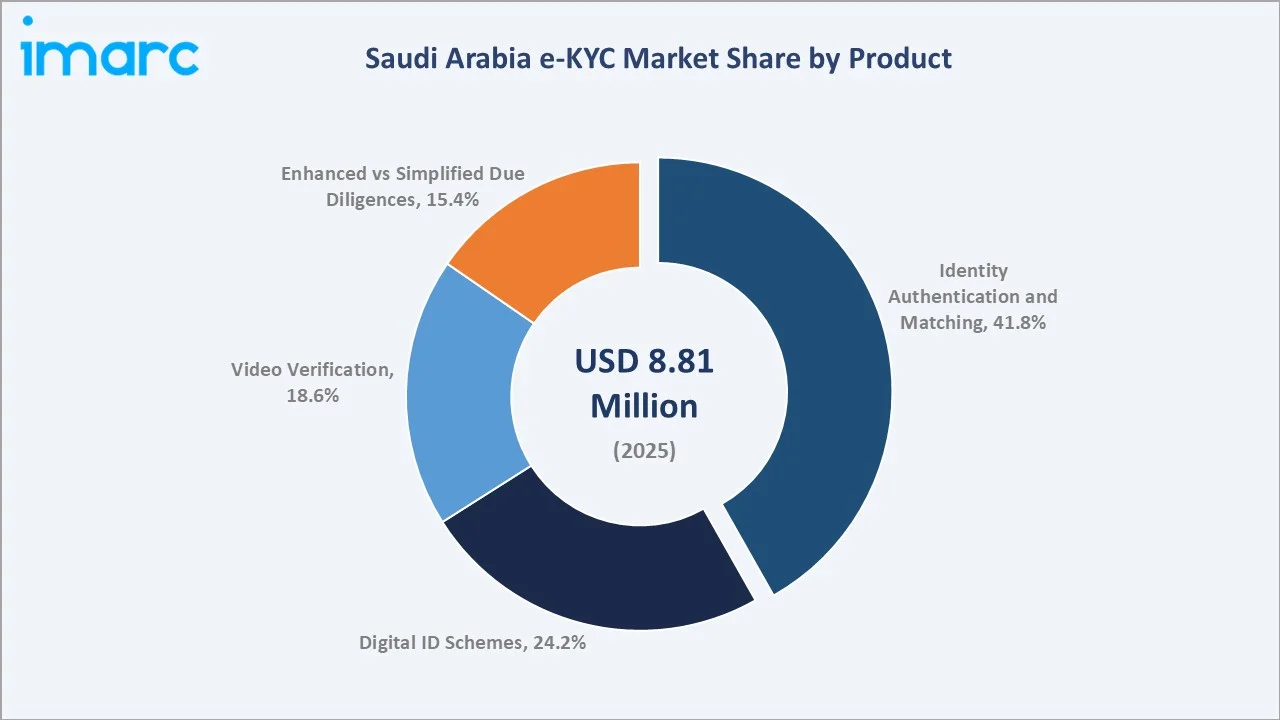
Identity Authentication and Matching leads the product segment at 41.8%, supported by government-backed verification infrastructure such as Yakeen and Nafath. Cloud-based deployment dominates at 68.4%, reflecting the sector's preference for scalable, low-capex onboarding infrastructure. The Northern and Central Region commands 47.6% of the market, anchored by Riyadh's concentration of banks, fintechs, and regulatory institutions.
Market Snapshot
|
Metric |
Value |
|
Market Size (2025) |
USD 8.81 Million |
|
Forecast Market Size (2034) |
USD 35.77 Million |
|
CAGR (2026-2034) |
16.85% |
|
Base Year |
2025 |
|
Historical Period |
2020-2025 |
|
Forecast Period |
2026-2034 |
|
Dominant Product |
Identity Authentication and Matching (41.8%, 2025) |
|
Dominant Deployment Mode |
Cloud-based (68.4%, 2025) |
|
Leading Region |
Northern and Central Region (47.6%, 2025) |
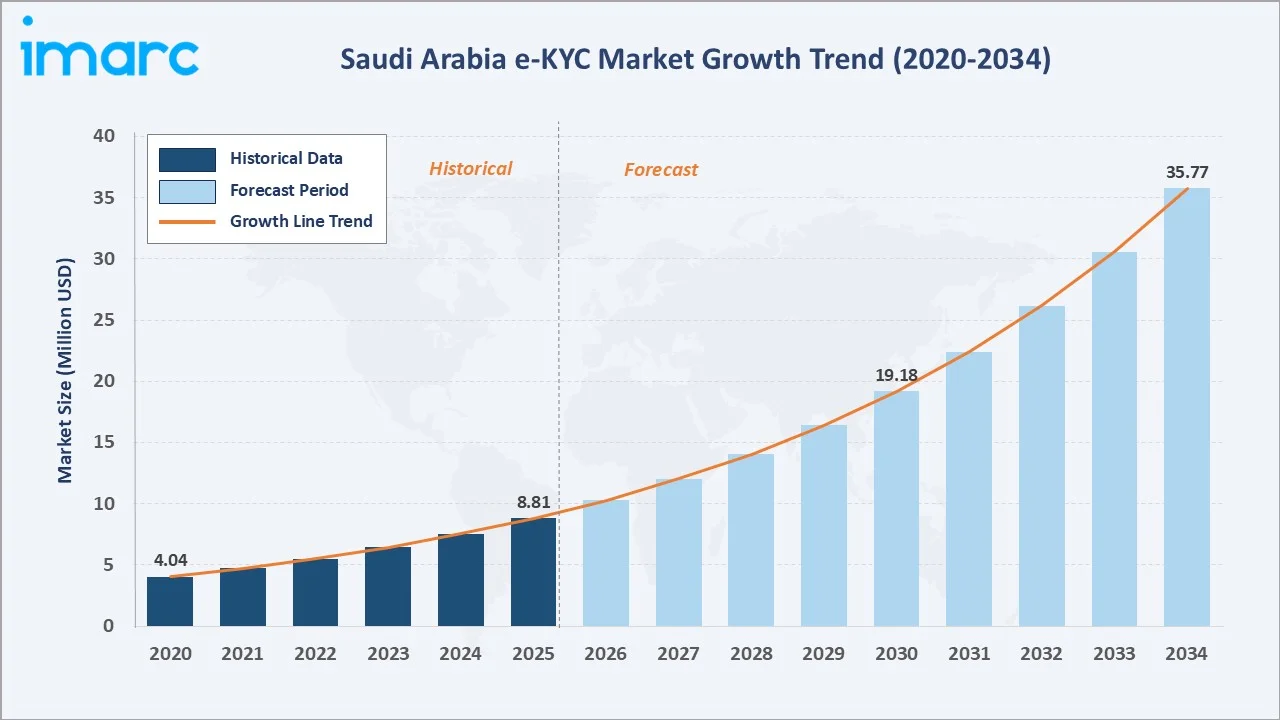
The market expanded from an estimated USD 4.04 Million in 2020 to USD 8.81 Million in 2025, more than doubling over the historical period as digital onboarding gained traction across Saudi banks and fintechs. The market is anchored at approximately USD 19.18 Million in 2030 and is forecast to reach USD 35.77 Million by 2034. Growth accelerated through 2023-2025 as SAMA's regulatory sandbox matured and licensed digital banks scaled onboarding, a trajectory expected to continue as enhanced due diligence requirements broaden across regulated sectors.
To get more information on this market, Request Sample
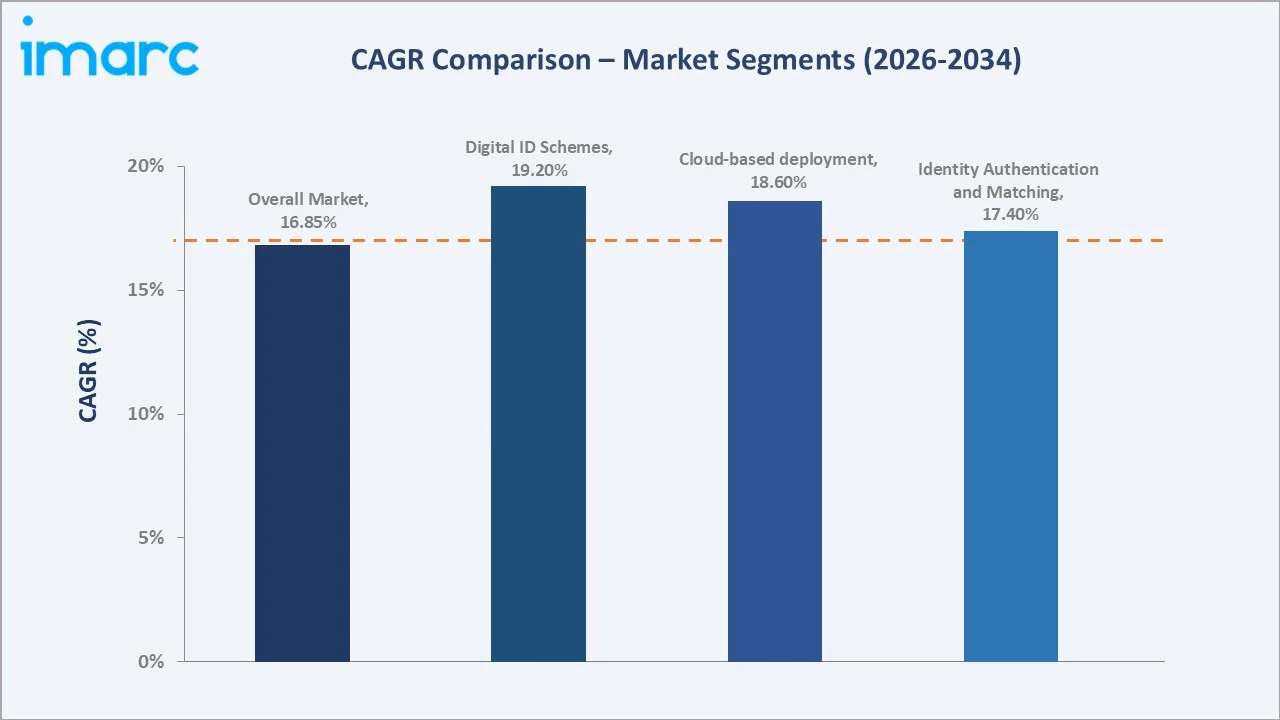
Against the overall market's 16.85% CAGR, Digital ID Schemes is estimated to be the fastest-growing product segment at approximately 19.2% CAGR as Nafath integration deepens, followed by Identity Authentication and Matching at approximately 17.4%. Cloud-based deployment leads deployment-mode growth at approximately 18.6% CAGR, comfortably outpacing On-premises deployment at approximately 11.8% as fintechs and digital banks favor scalable, low-capex infrastructure over legacy systems.
Executive Summary
The Saudi Arabia e-KYC market reached USD 8.81 Million in 2025, reflecting the Kingdom's rapid shift toward digital identity verification as financial institutions, telecom operators, and government entities modernize customer onboarding under Vision 2030. e-KYC systems enable secure, remote verification of identity documents, biometric data, and government records, replacing manual, branch-based onboarding processes. The market is projected to reach USD 35.77 Million by 2034.
Identity Authentication and Matching at 41.8% dominates by anchoring onboarding workflows to real-time verification against national identity databases such as Yakeen and Nafath. Cloud-based deployment at 68.4% leads through lower upfront costs and faster integration for banks and fintechs. The Northern and Central Region at 47.6% leads through Riyadh's concentration of licensed banks, fintech sandboxes, and regulatory bodies including SAMA.
Key Market Insights
|
Insight |
Data |
|
Dominant Product |
Identity Authentication and Matching - 41.8% share (2025) |
|
Dominant Deployment Mode |
Cloud-based - 68.4% market share (2025) |
|
Leading Region |
Northern and Central Region - 47.6% market share (2025) |
|
Market Opportunity |
AI-driven biometric authentication; blockchain-based digital ID; RegTech-integrated due diligence platforms; GCC cross-border verification interoperability |
Key Analytical Observations Supporting the Above Data:
- Identity Authentication and Matching at 41.8%: dominates as it forms the compliance backbone of SAMA-regulated onboarding, matching customer-submitted documents against national identity records in real time. Its integration with Yakeen and Nafath strengthens adoption across banks, fintechs, and government service providers seeking fraud-resistant onboarding.
- Cloud-based at 68.4%: leads due to lower infrastructure investment, faster deployment, and easier scalability for fintechs and digital banks. Cloud delivery also supports rapid updates to biometric and liveness-detection models as fraud typologies evolve across the Kingdom's digital economy.
- Northern and Central Region at 47.6%: leads through Riyadh's dense concentration of licensed banks, SAMA-supervised fintechs, and headquarters of national identity infrastructure providers, generating the highest volume of e-KYC-enabled customer onboarding nationally.
Saudi Arabia e-KYC Market Overview
The Saudi Arabia e-KYC market encompasses software platforms and services enabling remote, digital verification of customer identity through document authentication, biometric matching, liveness detection, and government database checks. The ecosystem integrates identity verification technology vendors, government identity infrastructure operators, systems integrators, banks, fintechs, telecom companies, and regulatory bodies including SAMA and the Communications, Space and Technology Commission. Macroeconomic drivers include Vision 2030's financial inclusion agenda, the Kingdom's high internet and smartphone penetration, growth of the fintech sandbox, and tightening anti-money laundering and counter-terrorist financing requirements across regulated sectors.
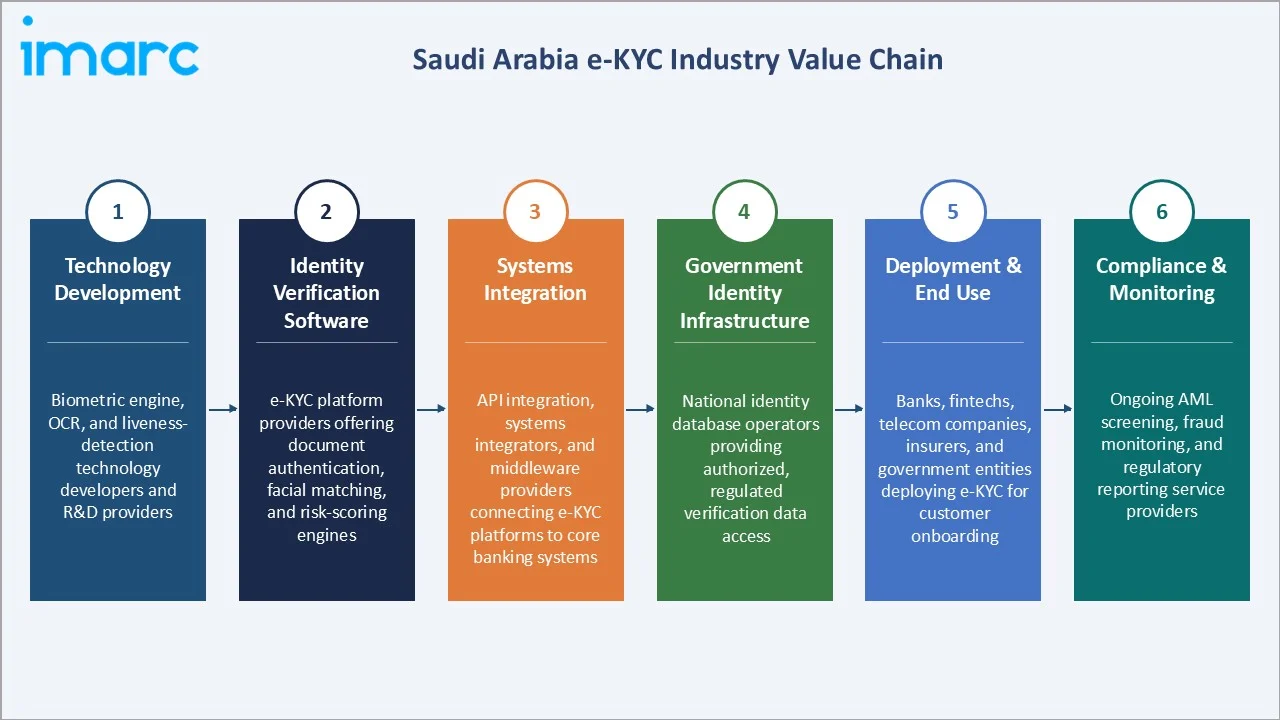
The ecosystem's central architecture links commercial identity verification vendors to authoritative government identity infrastructure, with systems integrators, telecom and e-payment providers, and regulatory bodies forming interconnected support layers. This interconnected structure allows verification requests to be authenticated in real time against national records while remaining compliant with SAMA's evolving digital onboarding standards.
Market Dynamics
To evaluate market opportunities, Request Sample
Market Drivers
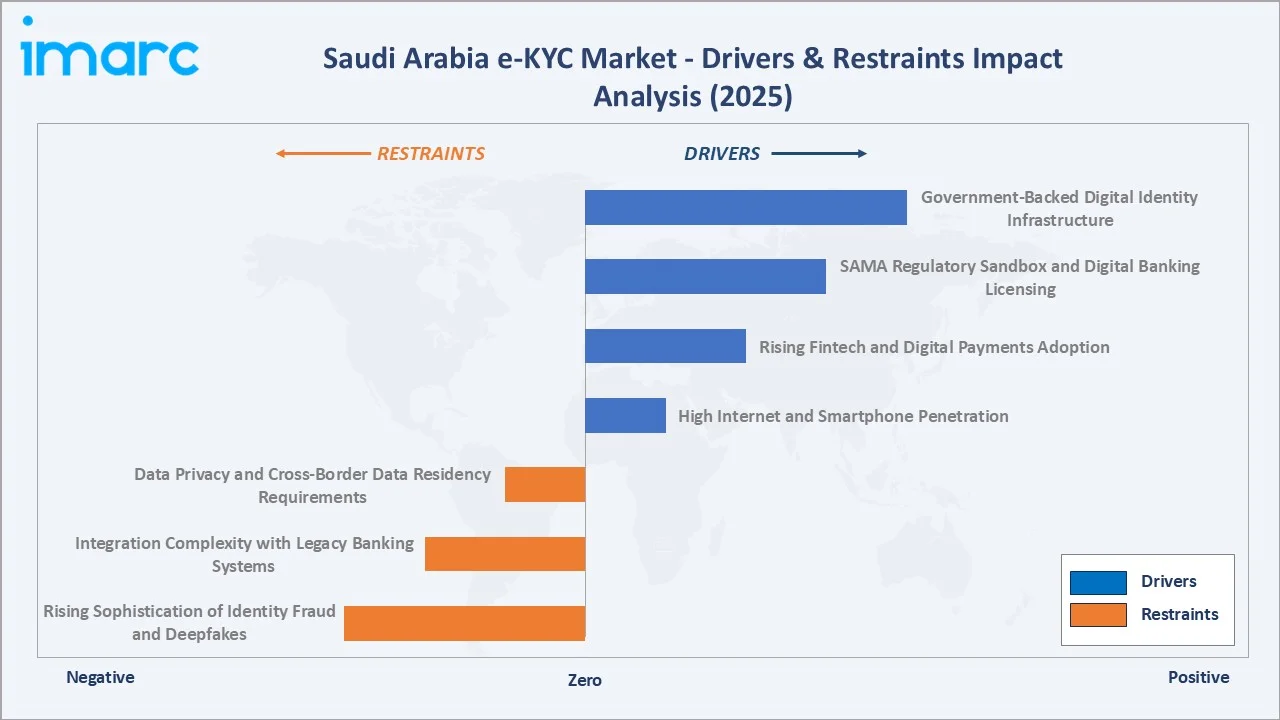
- Government-Backed Digital Identity Infrastructure: Elm's Yakeen and the Nafath national digital identity platform give Saudi e-KYC providers direct, authoritative access to citizen and resident records, reducing onboarding friction and fraud. Their widespread integration across banks and fintechs is accelerating adoption of automated, real-time identity verification. SAMA's rulebook formally recognizes Yakeen as an approved verification source, giving institutions regulatory certainty when building onboarding flows around it. As Nafath's single sign-on capability extends to more service categories, vendors that integrate deeply with these government rails gain a durable trust advantage over generic document-scanning tools. This authoritative data access also reduces false-positive rates in identity matching, lowering both fraud losses and manual review costs for adopting institutions.
- SAMA Regulatory Sandbox and Digital Banking Licensing: The Saudi Central Bank's regulatory sandbox and licensing of digital-only banks are compelling institutions to deploy compliant e-KYC systems from inception. This regulatory push is normalizing e-KYC as the default onboarding mechanism across newly licensed financial entities. Since its launch, the sandbox has graduated a growing cohort of digital-only banks and payment institutions, each required to embed compliant identity verification before commercial launch. This front-loaded compliance requirement creates predictable, recurring demand for e-KYC vendors as new licenses are issued. The sandbox's periodic rule updates also push existing players to continuously upgrade their verification stacks to remain compliant, sustaining a replacement and upgrade cycle alongside new-customer demand.
- Rising Fintech and Digital Payments Adoption: Saudi Arabia's expanding fintech sector and Vision 2030's digital payment targets are increasing the volume of digitally onboarded customers. As e-payment providers and buy-now-pay-later platforms scale, demand for fast, compliant e-KYC integration is rising correspondingly. Saudi Arabia's digital payments market has expanded rapidly alongside government targets to shift most transactions to cashless channels by 2030, pulling more first-time users into formally verified financial relationships. Buy-now-pay-later and digital wallet providers require near-instant onboarding decisions to remain competitive, pushing them toward automated e-KYC rather than manual review. This volume growth is also encouraging vendors to price verification on a per-transaction basis, lowering the entry barrier for smaller fintechs to adopt enterprise-grade identity checks.
- High Internet and Smartphone Penetration: With internet usage exceeding 34 million users and near-universal smartphone adoption, Saudi consumers increasingly expect frictionless digital onboarding, pushing banks, insurers, and telecom companies to replace in-branch verification with e-KYC-enabled digital journeys. Saudi Arabia's smartphone penetration rate is among the highest in the Middle East, giving e-KYC vendors a large addressable base of camera-equipped, NFC-capable devices needed for document and biometric capture.
Market Restraints:
- Data Privacy and Cross-Border Data Residency Requirements: Saudi data protection regulations mandate strict data residency and privacy controls for personal identity information, raising compliance costs for e-KYC vendors, particularly international providers needing localized infrastructure to serve Saudi clients. Institutions handling personal identity data must navigate the Kingdom's Personal Data Protection Law, which restricts cross-border data transfer and requires clear consent and retention controls for biometric and document records.
- Integration Complexity with Legacy Banking Systems: Many established Saudi financial institutions operate legacy core banking systems that complicate integration with modern e-KYC APIs, slowing deployment timelines and increasing implementation costs for both vendors and adopting institutions. Core banking platforms in several established Saudi banks were not originally designed for real-time API-based verification, requiring costly middleware layers or phased system replacements to support modern e-KYC workflows. This complexity often extends implementation timelines from weeks to several months for larger institutions, delaying the realization of onboarding efficiency gains. Smaller and newer banks with cloud-native cores face fewer such constraints, creating an uneven pace of e-KYC adoption across the incumbent banking sector.
- Rising Sophistication of Identity Fraud and Deepfakes: Increasingly sophisticated synthetic identity and deepfake-based spoofing attacks are raising the bar for liveness detection and biometric verification, requiring continuous technology investment that can strain smaller e-KYC vendors and adopting institutions alike. Fraud typologies have shifted from simple document forgery toward AI-generated synthetic identities and real-time deepfake video injection attacks that can circumvent older liveness-detection methods. Vendors must continuously retrain detection models against emerging attack patterns, a resource-intensive process that favors larger players with dedicated fraud-research teams. Smaller vendors that fail to keep pace risk both direct fraud losses for their clients and reputational damage that can trigger customer attrition to more secure competitors.
Market Opportunities
- AI-Driven Biometric and Behavioral Authentication: Advances in AI-powered facial recognition, voice biometrics, and behavioral analytics present opportunities for e-KYC vendors to offer layered, continuous authentication beyond one-time onboarding checks, strengthening fraud prevention for high-value transactions. Behavioral biometrics, such as typing cadence, device-handling patterns, and navigation behavior, can supplement one-time document checks with continuous, passive risk scoring throughout the customer relationship. Vendors that successfully commercialize these capabilities can differentiate on fraud-prevention effectiveness rather than price alone, supporting stronger margins.
- GCC Cross-Border Identity Interoperability: Growing GCC economic integration creates opportunities for e-KYC platforms that support cross-border identity verification across Saudi Arabia, the UAE, and other Gulf states, enabling regional fintechs and banks to onboard customers seamlessly across jurisdictions. As GCC governments explore mutual recognition of national digital identity credentials, vendors with existing footprints in both Saudi Arabia and neighboring markets are well positioned to offer unified verification APIs for regional expansion. This would particularly benefit e-commerce, ride-hailing, and remittance platforms serving cross-border GCC customers who currently face duplicated verification steps in each market.
Market Challenges
- Talent Shortage in AI and Biometric Engineering: Limited local availability of specialized AI and biometric engineering talent constrains the pace at which Saudi-based e-KYC vendors can develop and localize advanced verification technologies domestically. Saudi universities are only beginning to scale specialized AI and computer-vision curricula, meaning much of the required expertise must currently be sourced internationally at a premium cost. This talent gap can slow product roadmaps for Saudi-headquartered vendors relative to global competitors with deeper established engineering benches.
- Price Competition from Global RegTech Entrants: The entry of global identity verification platforms into the Saudi market is intensifying price competition, pressuring margins for local vendors while raising switching costs and vendor-evaluation complexity for financial institutions. Global vendors entering the Saudi market can often amortize core verification technology development costs across dozens of markets, allowing them to underprice smaller domestic specialists on a per-verification basis. These dynamic pressures local vendors to differentiate on Arabic-language accuracy, government-database integration, and dedicated local support rather than competing purely on price.
Emerging Market Trends
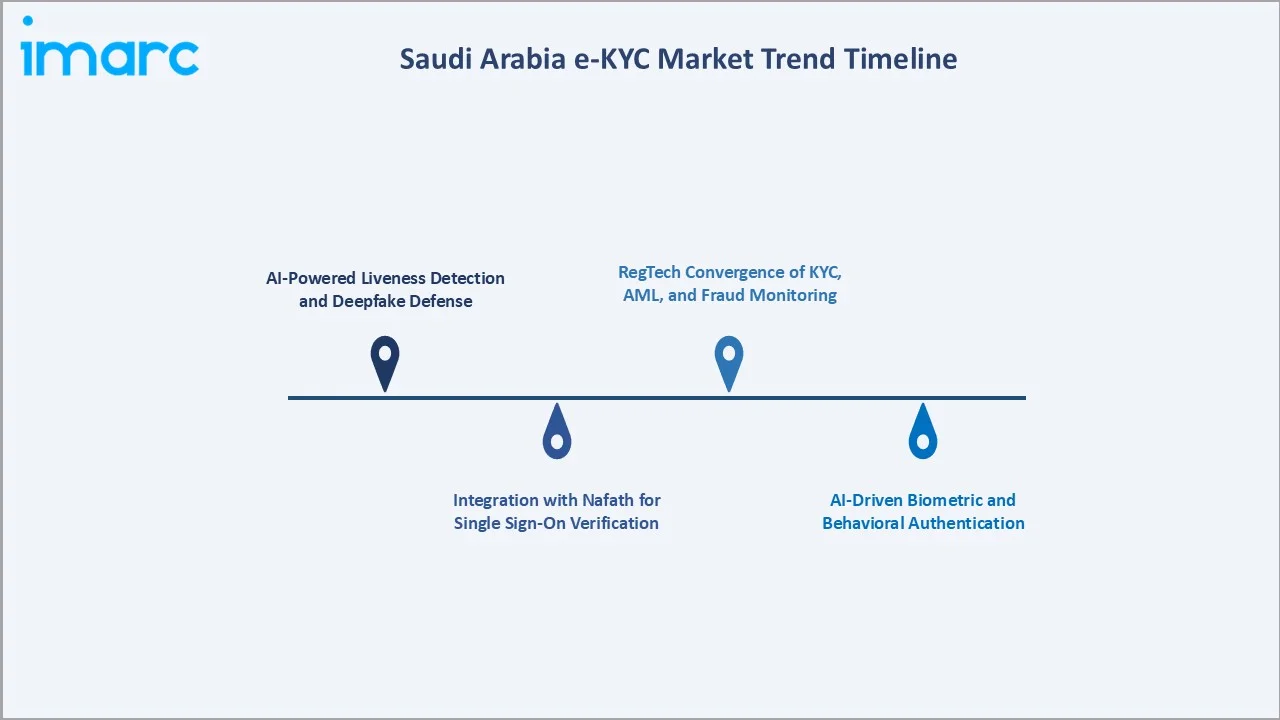
1. AI-Powered Liveness Detection and Deepfake Defense
Saudi e-KYC vendors are deploying advanced liveness detection to counter deepfake and presentation-attack fraud, combining facial motion analysis with document-chip verification. This dual-layer approach is becoming standard for SAMA-licensed digital banks and fintech-sandbox participants managing rising synthetic-identity risk.
2. Integration with Nafath for Single Sign-On Verification
Growing integration of e-KYC platforms with Nafath's national digital identity system is enabling single sign-on verification across banking, government, and telecom services, reducing redundant document submission and improving onboarding speed for consumers.
3. RegTech Convergence of KYC, AML, and Fraud Monitoring
Saudi e-KYC providers are increasingly bundling identity verification with AML screening and continuous fraud monitoring into unified compliance platforms, reflecting demand from regulated institutions for consolidated, API-driven RegTech solutions rather than point verification tools.
4. AI-Driven Biometric and Behavioral Authentication
AI-driven biometric authentication is expanding beyond one-time facial verification at onboarding toward continuous, passive authentication that layer’s voice, behavioral, and device-based signals across the customer lifecycle. Saudi banks and fintechs are piloting these capabilities to detect account-takeover attempts and synthetic-identity fraud that static document checks alone cannot catch. As AI models mature, this shift is positioning behavioral biometrics as a standard complement to traditional e-KYC verification rather than a niche add-on.
Industry Value Chain Analysis
The Saudi Arabia e-KYC value chain integrates identity verification technology development, biometric and document-authentication engine providers, government identity database operators, systems integration and API delivery, deployment by banks, fintechs, telecom companies, and regulated end users, and ongoing compliance monitoring and fraud analytics.
|
Stage |
Key Participants |
|
Technology Development |
Biometric engine, OCR, and liveness-detection technology developers and R&D providers |
|
Identity Verification Software |
e-KYC platform providers offering document authentication, facial matching, and risk-scoring engines |
|
Systems Integration |
API integration, systems integrators, and middleware providers connecting e-KYC platforms to core banking systems |
|
Government Identity Infrastructure |
National identity database operators providing authorized, regulated verification data access |
|
Deployment & End Use |
Banks, fintechs, telecom companies, insurers, and government entities deploying e-KYC for customer onboarding |
|
Compliance & Monitoring |
Ongoing AML screening, fraud monitoring, and regulatory reporting service providers |
The government identity infrastructure stage remains the value chain's most commercially sensitive layer, as authorized access to national records is tightly regulated and forms the basis of vendor credibility. The deployment and compliance-monitoring stages are experiencing the fastest structural change, as regulated institutions increasingly demand bundled, continuously updated verification and fraud-monitoring capability rather than one-time onboarding checks.
Technology Landscape in the Saudi Arabia e-KYC Industry
AI-Based Biometric Verification
AI-based biometric verification, encompassing facial recognition, liveness detection, and voice authentication, offers high accuracy and low false-acceptance rates. Its ability to counter deepfake and presentation-attack fraud is driving preference among SAMA-regulated institutions for AI-native identity authentication and matching platforms.
Optical Character Recognition and NFC Chip Reading
Optical character recognition and NFC chip-reading technologies enable automated extraction and validation of Saudi national ID, Iqama, and passport data, including Arabic-script recognition. Their accuracy and speed support high-volume onboarding for banks, telecom companies, and e-payment service providers across the Kingdom.
Blockchain-Based Digital Identity Verification
Blockchain-based digital identity verification offers tamper-resistant, auditable identity records and reduces reliance on repeated document resubmission across institutions. Early-stage pilots among Saudi banks and RegTech vendors point to growing interest in decentralized identity credentials as a complement to Yakeen and Nafath-based verification, particularly for cross-institutional and cross-border onboarding scenarios.
Market Segmentation Analysis
The report covers the following segments:
|
Segment Category |
Leading Segment |
Market Share |
Year |
|
Product |
Identity Authentication and Matching |
41.8% |
2025 |
|
Deployment Mode |
Cloud-based |
68.4% |
2025 |
|
End User |
🔒 |
🔒 |
2025 |
|
Region |
Northern and Central Region |
47.6% |
2025 |

By Product
Identity Authentication and Matching leads at 41.8% in 2025, encompassing real-time verification of customer-submitted documents against government identity records, the most commercially critical product category for SAMA-regulated onboarding.
To access detailed market analysis, Request Sample
Digital ID Schemes at 24.2% capture government-backed digital identity integration, led by Nafath-linked verification. Video Verification at 18.6% supports remote face-to-face compliance checks, while Enhanced vs Simplified Due Diligences at 15.4% serves risk-tiered onboarding for higher-risk customer segments.
By Deployment Mode
Cloud-based deployment leads at 68.4% in 2025, reflecting the scalability, lower upfront cost, and faster update cycles that cloud infrastructure offers fintechs and digital banks scaling customer onboarding.
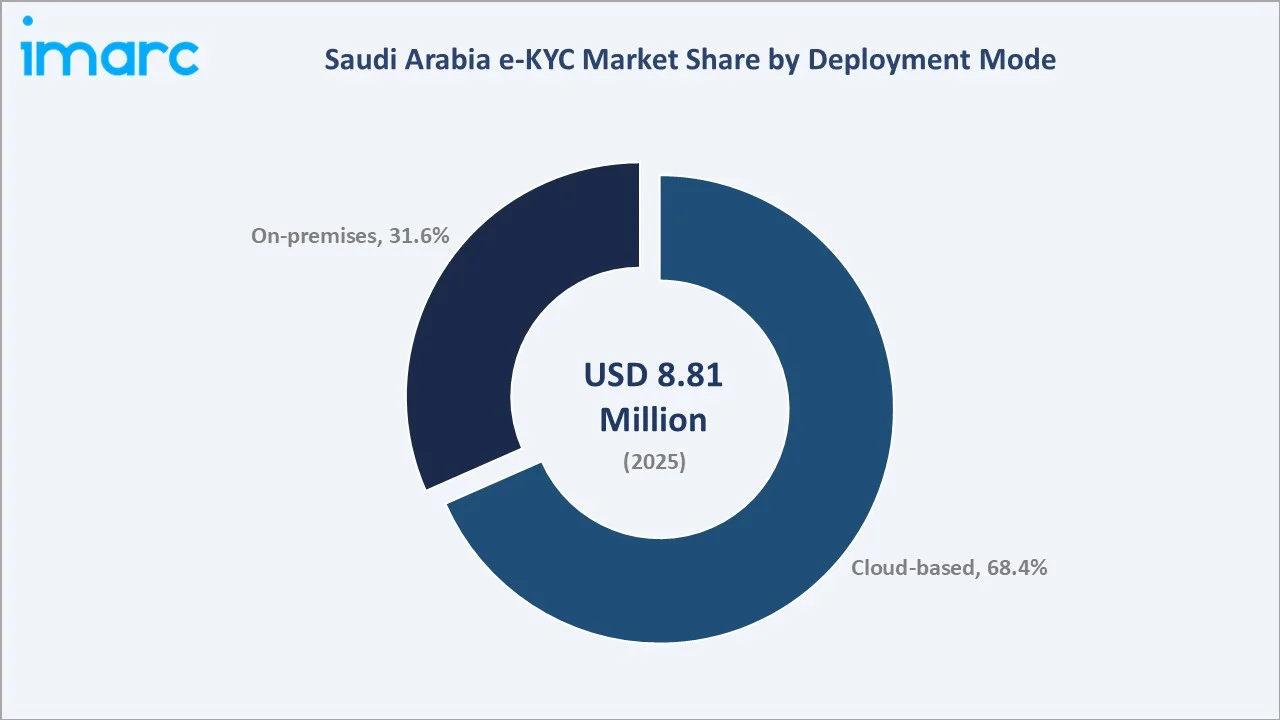
On-premises deployment at 31.6% remains relevant among large, established banks and government entities with strict data residency and legacy infrastructure requirements, though its share is expected to gradually narrow as cloud-native compliance frameworks mature.
Regional Market Insights
|
Region |
Share (2025) |
Key e-KYC Market Drivers & Characteristics |
|
Northern and Central Region |
47.6% |
Driven by a strong concentration of licensed financial institutions, fintech activity, and national digital identity infrastructure |
|
Western Region |
24.3% |
Supported by an expanding commercial banking base, growing e-commerce activity, and rising fintech adoption |
|
Eastern Region |
17.5% |
Driven by corporate banking demand linked to the region's industrial and energy-sector employer base |
|
Southern Region |
10.6% |
Emerging market supported by expanding financial inclusion initiatives and gradual digital banking penetration |
Northern and Central Region, at 47.6%, leads through Riyadh's dense concentration of SAMA-licensed banks, fintechs, and national identity infrastructure. Western Region, at 24.3%, reflects Jeddah's commercial banking scale and Red Sea coast fintech activity.
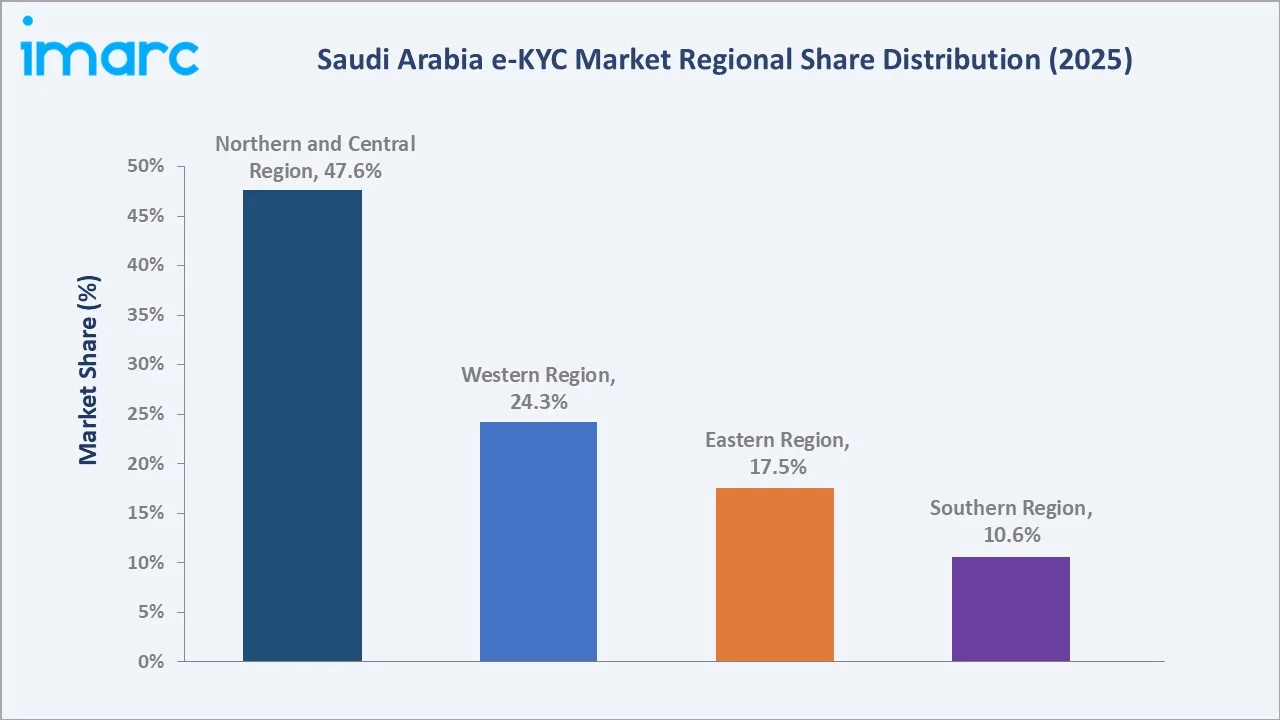
Eastern Region, at 17.5%, and Southern Region, at 10.6%, represent smaller but steadily digitizing markets, driven respectively by corporate banking tied to the energy sector and government-led financial inclusion programs.
Competitive Landscape
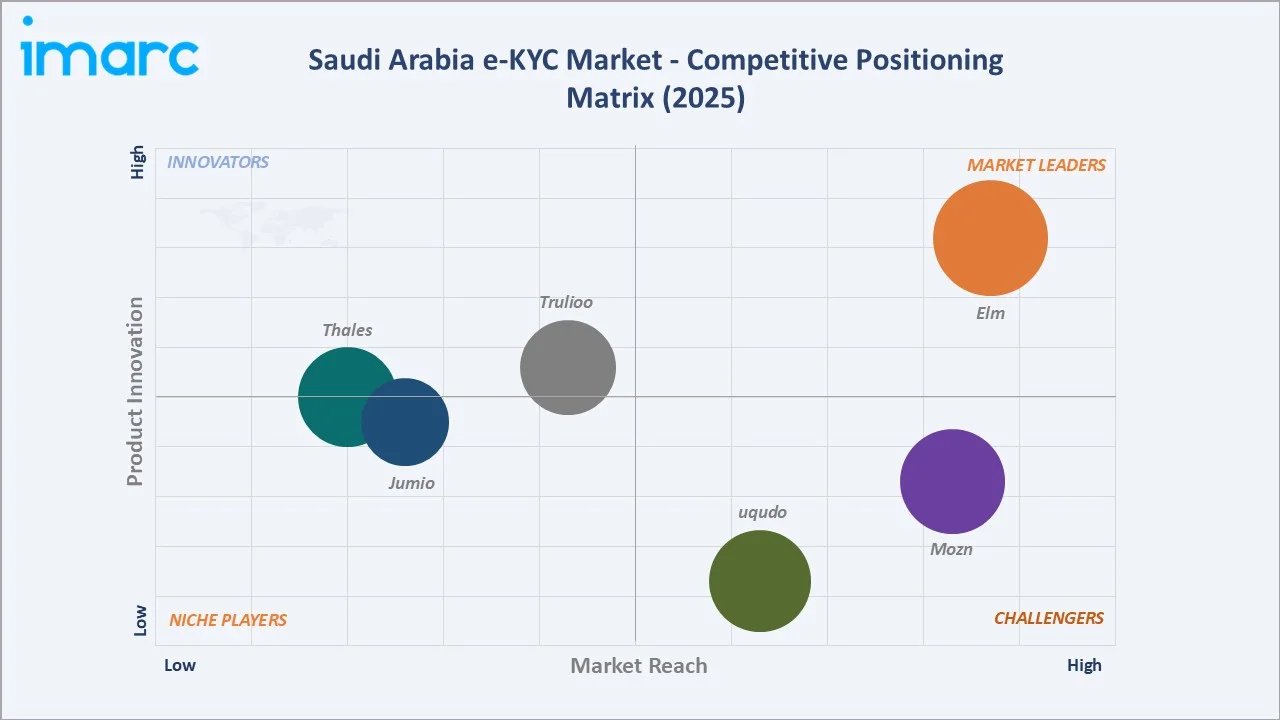
The Saudi Arabia e-KYC market competitive landscape is moderately fragmented, comprising government-linked national identity infrastructure operators, Saudi-based RegTech specialists, and international identity verification platforms expanding across the Kingdom's regulated financial sector.
|
Company Name |
Key Products |
Market Position |
Core Strength |
|
Elm |
Yakeen |
Market Leader |
Elm operates Saudi Arabia's authoritative government-backed identity verification infrastructure, giving it unmatched authorized access to national identity records. |
|
Mozn |
FOCAL KYC/AML Platform |
Strong Challenger |
Mozn is a Saudi-based AI-native compliance company offering integrated identity verification, AML screening, and fraud detection tailored to SAMA regulations. |
|
uqudo |
Digital Identity Verification Platform |
Strong Challenger |
uqudo specializes in AI-powered document, NFC chip, and biometric verification optimized for Arabic-script identity documents across the MEA region. |
|
Thales |
Digital Identity and Biometrics Suite |
Established Player |
Thales provides biometric identity and digital security solutions for financial institutions and government entities across the GCC. |
|
Jumio |
Jumio KYX Platform |
Emerging Player |
Jumio offers AI-driven identity verification and biometric authentication used by global and regional institutions for compliant digital onboarding. |
|
Trulioo |
GlobalGateway Identity Platform |
Emerging Player |
Trulioo provides a global identity verification network enabling cross-border KYC compliance for institutions expanding into Saudi Arabia. |
Key players include Elm, Mozn, uqudo, Thales, Jumio, Trulioo, and others.
Key Company Profiles
Elm
Elm is a Saudi-based, Public Investment Fund-backed digital solutions provider and operator of Yakeen, the Kingdom's authoritative real-time identity verification service linking financial institutions and regulated entities to national identity records.
- Key Products: Yakeen identity verification service.
- Strategic Focus: Strengthening authoritative identity verification infrastructure and expanding integration with banks, fintechs, and government entities across Saudi Arabia. The company continues to broaden Yakeen's integration footprint beyond banking into insurance, telecom, and e-government services, positioning it as the default verification layer across the Kingdom's digital economy.
Mozn
Mozn is a Riyadh-headquartered AI company whose FOCAL platform delivers integrated identity verification, AML screening, and continuous fraud monitoring for Saudi banks, fintechs, and regulated entities.
- Key Products: FOCAL KYC/AML compliance platform.
- Strategic Focus: Deepening AI-driven fraud detection and compliance automation tailored to local regulatory requirements and financial-crime typologies. Mozn is expanding FOCAL's self-learning risk models to cover a broader range of financial-crime typologies specific to the Saudi and wider GCC markets, reducing reliance on generic global rule sets.
uqudo
uqudo is a MEA-focused digital identity verification company offering document, NFC chip, and biometric verification technology optimized for Saudi national ID cards, Iqama, and passports.
- Key Products: AI-powered digital identity verification platform.
- Strategic Focus: Expanding Arabic-script document verification accuracy and government-database integration across Saudi banking, telecom, and e-payment sectors. uqudo continues to refine its OCR and NFC chip-reading models specifically for Gulf-region identity documents, aiming to reduce verification failure rates for non-standard or damaged documents. The company is also pursuing deeper direct integrations with government identity databases across its MEA markets to reduce dependence on third-party data intermediaries.
Market Concentration Analysis
The Saudi Arabia e-KYC market is moderately concentrated around Elm's government-linked Yakeen infrastructure, which underpins most regulated identity verification transactions nationally. Saudi-based RegTech specialists are capturing a growing share of commercial KYC-AML integration, while international platforms compete primarily for cross-border and enterprise-scale deployments. Market concentration is expected to gradually ease as SAMA's fintech sandbox licenses new digital banks and specialized RegTech entrants, broadening the competitive base beyond the small group of vendors that currently hold authorized access to national identity infrastructure.
Investment & Growth Opportunities
Highest Growth Segments
Identity Authentication and Matching, Digital ID Schemes integration with Nafath, and cloud-based deployment represent the highest-growth investment vectors through 2034, supported by SAMA's expanding digital banking licenses and the Kingdom's broader financial-inclusion agenda under Vision 2030. Video Verification and risk-tiered due diligence tools are also expected to grow steadily as regulated institutions extend remote onboarding to higher-risk customer segments.
Emerging Investment Opportunities
AI-driven biometric authentication and RegTech platforms bundling KYC, AML, and continuous fraud monitoring represent the market's highest-value emerging opportunity, as regulated institutions increasingly favor consolidated compliance platforms over standalone document-verification tools, creating a structurally growing demand pool through 2034. Vendors able to combine authoritative government-data access with AI-native fraud detection are best positioned to capture this consolidating demand.
Investment Themes
- AI-native compliance platform development: Vendors that combine identity verification, AML screening, and fraud analytics into a single API-driven platform are positioned to capture disproportionate share as SAMA-regulated institutions consolidate vendor relationships and prioritize integrated compliance infrastructure.
- Nafath and Yakeen-integrated onboarding solutions: Deepening integration with national digital identity infrastructure creates a durable competitive advantage, as authorized access to government identity records remains the market's most defensible differentiator for e-KYC vendors.
- GCC cross-border verification network expansion: Building verification networks that support seamless identity checks across Saudi Arabia and other GCC states positions vendors to serve regional fintechs and banks expanding cross-border, ahead of anticipated GCC-wide digital identity interoperability initiatives.
Future Market Outlook (2026-2034)
The Saudi Arabia e-KYC market is projected to grow from USD 8.81 Million in 2025 to USD 35.77 Million by 2034, delivering a 16.85% CAGR over the forecast period. The market's anchor value of approximately USD 19.18 Million in 2030 reflects an e-KYC industry at its most transformative phase, as SAMA-licensed digital banks scale nationally and Nafath-integrated verification becomes the default onboarding standard. Cloud-based, AI-native compliance platforms are expected to displace legacy on-premises and manual verification methods, while GCC cross-border interoperability and deepening AML-fraud convergence will shape vendor competitiveness through 2034.
Research Methodology
Primary Research
Primary research comprised structured interviews with compliance officers, digital banking executives, fintech identity leads, and RegTech product specialists across Saudi Arabia's regulated financial sector.
Secondary Research
Secondary research encompassed SAMA regulatory publications, company annual disclosures, Vision 2030 digital transformation reports, fintech sandbox documentation, national digital identity program updates, and industry association data. Over 40 secondary sources were reviewed and cross-referenced to validate market sizing and segment-level estimates.
Forecasting Models
Market revenue forecasts were developed using a bottom-up model incorporating regulated-entity onboarding volumes, per-transaction e-KYC pricing, deployment-mode cost structures, and adoption-rate assumptions across banks, fintechs, telecom companies, and government entities.
Saudi Arabia e-KYC Market Report Coverage:
| Report Features | Details |
|---|---|
| Base Year of the Analysis | 2025 |
| Historical Period | 2020-2025 |
| Forecast Period | 2026-2034 |
| Units | Million USD |
| Scope of the Report |
Exploration of Historical Trends and Market Outlook, Industry Catalysts and Challenges, Segment-Wise Historical and Future Market Assessment:
|
| Products Covered | Identity Authentication and Matching, Video Verification, Digital ID Schemes, Enhanced vs Simplified Due Diligence |
| Deployment Modes Covered | Cloud-based, On-Premises |
| End Users Covered | Banks, Financial Institutions, E-Payment Service Providers, Telecom Companies, Government Entities, Insurance Companies |
| Regions Covered | Northern and Central Region, Western Region, Eastern Region, and Southern Region |
| Companies Covered | Elm, Mozn, uqudo, Thales, Jumio, Trulioo, etc. |
| Customization Scope | 10% Free Customization |
| Post-Sale Analyst Support | 10-12 Weeks |
| Delivery Format | PDF and Excel through Email (We can also provide the editable version of the report in PPT/Word format on special request) |
Key Benefits for Stakeholders:
- IMARC’s industry report offers a comprehensive quantitative analysis of various market segments, historical and current market trends, market forecasts, and dynamics of the Saudi Arabia e-KYC market from 2020-2034.
- The research report provides the latest information on the market drivers, challenges, and opportunities in the Saudi Arabia e-KYC market.
- Porter's five forces analysis assist stakeholders in assessing the impact of new entrants, competitive rivalry, supplier power, buyer power, and the threat of substitution. It helps stakeholders to analyze the level of competition within the Saudi Arabia e-KYC industry and its attractiveness.
- Competitive landscape allows stakeholders to understand their competitive environment and provides an insight into the current positions of key players in the market.
Frequently Asked Questions About the Saudi Arabia e-KYC Market Report
The Saudi Arabia e-KYC market reached USD 8.81 Million in 2025, driven by Identity Authentication and Matching's 41.8% product share, Cloud-based deployment's 68.4% share, the Northern and Central Region's 47.6% regional share, and rising SAMA-regulated digital onboarding across banks and fintechs.
The market is projected to grow at a 16.85% CAGR during 2026-2034, reaching USD 35.77 Million by 2034. This growth reflects SAMA's digital banking licensing, deepening Nafath integration, rising fintech adoption, and continued expansion of AI-native biometric verification across regulated institutions.
Identity Authentication and Matching leads at 41.8%, anchoring SAMA-regulated onboarding through real-time verification against national identity records including Yakeen and Nafath. This segment grows at approximately 17.4% CAGR through continued expansion of digital banking and fintech onboarding volumes.
Cloud-based deployment leads at 68.4% through lower upfront costs, faster integration, and scalability for banks, fintechs, and digital-only institutions across Saudi Arabia, growing at approximately 18.6% CAGR as on-premises systems are gradually phased out.
The Northern and Central Region leads at 47.6%, driven by Riyadh's concentration of licensed banks, fintechs, and national identity infrastructure operators, followed by the Western Region at 24.3% through Jeddah's commercial banking scale.
Leading companies include Elm, Mozn, uqudo, Thales, Jumio, Trulioo, and others.
The market is projected to reach approximately USD 19.18 Million by 2030, as SAMA-licensed digital banks scale nationally and Nafath-integrated verification becomes the default onboarding standard across regulated financial institutions.
Priority investment opportunities include AI-native KYC-AML-fraud compliance platforms, Nafath and Yakeen-integrated onboarding solutions, and GCC cross-border identity verification interoperability supporting regional fintech and banking expansion.
Need more help?
- Speak to our experienced analysts for insights on the current market scenarios.
- Include additional segments and countries to customize the report as per your requirement.
- Gain an unparalleled competitive advantage in your domain by understanding how to utilize the report and positively impacting your operations and revenue.
- For further assistance, please connect with our analysts.
 Request Customization
 Speak to an Analyst
 Request Brochure
 Inquire Before Buying
Benefits of Customization
- Personalize this research
- Triangulate with your data
- Get data as per your format and definition
- Gain a deeper dive into a specific application, geography, customer, or competitor
- Any level of personalization
Get in Touch With Us
UNITED STATES
Phone: +1-201-971-6302
INDIA
Phone: +91-120-433-0800
UNITED KINGDOM
Phone: +44-753-714-6104
Email: [email protected]
Client Testimonials

















Related Reports

Choose your plan
*Please note that the prices mentioned below are starting prices for each bundle type. Kindly contact our team for further details.*
Single User License
- 1 User License, Access on 2 Devices
- PDF Report + Excel Dataset (Password Protected)
- Lifetime Access
- No Printing Rights
- 10% Free Report Customization
- 10–12 Weeks of Analyst Support
Five User License
- Access for 5 Users, 2 Devices per User
- PDF Report + Excel Dataset (Password Protected)
- Lifetime Access
- Dedicated Account Manager
- 12–14 Weeks of Analyst Support
- No Printing Rights
- 15% Free Report Customization
- 25% Discount on Your Next Purchase
Corporate User License
- Unlimited User Access (Within Your Organization)
- PDF Report + Excel Dataset
- Lifetime Access
- Dedicated Account Manager
- 14–20 Weeks of Analyst Support
- No Printing Rights
- 20% Free Report Customization
- 30% Discount on Your Next Purchase
Essential Insights
What's included:
3 reports
- Lifetime Access
- PDF Reports
- Excel Datasets
- 2 Weeks of Free Analyst Support
- 2 User Licenses
- Access on 2 Devices
- Printing Rights
- Complimentary PowerPoint (PPT) Version
- Complimentary License Upgrade
Professional Access
What's included:
5 reports
- Lifetime Access
- PDF Reports
- Excel Datasets
- 8 Weeks of Free Analyst Support
- 2 User Licenses
- Access on 2 Devices
- Printing Rights
- Complimentary PowerPoint (PPT) Version
- Complimentary License Upgrade
Business Advantage
What's included:
8 reports
- Lifetime Access
- PDF Reports
- Excel Datasets
- 14 Weeks of Free Analyst Support
- 2 User Licenses
- Access on 2 Devices
- Printing Rights
- Complimentary PowerPoint (PPT) Version
- Complimentary License Upgrade
Enterprise Intelligence
What's included:
10 reports
- Lifetime Access
- PDF Reports
- Excel Datasets
- 20 Weeks of Free Analyst Support
- 2 User Licenses
- Access on 2 Devices
- Printing Rights
- Complimentary PowerPoint (PPT) Version
- Complimentary License Upgrade