
Saudi Arabia Energy Efficient HVAC Systems Market Size, Share, Trends and Forecast by Product, Application, and Region, 2026-2034
Saudi Arabia Energy Efficient HVAC Systems Market Size, Share, Trends & Forecast (2026-2034)
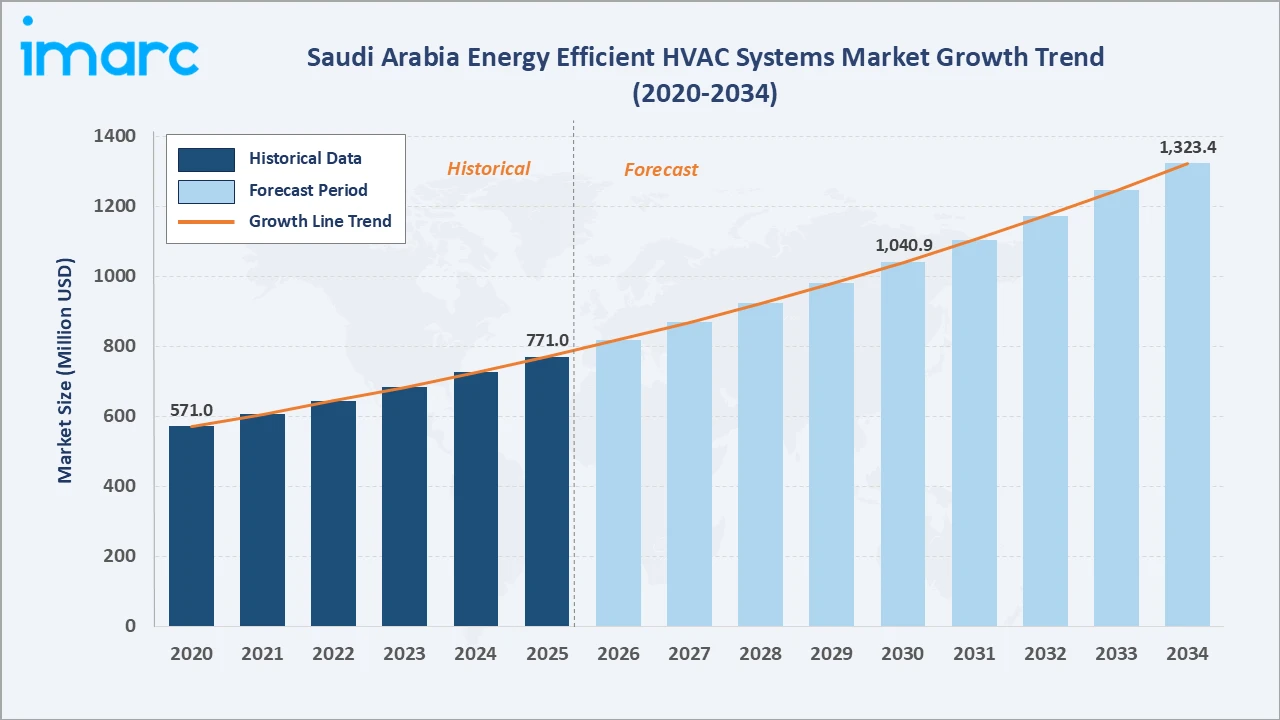
The Saudi Arabia energy efficient HVAC systems market reached USD 771.0 Million in 2025 and is projected to reach USD 1,323.4 Million by 2034, exhibiting a CAGR of 6.19% during 2026-2034. Saudi Arabia’s giga-projects are boosting demand for energy-efficient HVAC systems across large-scale residential, hospitality, commercial, and entertainment developments. Key projects include the US$50 billion New Murabba, featuring the 400-metre Mukaab and 25 million square meters of floor space by 2030, along with Red Sea's target of 50 hotels by 2030. These developments are accelerating the adoption of high-efficiency chillers, district cooling, smart controls, and building management systems to reduce energy consumption and operating costs. Efficient air conditioning systems lead at 46.3%, commercial dominates the application at 38.7%, and the Northern and Central region accounts for the largest regional share at 40.5%.
Market Snapshot
|
Metric |
Value |
|
Market Size (2025) |
USD 771.0 Million |
|
Forecast Market Size (2034) |
USD 1,323.4 Million |
|
CAGR (2026-2034) |
6.19% |
|
Base Year |
2025 |
|
Historical Period |
2020-2025 |
|
Forecast Period |
2026-2034 |
|
Dominant Product |
Efficient Air Conditioning Systems (46.3%, 2025) |
|
Dominant Application |
Commercial (38.7%, 2025) |
|
Leading Region |
Northern and Central Region (40.5%, 2025) |
The Saudi Arabia energy efficient HVAC systems market grew from USD 571.0 Million in 2020 to USD 771.0 Million in 2025, driven by the progressive tightening of minimum energy performance standards for air conditioners and chillers, the explosion of giga-project construction activity across the Kingdom generating unprecedented commercial and hospitality HVAC installation demand, and the adoption of smart and IoT-enabled HVAC technologies that optimize energy consumption through real-time data analytics, remote monitoring, and adaptive control. The market is projected to reach USD 1,040.9 Million by 2030 and USD 1,323.4 Million by 2034.
To get more information on this market, Request Sample
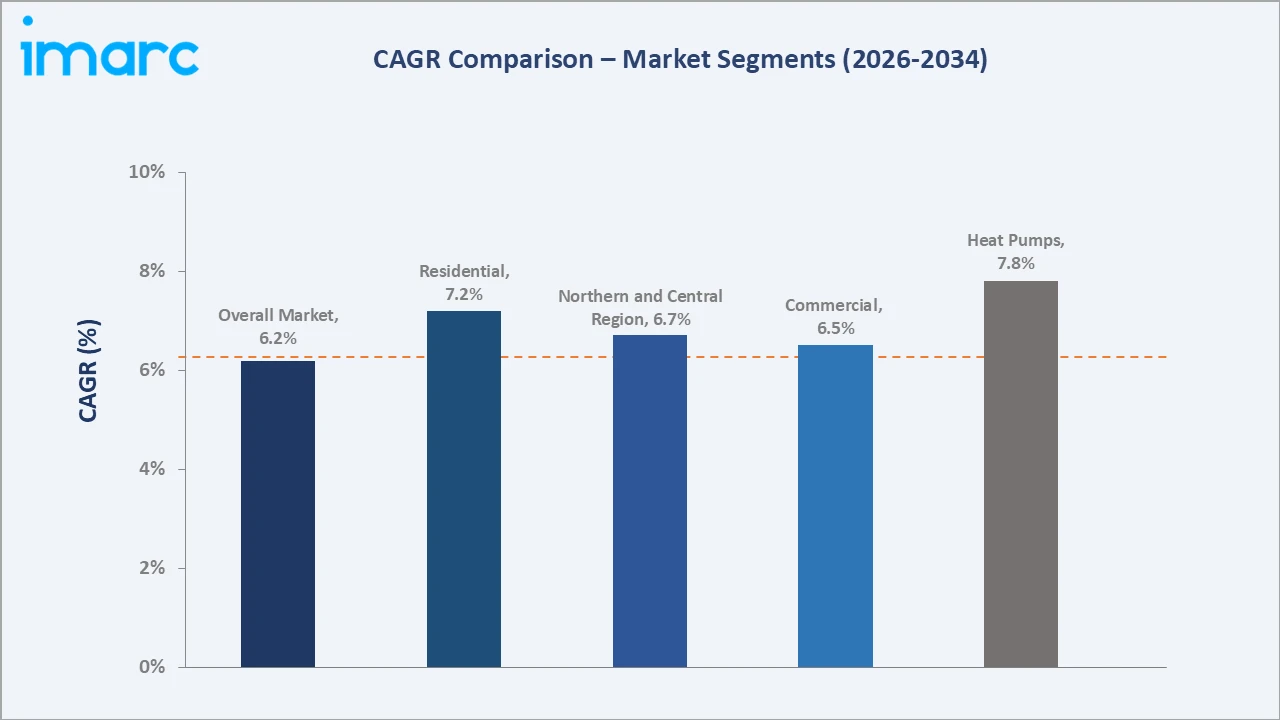
Heat pumps grow at ~7.8% CAGR through Vision 2030's green building code mandating reversible heat pump systems in net-zero building pilots at NEOM developments. Commercial applications grow at ~6.5% CAGR through hospitality HVAC demand and Riyadh Metro commercial zone air-side mechanical system upgrades. Northern and Central region grows at ~6.7% CAGR through Riyadh's 2030 mega-infrastructure investment and HVAC installations. Residential applications grow at ~7.2% CAGR through Estbdal program momentum and Vision 2030's national housing program delivering affordable units.
Executive Summary
The Saudi Arabia energy efficient HVAC systems market occupies a structurally unique position in the overall HVAC industry, as the only major market where the most extreme ambient cooling demand combines with the most ambitious near-term building construction program and the most financially supported energy efficiency transformation. Market value reached USD 771.0 Million in 2025, forecast at USD 1,323.4 Million by 2034.
Efficient air conditioning systems lead at 46.3% (2025) through the combination of Saudi Arabia's extreme climate requiring year-round cooling in virtually all building types and the progressive displacement of older fixed-speed compressor systems by inverter-driven variable-speed equivalents. Commercial application leads at 38.7% (2025) through the extraordinary scale of Vision 2030's commercial real estate pipeline, each requiring comprehensive central plant and air distribution HVAC systems. Northern and Central region leads at 40.5% through Riyadh's position as Saudi Arabia's administrative and commercial capital, with the Kingdom's highest concentration of government buildings, corporate headquarters, and luxury residential developments requiring premium energy-efficient HVAC systems.
Key Market Insights
|
Insight |
Data |
|
Dominant Product |
Efficient Air Conditioning Systems – 46.3% share (2025) |
|
Dominant Application |
Commercial – 38.7% share (2025) |
|
Leading Region |
Northern and Central Region – 40.5% share (2025) |
|
Market Opportunity |
Giga-project HVAC specification partnerships; district cooling expansion; VRF system retrofit market; smart IoT HVAC for NEOM; heat pump commercial adoption |
Key Analytical Observations Supporting the Above Data:
- Efficient Air Conditioning Systems at 46.3% (2025): Saudi Arabia's extreme ambient climate, where cooling is a year-round operational necessity rather than a seasonal comfort amenity, with air conditioning systems requiring continuous operation across most of the Kingdom's inhabited regions, creates the highest per-capita air conditioning demand density that structurally ensures the efficient AC systems segment's market dominance.
- Commercial Application at 38.7%: Saudi Arabia's commercial HVAC demand is structurally elevated by the Vision 2030 tourism transformation requiring construction of new hotel rooms nationally, requiring fully certified energy-efficient HVAC systems to meet the regulatory mandatory hospitality standards.
- Northern and Central Region at 40.5% (2025): The Northern and Central region dominates due to extensive construction activity in Riyadh and surrounding areas, including major giga projects, commercial developments, and smart-city initiatives. High cooling demand and stricter energy-efficiency requirements are further accelerating the adoption of advanced HVAC systems.
Saudi Arabia Energy Efficient HVAC Systems Market Overview
The Saudi Arabia energy efficient HVAC systems market encompasses heating, ventilation, air conditioning, and refrigeration equipment and systems that meet or exceed Saudi Arabia's regulatory standards covering residential air conditioners, commercial chillers, variable refrigerant flow (VRF) systems, heat pumps, and water heating and cooling equipment deployed across residential, commercial, office, industrial, and hospitality building types. Saudi Arabia's unique market characteristics create a market where energy efficiency is not merely a premium product differentiator but a regulatory compliance requirement enforced at the point of sale through product registration and labeling certification. Macroeconomic factors include rapid urbanization, rising construction investment, and expansion of tourism and commercial infrastructure.
Market Dynamics
To evaluate market opportunities, Request Sample
Market Drivers
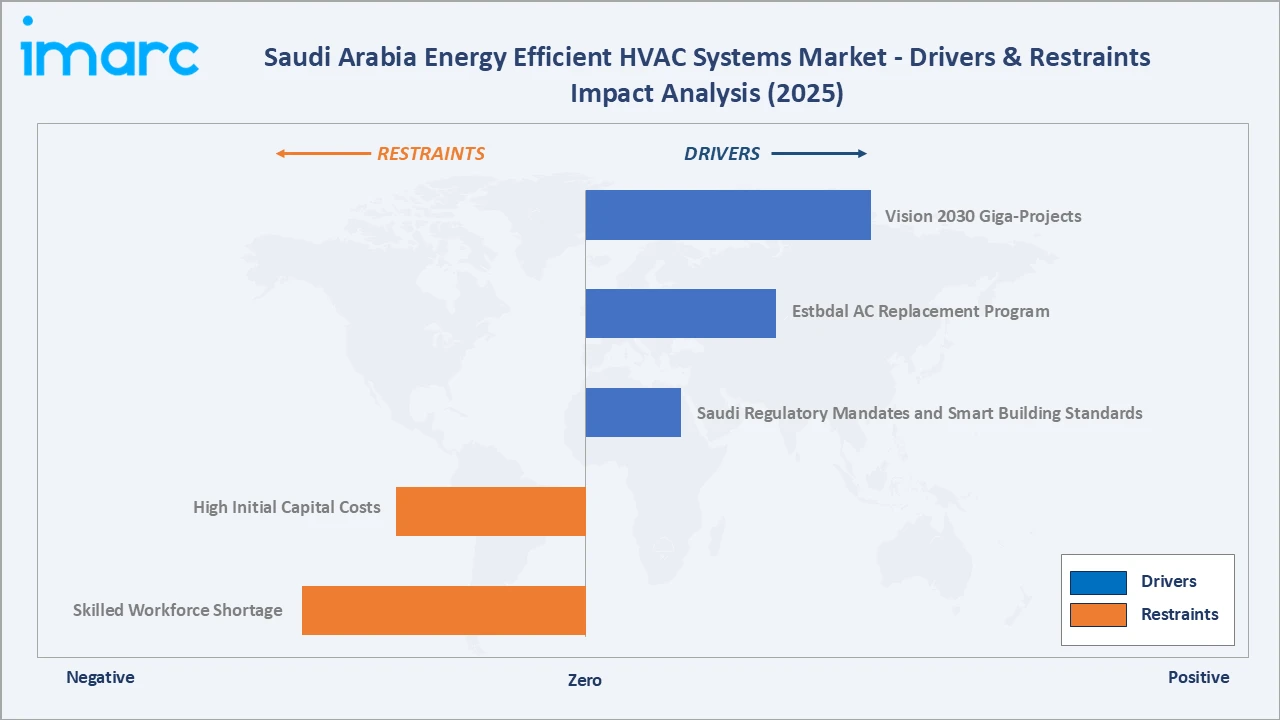
- Vision 2030 Giga-Projects: Saudi Arabia’s Vision 2030 giga-project portfolio represents more than US$1 trillion in announced investments, making it one of the world’s largest construction programs. Key developments include NEOM (US$500 billion), New Murabba (US$50 billion) featuring the 400-meter Mukaab, Red Sea Global with a target of 50 hotels by 2030, and Qiddiya and Diriyah Gate, collectively representing the largest simultaneous building construction program in a single country, all requiring purpose-built energy-efficient HVAC systems designed for Saudi Arabia's extreme climate and international green building certification standards.
- Estbdal AC Replacement Program: In September 2024, Saudi Arabia introduced the nationwide Estbdal program to replace older air conditioners with energy-efficient models, helping reduce household electricity consumption. Led by the Saudi Energy Efficiency Centre in partnership with government agencies, the initiative involves more than 30 retailers, 350 showrooms, and four local manufacturing plants. Eligible homeowners receive a $267 discount, along with free delivery and installation of the replacement unit, which represents the Saudi government's most commercially impactful direct intervention in the residential HVAC replacement market. The program's commercial infrastructure creates a comprehensive consumer-facing replacement campaign that simultaneously addresses the market penetration challenge and the economic barrier.
- Saudi Regulatory Mandates and Smart Building Standards: Saudi Arabia’s regulatory mandates and smart building standards are accelerating the adoption of energy-efficient HVAC systems by enforcing higher energy performance requirements in new and existing buildings. Building energy codes, minimum energy performance standards, and the appliance labeling program encourage the use of high-efficiency air conditioning equipment.
Market Restraints
- High Initial Capital Costs: Energy-efficient HVAC systems, inverter-driven split ACs, VRF multi-split systems, and high-efficiency centrifugal chillers command retail price premiums above conventional fixed-speed equivalents of comparable capacity, creating a financial barrier that limits adoption in segments where upfront capital cost optimization dominates over lifecycle operating cost analysis. Small and medium commercial building owners, residential landlords managing multi-tenant properties where tenants pay their own electricity bills, and government housing authority residential developments operating under tight per-unit construction budgets struggle to justify the capital premium even when lifecycle economic analysis demonstrates net positive returns within 3-5 years.
- Skilled Workforce Shortage: Saudi Arabia's HVAC installation and O&M technical workforce has not scaled commensurately with the extraordinary pace of new building construction activity, creating service bottlenecks that delay project completion, extend commissioning periods, and compromise the operational performance of installed energy-efficient systems that require expert commissioning to achieve their design performance metrics.
Market Opportunities
- NEOM and Red Sea HVAC Specification Partnership: The scale and technical specification requirements of NEOM's THE LINE, Sindalah, and Aqaba developments create HVAC specification and supply opportunities of unprecedented scale for the manufacturer or system integrator capable of meeting NEOM's net-zero building mandate, energy modeling verification requirements, and guaranteed performance specifications that conventional project HVAC procurement models do not require.
- District Cooling Network Expansion: Saudi Arabia's district cooling sector, where a central chilled water production plant serves multiple buildings through an insulated underground pipe network rather than each building operating its own cooling equipment, represents the highest-efficiency cooling distribution model for the dense urban environments that Vision 2030's mega-development creates.
Market Challenges
- Refrigerant Transition and HFC Phase-Down Compliance Complexity: The transition to low-global warming potential (GWP) refrigerants and compliance with HFC phase-down regulations present significant challenges for the Saudi Arabia energy-efficient HVAC systems market. Manufacturers and contractors must redesign equipment, update servicing practices, and invest in technician training to handle new refrigerants safely. The higher costs of compliant HVAC systems and limited availability of compatible components can slow market adoption, particularly among cost-sensitive customers.
- Counterfeit and Product Infiltration Undermining Market Standards: Counterfeit and substandard HVAC products undermine market standards by entering the supply chain without meeting required energy-efficiency, safety, or performance specifications. These products are often sold at lower prices, creating unfair competition for certified manufacturers and reducing consumer confidence. Poor-quality components can also lead to higher electricity consumption, frequent breakdowns, and increased maintenance costs. Limited product traceability and inconsistent enforcement across distribution channels further complicate efforts to maintain quality standards.
Emerging Market Trends
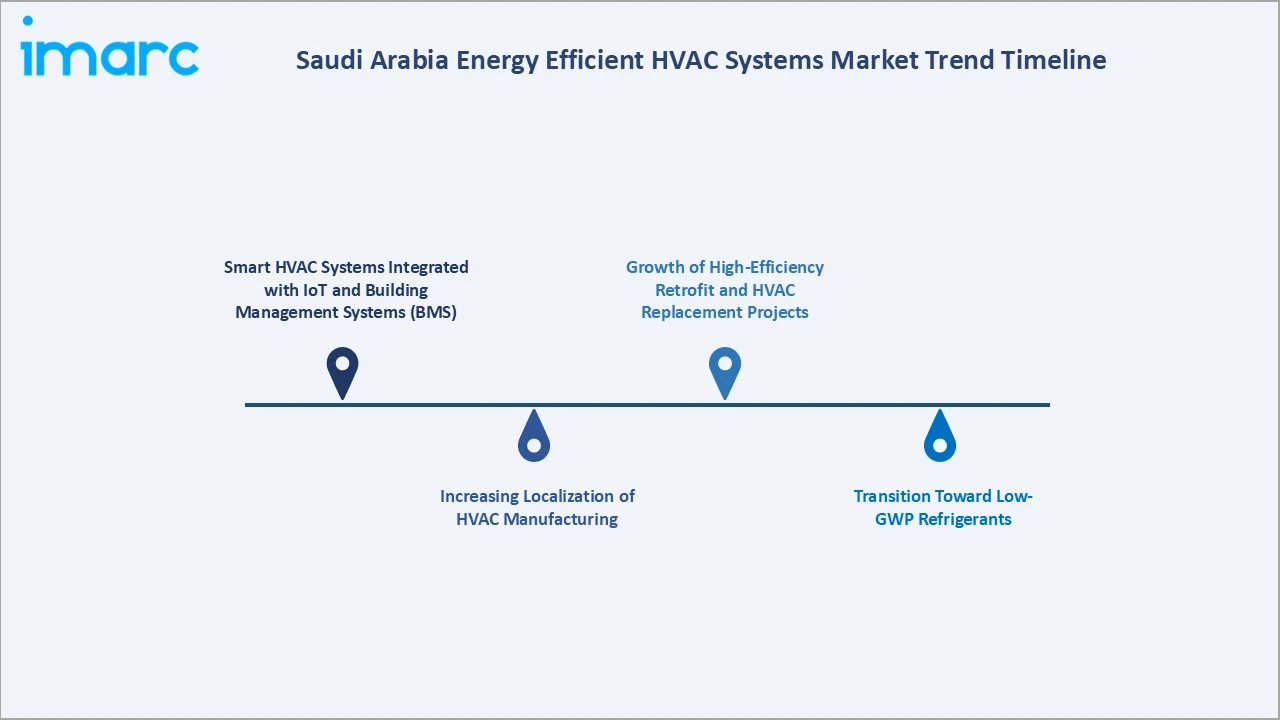
1. Smart HVAC Systems Integrated with IoT and Building Management Systems (BMS)
The adoption of IoT-enabled HVAC systems is accelerating as commercial buildings, hotels, healthcare facilities, and smart cities seek real-time energy optimization. Advanced sensors, cloud-based analytics, and AI-driven controls enable predictive maintenance, remote monitoring, and automated temperature management. These technologies improve occupant comfort while reducing energy consumption and operating costs.
2. Increasing Localization of HVAC Manufacturing
Saudi Arabia is encouraging domestic production of HVAC equipment under Vision 2030 to strengthen local manufacturing capabilities and reduce dependence on imports. Global HVAC companies are expanding local assembly, production facilities, and supplier partnerships to meet growing demand. In November 2025, Daikin commenced construction of a new manufacturing facility in Jeddah. The facility manufactures chillers and hydronic heat pumps locally to address advanced cooling requirements. It is expected to serve customers across Saudi Arabia and the wider region, reinforcing Daikin’s commitment to local manufacturing, supply-chain development, and regional market expansion. Localization also shortens supply chains, improves product availability, and supports national industrial development goals.
3. Transition Toward Low-GWP Refrigerants
The market is witnessing a gradual shift toward environmentally friendly refrigerants with lower global warming potential (GWP) as sustainability regulations become more stringent. HVAC manufacturers are introducing next-generation systems compatible with low-GWP refrigerants while improving overall system efficiency. This transition supports Saudi Arabia's environmental goals and international climate commitments.
4. Growth of High-Efficiency Retrofit and HVAC Replacement Projects
Building owners are increasingly replacing aging HVAC equipment with high-efficiency systems to reduce electricity consumption and maintenance costs. Government initiatives, energy-efficiency incentives, and rising awareness of lifecycle cost savings are encouraging retrofit projects across residential, commercial, and public-sector buildings. This trend is creating strong aftermarket opportunities for HVAC manufacturers and service providers.
Industry Value Chain Analysis
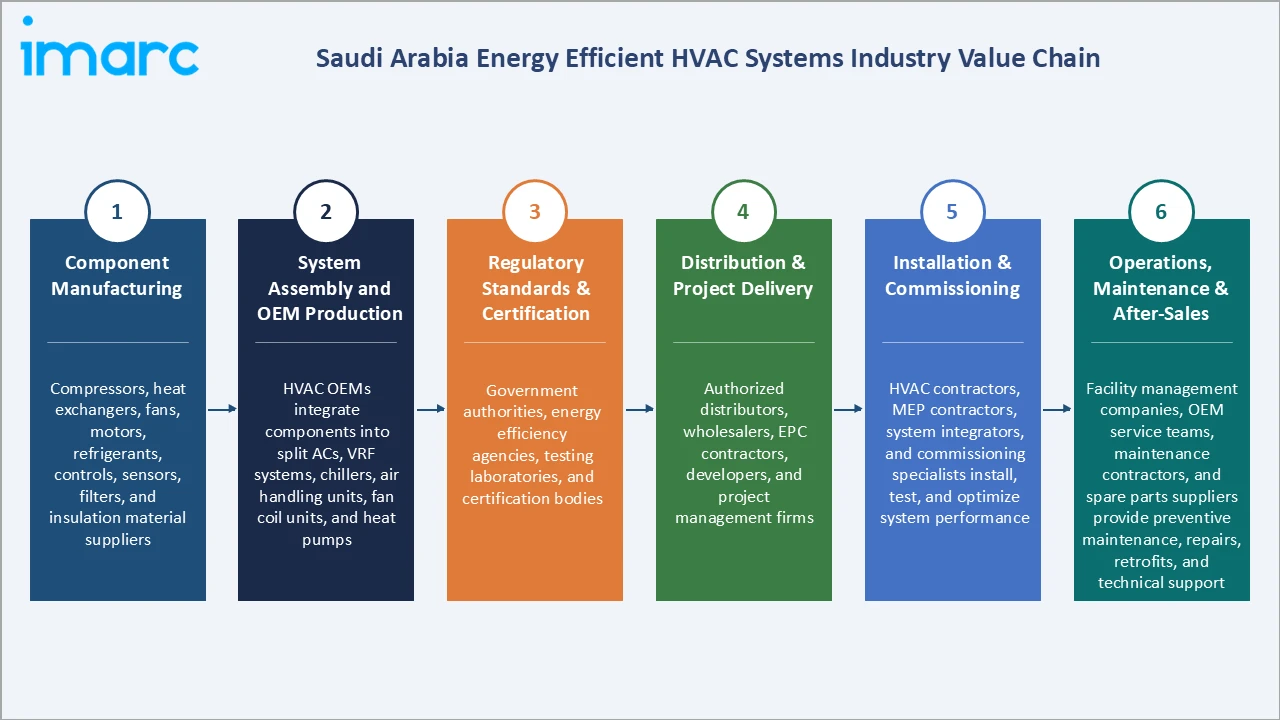
The Saudi Arabia energy efficient HVAC systems value chain integrates component manufacturing, system assembly and OEM production, regulatory standards & certification, distribution & project delivery, installation & commissioning, and operations, maintenance & after-sales.
|
Stage |
Key Participants |
|
Component Manufacturing |
Compressors, heat exchangers, fans, motors, refrigerants, controls, sensors, filters, and insulation material suppliers. |
|
System Assembly and OEM Production |
HVAC OEMs integrate components into split ACs, VRF systems, chillers, air handling units, fan coil units, and heat pumps. |
|
Regulatory Standards & Certification |
Government authorities, energy efficiency agencies, testing laboratories, and certification bodies. |
|
Distribution & Project Delivery |
Authorized distributors, wholesalers, EPC contractors, developers, and project management firms. |
|
Installation & Commissioning |
HVAC contractors, MEP contractors, system integrators, and commissioning specialists install, test, and optimize system performance. |
|
Operations, Maintenance & After-Sales |
Facility management companies, OEM service teams, maintenance contractors, and spare parts suppliers provide preventive maintenance, repairs, retrofits, and technical support. |
System assembly and OEM production are the most value-added stage in the Saudi Arabia energy-efficient HVAC systems value chain. At this stage, manufacturers integrate advanced technologies such as inverter compressors, smart controls, IoT connectivity, and high-efficiency heat exchangers into finished HVAC systems. Product innovation, energy performance optimization, quality assurance, and customization for local climate conditions significantly enhance product value and create strong competitive differentiation.
Technology Landscape in the Saudi Arabia EE-HVAC Systems Industry
Inverter and Variable-Speed Compressor Technology
Inverter-driven variable-speed compressor technology, enabling continuously variable refrigerant flow rate matching to instantaneous building load rather than on/off compressor cycling, is the foundational efficiency technology that differentiates energy-efficient AC systems from legacy fixed-speed equipment. In Saudi Arabia's extreme cooling climate, where peak building loads during 48°C+ ambient conditions can be 2-3x the average load during mild weather, inverter technology's ability to ramp compressor capacity continuously between 15-120% of nominal avoids the energy waste, temperature hunting, and comfort loss that fixed-speed systems experience during part-load operation that occupies most of the annual operating hours.
High-Ambient Ventilation Systems
In October 2025, Systemair inaugurated a wholly owned, advanced manufacturing facility in Riyadh, strengthening its regional presence and supporting the expansion of Saudi Arabia’s HVAC manufacturing capabilities. The site covers 13,000 square metres, including 9,000 square metres of production space. It manufactures a range of “Saudi Made” ventilation products designed for high-ambient operating conditions, serving customers across Saudi Arabia and the wider Gulf region. These systems use durable motors, heat-resistant components, and optimized airflow designs to maintain reliable performance. They are suitable for commercial, industrial, and infrastructure applications.
AI-Driven Predictive Analytics and Digital Twin HVAC Optimization
The most advanced HVAC technology being piloted at NEOM and flagship developments uses digital twin modeling, creating a real-time virtual replica of the building's HVAC system that continuously receives sensor data, runs simulation models to predict system performance under various operating scenarios, and generates AI-optimized control signals that minimize energy consumption while maintaining comfort requirements.
Market Segmentation Analysis
The report covers the following segments:
|
Segment Category |
Leading Segment |
Market Share |
Year |
|
Product |
Efficient Air Conditioning Systems |
46.3% |
2025 |
|
Application |
Commercial |
38.7% |
2025 |
|
Region |
Northern and Central Region |
40.5% |
2025 |

By Product
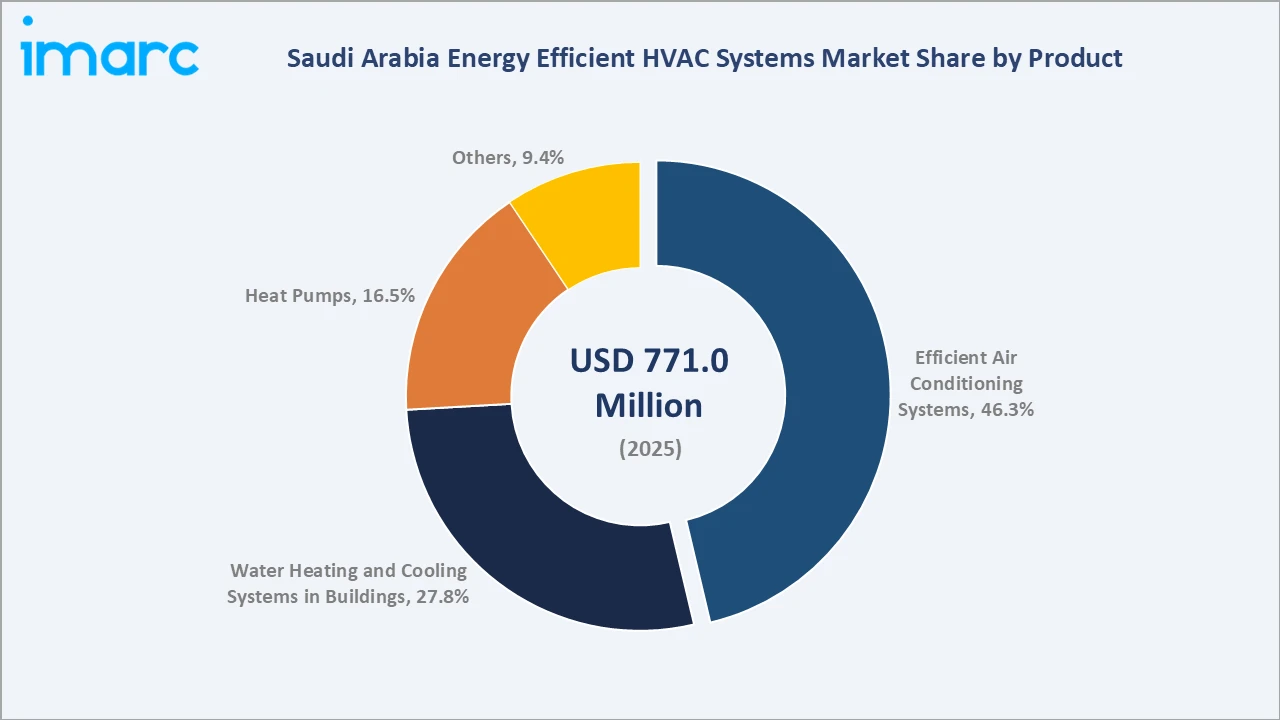
Efficient air conditioning systems lead at 46.3% (2025) through Saudi Arabia's universal requirement for cooling systems in every occupied space and the Estbdal residential replacement program driving concentrated product demand for certified split AC systems. Water heating and cooling systems in buildings at 27.8% serve large commercial building central plant requirements.
To access detailed market analysis, Request Sample
Heat pumps at 16.5% are growing fastest at ~7.8% CAGR through NEOM and Red Sea net-zero building mandates requiring reversible heating-cooling systems and smart AC specifications for commercial buildings. Others at 9.4% encompass energy recovery ventilators (ERVs), demand-controlled ventilation (DCV) systems, and advanced filtration units increasingly specified in Saudi Arabia's indoor air quality-sensitive healthcare and hospitality developments.
By Application
Commercial application leads at 38.7% (2025) through hospitality, retail, healthcare, and entertainment venue HVAC demand driven by Vision 2030's tourism transformation. Residential at 34.2% growing at ~7.2% CAGR through Estbdal AC replacement program and national housing program delivery momentum.
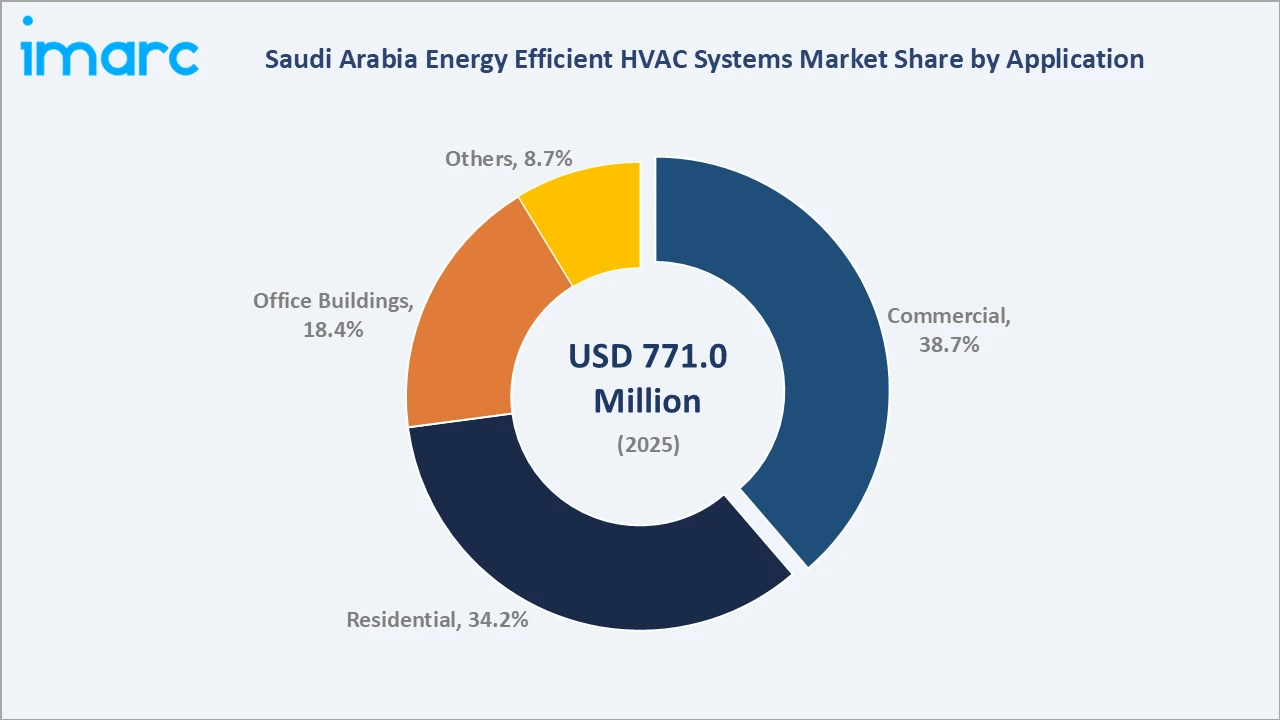
Office buildings at 18.4% serve corporate headquarters, government ministry buildings, and coworking facilities requiring precision climate control with smart occupancy-based HVAC scheduling. Others at 8.7% encompass industrial process cooling, data center precision air conditioning, and educational institution HVAC for NEOM's university campuses.
Regional Market Insights
|
Region |
Share (2025) |
Key Saudi Arabia EE-HVAC Market Drivers & Characteristics |
|
Northern and Central Region |
40.5% |
Largest market driven by Riyadh's commercial developments, government infrastructure projects, smart city initiatives, and strong demand for energy-efficient cooling solutions. |
|
Western Region |
27.3% |
Growth supported by expanding tourism, hospitality, mixed-use developments, and major projects in Jeddah, Makkah, and Madinah requiring high-performance HVAC systems. |
|
Eastern Region |
20.4% |
Demand fueled by industrial facilities, oil & gas operations, petrochemical complexes, and commercial developments emphasizing reliable and energy-efficient climate control. |
|
Southern Region |
11.8% |
Market expansion supported by residential construction, public infrastructure development, and increasing adoption of energy-efficient HVAC systems in urban centers. |
Northern and Central regions' 40.5% market dominance is driven by Riyadh's rapid urbanization, smart city initiatives, and large-scale commercial and residential developments. Western region's 27.3% is supported by expanding tourism, hospitality projects, and religious infrastructure in Jeddah, Makkah, and Madinah.
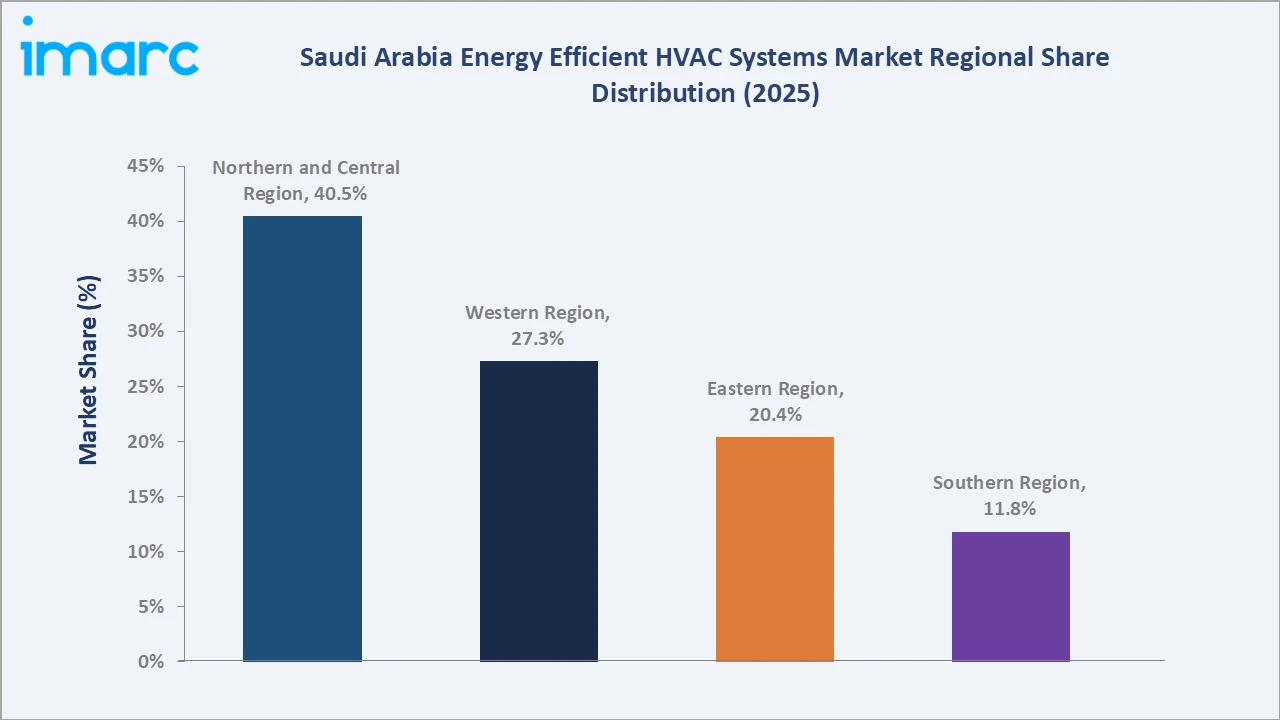
Eastern region's 20.4% benefits from sustained investments in the oil & gas, petrochemical, and industrial sectors, where energy-efficient cooling solutions are essential for operational reliability. Southern region, at 11.8%, is experiencing gradual growth due to increasing residential construction, public infrastructure development, and urban expansion.
Competitive Landscape
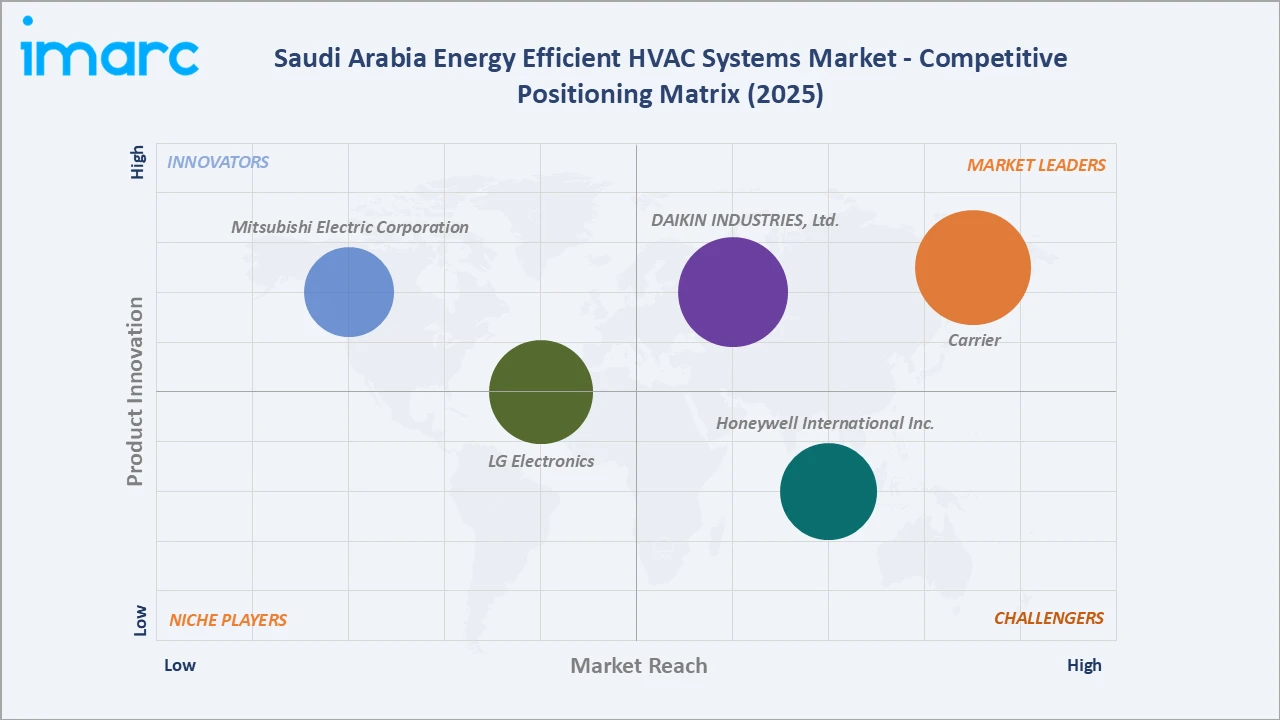
The Saudi Arabia energy-efficient HVAC systems market is moderately consolidated, with global manufacturers competing alongside regional and local players. Companies are focusing on expanding local manufacturing, developing high-efficiency and smart HVAC solutions, and strengthening their distribution and service networks to enhance market presence. Strategic partnerships, product innovation, and investments aligned with Vision 2030 are intensifying competition. Compliance with energy-efficiency regulations and the growing demand for sustainable cooling technologies continue to be key competitive differentiators.
|
Company |
Key Products |
Market Position |
Core Strength |
|
Carrier |
AquaEdge Water-Cooled Centrifugal Chiller, AquaEdge High-Efficiency Variable-Speed Screw Chiller, AquaSnap Air-Cooled Scroll Chiller |
Market Leader |
Carrier leads through sustainable product development and large-scale manufacturing. Carrier builds advanced R&D facilities to supply giga-projects like NEOM. |
|
DAIKIN INDUSTRIES, Ltd. |
Air Cooled Scroll Compressor Chiller, Air Cooled Screw Compressor Chiller, Air Cooled High Efficiency Modular Chiller, Small Inverter Chiller and Heat Pump |
Market Leader |
Daikin Industries, Ltd. plays a foundational role in Saudi Arabia's energy-efficient HVAC market, aligning its technologies with Saudi Vision 2030. |
|
LG Electronics |
VRF System, LG THERMA V |
Established Player |
LG Electronics is playing a critical role in Saudi Arabia's transition to energy-efficient HVAC systems by providing AI-driven commercial solutions, collaborating on extreme-heat academic research, and supplying large-scale projects, |
|
Mitsubishi Electric Corporation |
Air Conditioning Systems for Buildings, Ventilation Systems for Tunnels, Air Conditioning Systems for Train Stations |
Innovator |
Mitsubishi Electric Corporation plays a critical role in Saudi Arabia's energy-efficient HVAC sector by supplying advanced, high-performance cooling systems tailored for the Kingdom's extreme climate. |
|
Honeywell International Inc. |
Honeywell Building Manager |
Challenger |
Honeywell International Inc. plays a crucial role in Saudi Arabia's energy-efficient HVAC and smart building sector by providing advanced automation platforms, AI-driven software, and eco-friendly refrigerants. |
Competitive dynamics are increasingly shaped by the IoT HVAC and the chiller lab establishments, enabling local certification competition that may prompt competitive local manufacturing investments.
Key Company Profiles
Carrier
Carrier is one of the leading providers of heating, ventilation, and air conditioning (HVAC) solutions in Saudi Arabia, serving the residential, commercial, industrial, and infrastructure sectors. The company offers a comprehensive portfolio of energy-efficient chillers, VRF systems, air handling units (AHUs), fan coil units (FCUs), rooftop units, and smart building solutions designed for the Kingdom's high-temperature climate. Carrier has established a strong market presence through an extensive distribution network, local partnerships, and after-sales service capabilities.
- Key Products: AquaEdge Water-Cooled Centrifugal Chiller, AquaEdge High-Efficiency Variable-Speed Screw Chiller, AquaSnap Air-Cooled Scroll Chiller.
- Strategic Focus: Focused on expanding its portfolio of high-efficiency HVAC systems, including advanced chillers, VRF solutions, and intelligent building management technologies, to meet Saudi Arabia's growing demand for sustainable cooling. The company emphasizes energy-efficient product innovation, digital connectivity, and low-carbon solutions that support Vision 2030 and national energy-efficiency objectives.
DAIKIN INDUSTRIES, Ltd.
DAIKIN INDUSTRIES, Ltd. is a leading manufacturer of heating, ventilation, air conditioning, and refrigeration (HVAC-R) solutions with a strong and expanding presence in Saudi Arabia. The company offers a broad portfolio of energy-efficient products, including VRF systems, chillers, heat pumps, split air conditioners, and intelligent HVAC control solutions for residential, commercial, and industrial applications. Daikin is strengthening its position in the Kingdom through local manufacturing investments, including its new production facility in Jeddah, which will manufacture chillers and hydronic heat pumps for regional markets.
- Key Products: Air Cooled Scroll Compressor Chiller, Air Cooled Screw Compressor Chiller, Air Cooled High Efficiency Modular Chiller, Small Inverter Chiller and Heat Pump.
- Key Developments: In November 2025, Daikin commenced construction of a new manufacturing facility in Jeddah, focusing on the localized production of chillers and hydronic heat pumps designed to meet advanced cooling requirements. It will serve customers across Saudi Arabia and the wider region, reinforcing Daikin’s commitment to local manufacturing, industrial development, and regional market expansion.
- Strategic Focus: Focused on strengthening its presence in Saudi Arabia through localized manufacturing, energy-efficient product innovation, and expansion of its advanced HVAC portfolio. The company is investing in local production of chillers and hydronic heat pumps to improve supply chain resilience and support Vision 2030's industrial localization goals. It also emphasizes smart HVAC technologies, inverter-based systems, and environmentally friendly refrigerants to enhance energy efficiency and sustainability.
Market Concentration Analysis
The Saudi Arabia energy-efficient HVAC systems market is moderately consolidated, with global manufacturers holding a significant share through strong product portfolios and established distribution networks. Competition is driven by technological innovation, energy-efficient product development, and participation in large-scale infrastructure and giga projects under Vision 2030. At the same time, regional distributors and local manufacturers compete by offering customized solutions, competitive pricing, and robust after-sales services. Strategic partnerships, localized manufacturing, and compliance with Saudi energy-efficiency regulations remain key differentiators shaping the competitive landscape.
Investment & Growth Opportunities
Highest Growth Segments
Heat pumps (~7.8% CAGR), residential application (~7.2% CAGR), commercial application (~6.5% CAGR), Northern and Central region (~6.7% CAGR), and IoT-enabled smart HVAC sub-segment represent Saudi Arabia's highest-growth EE-HVAC investment vectors through 2034.
Investment Themes
- NEOM and giga-project HVAC specification partnership: The rapid development of NEOM and other giga projects is creating significant opportunities for HVAC manufacturers to secure long-term specification partnerships for high-efficiency cooling systems. Companies investing in smart HVAC technologies, district cooling integration, and low-carbon solutions are well-positioned to benefit from these large-scale developments.
- Residential AC retrofit market: Saudi Arabia's growing focus on energy efficiency is accelerating the replacement of aging air conditioning units with high-efficiency inverter and smart AC systems. Government initiatives, stricter energy performance standards, and rising consumer awareness are driving investment opportunities in residential retrofit and replacement projects.
Future Market Outlook (2026-2034)
The Saudi Arabia energy efficient HVAC systems market is projected to grow from USD 771.0 Million in 2025 to USD 1,323.4 Million by 2034, delivering a 6.19% CAGR that reflects the structural alignment between Saudi Arabia's extraordinarily ambitious building construction program, its aggressively escalating energy efficiency regulatory framework, and the unprecedented commercial infrastructure investment being made by global HVAC leaders to serve the Kingdom's unique market requirements. The anchor value of USD 1,040.9 Million in 2030 is driven by three structural forces that compound through the forecast period.
First, Vision 2030's giga-project construction pipeline collectively represents the largest simultaneous commercial HVAC installation program in a single country, with each development mandated to achieve net-zero carbon building energy performance that requires the most advanced energy-efficient HVAC systems commercially available. Second, the Estbdal residential AC replacement program will sustain concentrated residential HVAC replacement demand at subsidized pricing through the 2026-2030 period that will contribute substantially to market revenue above the organic replacement cycle baseline. Third, the chiller laboratories create a catalyst for Saudi Arabia's emergence as a regional HVAC manufacturing hub that could fundamentally change the Saudi HVAC market's supply structure by 2034.
Research Methodology
Primary Research
Primary research comprised in-depth interviews with technical representatives, MEP engineering consultants working on NEOM and Red Sea projects, HVAC manufacturers' Saudi Arabia country managers and technical sales directors, Estbdal program participating retailer purchasing managers, energy performance contract managers, and independent Saudi building services consulting engineers. Discussions validated market size estimates, segment dynamics, competitive positioning, regional demand patterns, and key regulatory development timelines.
Secondary Research
Secondary research encompassed Saudi Vision 2030 giga-project construction pipeline reporting, annual district cooling capacity expansion reports, company annual reports, and leading trade publication coverage.
Forecasting Models
Forecasting models were developed using historical Saudi Arabia energy efficient HVAC market data, Vision 2030 giga-project construction area and HVAC density modeling, Estbdal residential AC replacement program volume scenario analysis, district cooling capacity expansion investment pipeline analysis, regional market CAGR differential estimation, local manufacturing development impact scenario, and IoT-mandate-driven premium system adoption rate projections. Both top-down and bottom-up approaches were validated through primary research.
Saudi Arabia Energy Efficient HVAC Systems Market Report Coverage:
| Report Features | Details |
|---|---|
| Base Year of the Analysis | 2025 |
| Historical Period | 2020-2025 |
| Forecast Period | 2026-2034 |
| Units | Million USD |
| Scope of the Report |
Exploration of Historical Trends and Market Outlook, Industry Catalysts and Challenges, Segment-Wise Historical and Future Market Assessment:
|
| Products Covered | Heat Pumps, Water Heating and Cooling Systems in Buildings, Efficient Air Conditioning Systems, Others |
| Applications Covered | Residential, Commercial, Office Buildings, Others |
| Regions Covered | Northern and Central Region, Western Region, Eastern Region, Southern Region |
| Companies Covered | Carrier, DAIKIN INDUSTRIES, Ltd., LG Electronics, Mitsubishi Electric Corporation, Honeywell International Inc., etc. |
| Customization Scope | 10% Free Customization |
| Post-Sale Analyst Support | 10-12 Weeks |
| Delivery Format | PDF and Excel through Email (We can also provide the editable version of the report in PPT/Word format on special request) |
Key Benefits for Stakeholders:
- IMARC’s industry report offers a comprehensive quantitative analysis of various market segments, historical and current market trends, market forecasts, and dynamics of the Saudi Arabia energy efficient HVAC systems market from 2020-2034.
- The research report provides the latest information on the market drivers, challenges, and opportunities in the Saudi Arabia energy efficient HVAC systems market.
- Porter's five forces analysis assist stakeholders in assessing the impact of new entrants, competitive rivalry, supplier power, buyer power, and the threat of substitution. It helps stakeholders to analyze the level of competition within the Saudi Arabia energy efficient HVAC systems industry and its attractiveness.
- Competitive landscape allows stakeholders to understand their competitive environment and provides an insight into the current positions of key players in the market.
Frequently Asked Questions About the Saudi Arabia Energy Efficient HVAC Systems Market Report
The market reached USD 771.0 Million in 2025, driven by Estbdal AC replacement program launch and Vision 2030 giga-project HVAC infrastructure demand.
The market grows at 6.19% CAGR during 2026-2034, reaching USD 1,323.4 Million by 2034. This growth is supported by energy-efficiency regulations, large-scale construction projects, and rising demand for smart and sustainable cooling solutions.
Efficient air conditioning systems lead at 46.3% (2025) through universal cooling requirements in Saudi Arabia's extreme climate, inverter technology transition, and Estbdal residential replacement program.
Commercial application leads at 38.7% (2025) through Vision 2030 hospitality construction, entertainment venue HVAC, and retail mall HVAC district cooling connections.
Northern and Central region leads at 40.5% (2025) through Riyadh's concentration of government buildings, corporate headquarters, giga-project development, and highest Estbdal program demand density.
Leading companies include Carrier, DAIKIN INDUSTRIES, Ltd., LG Electronics, Mitsubishi Electric Corporation, and Honeywell International Inc., among others.
Top opportunities include NEOM and giga-project HVAC specification partnership, Estbdal program residential AC replacement volume capture through certified product range and domestic factory qualification, IoT smart HVAC platform deployment, district cooling central plant HVAC for network expansion in Riyadh, Jeddah, and Makkah, and local manufacturing investment in Saudi Arabia.
Need more help?
- Speak to our experienced analysts for insights on the current market scenarios.
- Include additional segments and countries to customize the report as per your requirement.
- Gain an unparalleled competitive advantage in your domain by understanding how to utilize the report and positively impacting your operations and revenue.
- For further assistance, please connect with our analysts.
 Request Customization
 Speak to an Analyst
 Request Brochure
 Inquire Before Buying
Benefits of Customization
- Personalize this research
- Triangulate with your data
- Get data as per your format and definition
- Gain a deeper dive into a specific application, geography, customer, or competitor
- Any level of personalization
Get in Touch With Us
UNITED STATES
Phone: +1-201-971-6302
INDIA
Phone: +91-120-433-0800
UNITED KINGDOM
Phone: +44-753-714-6104
Email: [email protected]
Client Testimonials




.webp)




.webp)













Related Reports

Choose your plan
*Please note that the prices mentioned below are starting prices for each bundle type. Kindly contact our team for further details.*
Single User License
- 1 User License, Access on 2 Devices
- PDF Report + Excel Dataset (Password Protected)
- Lifetime Access
- No Printing Rights
- 10% Free Report Customization
- 10–12 Weeks of Analyst Support
Five User License
- Access for 5 Users, 2 Devices per User
- PDF Report + Excel Dataset (Password Protected)
- Lifetime Access
- Dedicated Account Manager
- 12–14 Weeks of Analyst Support
- No Printing Rights
- 15% Free Report Customization
- 25% Discount on Your Next Purchase
Corporate User License
- Unlimited User Access (Within Your Organization)
- PDF Report + Excel Dataset
- Lifetime Access
- Dedicated Account Manager
- 14–20 Weeks of Analyst Support
- No Printing Rights
- 20% Free Report Customization
- 30% Discount on Your Next Purchase
Essential Insights
What's included:
3 reports
- Lifetime Access
- PDF Reports
- Excel Datasets
- 2 Weeks of Free Analyst Support
- 2 User Licenses
- Access on 2 Devices
- Printing Rights
- Complimentary PowerPoint (PPT) Version
- Complimentary License Upgrade
Professional Access
What's included:
5 reports
- Lifetime Access
- PDF Reports
- Excel Datasets
- 8 Weeks of Free Analyst Support
- 2 User Licenses
- Access on 2 Devices
- Printing Rights
- Complimentary PowerPoint (PPT) Version
- Complimentary License Upgrade
Business Advantage
What's included:
8 reports
- Lifetime Access
- PDF Reports
- Excel Datasets
- 14 Weeks of Free Analyst Support
- 2 User Licenses
- Access on 2 Devices
- Printing Rights
- Complimentary PowerPoint (PPT) Version
- Complimentary License Upgrade
Enterprise Intelligence
What's included:
10 reports
- Lifetime Access
- PDF Reports
- Excel Datasets
- 20 Weeks of Free Analyst Support
- 2 User Licenses
- Access on 2 Devices
- Printing Rights
- Complimentary PowerPoint (PPT) Version
- Complimentary License Upgrade