
Saudi Arabia Generic Drug Market Report by Therapy Area (Central Nervous System, Cardiovascular, Dermatology, Genitourinary/Hormonal, Respiratory, Rheumatology, Diabetes, Oncology, and Others), Drug Delivery (Oral, Injectables, Dermal/Topical, Inhalers), Distribution Channel (Retail Pharmacies, Hospital Pharmacies), and Region 2026-2034
Market Overview:
Saudi Arabia generic drug market size increased from USD 4.1 Billion in 2025 to USD 4.4 Billion in 2026. Looking forward, IMARC Group expects the market to reach USD 8.1 Billion by 2034, exhibiting a growth rate (CAGR) of 7.88% during 2026-2034. The favorable government initiatives, rising healthcare costs, patent expirations, increasing prevalence of chronic diseases, growth of the pharmaceutical industry, rapid healthcare infrastructure development, and regulatory framework of SFDA in ensuring the safety, quality and efficacy of generic drugs represent some of the key factors driving the market.
|
Report Attribute
|
Key Statistics
|
|---|---|
|
Base Year
|
2025 |
|
Forecast Years
|
2026-2034
|
|
Historical Years
|
2020-2025
|
| Base Year Market Size (2025) | USD 4.1 Billion |
| Market Size (2026) | USD 4.4 Billion |
| Forecast Market Size (2034) | USD 8.1 Billion |
| CAGR (2026-2034) | 7.88% |
Access the full market insights report Request Sample
Generic drugs are pharmaceutical products that are essentially identical to their brand-name counterparts in terms of active ingredients, dosage, strength, and intended use. These medications are typically developed after the patent protection of the original brand-name drug expires. One key distinction between generic and brand-name drugs is the cost. Generic drugs are often more affordable, making them an attractive option for patients and healthcare systems looking to reduce healthcare expenditures.
Saudi Arabia Generic Drug Market Trends:
Growing Healthcare Spending
Saudi Arabia is constantly growing its spending on healthcare, which is significantly contributing to the generic drug sector growth. The government is making massive investments in healthcare facilities so that people can enjoy affordable and accessible healthcare. This investment has caused a boom in the number of healthcare centers and the increasing sizes of already established ones, which are increasingly looking for affordable medication. The Saudi Health Ministry is 2025 marked notable healthcare accomplishments, such as decreasing the average hospital duration and conserving 13,000 beds. Moreover, mobile apps as digital health solutions are now commonplace in the country. They are effective instruments that enable patients to track their health information, handle chronic illnesses, book appointments, and interact with healthcare providers. With increasing global healthcare expenses, Saudi Arabia is being keen to lower the burden on its healthcare system, especially in high-expense branded medication. This has led to an increasing demand for generic medicines, which are as effective as branded medicines but at significantly lower prices. Through generic drug uptake prioritization, the government is essentially curbing growing demand for healthcare treatments while keeping aggregate healthcare expenditure in check.
Government Initiatives and Regulations
The government of Saudi Arabia is adopting a series of initiatives and regulatory reforms that are actively encouraging the utilization of generic drugs. One of the most important variables is the regulatory environment of the country, set up to ease the approval and availability of the generics. Saudi Arabia will host the 8th Global Health Exhibition from October 27 to 30, 2025, at the Riyadh Exhibition and Convention Center – Malham, with the motivating theme: “Invest in Health.” The event highlights the Kingdom’s dedication to enhancing its healthcare transformation and establishing itself as a global center for health innovation and investment, in accordance with Vision 2030. This is establishing a culture where generics are becoming more readily available, and pharmaceutical firms are incentivized to produce and distribute them. The government has also put price controls on branded drugs, such that generics become even more appealing because of their cheaper prices. Additionally, there are efforts towards enhancing the local production of generic medicines to curb reliance on imports, and spur the local economy. The government has also been busy supporting policies that make medicines affordable, such as offering subsidies to key generics.
Increasing Occurrence of Chronic Diseases
The growing rate of chronic diseases in Saudi Arabia is creating substantial demand for long-term medication, and this is having a direct positive impact on the development of the generic drug market. Diseases such as diabetes, hypertension, cardiovascular ailments, and obesity have become widespread in the nation, primarily because of lifestyle modifications, eating habits, and a growing population that is aging. These conditions usually need lifelong management and treatment, so continual access to cost-effective medication is needed. Generic drugs, which are equivalent in their therapeutic value to branded drugs, are becoming increasingly popular since they offer the same quality without sacrificing efficacy or quality at a lower price. With the strain of chronic diseases increasing, healthcare systems are utilizing generics as a means of providing a cheaper alternative to allow patients to access the medicines they require over a longer period. Various firms are also collaborating hospitals to improve their services in curing chronic ailments. For instance, in 2025, Bayer, a worldwide frontrunner in life sciences focusing on healthcare and nutrition, announced its partnership with Al-Dawaa Medical Services, a major retail pharmacy chain in Saudi Arabia. Through the Memorandum of Understanding (MoU), Al-Dawaa Medical Services aims to be instrumental in the "Protect Your Heart" national awareness initiative, backed by Bayer and Al-Dawaa Medical Services, with the support of the Ministry of Health. This initiative is being conducted in partnership with Athar Volunteering Society, which will handle all logistical arrangements, including securing necessary permissions and volunteering efforts.
Saudi Arabia Generic Drug Market Growth Drivers:
Cost-Efficiency of Generic Drugs
The cost-efficiency of generic drugs is among the most powerful drivers of their growth in the Saudi Arabian market. With increasing healthcare expenses all over the world, both healthcare providers and patients are looking for ways to lower their costs without compromising on the quality of care. Generic medicines are presenting an excellent solution in this context because they are chemically equivalent to branded medicines but at a negligible cost. This dramatic price reduction is attractive not just for patients who might have difficulty paying high drug costs but also for healthcare providers and insurance companies looking to cut overall costs. Generics' affordability is especially important in Saudi Arabia, where government healthcare expenditures are on the rise and there is a strong desire to lower healthcare costs. By replacing branded medicines with generics, physicians can contain treatment expenses but provide patients with effective medicines. Insurance organizations are also opting to cover generic medicines in greater numbers, which is another factor that enhances their use among patients. The affordability of generics is fueling their usage in every therapeutic category, such as in managing chronic diseases, where extended usage of medicine is the norm. This cost benefit is to continue leading the market, as healthcare systems and consumers both value financial sustainability.
Growing Local Manufacturing Capacity
Saudi Arabia's emphasis on growing local manufacturing capacity for generic medicine is a significant driver of the growth of the market. The government is aggressively promoting local pharmaceutical production as a means of decreasing dependency on imported medicines, which are potentially expensive and vulnerable to supply chain risks. Through the promotion of local production, Saudi Arabia is enhancing the availability and affordability of generic medicines, while at the same time fostering a more independent pharmaceutical industry. The nation has been investing in modern pharmaceutical production plants, which are able to produce diverse generic medicines. It is through this growth that the increasing needs for inexpensive drugs are being catered to, especially with the population growing and chronic diseases becoming more prevalent. Domestic production also has the added advantage of quicker access to generics since the process of approving domestic products tends to be more simplified.
Rising Consumer Awareness
Rising consumer awareness about generic drugs' advantages is an important factor fueling the market growth in Saudi Arabia. In the last couple of years, healthcare professionals, pharmaceutical firms, and government agencies have made concerted efforts in informing people of the safety, efficacy, and affordability of generics. Patients are becoming more aware that generic drugs are not only pharmacologically equivalent in active ingredients and therapeutic action but also go through strict testing to guarantee safety and quality. Consequently, consumer behavior has seen a recognisable change, with most patients becoming less resistant to the use of generics over the branded version of the drug. This greater awareness is particularly crucial in a nation such as Saudi Arabia, where healthcare costs can be high. The popularity of generics is also being fueled by medical professionals who are urging patients to opt for these low-cost substitutes, particularly for conditions that have to be treated continuously over an extended period of time.
Saudi Arabia Generic Drug Market Segmentation:
IMARC Group provides an analysis of the key trends in each segment of the market, along with forecasts at the country level for 2026-2034. Our report has categorized the market based on therapy area, drug delivery, and distribution channel.
Therapy Area Insights:
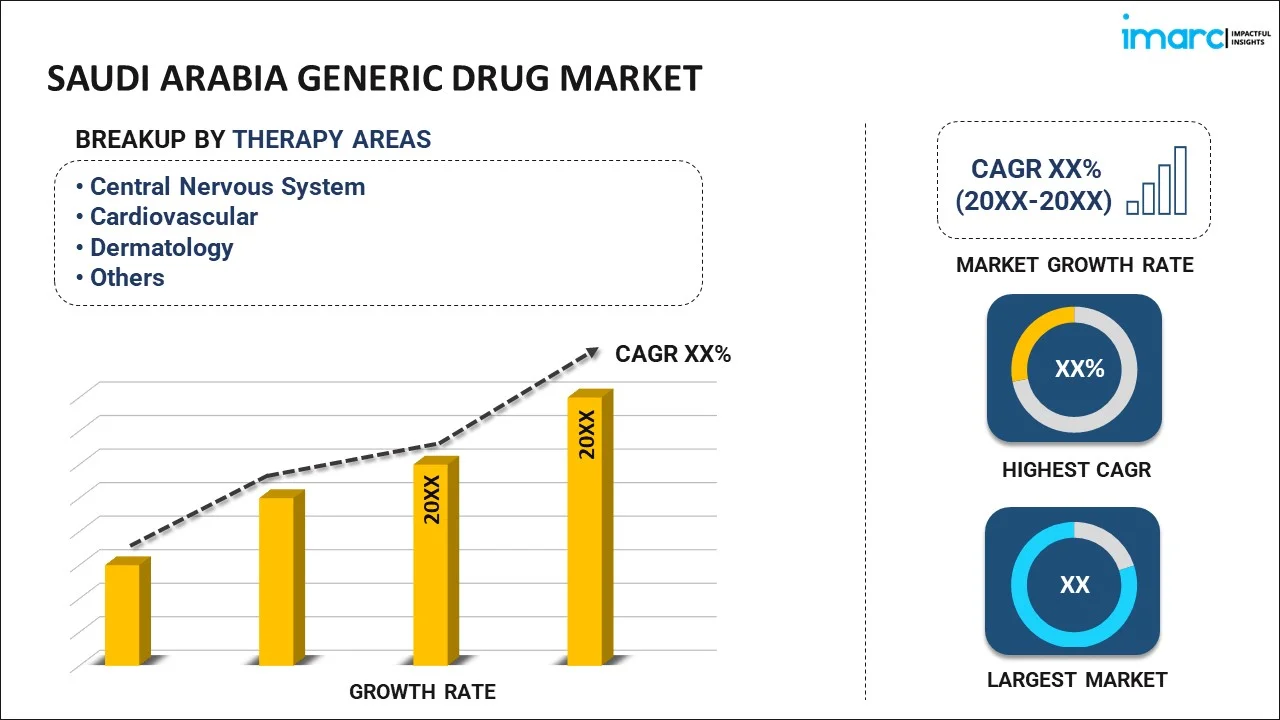
To get detailed segment analysis of this market Request Sample
- Central Nervous System
- Cardiovascular
- Dermatology
- Genitourinary/Hormonal
- Respiratory
- Rheumatology
- Diabetes
- Oncology
- Others
The report has provided a detailed breakup and analysis of the market based on the therapy area. This includes central nervous system, cardiovascular, dermatology, genitourinary/hormonal, respiratory, rheumatology, diabetes, oncology, and others.
Drug Delivery Insights:
- Oral
- Injectables
- Dermal/Topical
- Inhalers
A detailed breakup and analysis of the market based on the drug delivery have also been provided in the report. This includes oral, injectables, dermal/topical, and inhalers.
Distribution Channel Insights:
- Retail Pharmacies
- Hospital Pharmacies
The report has provided a detailed breakup and analysis of the market based on the distribution channel. This includes retail pharmacies and hospital pharmacies.
Regional Insights:
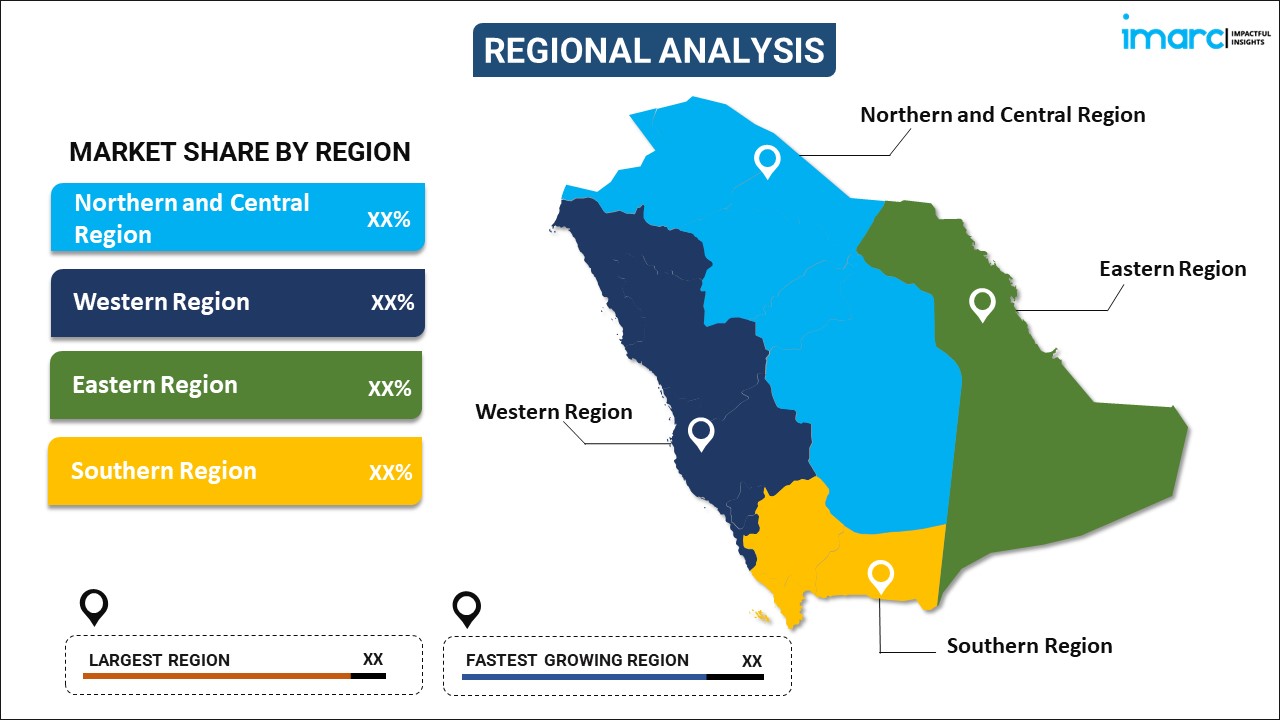
To get detailed regional analysis of this market Request Sample
- Northern and Central Region
- Western Region
- Eastern Region
- Southern Region
The report has also provided a comprehensive analysis of all the major regional markets, which include Northern and Central Region, Western Region, Eastern Region, and Southern Region.
Competitive Landscape:
The market research report has also provided a comprehensive analysis of the competitive landscape in the market. Competitive analysis such as market structure, key player positioning, top winning strategies, competitive dashboard, and company evaluation quadrant has been covered in the report. Also, detailed profiles of all major companies have been provided.
Saudi Arabia Generic Drug Market News:
- February 2025: Bio-Thera Solutions (Bio-Thera) has teamed up with Tabuk Pharmaceutical Manufacturing (Tabuk) for the exclusive manufacturing, distribution, and marketing of BAT2206, a biosimilar to Stelara (ustekinumab), in Saudi Arabia. At the same time, Bio-Thera broadened its partnership with SteinCares, providing exclusive distribution rights for another biosimilar in Latin America, strengthening its international biosimilar strategy.
- March 2025: Apex Pharma, a prominent Egyptian pharmaceutical firm focused on producing high-quality generic drugs, commenced operations at its inaugural pharmaceutical facility in King Abdullah Economic City (KAEC), as stated by Chairman Magdy Elba. Elba mentioned in an interview with Alarabiya Business that the company plans to start distributing its products in the Kingdom following the Hajj season and aims to produce 10 to 14 pharmaceuticals this year.
- October 2024: Eisai Co., Ltd. declared that complete operations and business activities have commenced at Eisai Pharmaceuticals Single Person Limited Liability Company (“Eisai Saudi Arabia”), a recently formed pharmaceutical sales subsidiary in Riyadh, Kingdom of Saudi Arabia (“Saudi Arabia”). Eisai Saudi Arabia operates as a fully-owned subsidiary of Eisai’s European regional headquarters, Eisai Europe Ltd.
- May 2024: Formycon and MS Pharma declared that their FYB201/ranibizumab Ravegza, a biosimilar to Lucentis, has obtained marketing approval from the Saudi Food and Drug Authority. Ravegza (FYB201/ranibizumab) is authorized in Saudi Arabia for curing patients with age-related neovascular (wet) macular degeneration (nAMD) and other severe eye conditions such as retinopathies caused by diabetes.
Saudi Arabia Generic Drug Market Report Coverage:
| Report Features | Details |
|---|---|
| Base Year of the Analysis | 2025 |
| Historical Period | 2020-2025 |
| Forecast Period | 2026-2034 |
| Units | Billion USD |
| Scope of the Report | Exploration of Historical and Forecast Trends, Industry Catalysts and Challenges, Segment-Wise Historical and Predictive Market Assessment:
|
| Therapy Areas Covered | Central Nervous System, Cardiovascular, Dermatology, Genitourinary/Hormonal, Respiratory, Rheumatology, Diabetes, Oncology, Others |
| Drug Deliveries Covered | Oral, Injectables, Dermal/Topical, Inhalers |
| Distribution Channels Covered | Retail Pharmacies, Hospital Pharmacies |
| Regions Covered | Northern and Central Region, Western Region, Eastern Region, Southern Region |
| Customization Scope | 10% Free Customization |
| Post-Sale Analyst Support | 10-12 Weeks |
| Delivery Format | PDF and Excel through Email (We can also provide the editable version of the report in PPT/Word format on special request) |
Key Benefits for Stakeholders:
- IMARC’s industry report offers a comprehensive quantitative analysis of various market segments, historical and current market trends, market forecasts, and dynamics of the Saudi Arabia generic drug market from 2020-2034.
- The research report provides the latest information on the market drivers, challenges, and opportunities in the Saudi Arabia generic drug market.
- Porter's five forces analysis assist stakeholders in assessing the impact of new entrants, competitive rivalry, supplier power, buyer power, and the threat of substitution. It helps stakeholders to analyze the level of competition within the Saudi Arabia generic drug industry and its attractiveness.
- Competitive landscape allows stakeholders to understand their competitive environment and provides an insight into the current positions of key players in the market.
Frequently Asked Questions About the Saudi Arabia Generic Drug Market Report
The Saudi Arabia generic drug market size increased from USD 4.1 Billion in 2025 to USD 4.4 Billion in 2026.
The Saudi Arabia generic drug market is projected to exhibit a CAGR of 7.88% during 2026-2034, reaching a value of USD 8.1 Billion by 2034.
Key factors driving the Saudi Arabia generic drug market include increasing healthcare expenditure, government initiatives promoting generics, rising prevalence of chronic diseases, cost-efficiency of generics, expanding local manufacturing capabilities, and growing consumer awareness about the affordability and efficacy of generic medications.
Need more help?
- Speak to our experienced analysts for insights on the current market scenarios.
- Include additional segments and countries to customize the report as per your requirement.
- Gain an unparalleled competitive advantage in your domain by understanding how to utilize the report and positively impacting your operations and revenue.
- For further assistance, please connect with our analysts.
 Request Customization
 Speak to an Analyst
 Request Brochure
 Inquire Before Buying
Benefits of Customization
- Personalize this research
- Triangulate with your data
- Get data as per your format and definition
- Gain a deeper dive into a specific application, geography, customer, or competitor
- Any level of personalization
Get in Touch With Us
UNITED STATES
Phone: +1-201-971-6302
INDIA
Phone: +91-120-433-0800
UNITED KINGDOM
Phone: +44-753-714-6104
Email: [email protected]
Client Testimonials




.webp)




.webp)













Related Reports

Choose your plan
*Please note that the prices mentioned below are starting prices for each bundle type. Kindly contact our team for further details.*
Single User License
- 1 User License, Access on 2 Devices
- PDF Report + Excel Dataset (Password Protected)
- Lifetime Access
- No Printing Rights
- 10% Free Report Customization
- 10–12 Weeks of Analyst Support
Five User License
- Access for 5 Users, 2 Devices per User
- PDF Report + Excel Dataset (Password Protected)
- Lifetime Access
- Dedicated Account Manager
- 12–14 Weeks of Analyst Support
- No Printing Rights
- 15% Free Report Customization
- 25% Discount on Your Next Purchase
Corporate User License
- Unlimited User Access (Within Your Organization)
- PDF Report + Excel Dataset
- Lifetime Access
- Dedicated Account Manager
- 14–20 Weeks of Analyst Support
- No Printing Rights
- 20% Free Report Customization
- 30% Discount on Your Next Purchase
Essential Insights
What's included:
3 reports
- Lifetime Access
- PDF Reports
- Excel Datasets
- 2 Weeks of Free Analyst Support
- 2 User Licenses
- Access on 2 Devices
- Printing Rights
- Complimentary PowerPoint (PPT) Version
- Complimentary License Upgrade
Professional Access
What's included:
5 reports
- Lifetime Access
- PDF Reports
- Excel Datasets
- 8 Weeks of Free Analyst Support
- 2 User Licenses
- Access on 2 Devices
- Printing Rights
- Complimentary PowerPoint (PPT) Version
- Complimentary License Upgrade
Business Advantage
What's included:
8 reports
- Lifetime Access
- PDF Reports
- Excel Datasets
- 14 Weeks of Free Analyst Support
- 2 User Licenses
- Access on 2 Devices
- Printing Rights
- Complimentary PowerPoint (PPT) Version
- Complimentary License Upgrade
Enterprise Intelligence
What's included:
10 reports
- Lifetime Access
- PDF Reports
- Excel Datasets
- 20 Weeks of Free Analyst Support
- 2 User Licenses
- Access on 2 Devices
- Printing Rights
- Complimentary PowerPoint (PPT) Version
- Complimentary License Upgrade