
Saudi Arabia Health and Fitness Club Market Report by Revenue Stream (Membership Fees, Personal Training and Instruction Services, and Others), End User (Men, Women), and Region 2026-2034
Market Overview:
Saudi Arabia health and fitness club market size reached USD 1,260.4 Million in 2025. Looking forward, IMARC Group expects the market to reach USD 2,808.2 Million by 2034, exhibiting a growth rate (CAGR) of 9.31% during 2026-2034. Saudi Arabia’s market is experiencing rapid growth under Vision 2030, supported by major government investments, public-private partnerships, and business-friendly regulations. Women-focused fitness centers are rising following regulatory reforms and initiatives. Apart from this, digital transformation like artificial intelligence (AI)-driven coaching, hybrid memberships, and growing wearable adoption is expanding the Saudi Arabia health and fitness club market share.
|
Report Attribute
|
Key Statistics
|
|---|---|
|
Base Year
|
2025
|
|
Forecast Years
|
2026-2034
|
|
Historical Years
|
2020-2025
|
|
Market Size in 2025
|
USD 1,260.4 Million |
|
Market Forecast in 2034
|
USD 2,808.2 Million |
| Market Growth Rate 2026-2034 | 9.31% |
Access the full market insights report Request Sample
A health and fitness club, often referred to as a gym or fitness center, is a dedicated facility where individuals engage in physical exercise and activities to improve their overall health, wellness, and fitness levels. These clubs provide a wide range of exercise equipment, such as cardio machines, weightlifting equipment, and functional training areas, to accommodate various fitness goals and preferences. In addition to access to fitness equipment, health and fitness clubs often offer group fitness classes, personal training services, and wellness programs that focus on nutrition, stress management, and overall lifestyle improvement. The primary goal of these establishments is to promote physical activity, encourage regular exercise routines, and support individuals in achieving their fitness objectives, whether that be weight loss, muscle gain, cardiovascular endurance, or simply maintaining a healthy and active lifestyle. Health and fitness clubs play a vital role in fostering a sense of community among members and serve as motivating environments to pursue healthier habits and well-being.
Saudi Arabia Health and Fitness Club Market Trends:
Vision 2030 Government Initiative Implementation
The Saudi Arabian government's Vision 2030 program is fundamentally reshaping the health and fitness club landscape across the Kingdom. Founded in 1439H, the SFA acts as the main body for advancing community sports in Saudi Arabia. The federation seeks to boost participation in physical activities to 40% by 2030 via innovative and sustainable initiatives that motivate all demographics to embrace healthy, active lifestyles. The Quality of Life Programme, a cornerstone initiative under Vision 2030, actively promotes physical, psychological, and social well-being through substantial investments in public sports infrastructure and fitness facilities. Government partnerships with private sector operators, including collaborations between the Ministry of Municipal and Rural Affairs and Housing with leading fitness brands, are accelerating market development. These strategic initiatives are establishing comprehensive regulatory frameworks that facilitate business-friendly environments for both domestic and international fitness operators, thereby strengthening the Saudi Arabia health and fitness club market outlook.
Expansion of Women-Focused Fitness Facilities
The proliferation of women-only fitness centers represents a transformative trend in the Saudi Arabia health and fitness club market. Following regulatory reforms that lifted restrictions on female participation in fitness activities, specialized women's facilities have experienced explosive growth. The Public Investment Fund's establishment of Kayanee, a dedicated women's fitness and wellness company, exemplifies institutional commitment to female health empowerment. Female gym membership numbers are now surpassing male participation rates in several premium facilities, reflecting changing cultural attitudes and increased social acceptance. These specialized centers address cultural sensitivities while providing comprehensive fitness solutions including personal training, group classes, nutritional counseling, and wellness services exclusively for women. The development of state-of-the-art ladies-only facilities with modern equipment, reformer Pilates studios, and holistic wellness offerings is expanding market reach and driving substantial revenue growth across the Saudi Arabia health and fitness club market landscape. ARMAH Sports Company revealed the launch of a new women’s B_Fit club in Riyadh in 2024. The club focused on women and offer numerous facilities that are fully equipped with technological advancements. The financial effect will be evident starting in the first quarter of 2024. The club can be found on the extension of Abu Bakr Al-Siddiq Road in the An Nada District of Riyadh.
Digital Transformation and Hybrid Fitness Models
Technological integration is revolutionizing how Saudi consumers engage with fitness services, establishing digital innovation as a defining market trend. Leading fitness operators are deploying proprietary mobile applications offering virtual training sessions, personalized workout programs, and real-time progress tracking capabilities. The adoption of wearable fitness technology, including smartwatches and fitness trackers, enables seamless data synchronization with gym platforms for comprehensive health monitoring. Hybrid membership models combining in-person facility access with digital coaching and on-demand virtual classes are gaining significant traction among tech-savvy younger demographics. Artificial intelligence (AI)-powered personal training recommendations, automated workout customization, and predictive analytics are enhancing member engagement and retention rates. IMARC Group predicts that the Saudi Arabia wearable fitness trackers market is expected to attain USD 1,833.56 Million by 2033.
Growth Drivers of Saudi Arabia Health and Fitness Club Market:
Rising Health Consciousness and Lifestyle Disease Prevention
Escalating prevalence of lifestyle-related health conditions is compelling Saudi citizens to prioritize preventive healthcare through fitness club memberships. Over one-third of the Saudi population faces obesity challenges, while diabetes, hypertension, cardiovascular diseases, and chronic kidney conditions affect substantial demographic segments. Medical professionals and public health campaigns increasingly emphasize exercise as critical intervention for disease management and prevention. Growing awareness about the correlation between physical inactivity and serious health complications is motivating individuals across all age groups to seek professional fitness guidance. Corporate wellness programs implemented by employers are further normalizing gym membership as essential employee benefit. Health insurance providers are beginning to incentivize fitness club participation through premium discounts and wellness rewards. This fundamental shift toward preventive health management rather than reactive medical treatment is establishing fitness clubs as healthcare destinations, thereby driving sustained growth in the Saudi Arabia health and fitness club market demand.
Increasing Disposable Income and Premium Service Demand
The expanding affluent consumer class in Saudi Arabia is fueling demand for high-quality fitness experiences and personalized wellness services. Rising disposable incomes enable more individuals to invest in premium gym memberships, personal training packages, and comprehensive wellness programs. Affluent consumers increasingly prioritize fitness as lifestyle investment rather than discretionary expense, creating opportunities for luxury fitness centers with advanced amenities. The proliferation of boutique fitness studios offering specialized services like reformer Pilates, spin classes, and functional training zones commands premium pricing while attracting discerning clientele. Young professionals and expatriate populations demonstrate willingness to pay substantially higher fees for facilities featuring cutting-edge equipment, recovery zones with infrared saunas and ice baths, and exclusive member experiences. This economic prosperity combined with changing lifestyle preferences toward health optimization is propelling market premiumization and expanding the total addressable market for the Saudi Arabia health and fitness club industry.
Wellness Tourism and Hotel Fitness Integration
The burgeoning wellness tourism sector is creating synergistic growth opportunities for health and fitness clubs throughout Saudi Arabia. Hotels and resorts are incorporating high-end fitness centers featuring advanced amenities including infrared therapy, body scanning technology, comprehensive spa facilities, and dedicated yoga and Pilates studios to attract health-conscious travelers. Luxury hospitality operators are partnering with established fitness brands to deliver world-class experiences that differentiate their properties in competitive markets. Business travelers and tourists increasingly select accommodations based on fitness facility quality and wellness service availability. This convergence of hospitality and fitness sectors is expanding market penetration beyond resident populations, generating additional revenue streams and elevating industry standards across the Saudi Arabia health and fitness club market landscape.
Saudi Arabia Health and Fitness Club Market Segmentation:
IMARC Group provides an analysis of the key trends in each segment of the market, along with forecasts at the country level for 2026-2034. Our report has categorized the market based on revenue stream and end user.
Revenue Stream Insights:
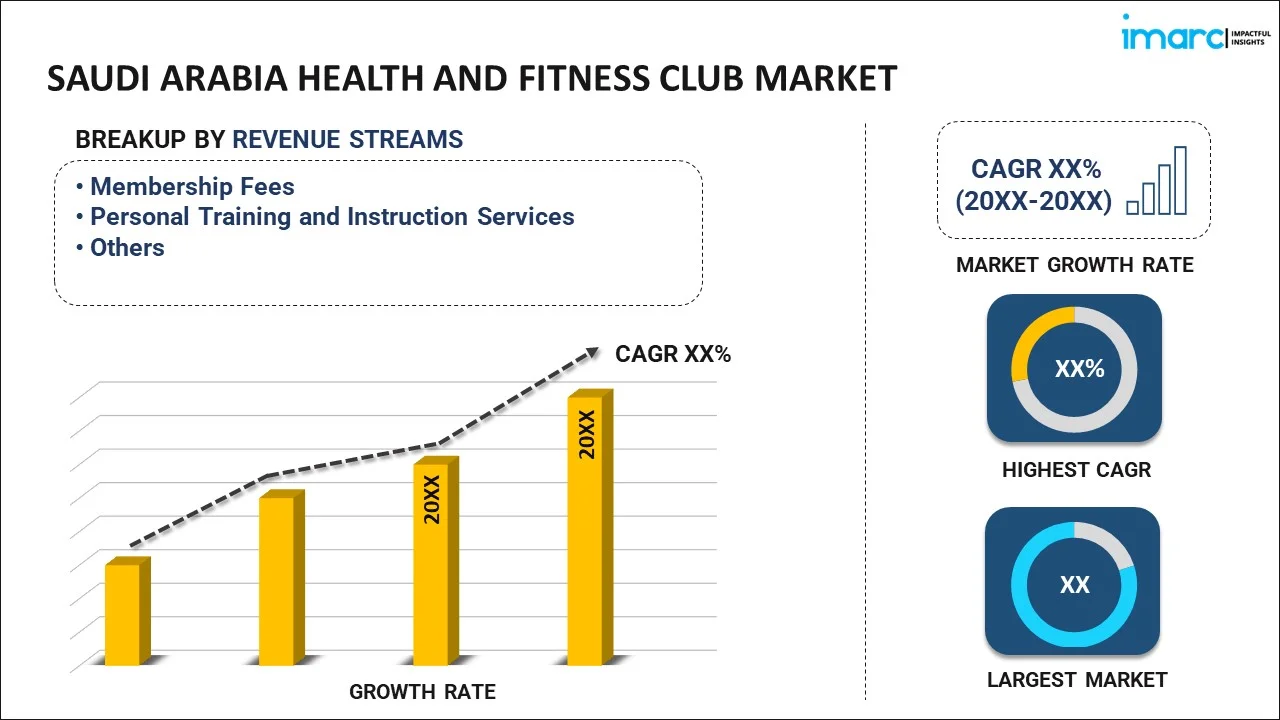
To get detailed segment analysis of this market Request Sample
- Membership Fees
- Personal Training and Instruction Services
- Others
The report has provided a detailed breakup and analysis of the market based on the revenue stream. This includes membership fees, personal training and instruction services, and others.
End User Insights:
- Men
- Women
A detailed breakup and analysis of the market based on the end user have also been provided in the report. This includes men and women.
Regional Insights:
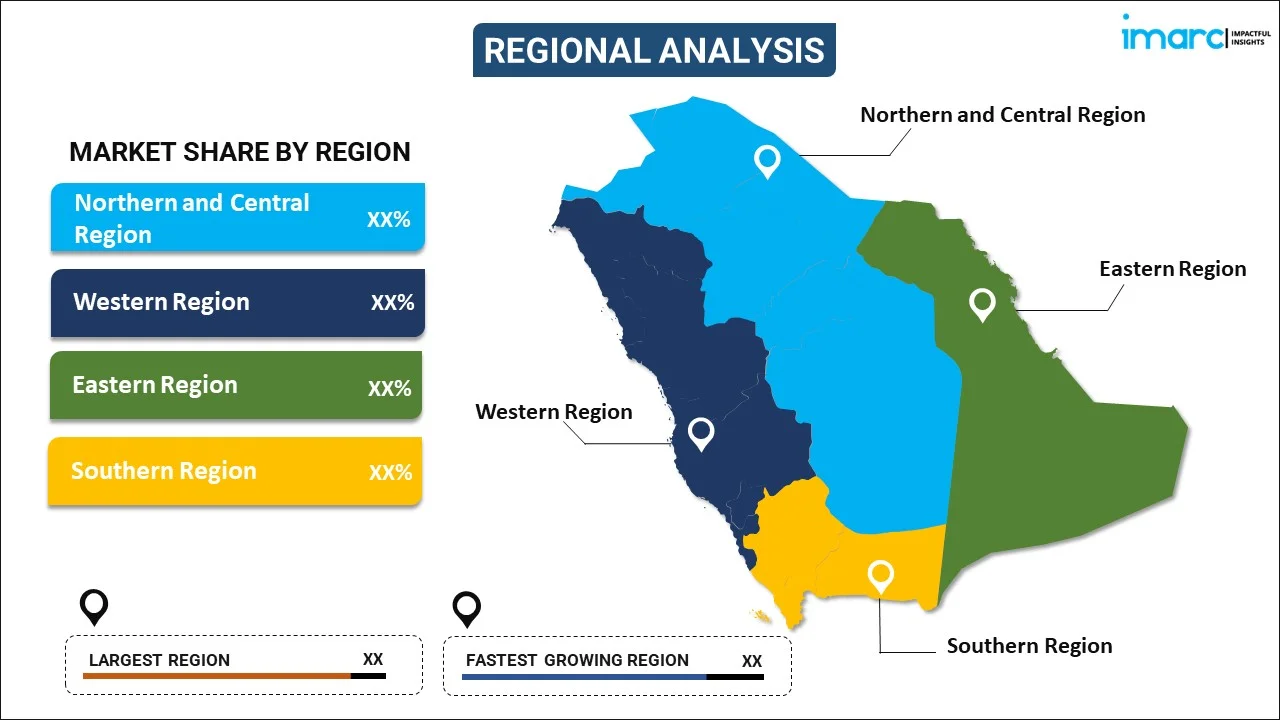
To get detailed regional analysis of this market Request Sample
- Northern and Central Region
- Western Region
- Eastern Region
- Southern Region
The report has also provided a comprehensive analysis of all the major regional markets, which include Northern and Central Region, Western Region, Eastern Region, and Southern Region.
Competitive Landscape:
The market research report has also provided a comprehensive analysis of the competitive landscape in the market. Competitive analysis such as market structure, key player positioning, top winning strategies, competitive dashboard, and company evaluation quadrant has been covered in the report. Also, detailed profiles of all major companies have been provided.
Saudi Arabia Health and Fitness Club Market News:
- October 2025: Sport Clubs Company has entered into a land lease agreement valued at SAR 22.01 million to construct two fitness centers at King Fahd Medical City in Riyadh. Situated in the Al-Sulaymaniyah District, the new fitness clubs will function under the Body Masters and Body Motions brand, encompassing an area of 3,800 square meters. The site will encompass 4,750 square meters, as a component of the company's growth strategy to boost the number of clubs and strengthen its footprint throughout different areas of the Kingdom.
- June 2025: GymNation officially launched its largest and most advanced facility to date in Qurtubah, Riyadh, spanning 77,000 square feet. The flagship location features Saudi Arabia's largest ladies-only reformer Pilates studio, an outdoor roof terrace, comprehensive recovery zones, and specialized training areas, setting new standards for fitness facility design and member amenities across the Kingdom.
- February 2025: In2Fitness, owned by Kun Sports, announced ambitious expansion plans to open 25 additional fitness locations across Saudi Arabia throughout 2025, building upon its existing network of 54 sites serving 300,000 members. The expansion strategy focuses on strengthening regional presence, enhancing digital innovation, and fostering inclusive communities committed to healthier lifestyles nationwide.
- June 2024: GymNation, the UAE-based fitness brand, achieved record-breaking pre-opening sales in Saudi Arabia, selling 12,000 memberships within 72 hours across its first six Kingdom locations in Jeddah and Al Khobar.
Saudi Arabia Health and Fitness Club Market Report Coverage:
| Report Features | Details |
|---|---|
| Base Year of the Analysis | 2025 |
| Historical Period | 2020-2025 |
| Forecast Period | 2026-2034 |
| Units | Million USD |
| Scope of the Report | Exploration of Historical Trends and Market Outlook, Industry Catalysts and Challenges, Segment-Wise Historical and Future Market Assessment:
|
| Revenue Streams Covered | Membership Fees, Personal Training and Instruction Services, Others |
| End Users Covered | Men, Women |
| Regions Covered | Northern and Central Region, Western Region, Eastern Region, Southern Region |
| Customization Scope | 10% Free Customization |
| Post-Sale Analyst Support | 10-12 Weeks |
| Delivery Format | PDF and Excel through Email (We can also provide the editable version of the report in PPT/Word format on special request) |
Key Benefits for Stakeholders:
- IMARC’s industry report offers a comprehensive quantitative analysis of various market segments, historical and current market trends, market forecasts, and dynamics of the Saudi Arabia health and fitness club market from 2020-2034
- The research report provides the latest information on the market drivers, challenges, and opportunities in the Saudi Arabia health and fitness club market.
- Porter's five forces analysis assist stakeholders in assessing the impact of new entrants, competitive rivalry, supplier power, buyer power, and the threat of substitution. It helps stakeholders to analyze the level of competition within the Saudi Arabia health and fitness club industry and its attractiveness.
- Competitive landscape allows stakeholders to understand their competitive environment and provides an insight into the current positions of key players in the market.
Frequently Asked Questions About the Saudi Arabia Health and Fitness Club Market Report
The health and fitness club market in Saudi Arabia was valued at USD 1,260.4 Million in 2025.
The Saudi Arabia health and fitness club market is projected to exhibit a CAGR of 9.31% during 2026-2034
The Saudi Arabia health and fitness club market is projected to reach a value of USD 2,808.2 Million by 2034.
The market is experiencing transformative growth driven by Vision 2030 government initiatives promoting physical activity participation, rapid expansion of women-focused fitness facilities addressing cultural preferences, and comprehensive digital transformation through hybrid membership models. Technology integration including wearable devices, mobile applications, and virtual training platforms is reshaping consumer engagement. Wellness tourism convergence with hospitality sectors is expanding market reach beyond resident populations nationwide.
Need more help?
- Speak to our experienced analysts for insights on the current market scenarios.
- Include additional segments and countries to customize the report as per your requirement.
- Gain an unparalleled competitive advantage in your domain by understanding how to utilize the report and positively impacting your operations and revenue.
- For further assistance, please connect with our analysts.
 Request Customization
 Speak to an Analyst
 Request Brochure
 Inquire Before Buying
Benefits of Customization
- Personalize this research
- Triangulate with your data
- Get data as per your format and definition
- Gain a deeper dive into a specific application, geography, customer, or competitor
- Any level of personalization
Get in Touch With Us
UNITED STATES
Phone: +1-201-971-6302
INDIA
Phone: +91-120-433-0800
UNITED KINGDOM
Phone: +44-753-714-6104
Email: [email protected]
Client Testimonials




.webp)




.webp)













Related Reports

Choose your plan
*Please note that the prices mentioned below are starting prices for each bundle type. Kindly contact our team for further details.*
Single User License
- 1 User License, Access on 2 Devices
- PDF Report + Excel Dataset (Password Protected)
- Lifetime Access
- No Printing Rights
- 10% Free Report Customization
- 10–12 Weeks of Analyst Support
Five User License
- Access for 5 Users, 2 Devices per User
- PDF Report + Excel Dataset (Password Protected)
- Lifetime Access
- Dedicated Account Manager
- 12–14 Weeks of Analyst Support
- No Printing Rights
- 15% Free Report Customization
- 25% Discount on Your Next Purchase
Corporate User License
- Unlimited User Access (Within Your Organization)
- PDF Report + Excel Dataset
- Lifetime Access
- Dedicated Account Manager
- 14–20 Weeks of Analyst Support
- No Printing Rights
- 20% Free Report Customization
- 30% Discount on Your Next Purchase
Essential Insights
What's included:
3 reports
- Lifetime Access
- PDF Reports
- Excel Datasets
- 2 Weeks of Free Analyst Support
- 2 User Licenses
- Access on 2 Devices
- Printing Rights
- Complimentary PowerPoint (PPT) Version
- Complimentary License Upgrade
Professional Access
What's included:
5 reports
- Lifetime Access
- PDF Reports
- Excel Datasets
- 8 Weeks of Free Analyst Support
- 2 User Licenses
- Access on 2 Devices
- Printing Rights
- Complimentary PowerPoint (PPT) Version
- Complimentary License Upgrade
Business Advantage
What's included:
8 reports
- Lifetime Access
- PDF Reports
- Excel Datasets
- 14 Weeks of Free Analyst Support
- 2 User Licenses
- Access on 2 Devices
- Printing Rights
- Complimentary PowerPoint (PPT) Version
- Complimentary License Upgrade
Enterprise Intelligence
What's included:
10 reports
- Lifetime Access
- PDF Reports
- Excel Datasets
- 20 Weeks of Free Analyst Support
- 2 User Licenses
- Access on 2 Devices
- Printing Rights
- Complimentary PowerPoint (PPT) Version
- Complimentary License Upgrade