
Saudi Arabia Home Healthcare Equipment Market Size, Share, Trends and Forecast by Product and Region, 2026-2034
Saudi Arabia Home Healthcare Equipment Market Summary:
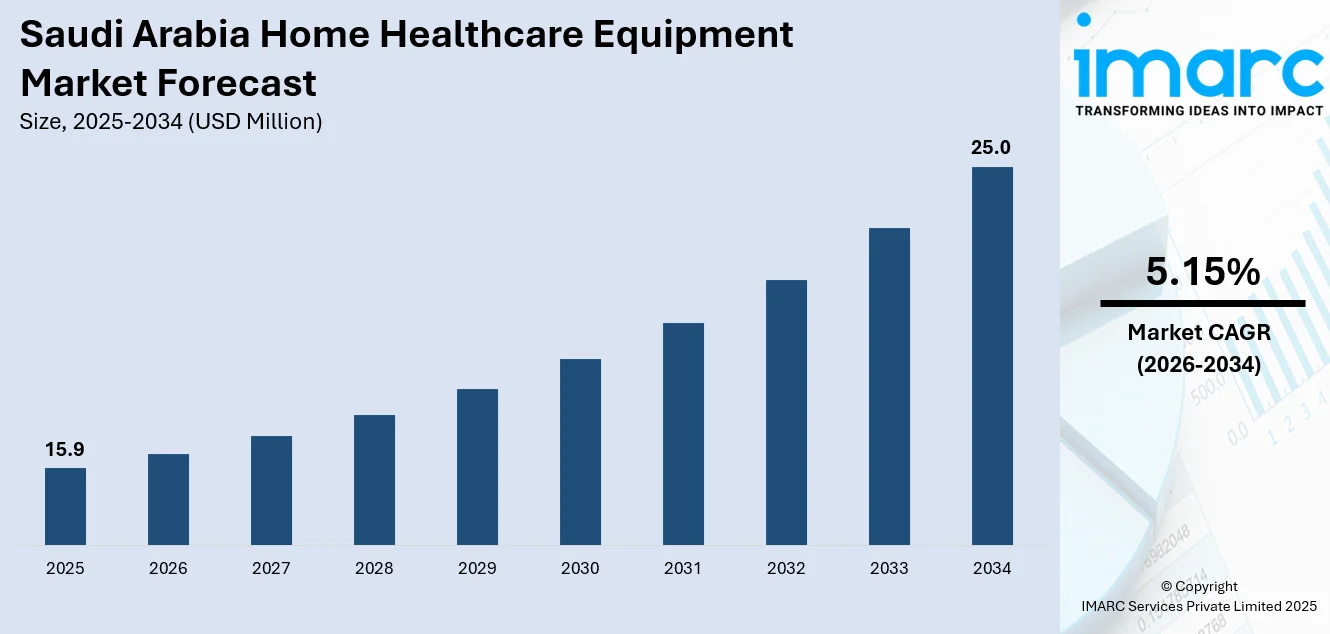
The Saudi Arabia home healthcare equipment market size was valued at USD 15.9 Million in 2025 and is projected to reach USD 25.0 Million by 2034, growing at a compound annual growth rate of 5.15% from 2026-2034.
The market is experiencing notable growth driven by rising chronic disease prevalence, technological advancements in monitoring devices, and strategic government initiatives supporting home-based healthcare delivery. Saudi Arabia's Vision 2030 healthcare transformation program has allocated substantial investments toward digital health infrastructure and patient-centered care models. This expansion encompasses wound care, chronic disease management, and post-operative care services. The convergence of demographic shifts, including a growing elderly population, increasing health awareness among consumers, and the proliferation of smart monitoring technologies, is fundamentally reshaping care delivery patterns and creating substantial opportunities for market participants across the value chain, contributing to the expanding Saudi Arabia home healthcare equipment market share.
Key Takeaways and Insights:
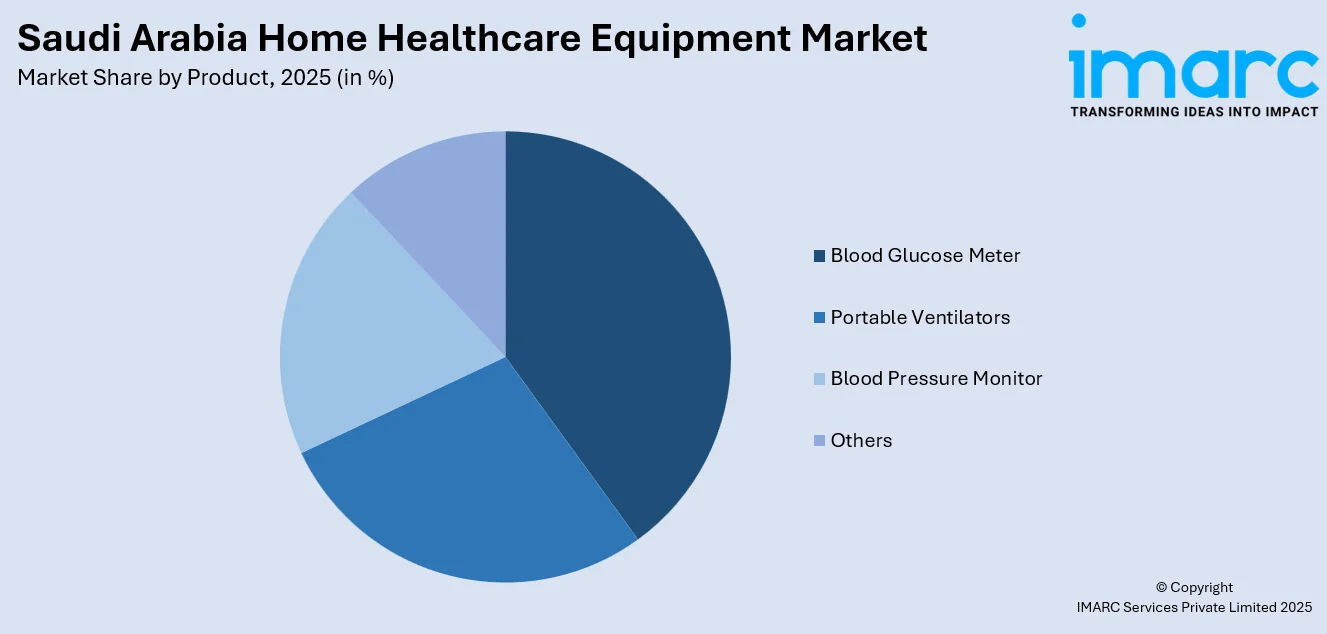
- By Product: Blood glucose meter dominates the market with a share of 37% in 2025, driven by the exceptionally high diabetes prevalence rates affecting over one-fifth of the adult population, increasing consumer health awareness, and the growing adoption of self-monitoring practices.
- By Region: Northern and Central Region leads the market with a share of 31% in 2025, supported by Riyadh's concentration of advanced healthcare facilities, higher population density, superior medical infrastructure, and substantial government healthcare investments.
- Key Players: The Saudi Arabia home healthcare equipment market exhibits moderate competitive intensity, with multinational medical device corporations competing alongside regional distributors through product innovation, digital integration capabilities, strategic partnerships, and expanding distribution networks.
To get more information on this market Request Sample
The Saudi Arabia home healthcare equipment market is growing due to a combination of healthcare, demographic, and structural drivers supporting home-based treatment adoption. The rising prevalence of chronic illnesses is a major contributor, driving the need for continuous monitoring and long-term care outside hospital environments. According to the 2024 National Health Survey and the Woman and Child Health Survey, 18.95% of adults have at least one chronic illness, with hypertension accounting for 7.9%, highlighting strong underlying demand for home healthcare solutions. The growing aging population is also strengthening requirements for mobility aids, rehabilitation devices, and supportive care equipment. Vision 2030 healthcare transformation policies encourage decentralization of care delivery, improving affordability and easing hospital congestion. Technological progress in telehealth and remote patient monitoring is further enabling effective care at home. Furthermore, the expansion of private providers and wider distribution networks is improving access, supporting the market growth.
Saudi Arabia Home Healthcare Equipment Market Trends:
Increasing Burden of Chronic Illness
The use of home healthcare equipment is increasing as more residents manage long-term conditions that require steady oversight outside clinical settings. The growing cases of hypertension, diabetes, cardiovascular concerns, and respiratory disorders are driving the need for monitoring and therapeutic devices to manage daily health needs efficiently. According to the data from the 2024 National Health Survey and the Woman and Child Health Survey, 18.95% of adults have at least one chronic illness, comprising (diabetes 9.1%, high cholesterol 3.6%, heart and vascular diseases 1.5%, and cancer 0.6%). Families rely on accurate home devices to reduce clinic visits, while physicians promote structured monitoring to support timely intervention and maintain stable care routines.
Growing Geriatric Population
The steady increase in the elderly population is catalyzing the demand for home healthcare equipment, as older adults often need frequent checks for blood pressure, glucose levels, oxygen saturation, and general wellbeing within the comfort of their own homes. The Elderly Survey 2025 reported that around 1.7 million people in Saudi Arabia were aged 60 years and above, representing 4.8% of the total population. People are prioritizing safety and preventive oversight for ageing family members, making home-based equipment a key element of long-term care planning. User-friendly devices that simplify routine tracking have encouraged broader adoption, supporting consistent, home-centered management of age-related conditions.
Rise of Medical Equipment Distribution and Retail Networks
The growing presence of specialized suppliers, pharmacies, and medical device retailers is strengthening access to home healthcare equipment across Saudi Arabia. Improved distribution systems are ensuring that essential products are available beyond major hospital centers, supporting wider household adoption of home-based treatment solutions. Digital sales platforms are also becoming increasingly important in expanding user reach and simplifying procurement. According to the International Trade Administration, the number of internet users participating in e-commerce in Saudi Arabia is projected to reach 33.6 million by 2024, highlighting the scale of online purchasing potential. This expansion in supply networks is driving deeper market penetration and sustained market demand.
How Vision 2030 is Transforming the Saudi Arabia Home Healthcare Equipment Market:
Saudi Vision 2030 is playing a significant role in transforming the home healthcare equipment market by prioritizing healthcare modernization, improving service accessibility, and promoting preventive care models. The initiative supports the shift from hospital-centered treatment toward home-based healthcare solutions, driven by rising chronic disease prevalence and an aging population. Investments in digital health, remote monitoring, and expanded medical device infrastructure are increasing demand for home-use equipment such as glucose meters, mobility aids, and respiratory devices. Vision 2030 also encourages private sector participation and localized manufacturing, improving product availability and affordability. Overall, these reforms are strengthening the growth outlook for Saudi Arabia’s home healthcare equipment industry.
Market Outlook 2026-2034:
The Saudi Arabia home healthcare equipment market shows notable revenue growth potential across the forecast period, supported by aging population trends, rising chronic disease prevalence, and shifting healthcare delivery toward home-based care. Increased demand for patient monitoring, mobility aids, and respiratory support devices is further contributing to the market growth. The market generated a revenue of USD 15.9 Million in 2025 and is projected to reach a revenue of USD 25.0 Million by 2034, growing at a compound annual growth rate of 5.15% from 2026-2034.
Saudi Arabia Home Healthcare Equipment Market Report Segmentation:
|
Segment Category |
Leading Segment |
Market Share |
|
Product |
Blood Glucose Meter |
37% |
|
Region |
Northern and Central Region |
31% |
Product Insights:
Access the comprehensive market breakdown Request Sample
- Portable Ventilators
- Blood Pressure Monitor
- Blood Glucose Meter
- Others
Blood glucose meter dominates with a market share of 37% of the total Saudi Arabia home healthcare equipment market in 2025.
Blood glucose meter represents the largest segment owing to the high prevalence of diabetes and the growing need for regular blood sugar monitoring among patients. Saudi Arabia has one of the highest diabetes rates globally, leading to strong demand for convenient at-home testing devices. According to the International Diabetes Federation, Saudi Arabia’s adult population reached 24,983,100 in 2024, with diabetes prevalence estimated at 23.1%. These meters support early detection, daily management, and better control of blood glucose levels, reducing hospital visits. Increased awareness about chronic disease management and rising adoption of self-monitoring practices further strengthen this segment’s market leadership.
The dominance of blood glucose meter is also supported by widespread availability through pharmacies, hospitals, and online healthcare platforms. Technological advancements, including digital displays, portable designs, and connectivity with mobile health apps, are improving ease of use for patients. Home healthcare services and government programs encouraging preventive care also contribute to consistent demand. Additionally, the growing aging population and lifestyle-related health risks increase the number of individuals requiring frequent monitoring, ensuring that blood glucose meter remains the leading product category in the market.
Regional Insights:
- Northern and Central Region
- Western Region
- Eastern Region
- Southern Region
Northern and Central Region leads with a market share of 31% of the total Saudi Arabia home healthcare equipment market in 2025.
Northern and Central Region holds the biggest market share due to its high population concentration, advanced healthcare infrastructure, and strong demand for home-based medical devices. Major urban centers, such as Riyadh, drive significant usage, supported by higher awareness about chronic disease management and greater access to pharmacies and medical suppliers. The region also benefits from better healthcare service penetration and stronger purchasing power, encouraging adoption of monitoring and mobility devices for home use among aging and chronically ill patients. According to the Mid-Year Economic and Fiscal Performance Report FY 2024, private consumption expenditure grew by 2.4% in real terms during the first half of FY2024 compared to the same period a year earlier.
The dominance of the Northern and Central Region is further reinforced by the presence of leading hospitals, specialized clinics, and well-established distribution networks that support easy availability of home healthcare equipment. Government healthcare initiatives and increased investment in medical technology are concentrated in these areas, driving the demand for self-care and remote patient monitoring solutions. Moreover, rising lifestyle-related conditions like diabetes and cardiovascular disorders are more prevalent in urbanized zones, ensuring steady growth for home healthcare products across this region.
Market Dynamics:
Growth Drivers:
Why is the Saudi Arabia Home Healthcare Equipment Market Growing?
Rise of Remote Patient Monitoring Partnerships
The growing emphasis on remote patient monitoring is a crucial factor influencing the Saudi Arabia home healthcare equipment market, as healthcare providers seek to improve efficiency and reduce pressure on hospitals. Technology-enabled monitoring allows patients with chronic or post-acute needs to remain safely at home while clinicians track health data in real time. A crucial example is the 2024 milestone when HoopoeView Ltd became the first Saudi Arabian company to join the Clinitouch Partner Program, introducing advanced remote monitoring solutions to the Middle East. This partnership aligned with Vision 2030 goals and supports healthcare transformation through home-based care expansion.
Technology-Enabled Chronic Disease Management at Home
Healthcare systems are increasingly shifting chronic disease management from hospitals to home environments, supported by digital tools, remote coaching, and continuous monitoring. This trend is particularly important for conditions, such as diabetes, where long-term adherence and lifestyle guidance play a major role in outcomes. As home-based care models expand, there is a rise in the demand for devices that support regular monitoring and patient support outside clinical facilities. A relevant example is the 2024 MoU between Saudi Arabia’s Ministry of Health and Ithnain, a digital healthcare coaching startup, to strengthen diabetes care across the Kingdom. The partnership supported over 10,000 patients through specialized education and home-based coaching integrated into ministry diabetes centers.
Growing Demand for Cost-Effective Care Delivery Models
Hospital-based care in Saudi Arabia is increasingly resource-intensive, especially for patients needing long-term recovery support or chronic disease management. Home healthcare equipment offers a more cost-effective solution by reducing inpatient stays, easing pressure on hospital infrastructure, and allowing patients to receive ongoing care within their homes. This model supports better allocation of medical resources while improving patient comfort and continuity of treatment. Healthcare providers and families are showing stronger preference for affordable alternatives that maintain clinical oversight outside institutional settings. These financial and operational advantages are driving greater adoption of diagnostic, therapeutic, and assistive equipment designed for home use.
Market Restraints:
What Challenges the Saudi Arabia Home Healthcare Equipment Market is Facing?
High Costs of Advanced Monitoring Devices
The premium pricing of advanced home healthcare equipment, particularly continuous glucose monitoring systems and sophisticated diagnostic devices, creates affordability barriers limiting broader market penetration. While basic monitoring equipment remains accessible, next-generation connected devices with enhanced features often exceed household budgets for middle and lower-income segments. Limited insurance coverage for certain device categories further restricts adoption among price-sensitive individuals.
Limited Healthcare Infrastructure in Remote Areas
Inadequate healthcare infrastructure and limited distribution networks in rural and remote regions create significant access barriers constraining market growth. While urban centers enjoy comprehensive product availability through pharmacies and retail channels, underserved communities face challenges obtaining home healthcare equipment and receiving proper training on device utilization. Geographic disparities in healthcare access continue limiting the market growth potential outside major metropolitan areas.
Shortage of Trained Healthcare Professionals
The limited availability of skilled healthcare professionals trained in home healthcare equipment deployment and patient education presents challenges for market development. Effective utilization of monitoring devices requires proper patient instruction and ongoing support, which remains constrained by workforce limitations. The shortage of specialized personnel impacts service quality and restricts expansion of comprehensive home healthcare programs across the Kingdom.
Competitive Landscape:
The Saudi Arabia home healthcare equipment market exhibits moderate competitive intensity characterized by the presence of multinational medical device corporations alongside regional distributors and emerging local players. Market dynamics reflect strategic positioning, ranging from premium innovation-driven offerings emphasizing advanced connectivity and diagnostic accuracy to value-oriented products targeting cost-conscious individuals. The competitive landscape is increasingly shaped by digital health integration capabilities, distribution network expansion, regulatory compliance expertise, and brand marketing effectiveness in addressing user education needs. Market participants are focusing on establishing local partnerships, expanding product portfolios, and enhancing after-sales support services to strengthen market positioning.
Recent Developments:
- May 2025: the Saudi Food and Drug Authority (SFDA) launched a digital awareness campaign to promote the safe use of home medical devices and supplies. The initiative educated people on buying only licensed devices with valid authorization, warranties, and proper after-sales support. It also advised consulting healthcare specialists, following usage instructions, maintaining devices safely at home, and reporting any device-related incidents through the SFDA’s official medical devices reporting center.
- May 2025: Aktiia, now rebranded as "Hilo," raised $42 million in Series B funding to expand its cuffless blood pressure monitoring technology. The company, which has received approval in Saudi Arabia, aims to improve blood pressure management with AI-powered optical sensors.
Saudi Arabia Home Healthcare Equipment Market Report Coverage:
| Report Features | Details |
|---|---|
| Base Year of the Analysis | 2025 |
| Historical Period | 2020-2025 |
| Forecast Period | 2026-2034 |
| Units | Million USD |
| Scope of the Report |
Exploration of Historical Trends and Market Outlook, Industry Catalysts and Challenges, Segment-Wise Historical and Future Market Assessment:
|
| Products Covered | Portable Ventilators, Blood Pressure Monitor, Blood Glucose Meter, Others |
| Regions Covered | Northern and Central Region, Western Region, Eastern Region, Southern Region |
| Customization Scope | 10% Free Customization |
| Post-Sale Analyst Support | 10-12 Weeks |
| Delivery Format | PDF and Excel through Email (We can also provide the editable version of the report in PPT/Word format on special request) |
Frequently Asked Questions About the Saudi Arabia Home Healthcare Equipment Market Report
The Saudi Arabia home healthcare equipment market size was valued at USD 15.9 Million in 2025.
The Saudi Arabia home healthcare equipment market is expected to grow at a compound annual growth rate of 5.15% from 2026-2034 to reach USD 25.0 Million by 2034.
Blood glucose meter dominates the market with a revenue share of 37% in 2025, driven by the exceptionally high diabetes prevalence affecting majority of the adult population and the growing adoption of self-monitoring practices.
Key factors driving the Saudi Arabia home healthcare equipment market include the rising elderly population, which requires regular monitoring of blood pressure, glucose, and oxygen levels at home. The Elderly Survey 2025 reported 1.7 million people aged 60+ (4.8% of the population), supporting greater adoption of home-based care devices.
Major challenges include high costs of advanced monitoring devices limiting broader adoption, limited healthcare infrastructure and distribution networks in remote areas, shortage of trained healthcare professionals for patient education, and varying insurance coverage for home healthcare equipment categories.
Need more help?
- Speak to our experienced analysts for insights on the current market scenarios.
- Include additional segments and countries to customize the report as per your requirement.
- Gain an unparalleled competitive advantage in your domain by understanding how to utilize the report and positively impacting your operations and revenue.
- For further assistance, please connect with our analysts.
 Request Customization
 Speak to an Analyst
 Request Brochure
 Inquire Before Buying
Benefits of Customization
- Personalize this research
- Triangulate with your data
- Get data as per your format and definition
- Gain a deeper dive into a specific application, geography, customer, or competitor
- Any level of personalization
Get in Touch With Us
UNITED STATES
Phone: +1-201-971-6302
INDIA
Phone: +91-120-433-0800
UNITED KINGDOM
Phone: +44-753-714-6104
Email: [email protected]
Client Testimonials




.webp)




.webp)













Related Reports

Choose your plan
*Please note that the prices mentioned below are starting prices for each bundle type. Kindly contact our team for further details.*
Single User License
- 1 User License, Access on 2 Devices
- PDF Report + Excel Dataset (Password Protected)
- Lifetime Access
- No Printing Rights
- 10% Free Report Customization
- 10–12 Weeks of Analyst Support
Five User License
- Access for 5 Users, 2 Devices per User
- PDF Report + Excel Dataset (Password Protected)
- Lifetime Access
- Dedicated Account Manager
- 12–14 Weeks of Analyst Support
- No Printing Rights
- 15% Free Report Customization
- 25% Discount on Your Next Purchase
Corporate User License
- Unlimited User Access (Within Your Organization)
- PDF Report + Excel Dataset
- Lifetime Access
- Dedicated Account Manager
- 14–20 Weeks of Analyst Support
- No Printing Rights
- 20% Free Report Customization
- 30% Discount on Your Next Purchase
Essential Insights
What's included:
3 reports
- Lifetime Access
- PDF Reports
- Excel Datasets
- 2 Weeks of Free Analyst Support
- 2 User Licenses
- Access on 2 Devices
- Printing Rights
- Complimentary PowerPoint (PPT) Version
- Complimentary License Upgrade
Professional Access
What's included:
5 reports
- Lifetime Access
- PDF Reports
- Excel Datasets
- 8 Weeks of Free Analyst Support
- 2 User Licenses
- Access on 2 Devices
- Printing Rights
- Complimentary PowerPoint (PPT) Version
- Complimentary License Upgrade
Business Advantage
What's included:
8 reports
- Lifetime Access
- PDF Reports
- Excel Datasets
- 14 Weeks of Free Analyst Support
- 2 User Licenses
- Access on 2 Devices
- Printing Rights
- Complimentary PowerPoint (PPT) Version
- Complimentary License Upgrade
Enterprise Intelligence
What's included:
10 reports
- Lifetime Access
- PDF Reports
- Excel Datasets
- 20 Weeks of Free Analyst Support
- 2 User Licenses
- Access on 2 Devices
- Printing Rights
- Complimentary PowerPoint (PPT) Version
- Complimentary License Upgrade