
Saudi Arabia Keto Friendly Snacks Market Size, Share, Trends and Forecast by Flavor, Ingredient Type, Distribution Channel, and Region, 2026-2034
Saudi Arabia Keto Friendly Snacks Market Size, Share, Trends & Forecast (2026-2034)
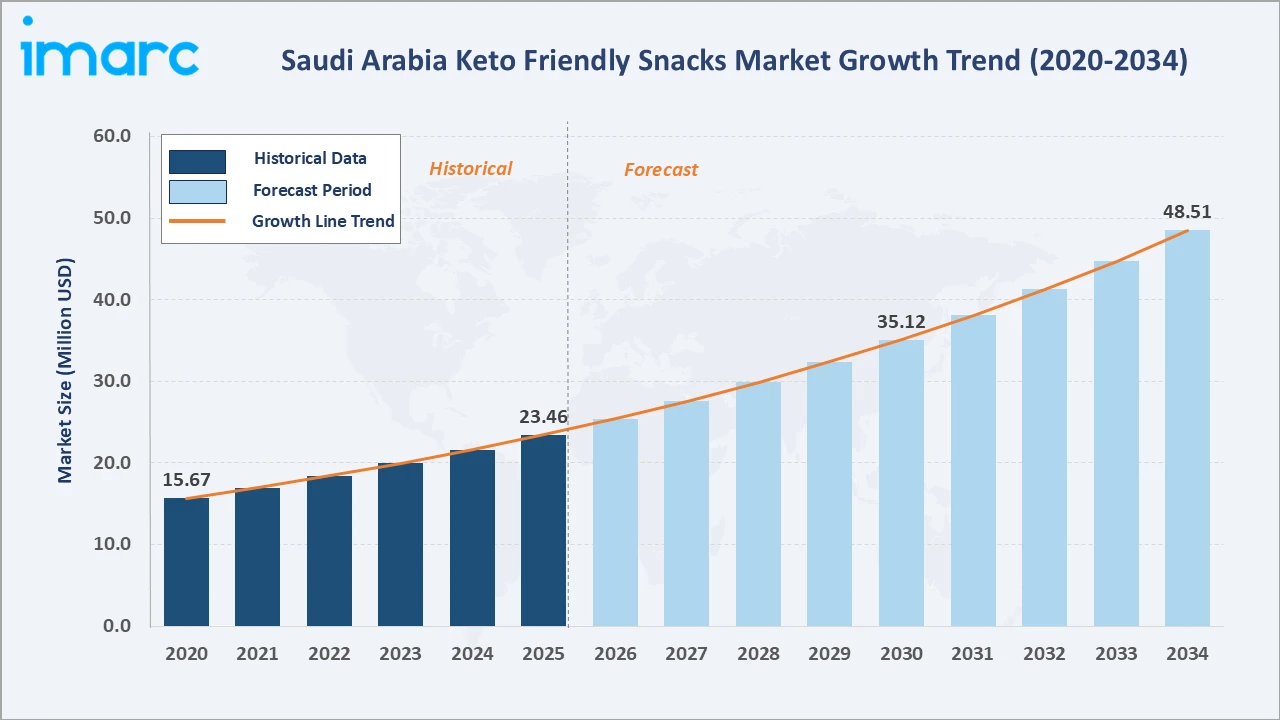
The Saudi Arabia keto friendly snacks market reached USD 23.46 Million in 2025 and is projected to reach USD 48.51 Million by 2034, growing at a CAGR of 8.41% during 2026-2034. Growth is driven by rising health consciousness, increasing prevalence of lifestyle-related illnesses, and expanding retail and e-commerce access to low-carb, high-fat snack formats. Savory flavors lead the Saudi Arabia keto friendly snacks market share at 39.4% in 2025, while nuts and seeds dominate the ingredient type breakup at 34.8%. The Northern and Central Region, anchored by Riyadh's dense urban population and premium retail infrastructure, commands the largest regional share at 39.8%.
Market Snapshot
|
Metric |
Value |
|
Market Size (2025) |
USD 23.46 Million |
|
Forecast Market Size (2034) |
USD 48.51 Million |
|
CAGR (2026-2034) |
8.41% |
|
Base Year |
2025 |
|
Historical Period |
2020-2025 |
|
Forecast Period |
2026-2034 |
|
Largest Flavor Segment |
Savory (39.4%, 2025) |
|
Largest Ingredient Segment |
Nuts and Seeds (34.8%, 2025) |
|
Dominant Region |
Northern & Central Region (39.8%, 2025) |
The market expanded from USD 15.67 Million in 2020 to USD 23.46 Million in 2025, anchored at USD 35.12 Million in 2030, and forecast to reach USD 48.51 Million by 2034. This trajectory reflects Saudi Arabia's Vision 2030 wellness agenda, rising disposable incomes, and growing consumer preference for functional, low-carbohydrate snacking formats across urban and semi-urban markets.
To get more information on this market, Request Sample
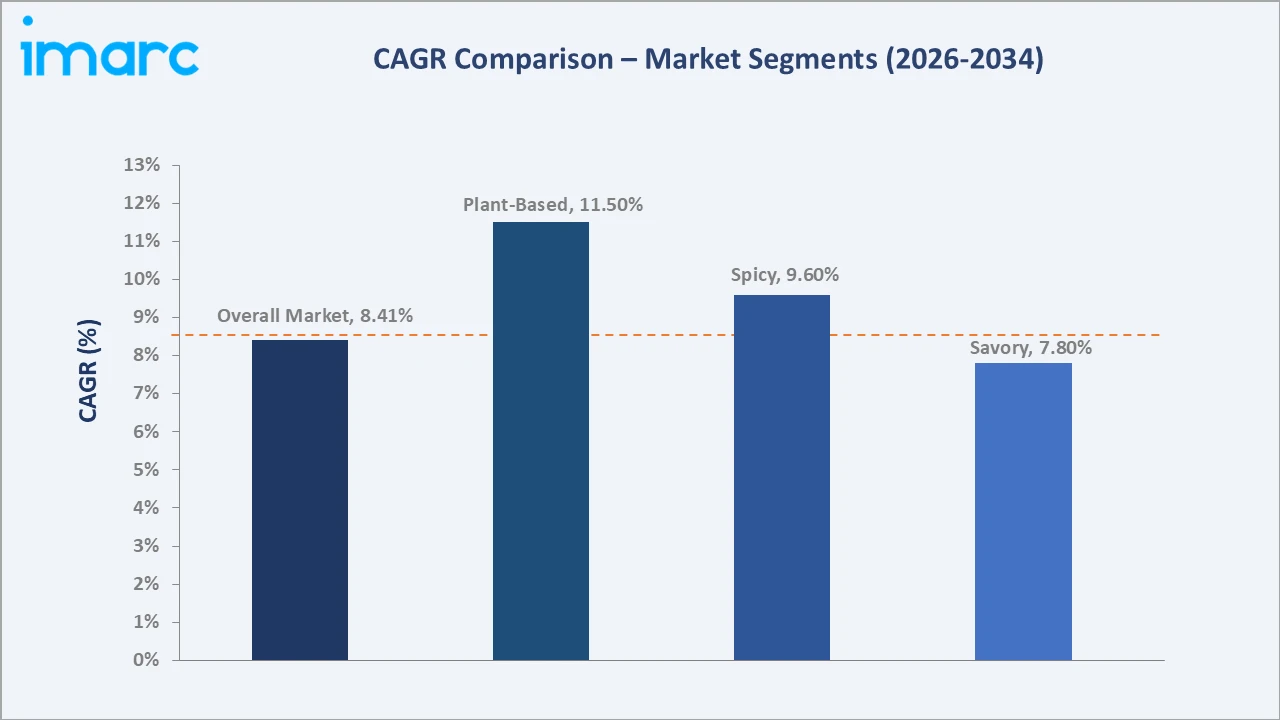
Spicy-flavored keto snacks are growing fastest among flavor categories at an estimated 9.6% CAGR (2026-2034), reflecting rising demand for bold, regionally inspired taste profiles. Within ingredient types, plant-based formulations are expanding fastest at approximately 11.5% CAGR, supported by a small existing base and increasing interest in vegan and flexitarian keto diets among younger Saudi consumers.
Executive Summary
The Saudi Arabia keto friendly snacks market reached USD 23.46 Million in 2025, supported by rising obesity and diabetes prevalence, expanding modern retail infrastructure, and growing consumer familiarity with ketogenic nutrition principles. Vision 2030's preventive healthcare agenda and government-backed wellness campaigns are reinforcing structural demand for low-carbohydrate, high-fat snack alternatives across the Kingdom's major urban centers.
Savory snacks commanded 39.4% of the 2025 market, reflecting strong cultural preference for salty, spiced snacking formats, while nuts and seeds led the ingredient type breakup at 34.8% owing to their natural macronutrient alignment with ketogenic diets. The market is projected to reach USD 48.51 Million by 2034 at an 8.41% CAGR, supported by product innovation, clean-label positioning, and broadening e-commerce distribution.
The Northern and Central Region dominates at 39.8% share, anchored by Riyadh's high-income consumer base and dense specialty retail network, while the Western Region benefits from Jeddah's cosmopolitan consumer base and pilgrimage-driven retail traffic. Sustained investment in health food retail and digital wellness platforms is expected to widen keto snack accessibility through 2034.
Key Market Insights
|
Insight |
Data |
|
Largest Flavor Segment |
Savory - 39.4% share (2025) |
|
Largest Ingredient Segment |
Nuts and Seeds - 34.8% share (2025) |
|
Dominant Region |
Northern & Central Region - 39.8% share (2025) |
|
Fastest Growing Flavor |
Spicy - ~9.6% CAGR (2026-2034) |
|
Fastest Growing Ingredient |
Plant-Based - ~11.5% CAGR (2026-2034) |
|
Top Companies |
Dr. Nutrition, The Simply Good Foods Company, and Munchbox |
Key Analytical Observations Supporting The Above Data:
- Savory at 39.4% share (2025) driven by cultural taste alignment: Saudi consumers show strong preference for salty and spiced snacking formats, supporting broad savory keto product adoption across supermarkets and specialty retailers.
- Nuts and seeds at 34.8% anchored by macronutrient compatibility: Nuts and seeds naturally align with ketogenic fat-to-carbohydrate ratios, making them a preferred base ingredient for manufacturers formulating new keto snack lines.
- Northern and Central Region leads with 39.8% share (2025): The region benefits from Riyadh's concentration of premium supermarkets, health food stores, and high per-capita disposable income supporting specialty snack spending.
- Spicy flavors grow fastest at ~9.6% CAGR (2026-2034): Rising demand for bold, regionally inspired taste profiles is prompting manufacturers to expand spicy keto snack portfolios beyond traditional savory offerings.
- Plant-based ingredients expand fastest at ~11.5% CAGR from a small base: Growing vegan and flexitarian interest among younger consumers is accelerating plant-based keto snack launches, despite the segment's currently modest 13.2% share.
- E-commerce and specialty retail expansion broaden accessibility: Online grocery platforms and health food delivery apps are increasing the visibility of niche keto products beyond major metropolitan markets.
Saudi Arabia Keto Friendly Snacks Market Overview
Saudi Arabia's keto friendly snacks market encompasses savory, sweet, spicy, and mild snack formats formulated around nuts and seeds, dairy, meat and poultry, plant-based, and low-carb vegetable ingredients, targeting health-conscious consumers pursuing ketogenic and low-carbohydrate lifestyles.
The market is supplied through a mix of international nutrition brands and growing local manufacturing, distributed via supermarkets, specialty health stores, pharmacies, and e-commerce platforms regulated under Saudi Food and Drug Authority (SFDA) and Saudi Standards, Metrology and Quality Organization (SASO) food labeling requirements.
Macroeconomic tailwinds include Vision 2030's non-oil economic diversification, rising household incomes, and government preventive-healthcare initiatives addressing the Kingdom's elevated obesity and diabetes prevalence, sustaining structural demand for functional snacking alternatives.
Market Dynamics
To evaluate market opportunities, Request Sample
Market Drivers
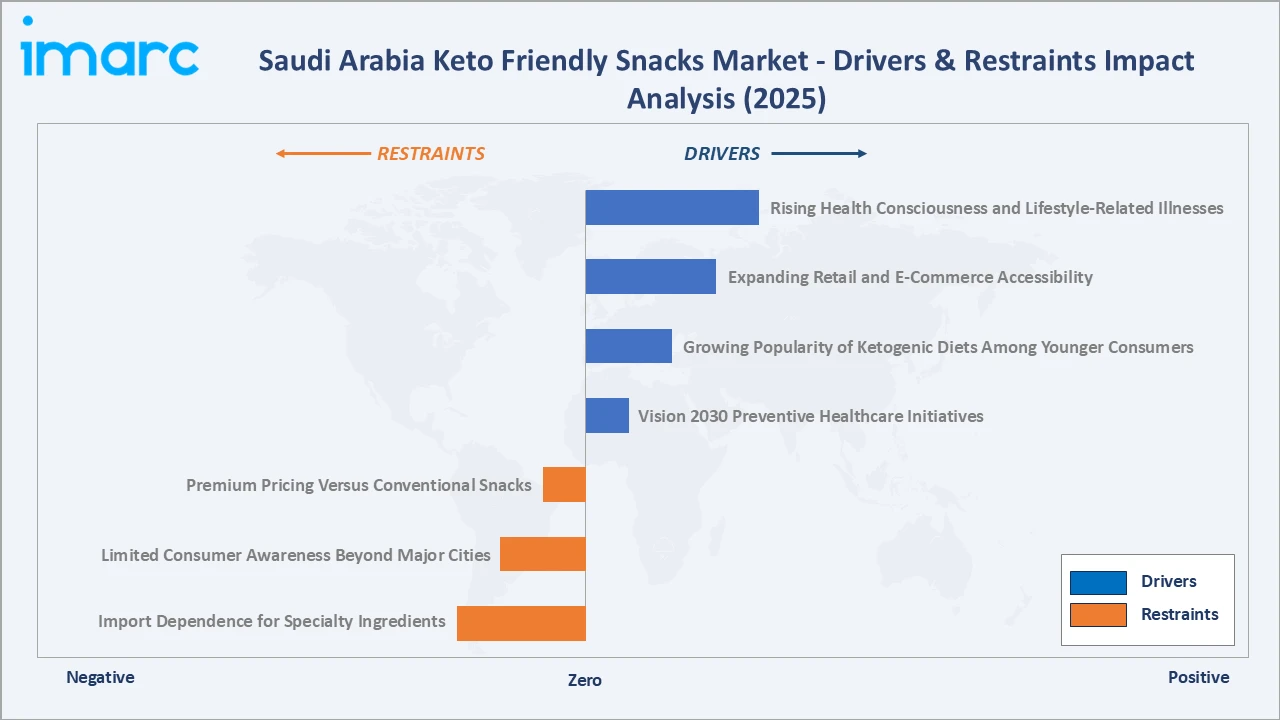
- Rising Health Consciousness and Lifestyle-Related Illnesses: Increasing prevalence of obesity and type-2 diabetes in Saudi Arabia is prompting consumers to adopt low-carbohydrate, high-fat dietary alternatives, directly lifting demand for keto-formulated snacks.
- Expanding Retail and E-Commerce Accessibility: Supermarkets, specialty health stores, and online grocery platforms are increasingly stocking dedicated keto product lines, widening consumer access beyond niche health food outlets.
- Growing Popularity of Ketogenic Diets Among Younger Consumers: Social media and fitness-influencer culture are driving Saudi millennials and Gen Z toward experimenting with ketogenic eating patterns for weight management and sustained energy.
- Vision 2030 Preventive Healthcare Initiatives: Government-backed wellness campaigns and nutrition labeling reforms are reinforcing public awareness of functional and low-carbohydrate food choices across the Kingdom.
Market Restraints
- Premium Pricing Versus Conventional Snacks: Keto-formulated snacks typically carry a price premium of 30-50% over conventional alternatives, limiting broader adoption among price-sensitive consumer segments.
- Limited Consumer Awareness Beyond Major Cities: Ketogenic dietary knowledge remains concentrated in Riyadh and Jeddah, with lower awareness levels constraining demand growth in smaller regional markets.
Market Opportunities
- Clean-Label and Plant-Based Innovation: Rising demand for transparent, minimally processed ingredients creates opportunities for manufacturers to launch clean-label and plant-based keto snack lines.
- Domestic Manufacturing Localization Under Vision 2030: Government incentives for food manufacturing localization could support domestic keto snack production, reducing import dependence and improving cost competitiveness.
Market Challenges
- Import Dependence for Specialty Ingredients: Many keto-specific ingredients, including specialty sweeteners and protein isolates, are imported, exposing manufacturers to currency and freight cost volatility.
- Intensifying Competition from International Entrants: Growing interest from global nutrition brands is increasing competitive pressure on early-mover local players seeking to establish shelf space and brand loyalty.
Emerging Market Trends
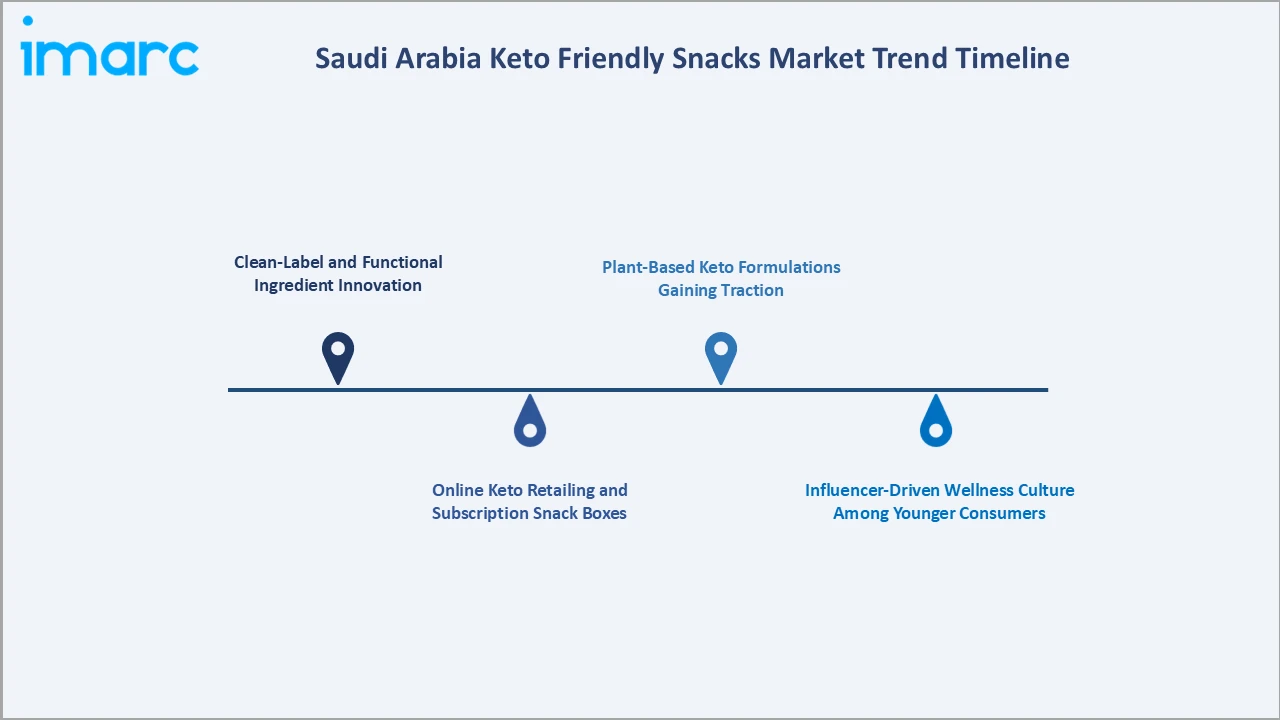
1. Clean-Label and Functional Ingredient Innovation
Manufacturers are reformulating keto snacks with recognizable, minimally processed ingredients to meet rising consumer demand for transparency. Functional additions such as collagen, MCT oil, and fiber blends are increasingly featured on Saudi keto snack packaging.
2. Online Keto Retailing and Subscription Snack Boxes
Saudi Arabia's growing e-commerce penetration is supporting curated keto snack subscription boxes and direct-to-consumer brand websites, offering consumers convenient discovery of niche products unavailable in physical stores.
3. Plant-Based Keto Formulations Gaining Traction
Rising flexitarian and vegan interest is prompting brands to expand plant-based keto snack ranges using nut butters, seed-based crackers, and coconut-derived fats as core formulation components.
4. Influencer-Driven Wellness Culture Among Younger Consumers
Fitness and wellness influencers are shaping keto snack purchasing decisions among younger Saudi consumers, accelerating brand discovery through social media product reviews and recipe content.
Industry Value Chain Analysis
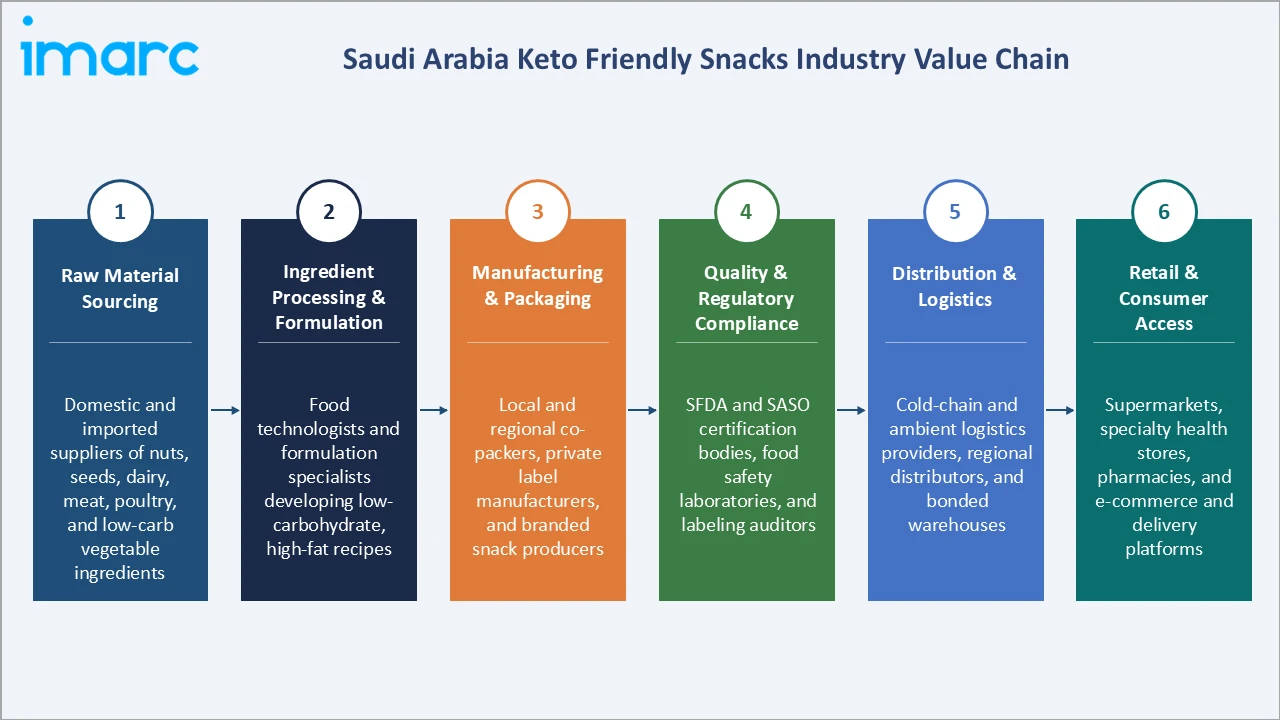
Saudi Arabia's keto friendly snacks value chain spans ingredient sourcing, formulation and manufacturing, quality and regulatory compliance, multi-channel distribution, and end-consumer retail across offline and online channels.
|
Stage |
Key Participants |
|
Raw Material Sourcing |
Domestic and imported suppliers of nuts, seeds, dairy, meat, poultry, and low-carb vegetable ingredients |
|
Ingredient Processing & Formulation |
Food technologists and formulation specialists developing low-carbohydrate, high-fat recipes |
|
Manufacturing & Packaging |
Local and regional co-packers, private label manufacturers, and branded snack producers |
|
Quality & Regulatory Compliance |
SFDA and SASO certification bodies, food safety laboratories, and labeling auditors |
|
Distribution & Logistics |
Cold-chain and ambient logistics providers, regional distributors, and bonded warehouses |
|
Retail & Consumer Access |
Supermarkets, specialty health stores, pharmacies, and e-commerce and delivery platforms |
Saudi Arabia's keto snack distribution follows a multi-tier model in which manufacturers and importers supply regional distributors, who in turn service supermarkets, specialty retailers, and growing e-commerce channels. Direct-to-consumer online models are gradually compressing traditional distributor margins as brands seek closer consumer relationships.
Technology Landscape in the Saudi Arabia Keto Friendly Snacks Industry
Clean-Label Formulation Technology
Advances in natural preservation and minimal-processing techniques are enabling manufacturers to extend shelf life while maintaining clean-label positioning, supporting consumer trust in ingredient transparency.
Alternative Sweetener Innovation
Erythritol, stevia, and monk fruit-based sweetening systems are replacing traditional sugars in Saudi keto snack formulations, allowing manufacturers to maintain flavor appeal while meeting low-carbohydrate requirements.
Extended Shelf-Life Packaging
Modified atmosphere packaging and moisture-barrier materials are being adopted to preserve product freshness across Saudi Arabia's extended distribution routes and high ambient temperatures.
Digital Traceability and Smart Labeling
QR-enabled packaging and digital nutrition labeling are gaining adoption, allowing consumers to verify ingredient sourcing and macronutrient content directly through smartphone applications.
Market Segmentation Analysis
The report covers the following segments:
|
Segment Category |
Leading Segment |
Market Share |
Year |
|
Flavor |
Savory |
39.4% |
2025 |
|
Ingredient Type |
Nuts and Seeds |
34.8% |
2025 |
|
Distribution Channel |
🔒 |
🔒 |
2025 |
|
Region |
Northern & Central Region |
39.8% |
2025 |

By Flavor
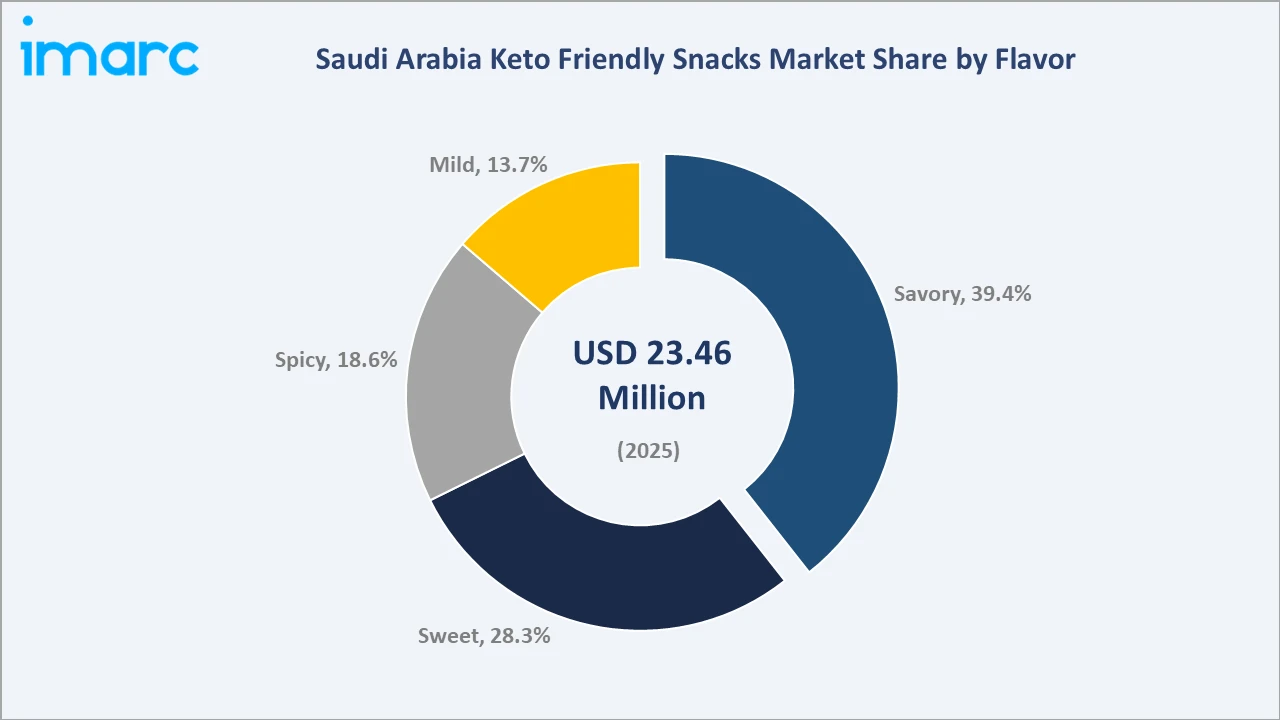
Savory snacks dominate at 39.4% market share (2025), reflecting broad cultural preference for salty and spiced snacking formats across Saudi Arabia's demographic segments. Savory keto products span cheese crisps, seasoned nut mixes, and meat-based snacks.
To access detailed market analysis, Request Sample
Sweet flavors hold 28.3% share, supported by keto friendly chocolate, cookies, and dessert-style snacks formulated with alternative sweeteners. Spicy variants, at 18.6% share, are growing fastest at an estimated 9.6% CAGR (2026-2034) as manufacturers introduce regionally inspired seasoning profiles, while mild flavors account for the remaining 13.7% share, appealing to consumers seeking neutral-tasting everyday snacking options.
By Ingredient Type
Nuts and seeds lead the ingredient type breakup at 34.8% share (2025), owing to their natural fat-to-carbohydrate ratio that aligns closely with ketogenic dietary principles. Almonds, walnuts, and pumpkin seeds are widely used base ingredients across Saudi Arabia's keto snack formulations.
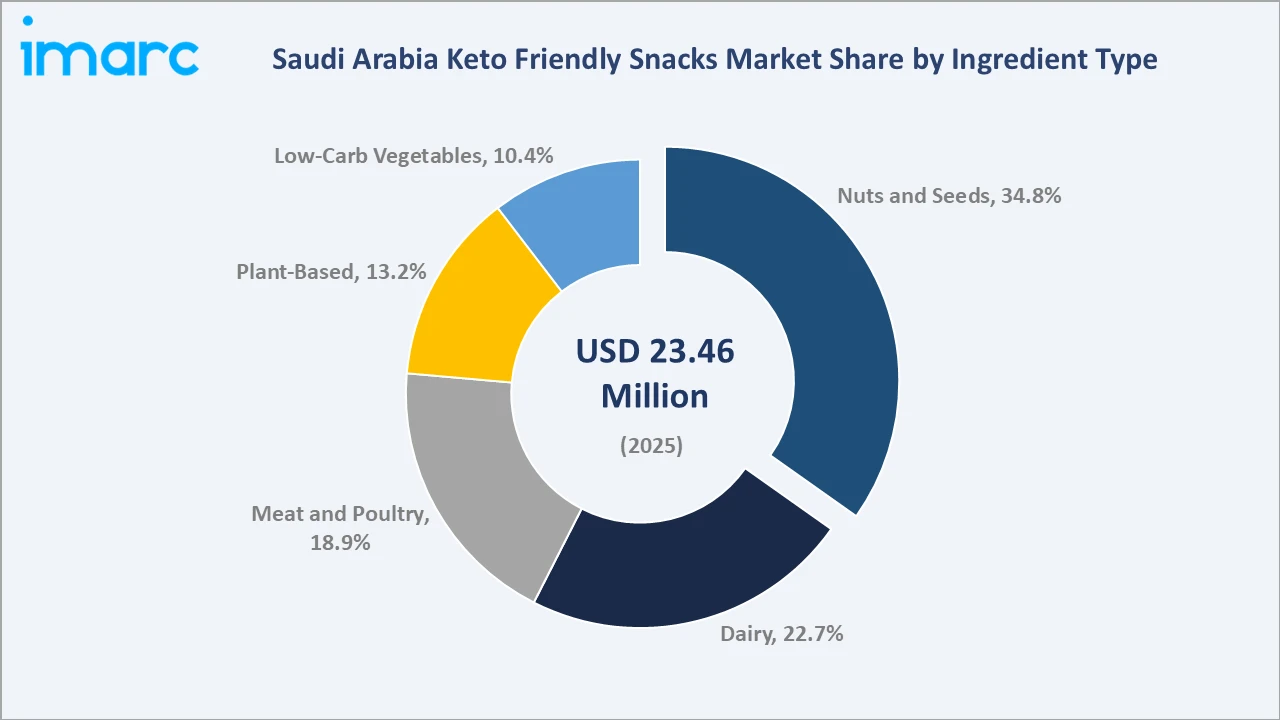
Dairy-based ingredients hold 22.7% share through cheese-based and yogurt-derived snack formats, while meat and poultry account for 18.9% share via jerky and protein-based snack formats. Plant-based ingredients, at 13.2% share, are expanding fastest at approximately 11.5% CAGR (2026-2034), and low-carb vegetables complete the segmentation at 10.4% share, supported by rising interest in vegetable-based crisps and chips.
Regional Market Insights
|
Region |
Share (2025) |
Key Growth Drivers & Characteristics |
|
Northern & Central Region |
39.8% |
Highest population density and disposable income concentrated around Riyadh; strong presence of premium supermarkets and specialty health food retailers |
|
Western Region |
27.6% |
Jeddah's cosmopolitan consumer base and Makkah-Madinah pilgrimage traffic support elevated health food retail demand and tourism-linked snacking |
|
Eastern Region |
19.1% |
Growing expatriate professional population and industrial urban centers driving demand for convenient, health-oriented snacking options |
|
Southern Region |
13.5% |
Emerging retail infrastructure development and gradually increasing health awareness supporting nascent keto snack demand growth |
The Northern and Central Region's 39.8% dominance reflects Riyadh's status as Saudi Arabia's economic and administrative capital, home to the highest concentration of premium supermarkets, specialty health stores, and health-conscious high-income consumers.
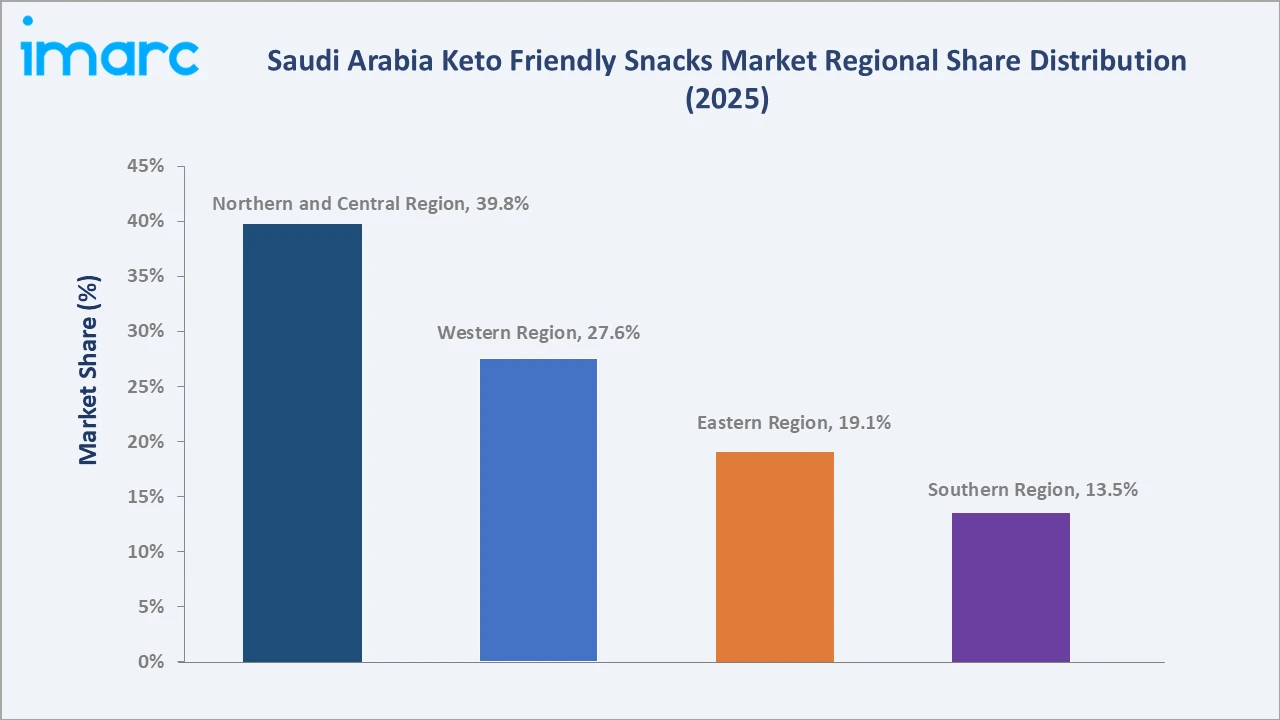
The Western Region's 27.6% share is anchored by Jeddah's cosmopolitan retail landscape and consistent pilgrimage-driven visitor traffic through Makkah and Madinah, sustaining year-round demand for convenient, health-positioned snack formats. The Eastern Region's 19.1% share reflects its growing expatriate professional base and industrial urban centers, while the Southern Region's 13.5% share is expected to see gradual gains as retail infrastructure and health awareness continue to develop.
Competitive Landscape
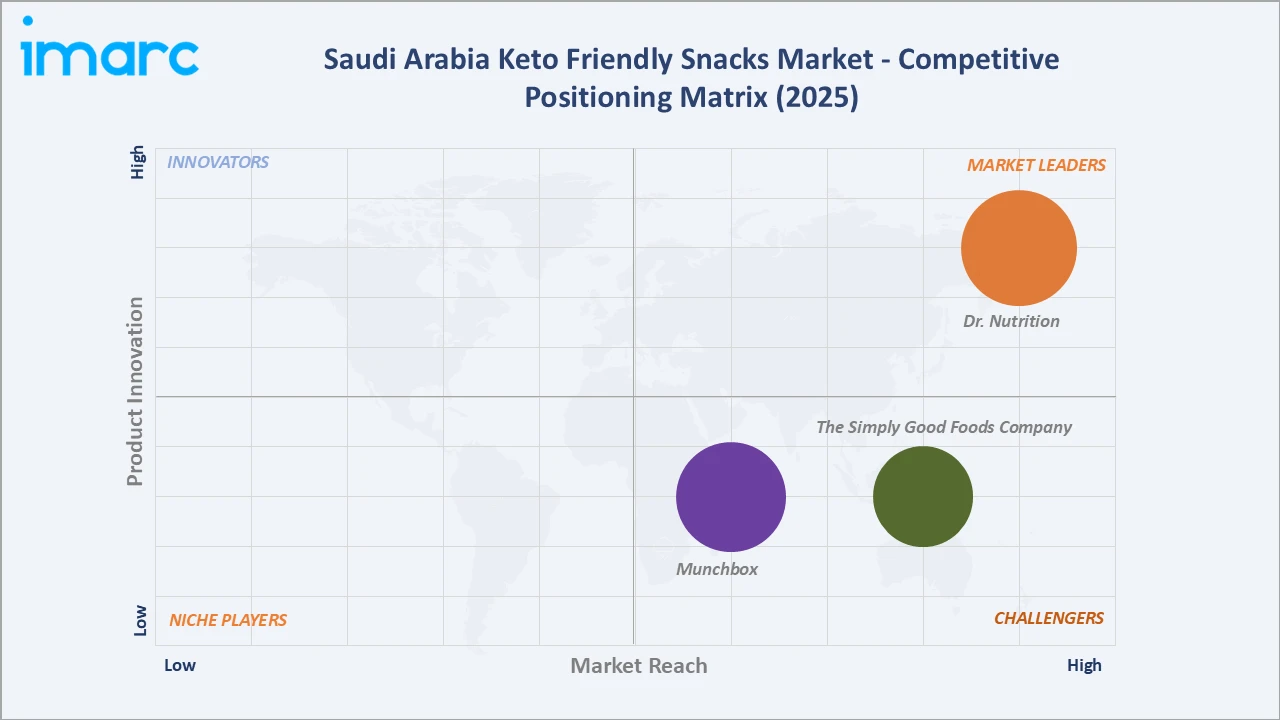
Saudi Arabia's keto friendly snacks market is moderately fragmented, with international nutrition brands competing alongside expanding regional health-snack companies and diversifying mainstream snack manufacturers entering the low-carbohydrate category.
|
Company Name |
Brand / Product Line |
Market Position |
Core Strength |
|
Dr. Nutrition |
Laperva keto bar, keto fit (chocolate caramel & peanut), keto cookies, keto cake protein bars |
Market Leader |
Owns in-house health and wellness brand-Laperva, established sports-nutrition brand with wide Kingdom distribution and strong keto product range |
|
The Simply Good Foods Company |
Quest protein bars, protein cookies, peanut butter cups, protein chips |
Strong Challenger |
Owns Quest Nutrition, globally recognized high-protein, low-carb snack innovator with growing GCC retail and online presence |
|
Munchbox |
Keto cookies, chocolate bars, choco malts |
Strong Challenger |
GCC-focused healthy snacking brand with dedicated keto product portfolio and regional manufacturing base |
Competitive intensity is increasing as global nutrition brands expand GCC distribution agreements while regional players such as Munchbox scale local manufacturing capacity, and mainstream snack producers explore keto-formulated product line extensions to capture rising demand.
Key Company Profiles
Dr. Nutrition
Dr. Nutrition is a specialized health and wellness company, specializing in personalized nutritional consultations and a wide array of natural supplements, diet plans, and weight management programs. It owns an in-house health and wellness brand, Laperva.
- Product Portfolio: Laperva keto bar, keto fit (chocolate caramel & peanut), keto cookies, keto cake protein bars, and others.
- Strategic Focus: Broadening keto-specific product lines while strengthening GCC distributor partnerships.
The Simply Good Foods Company
The Simply Good Foods Company, which owns Quest Nutrition, is a US-based company specializing in high-protein, low-carbohydrate snack formats, with growing availability across Saudi Arabia's online and specialty retail channels.
- Product Portfolio: Quest protein bars, protein cookies, peanut butter cups, protein chips, and others.
- Strategic Focus: Leveraging global brand recognition to grow GCC online retail penetration.
Market Concentration Analysis
Saudi Arabia's keto friendly snacks market exhibits moderate fragmentation, with no single company commanding a dominant share. Leading brands such as Laperva, Quest Nutrition, and Munchbox collectively account for an estimated 30-38% of total market value (2025), reflecting a competitive landscape still open to new entrants.
Fragmentation is most pronounced in the mid-tier and emerging local brand segments, where smaller Saudi and regional producers compete on price and product freshness. Consolidation activity remains limited, though international brands are increasingly pursuing direct GCC distribution agreements to strengthen market positioning ahead of anticipated category growth through 2034.
Investment & Growth Opportunities
Fastest Growing Segments
Plant-based keto ingredients (~11.5% CAGR), spicy-flavored snacks (~9.6% CAGR), and online distribution channels represent Saudi Arabia's highest-growth investment vectors through 2034, supported by evolving consumer taste preferences and rising e-commerce adoption.
Emerging Market Opportunities
Vision 2030's food manufacturing localization incentives create a viable pathway for domestic keto snack production, potentially reducing import dependence while positioning Saudi Arabia as a regional keto snack export hub serving the broader GCC market.
Investment Themes
- Clean-label product development: Rising consumer demand for ingredient transparency creates opportunities for brands investing in minimally processed, recognizable-ingredient keto snack formulations.
- Digital-first retail expansion: Growing e-commerce penetration supports investment in direct-to-consumer platforms, subscription snack boxes, and digital wellness community partnerships.
- Regional manufacturing localization: Establishing Saudi-based keto snack production facilities could capture Vision 2030 incentives while improving cost competitiveness against imported alternatives.
Future Market Outlook (2026-2034)
The Saudi Arabia keto friendly snacks market is projected to grow from USD 23.46 Million in 2025 to USD 48.51 Million by 2034, at an 8.41% CAGR, reflecting sustained structural demand supported by Vision 2030's wellness agenda and evolving consumer dietary preferences.
The market's USD 35.12 Million milestone in 2030 will be shaped by continued retail and e-commerce expansion, with plant-based and clean-label innovation serving as key differentiators for brands competing for shelf space and consumer loyalty. Sustained investment in domestic manufacturing and product localization is expected to further support category growth through 2034.
Research Methodology
Primary Research
Primary research comprised structured interviews with industry stakeholders, including regional snack distributors and importers, specialty health retail managers from Riyadh and Jeddah, and nutrition brand category managers operating in the Saudi market.
Secondary Research
Secondary research encompassed Saudi Food and Drug Authority (SFDA) food labeling and import data, Saudi General Authority for Statistics (GASTAT) demographic and health data, Vision 2030 wellness initiative documentation, and company disclosures from major nutrition and snack brands operating in Saudi Arabia.
Forecasting Models
Market value forecasts were developed using segmented flavor, ingredient-type, and regional demand models, validated against historical retail and e-commerce growth trends and Saudi Arabia's demographic and health-expenditure trajectories through 2034.
Saudi Arabia Keto Friendly Snacks Market Report Coverage:
| Report Features | Details |
|---|---|
| Base Year of the Analysis | 2025 |
| Historical Period | 2020-2025 |
| Forecast Period | 2026-2034 |
| Units | Million USD |
| Scope of the Report |
Exploration of Historical Trends and Market Outlook, Industry Catalysts and Challenges, Segment-Wise Historical and Future Market Assessment:
|
| Flavours Covered | Savory, Sweet, Mild, Spicy |
| Ingredients Types Covered | Nuts And Seeds, Low-Carb Vegetables, Meat And Poultry, Dairy, Plant-Based |
| Distribution Channels Covered | Supermarkets and Hypermarkets, Convenience Stores, Online Retailers, Specialty Stores, Pharmacies |
| Regions Covered | Northern and Central Region, Western Region, Eastern Region, Southern Region |
| Companies Covered | Dr. Nutrition, The Simply Good Foods Company, Munchbox, etc. |
| Customization Scope | 10% Free Customization |
| Post-Sale Analyst Support | 10-12 Weeks |
| Delivery Format | PDF and Excel through Email (We can also provide the editable version of the report in PPT/Word format on special request) |
Key Benefits for Stakeholders:
- IMARC’s industry report offers a comprehensive quantitative analysis of various market segments, historical and current market trends, market forecasts, and dynamics of the Saudi Arabia keto friendly snacks market from 2020-2034.
- The research report provides the latest information on the market drivers, challenges, and opportunities in the Saudi Arabia keto friendly snacks market.
- Porter's five forces analysis assist stakeholders in assessing the impact of new entrants, competitive rivalry, supplier power, buyer power, and the threat of substitution. It helps stakeholders to analyze the level of competition within the Saudi Arabia keto friendly snacks industry and its attractiveness.
- Competitive landscape allows stakeholders to understand their competitive environment and provides an insight into the current positions of key players in the market.
Frequently Asked Questions About the Saudi Arabia Keto Friendly Snacks Market Report
The Saudi Arabia keto friendly snacks market reached USD 23.46 Million in 2025, driven by rising health consciousness, lifestyle-disease awareness, and expanding retail accessibility of low-carbohydrate snack formats.
The market is projected to grow at a CAGR of 8.41% during 2026-2034, reaching USD 48.51 Million by 2034, supported by Vision 2030 wellness initiatives and product innovation.
Savory flavors lead at 39.4% share (2025), reflecting strong cultural preference for salty and spiced snacking formats among Saudi consumers across all major regions.
Nuts and seeds hold the largest ingredient type share at 34.8% (2025), owing to their natural alignment with ketogenic fat-to-carbohydrate dietary requirements.
Spicy flavors grow fastest at an estimated 9.6% CAGR (2026-2034), driven by rising demand for bold, regionally inspired seasoning profiles among Saudi consumers.
The Northern and Central Region leads with 39.8% market share (2025), anchored by Riyadh's high concentration of disposable income and dense specialty retail network.
Leading companies include Dr. Nutrition, The Simply Good Foods Company, and Munchbox, among others operating across the Kingdom.
Vision 2030 creates preventive healthcare incentives, wellness campaigns, and food manufacturing localization opportunities, driving structural demand for functional keto snack products.
The market is projected to reach approximately USD 35.12 Million by 2030, supported by continued retail expansion and rising ketogenic diet adoption across the Kingdom.
The market is segmented into nuts and seeds, dairy, meat and poultry, plant-based, and low-carb vegetables, with nuts and seeds leading at 34.8% share (2025).
Key challenges include premium pricing versus conventional snacks, import dependence for specialty ingredients, and limited consumer awareness beyond major metropolitan areas.
Need more help?
- Speak to our experienced analysts for insights on the current market scenarios.
- Include additional segments and countries to customize the report as per your requirement.
- Gain an unparalleled competitive advantage in your domain by understanding how to utilize the report and positively impacting your operations and revenue.
- For further assistance, please connect with our analysts.
 Request Customization
 Speak to an Analyst
 Request Brochure
 Inquire Before Buying
Benefits of Customization
- Personalize this research
- Triangulate with your data
- Get data as per your format and definition
- Gain a deeper dive into a specific application, geography, customer, or competitor
- Any level of personalization
Get in Touch With Us
UNITED STATES
Phone: +1-201-971-6302
INDIA
Phone: +91-120-433-0800
UNITED KINGDOM
Phone: +44-753-714-6104
Email: [email protected]
Client Testimonials




.webp)




.webp)













Related Reports

Choose your plan
*Please note that the prices mentioned below are starting prices for each bundle type. Kindly contact our team for further details.*
Single User License
- 1 User License, Access on 2 Devices
- PDF Report + Excel Dataset (Password Protected)
- Lifetime Access
- No Printing Rights
- 10% Free Report Customization
- 10–12 Weeks of Analyst Support
Five User License
- Access for 5 Users, 2 Devices per User
- PDF Report + Excel Dataset (Password Protected)
- Lifetime Access
- Dedicated Account Manager
- 12–14 Weeks of Analyst Support
- No Printing Rights
- 15% Free Report Customization
- 25% Discount on Your Next Purchase
Corporate User License
- Unlimited User Access (Within Your Organization)
- PDF Report + Excel Dataset
- Lifetime Access
- Dedicated Account Manager
- 14–20 Weeks of Analyst Support
- No Printing Rights
- 20% Free Report Customization
- 30% Discount on Your Next Purchase
Essential Insights
What's included:
3 reports
- Lifetime Access
- PDF Reports
- Excel Datasets
- 2 Weeks of Free Analyst Support
- 2 User Licenses
- Access on 2 Devices
- Printing Rights
- Complimentary PowerPoint (PPT) Version
- Complimentary License Upgrade
Professional Access
What's included:
5 reports
- Lifetime Access
- PDF Reports
- Excel Datasets
- 8 Weeks of Free Analyst Support
- 2 User Licenses
- Access on 2 Devices
- Printing Rights
- Complimentary PowerPoint (PPT) Version
- Complimentary License Upgrade
Business Advantage
What's included:
8 reports
- Lifetime Access
- PDF Reports
- Excel Datasets
- 14 Weeks of Free Analyst Support
- 2 User Licenses
- Access on 2 Devices
- Printing Rights
- Complimentary PowerPoint (PPT) Version
- Complimentary License Upgrade
Enterprise Intelligence
What's included:
10 reports
- Lifetime Access
- PDF Reports
- Excel Datasets
- 20 Weeks of Free Analyst Support
- 2 User Licenses
- Access on 2 Devices
- Printing Rights
- Complimentary PowerPoint (PPT) Version
- Complimentary License Upgrade