
Saudi Arabia Kidswear Market Size, Share, Trends and Forecast by Gender, Category, Season, Sector, Sales Channel, and Region, 2026-2034
Saudi Arabia Kidswear Market Size, Share, Trends & Forecast (2026-2034)
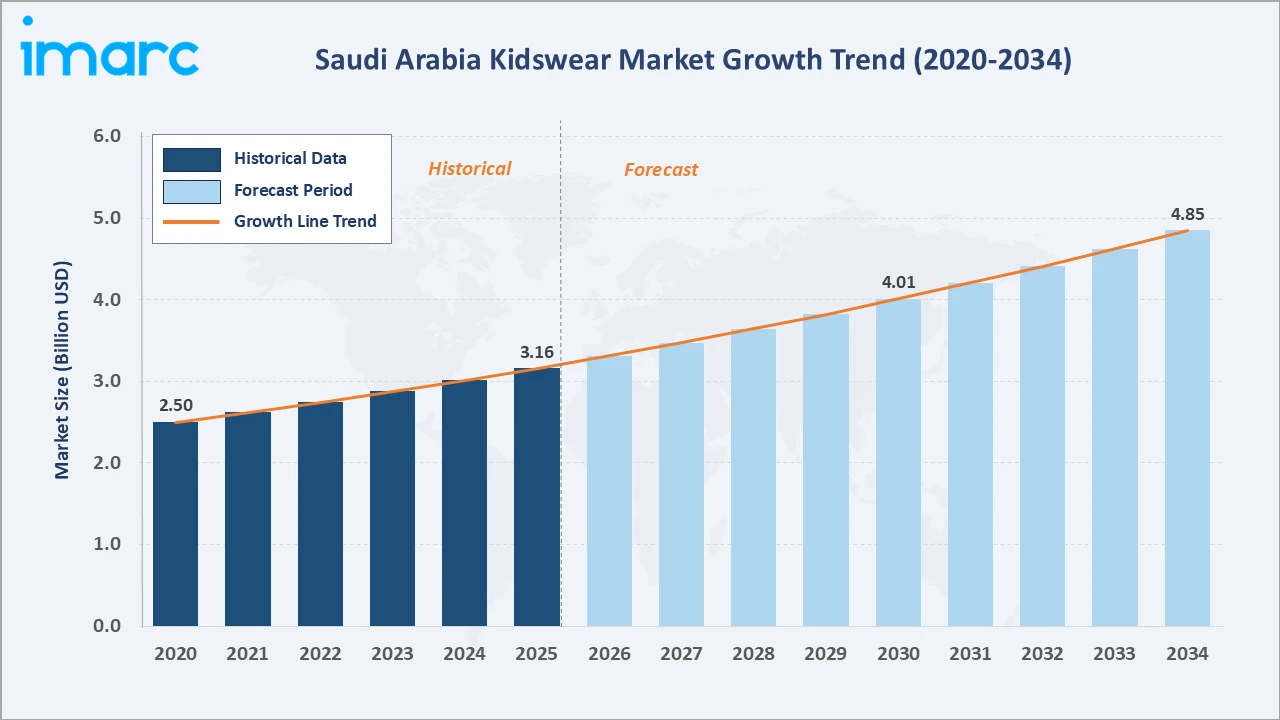
The Saudi Arabia kidswear market size increased from USD 3.16 Billion in 2025 to USD 3.32 Billion in 2026 and is projected to reach USD 4.85 Billion by 2034, expanding at a CAGR of 4.86% during 2026-2034. Growth is anchored in the Kingdom's demographic profile, with the General Authority for Statistics reporting that children aged 0-14 years made up 24% of Saudi Arabia's 35 million population in 2025. Rising disposable incomes under Vision 2030, expanding organized retail networks, and a fast-growing e-commerce channel continue to widen access to branded kidswear across the Kingdom. All season wear leads consumption at 48.5% share in 2025, while the Northern and Central Region, anchored by Riyadh, commands the largest regional share at 39.1%.
Market Snapshot
|
Metric |
Value |
|
Base Year Market Size (2025) |
USD 3.16 Billion |
| Market Size (2026) | USD 3.32 Billion |
|
Forecast Market Size (2034) |
USD 4.85 Billion |
|
CAGR (2026-2034) |
4.86% |
|
Base Year |
2025 |
|
Historical Period |
2020-2025 |
|
Forecast Period |
2026-2034 |
|
Largest Segment (Season) |
All Season Wear (48.5%, 2025) |
|
Dominant Region |
Northern & Central Region (39.1%, 2025) |
The market expanded from USD 2.50 Billion in 2020 to USD 3.16 Billion in 2025 and an estimated USD 3.32 Billion in 2026, anchored at USD 4.01 Billion in 2030 and forecast to reach USD 4.85 Billion by 2034. This trajectory is supported by the Kingdom's young population base, Vision 2030's economic diversification agenda, and the Saudi Fashion Commission's push to build a domestic apparel manufacturing and design ecosystem valued at nearly USD 40 Billion by 2028 across the wider fashion sector.
To get more information on this market, Request Sample
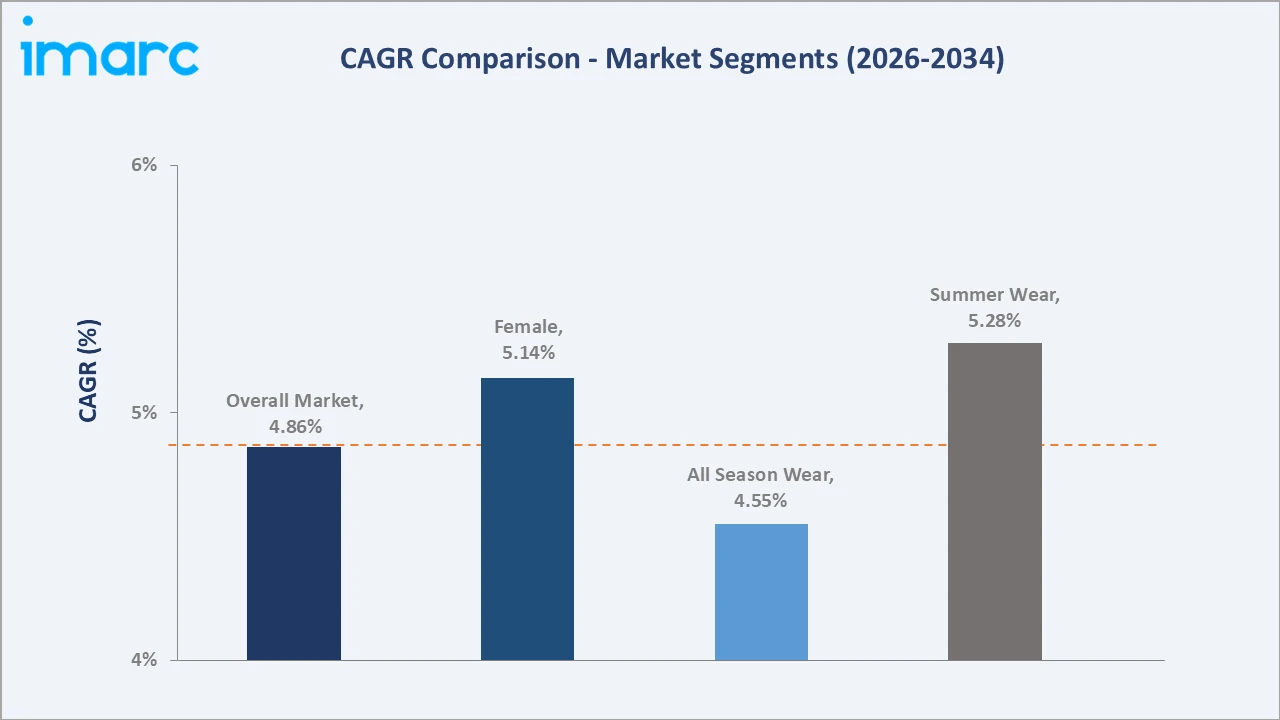
Female kidswear is growing marginally faster than male kidswear as parents increase spending on girls' dresses and occasion wear for Riyadh Season and Jeddah Season events. Summer wear also outpaces the overall market, a pattern consistent with the Kingdom's extended warm-weather season and school uniform replacement cycles that peak ahead of the academic year.
Executive Summary
The Saudi Arabia kidswear market, which increased from USD 3.16 Billion in 2025 to an estimated USD 3.32 Billion in 2026, propelled by one of the youngest population structures in the Middle East and a policy environment under Vision 2030 that is actively reshaping the Kingdom's retail and fashion landscape. GASTAT data shows Saudi Arabia's population climbed to 35 million in 2025, with the 0-14 age cohort accounting for roughly 8 million children, a base that sustains recurring demand for apparel, footwear, and accessories.
The market is projected to reach USD 4.85 Billion by 2034 at a 4.86% CAGR, supported by rising household incomes, growing organized retail penetration, and accelerating online kidswear sales. Retail groups such as Landmark Group, Chalhoub Group, and Alshaya Group continue to expand flagship store formats across Riyadh, Jeddah, and secondary cities, while government-backed initiatives including the Saudi Fashion Commission's Saudi 100 Brands programme are gradually building local design and manufacturing capacity.
All season wear commands the largest share among season categories at 48.5% in 2025, reflecting Saudi Arabia's climate and modest-fashion preferences that favour versatile, year-round garments. The Northern and Central Region leads geographically at 39.1% share, anchored by Riyadh's population density and retail infrastructure, while the Southern Region is expected to post the fastest regional growth through 2034 as retail formalization extends into secondary cities.
Key Market Insights
|
Insight |
Data |
|
Largest Season Category |
All Season Wear - 48.5% share (2025) |
|
Gender Split |
Male 52.3% / Female 47.7% (2025) |
|
Dominant Region |
Northern & Central Region - 39.1% share (2025) |
|
Fastest Growing Season Category |
Summer Wear - highest segment CAGR (2026-2034) |
|
Top Companies |
Landmark Group, Chalhoub Group, AFG International Company, and Alshaya Group |
|
Market Opportunity |
Localized manufacturing and premium modest-fashion kidswear lines |
Key Analytical Observations Supporting The Above Data:
- All season wear at 48.5% share (2025) driven by climate-adapted, versatile garment demand: Saudi households favour breathable, modest-styled clothing that can transition across indoor and outdoor settings, reducing the need for frequent seasonal wardrobe changes.
- Male kidswear leads gender share at 52.3%, though female kidswear is growing at a marginally faster pace: parents are increasing spend on girls' dresses, ethnic wear, and occasion-led outfits tied to festive and cultural events.
- Northern and Central Region dominant at 39.1% share: Riyadh's concentration of shopping malls, population density, and household income levels anchors the region's outsized contribution to national kidswear sales.
- Organized retail continues to gain share from traditional souks and independent stores as international and regional chains expand flagship formats across major Saudi cities.
- E-commerce is expanding rapidly, with online retail representing an increasing share of total online sales in the Kingdom as smartphone-led shopping becomes mainstream among parents.
- Government-backed fashion sector development, including manufacturing and textile investment led by the Saudi Fashion Commission, is gradually reducing reliance on imported kidswear.
Saudi Arabia Kidswear Market Overview
Saudi Arabia's kidswear market covers apparel, footwear, and accessories designed for infants, toddlers, and children through the teenage years. The market is served through a mix of organized retail chains, hypermarkets, specialty stores, and a rapidly expanding online channel, with brands ranging from value-focused domestic retailers to premium international labels.
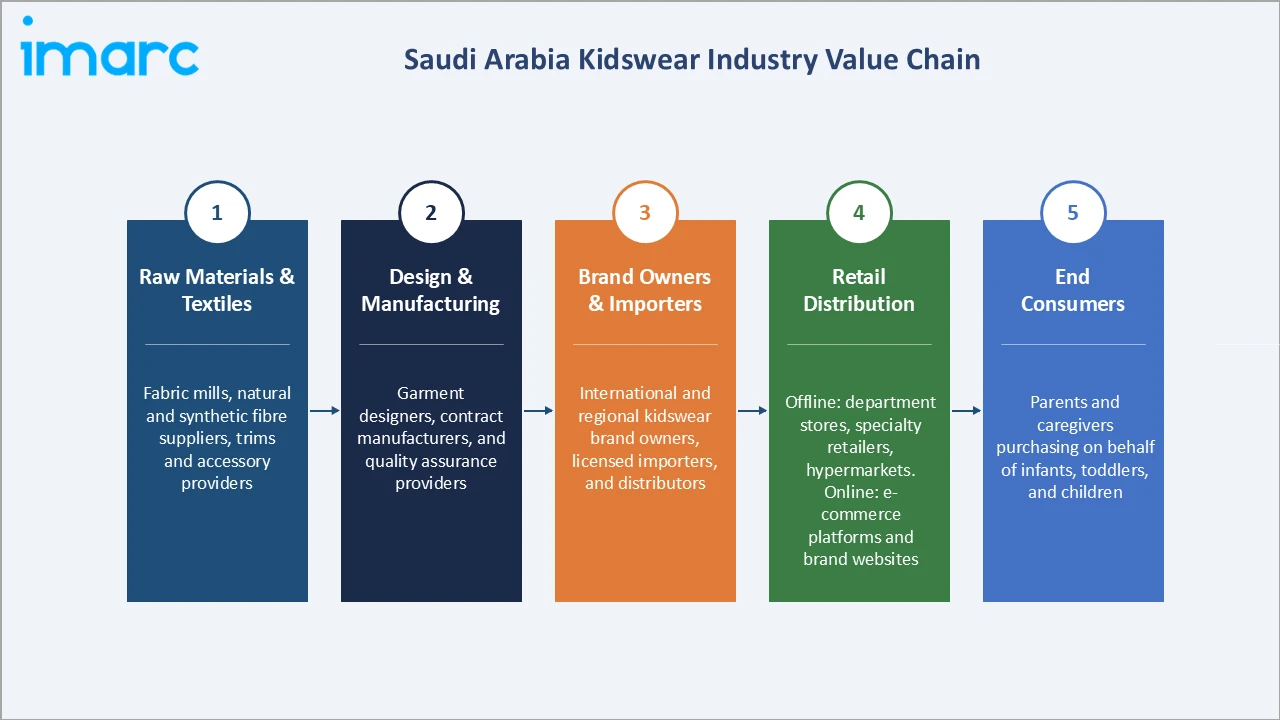
The ecosystem spans textile and raw material sourcing, design and manufacturing (largely import-driven), brand distribution, and multi-channel retail. Macroeconomic tailwinds include Vision 2030's economic diversification, GASTAT-reported income growth in non-oil sectors, and continued urbanization that concentrates retail demand in Riyadh, Jeddah, and the Eastern Province.
Market Dynamics
To evaluate market opportunities, Request Sample
Market Drivers
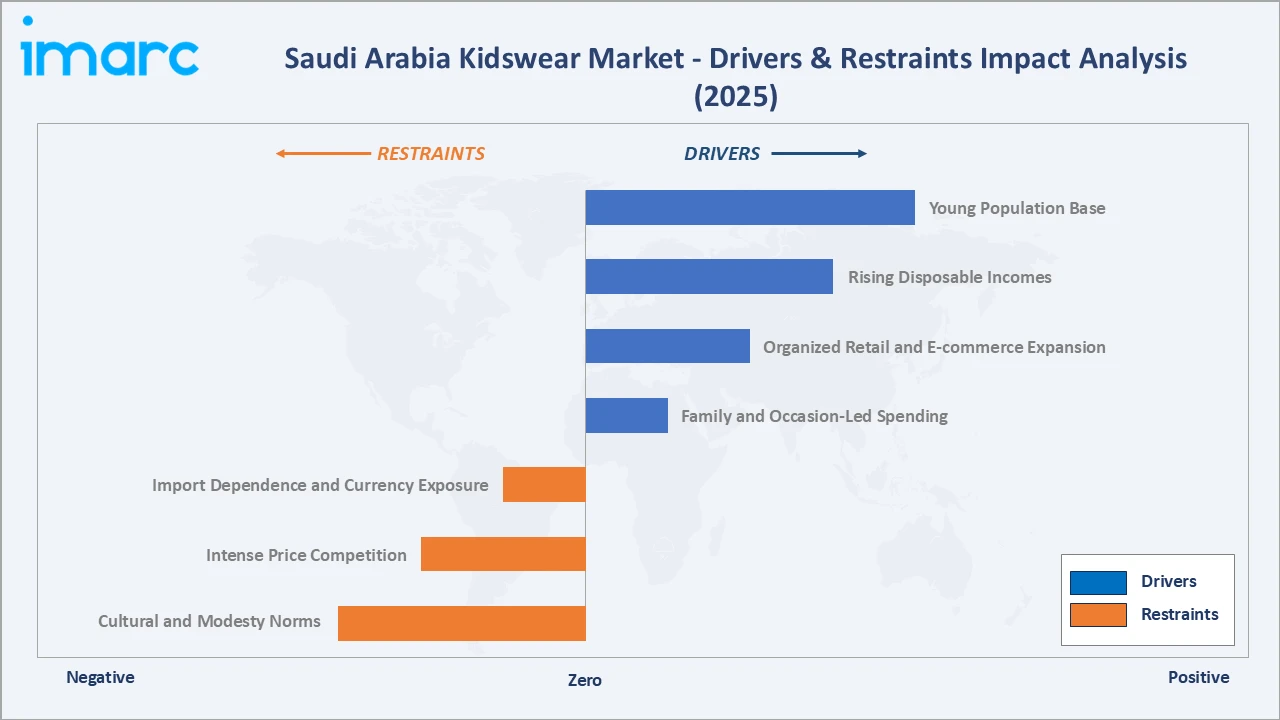
- Young Population Base: GASTAT's 2025 population estimates confirm that children aged 0-14 represent 24% of Saudi Arabia's population, a structurally large base that sustains recurring kidswear demand as children outgrow garments every season.
- Rising Disposable Incomes: Vision 2030's economic diversification is lifting household incomes in non-oil sectors, giving parents greater capacity to spend on branded, quality kidswear rather than basic substitutes.
- Organized Retail and E-commerce Expansion: Retail groups are opening larger-format flagship stores across major cities while online kidswear sales grow on the back of smartphone-led shopping and social media discovery.
- Family and Occasion-Led Spending: Riyadh Season, Jeddah Season, and religious and cultural celebrations create recurring demand spikes for children's occasion wear and festive outfits.
Market Restraints
- Import Dependence and Currency Exposure: A large share of Saudi Arabia's kidswear supply is imported, exposing retailers to global freight costs and exchange rate movements.
- Intense Price Competition: The presence of value-focused domestic chains alongside international brands creates pricing pressure, particularly in the mass-market segment.
Market Opportunities
- Local Manufacturing Development: The Saudi Fashion Commission's investment in textile mills, product development studios, and the Saudi 100 Brands programme creates an opening for domestic kidswear production.
- Premium Modest-Fashion Kidswear: Rising demand for stylish yet culturally aligned children's clothing creates room for brands that combine modern design with modest fashion sensibilities.
Market Challenges
- Cultural and Modesty Norms: Brands must design collections that respect local cultural sensitivities, which can limit the breadth of styles offered compared with other markets.
- Fragmented Small-Format Retail: A large number of independent and unorganized stores remain in secondary cities, complicating brand standardization and quality consistency.
Emerging Market Trends
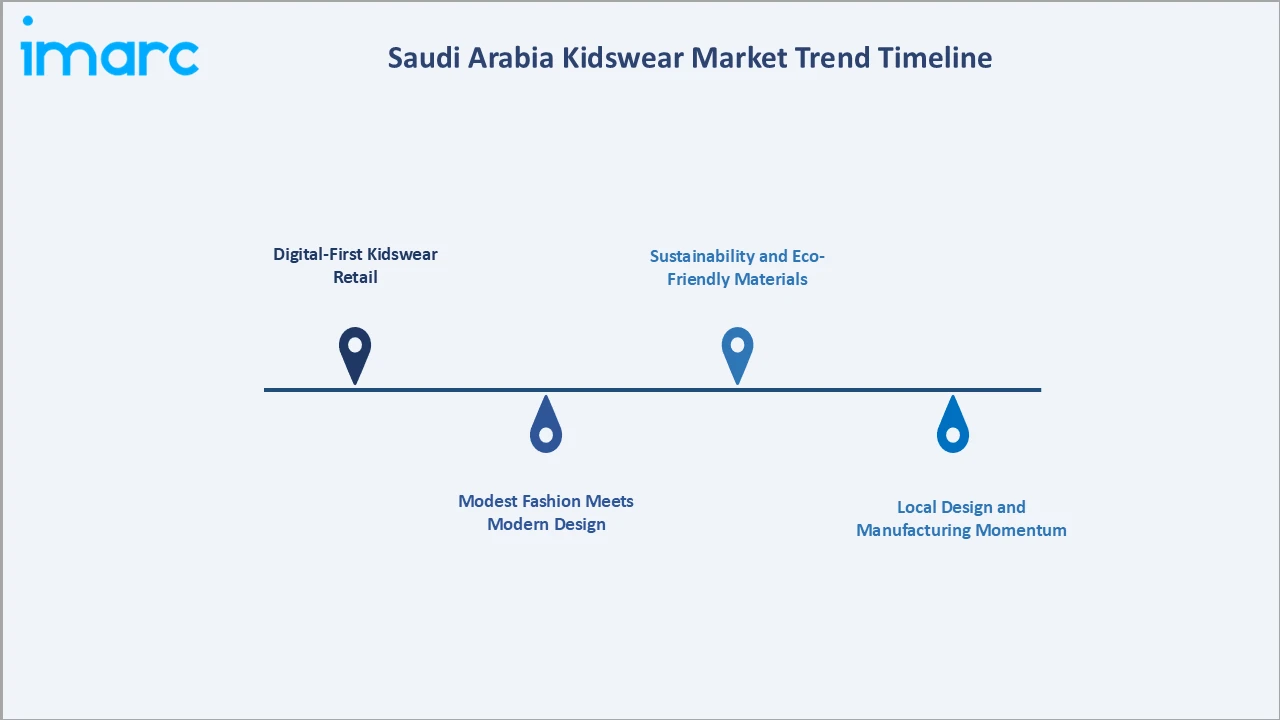
1. Digital-First Kidswear Retail
Online retail is becoming a core discovery and purchase channel for Saudi parents, with e-commerce claiming a rising share of total online retail activity in the Kingdom and most purchases now completed via smartphone.
2. Modest Fashion Meets Modern Design
Designers are blending traditional modest silhouettes with contemporary cuts and colours, positioning Saudi Arabia as an influential voice within the broader global modest fashion movement.
3. Sustainability and Eco-Friendly Materials
Parents are showing greater interest in organic cotton, recycled fabrics, and ethically produced garments, a shift aligned with the Saudi Green Initiative's broader sustainability agenda.
4. Local Design and Manufacturing Momentum
The Saudi Fashion Commission's Saudi 100 Brands programme and its product development studio are mentoring domestic designers and building manufacturing capacity that could eventually serve the kidswear category.
Industry Value Chain Analysis
Saudi Arabia's kidswear value chain spans raw material and textile sourcing, design and manufacturing, brand ownership and import distribution, and multi-channel retail reaching end consumers across offline and online formats.
|
Stage |
Key Participants |
|
Raw Materials & Textiles |
Fabric mills, natural and synthetic fibre suppliers, trims and accessory providers |
|
Design & Manufacturing |
Garment designers, contract manufacturers, and quality assurance providers |
|
Brand Owners & Importers |
International and regional kidswear brand owners, licensed importers, and distributors |
|
Retail Distribution |
Offline: department stores, specialty retailers, hypermarkets. Online: e-commerce platforms and brand websites |
|
End Consumers |
Parents and caregivers purchasing on behalf of infants, toddlers, and children |
Technology Landscape in the Saudi Arabia Kidswear Industry
Digital Commerce and Personalization
Retailers are investing in mobile-first shopping experiences, AI-assisted product recommendations, and virtual try-on style tools to improve conversion in the kidswear category. Chalhoub Group AI engine, deployed across its retail banners, illustrates how regional retailers are applying AI-led personalization to fashion retail more broadly.
Omnichannel Retail Integration
Store formats increasingly combine real-time stock visibility, click-and-collect services, and RFID-enabled self-checkout, allowing parents to move seamlessly between digital and physical shopping.
Sustainable Materials Innovation
Fabric innovation focused on organic cotton, recycled fibres, and skin-friendly finishes is gaining traction as parents prioritize comfort and environmental responsibility for children's clothing.
Local Manufacturing Technology
The Saudi Fashion Commission's product development studio is introducing modern pattern-making and prototyping technology intended to shorten development cycles for Saudi-based apparel manufacturers.
Market Segmentation Analysis
The report covers following segments:
|
Segment Category |
Leading Segment |
Market Share |
Year |
|
Gender |
Male |
52.3% |
2025 |
|
Category |
🔒 |
🔒 |
2025 |
|
Season |
All Season Wear |
48.5% |
2025 |
|
Sector |
🔒 |
🔒 |
2025 |
|
Sales Channel |
🔒 |
🔒 |
2025 |
|
Region |
Northern and Central Region |
39.1% |
2025 |

By Gender
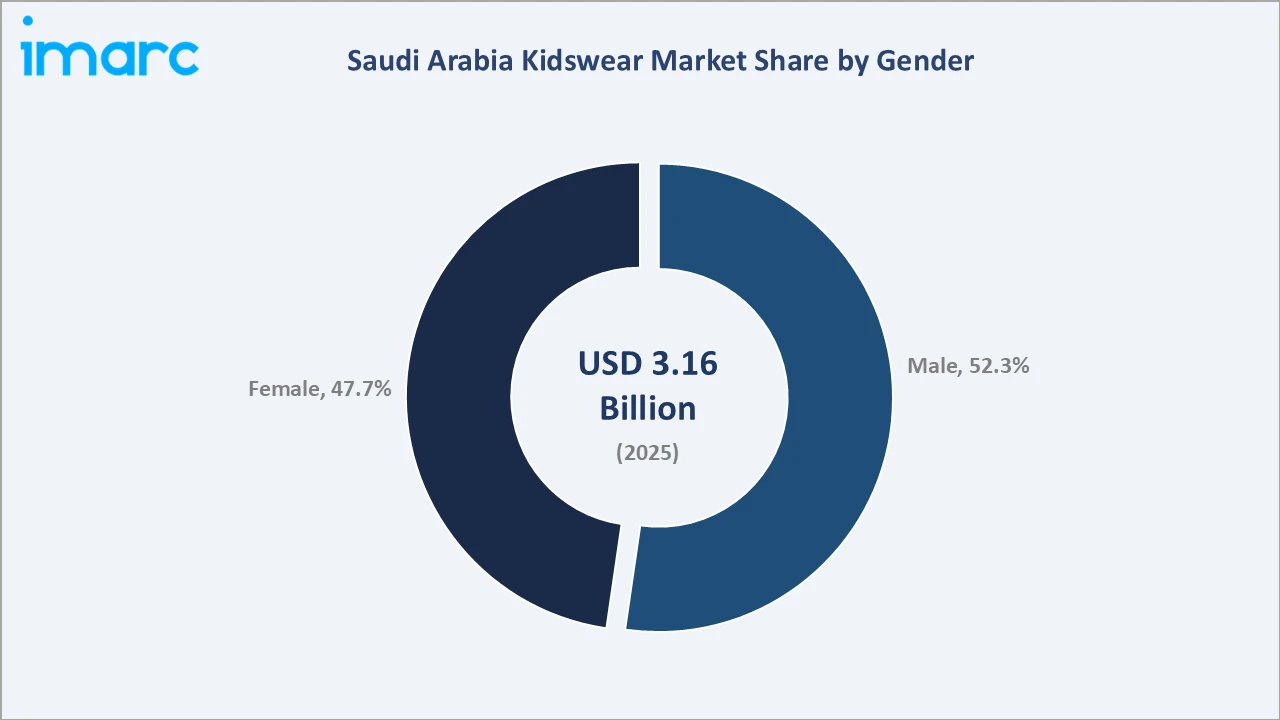
Male kidswear leads with 52.3% share in 2025, reflecting steady demand for boys' everyday wear, uniforms, and casual clothing. Female kidswear follows closely at 47.7% and is growing at a marginally faster pace as parents increase spending on girls' dresses, ethnic wear, and occasion-specific outfits.
To access detailed market analysis, Request Sample
The narrowing gap between male and female segments points to rising discretionary spend on girls' fashion, supported by social media-driven style discovery and greater availability of premium girls' collections from both regional and international brands.
By Season
All season wear dominates at 48.5% share in 2025, favoured for its versatility across Saudi Arabia's warm climate and modest-fashion preferences. Summer wear follows at 36.8% share, while winter wear accounts for 14.7%, reflecting the Kingdom's shorter cool season.
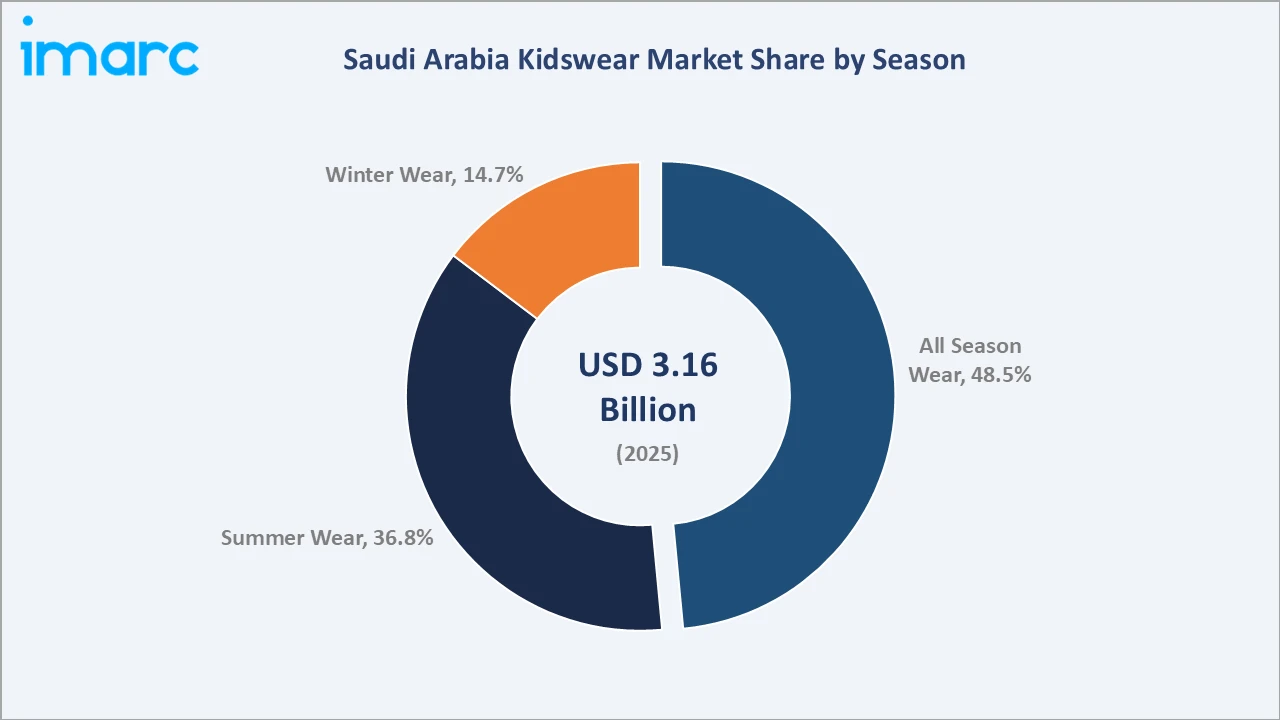
Summer wear is expanding at a faster pace than the category average, supported by extended warm-weather months and back-to-school replacement cycles that concentrate demand ahead of the academic year.
Regional Market Insights
|
Region |
Share (2025) |
Key Growth Drivers & Characteristics |
|
Northern & Central Region |
39.1% |
Highest population density and household income concentration; extensive organized retail and mall infrastructure supporting strong kidswear demand |
|
Western Region |
28.8% |
High volume of domestic and international travel and religious tourism, supporting sustained retail footfall and family-oriented shopping activity |
|
Eastern Region |
20.4% |
Strong household income levels linked to the region's industrial and energy sector employment base, supporting steady branded kidswear demand |
|
Southern Region |
11.7% |
Emerging retail infrastructure and rising urbanization gradually widening access to organized kidswear retail formats |
The Northern and Central Region's 39.1% share reflects Riyadh's position as the Kingdom's largest urban centre and its concentration of shopping malls, department stores, and household spending power.
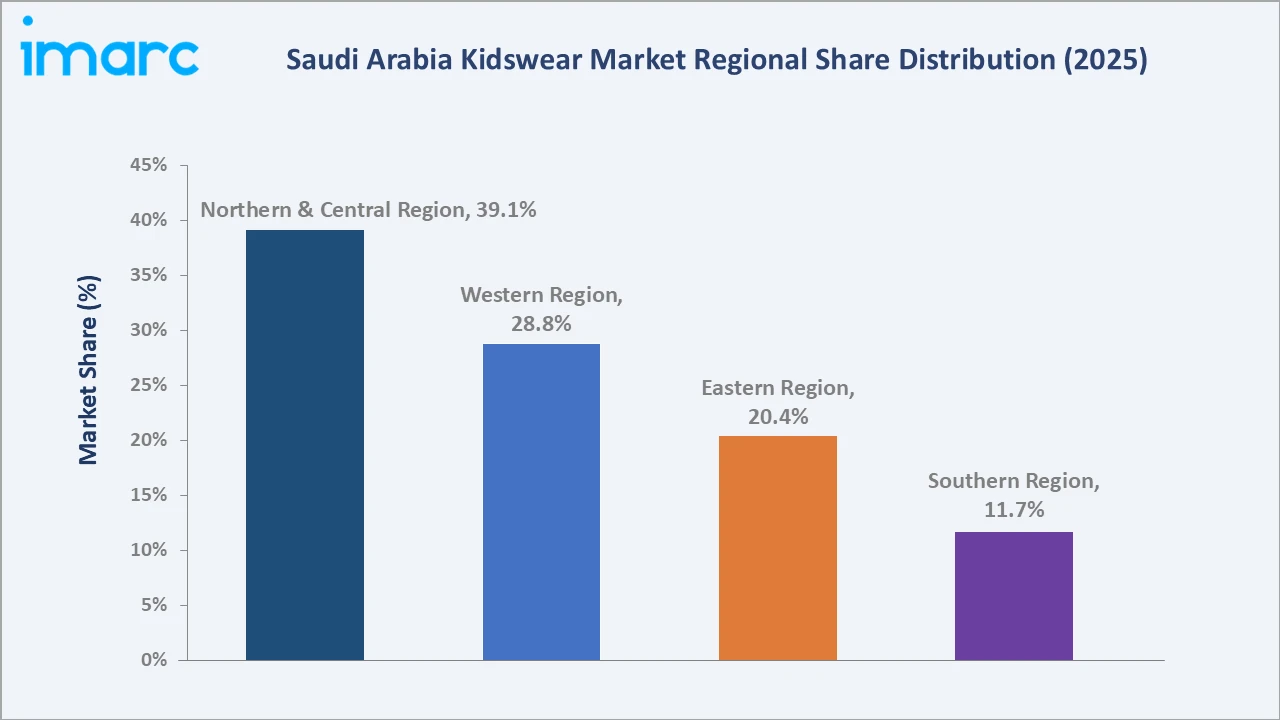
The Western Region's 28.8% share is supported by Jeddah's role as a major commercial hub and the sustained flow of religious and domestic travellers through Makkah and Madinah. The Eastern Region's 20.4% share is anchored in household incomes tied to the region's industrial base, while the Southern Region, though smallest at 11.7%, is expected to post the fastest regional growth as retail formalization extends into secondary cities.
Competitive Landscape
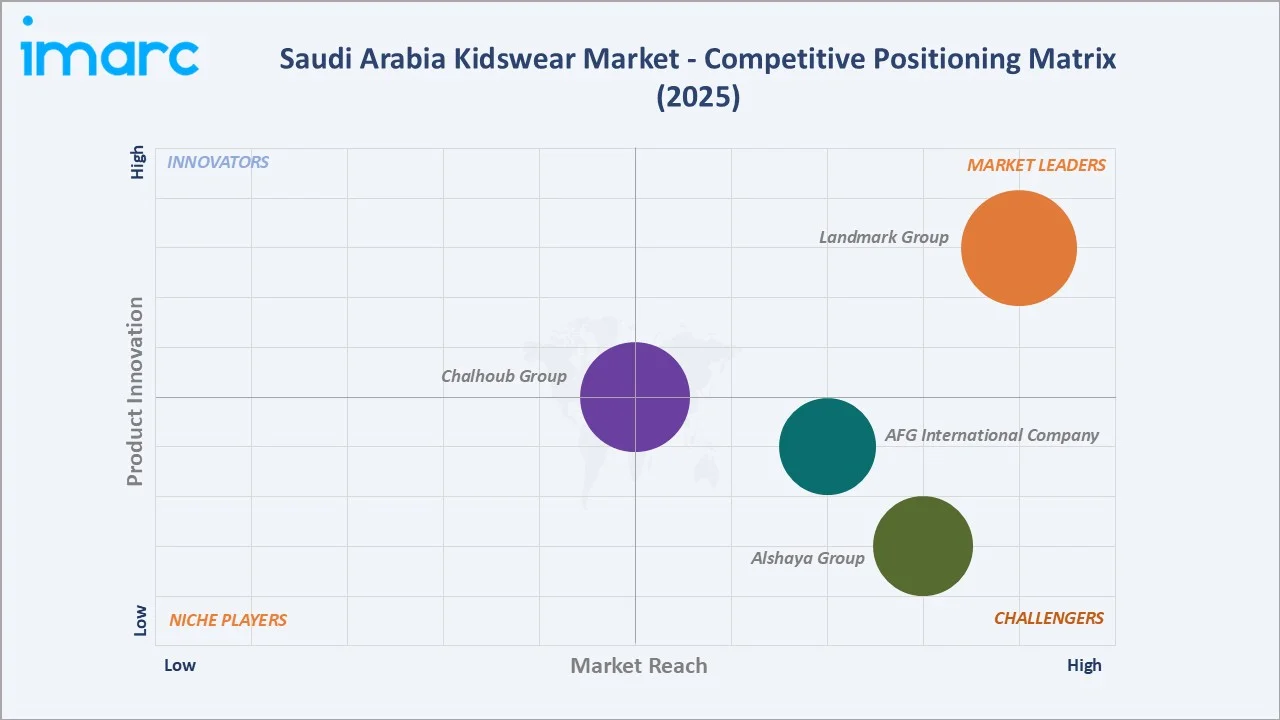
Saudi Arabia's kidswear market is moderately fragmented, with large multi-brand retail groups holding the broadest store networks alongside global fashion houses entering through franchise and joint-venture partnerships.
|
Company Name |
Brand / Product Line |
Market Position |
Core Strength |
|
Landmark Group |
Babyshop, Max Fashion |
Market Leader |
Omnichannel ecosystem & concept stores, value-driven pricing & quality, deep market localization, vast retail footprint |
|
Chalhoub Group |
Kids Around |
Established Player |
Dominant as an exclusive luxury partner, holds flagship multi-brand concepts and exclusive franchises for top international brands |
|
AFG International Company |
Zara Kids, Gap Kids, Mayoral, Chicco |
Strong Challenger |
Operates through Cenomi Retail, integrating e-commerce with massive physical concept stores featuring dedicated boutique spaces for children and newborns |
|
Alshaya Group |
Mothercare, H&M Kids, Next |
Strong Challenger |
Extensive portfolio of global franchise brands and its omnichannel presence, offers a combination of diverse offerings, a strong rewards program, and localized shopping experiences |
Landmark Group's Babyshop and Max Fashion banners, operated through Landmark Arabia, together span hundreds of stores across more than 50 Saudi cities, giving the group the widest kidswear retail footprint in the Kingdom. Chalhoub Group continues to expand its luxury retail footprint, including a 2025 fulfillment hub in Riyadh supporting faster e-commerce delivery.
Key Company Profiles
Landmark Group
Landmark Group, operating in Saudi Arabia through Landmark Arabia, is one of the Kingdom's largest retail and lifestyle organizations with more than 30 years of continuous presence in the market.
- Product Portfolio: Babyshop, Max Fashion
- Strategic Focus: Store network expansion, digital-first store formats, and omnichannel integration across the Kingdom.
Chalhoub Group
Chalhoub Group is the Middle East's leading luxury retail partner, operating a broad portfolio of fashion, beauty, and lifestyle brands across Saudi Arabia through joint ventures, franchises, and owned concepts.
- Product Portfolio: Kids Around
- Strategic Focus: Luxury retail expansion in Saudi Arabia, digital fulfillment infrastructure, and support for Saudi fashion talent through its Fashion Lab programme.
Alshaya Group
Alshaya Group operates a wide portfolio of international franchise brands across the Gulf region, including dedicated kidswear and baby product retail formats in Saudi Arabia.
- Product Portfolio: Mothercare, H&M Kids, Next, and others.
- Strategic Focus: Franchise brand growth and integrated customer experience across physical and digital retail channels.
Market Concentration Analysis
Saudi Arabia's kidswear market exhibits moderate fragmentation, with large multi-brand retail groups such as Landmark Group, Chalhoub Group, and Alshaya Group holding the widest store networks, while numerous independent and unorganized retailers continue to serve secondary cities and value-conscious consumers.
No single retail group holds a dominant share of the overall kidswear market, reflecting the category's dependence on multiple international franchise partnerships and a large base of small-format stores. Consolidation is gradually progressing as leading retail groups expand flagship formats and close underperforming outlets in favour of larger, digitally integrated stores.
Investment & Growth Opportunities
Fastest Growing Segments
Female kidswear and summer wear categories are expanding faster than the overall market, alongside a rapidly growing online retail channel, positioning these areas as priority investment vectors through 2034.
Emerging Market Opportunities
The Saudi Fashion Commission's investment in domestic textile and garment manufacturing capacity creates a pathway for kidswear brands to establish localized production, reducing import dependence and supporting Vision 2030's non-oil GDP diversification goals.
Investment Themes
- Local manufacturing partnerships: Brands can align with Saudi Fashion Commission initiatives to access domestic textile and product development infrastructure.
- Digital-first retail platforms: Continued growth in online kidswear demand supports investment in dedicated e-commerce platforms and fulfillment infrastructure.
- Premium modest kidswear lines: Rising disposable incomes create room for brands blending contemporary design with culturally aligned modest fashion for children.
Future Market Outlook (2026-2034)
The Saudi Arabia kidswear market is projected to grow from USD 3.16 Billion in 2025 to USD 3.32 Billion in 2026, reaching USD 4.85 Billion by 2034, at a 4.86% CAGR, supported by the Kingdom's structurally young population and continued Vision 2030-driven income growth. The market's USD 4.01 Billion size in 2030 will reflect the combined effect of organized retail expansion, growing e-commerce penetration, and gradual localization of apparel manufacturing.
Three structural forces are expected to anchor growth through 2034: a sustained young population base that continues to generate recurring kidswear demand, rising household incomes under Vision 2030's economic diversification, and the Saudi Fashion Commission's ongoing efforts to build domestic design and manufacturing capacity that could reshape the competitive landscape over the long term.
Research Methodology
Primary Research
Primary research inputs draw on information from leading Saudi kidswear retailers, including Landmark Group, Chalhoub Group, and Alshaya Group, regarding store network expansion, digital retail investment, and consumer demand trends.
Secondary Research
Secondary research sources include General Authority for Statistics (GASTAT) population and demographic bulletins, Saudi Fashion Commission publications on fashion sector development, and company press releases and corporate websites of leading retail groups operating in the Kingdom.
Forecasting Models
Market forecasts are developed using historical growth trends anchored to base-year and forecast-year market size inputs, cross-checked against Saudi Arabia's demographic growth trajectory and macroeconomic indicators published by GASTAT.
Saudi Arabia Kidswear Market Report Coverage:
| Report Features | Details |
|---|---|
| Base Year of the Analysis | 2025 |
| Historical Period | 2020-2025 |
| Forecast Period | 2026-2034 |
| Units | Billion USD |
| Scope of the Report |
Exploration of Historical Trends and Market Outlook, Industry Catalysts and Challenges, Segment-Wise Historical and Future Market Assessment:
|
| Genders Covered | Female, Male |
| Categories Covered | Uniforms, T-Shirts/Shirts, Bottom Wear, Ethnic Wear, Dresses, Denims, Others |
| Seasons Covered | Summer Wear, Winter Wear, All Season Wear |
| Sectors Covered | Organized Sector, Unorganized Sector |
| Sales Channels Covered | Supermarkets/Hypermarkets, Exclusive Stores, Multi-Branded Stores, Online, Others |
| Regions Covered | Northern and Central Region, Western Region, Eastern Region, Southern Region |
| Companies Covered | Landmark Group, Chalhoub Group, AFG International Company, Alshaya Group, etc. |
| Customization Scope | 10% Free Customization |
| Post-Sale Analyst Support | 10-12 Weeks |
| Delivery Format | PDF and Excel through Email (We can also provide the editable version of the report in PPT/Word format on special request) |
Key Benefits for Stakeholders:
- IMARC’s industry report offers a comprehensive quantitative analysis of various market segments, historical and current market trends, market forecasts, and dynamics of the Saudi Arabia kidswear market from 2020-2034.
- The research report provides the latest information on the market drivers, challenges, and opportunities in the Saudi Arabia kidswear market.
- Porter's five forces analysis assist stakeholders in assessing the impact of new entrants, competitive rivalry, supplier power, buyer power, and the threat of substitution. It helps stakeholders to analyze the level of competition within the Saudi Arabia kidswear industry and its attractiveness.
- Competitive landscape allows stakeholders to understand their competitive environment and provides an insight into the current positions of key players in the market.
Frequently Asked Questions About the Saudi Arabia Kidswear Market Report
The Saudi Arabia kidswear market size is estimated at USD 3.32 Billion in 2026, driven by the Kingdom's young population base and rising household incomes under Vision 2030's economic diversification programme.
The market is projected to grow at a CAGR of 4.86% during 2026-2034, reaching USD 4.85 Billion by 2034, supported by organized retail expansion and growing e-commerce penetration.
Male kidswear leads with 52.3% share in 2025, while female kidswear follows at 47.7% and is growing at a marginally faster pace as spending on girls' fashion increases.
All season wear leads with 48.5% share in 2025, favoured for its versatility across Saudi Arabia's climate and modest-fashion preferences among parents.
Summer wear is growing faster than the category average, supported by the Kingdom's extended warm season and back-to-school replacement cycles.
The Northern and Central Region leads with 39.1% share in 2025, anchored by Riyadh's population density, household income levels, and organized retail infrastructure.
The Southern Region, though smallest at 11.7% share, is expected to grow fastest as organized retail formats extend into the Kingdom's secondary cities.
Leading companies include Landmark Group, Chalhoub Group, AFG International Company, and Alshaya Group, among other regional and international retail groups.
Vision 2030 is lifting household incomes, expanding organized retail infrastructure, and supporting the Saudi Fashion Commission's efforts to build domestic apparel manufacturing capacity.
The Saudi Arabia kidswear market is projected to reach approximately USD 4.01 Billion by 2030, supported by continued population growth and rising organized retail penetration.
Need more help?
- Speak to our experienced analysts for insights on the current market scenarios.
- Include additional segments and countries to customize the report as per your requirement.
- Gain an unparalleled competitive advantage in your domain by understanding how to utilize the report and positively impacting your operations and revenue.
- For further assistance, please connect with our analysts.
 Request Customization
 Speak to an Analyst
 Request Brochure
 Inquire Before Buying
Benefits of Customization
- Personalize this research
- Triangulate with your data
- Get data as per your format and definition
- Gain a deeper dive into a specific application, geography, customer, or competitor
- Any level of personalization
Get in Touch With Us
UNITED STATES
Phone: +1-201-971-6302
INDIA
Phone: +91-120-433-0800
UNITED KINGDOM
Phone: +44-753-714-6104
Email: [email protected]
Client Testimonials




.webp)




.webp)













Related Reports

Choose your plan
*Please note that the prices mentioned below are starting prices for each bundle type. Kindly contact our team for further details.*
Single User License
- 1 User License, Access on 2 Devices
- PDF Report + Excel Dataset (Password Protected)
- Lifetime Access
- No Printing Rights
- 10% Free Report Customization
- 10–12 Weeks of Analyst Support
Five User License
- Access for 5 Users, 2 Devices per User
- PDF Report + Excel Dataset (Password Protected)
- Lifetime Access
- Dedicated Account Manager
- 12–14 Weeks of Analyst Support
- No Printing Rights
- 15% Free Report Customization
- 25% Discount on Your Next Purchase
Corporate User License
- Unlimited User Access (Within Your Organization)
- PDF Report + Excel Dataset
- Lifetime Access
- Dedicated Account Manager
- 14–20 Weeks of Analyst Support
- No Printing Rights
- 20% Free Report Customization
- 30% Discount on Your Next Purchase
Essential Insights
What's included:
3 reports
- Lifetime Access
- PDF Reports
- Excel Datasets
- 2 Weeks of Free Analyst Support
- 2 User Licenses
- Access on 2 Devices
- Printing Rights
- Complimentary PowerPoint (PPT) Version
- Complimentary License Upgrade
Professional Access
What's included:
5 reports
- Lifetime Access
- PDF Reports
- Excel Datasets
- 8 Weeks of Free Analyst Support
- 2 User Licenses
- Access on 2 Devices
- Printing Rights
- Complimentary PowerPoint (PPT) Version
- Complimentary License Upgrade
Business Advantage
What's included:
8 reports
- Lifetime Access
- PDF Reports
- Excel Datasets
- 14 Weeks of Free Analyst Support
- 2 User Licenses
- Access on 2 Devices
- Printing Rights
- Complimentary PowerPoint (PPT) Version
- Complimentary License Upgrade
Enterprise Intelligence
What's included:
10 reports
- Lifetime Access
- PDF Reports
- Excel Datasets
- 20 Weeks of Free Analyst Support
- 2 User Licenses
- Access on 2 Devices
- Printing Rights
- Complimentary PowerPoint (PPT) Version
- Complimentary License Upgrade