
Saudi Arabia Massage Chair Market Size, Share, Trends and Forecast by Type, Product Type, Distribution Channel, End Use, and Region, 2026-2034
Saudi Arabia Massage Chair Market Summary:
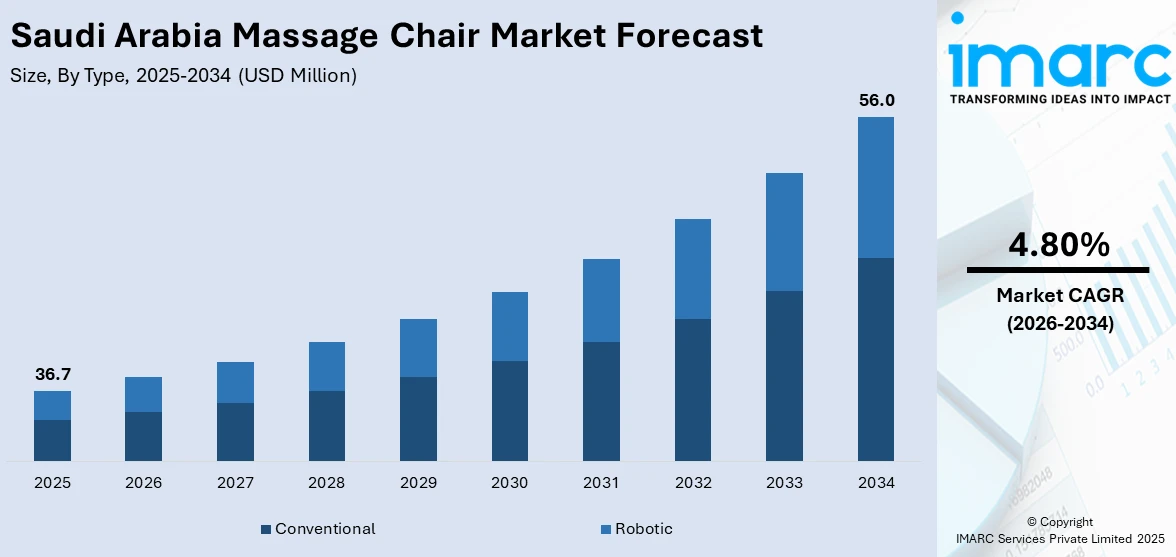
The Saudi Arabia massage chair market size was valued at USD 36.7 Million in 2025 and is projected to reach USD 56.0 Million by 2034, growing at a compound annual growth rate of 4.80% from 2026-2034.
The Saudi Arabia massage chair market is driven by increasing health consciousness among consumers, rapid urbanization, and growing preference for at-home wellness solutions. The market benefits from rising disposable incomes, government initiatives promoting healthy lifestyles under Vision 2030, and technological innovations including AI-powered features and zero gravity designs that enhance therapeutic benefits and user experience across residential and commercial segments.
Key Takeaways and Insights:
- By Type: Conventional dominates the market with a share of 57% in 2025, owing to its established presence, reliable mechanical systems, and consumer familiarity with traditional massage mechanisms that deliver consistent therapeutic experiences at accessible price points across retail channels.
- By Product Type: Zero gravity massage chairs lead the market with a share of 34% in 2025, driven by innovative ergonomic designs that distribute body weight evenly, reduce spinal pressure, and enhance circulation while providing deep relaxation and therapeutic benefits to health-conscious consumers.
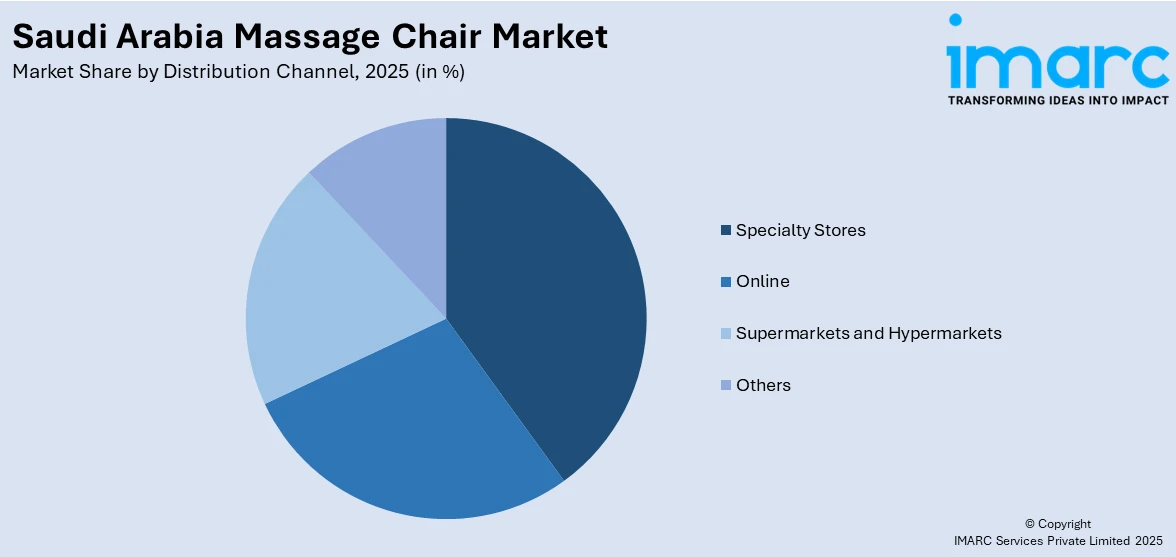
- By Distribution Channel: Specialty stores hold the largest segment with a market share of 31% in 2025, attributed to personalized customer service, product demonstrations, professional guidance, and hands-on evaluation opportunities that build consumer confidence for high-value wellness purchases.
- By End Use: Residential exhibits a clear dominance in the market with 60% share in 2025, reflecting strong consumer preference for convenient at-home relaxation solutions that offer stress relief, muscle recovery, and therapeutic benefits without requiring professional appointments.
- By Region: Northern and Central Region represents the largest region with 30% share in 2025, driven by the concentration of affluent consumers in Riyadh metropolitan area, superior retail infrastructure, high disposable incomes, and the presence of premium wellness retail establishments.
- Key Players: Key players drive the Saudi Arabia massage chair market by introducing technologically advanced products, expanding distribution networks, and implementing strategic marketing campaigns. Their investments in AI integration, ergonomic innovations, and omnichannel retail presence enhance product accessibility and consumer engagement across diverse market segments.
To get more information on this market Request Sample
The Saudi Arabia massage chair market is experiencing robust growth fueled by the convergence of health awareness initiatives, technological advancements, and evolving consumer lifestyles that prioritize wellness and self-care. Rising stress levels associated with modern urban lifestyles have intensified demand for therapeutic solutions that offer convenient relaxation without professional appointments. The market benefits from increasing female workforce participation, corporate wellness adoption, and expanding premium retail spaces across major cities. Manufacturers are responding to consumer preferences by integrating smart technologies including AI-powered body scanning, customizable massage programs, and connectivity features that enhance personalization. The growing elderly population, projected to increase five-fold between 2020-2050 from 2 million (5.9% of the total population) to 10.5 million (23.7%) by 2050, presents significant opportunities for therapeutic massage solutions addressing age-related musculoskeletal concerns and promoting overall wellbeing.
Saudi Arabia Massage Chair Market Trends:
Integration of Artificial Intelligence and Smart Technology
The Saudi Arabia massage chair market is witnessing significant adoption of AI-powered features that deliver personalized therapeutic experiences. Modern chairs incorporate intelligent body scanning technology, biometric sensors, and adaptive massage programs that automatically adjust intensity based on user feedback and physical conditions. These innovations enable precise targeting of muscle tension areas, enhancing therapeutic efficacy while meeting the growing demand from tech-savvy consumers seeking customized wellness solutions tailored to their individual health requirements.
Growing Preference for Home-Based Wellness Solutions
Consumer behavior in Saudi Arabia is shifting toward at-home wellness experiences that offer convenience and privacy. The residential segment dominates market demand as consumers increasingly invest in massage chairs that provide spa-quality therapeutic benefits within domestic settings. This trend is amplified by busy professional lifestyles, cultural preferences for family-oriented home environments, and the growing availability of premium massage chairs through specialized retail outlets and e-commerce platforms serving affluent households.
Rising Demand for Zero Gravity and Ergonomic Designs
Zero gravity massage chairs are gaining substantial traction among health-conscious consumers in Saudi Arabia due to their superior ergonomic benefits. These advanced designs position users in a reclined posture that reduces spinal pressure and enhances blood circulation while delivering comprehensive massage therapy. The segment is attracting premium consumers seeking chairs that combine therapeutic functionality with modern aesthetics, driving manufacturers to introduce innovative models featuring heat therapy, chromotherapy, and enhanced lumbar support.
How Vision 2030 is Transforming the Saudi Arabia Massage Chair Market:
Saudi Arabia's Vision 2030 has reshaped the massage chair market, entailing a strategic approach for citizen health, wellness, and quality of life economic diversification. The Health Sector Transformation Program and Quality of Life Initiative accelerate the demand for therapeutic wellness products in residential and commercial categories. Mega-projects-AMAALA's wellness resorts, the Red Sea Global developments, and further expansions of luxury hospitality-introduce premium massage facilities that raise consumer awareness of the therapeutic benefits. The health and wellness market in the Kingdom has thus taken up greater engagement with preventive healthcare solutions among consumers. Corporate wellness programs, as encouraged by Vision 2030, are proliferating massage chair inclusions in workplace settings, while regulatory support for tourism and hospitality infrastructure creates new channels for commercial demand. Increased female participation in the workforce, targets for sports and fitness engagement, and increased investment in wellness tourism are stimulating household expenditure toward home-based therapeutic solutions that can offer convenient stress relief and muscle recovery.
Market Outlook 2026-2034:
The Saudi Arabia massage chair market outlook remains optimistic, supported by the expanding health awareness, robust economic growth, and favorable demographic trends. Urbanization trends, rising disposable incomes, and increasing focus on preventive healthcare are expected to sustain market momentum. The expansion of specialty retail formats and e-commerce channels will enhance product accessibility, while continued technological innovations in AI integration and ergonomic design will attract discerning consumers seeking premium therapeutic solutions. The market generated a revenue of USD 36.7 Million in 2025 and is projected to reach a revenue of USD 56.0 Million by 2034, growing at a compound annual growth rate of 4.80% from 2026-2034.
Saudi Arabia Massage Chair Market Report Segmentation:
| Segment Category | Leading Segment | Market Share |
|---|---|---|
| Type | Conventional | 57% |
| Product Type | Zero Gravity Massage Chairs | 34% |
| Distribution Channel | Specialty Stores | 31% |
| End Use | Residential | 60% |
| Region | Northern and Central Region | 30% |
Type Insights:
- Conventional
- Robotic
Conventional dominates with a market share of 57% of the total Saudi Arabia massage chair market in 2025.
Conventional massage chairs maintain market leadership in Saudi Arabia due to their established reliability, straightforward mechanical systems, and proven therapeutic effectiveness. These chairs appeal to consumers seeking dependable relaxation solutions without the complexity of advanced robotics. The segment benefits from competitive pricing that makes therapeutic massage accessible to broader consumer demographics across the Kingdom, while their simpler construction ensures enhanced durability and consistently lower maintenance requirements over extended usage periods.
The conventional segment's dominance reflects strong consumer trust in traditional massage mechanisms that deliver consistent kneading, rolling, and vibration functions. Retail channels including specialty stores and furniture outlets maintain extensive conventional chair inventories, providing consumers with hands-on evaluation opportunities before purchase. Conventional models represent a significant portion of sales across Middle Eastern markets seeking reliable wellness solutions, as their established functionality and proven performance continue attracting consumers who prioritize dependable therapeutic experiences over advanced technological features.

Product Type Insights:
- Inversion Massage Chairs
- Zero Gravity Massage Chairs
- Targeted Massage Products
- Others
Zero gravity massage chairs lead with a share of 34% of the total Saudi Arabia massage chair market in 2025.
Zero gravity massage chairs have emerged as the leading product segment in Saudi Arabia, driven by their innovative ergonomic design that positions users in a reclined posture similar to the position astronauts assume during liftoff. This configuration distributes body weight evenly across the chair surface, reducing pressure on the spine while enhancing blood circulation and enabling deeper muscle relaxation. Health-conscious consumers increasingly recognize these therapeutic advantages, driving premium product demand.
The zero gravity segment's growth reflects broader wellness trends prioritizing holistic health benefits beyond basic massage functionality. As per the industry reports, Cozzia USA unveiled its Quantum massage chair featuring AI-powered voice control, a 5D adaptive mechanism, precise body mapping via 27 sensors, and full-body heat integration, demonstrating the technological sophistication available in premium zero gravity models. Saudi consumers seeking luxury home wellness investments are attracted to these advanced features.
Distribution Channel Insights:
To get detailed segment analysis of this market Request Sample
- Specialty Stores
- Online
- Supermarkets and Hypermarkets
- Others
Specialty stores exhibit a clear dominance with a 31% share of the total Saudi Arabia massage chair market in 2025.
Specialty stores dominate massage chair distribution in Saudi Arabia by offering comprehensive product assortments, expert consultation, and immersive shopping experiences essential for high-value wellness purchases. These retail formats provide dedicated demonstration areas where consumers can thoroughly evaluate massage intensity, comfort levels, and feature functionality before committing to significant investments. Trained staff deliver personalized recommendations based on individual health needs, lifestyle requirements, and therapeutic preferences, ensuring customers select chairs that align with their specific wellness objectives.
The specialty retail segment's strength reflects Saudi consumer preferences for tactile product evaluation when purchasing premium home wellness equipment. Specialty furniture stores capture substantial market share across the Kingdom, with operators implementing digital enhancements including VR showroom tours and appointment scheduling to complement physical shopping experiences. This omnichannel approach strengthens customer relationships and builds confidence for substantial massage chair investments, enabling consumers to seamlessly transition between online research and in-store demonstrations before finalizing purchase decisions.
End Use Insights:
- Commercial
- Residential
Residential holds the leading segment with a 60% share of the total Saudi Arabia massage chair market in 2025.
The residential segment commands substantial market dominance in Saudi Arabia, reflecting strong consumer preference for convenient at-home wellness solutions that effectively eliminate scheduling constraints and travel requirements typically associated with professional spa visits. Rising disposable incomes enable households to invest in premium massage chairs that deliver comprehensive therapeutic benefits across multiple family members over extended periods, representing compelling value propositions for health-conscious consumers seeking long-term relaxation solutions within the comfort and privacy of their homes.
Residential demand is further amplified by cultural factors that prioritize family-oriented home environments and privacy considerations for personal wellness activities. The global residential segment leads massage chair end use categories, driven by growing interest in home wellness solutions that offer convenience and therapeutic benefits. Saudi Arabia's expanding residential construction pipeline under Vision 2030 creates sustained opportunities for massage chair adoption in newly furnished households, as homeowners increasingly invest in premium furnishings that enhance domestic comfort and wellbeing.
Regional Insights:
- Northern and Central Region
- Western Region
- Eastern Region
- Southern Region
Northern and Central Region represents the leading region with a market share of 30% of the total Saudi Arabia massage chair market in 2025.
The Northern and Central Region leads the Saudi Arabia massage chair market, driven primarily by Riyadh's prominent status as the Kingdom's capital and principal commercial hub concentrating major government entities, corporate headquarters, and high-earning professionals with substantial disposable incomes. The region's superior retail infrastructure includes extensive specialty store networks, premium shopping malls, and well-established distribution channels that facilitate seamless product accessibility for affluent consumers actively seeking quality wellness investments and premium therapeutic home solutions.
Riyadh's central position in Saudi Arabia's urban development agenda intensifies regional market dominance. The Central Region accounted for approximately 36% of the broader furniture market share in 2024, reflecting its economic significance. Urban densification projects, including New Murabba's planned 104,000 residential apartments and expanding residential developments, create sustained demand for home furnishing categories including therapeutic massage equipment that enhances domestic comfort and wellness.
Market Dynamics:
Growth Drivers:
Why is the Saudi Arabia Massage Chair Market Growing?
Vision 2030 Health and Wellness Initiatives
The Saudi Arabian government's Vision 2030 initiative has established health and wellness as strategic priorities driving market expansion across therapeutic product categories. The program emphasizes improving citizen quality of life through enhanced healthcare access, sports participation, and wellness infrastructure development. The Saudi Arabia health and wellness market size reached USD 38,747.7 Million in 2025. Looking forward, IMARC Group expects the market to reach USD 85,661.6 Million by 2034, exhibiting a growth rate (CAGR) of 9.22% during 2026-2034, as government investments catalyze consumer adoption of wellness products. This strategic framework creates favorable conditions for massage chair market growth by normalizing wellness expenditure and establishing supportive regulatory environments. Corporate wellness programs encouraged under Vision 2030 are expanding massage chair adoption in workplace settings, while hospitality developments including luxury hotels and resorts integrate premium massage facilities that familiarize consumers with therapeutic benefits.
Rising Disposable Income and Affluent Consumer Base
Economic diversification efforts have strengthened household purchasing power across Saudi Arabia, enabling consumers to allocate discretionary spending toward premium wellness products including massage chairs. Robust economic performance has elevated consumer spending on luxury goods and lifestyle enhancements that improve quality of life. Rising affluence particularly among young professionals and entrepreneurs creates a demographic segment predisposed toward self-care investments and innovative wellness technologies. The luxury furniture market in Saudi Arabia size reached USD 10.1 Billion in 2024. Looking forward, IMARC Group expects the market to reach USD 23.3 Billion by 2033, exhibiting a growth rate (CAGR) of 9.7% during 2025-2033, demonstrates consumer appetite for premium home furnishings that combine functionality with sophisticated aesthetics. Massage chairs positioned within this premium category benefit from consumers seeking comprehensive home wellness solutions that reflect their elevated lifestyles. The Saudi Arabia spa and wellness market across retail and hospitality channels further indicate substantial consumer engagement with therapeutic services that translate to product demand.
Increasing Health Consciousness and Stress Management Awareness
The awareness about the importance of physical and mental well-being among Saudi consumers promotes a need for a therapeutic solution to modern life challenges. Working professionals are increasingly witnessing health issues caused by stress that can lead to a sedentary lifestyle with a hectic daily routine. The health-conscious community actively looks for a convenient way to manage stress, relax their muscles, or improve their well-being. Massage chairs provide a strong point of difference because they can provide professional-grade health therapies in a domestic setting with no constraints of appointment times or geographical location. The widespread outbreak of health issues because of a sedentary lifestyle, such as obesity, diabetes, or musculoskeletal disorders, promotes health care preventive measures to preserve physical health.
Market Restraints:
What Challenges the Saudi Arabia Massage Chair Market is Facing?
High Product Acquisition Costs
High-quality, premium massage chairs are large financial outlays, restricting market penetration for budget-minded consumer groups. The best models, equipped with the latest features such as artificial intelligence capabilities, zero gravity, and full-scale massage therapy options, incur remarkably high price margins. A large number of people, worldwide, find the price of a massage chair too steep, especially in developing market sectors where similar relaxation therapies are far less costly.
Consumer Preference for Physical Product Evaluation
Buying a massage chair often involves practical, "hands-on" product testing, which hampers the development of e-commerce business channels and restricts market coverage to geographical locations. Customers want to test the comfort and strength of the massage function before making a serious outlay of money. Such a requirement tends to focus sales in major urban hubs with dedicated point-of-sale facilities but hampers market penetration in secondary locations that lack dedicated showroom space.
Competition from Professional Wellness Services
The rise in the spa and wellness service industry in Saudi Arabia provides competitive alternatives to owning home massage equipment. Professional massage facilities, hotels, and wellness centers provide therapy sessions conducted by professionals using professional equipment. Consumers can consider professional services to be better alternatives to home equipment, especially when they want to treat certain ailments in their bodies that need specialized therapy.
Competitive Landscape:
The Saudi Arabia massage chair market is marked by a competitive environment where globally popular brands capitalize on technological advancement and positioning themselves upscale, alongside others focusing on market expertise within the geographical boundaries. The key players in the market resort to differentiation techniques in their products, stressing the need for the incorporation of AI, superior ergonomics, and full-feature delivery targeting various therapy needs. The players invest heavily in R&D for the development of sophisticated massaging technologies, body scanning solutions, and connectivity options that improve the experience for the end-user. Partnerships for distribution through specialist dealerships and furniture exhibition spaces increase market accessibility, with support services for customers bolstering trust for upscale buying.
Saudi Arabia Massage Chair Market Report Coverage:
| Report Features | Details |
|---|---|
| Base Year of the Analysis | 2025 |
| Historical Period | 2020-2025 |
| Forecast Period | 2026-2034 |
| Units | Million USD |
| Scope of the Report |
Exploration of Historical Trends and Market Outlook, Industry Catalysts and Challenges, Segment-Wise Historical and Future Market Assessment:
|
| Types Covered | Conventional, Robotic |
| Product Types Covered | Inversion Massage Chairs, Zero Gravity Massage Chairs, Targeted Massage Products, Others |
| Distribution Channels Covered | Specialty Stores, Online, Supermarkets and Hypermarkets, Others |
| End-Uses Covered | Commercial, Residential |
| Regions Covered | Northern and Central Region, Western Region, Eastern Region, Southern Region |
| Customization Scope | 10% Free Customization |
| Post-Sale Analyst Support | 10-12 Weeks |
| Delivery Format | PDF and Excel through Email (We can also provide the editable version of the report in PPT/Word format on special request) |
Frequently Asked Questions About the Saudi Arabia Massage Chair Market Report
The Saudi Arabia massage chair market size was valued at USD 36.7 Million in 2025.
The Saudi Arabia massage chair market is expected to grow at a compound annual growth rate of 4.80% from 2026-2034 to reach USD 56.0 Million by 2034.
Conventional dominated the market with a share of 57%, driven by established reliability, consumer familiarity with traditional massage mechanisms, competitive pricing, and straightforward functionality that appeals to broad consumer demographics.
Key factors driving the Saudi Arabia massage chair market include Vision 2030 health initiatives, rising disposable incomes, increasing health consciousness, growing preference for home-based wellness solutions, and technological innovations including AI integration and zero gravity features.
Major challenges include high product acquisition costs limiting broader market penetration, consumer preference for physical product evaluation constraining e-commerce development, competition from professional spa and wellness services, and limited retail infrastructure in secondary cities.
Need more help?
- Speak to our experienced analysts for insights on the current market scenarios.
- Include additional segments and countries to customize the report as per your requirement.
- Gain an unparalleled competitive advantage in your domain by understanding how to utilize the report and positively impacting your operations and revenue.
- For further assistance, please connect with our analysts.
 Request Customization
 Speak to an Analyst
 Request Brochure
 Inquire Before Buying
Benefits of Customization
- Personalize this research
- Triangulate with your data
- Get data as per your format and definition
- Gain a deeper dive into a specific application, geography, customer, or competitor
- Any level of personalization
Get in Touch With Us
UNITED STATES
Phone: +1-201-971-6302
INDIA
Phone: +91-120-433-0800
UNITED KINGDOM
Phone: +44-753-714-6104
Email: sales@imarcgroup.com
Client Testimonials




.webp)




.webp)













Related Reports

Choose your plan
*Please note that the prices mentioned below are starting prices for each bundle type. Kindly contact our team for further details.*
Single User License
- 1 User License, Access on 2 Devices
- PDF Report + Excel Dataset (Password Protected)
- Lifetime Access
- No Printing Rights
- 10% Free Report Customization
- 10–12 Weeks of Analyst Support
Five User License
- Access for 5 Users, 2 Devices per User
- PDF Report + Excel Dataset (Password Protected)
- Lifetime Access
- Dedicated Account Manager
- 12–14 Weeks of Analyst Support
- No Printing Rights
- 15% Free Report Customization
- 25% Discount on Your Next Purchase
Corporate User License
- Unlimited User Access (Within Your Organization)
- PDF Report + Excel Dataset
- Lifetime Access
- Dedicated Account Manager
- 14–20 Weeks of Analyst Support
- No Printing Rights
- 20% Free Report Customization
- 30% Discount on Your Next Purchase
Essential Insights
What's included:
3 reports
- Lifetime Access
- PDF Reports
- Excel Datasets
- 2 Weeks of Free Analyst Support
- 2 User Licenses
- Access on 2 Devices
- Printing Rights
- Complimentary PowerPoint (PPT) Version
- Complimentary License Upgrade
Professional Access
What's included:
5 reports
- Lifetime Access
- PDF Reports
- Excel Datasets
- 8 Weeks of Free Analyst Support
- 2 User Licenses
- Access on 2 Devices
- Printing Rights
- Complimentary PowerPoint (PPT) Version
- Complimentary License Upgrade
Business Advantage
What's included:
8 reports
- Lifetime Access
- PDF Reports
- Excel Datasets
- 14 Weeks of Free Analyst Support
- 2 User Licenses
- Access on 2 Devices
- Printing Rights
- Complimentary PowerPoint (PPT) Version
- Complimentary License Upgrade
Enterprise Intelligence
What's included:
10 reports
- Lifetime Access
- PDF Reports
- Excel Datasets
- 20 Weeks of Free Analyst Support
- 2 User Licenses
- Access on 2 Devices
- Printing Rights
- Complimentary PowerPoint (PPT) Version
- Complimentary License Upgrade