
Saudi Arabia Metal Sheets Market Size, Share, Trends and Forecast by Material Type, Thickness, Application, and Region, 2026-2034
Saudi Arabia Metal Sheets Market Size, Share, Trends & Forecast (2026-2034)
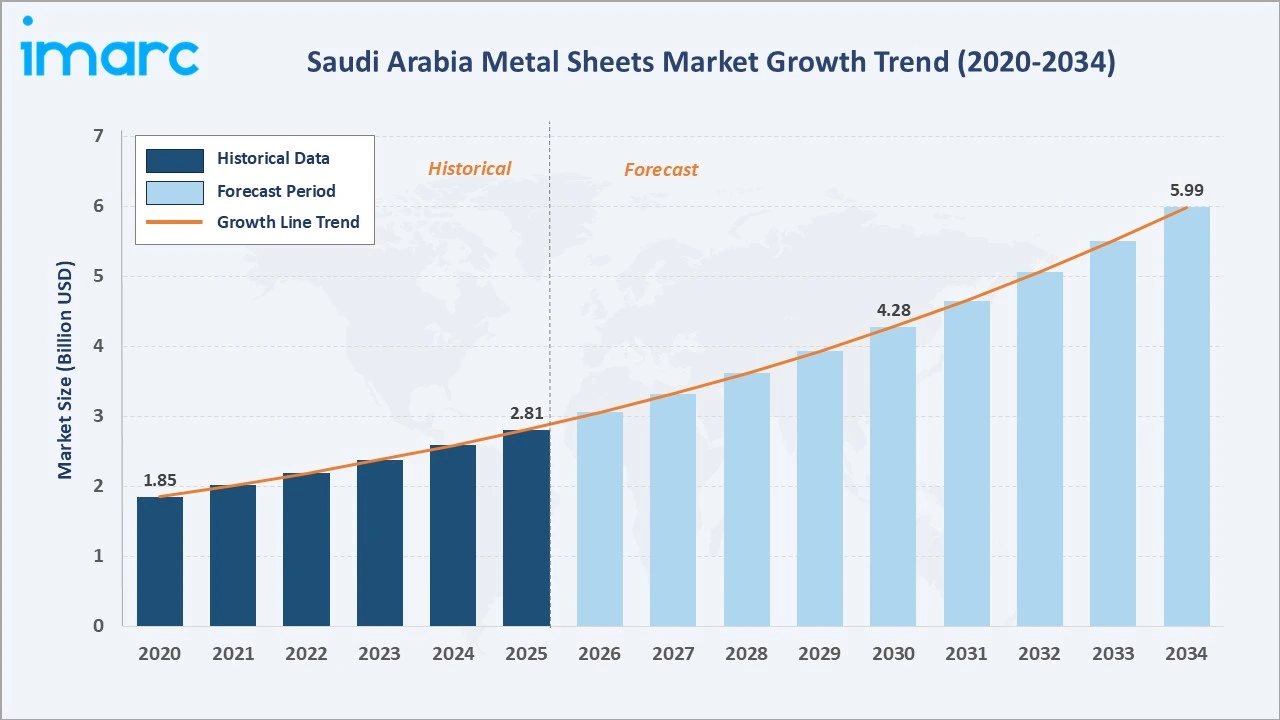
The Saudi Arabia metal sheets market size reached USD 2.81 Billion in 2025 and is estimated at USD 3.06 Billion in 2026. The market is projected to reach USD 5.99 Billion by 2034, growing at a CAGR of 8.77% during 2026-2034. Growth is driven by Vision 2030 mega-projects, expanding oil & gas infrastructure, and rising demand for lightweight metal sheets in renewable energy and automotive sectors.
The market is characterized by increasing construction activity, growing industrial manufacturing, and government-led diversification. Stainless Steel dominates at 32.6%. The 1-6 mm thickness segment leads at 48.7%. The Eastern Region commands 38.6% of the national market share.
Market Snapshot
|
Metric |
Value |
|
Base Year Market Size (2025) |
USD 2.81 Billion |
|
Market Size (2026) |
USD 3.06 Billion |
|
Forecast Market Size (2034) |
USD 5.99 Million |
|
CAGR (2026-2034) |
8.77% |
|
Base Year |
2025 |
|
Historical Period |
2020-2025 |
|
Forecast Period |
2026-2034 |
|
Dominant Thickness |
1-6 mm (48.7%, 2025) |
|
Dominant Material Type |
Stainless Steel (32.6%, 2025) |
|
Leading Region |
Eastern Region (38.6%, 2025) |
The Saudi Arabia metal sheets market size increased from USD 1.85 Billion in 2020 to USD 2.81 Billion in 2025 and is estimated to reach USD 3.06 Billion in 2026. The market is further projected to reach USD 4.28 Billion by 2030 and USD 5.99 Billion by 2034, anchored by Vision 2030 infrastructure investment and the Kingdom's strategic energy transition.
To get more information on this market, Request Sample
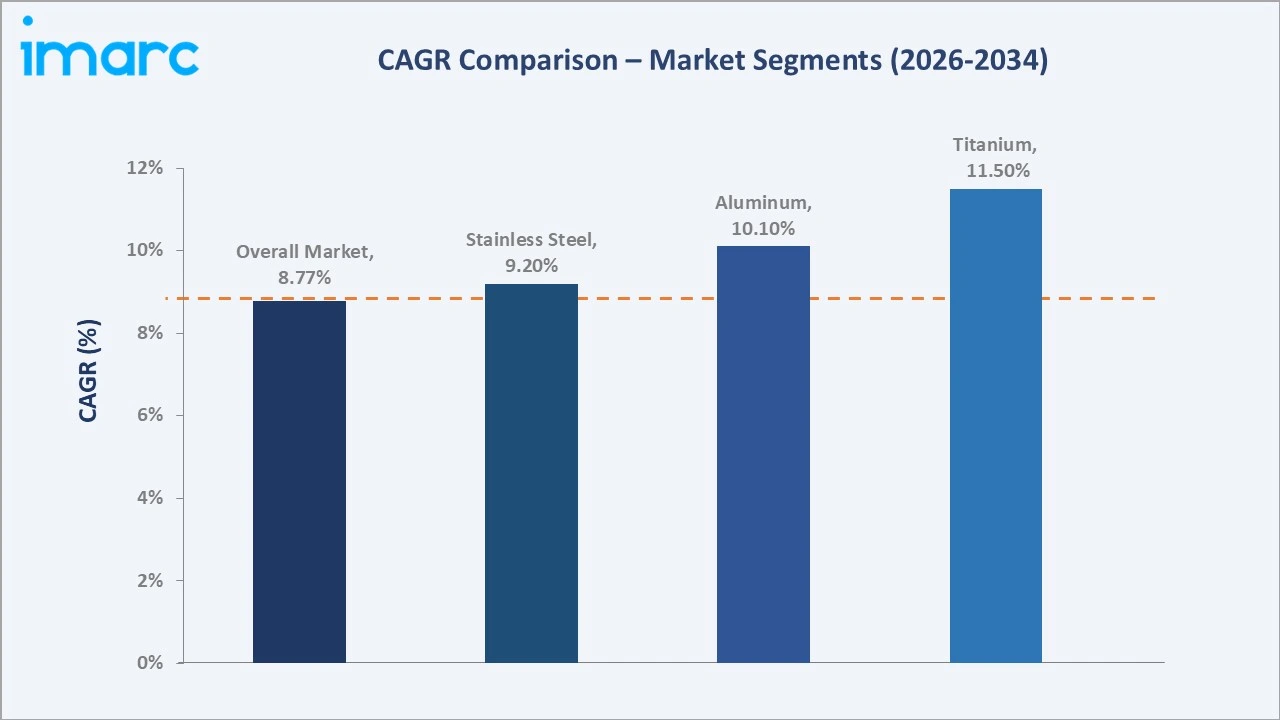
Aluminum is the fastest-growing material at ~10.1% CAGR through EV manufacturing expansion, renewable energy project demand, and its lightweight properties. Titanium grows at ~11.5% CAGR through oil & gas and aerospace sectors, driven by corrosion resistance and high strength-to-weight ratio requirements.
Executive Summary
The Saudi Arabia metal sheets market reached USD 2.81 Billion in 2025 and is estimated at USD 3.06 Billion in 2026, positioned as one of the fastest-growing metal markets in the Middle East. Growth is anchored by Vision 2030 mega-projects, expanding industrial manufacturing zones, and increasing demand for corrosion-resistant and lightweight metal solutions across all key end-use sectors including oil & gas, construction, and renewable energy.
Market structure reflects Saudi Arabia's economic diversification agenda. Stainless Steel leads at 32.6%, underpinned by oil & gas and petrochemical sector dominance. The 1-6 mm thickness segment leads at 48.7% through broad construction and industrial applicability, while the Eastern Region commands 38.6% of national market share, driven by Jubail Industrial City and Saudi Arabia's largest petrochemical clusters. The market is projected to nearly double from USD 2.81 Billion in 2025 to USD 5.99 Billion by 2034, representing sustained structural demand across the forecast period.
Key Market Insights
|
Insight |
Data |
|
Dominant Thickness |
1-6 mm – 48.7% share (2025) |
|
Dominant Material |
Stainless Steel – 32.6% market share (2025) |
|
Leading Region |
Eastern Region – 38.6% share (2025) |
|
Market Opportunity |
Domestic aluminum rolling investment; specialty stainless steel processing for oil & gas; coated sheet production for Vision 2030 construction |
Key Analytical Observations Supporting the Above Data:
- Stainless Steel at 32.6%: Dominant due to superior corrosion resistance and durability, indispensable for Saudi Arabia's oil & gas, petrochemical, and food processing sectors operating in extreme environments.
- 1-6 mm at 48.7%: Leads through broad applicability across construction, industrial machinery, and oil & gas applications, offering optimal balance of structural strength, formability, and cost-efficiency.
- Eastern Region at 38.6%: Home to Saudi Arabia's oil & gas hub, industrial zones, and Jubail Industrial City, the largest integrated petrochemical complex globally, driving disproportionate metal sheets demand.
Saudi Arabia Metal Sheets Market Overview
Saudi Arabia's metal sheets market is positioned at the intersection of Vision 2030 industrial diversification, expanding oil & gas infrastructure, and mega-project construction. The market integrates domestic steel production, international material imports, and advanced fabrication across industrial cities including Jubail, Yanbu, and Jeddah, forming a multi-layered supply chain serving the Kingdom's most critical sectors.
The Saudi government's sustained capital expenditure commitments through the Public Investment Fund, Saudi Aramco, and SABIC provide multi-year demand visibility. Growth is further underpinned by rising private sector investment in manufacturing, expanding SME fabrication capacity, and increasing domestic and regional demand for processed metal products across the full thickness and material spectrum.
Market Dynamics
To evaluate market opportunities, Request Sample
Market Drivers
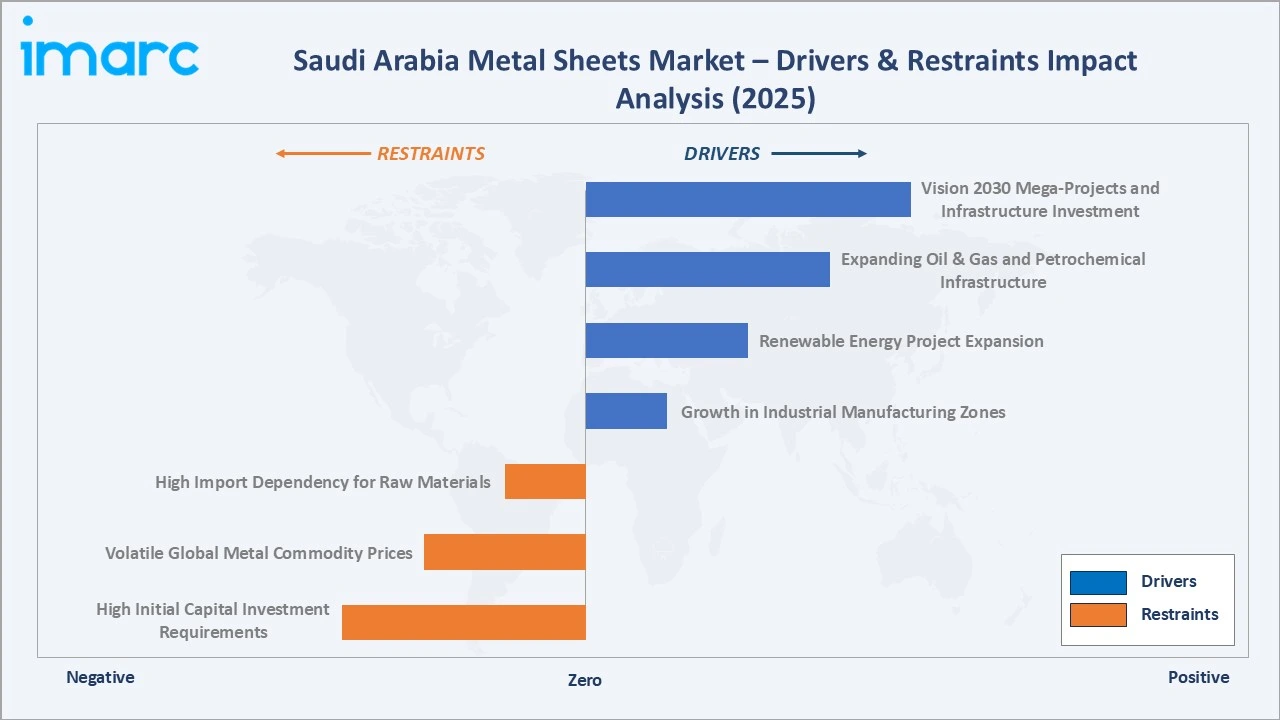
- Vision 2030 Mega-Projects and Infrastructure Investment: Saudi Arabia's Vision 2030 drives unprecedented infrastructure demand through NEOM, Red Sea Project, Qiddiya, and Riyadh Metro, requiring massive metal sheet volumes across all thickness grades. NEOM, Red Sea Project, and Qiddiya collectively require USD 700+ billion in infrastructure investment, sustaining metal sheet demand at historically unprecedented levels. Government-mandated local content requirements in Vision 2030 projects prioritize domestically produced and fabricated metal sheets over imported alternatives.
- Expanding Oil & Gas and Petrochemical Infrastructure: Saudi Arabia's oil & gas sector remains the primary consumer of high-grade metal sheets. Ongoing Aramco refinery expansions and SABIC petrochemical upgrades drive consistent demand for corrosion-resistant stainless steel and titanium sheets. Aramco's Master Gas System expansion and offshore oilfield development projects create recurring demand for high-grade stainless steel and corrosion-resistant sheets. SABIC's ongoing petrochemical plant capacity upgrades require specialized alloy metal sheets meeting stringent API and ASME industrial standards.
- Renewable Energy Project Expansion: Saudi Arabia's target of 50% renewable electricity by 2030 drives aluminum and galvanized metal sheet demand for solar mounting structures, wind turbine components, and green hydrogen infrastructure at scale. Saudi Arabia's National Renewable Energy Program targets 130 GW of solar capacity by 2030, creating structured large-scale aluminum and galvanized sheet demand for mounting systems. The NEOM Green Hydrogen Project requires specialty corrosion-resistant metal sheets for hydrogen storage, piping, and process equipment infrastructure at unprecedented scale.
- Growth in Industrial Manufacturing Zones: The expansion of Jubail Industrial City, King Abdullah Economic City, and Sudair Industrial City attracts manufacturing investments requiring metal sheets for machinery housings, storage facilities, and fabrication applications. MODON-managed industrial cities across Saudi Arabia are expanding infrastructure for metal-intensive industries including automotive, defense, and heavy equipment manufacturing. The Special Integrated Logistics Zone at King Khalid International Airport is attracting advanced manufacturing investments requiring high-grade metal sheet inputs.
Market Restraints
- High Import Dependency for Raw Materials: Saudi Arabia relies heavily on imported raw materials, particularly iron ore and specialty alloy inputs for stainless steel and titanium production, creating cost pressures and limiting capacity expansion. Saudi Arabia imports over 70% of its iron ore and specialty alloy inputs, creating structural vulnerability to global shipping disruptions and commodity price cycles. Limited domestic scrap collection infrastructure reduces feedstock self-sufficiency for Saudi steelmakers, constraining cost-competitive domestic production expansion.
- Volatile Global Metal Commodity Prices: International price volatility in steel, aluminum, and specialty metals creates uncertainty for Saudi manufacturers and procurement teams, often delaying procurement decisions and affecting market growth rates. China's steel overcapacity policies create periodic price collapses that undermine the economics of Saudi domestic metal sheet manufacturing investments. London Metal Exchange aluminum and steel price volatility creates budgeting uncertainty for Saudi Arabia's large-scale infrastructure project procurement teams.
- High Initial Capital Investment Requirements: Establishing advanced metal sheet manufacturing and processing facilities requires substantial capital investment in rolling mills, coating lines, and quality testing infrastructure, limiting new entrants. A greenfield cold-rolling mill with modern surface treatment capabilities requires USD 200-500 million in capital investment, limiting new market entrants in Saudi Arabia. Specialized steel grades for oil & gas require additional quality testing and certification infrastructure, adding USD 30-80 million to facility investment requirements.
Market Opportunities
- Localization of Metal Sheet Production under Vision 2030: Vision 2030's industrial localization program incentivizes domestic metal sheet manufacturing through subsidies, land grants, and local content requirements, providing long-term off-take security for domestic producers. Saudi Arabia's IKTVA program mandates minimum local content in oil & gas procurement, creating guaranteed off-take for domestic metal sheet producers across standard and specialty grades. NIDLP's Advanced Materials cluster incentives include subsidized industrial land, utilities, and training programs specifically designed for metal manufacturing enterprises.
- Growing Demand for Specialty Sheets in Aerospace and Defense: Saudi Arabia's expanding aerospace and defense sectors create emerging demand for titanium and high-grade aluminum alloy sheets, supported by GAMI-led defense manufacturing localization programs. Saudi Arabia's USD 72 billion defense budget and GAMI-supported manufacturing localization create structured demand for military-grade aluminum and titanium sheets. Vision 2030's target of 50% local defense content by 2030 creates structured off-take opportunities for domestic titanium and advanced alloy metal sheet manufacturers.
Market Challenges
- Technical Skill Shortage in Metal Fabrication: Saudi Arabia faces challenges developing sufficient skilled workforce for advanced metal sheet fabrication, precision cutting, and quality testing under Vision 2030's Saudization requirements. Advanced metal sheet fabrication processes including precision laser cutting and CNC machining require specialized training programs that Saudi Arabia is still actively developing. Saudization requirements mandate gradual replacement of experienced expatriate fabricators with Saudi nationals, creating a transitional skills gap in the metal industry.
- Competition from Regional and International Metal Suppliers: Saudi Arabia's market faces intense competition from UAE, Bahrain, China, India, and South Korea offering highly competitive pricing, creating sustained pressure on domestic producers. Chinese steel exports to Saudi Arabia are priced 15-25% below domestic production costs, creating structural pressure across standard commodity sheet categories. UAE-based integrated steel producers leverage GCC free trade agreements and proximity logistics advantages to compete effectively across Saudi Arabia's construction and industrial sectors.
Emerging Market Trends
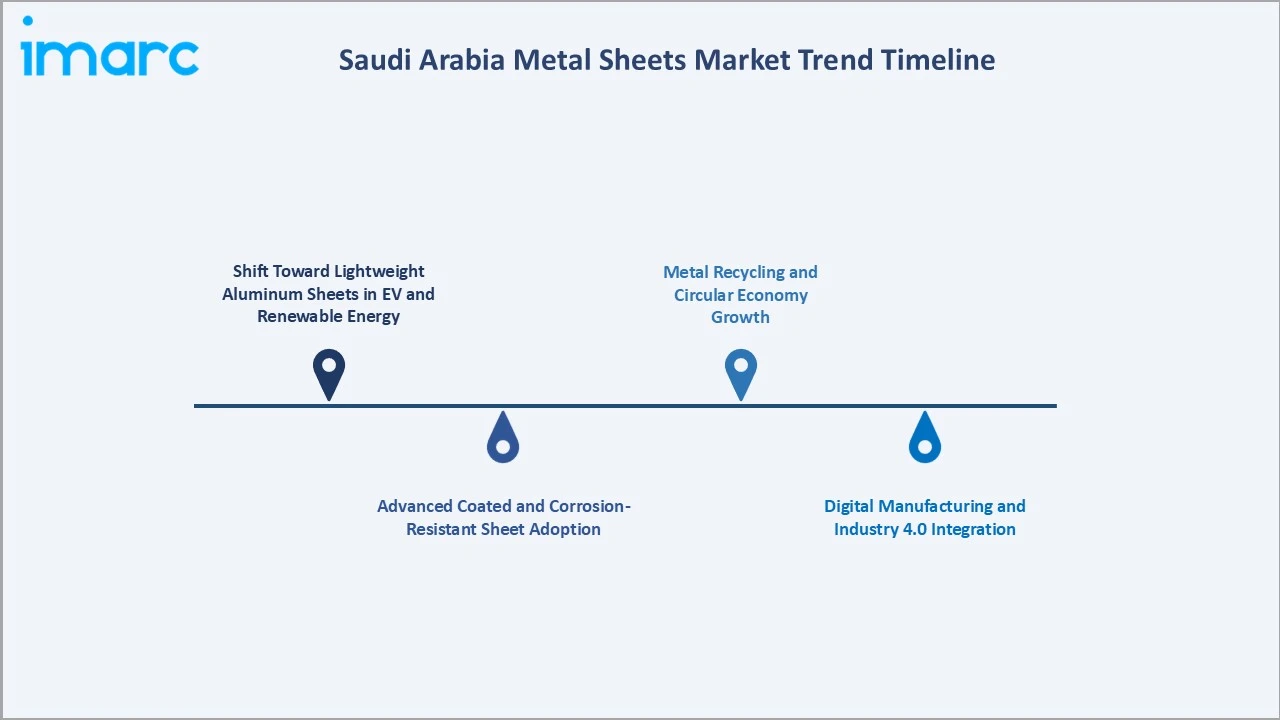
1. Shift Toward Lightweight Aluminum Sheets in EV and Renewable Energy
Aluminum sheet demand is accelerating through Saudi Arabia's EV ambitions and large-scale solar projects. Manufacturers invest in high-purity aluminum rolling to meet EV body and solar mounting structure requirements.
2. Advanced Coated and Corrosion-Resistant Sheet Adoption
Mega-project construction drives adoption of galvanized, coated, and pre-painted metal sheets with enhanced durability. Specification upgrades in Vision 2030 projects are creating premium demand for high-performance coated products.
3. Digital Manufacturing and Industry 4.0 Integration
Saudi Arabia's metal sheet processors are integrating automated cutting systems, precision laser processing, and digital quality management under the Kingdom's Industry 4.0 initiatives, improving efficiency and enabling customized solutions.
4. Metal Recycling and Circular Economy Growth
Saudi Arabia is developing scrap metal recycling infrastructure under Vision 2030's sustainability agenda. Increased domestic scrap availability improves feedstock cost economics for local steel producers across standard grades.
Industry Value Chain Analysis
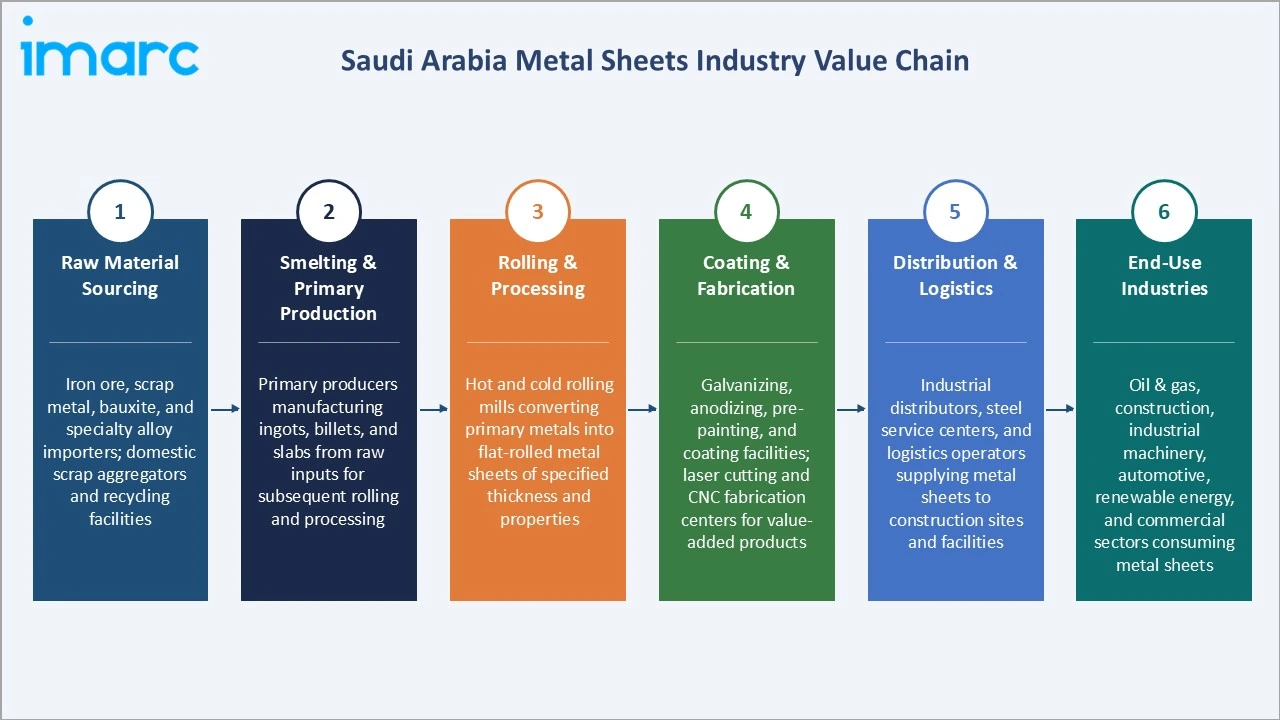
Saudi Arabia's developing scrap metal recycling infrastructure is beginning to strengthen the raw material sourcing stage, progressively reducing import dependency for secondary steel inputs.
|
Stage |
Key Participants |
| Raw Material Sourcing | Iron ore, scrap metal, bauxite, and specialty alloy importers; domestic scrap aggregators and recycling facilities |
| Smelting & Primary Production | Primary producers manufacturing ingots, billets, and slabs from raw inputs for subsequent rolling and processing |
| Rolling & Processing | Hot and cold rolling mills converting primary metals into flat-rolled metal sheets of specified thickness and properties |
| Coating & Fabrication | Galvanizing, anodizing, pre-painting, and coating facilities; laser cutting and CNC fabrication centers for value-added products |
| Distribution & Logistics | Industrial distributors, steel service centers, and logistics operators supplying metal sheets to construction sites and facilities |
| End-Use Industries | Oil & gas, construction, industrial machinery, automotive, renewable energy, and commercial sectors consuming metal sheets |
The oil & gas and construction sectors collectively account for over 60% of domestic metal sheet consumption, with industrial zones in the Eastern and Western Regions serving as the primary geographic concentration points for both production and consumption.
Technology Landscape in the Saudi Arabia Metal Sheets Industry
Hot Rolling and Cold Rolling Technology
Hot and cold rolling technologies form the core of metal sheet production in Saudi Arabia. Hot rolling produces thicker structural sheets (typically >3 mm) for construction and industrial machinery, while cold rolling produces precision thin sheets for automotive, electronics, and precision industrial applications. Saudi producers are investing in advanced rolling mills equipped with digital thickness control systems and real-time quality monitoring to improve dimensional consistency and meet international standards.
Surface Treatment and Coating Technologies
Advanced surface treatment technologies including hot-dip galvanization, electrolytic galvanizing, anodization, and pre-painted coatings are increasingly adopted by Saudi metal sheet manufacturers. These technologies enhance corrosion resistance, aesthetic quality, and operational service life, which are particularly critical for construction and infrastructure applications in Saudi Arabia's extreme desert environment characterized by high temperatures, UV exposure, and coastal humidity.
Precision Laser Cutting and Metal Fabrication
Laser cutting and CNC precision fabrication technologies are significantly expanding Saudi Arabia's metal sheet value-added processing capabilities and product customization range. Industrial city-based fabricators across Jubail, Riyadh, and Jeddah are investing in automated cutting lines and robotic processing cells, reducing processing time and material waste while enabling highly customized sheet solutions for specialty infrastructure and industrial manufacturing projects within Vision 2030 project ecosystems.
Market Segmentation Analysis
The report covers the following segments:
|
Segment Category |
Leading Segment |
Market Share |
Year |
| Thickness | 1-6 mm |
48.7% |
2025 |
| Material Type | Stainless Steel | 32.6% | 2025 |
|
Application |
🔒 | 🔒 | 2025 |
|
Region |
Eastern Region |
43.6% |
2025 |

By Thickness
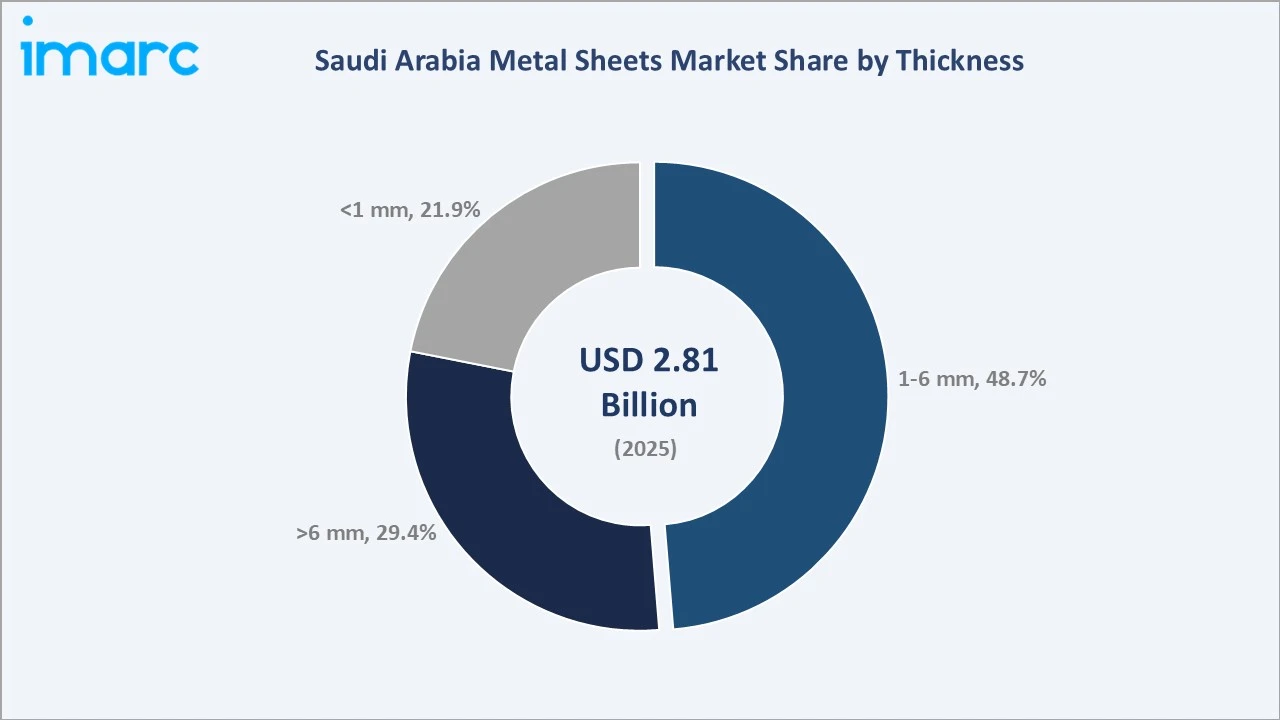
The 1-6 mm segment leads at 48.7% (2025). This thickness range offers optimal versatility for Saudi Arabia's largest end-use sectors including construction, industrial machinery, and oil & gas equipment fabrication. Its balance of structural strength, formability, and cost-efficiency drives adoption across roofing panels, storage vessels, machinery housings, and construction cladding applications, making it the preferred thickness specification for the majority of Saudi construction projects and industrial facilities.
To access detailed market analysis, Request Sample
The >6 mm segment at 29.4% serves heavy industrial applications in oil & gas, heavy equipment manufacturing, and shipbuilding, where structural integrity under high pressure is critical. The <1 mm segment at 21.9% is growing through increasing automotive manufacturing, electronics, and precision engineering applications within Saudi Arabia's expanding industrial base.
By Material Type
Stainless Steel leads at 32.6% (2025). Stainless steel's superior corrosion resistance, chemical compatibility, and high-temperature performance make it indispensable for Saudi Arabia's oil & gas, petrochemical, food processing, and desalination industries. Its performance in harsh chemical and thermal environments is critical to operational safety and longevity in the Kingdom's most demanding industrial applications, where material failure carries significant financial and safety consequences.
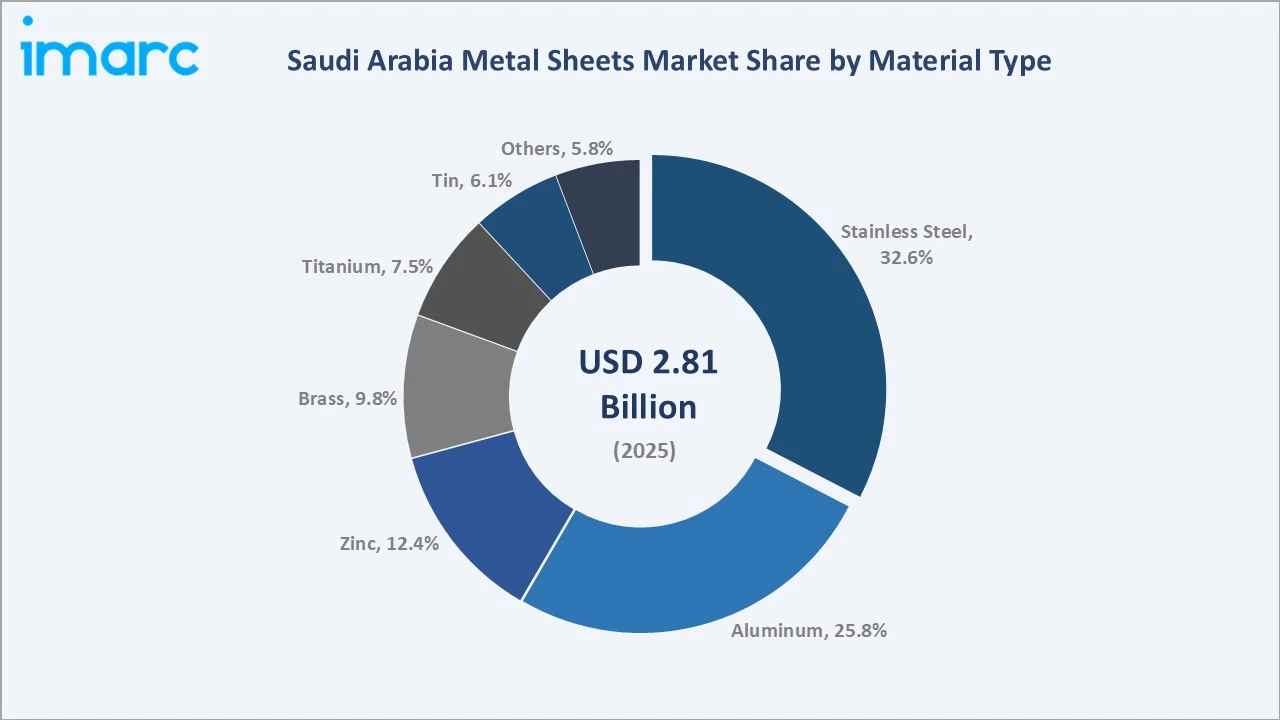
Aluminum at 25.8% is the fastest-growing material segment driven by Saudi Arabia's renewable energy project demand, automotive manufacturing expansion, and its lightweight-to-strength advantage in transportation and construction applications. Zinc at 12.4% serves corrosion protection applications in galvanized steel construction sheets. Brass at 9.8% serves plumbing, electrical, and marine applications. Titanium at 7.5% serves oil & gas, defense, and aerospace applications, while Tin at 6.1% serves specialized food-grade packaging and industrial sealing sectors.
Regional Market Insights
|
Region |
Share (2025) |
Key Saudi Food Processing Machinery Market Drivers & Characteristics |
|
Eastern Region |
38.6% |
Driven by Jubail Industrial City, oil & gas infrastructure hub, and major manufacturing clusters. Home to the world's largest petrochemical complex. |
|
Western Region |
27.9% |
Jeddah's construction activity, King Abdullah Economic City industrial zone, and Red Sea coastal infrastructure projects drive metal sheet demand. |
|
Northern and Central Region |
22.1% |
Riyadh mega-project construction including Vision 2030 smart city infrastructure and expanding manufacturing zones support consistent demand growth. |
|
Southern Region |
11.4% |
Jizan Economic City expansion, defense-related manufacturing, and growing construction activity in Asir and Jizan regions drive growing demand. |
Eastern Region's 38.6% market leadership reflects Saudi Arabia's industrial concentration in Jubail Industrial City, Dammam industrial area, and the Kingdom's oil & gas infrastructure hub. Western Region's 27.9% is driven by Jeddah's construction activity and King Abdullah Economic City's industrial zone development creating sustained metal demand.
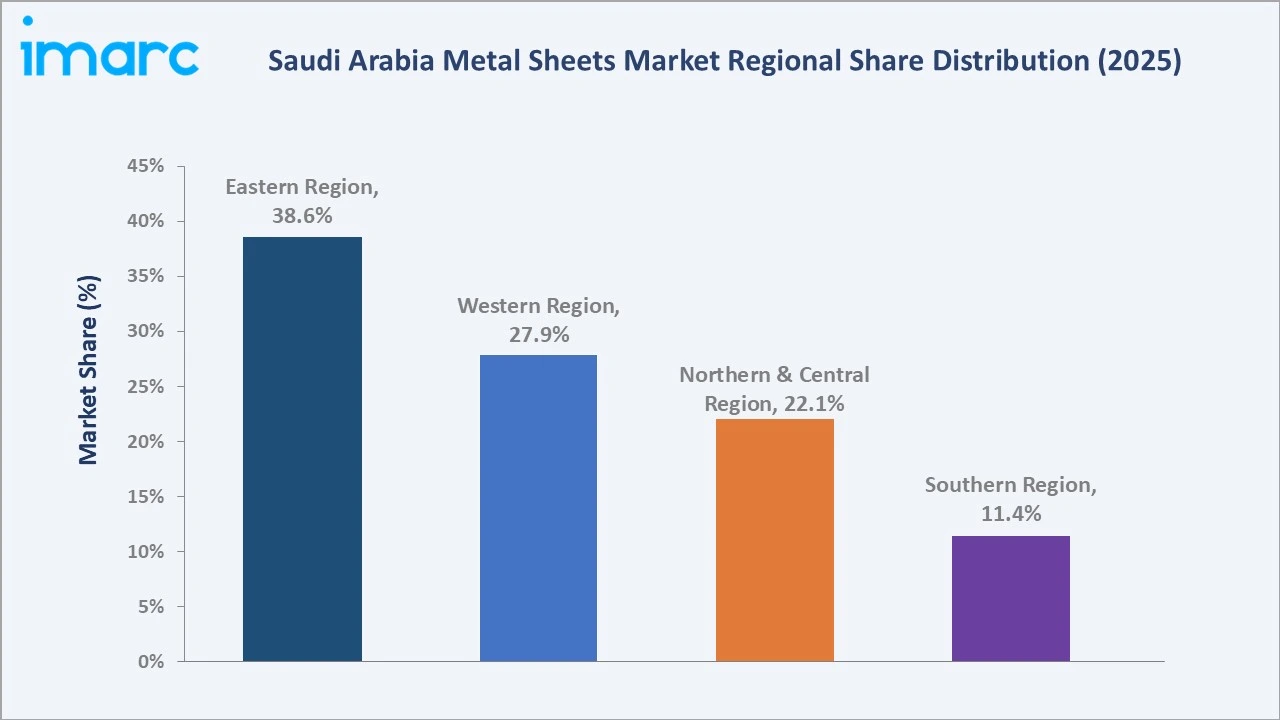
Northern and Central Region at 22.1% is supported by Riyadh's mega-project construction. Southern Region at 11.4% represents underpenetrated demand with Jizan Economic City expansion and defense manufacturing providing above-market growth potential through 2034.
Competitive Landscape
Saudi Arabia's metal sheets competitive landscape is a dual-structure market combining domestic producers and international exporters from China, India, South Korea, UAE, and Europe. Competition intensifies through Vision 2030's localization requirements encouraging domestic capacity expansion, while global suppliers compete aggressively on price in commodity carbon steel segments and maintain advantage in specialty stainless steel and titanium product categories due to superior product breadth and established quality certifications.
| Company | Key Offerings | Market Position | Core Strength |
|---|---|---|---|
| Hadeed | Hot & cold-rolled sheets, galvanized steel | Market Leader | Largest Arab world flat steel producer; SABIC affiliate with integrated production |
| SENAAT | Pre-painted sheets, structural steel, roofing & cladding | Strong Challenger | Leading pre-engineered steel buildings manufacturer with strong Middle East presence |
Key players include Hadeed, SENAAT, and others.
Key Company Profiles
Hadeed
Hadeed, is one of the largest steel producers in the Arab world, manufacturing flat steel products including metal sheets for construction, industrial, and oil & gas applications across Saudi Arabia and the wider Middle East region.
- Key Products: Hot-rolled coils, cold-rolled coils, galvanized steel sheets, and structural steel products for industrial, construction, and oil & gas applications.
- Strategic Focus: Expanding value-added flat steel production capabilities to meet Saudi Arabia's growing domestic demand and support Vision 2030 industrial localization objectives. Investing in digital quality management systems and Industry 4.0 integration to improve production consistency and reduce material waste across flat steel production lines. Targeting new export markets in East Africa and South Asia as domestic production capacity expands beyond Saudi Arabia's near-term demand absorption capacity.
SENAAT
SENAAT is a leading Saudi manufacturer of pre-engineered steel buildings and structural steel products, serving construction, industrial, and commercial sectors across the Middle East, Africa, and South Asia with steel sheets and fabricated steel structures.
- Key Products: Pre-painted steel sheets, structural steel components, metal roofing and cladding, and custom fabricated sheet metal products for industrial and commercial buildings.
- Strategic Focus: Leveraging Saudi Arabia's construction boom and Vision 2030 infrastructure projects to expand metal sheets market penetration across industrial and commercial construction segments. Implementing sustainable building systems using recycled-content metal sheets to align with Saudi Arabia's Vision 2030 green building standards and international sustainability certifications. Targeting export growth across GCC, Africa, and South Asia markets through established pre-engineered buildings brand recognition built over four decades of regional operations.
Market Concentration Analysis
Saudi Arabia's metal sheets market shows moderate concentration with a tiered competitive structure. Hadeed and domestic producers collectively hold approximately 40-45% of the organized market by value. International exporters from China, India, and South Korea compete vigorously on price in commodity-grade carbon steel and galvanized sheet segments, while specialty stainless steel and titanium sheets are predominantly supplied by international specialists and regional producers.
Market concentration is evolving through Vision 2030's localization agenda, which incentivizes domestic production expansion through IKTVA requirements and NIDLP industrial development support. Import share is gradually declining in standard steel sheet categories as domestic producers scale production capacity, improve product quality to meet international standards, and establish service center networks closer to major construction and industrial end-users across the Kingdom.
Investment & Growth Opportunities
Highest Growth Segments
Aluminum sheets (~10.1% CAGR through EV and renewable energy demand), titanium sheets (~11.5% CAGR through oil & gas and aerospace), and stainless steel sheets (~9.2% CAGR through industrial expansion), represent Saudi Arabia's highest-growth investment segments through 2034.
Emerging Investment Opportunities
Domestic aluminum smelting and rolling capacity represents a significant investment opportunity aligned with Vision 2030's industrial localization objectives. Saudi Arabia's abundant solar energy resources and strategic location enable competitive aluminum production, reducing import dependency and capturing higher-margin processed sheet manufacturing value.
Investment Themes
- Advanced metal sheet processing and coating facilities in industrial cities: Saudi Arabia's industrial city framework provides ready infrastructure and logistics for metal sheet processing, with incentives through MODON and Royal Commission industrial zones.
- Specialty stainless steel and titanium sheet processing for oil & gas: Saudi Arabia's vast oil & gas sector provides sustained high-grade sheet demand, offering long-term off-take security for investors in specialty alloy processing near industrial clusters.
Future Market Outlook (2026-2034)
The Saudi Arabia metal sheets market is projected to grow from USD 2.81 Billion in 2025 to USD 3.06 Billion in 2026, reaching USD 4.28 Billion by 2030 and USD 5.99 Billion by 2034 at a CAGR of 8.77% during 2026-2034. Growth is anchored by Vision 2030 mega-project construction maintaining sustained structural demand and industrial diversification expanding manufacturing-sector consumption across the forecast period.
Three structural forces define Saudi Arabia's metal sheets growth trajectory through 2034: Vision 2030's sustained project pipeline providing construction-driven demand; Saudi Arabia's renewable energy transition creating new demand for aluminum and galvanized sheets in solar and green hydrogen infrastructure; and domestic manufacturing expansion progressively absorbing imported specialty metal volumes through Vision 2030's localization incentives and local content mandates. The combination of government-backed mega-project construction, private sector industrialization, and energy transition investment creates an exceptionally favorable multi-decade demand environment for Saudi Arabia's metal sheets market.
Research Methodology
Primary Research
Primary research comprised structured interviews with Saudi Arabia metal sheets industry stakeholders, including plant directors, procurement managers, oil & gas project engineers, construction industry buyers, and government industrial development officials.
Secondary Research
Secondary research encompassed Saudi Arabia industrial production data, SIDF reports, Aramco and SABIC supply chain publications, steel trade association data, Vision 2030 project announcements, and international steel market databases. Over 40 secondary sources were reviewed.
Forecasting Models
Forecasts used a sector-consumption model: end-use sector investment volumes multiplied by metal sheet intensity coefficients, aggregated by material type and thickness, with adjustment factors for domestic production growth and import substitution trends.
Saudi Arabia Metal Sheets Market Report Coverage:
| Report Features | Details |
|---|---|
| Base Year of the Analysis | 2025 |
| Historical Period | 2020-2025 |
| Forecast Period | 2026-2034 |
| Units | Billion USD |
| Scope of the Report |
Exploration of Historical Trends and Market Outlook, Industry Catalysts and Challenges, Segment-Wise Historical and Future Market Assessment:
|
| Material Types Covered | Stainless Steel, Aluminum, Brass, Tin, Titanium, Zinc, Others |
| Thickness Covered | < 1 mm, 1-6 mm, > 6mm |
| Applications Covered | Automotive and Transportation, Building and Construction, Industrial Machinery, Oil and Gas, Commercial, Others |
| Regions Covered | Northern and Central Region, Western Region, Eastern Region, Southern Region |
| Companies Covered | Hadeed, SENAAT, etc. |
| Customization Scope | 10% Free Customization |
| Post-Sale Analyst Support | 10-12 Weeks |
| Delivery Format | PDF and Excel through Email (We can also provide the editable version of the report in PPT/Word format on special request) |
Key Benefits for Stakeholders:
- IMARC’s industry report offers a comprehensive quantitative analysis of various market segments, historical and current market trends, market forecasts, and dynamics of the Saudi Arabia metal sheets market from 2020-2034.
- The research report provides the latest information on the market drivers, challenges, and opportunities in the Saudi Arabia metal sheets market.
- Porter's five forces analysis assist stakeholders in assessing the impact of new entrants, competitive rivalry, supplier power, buyer power, and the threat of substitution. It helps stakeholders to analyze the level of competition within the Saudi Arabia metal sheets industry and its attractiveness.
- Competitive landscape allows stakeholders to understand their competitive environment and provides an insight into the current positions of key players in the market.
Frequently Asked Questions About the Saudi Arabia Metal Sheets Market Report
The Saudi Arabia metal sheets market size is estimated at USD 3.06 Billion in 2026, driven by Vision 2030 mega-projects, oil & gas infrastructure expansion, and growing industrial manufacturing across the Kingdom.
The Saudi Arabia metal sheets market grows at 8.77% CAGR during 2026-2034, reaching USD 5.99 Billion by 2034, sustained by Vision 2030 construction demand, industrial expansion, and renewable energy projects requiring specialty metal sheets.
The 1-6 mm segment leads at 48.7% (2025) through its broad applicability across construction, industrial machinery, and oil & gas applications, offering optimal balance between structural performance and fabrication versatility.
Stainless Steel leads at 32.6% (2025) through its corrosion resistance and durability advantages in Saudi Arabia's oil & gas, petrochemical, and construction sectors operating under extreme chemical and thermal environmental conditions.
Eastern Region leads at 38.6% (2025) through concentration of oil & gas infrastructure, Jubail Industrial City, and Saudi Arabia's largest manufacturing and petrochemical processing clusters driving disproportionate metal sheet demand.
Leading companies include Hadeed, SENAAT, and others.
The Saudi Arabia metal sheets market is projected to reach approximately USD 4.28 Billion by 2030, driven by Vision 2030 mega-project construction, expanding renewable energy infrastructure, and growing automotive and electronics manufacturing activities.
Need more help?
- Speak to our experienced analysts for insights on the current market scenarios.
- Include additional segments and countries to customize the report as per your requirement.
- Gain an unparalleled competitive advantage in your domain by understanding how to utilize the report and positively impacting your operations and revenue.
- For further assistance, please connect with our analysts.
 Request Customization
 Speak to an Analyst
 Request Brochure
 Inquire Before Buying
Benefits of Customization
- Personalize this research
- Triangulate with your data
- Get data as per your format and definition
- Gain a deeper dive into a specific application, geography, customer, or competitor
- Any level of personalization
Get in Touch With Us
UNITED STATES
Phone: +1-201-971-6302
INDIA
Phone: +91-120-433-0800
UNITED KINGDOM
Phone: +44-753-714-6104
Email: [email protected]
Client Testimonials























Related Reports

Choose your plan
*Please note that the prices mentioned below are starting prices for each bundle type. Kindly contact our team for further details.*
Single User License
- 1 User License, Access on 2 Devices
- PDF Report + Excel Dataset (Password Protected)
- Lifetime Access
- No Printing Rights
- 10% Free Report Customization
- 10–12 Weeks of Analyst Support
Five User License
- Access for 5 Users, 2 Devices per User
- PDF Report + Excel Dataset (Password Protected)
- Lifetime Access
- Dedicated Account Manager
- 12–14 Weeks of Analyst Support
- No Printing Rights
- 15% Free Report Customization
- 25% Discount on Your Next Purchase
Corporate User License
- Unlimited User Access (Within Your Organization)
- PDF Report + Excel Dataset
- Lifetime Access
- Dedicated Account Manager
- 14–20 Weeks of Analyst Support
- No Printing Rights
- 20% Free Report Customization
- 30% Discount on Your Next Purchase
Essential Insights
What's included:
3 reports
- Lifetime Access
- PDF Reports
- Excel Datasets
- 2 Weeks of Free Analyst Support
- 2 User Licenses
- Access on 2 Devices
- Printing Rights
- Complimentary PowerPoint (PPT) Version
- Complimentary License Upgrade
Professional Access
What's included:
5 reports
- Lifetime Access
- PDF Reports
- Excel Datasets
- 8 Weeks of Free Analyst Support
- 2 User Licenses
- Access on 2 Devices
- Printing Rights
- Complimentary PowerPoint (PPT) Version
- Complimentary License Upgrade
Business Advantage
What's included:
8 reports
- Lifetime Access
- PDF Reports
- Excel Datasets
- 14 Weeks of Free Analyst Support
- 2 User Licenses
- Access on 2 Devices
- Printing Rights
- Complimentary PowerPoint (PPT) Version
- Complimentary License Upgrade
Enterprise Intelligence
What's included:
10 reports
- Lifetime Access
- PDF Reports
- Excel Datasets
- 20 Weeks of Free Analyst Support
- 2 User Licenses
- Access on 2 Devices
- Printing Rights
- Complimentary PowerPoint (PPT) Version
- Complimentary License Upgrade