
Saudi Arabia Stainless Steel Market Report by Product (Flat, Long), Grade (200 Series, 300 Series, 400 Series, Duplex Series, and Others), Application (Automotive and Transportation, Building and Construction, Consumer Goods, Mechanical Engineering and Heavy Industries, and Others), and Region 2026-2034
Market Overview:
Saudi Arabia stainless steel market grew from USD 1.9 Billion in 2025 to USD 2.0 Billion in 2026. Looking forward, IMARC Group expects the market to reach USD 2.8 Billion by 2034, exhibiting a growth rate (CAGR) of 4.25% during 2026-2034. The market is experiencing rapid growth, driven by large-scale construction projects under Vision 2030 and major investments in smart cities and infrastructure. Rising demand from the oil, gas, and petrochemical sectors, supported by anti-dumping tariffs, is strengthening local industry performance. Moreover, ongoing industrial diversification and manufacturing growth further boost stainless steel consumption, positioning the material as essential to the Kingdom’s long-term economic development, thereby expanding Saudi Arabia stainless steel market share.
|
Report Attribute
|
Key Statistics
|
|---|---|
|
Base Year
|
2025
|
|
Forecast Years
|
2026-2034
|
|
Historical Years
|
2020-2025
|
|
Base Year Market Size (2025)
|
USD 1.9 Billion |
| Market Size (2026) | USD 2.0 Billion |
|
Forecast Market Size (2034)
|
USD 2.8 Billion |
| CAGR (2026-2034) | 4.25% |
Access the full market insights report Request Sample
Stainless steel is a corrosion-resistant alloy that finds numerous applications across various industries. It retains its strength and integrity at elevated temperatures, making it suitable for high-temperature applications. It has a sleek and modern appearance, which enhances its use in architectural and decorative applications. It is an environment friendly material as it can be recycled, reducing waste and conserving resources. It features a smooth-non-porous, and easy-to-clean surface, which requires minimal maintenance. It has a long lifespan, reducing replacement and maintenance costs. It is widely used in kitchen utensils, cookware, and appliances due to its resistance to corrosion and staining. It is also utilized for surgical instruments, medical devices, and pharmaceutical equipment. Moreover, it is employed in pipelines, storage tanks, and offshore platforms due to its resistance to corrosive environments. In addition, stainless steel is used for marine applications, including boat hardware and marine architecture, on account of its resistance to saltwater corrosion. Besides this, as it can withstand harsh conditions and mechanical stress, the demand for stainless steel is increasing in Saudi Arabia.
Saudi Arabia Stainless Steel Market Trends:
Improvements in Construction and Infrastructure Projects
Saudi Arabia is experiencing a rapid growth in construction and infrastructure projects, which is largely driving the demand for stainless steel. The government is undertaking its Vision 2030 program, which targets economic diversification and decreased reliance on oil revenues. Large-scale urban developments like NEOM City, Red Sea Project, and Qiddiya Entertainment City are using stainless steel in structural elements, facades, and architectural details because of its durability, corrosion resistance, and visual appeal. The commercial, residential, and hospitality industries are increasingly adopting stainless steel for building construction materials, pipelines, and fittings to provide durability and sustainability. Further, the government is continuously investing in smart city development, transport systems, and renewable energy installations, increasing stainless steel consumption further. With the construction sector still growing at a rapid rate, stainless steel demand is growing consistently, making it a material of prime importance behind Saudi Arabia's new infrastructure growth. IMARC Group predicts that the Saudi Arabia construction market is projected to attain USD 135.6 Billion by 2033.
Increasing Demand from the Oil, Gas, and Petrochemical Sectors
Saudi Arabia's stainless steel industry is constantly gaining from the high growth of its oil, gas, and petrochemical sectors. The nation, being a top energy producer of the world, is always expanding its refining capacity, storage terminals, and pipelines. Stainless steel is used widely in these industries due to its ability to tolerate high temperatures, pressure, and corrosion conditions that are common in energy operations. Firms such as Saudi Aramco are heavily investing in pipeline infrastructure, liquefied natural gas terminals, and downstream processing facilities, which all demand enormous amounts of stainless steel. Additionally, the petrochemical industry is ever more dependent on stainless steel in reactors, heat exchangers, and pressure vessels for improving operational efficiency and safety. With continued investment in industrial growth and energy diversification, stainless steel consumption is continually increasing, with a key function of ensuring the resilience and durability of Saudi Arabia's oil and gas infrastructure. In 2025, Saudi Arabia will implement final anti-dumping tariffs on steel and stainless steel pipe imports from China and Taiwan, starting June 30, lasting for five years. These duties by the Kingdom are intended to safeguard local industries against unfair trade tactics from foreign exporters. They aim to shield local enterprises from the negative impacts of dumping and subsidized goods.
Increased Emphasis on Industrial Diversification and Manufacturing Expansion
There is a continuous focus on industrial diversification to develop a robust non-oil economy in Saudi Arabia, and stainless steel is serving as a key enabler of this shift. The government is encouraging domestic production, mining, manufacturing, and automobile production under Vision 2030's National Industrial Development and Logistics Program (NIDLP). Domestic production of stainless steel is needed by these industries for equipment, production lines, and machinery because it is durable and hygienic. The expansion of the local factories and industrial estates is boosting stainless steel imports and supporting local production. In addition, the nation is continually developing its export and logistics capabilities, enhancing supply chain efficiency for raw materials as well as finished goods. As production keeps expanding, stainless steel consumption is increasing across sectors, ranging from industrial equipment to packaging and transportation. This diversification in industry is guaranteeing stable growth in stainless steel usage, complementing Saudi Arabia's overall objectives of sustainable economic growth. In 2025, The World Bank has increased Saudi Arabia’s 2025 economic growth prediction to 3.2 percent, attributing it to heightened oil production and vigorous non-oil activity, a significant revision from the 2.8 percent anticipated in April.
Saudi Arabia Stainless Steel Market Growth Drivers:
Growing Investments in Renewable Energy Projects
Saudi Arabia is continuously expanding its investment in renewable energy projects, specifically solar, wind, and hydrogen projects, which are opening up new avenues for stainless steel demand. The government is focusing on sustainability and diversification of energy to decrease carbon emissions and reliance on fossil fuels under Vision 2030. Stainless steel is finding extensive application in the manufacture of solar power plants, windmills, hydrogen units, and desalination plants because it is resistant to corrosion, strong, and durable. Saudi Green Initiative and National Renewable Energy Program (NREP) are also pushing projects that demand high-quality stainless steel for energy infrastructure and transmission networks. With the ongoing growth in renewable energy development, stainless steel usage is increasingly growing, complementing the shift toward a cleaner and more sustainable energy system. The change is supporting the role of the metal in complementing Saudi Arabia's journey toward sustainable environmental and industrial development.
Increasing Water Desalination and Wastewater Treatment Facilities
Saudi Arabia is constantly developing water desalination and wastewater treatment facilities in order to address the increasing demand for clean water in urban and industrial sectors. As one of the world's driest nations, the Kingdom depends significantly on desalination plants, where stainless steel is an indispensable element owing to its high corrosion resistance in saltwater environments. The government is spending on bulk desalination projects by organizations like Saline Water Conversion Corporation (SWCC) and ACWA Power, which are continuously building modern plants with reverse osmosis and other methods. Stainless steel is being widely used in pipelines, pressure vessels, pumps, and filter systems to provide long-term strength and efficiency. In addition, wastewater recycling and reuse schemes are increasing in Vision 2030, promoting additional stainless steel use. As such projects keep developing, stainless steel continues to be crucial in providing water security and infrastructure sustainability throughout Saudi Arabia.
Increased Urbanization and Lifestyle Modernization
Rapid urban developments and modernization of lifestyles are taking place in Saudi Arabia, and this keeps building up the demand for stainless steel in consumer goods, home appliances, and public infrastructure. The growing number of urban dwellers is driving the construction of high-rises, subway systems, airports, and shopping complexes, all of which necessitate the use of stainless steel for finishes, strength, and maintenance effectiveness. Consumers are also turning increasingly towards stainless steel usage in domestic appliances, kitchen utensils, and ornamental fittings as it has a smooth finish and is resistant to corrosion. Hospitality and health care industries also are growing, using stainless steel in medical devices, catering equipment, and sanitary uses. The government's constant investments in smart cities and public infrastructures also are further increasing this demand.
Saudi Arabia Stainless Steel Market Segmentation:
IMARC Group provides an analysis of the key trends in each segment of the market, along with forecasts at the country level for 2026-2034. Our report has categorized the market based on product, grade, and application.

Product Insights:
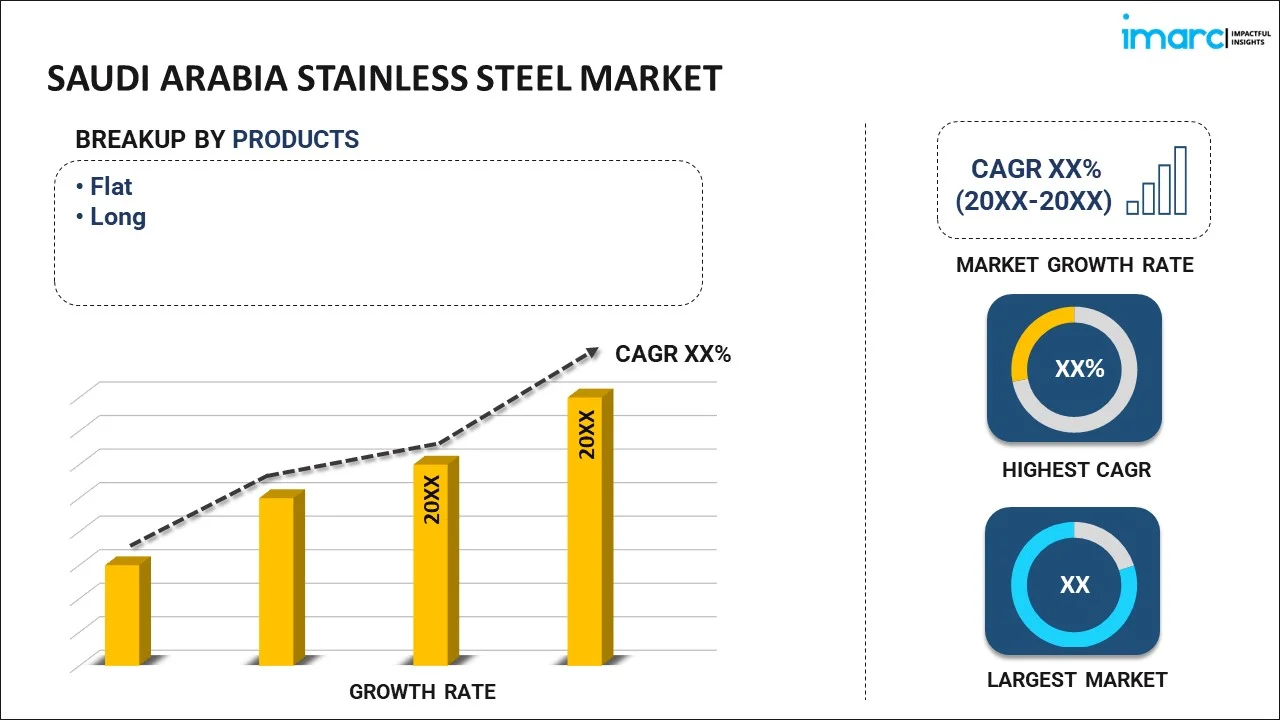
To get detailed segment analysis of this market Request Sample
- Flat
- Long
The report has provided a detailed breakup and analysis of the market based on the product. This includes flat and long.
Grade Insights:
- 200 Series
- 300 Series
- 400 Series
- Duplex Series
- Others
A detailed breakup and analysis of the market based on the grade have also been provided in the report. This includes 200 series, 300 series, 400 series, duplex series, and others.
Application Insights:
- Automotive and Transportation
- Building and Construction
- Consumer Goods
- Mechanical Engineering and Heavy Industries
- Others
The report has provided a detailed breakup and analysis of the market based on the application. This includes automotive and transportation, building and construction, consumer goods, mechanical engineering and heavy industries, and others.
Regional Insights:
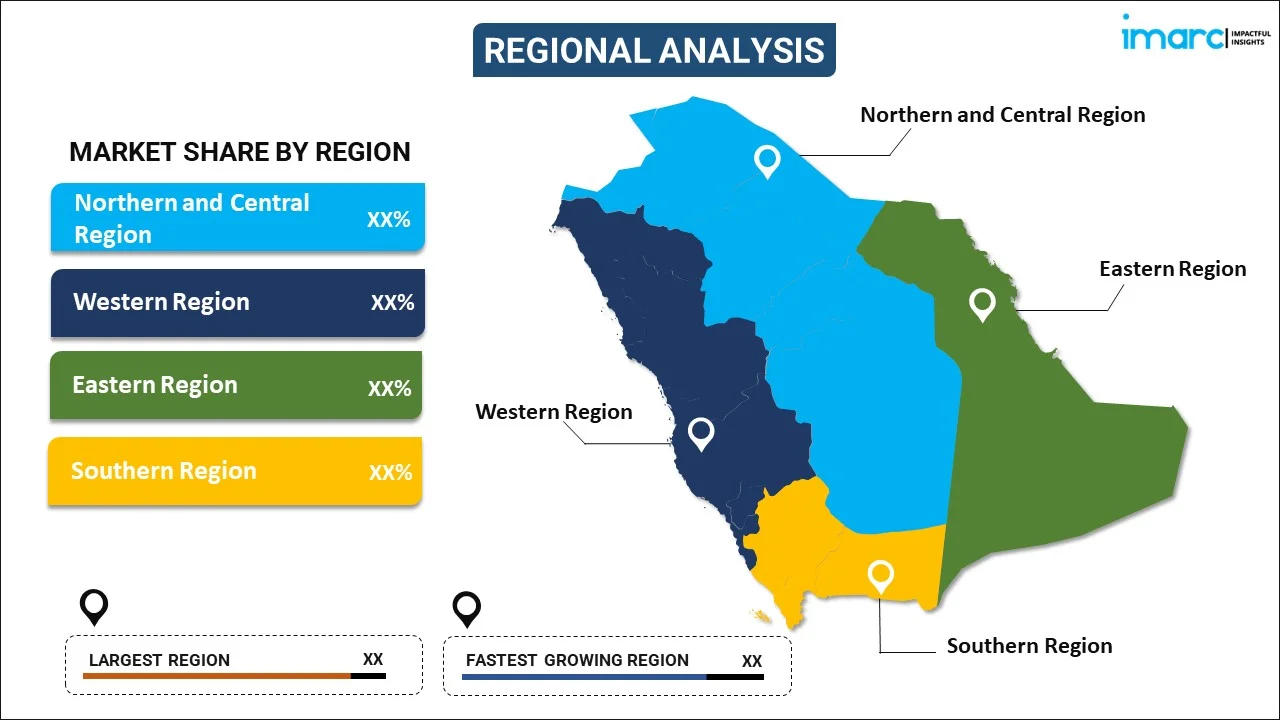
To get detailed regional analysis of this market Request Sample
- Northern and Central Region
- Western Region
- Eastern Region
- Southern Region
The report has also provided a comprehensive analysis of all the major regional markets, which include Northern and Central Region, Western Region, Eastern Region, Southern Region.
Competitive Landscape:
The market research report has also provided a comprehensive analysis of the competitive landscape in the market. Competitive analysis such as market structure, key player positioning, top winning strategies, competitive dashboard, and company evaluation quadrant has been covered in the report. Also, detailed profiles of all major companies have been provided. Some of the key players include:
- Armetal Stainless Pipe
- Kaisab Company Limited
- Saudi Hidayath Company Ltd.
- Shaaban Steel Co.
(Please note that this is only a partial list of the key players, and the complete list is provided in the report.)
Saudi Arabia Stainless Steel Market News:
- October 2025: Hunter Steel Flanges Manufacturing has recently opened its expanded production facility at Dubai Industrial City (DIC). The growth bolsters Hunter Steel Flanges’ dedication to backing the UAE’s Make it in the Emirates initiative and promoting the localisation of essential oil and gas equipment.
- August 2025: ArcelorMittal Tubular Products Al-Jubail (AMTPJ) has awarded a contract to Sinosteel Equipment & Engineering to expand its seamless steel pipe heat treatment and finishing line in Saudi Arabia.
- January 2025: The metallurgical group SIJ (Slovenska Industrija Jekla) from Slovenia intends to construct a €1.5bn facility in Saudi Arabia for the production of electric steel and premium hot-rolled coils. The firm has entered into a relevant agreement with the Saudi government, and the facility will be located in the industrial city of Ras al-Khair. The factory is set to be operational by 2029. SIJ is a leading manufacturer of stainless and specialty steels in Europe and the top vertically integrated steel organization in Slovenia.
Saudi Arabia Stainless Steel Market Report Coverage:
| Report Features | Details |
|---|---|
| Base Year of the Analysis | 2025 |
| Historical Period | 2020-2025 |
| Forecast Period | 2026-2034 |
| Units | Billion USD |
| Scope of the Report | Exploration of Historical Trends and Market Outlook, Industry Catalysts and Challenges, Segment-Wise Historical and Future Market Assessment:
|
| Products Covered | Flat, Long |
| Grades Covered | 200 Series, 300 Series, 400 Series, Duplex Series, Others |
| Applications Covered | Automotive and Transportation, Building and Construction, Consumer Goods, Mechanical Engineering and Heavy Industries, Others |
| Regions Covered | Northern and Central Region, Western Region, Eastern Region, Southern Region |
| Companies Covered | Armetal Stainless Pipe, Kaisab Company Limited, Saudi Hidayath Company Ltd., Shaaban Steel Co., etc. |
| Customization Scope | 10% Free Customization |
| Post-Sale Analyst Support | 10-12 Weeks |
| Delivery Format | PDF and Excel through Email (We can also provide the editable version of the report in PPT/Word format on special request) |
Key Benefits for Stakeholders:
- IMARC’s industry report offers a comprehensive quantitative analysis of various market segments, historical and current market trends, market forecasts, and dynamics of the Saudi Arabia stainless steel market from 2020-2034.
- The research report provides the latest information on the market drivers, challenges, and opportunities in the Saudi Arabia stainless steel market.
- Porter's five forces analysis assist stakeholders in assessing the impact of new entrants, competitive rivalry, supplier power, buyer power, and the threat of substitution. It helps stakeholders to analyze the level of competition within the Saudi Arabia stainless steel industry and its attractiveness.
- Competitive landscape allows stakeholders to understand their competitive environment and provides an insight into the current positions of key players in the market.
Frequently Asked Questions About the Saudi Arabia Stainless Steel Market Report
The Saudi Arabia stainless steel market size increased from USD 1.9 Billion in 2025 to USD 2.0 Billion in 2026.
The Saudi Arabia stainless steel market is projected to exhibit a CAGR of 4.25% during 2026-2034, reaching a value of USD 2.8 Billion by 2034.
The stainless steel market in Saudi Arabia is growing quickly, fueled by extensive construction initiatives related to Vision 2030 and significant funding in smart cities and infrastructure. Increasing demand from the oil, gas, and petrochemical industries, bolstered by anti-dumping tariffs, is enhancing local industry output. Continuous industrial diversification and growth in manufacturing enhance stainless steel use, establishing the material as crucial for the Kingdom’s sustained economic progress.
Some of the major players in the Saudi Arabia stainless steel market include Armetal Stainless Pipe, Kaisab Company Limited, Saudi Hidayath Company Ltd., Shaaban Steel Co., etc.
Need more help?
- Speak to our experienced analysts for insights on the current market scenarios.
- Include additional segments and countries to customize the report as per your requirement.
- Gain an unparalleled competitive advantage in your domain by understanding how to utilize the report and positively impacting your operations and revenue.
- For further assistance, please connect with our analysts.
 Request Customization
 Speak to an Analyst
 Request Brochure
 Inquire Before Buying
Benefits of Customization
- Personalize this research
- Triangulate with your data
- Get data as per your format and definition
- Gain a deeper dive into a specific application, geography, customer, or competitor
- Any level of personalization
Get in Touch With Us
UNITED STATES
Phone: +1-201-971-6302
INDIA
Phone: +91-120-433-0800
UNITED KINGDOM
Phone: +44-753-714-6104
Email: [email protected]
Client Testimonials




.webp)




.webp)













Related Reports

Choose your plan
*Please note that the prices mentioned below are starting prices for each bundle type. Kindly contact our team for further details.*
Single User License
- 1 User License, Access on 2 Devices
- PDF Report + Excel Dataset (Password Protected)
- Lifetime Access
- No Printing Rights
- 10% Free Report Customization
- 10–12 Weeks of Analyst Support
Five User License
- Access for 5 Users, 2 Devices per User
- PDF Report + Excel Dataset (Password Protected)
- Lifetime Access
- Dedicated Account Manager
- 12–14 Weeks of Analyst Support
- No Printing Rights
- 15% Free Report Customization
- 25% Discount on Your Next Purchase
Corporate User License
- Unlimited User Access (Within Your Organization)
- PDF Report + Excel Dataset
- Lifetime Access
- Dedicated Account Manager
- 14–20 Weeks of Analyst Support
- No Printing Rights
- 20% Free Report Customization
- 30% Discount on Your Next Purchase
Essential Insights
What's included:
3 reports
- Lifetime Access
- PDF Reports
- Excel Datasets
- 2 Weeks of Free Analyst Support
- 2 User Licenses
- Access on 2 Devices
- Printing Rights
- Complimentary PowerPoint (PPT) Version
- Complimentary License Upgrade
Professional Access
What's included:
5 reports
- Lifetime Access
- PDF Reports
- Excel Datasets
- 8 Weeks of Free Analyst Support
- 2 User Licenses
- Access on 2 Devices
- Printing Rights
- Complimentary PowerPoint (PPT) Version
- Complimentary License Upgrade
Business Advantage
What's included:
8 reports
- Lifetime Access
- PDF Reports
- Excel Datasets
- 14 Weeks of Free Analyst Support
- 2 User Licenses
- Access on 2 Devices
- Printing Rights
- Complimentary PowerPoint (PPT) Version
- Complimentary License Upgrade
Enterprise Intelligence
What's included:
10 reports
- Lifetime Access
- PDF Reports
- Excel Datasets
- 20 Weeks of Free Analyst Support
- 2 User Licenses
- Access on 2 Devices
- Printing Rights
- Complimentary PowerPoint (PPT) Version
- Complimentary License Upgrade