
Saudi Arabia Weight Loss Market Size, Share, Trends and Forecast by Diet, Equipment, Service, Gender, Age Group, 2026-2034
Saudi Arabia Weight Loss Market Size, Share, Trends & Forecast (2026-2034)
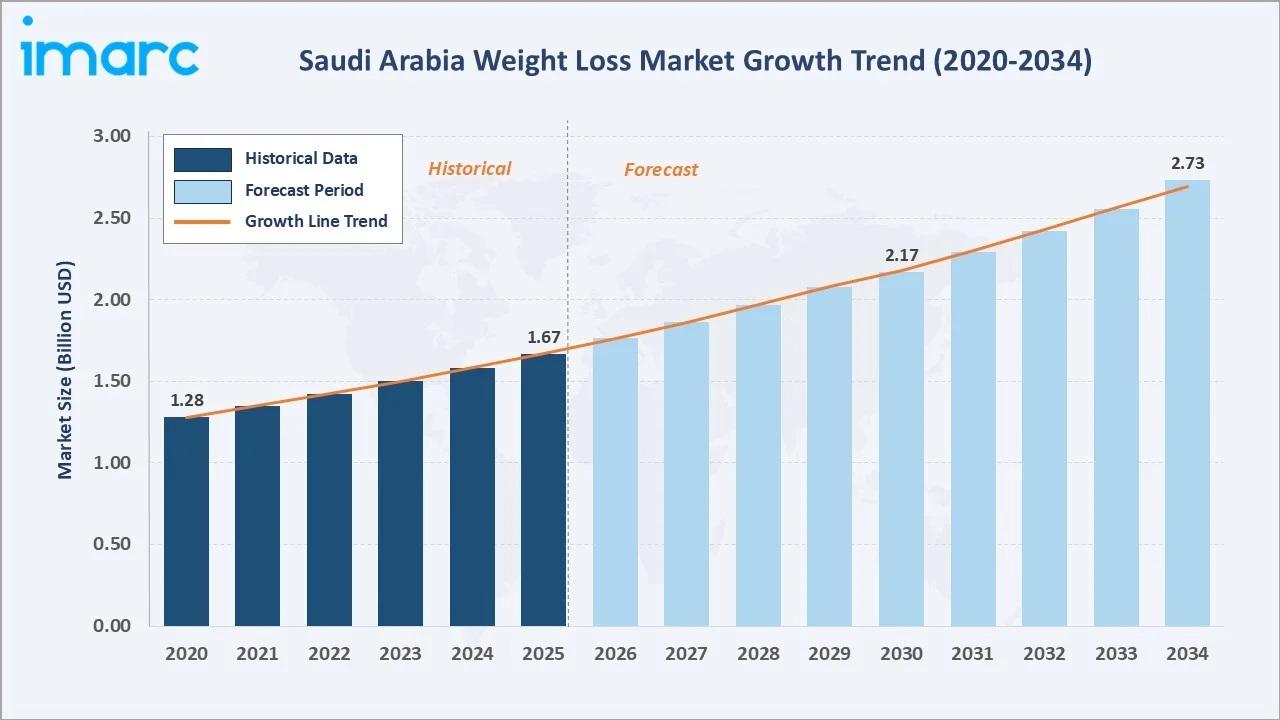
The Saudi Arabia weight loss market reached USD 1.67 Billion in 2025 and is projected to reach USD 2.73 Billion by 2034, growing at a CAGR of 5.46% during 2026-2034. Escalating obesity and overweight prevalence driven by sedentary lifestyles and dietary westernization, Vision 2030 wellness and active lifestyle promotion initiatives, the rapid adoption of GLP-1 receptor agonist therapies, and the growth of digital fitness and nutrition coaching platforms are the primary growth catalysts.
Market Snapshot
|
Metric |
Value |
|
Market Size (2025) |
USD 1.67 Billion |
|
Forecast Market Size (2034) |
USD 2.73 Billion |
|
CAGR (2026-2034) |
5.46% |
|
Base Year |
2025 |
|
Historical Period |
2020-2025 |
|
Forecast Period |
2026-2034 |
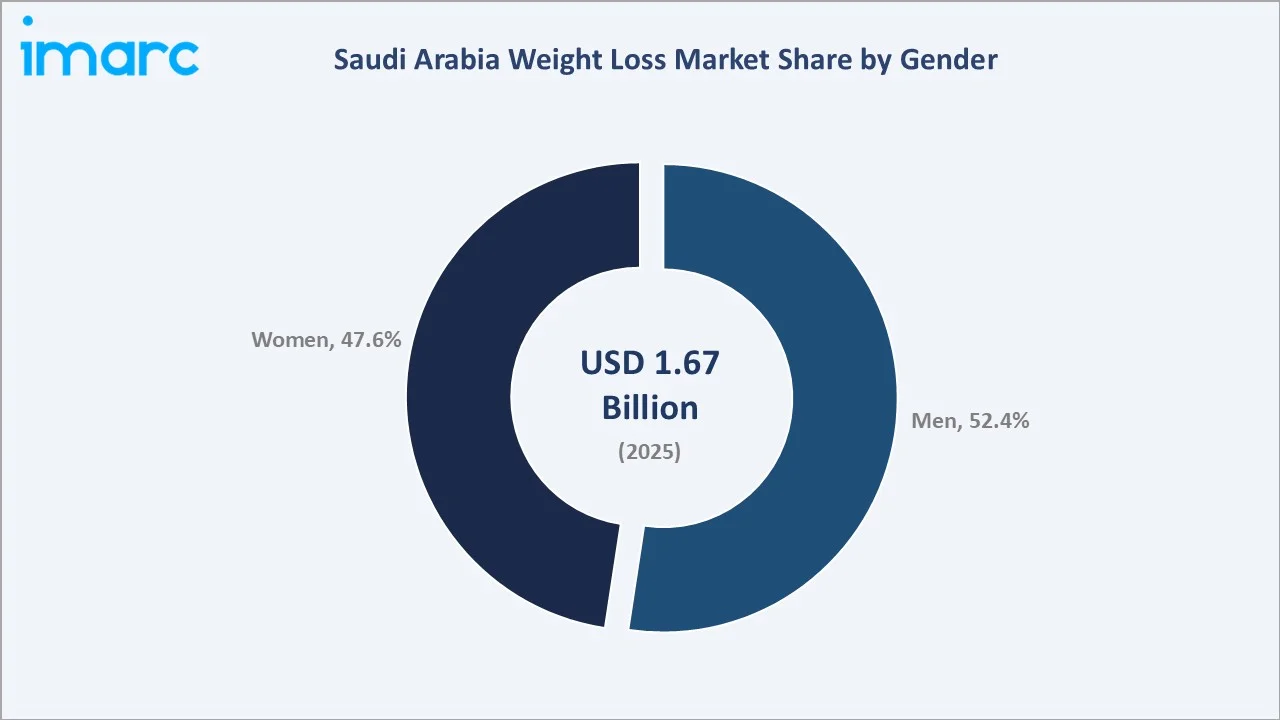
Men account for the largest gender segment at 52.4% of 2025 market value, reflecting Saudi Arabia's male-driven consumer spending and active fitness culture across gym memberships, sports nutrition supplements, and fitness equipment. Supplements dominate the diet segment at 46.8%, while meals at 33.7% and beverages at 19.5% complete the dietary weight loss product landscape for Saudi consumers increasingly seeking science-backed nutritional solutions.
To get more information on this market, Request Sample
The Saudi Arabia weight loss market is underpinned by three structural forces: an adult obesity prevalence of approximately 35.4% generating large-scale demand for weight management solutions across all income segments; the Vision 2030 Quality of Life Program's systematic investment in fitness infrastructure, sports facilities, and public health awareness campaigns that normalize active lifestyle behavior and weight management product consumption; and the entry of GLP-1 receptor agonist medications into the Saudi healthcare system as SFDA-approved treatments for obesity and type 2 diabetes, expanding the addressable medical weight loss market significantly.
Executive Summary
The Saudi Arabia weight loss market is experiencing above-average growth among GCC consumer health markets, driven by the convergence of a high-obesity demographic, government wellness investment, and rapid technology adoption in digital health and nutrition. The market was valued at USD 1.67 Billion in 2025 and is forecast to reach USD 2.73 Billion by 2034 at a CAGR of 5.46%, reflecting the Kingdom’s accelerating transition toward a health-conscious consumer culture catalyzed by Vision 2030.
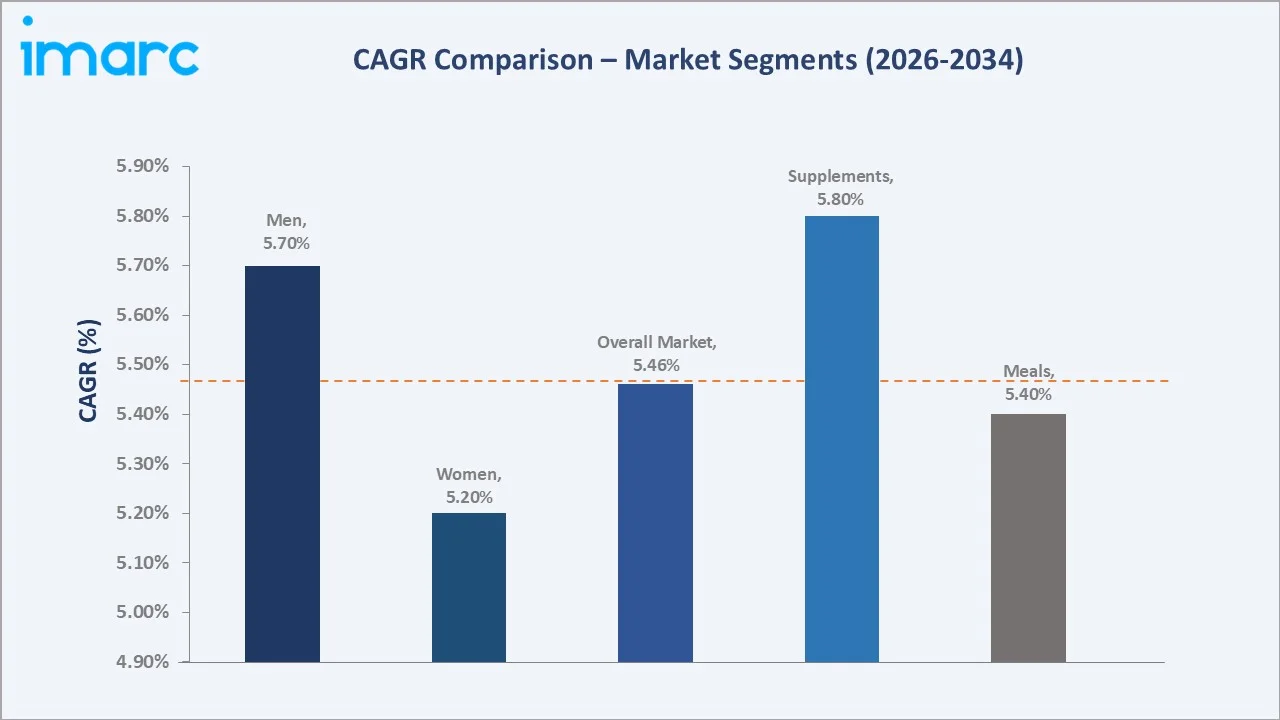
Men lead the gender segment at 52.4% in 2025, driven by Saudi Arabia’s large gym and fitness center sector where male membership has historically dominated and where sports nutrition supplement consumption per capita is significantly above the regional average. Supplements dominate the diet segment at 46.8%, encompassing protein shakes, capsules, tablets, fat burners, meal replacement protein powders, and specialty weight management supplements sold through pharmacies, health stores, e-commerce, and gym retail.
Key Market Insights
|
Insight |
Data |
|
Largest Gender Segment |
Men – 52.4% share (2025) |
|
Fastest Growing Gender |
Women – ~5.7% CAGR (2026-2034) |
|
Largest Diet Segment |
Supplements – 46.8% share (2025) |
|
Fastest Growing Diet Segment |
Supplements – ~5.8% CAGR (2026-2034) |
|
Top Companies |
Herbalife Ltd., Abbott Laboratories, Nestlé S.A., The Simply Good Foods Company |
Key Analytical Observations Supporting The Above Data:
- Men command 52.4% of the Saudi weight loss market in 2025, reflecting the country’s male-dominated fitness center culture, higher male disposable income allocation toward sports nutrition products, and the market’s historical development trajectory where men entered weight management services and supplement purchasing earlier than women.
- Supplements dominate at 46.8% (2025) of the diet segment, reflecting Saudi consumers’ preference for convenient, high-protein supplementation to support weight management goals alongside continued normal dietary patterns, rather than full meal replacement programs that require more significant behavior change.
- The market’s 5.46% CAGR reflects Saudi Arabia’s unique growth dynamics: an adult obesity rate of approximately 35.4% that creates substantial unmet demand for effective weight management solutions; Vision 2030’s Quality of Life Program targeting 40% of Saudi citizens engaged in sports or physical activity by 2030; and a rapidly growing private healthcare sector that is integrating weight management services into chronic disease management programs for diabetic and cardiovascular patients.
Saudi Arabia Weight Loss Market Overview
The Saudi Arabia weight loss market encompasses dietary supplements, meal replacement products, functional weight management beverages, fitness equipment, weight loss services, and pharmaceutical obesity treatments. Saudi Arabia is the GCC’s largest weight loss market by value, reflecting the Kingdom’s combination of high per-capita income, extreme obesity prevalence, and a rapidly evolving consumer health consciousness catalyzed by Vision 2030.
Saudi Arabia’s obesity and overweight crisis is the primary structural driver of the weight loss market: the Kingdom has an adult obesity rate of approximately 35.4%, placing it among the world’s most obesity-affected populations. The dietary factors driving this obesity epidemic, including heavy reliance on processed and fast food, high sugar consumption, low fiber intake, and a sedentary lifestyle, create a commercially addressable market of millions of Saudi consumers motivated to adopt weight management products and services.
Market Dynamics
To evaluate market opportunities, Request Sample
Market Drivers
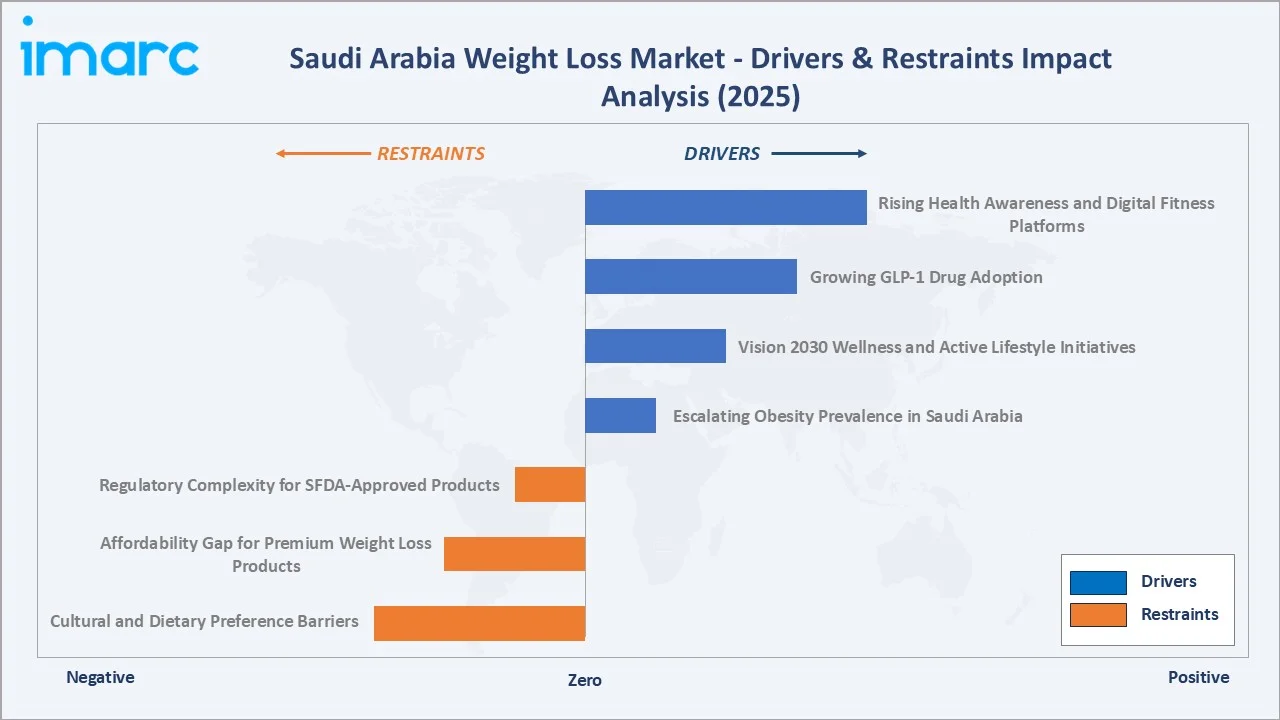
- Escalating Obesity Prevalence in Saudi Arabia: Saudi Arabia’s adult obesity rate of approximately 35.4% creates a large and structurally growing addressable market for weight loss products and services. The obesity epidemic is multifactorial: rapid economic development has elevated caloric intake through increased restaurant and fast food consumption; urbanization has dramatically reduced physical activity; and the Kingdom’s extreme summer heat further discourages outdoor exercise for 4–6 months annually.
- Vision 2030 Wellness and Active Lifestyle Initiatives: Saudi Arabia’s Vision 2030 Quality of Life Program is one of the most ambitious wellness transformation programs globally, targeting 40% of Saudi citizens regularly engaged in sports or physical activity by 2030. The Sports for All Federation’s nationwide campaign network, women’s fitness facility licensing program, and expansion of physical education in schools are all systematically increasing the base of health-conscious Saudi consumers.
- Growing GLP-1 Drug Adoption: The SFDA’s approval of semaglutide has opened a new pharmaceutical dimension to Saudi Arabia’s weight loss market. Saudi Arabia’s estimated 7 million people living with diabetes, combined with expanding Wegovy access for obesity treatment, has created a large medically supervised weight loss patient population that simultaneously purchases high-protein dietary supplements, registered dietitian consulting services, and structured meal programs.
- Rising Health Awareness and Digital Fitness Platforms: Social media influence has dramatically increased Saudi consumer awareness of nutrition, weight management products, and fitness techniques. The Saudi Healthtech startup Kilow raised USD 2.5 Million in seed funding in May 2025 to expand its AI-powered personalized weight management platform, reflecting venture capital confidence in digital health as a weight loss delivery channel.
Market Restraints
- Affordability Gap for Premium Weight Loss Products: International weight loss supplements, structured meal replacement programs, and medical weight management services command significant price premiums relative to mainstream food alternatives, creating an affordability barrier for lower-income Saudi consumers, non-citizen expatriate workers, and price-sensitive consumers in smaller cities and rural regions.
- Cultural and Dietary Preference Barriers: Saudi Arabia’s culinary culture creates behavior change barriers for weight loss program adoption that product innovation alone cannot easily overcome. Ramadan, during which eating patterns shift dramatically with large Iftar and Suhoor meals replacing regular small meals, disrupts weight management programs for 30 days annually and can reverse progress made in preceding months.
- Regulatory Complexity for SFDA-Approved Products: The SFDA’s regulatory requirements for health claim labelling, food supplement registration, and novel ingredient approval create compliance complexity and time-to-market delays for international weight loss supplement brands entering the Saudi market.
Market Opportunities
- Women’s Weight Loss Market Rapid Expansion: The female-focused fitness and nutrition segment is growing at approximately 5.7% CAGR as women’s gym membership, female-oriented nutrition coaching, and weight loss program uptake accelerates. Saudi-based women’s fitness brands and female health influencers with 1–5 million Instagram followers are building substantial audiences that convert directly to supplement and meal program purchasing.
- Bariatric Surgery and Medical Weight Loss Centre Growth: Saudi Arabia has one of the highest bariatric surgery rates in the world relative to population, with more than 30,000 procedures performed annually at over 50 accredited bariatric surgery centers. The post-bariatric surgery patient population requires lifelong nutritional supplementation, creating a recurring, high-compliance supplement customer base with medical-professional recommendation support.
- Personalized Nutrition and AI-Powered Weight Management: DNA-based personalized nutrition programs, AI-powered calorie and macro tracking applications, and smart home exercise equipment with integrated coaching are gaining traction among Saudi Arabia’s tech-forward millennial and Gen Z consumers. Saudi Healthtech startup Kilow’s USD 2.5 Million seed round and the regional expansion of global platforms with Arabic-language interfaces indicate growing commercial viability of technology-enabled weight management as a premium service category in the Saudi market.
Market Challenges
- Market Saturation in Urban Premium Segment: Saudi Arabia’s tier-1 cities are experiencing increasing market saturation in the premium fitness supplement and weight loss program segments, with hundreds of local and international brands competing for the same health-conscious, high-income urban consumer segment. Differentiation on product efficacy, brand equity, and consumer experience is becoming more critical and costly as advertising spending and influencer marketing investment escalate across the competitive landscape.
- Counterfeit and Substandard Supplement Products: The Saudi weight loss supplement market faces a persistent counterfeit and substandard product challenge, with unregistered supplements sold through social media, informal distribution channels, and cross-border imports containing unlabeled active pharmaceutical ingredients that pose consumer health risks.
Emerging Market Trends
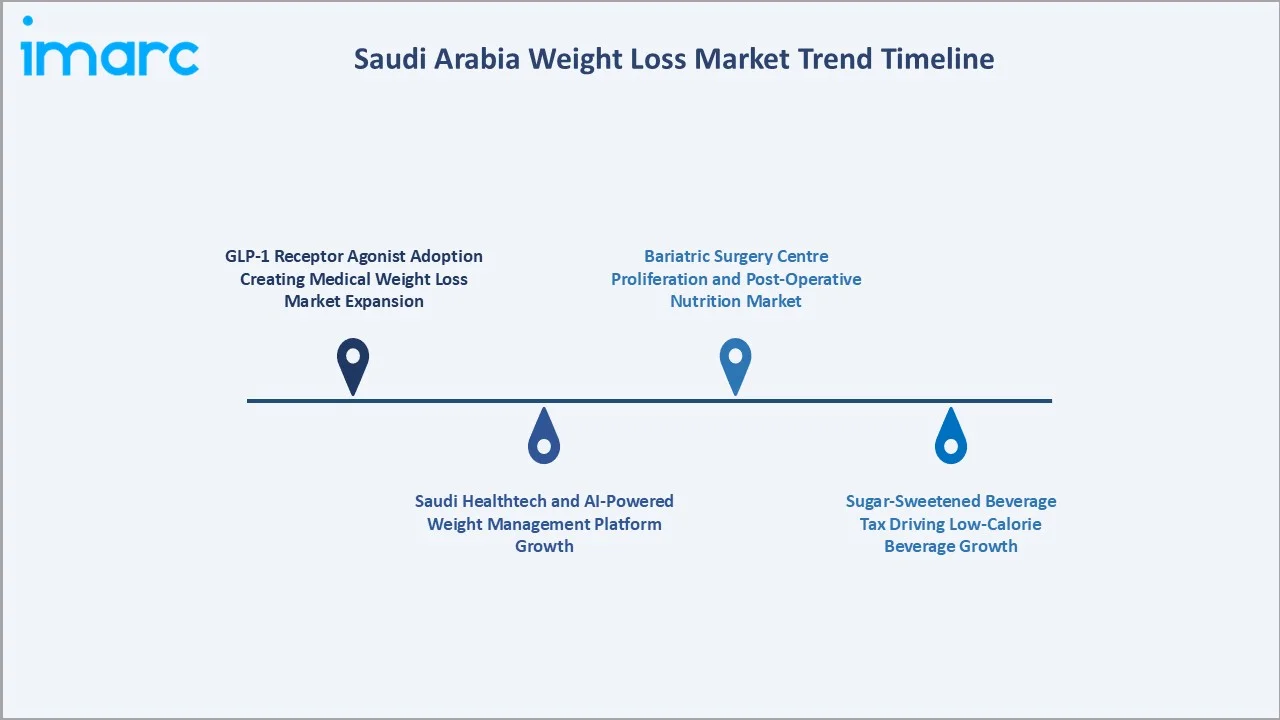
1. GLP-1 Receptor Agonist Adoption Creating Medical Weight Loss Market Expansion
The SFDA approval of semaglutide has fundamentally expanded Saudi Arabia’s weight loss market by adding a pharmaceutical dimension to what was primarily an OTC supplement and fitness service market. Saudi Arabia’s 7 million people living with diabetes represent the initial GLP-1 adoption wave, with Wegovy for obesity treatment progressively expanding access to the obese Saudi adults seeking medically supervised weight loss.
2. Saudi Healthtech and AI-Powered Weight Management Platform Growth
The Saudi digital health ecosystem is producing weight management-focused startups that are combining AI nutrition coaching, personalized meal planning, and integrated health tracking with culturally appropriate Saudi dietary and lifestyle guidance. Kilow’s USD 2.5 Million seed funding in May 2025 for its AI-powered personalized weight management platform reflects investor confidence in tech-enabled weight loss as a scalable Saudi business model.
3. Sugar-Sweetened Beverage Tax Driving Reformulation and Low-Calorie Beverage Growth
Saudi Arabia’s 50% excise tax on sugar-sweetened beverages (SSBs) and 100% tax on energy drinks, implemented since 2017 and progressively enforced, is creating structural market incentives for consumers to shift toward low-calorie and zero-sugar beverage alternatives. International brands and domestic functional beverage companies are expanding low-calorie product ranges targeting health-conscious Saudi consumers, while specialty weight management beverages (green tea extracts, thermogenic drinks, protein water) are gaining traction in the gym retail and health food store channel.
4. Bariatric Surgery Centre Proliferation and Post-Operative Nutrition Market
Saudi Arabia’s more than 30,000 annual bariatric surgery procedures are generating a large and growing post-operative nutrition supplementation market. Post-bariatric surgery patients require lifelong supplementation including specialty high-protein formulas, vitamin and mineral complexes, calcium-vitamin D combinations, and iron supplements to address the malabsorptive consequences of gastric bypass and sleeve gastrectomy procedures.
Industry Value Chain Analysis
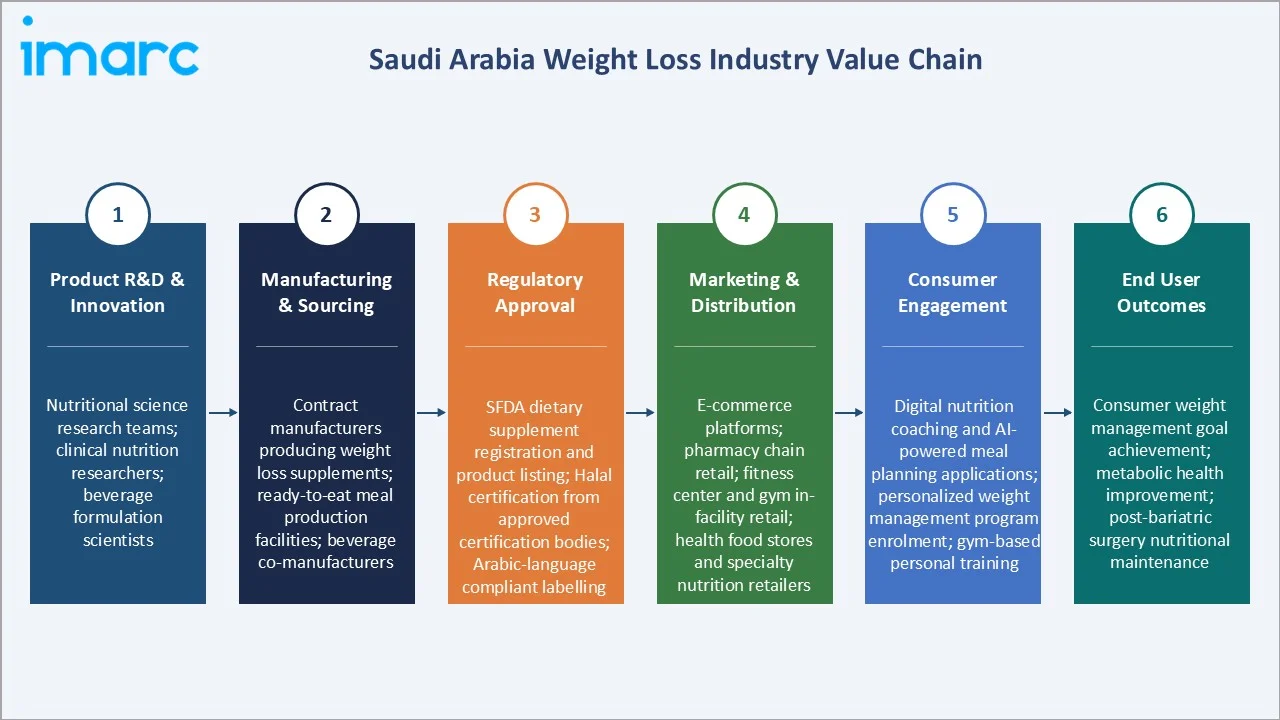
The Saudi Arabia weight loss market value chain spans product research and development through consumer outcomes, with the SFDA regulatory framework and Halal certification requirements serving as the critical compliance gateways for products entering the Saudi market.
|
Stage |
Key Players / Examples |
|
Product R&D & Innovation |
Nutritional science research teams; clinical nutrition researchers; beverage formulation scientists |
|
Manufacturing & Sourcing |
Contract manufacturers producing weight loss supplements; ready-to-eat meal production facilities; beverage co-manufacturers |
|
Regulatory Approval |
SFDA dietary supplement registration and product listing; Halal certification from approved certification bodies; Arabic-language compliant labelling |
|
Marketing & Distribution |
E-commerce platforms; pharmacy chain retail; fitness center and gym in-facility retail; health food stores and specialty nutrition retailers |
|
Consumer Engagement |
Digital nutrition coaching and AI-powered meal planning applications; personalized weight management program enrolment; gym-based personal training |
|
End User Outcomes |
Consumer weight management goal achievement; metabolic health improvement; post-bariatric surgery nutritional maintenance |
Technology Landscape in the Saudi Arabia Weight Loss Industry
AI-Powered Personalized Nutrition and Coaching
AI-driven personalized nutrition platforms are transforming Saudi Arabia’s weight loss market by delivering individualized dietary recommendations, calorie tracking, and coaching at scale. Global platforms including MyFitnessPal, Noom, and Lifesum have launched Arabic-language interfaces serving the GCC market, while Saudi-developed apps integrate Halal food databases and local restaurant nutritional information.
GLP-1 Pharmaceutical Technology and Medical Weight Management
GLP-1 receptor agonists represent the most clinically significant technology advance in obesity treatment in decades, achieving 15–22% body weight reduction in clinical trials versus 3–5% achievable with lifestyle intervention alone. Furthermore, the convergence of GLP-1 pharmaceutical therapy with supplementation, meal planning, and digital coaching creates an integrated medical weight management market segment that is growing rapidly and commands premium pricing across the combined treatment pathway.
Bariatric Surgery Technology and Minimally Invasive Procedures
Advances in minimally invasive bariatric surgery have made weight loss surgery safer, faster-recovering, and more accessible at Saudi Arabia’s growing bariatric surgery center network. Non-invasive endoscopic procedures including intragastric balloon placement are gaining popularity as lower-cost, lower-risk alternatives to traditional bariatric surgery, expanding the medically assisted weight loss market to patients who previously declined surgical options.
Market Segmentation Analysis
The report covers the following segments:
|
Segment Category |
Leading Segment |
Market Share |
Year |
|
Gender |
Men |
52.4% |
2025 |
|
Diet |
Supplements |
46.8% |
2025 |
|
Equipment |
Fitness Equipment |
🔒 |
2025 |
|
Service |
Fitness Centers and Health Clubs |
🔒 |
2025 |
|
Age Group |
Consumer Between 31 to 60 Years of Age |
🔒 |
2025 |

By Gender
The gender segment is analyzed across men (52.4%) and women (47.6%). Men’s dominance reflects their higher engagement with gym-based weight management that drives above-average sports nutrition supplement consumption. Saudi Arabia’s gym sector is primarily male-oriented in terms of historical development, with men’s gym infrastructure significantly more developed than women’s.
To access detailed market analysis, Request Sample
Women are closing the gap rapidly: Vision 2030 reforms permitting women to exercise in mixed-gender facilities and the proliferation of women-only gyms and female-oriented online fitness programs are expanding the female weight loss market at approximately 5.7% CAGR.
By Diet
The diet segment is led by supplements (46.8%), followed by meals (33.7%), and beverages (19.5%). Supplements dominate as Saudi consumers’ preferred weight management dietary approach, reflecting convenience, the influence of gym culture, and the wide availability of international supplement brands through both physical and e-commerce channels.
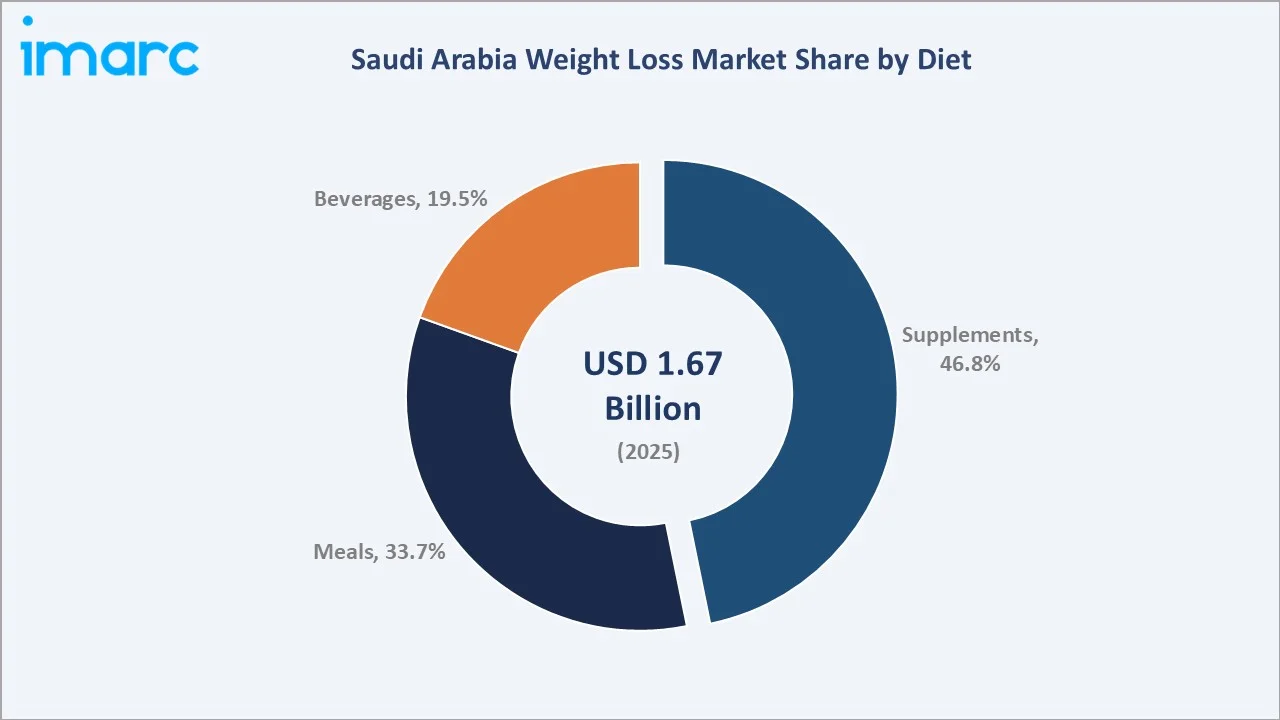
Meals encompasses calorie-controlled meal delivery services, pre-packaged diet meal kits, and structured diet program food products. Moreover, beverages include functional weight management drinks, green tea weight loss products, and low-calorie sports drinks formulated for caloric restriction compatibility.
Competitive Landscape
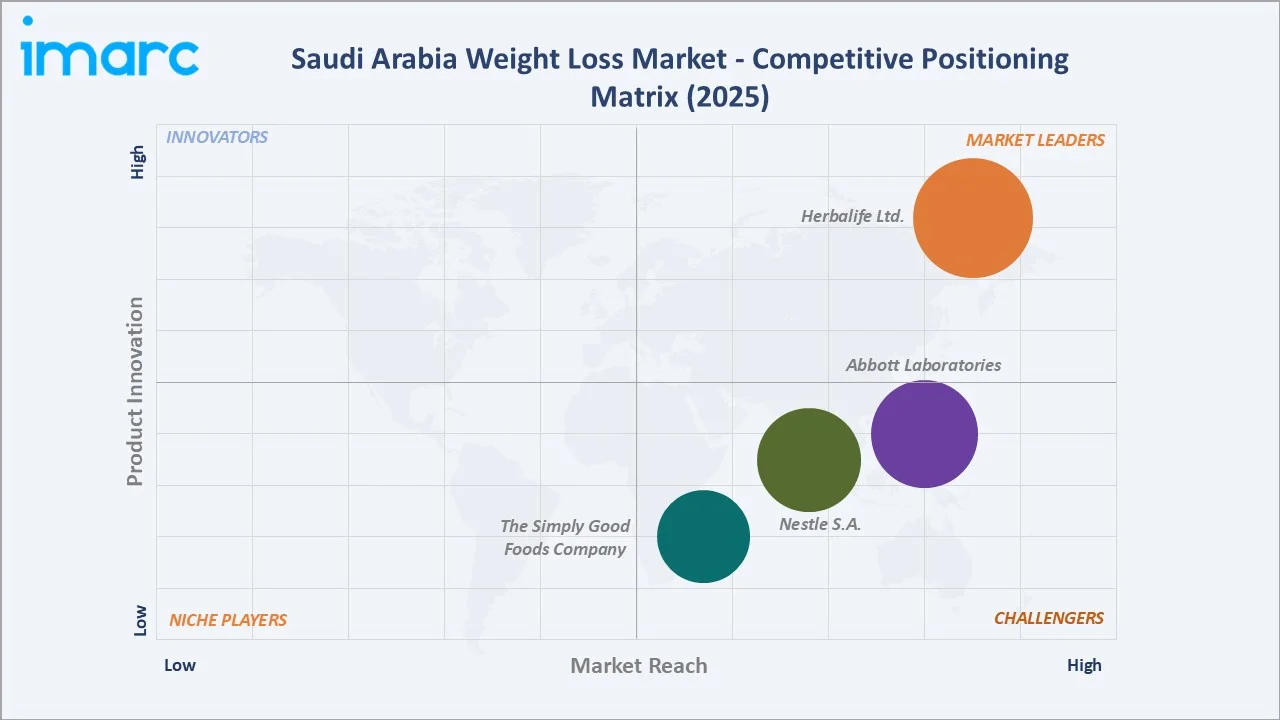
The Saudi Arabia weight loss market is fragmented across the supplement, meal program, fitness service, and medical weight loss segments, with no single company commanding dominant market share across all categories.
|
Company Name |
Brand/Product |
Market Position |
Core Strength |
|
Herbalife Ltd. |
Herbalife Formula 1 Nutritional Shake Mix, Herbalife Formula 2 Multivitamin, Herbalife Protein Powder, Liftoff energy tablets, Pro2col, among others |
Market Leader |
One of the global direct-selling supplement leaders; Formula 1 shakes and protein range; personalized coaching network; strong brand recognition |
|
Abbott Laboratories |
Ensure Plus, Glucerna (diabetic nutrition) |
Strong Challenger |
Medical nutrition leadership; Ensure brand trusted by healthcare professionals; Glucerna for diabetic weight management aligned with GLP-1 patient supplement needs |
|
Nestlé S.A. |
Nestle Optifast, Nestle Health Science weight management range |
Strong Challenger |
Broad FMCG distribution giving health science products retail access; trust brand equity; diverse price-point portfolio covering mass to premium segments |
|
The Simply Good Foods Company |
Atkins High Protein Bars and Shakes, Atkins Endulge Snacks, Ketogenic Diet Products |
Challenger |
Low-carbohydrate diet specialist; culturally compatible high-protein, low-carb positioning for Saudi consumer dietary preferences; growing keto diet trend alignment |
International supplement brands dominate Saudi market value through established brand equity and distribution. Saudi-founded weight loss brands and regional GCC companies compete on local market knowledge, Halal positioning, and Arabic-language consumer engagement.
Key Company Profiles
Herbalife Ltd.
Herbalife Ltd. is a global multi-level marketing nutrition company distributing weight management, sports nutrition, and health supplement products through a network of independent distributors in Saudi Arabia.
- Product Portfolio: Herbalife Formula 1 Nutritional Shake Mix (meal replacement); Herbalife Formula 2 and 3 vitamin and supplement complexes; Herbalife Protein Powder; Liftoff energy tablets; Herbalife Afresh energy tea mix; Pro2col, among others.
- Recent Developments: In February 2026, Herbalife Ltd. reported Q4 2025 net sales of USD 1.3 billion, up 6.3% year over year. Full-year net sales increased 0.9% to USD 5.0 billion, with adjusted EBITDA of USD 657.6 million and net income of USD 228.3 million.
- Strategic Focus: Distributor network expansion across Saudi secondary cities and regional markets beyond Riyadh and Jeddah; product development for Halal-certified protein formulations meeting Saudi consumer preferences; alignment of program messaging with Vision 2030 wellness campaign themes.
Abbott Laboratories
Abbott Laboratories is a global healthcare company whose Nutrition division produces medical nutrition products for weight management and metabolic health. Abbott’s Saudi Arabia nutrition business encompasses medical nutrition products distributed through hospital pharmacies, retail pharmacies, and health food stores.
- Product Portfolio: Ensure Plus (high-calorie liquid medical nutrition); Ensure High Protein (weight management support); Glucerna (specialized nutrition for diabetes management and weight control).
- Recent Developments: In January 2026, Abbott Laboratories reported full-year 2025 sales of USD 44.3 billion, up 5.7% on a reported basis. Fourth-quarter sales reached USD 11.5 billion, and projected 2026 organic sales growth of 6.5%–7.5%.
- Strategic Focus: Medical channel expansion through endocrinologist and bariatric surgeon recommendation for Glucerna and Ensure High Protein; corporate wellness channel development through employer-provided healthcare benefit programs.
Market Concentration Analysis
The Saudi Arabia weight loss market exhibits low-to-moderate concentration at the overall market level, with no single company commanding more than an estimated 10–15% of total market value across all weight loss categories.
The market’s fragmentation reflects its multi-segment nature: supplement brands compete in the diet product segment, fitness center chains compete in the service segment, pharmaceutical companies compete in the medical weight loss segment, and digital health platforms compete in the program and coaching segment, with limited direct overlap enabling multiple category leaders to co-exist.
Investment & Growth Opportunities
Fastest Growing Segments
Medical weight loss and GLP-1 integrated nutrition support (~12% CAGR within medical segment); women’s weight management products and services (~5.7% CAGR, above overall market); AI-powered personalized nutrition programs and digital weight management platforms (~15% CAGR for technology-enabled services); and post-bariatric surgery nutritional supplementation (~8% CAGR from growing bariatric procedure volumes) represent the highest-growth investment vectors within the Saudi weight loss market through 2034.
Emerging Market Expansion
Saudi Arabia’s secondary cities and regional markets represent significantly underpenetrated weight loss markets where digital-first distribution can reach health-conscious consumers without the capital investment of physical retail infrastructure. The growing affluence of Saudi secondary city populations under Vision 2030 regional development investment, combined with nationwide 5G-enabled digital access, makes these markets progressively commercially viable for supplement brands and digital weight management platforms expanding beyond Riyadh and Jeddah.
Venture and Institutional Investment Trends
- Saudi Healthtech weight management startups are attracting seed and Series A venture capital investment, with Kilow’s USD 2.5 Million seed round in May 2025 exemplifying investor interest in AI-powered personalized weight management platforms serving the Saudi and GCC market.
- Saudi Vision 2030 Quality of Life Program investment in sports infrastructure, public fitness facilities, and health awareness campaigns is generating indirect commercial opportunity for weight loss product and service companies by expanding the active, health-conscious consumer base that becomes their addressable market.
Future Market Outlook (2026-2034)
The Saudi Arabia weight loss market is positioned for above-average growth through 2034. From a base of USD 1.67 Billion in 2025, the market is projected to reach USD 2.73 Billion by 2034 at a CAGR of 5.46%, representing total incremental value creation of USD 1.06 Billion.
This growth is underpinned by Saudi Arabia’s persistent obesity epidemic, Vision 2030’s multi-billion-riyal wellness infrastructure investment, the rapid penetration of GLP-1 pharmaceutical therapies expanding the medical weight loss addressable market, and the technology-enabled scaling of digital weight management services.
Research Methodology
Primary Research
Primary research comprised structured interviews with over 70 industry participants in 2024–2025, including weight management product brand managers, fitness center operators, clinical dietitians, obesity medicine physicians, bariatric surgeons, pharmacy buyers, e-commerce platform managers, and Saudi health and fitness influencers across Riyadh, Jeddah, Dammam, and Makkah.
Secondary Research
Secondary research encompassed Saudi Ministry of Health obesity and nutrition statistics, SFDA dietary supplement and pharmaceutical product registry, Saudi Commission for Health Specialties obesity medicine and bariatric surgery data, Vision 2030 Quality of Life Program investment and participation statistics, Saudi Sports for All Federation membership and facility data, e-commerce platform category sales data, social media engagement analytics for Saudi health and fitness influencers, and annual reports.
Forecasting Models
Market size estimations were derived using top-down and bottom-up forecasting, incorporating Saudi adult population growth projections, obesity prevalence trend modelling under Vision 2030 intervention scenarios, per-capita weight loss product spending growth rates by income segment, SFDA-registered product category sales value growth analysis, fitness center membership and revenue trends, GLP-1 pharmaceutical market adoption curve modelling, and digital health platform user acquisition projections.
Report Coverage:
| Report Features | Details |
|---|---|
| Base Year of the Analysis | 2025 |
| Historical Period | 2020-2025 |
| Forecast Period | 2026-2034 |
| Units | Billion USD |
| Scope of the Report |
Exploration of Historical and Forecast Trends, Industry Catalysts and Challenges, Segment-Wise Historical and Predictive Market Assessment:
|
| Diets Covered | Supplements, Meals, Beverages |
| Equipments Covered | Fitness Equipment: Cardio Vascular Equipment, Strength Training Equipment, Others Surgical Equipment: Minimally Invasive/Bariatric Equipment, Non-Invasive Equipment |
| Services Covered | Fitness Centers and Health Clubs, Consulting Service, Surgical Clinics, Online Weight Loss Programs, Others |
| Genders Covered | Men, Women |
| Age Groups Covered | Consumer Between 31 to 60 Years of Age, Consumer Between 15 to 30 Years, Consumers with Age More Than 60 Years, Consumers Below 15 Years |
| Companies Covered | Herbalife Ltd., Abbott Laboratories, Nestlé S.A., The Simply Good Foods Company, etc. |
| Customization Scope | 10% Free Customization |
| Post-Sale Analyst Support | 10-12 Weeks |
| Delivery Format | PDF and Excel through Email (We can also provide the editable version of the report in PPT/Word format on special request) |
Frequently Asked Questions About the Saudi Arabia Weight Loss Market Report
The Saudi Arabia weight loss market reached USD 1.67 Billion in 2025 and is projected to reach USD 2.73 Billion by 2034.
The market is expected to grow at a CAGR of 5.46% during 2026-2034, driven by escalating obesity prevalence, rising health consciousness among Saudi millennials and Gen Z, and the rapid growth of digital fitness and nutrition coaching platforms.
Men hold the largest gender segment share at 52.4% in 2025, reflecting Saudi Arabia’s historically male-dominated gym and fitness culture and higher male sports nutrition supplement consumption.
Supplements dominate with a 46.8% share in 2025, reflecting Saudi consumers’ preference for protein powders, fat burners, meal replacement protein shakes, and weight management capsules as their primary dietary weight loss approach.
Key drivers include Saudi Arabia’s high adult obesity rate creating large unmet weight management demand, Vision 2030’s sports and wellness infrastructure investment, and rising health awareness through social media fitness influencers.
Some of the key players include Herbalife Ltd., Abbott Laboratories, Nestlé S.A., and The Simply Good Foods Company.
Vision 2030’s Quality of Life Program is one of the most significant structural drivers of the Saudi weight loss market. The program directly expands the health-conscious Saudi consumer base, legitimizes fitness culture as a mainstream activity, and creates institutional channels for weight management product and service providers.
Key challenges include an affordability gap for premium weight loss products limiting mass-market adoption, cultural and dietary preference barriers to structured meal replacement program adoption, and market saturation in the Riyadh and Jeddah premium supplement segment.
Need more help?
- Speak to our experienced analysts for insights on the current market scenarios.
- Include additional segments and countries to customize the report as per your requirement.
- Gain an unparalleled competitive advantage in your domain by understanding how to utilize the report and positively impacting your operations and revenue.
- For further assistance, please connect with our analysts.
 Request Customization
 Speak to an Analyst
 Request Brochure
 Inquire Before Buying
Benefits of Customization
- Personalize this research
- Triangulate with your data
- Get data as per your format and definition
- Gain a deeper dive into a specific application, geography, customer, or competitor
- Any level of personalization
Get in Touch With Us
UNITED STATES
Phone: +1-201-971-6302
INDIA
Phone: +91-120-433-0800
UNITED KINGDOM
Phone: +44-753-714-6104
Email: [email protected]
Client Testimonials




.webp)




.webp)













Related Reports

Choose your plan
*Please note that the prices mentioned below are starting prices for each bundle type. Kindly contact our team for further details.*
Single User License
- 1 User License, Access on 2 Devices
- PDF Report + Excel Dataset (Password Protected)
- Lifetime Access
- No Printing Rights
- 10% Free Report Customization
- 10–12 Weeks of Analyst Support
Five User License
- Access for 5 Users, 2 Devices per User
- PDF Report + Excel Dataset (Password Protected)
- Lifetime Access
- Dedicated Account Manager
- 12–14 Weeks of Analyst Support
- No Printing Rights
- 15% Free Report Customization
- 25% Discount on Your Next Purchase
Corporate User License
- Unlimited User Access (Within Your Organization)
- PDF Report + Excel Dataset
- Lifetime Access
- Dedicated Account Manager
- 14–20 Weeks of Analyst Support
- No Printing Rights
- 20% Free Report Customization
- 30% Discount on Your Next Purchase
Essential Insights
What's included:
3 reports
- Lifetime Access
- PDF Reports
- Excel Datasets
- 2 Weeks of Free Analyst Support
- 2 User Licenses
- Access on 2 Devices
- Printing Rights
- Complimentary PowerPoint (PPT) Version
- Complimentary License Upgrade
Professional Access
What's included:
5 reports
- Lifetime Access
- PDF Reports
- Excel Datasets
- 8 Weeks of Free Analyst Support
- 2 User Licenses
- Access on 2 Devices
- Printing Rights
- Complimentary PowerPoint (PPT) Version
- Complimentary License Upgrade
Business Advantage
What's included:
8 reports
- Lifetime Access
- PDF Reports
- Excel Datasets
- 14 Weeks of Free Analyst Support
- 2 User Licenses
- Access on 2 Devices
- Printing Rights
- Complimentary PowerPoint (PPT) Version
- Complimentary License Upgrade
Enterprise Intelligence
What's included:
10 reports
- Lifetime Access
- PDF Reports
- Excel Datasets
- 20 Weeks of Free Analyst Support
- 2 User Licenses
- Access on 2 Devices
- Printing Rights
- Complimentary PowerPoint (PPT) Version
- Complimentary License Upgrade