
Sheet Face Mask Market Size, Share, Trends and Forecast by Product Type, Price Point, Distribution Channel, and Region, 2026-2034
Sheet Face Mask Market Size, Share, Trends & Forecast (2026-2034)
The global sheet face mask market reached USD 439.9 Million in 2025 and is projected to reach USD 769.1 Million by 2034, growing at a CAGR of 6.21% during 2026-2034. The market is driven by rising consumer awareness of skincare, growing popularity of K-beauty routines, and expanding digital retail ecosystems. Supermarkets and hypermarkets dominate distribution at 33.7%, while mass-priced products account for 68.4% of total revenue. Asia-Pacific leads all regions with a 43.2% share, anchored by strong domestic demand in South Korea, Japan, and China.
Market Snapshot
|
Metric |
Value |
|
Market Size (2025) |
USD 439.9 Million |
|
Forecast Market Size (2034) |
USD 769.1 Million |
|
CAGR (2026-2034) |
6.21% |
|
Base Year |
2025 |
|
Historical Period |
2020-2025 |
|
Forecast Period |
2026-2034 |
|
Dominant Distribution Channel |
Supermarkets & Hypermarkets (33.7%, 2025) |
|
Dominant Price Point |
Mass (68.4%, 2025) |
|
Leading Region |
Asia-Pacific (43.2%, 2025) |
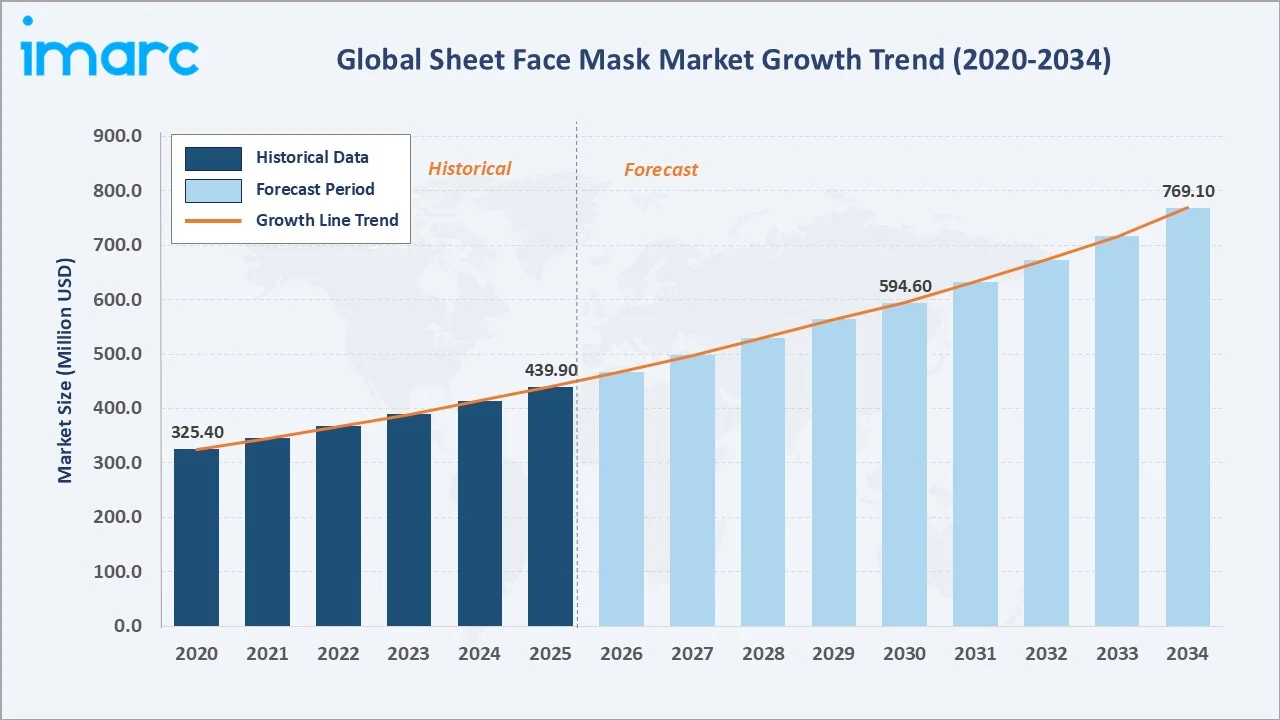
The global sheet face mask market expanded from USD 325.4 Million in 2020 to USD 439.9 Million in 2025, anchored at USD 594.6 Million in 2030, and forecast to reach USD 769.1 Million by 2034. Growing social media influence and the proliferation of online beauty tutorials have significantly accelerated product adoption across both developed and emerging economies.
To get more information on this market, Request Sample
E-commerce channels are growing at the fastest rate, supported by subscription skincare boxes, influencer-led campaigns, and AI-powered skin diagnostic tools that recommend personalized mask solutions. Bio-cellulose and hydrogel sheet formats are gaining traction as consumers shift toward performance-driven, skin-identical materials.
Executive Summary
The global sheet face mask market reached USD 439.9 Million in 2025, representing one of the personal care industry's most dynamic growth categories at the intersection of dermatology, consumer wellness, and digital retail. The market encompasses a broad portfolio of mask formats, cotton, microfiber, hydrogel, bio-cellulose, and knit-based variants, each designed to deliver concentrated active ingredients through extended skin contact.
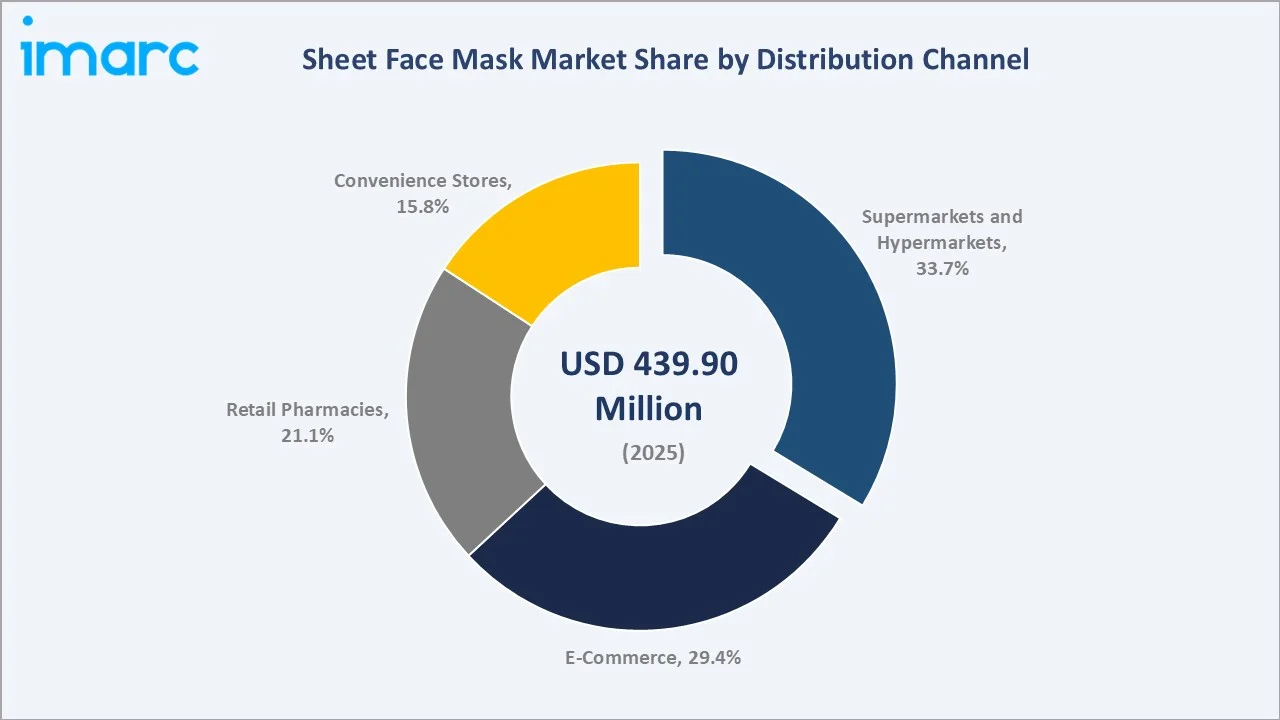
Supermarkets and hypermarkets at 33.7% retain the largest distribution share, while e-commerce at 29.4% is growing fastest through influencer marketing, skincare subscription services, and AI-powered personalization platforms. The mass price segment commands 68.4% share, reflecting widespread accessibility across income levels globally.
Asia-Pacific at 43.2% leads the global market through South Korea's established K-beauty innovation pipeline, Japan's precision formulation expertise, and China's rapidly expanding middle-class consumer base. North America at 23.8% and Europe at 21.7% follow, both registering above-trend growth driven by clean beauty demand and premiumization. The market is forecast to grow from USD 439.9 Million in 2025 to USD 769.1 Million by 2034 at a 6.21% CAGR.
Key Market Insights
|
Insight |
Data |
|
Dominant Distribution Channel |
Supermarkets & Hypermarkets – 33.7% share (2025) |
|
Fastest Growing Channel |
E-Commerce – 29.4% share (2025) |
|
Dominant Price Point |
Mass – 68.4% market share (2025) |
|
Leading Region |
Asia-Pacific – 43.2% market share (2025) |
|
Top Companies |
L'Oréal S.A., Amorepacific Group Inc., The Estée Lauder Companies, and Shiseido Company Limited |
|
Market Opportunity |
Bio-cellulose innovation; AI skin diagnostics; sustainable packaging; K-beauty global expansion |
Key Analytical Observations:
- Supermarkets & Hypermarkets at 33.7%: The channel dominates due to extensive product variety, promotional display space, and high consumer footfall. These outlets serve as primary discovery points for new sheet mask launches across all price tiers.
- E-Commerce at 29.4%: Online retail is growing fastest through D2C brand launches, influencer partnerships, and algorithm-based product recommendations. Platforms such as Amazon, Tmall, and Nykaa are driving above-trend conversion rates for sheet mask SKUs.
- Mass Price Point at 68.4%: Mass-priced sheet masks maintain dominance through high-volume sales in drugstores, supermarkets, and online multi-packs. Accessibility and trial-friendliness continue to drive volume leadership in the segment.
- Asia-Pacific at 43.2%: The region dominates through K-beauty's global influence, South Korea's formulation innovation ecosystem, and China's rapidly scaling skincare retail infrastructure.
- Premium Segment at 31.6%: Rising premiumization in North America and Europe is driving above-average growth in the premium tier, particularly for bio-cellulose and dermatologist-recommended formats.
Global Sheet Face Mask Market Overview
The global sheet face mask market encompasses the formulation, manufacturing, packaging, and distribution of pre-soaked facial treatment masks across cotton, hydrogel, bio-cellulose, knit, and microfiber substrates. Products are designed for single-use application and deliver concentrated serums containing active ingredients such as hyaluronic acid, niacinamide, retinol, peptides, and botanical extracts.
Macroeconomic drivers include rising disposable incomes in emerging markets, growing urban middle-class populations, and the globalization of K-beauty and J-beauty skincare philosophies. According to the United Nations, the global urban population reached nearly 4 billion in 2025, representing a growing addressable consumer base. The post-pandemic wellness boom has accelerated at-home skincare rituals, with sheet masks serving as accessible, spa-quality treatment formats.
Market Dynamics
To evaluate market opportunities, Request Sample
Market Drivers
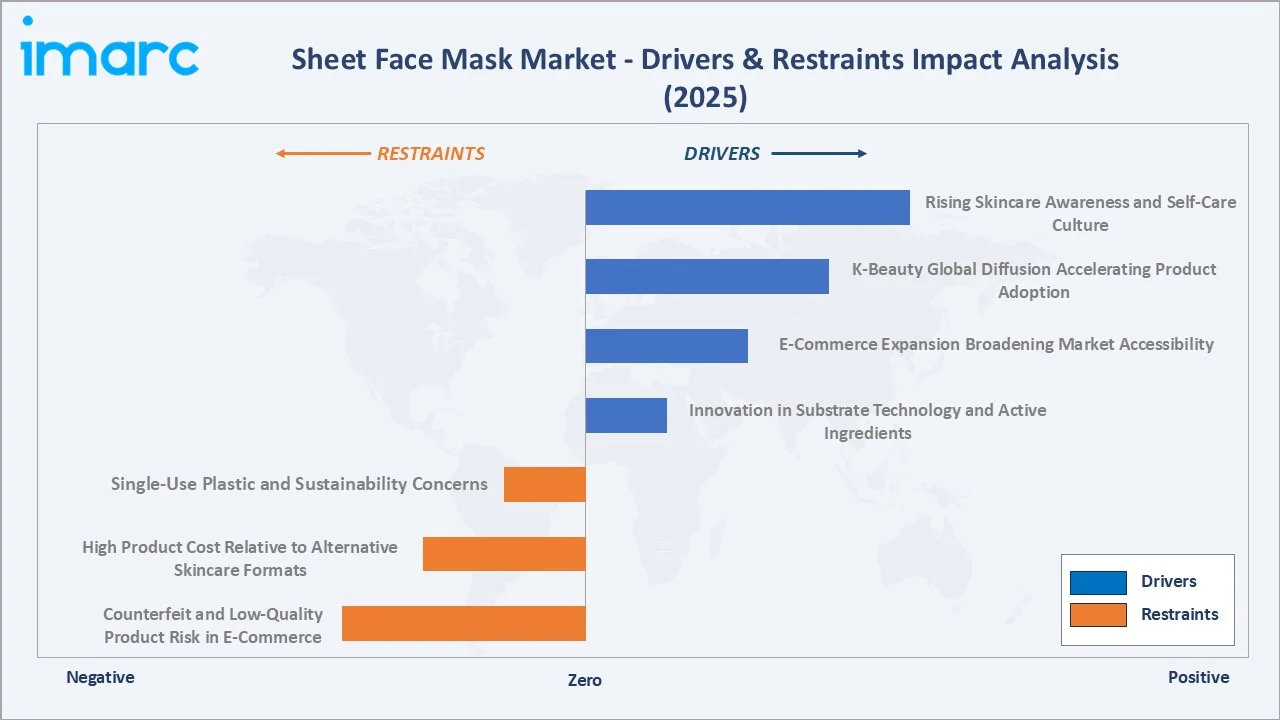
- Rising Skincare Awareness and Self-Care Culture: Growing consumer focus on skin health, driven by social media platforms and dermatology content creators, is increasing demand for regular sheet mask application. The global beauty and personal care market surpassed USD 500 Billion in 2025, reflecting robust underlying consumer spending on skincare. Sheet masks serve as accessible, affordable treatment formats across both premium and mass segments.
- K-Beauty Global Diffusion Accelerating Product Adoption: South Korea's beauty industry exported cosmetic products worth approximately USD 11.4 billion in 2025, with sheet masks representing a core export category. K-beauty cultural exports through streaming content and social media have embedded multi-step skincare routines including sheet masks into daily regimens across North America, Europe, and Southeast Asia.
- E-Commerce Expansion Broadening Market Accessibility: Online beauty retail is growing at approximately 12-15% annually in key markets including the US, India, and Southeast Asia. E-commerce platforms enable direct-to-consumer brand launches, subscription skincare boxes, and personalized product recommendations that lower the discovery and repurchase friction for sheet mask consumers globally.
- Innovation in Substrate Technology and Active Ingredients: Manufacturers are investing in next-generation bio-cellulose, hydrogel, and fermented ingredient formulations that deliver superior skin-identical fit and active penetration. Johnson & Johnson has developed hydrogel sheet masks incorporating locust bean and red seaweed-derived hydrogel for improved active delivery and comfort.
Market Restraints
- Single-Use Plastic and Sustainability Concerns: Growing consumer and regulatory pressure on single-use packaging is creating compliance costs for sheet mask manufacturers. The European Union's Single-Use Plastics Directive and similar regulations in multiple Asian markets are forcing packaging reformulation. Sustainability concerns may dampen trial rates among environmentally conscious consumer segments.
- High Product Cost Relative to Alternative Skincare Formats: Premium sheet masks face direct competition from reusable silicone masks, overnight sleeping masks, and serum formulations that offer comparable ingredient delivery at lower per-use costs. Price sensitivity remains a constraint in developing markets where disposable income allocation to skincare is limited.
- Counterfeit and Low-Quality Product Risk in E-Commerce: The proliferation of counterfeit and substandard sheet mask products on third-party e-commerce marketplaces risks consumer trust erosion for the category. Regulatory enforcement of cosmetic product safety standards varies significantly across markets, creating quality consistency challenges.
Market Opportunities
- AI-Powered Skin Diagnostics Enabling Personalized Sheet Mask Prescriptions: AI skin analysis tools integrated into brand apps and retail kiosks can deliver personalized sheet mask recommendations based on individual skin condition, age, and seasonal factors. This technology creates a premium positioning pathway and reduces consumer uncertainty in product selection.
- Sustainable and Biodegradable Substrate Innovation: Bio-cellulose substrates derived from bacterial fermentation and plant-based alternative fibers are creating eco-positioned sheet mask product lines that command price premiums while meeting regulatory and consumer sustainability requirements.
Market Challenges
- Intense Competition from Alternative Skincare Formats: Sheet masks compete for consumer wallet share against sleep masks, wash-off clay masks, chemical exfoliants, and serum products. Consumer education and differentiated active ingredient delivery remain critical to sustaining sheet mask adoption frequency.
- Supply Chain Complexity for Multi-Ingredient Formulations: Complex serums with multiple active ingredients, botanical extracts, and stability-sensitive compounds require sophisticated formulation and cold-chain management. Ingredient sourcing volatility, particularly for hyaluronic acid, plant extracts, and specialty polymers, creates cost and supply reliability challenges.
Emerging Market Trends
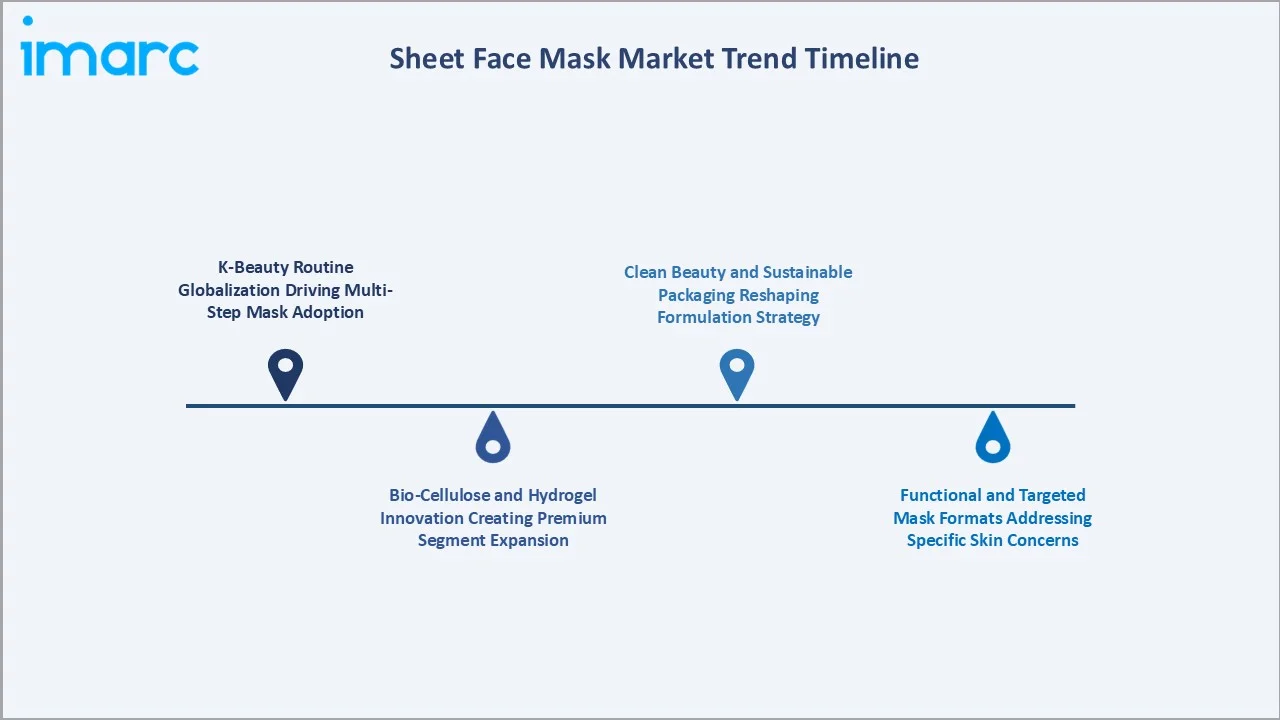
1. K-Beauty Routine Globalization Driving Multi-Step Mask Adoption
The global K-beauty market is expanding beyond its Asian core into North America, Europe, and the Middle East. Korean skincare routines emphasizing layered treatments have positioned sheet masks as essential daily-use products rather than occasional treatments. This behavioral shift is driving increased purchase frequency and expanding the addressable consumer base across multiple geographies.
2. Bio-Cellulose and Hydrogel Innovation Creating Premium Segment Expansion
Advanced substrate technologies including bacterial-derived bio-cellulose and hydrogel provide superior skin adhesion, enhanced active ingredient delivery, and a more comfortable user experience compared to traditional cotton and nonwoven formats. These innovations are enabling premium-tier product launches with dermatologist endorsements and clinical efficacy claims.
3. Clean Beauty and Sustainable Packaging Reshaping Formulation Strategy
Consumer demand for formaldehyde-free, paraben-free, vegan, and cruelty-free sheet masks is driving reformulation across leading brands. The clean beauty market is projected to continue growing at above-average rates through 2034, with sheet mask brands investing in transparent ingredient sourcing and biodegradable packaging to capture this consumer segment.
4. Social Commerce and Influencer Marketing Accelerating Discovery
Short-form video platforms including TikTok, YouTube Shorts, and Instagram Reels have created viral marketing channels for sheet mask brands. Influencer-led "sheet mask routines" and "before/after" skincare content drives impulse purchase decisions and introduction of new ingredient formats to mainstream consumers.
5. Functional and Targeted Mask Formats Addressing Specific Skin Concerns
The market is evolving from general hydration masks toward targeted solutions addressing acne, hyperpigmentation, anti-aging, pore minimization, and barrier repair. Brands are launching dedicated collections with dermatologically tested active formulations, enabling premium pricing and repeat purchase through a condition-specific product ecosystem.
Industry Value Chain Analysis
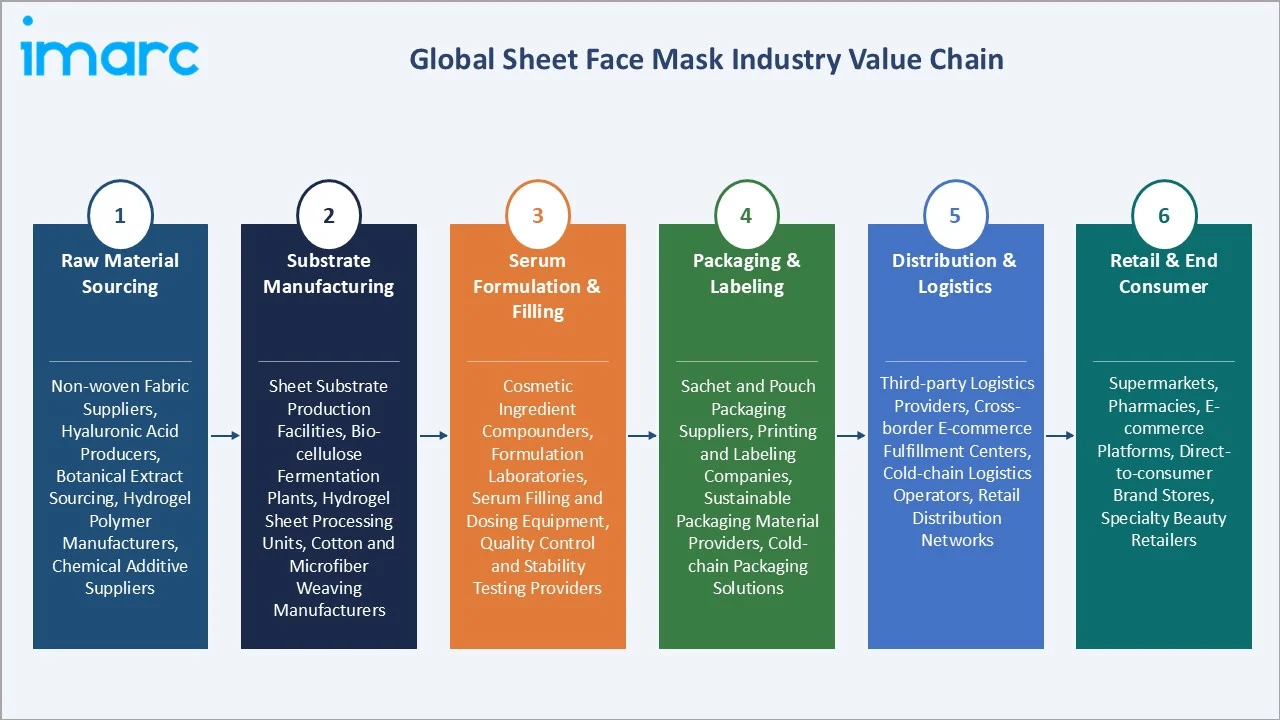
The sheet face mask value chain integrates raw material sourcing, substrate manufacturing, serum formulation and filling, packaging and labeling, logistics and distribution, and retail and end-consumer channels.
|
Stage |
Key Participants |
|
Raw Material Sourcing |
Non-woven fabric suppliers, hyaluronic acid producers, botanical extract sourcing, hydrogel polymer manufacturers, chemical additive suppliers |
|
Substrate Manufacturing |
Sheet substrate production facilities, bio-cellulose fermentation plants, hydrogel sheet processing units, cotton and microfiber weaving manufacturers |
|
Serum Formulation & Filling |
Cosmetic ingredient compounders, formulation laboratories, serum filling and dosing equipment, quality control and stability testing providers |
|
Packaging & Labeling |
Sachet and pouch packaging suppliers, printing and labeling companies, sustainable packaging material providers, cold-chain packaging solutions |
|
Distribution & Logistics |
Third-party logistics providers, cross-border e-commerce fulfillment centers, cold-chain logistics operators, retail distribution networks |
|
Retail & End Consumer |
Supermarkets, pharmacies, e-commerce platforms, direct-to-consumer brand stores, specialty beauty retailers |
The serum formulation and filling stage represents the highest value-added phase of the sheet face mask value chain, where differentiated active ingredient combinations determine product efficacy positioning and premium pricing capability. Raw material quality - particularly the grade and molecular weight of hyaluronic acid and the purity of botanical extracts - directly impacts clinical performance claims and brand credibility.
Technology Landscape in the Sheet Face Mask Industry
Bio-Cellulose Substrate Technology
Bio-cellulose sheet technology, derived from bacterial fermentation of glucose, produces a three-dimensional nano-fiber network with exceptional skin-conforming properties. Bio-cellulose masks achieve a fit and moisture retention profile superior to conventional nonwoven substrates, enabling higher active ingredient loading and extended wear times. Clinical studies indicate bio-cellulose improves transdermal delivery of hydrophilic actives by 30-40% compared to cotton substrates.
Hydrogel Formulation Technology
Hydrogel sheet masks utilize crosslinked polymer networks, typically carrageenan, gelatin, or polyacrylamide-based, that provide simultaneous active ingredient delivery and cooling, soothing skin effects. Hydrogel technology enables encapsulation of heat-sensitive actives including vitamins and peptides with improved stability. Johnson & Johnson Consumer Inc. has advanced hydrogel mask technology using locust bean and red seaweed-derived polymers that provide natural-origin positioning alongside technical performance.
AI-Driven Skin Analysis and Mask Personalization
AI skin diagnostic platforms integrated into brand mobile applications use computer vision and machine learning to analyze consumer skin condition parameters including hydration levels, pore size, fine lines, pigmentation, and tone evenness. These platforms generate personalized sheet mask formulation recommendations and track treatment efficacy over time. AI personalization is enabling premium D2C brand positioning and above-average customer lifetime value through subscription-based mask delivery models.
Sustainable Substrate and Packaging Innovation
Technology investment in biodegradable substrates including bamboo fiber, lyocell, and kombucha-derived cellulose is creating eco-positioned product lines. Water-soluble sachet packaging and refillable mask systems using concentrated serum cartridges represent emerging sustainable format innovations aligned with circular economy regulatory requirements in the EU and progressive Asian markets.
Market Segmentation Analysis
The report covers the following segments:
|
Segment Category |
Leading Segment |
Market Share |
Year |
|
Distribution Channel |
Supermarkets & Hypermarkets |
33.7% |
2025 |
|
Product Type |
Cotton and Microfiber Sheet |
🔒 |
2025 |
|
Price Point |
Mass |
68.4% |
2025 |
|
Region |
Asia-Pacific |
43.2% |
2025 |

By Distribution Channel
Supermarkets and hypermarkets lead at 33.7% (2025). These retail formats dominate through high product visibility, promotional placement, multi-brand comparison capability, and high consumer footfall. The channel is particularly strong in Asia-Pacific and North America, where major grocery retailers dedicate significant shelf space to skincare and beauty categories.
To access detailed market analysis, Request Sample
E-commerce at 29.4% is the fastest-growing distribution channel, driven by platform beauty categories on Amazon, Tmall, Shopee, and Nykaa. Online retail enables sheet mask brands to reach underserved geographic markets, deploy AI skin diagnostic tools for personalized recommendations, and leverage social commerce content for direct conversion. Retail pharmacies at 21.1% capture dermatologist-recommended and medically-positioned sheet mask SKUs. Convenience stores at 15.8% serve impulse purchase and on-the-go consumption occasions.
By Price Point
Mass-priced sheet masks lead at 68.4% (2025), driven by high-volume accessibility through supermarkets, convenience stores, and e-commerce platforms. Mass products in the USD 1-5 per mask range offer trial-friendly entry points and drive category volume growth particularly in Asia-Pacific and Latin America. Leading mass-positioned brands include Neutrogena, The Himalaya Drug Company, and Tonymoly at accessible retail price points.
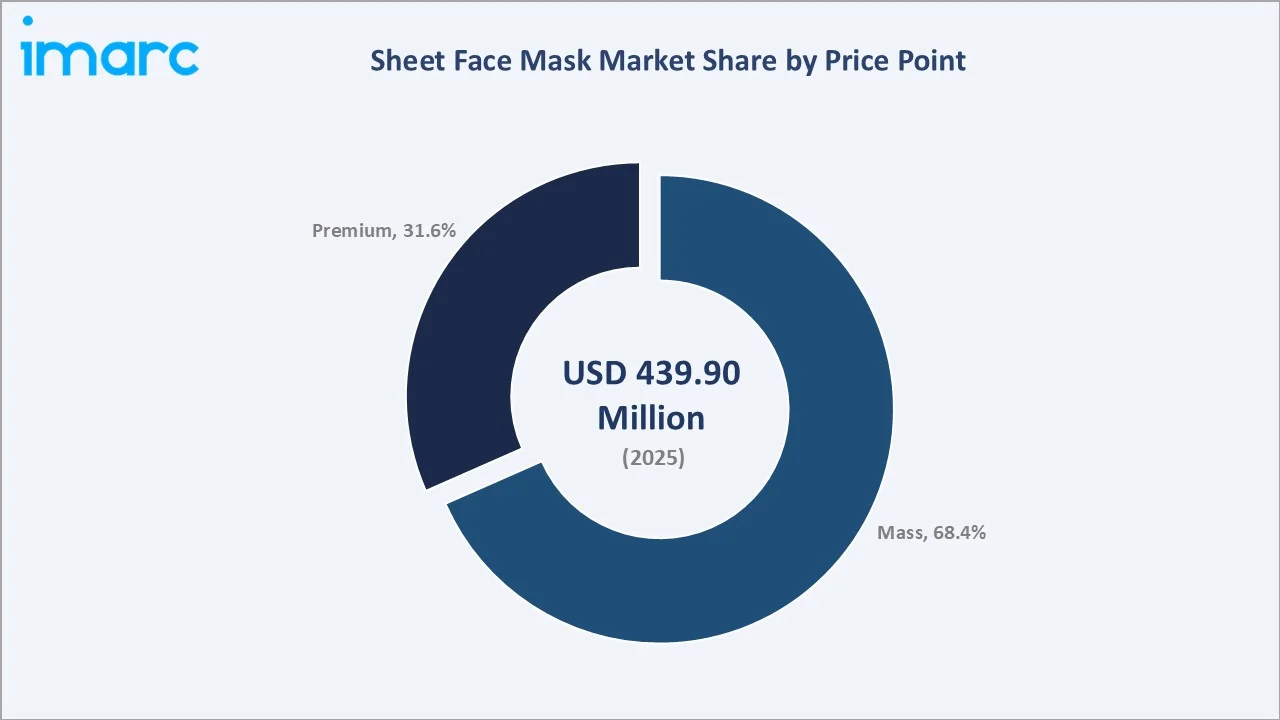
Premium sheet masks at 31.6% are growing above the market average through bio-cellulose substrate innovation, clinical efficacy positioning, and dermatologist endorsement strategies. Premium masks in the USD 8-25+ per unit range are gaining traction in North America, Europe, and premium urban segments across Asia-Pacific. The premium segment is expected to gain share progressively through 2034 as formulation differentiation becomes a key competitive dimension.
Regional Market Insights
|
Region |
Share (2025) |
Key Drivers & Characteristics |
|
Asia-Pacific |
43.2% |
Driven by K-beauty culture, established sheet mask manufacturing ecosystems in South Korea and China, rising middle-class skincare spending, and strong e-commerce beauty retail infrastructure. |
|
North America |
23.8% |
Driven by premiumization, clean beauty consumer movement, growing adoption of Korean skincare routines, and robust D2C e-commerce channels across the US and Canada. |
|
Europe |
21.7% |
Driven by natural and sustainable skincare demand, stringent cosmetic ingredient regulations supporting quality positioning, and expanding K-beauty product availability through specialty and online retail. |
|
Latin America |
6.3% |
Supported by growing beauty consciousness, rising e-commerce penetration, and increasing availability of mid-range sheet mask products in Brazil and Mexico. |
|
Middle East & Africa |
5.0% |
Growing through urbanization, rising disposable incomes, and increasing adoption of Korean and Japanese skincare routines, particularly in Gulf Cooperation Council markets. |
Asia-Pacific's 43.2% market leadership is anchored by South Korea's position as the global innovation capital of sheet mask development and Japan's precision formulation heritage. China represents the fastest-growing single country market within Asia-Pacific, with the country's beauty e-commerce ecosystem on Alibaba's Tmall and JD.com enabling rapid new product adoption. North America's 23.8% reflects strong growth in the US, where sheet masks have transitioned from niche K-beauty enthusiast products to mainstream drugstore and grocery retail staples.
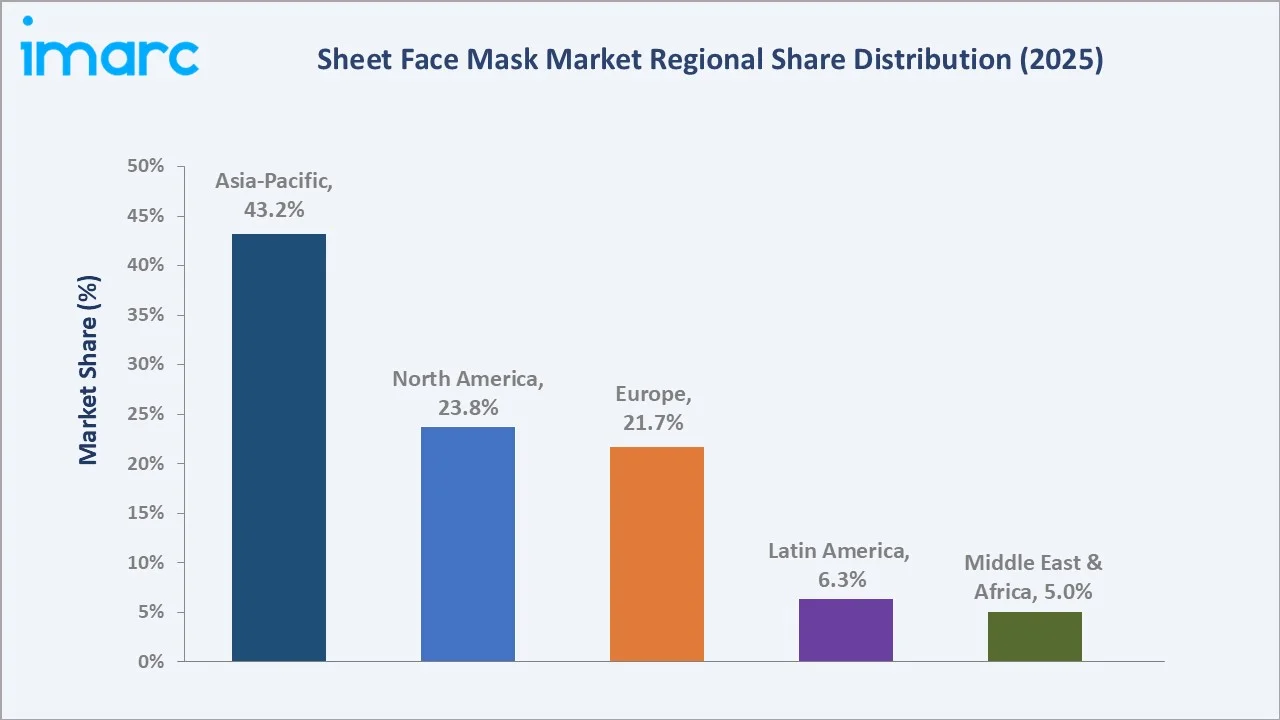
Europe's 21.7% is growing through expanding availability of Korean and Japanese sheet mask brands through Sephora, Douglas, and online specialty retailers. Latin America and the Middle East & Africa collectively represent 11.3% and remain the most commercially dynamic growth regions by CAGR through 2034, driven by demographic youth populations, rising incomes, and growing digital beauty retail infrastructure.
Competitive Landscape
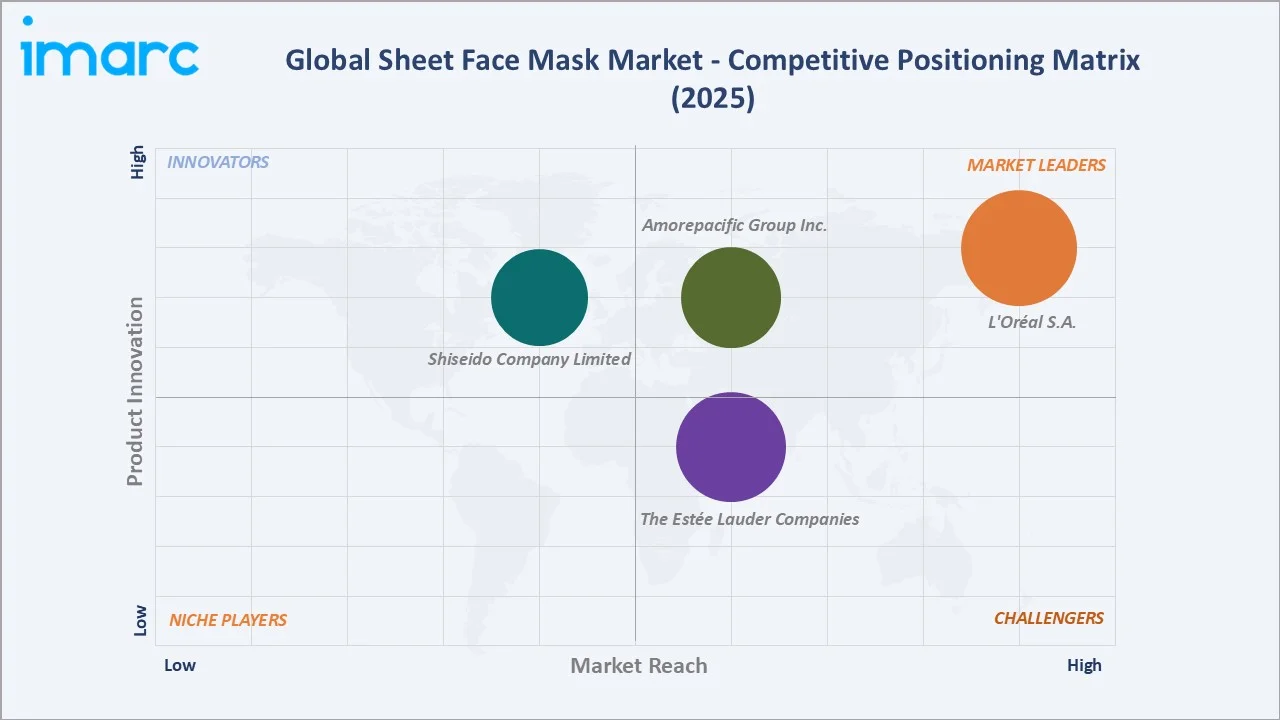
The global sheet face mask market competitive landscape spans global personal care conglomerates, dedicated K-beauty specialists, premium dermocosmetic brands, and emerging direct-to-consumer startups. The market is moderately concentrated at the brand tier, with leading global players holding significant distribution and marketing scale advantages, while K-beauty specialists retain formulation and trend leadership positions.
|
Company Name |
Key Brands |
Market Position |
Core Strength |
|
L'Oréal S.A. |
L'Oréal Paris, Garnier, Lancôme |
Market Leader |
Global distribution scale, portfolio diversification, and R&D leadership in active ingredient and substrate formulation innovation. |
|
Amorepacific Group Inc. |
Innisfree, Laneige, Sulwhasoo |
Market Leader |
K-beauty heritage and sheet mask category pioneer with global distribution across premium and accessible channel tiers. |
|
The Estée Lauder Companies |
Estée Lauder, Origins, Clinique, Dr. Jart+ |
Strong Challenger |
Premium positioning, dermatologist-endorsed formulations, and strong North America and Europe retail presence. |
|
Shiseido Company Limited |
Ultimune/White Lucent |
Innovator |
Japanese formulation excellence and strong Asia-Pacific market presence with high consumer trust in skincare efficacy. |
Large global personal care groups leverage multi-category distribution relationships, marketing investment scale, and formulation R&D infrastructure. K-beauty specialists compete on formulation innovation speed, trend responsiveness, and cultural authenticity positioning that commands premium pricing and consumer advocacy.
Key Company Profiles
L'Oréal S.A.
L'Oréal S.A. is the world's largest cosmetics company, with presence across mass and luxury skincare segments. Its sheet mask portfolio spans Garnier (mass), L'Oréal Paris (mid-market), and Lancôme (premium) brand tiers, covering diverse consumer segments globally.
- Key Products: L'Oréal Paris (Revitalift and Glycolic Bright), Garnier (Skin Naturals, Bright Complete, and Hydra Bomb), Lancôme (Génifique Advanced Hydrogel Melting Mask), and others.
- Recent Developments: In January 2025, L'Oréal Paris launched the Revitalift Filler Glass Skin Hydrogel Glow Mask as a transformative mask inspired by Korean Beauty and claimed visible glass skin results in just 90 minutes.
- Strategic Focus: Focused on sustainable packaging, bio-formulation innovation, and digital consumer engagement through AI-powered skin diagnostic tools embedded in brand mobile applications.
Amorepacific Group Inc.
Amorepacific Group Inc. operates Amorepacific Corporation, which is South Korea's leading beauty conglomerate and a founding architect of the modern sheet mask category. The company's portfolio spans premium (Sulwhasoo, Laneige), mid-market (Innisfree), and accessible (Etude House) sheet mask brands with global distribution.
- Key Products: Innisfree (Skin Solution), Laneige (Water Bank and Cica Sleeping), Sulwhasoo (Concentrated Ginseng Renewing), and others.
- Recent Developments: In January 2026, Laneige launched Cream Skin Milky Hydration Sheet Mask, which is an ultra-hydrating, zero-tightness sheet mask containing the brand's Cream Skin Cerapeptide Refiner.
- Strategic Focus: Centered on K-beauty heritage, sustainable formulation, and premiumization through functional ingredient differentiation and clinical efficacy positioning.
Market Concentration Analysis
The global sheet face mask market is moderately concentrated at the branded product tier, with the top companies - L'Oréal S.A., Amorepacific Group Inc., The Estée Lauder Companies, and Shiseido Company Limited - collectively accounting for an estimated 35-45% of global branded sheet mask revenue in 2025. The market accommodates both large global personal care conglomerates and specialized K-beauty brands, creating a tiered competitive structure.
The fragmentation level remains high within the private-label and regional brand tiers, particularly in Asia-Pacific, where hundreds of domestic Korean, Japanese, and Chinese brands compete on formulation novelty and price. Market concentration is gradually increasing through M&A activity, with global beauty groups acquiring specialized sheet mask brands to gain formulation IP and established Asian distribution relationships.
Consolidation trends are most pronounced in the premium bio-cellulose segment, where formulation differentiation capability and clinical efficacy positioning create competitive moats that larger groups can leverage through acquisition. The e-commerce native brand segment remains highly fragmented, with new D2C entrants launching regularly through social commerce channels.
Investment & Growth Opportunities
Highest Growth Segments
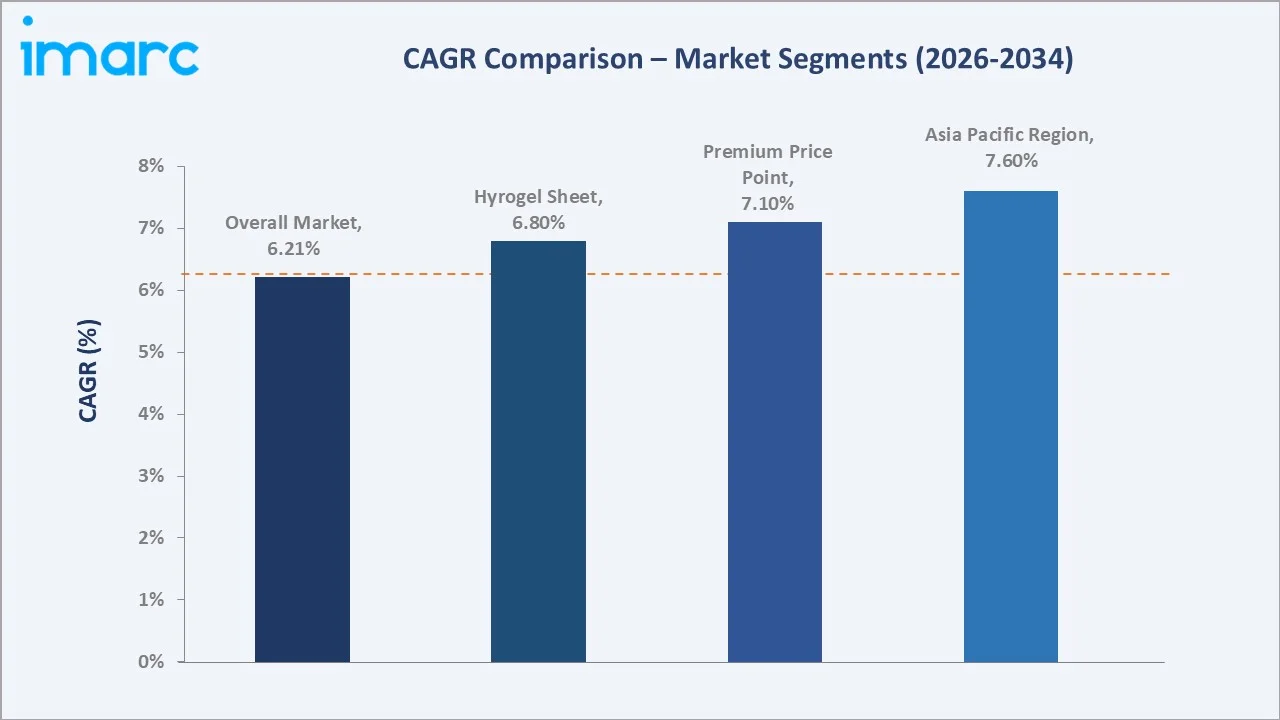
E-commerce distribution (~8.9% CAGR), bio-cellulose substrates (~8.3% CAGR), Asia-Pacific region (~7.6% CAGR), premium price point (~7.1% CAGR), and hydrogel formats (~6.8% CAGR) represent the highest-growth sheet face mask investment vectors through 2034. AI personalization platforms enabling subscription mask delivery models represent an emerging above-market growth vector from a small current base.
Emerging Investment Opportunities
The Middle East and Africa region represents the highest growth potential market by CAGR through 2034, driven by young demographic populations, rising skincare awareness, and expanding beauty retail infrastructure in Gulf Cooperation Council markets. Sheet mask brands establishing early retail and digital distribution presence in UAE, Saudi Arabia, and Nigeria are positioned for above-trend revenue growth.
Sustainable sheet mask format development - biodegradable substrates, water-soluble packaging, and refillable serum cartridge systems - represents an investment theme with both regulatory compliance and premium pricing dimensions. Brands successfully commercializing credible eco-positioned sheet mask formats will access growing consumer segments that prioritize sustainability alongside efficacy.
Investment Themes
- Bio-cellulose and hydrogel substrate platform development for premium global sheet mask positioning: Advanced substrate technology creates formulation differentiation and clinical efficacy positioning that sustains premium price points and professional channel distribution.
- AI skin diagnostic integration enabling personalized sheet mask subscription services: AI-powered personalization reduces consumer decision uncertainty, increases purchase frequency, and creates recurring revenue models with above-average customer lifetime value.
- E-commerce and social commerce platform presence in emerging Asian and Middle Eastern markets: Digital retail penetration in India, Indonesia, Vietnam, UAE, and Saudi Arabia is expanding addressable consumer bases for sheet mask brands with limited traditional retail infrastructure requirements.
Future Market Outlook (2026-2034)
The global sheet face mask market is projected to grow from USD 439.9 Million in 2025 to USD 769.1 Million by 2034, delivering a 6.21% CAGR over the forecast period. The market's anchor value of USD 594.6 Million in 2030 represents a skincare category that will have achieved mainstream consumer adoption in multiple emerging market economies, while continuing to preimmunize in developed markets through formulation innovation.
Three structural forces define sheet face mask market growth through 2034 with strong confidence. First, the continued globalization of K-beauty skincare philosophy is embedding sheet masks into daily skincare routines across demographics and geographies beyond their Asian origin. Second, e-commerce and social commerce platform expansion in Southeast Asia, India, Latin America, and the Middle East is unlocking new consumer populations with growing digital beauty retail access. Third, substrate and formulation technology advancement is creating performance differentiation that sustains consumer engagement and enables premiumization within an accessible category framework.
By 2034, bio-cellulose and hydrogel formats will have gained significant share from conventional cotton and nonwoven substrates, driven by consumer preference for superior fit, skin-identical material aesthetics, and enhanced active ingredient delivery. AI-powered skin diagnostic personalization will be a standard feature of leading sheet mask brands' digital consumer experience. Sustainable packaging will have transitioned from a premium differentiator to a baseline consumer expectation in developed markets. The premium segment is expected to grow to approximately 38-40% of global market value by 2034, with above-average contribution from North America and European markets.
Research Methodology
Primary Research
Primary research comprised structured interviews with 50+ industry stakeholders during 2024-2025, including brand managers at leading sheet mask companies, retail buyers, dermatologists, formulation chemists, e-commerce beauty category leads, and regional distribution specialists. Primary research provides direct validation of market sizing, segmentation shares, and growth driver assessments.
Secondary Research
Secondary research encompassed global cosmetics trade publications, company annual reports and investor presentations, national cosmetic industry association data, government trade statistics from South Korea KITA, US FDA cosmetic product filings, EU Cosmetics Regulation databases, and e-commerce beauty platform category data. Over 75 secondary sources were reviewed.
Forecasting Models
Market revenue forecasts developed using a segment bottom-up model incorporating: (i) distribution channel volume and average selling price assumptions; (ii) price point segment growth differential models; (iii) regional demographic and income growth adjustments; (iv) technology adoption curves for advanced substrate formats. Forecast period 2026-2034 with 2025 as the base year.
Sheet Face Mask Market Report Scope:
| Report Features | Details |
|---|---|
| Base Year of the Analysis | 2025 |
| Historical Period | 2020-2025 |
| Forecast Period | 2026-2034 |
| Units | Million USD |
| Scope of the Report | Exploration of Historical Trends and Market Outlook, Industry Catalysts and Challenges, Segment-Wise Historical and Future Market Assessment:
|
| Product Types Covered | Cotton and Microfiber Sheet, Hydrogel Sheet, Knit Sheet, Bio-Cellulose Sheet, Others |
| Price Points Covered | Mass, Premium |
| Distribution Channel Covered | Supermarkets and Hypermarkets, Convenience Stores, Retail Pharmacies, E-Commerce |
| Regions Covered | Asia Pacific, Europe, North America, Latin America, Middle East and Africa |
| Countries Covered | United States, Canada, Germany, France, United Kingdom, Italy, Spain, Russia, China, Japan, India, South Korea, Australia, Indonesia, Brazil, Mexico |
| Companies Covered | L'Oréal S.A., Amorepacific Group Inc., The Estée Lauder Companies, Shiseido Company Limited, etc. |
| Customization Scope | 10% Free Customization |
| Post-Sale Analyst Support | 10-12 Weeks |
| Delivery Format | PDF and Excel through Email (We can also provide the editable version of the report in PPT/Word format on special request) |
Frequently Asked Questions About the Sheet Face Mask Market Report
The global sheet face mask market reached USD 439.9 Million in 2025, driven by rising skincare awareness, K-beauty cultural influence, and expanding e-commerce beauty retail platforms globally.
The market is projected to reach USD 769.1 Million by 2034, growing at a CAGR of 6.21% during 2026-2034, supported by premiumization trends and emerging market demand expansion.
The market exhibits a 6.21% CAGR during 2026-2034, with e-commerce channels and bio-cellulose format segments growing at above-average rates within the overall market.
Supermarkets and hypermarkets lead at 33.7% (2025), followed by e-commerce at 29.4%. E-commerce is the fastest-growing channel, driven by social commerce and AI personalization.
Mass-priced sheet masks dominate at 68.4% (2025), with premium masks at 31.6% growing at an above-market rate driven by bio-cellulose innovation and dermatologist endorsement positioning.
Asia-Pacific leads at 43.2% (2025), anchored by South Korea's K-beauty innovation, China's e-commerce beauty market, and Japan's formulation expertise. North America follows at 23.8%.
Leading companies include L'Oréal S.A., Amorepacific Group Inc., The Estée Lauder Companies, Shiseido Company Limited, and others.
Key drivers include rising skincare awareness, K-beauty globalization, e-commerce channel expansion, innovation in bio-cellulose and hydrogel substrates, and growing demand for personalized skincare solutions.
Major types include cotton and microfiber sheets, hydrogel sheets, knit sheets, bio-cellulose sheets, and specialty formats. Bio-cellulose and hydrogel are growing fastest within the product type mix.
The global sheet face mask market was valued at USD 325.4 Million in 2020, growing to USD 439.9 Million by 2025 through consistent above-GDP growth in skincare spending globally.
The market is projected to reach USD 594.6 Million by 2030, representing an interim milestone in the 2026-2034 forecast period at a consistent 6.21% CAGR trajectory.
Emerging markets in Southeast Asia, Latin America, and the Middle East represent high-growth opportunities, driven by young demographics, rising e-commerce penetration, and growing skincare spending awareness.
Need more help?
- Speak to our experienced analysts for insights on the current market scenarios.
- Include additional segments and countries to customize the report as per your requirement.
- Gain an unparalleled competitive advantage in your domain by understanding how to utilize the report and positively impacting your operations and revenue.
- For further assistance, please connect with our analysts.
 Request Customization
 Speak to an Analyst
 Request Brochure
 Inquire Before Buying
Benefits of Customization
- Personalize this research
- Triangulate with your data
- Get data as per your format and definition
- Gain a deeper dive into a specific application, geography, customer, or competitor
- Any level of personalization
Get in Touch With Us
UNITED STATES
Phone: +1-201-971-6302
INDIA
Phone: +91-120-433-0800
UNITED KINGDOM
Phone: +44-753-714-6104
Email: [email protected]
Client Testimonials




.webp)




.webp)













Related Reports

Choose your plan
*Please note that the prices mentioned below are starting prices for each bundle type. Kindly contact our team for further details.*
Single User License
- 1 User License, Access on 2 Devices
- PDF Report + Excel Dataset (Password Protected)
- Lifetime Access
- No Printing Rights
- 10% Free Report Customization
- 10–12 Weeks of Analyst Support
Five User License
- Access for 5 Users, 2 Devices per User
- PDF Report + Excel Dataset (Password Protected)
- Lifetime Access
- Dedicated Account Manager
- 12–14 Weeks of Analyst Support
- No Printing Rights
- 15% Free Report Customization
- 25% Discount on Your Next Purchase
Corporate User License
- Unlimited User Access (Within Your Organization)
- PDF Report + Excel Dataset
- Lifetime Access
- Dedicated Account Manager
- 14–20 Weeks of Analyst Support
- No Printing Rights
- 20% Free Report Customization
- 30% Discount on Your Next Purchase
Essential Insights
What's included:
3 reports
- Lifetime Access
- PDF Reports
- Excel Datasets
- 2 Weeks of Free Analyst Support
- 2 User Licenses
- Access on 2 Devices
- Printing Rights
- Complimentary PowerPoint (PPT) Version
- Complimentary License Upgrade
Professional Access
What's included:
5 reports
- Lifetime Access
- PDF Reports
- Excel Datasets
- 8 Weeks of Free Analyst Support
- 2 User Licenses
- Access on 2 Devices
- Printing Rights
- Complimentary PowerPoint (PPT) Version
- Complimentary License Upgrade
Business Advantage
What's included:
8 reports
- Lifetime Access
- PDF Reports
- Excel Datasets
- 14 Weeks of Free Analyst Support
- 2 User Licenses
- Access on 2 Devices
- Printing Rights
- Complimentary PowerPoint (PPT) Version
- Complimentary License Upgrade
Enterprise Intelligence
What's included:
10 reports
- Lifetime Access
- PDF Reports
- Excel Datasets
- 20 Weeks of Free Analyst Support
- 2 User Licenses
- Access on 2 Devices
- Printing Rights
- Complimentary PowerPoint (PPT) Version
- Complimentary License Upgrade