
Sodium Tripolyphosphate Prices, Trend, Chart, Demand, Market Analysis, News, Historical and Forecast Data Report 2026 Edition
Sodium Tripolyphosphate Price Trend, Index and Forecast
Track the latest insights on sodium tripolyphosphate price trend and forecast with detailed analysis of regional fluctuations and market dynamics across North America, Latin America, Central Europe, Western Europe, Eastern Europe, Middle East, North Africa, West Africa, Central and Southern Africa, Central Asia, Southeast Asia, South Asia, East Asia, and Oceania.
Sodium Tripolyphosphate Prices Outlook Q2 2026
- USA: USD 1187/MT
- China: USD 1054/MT
- Russia: USD 962/MT
- Belgium: USD 1120/MT
- Brazil: USD 899/MT
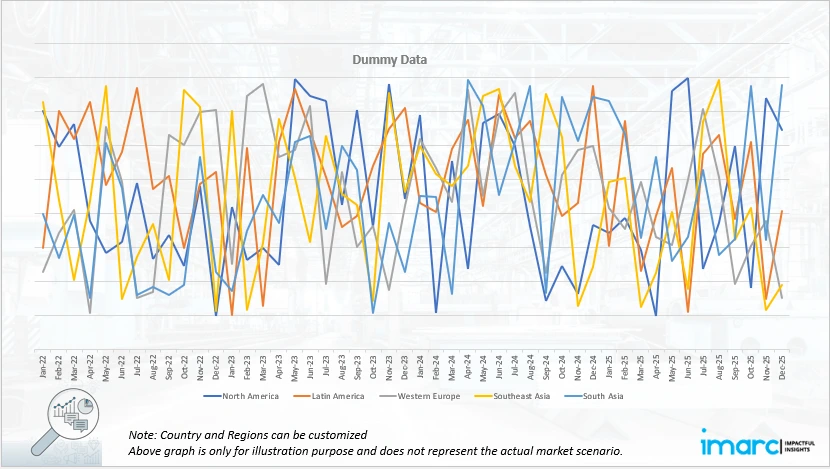
Sodium Tripolyphosphate Price Chart
Get real-time access to monthly/quarterly/yearly prices Request Sample
During the second quarter of 2026, the sodium tripolyphosphate prices in the USA reached 1187 USD/MT in June. Prices rose sharply as tight prompt availability strengthened seller leverage across the domestic market. Detergent manufacturers, industrial cleaning product formulators, ceramic processing facilities, and water treatment operators maintained active procurement, which absorbed available material and supported firm pricing.
During the second quarter of 2026, the sodium tripolyphosphate prices in China reached 1054 USD/MT in June. Prices increased strongly as higher feedstock costs and restricted prompt availability supported producer offers across the market. Detergent production, ceramic processing, water treatment chemical formulation, and industrial cleaning applications maintained consistent procurement, helping available inventories move through distribution channels.
During the second quarter of 2026, the sodium tripolyphosphate prices in Russia reached 962 USD/MT in June. Prices moved upward as tighter domestic supply and steady industrial demand supported the regional market throughout the quarter. Local phosphate processing capacity operated at firm utilization levels, yet logistics constraints and seasonal transport challenges restricted the timely movement of material.
During the second quarter of 2026, the sodium tripolyphosphate prices in Belgium reached 1120 USD/MT in June. Prices recorded a significant increase as imported feedstock and sodium tripolyphosphate replacement costs remained firm during much of the quarter, while regional demand from detergents, industrial cleaners, ceramic processing, and specialty chemical applications remained steady. Regional shipping constraints, port congestion, and higher insurance expenses affected cargo availability and encouraged buyers to secure material for planned production runs.
During the second quarter of 2026, the sodium tripolyphosphate prices in Brazil reached 899 USD/MT in June. Prices showed an upward trend as increased demand from detergent manufacturing, industrial cleaning product formulation, ceramic processing, and water treatment sectors absorbed available supply across the domestic market. Import dependency and fluctuating foreign exchange rates impacted the market, leading to firm supply offers from international suppliers and local distributors.
Sodium Tripolyphosphate Prices Outlook Q1 2026
- USA: USD 980/MT
- China: USD 858/MT
- Russia: USD 797/MT
- Belgium: USD 834/MT
- Brazil: USD 627/MT
During the first quarter of 2026, the sodium tripolyphosphate prices in the USA reached 980 USD/MT in March. The market recorded a strong upward trend supported by firm demand from the detergent and cleaning product industries. Consumption remained steady across household and industrial cleaning segments, reinforcing market stability. Supply conditions tightened due to controlled production and steady export activity, which limited availability in the domestic market.
During the first quarter of 2026, the sodium tripolyphosphate prices in China reached 858 USD/MT in March. The market experienced moderate price growth driven by steady demand from the detergent manufacturing and water treatment sectors. Domestic production remained controlled, while export demand contributed to tighter supply conditions. Consumption levels remained consistent, supporting market stability. Logistics conditions remained stable, further contributing to gradual price increases during the quarter.
During the first quarter of 2026, the sodium tripolyphosphate prices in Russia reached 797 USD/MT in March. The market observed a gradual increase supported by steady demand from industrial cleaning and water treatment applications. Supply conditions remained controlled due to stable production and limited imports. Additionally, stable operational and transportation costs provided moderate support to pricing, resulting in a steady upward trend during the quarter.
During the first quarter of 2026, the sodium tripolyphosphate prices in Belgium reached 834 USD/MT in March. The market recorded a moderate price increase driven by firm demand from the detergent and industrial cleaning sectors. Import availability remained stable, while supply conditions were moderately tight due to consistent consumption levels. Buyers maintained steady procurement patterns to ensure supply continuity.
During the first quarter of 2026, the sodium tripolyphosphate prices in Brazil reached 627 USD/MT in March. The market experienced a noticeable increase, supported by steady demand from cleaning product manufacturers and water treatment industries. Domestic production remained stable, while import reliance influenced supply conditions. Consumption levels remained consistent, reinforcing market stability.
Sodium Tripolyphosphate Prices Outlook Q4 2025
- USA: USD 929/MT
- China: USD 829/MT
- Russia: USD 781/MT
- Belgium: USD 807/MT
- Brazil: USD 600/MT
During the fourth quarter of 2025, the sodium tripolyphosphate prices in the USA reached 929 USD/MT in December. Prices increased, supported by firm demand from detergent manufacturers and water treatment chemical producers. Additionally, steady phosphate rock feedstock availability and balanced domestic production rates influenced supply positioning across industrial distribution channels.
During the fourth quarter of 2025, the sodium tripolyphosphate prices in China reached 829 USD/MT in December. Prices rose, driven by consistent procurement from cleaning product manufacturers and active export participation. Moreover, stable upstream phosphoric acid production and coordinated plant operating rates shaped regional availability.
During the fourth quarter of 2025, the sodium tripolyphosphate prices in Russia reached 781 USD/MT in December. Prices moved upward, influenced by steady demand from detergent blending units and industrial cleaning chemical applications. Furthermore, structured export flows and integrated phosphate processing operations shaped supply conditions.
During the fourth quarter of 2025, the sodium tripolyphosphate prices in Belgium reached 807 USD/MT in December. Prices increased, supported by procurement from European detergent and food processing sectors. In addition to this, regulated production standards and balanced import positioning influenced availability across Western Europe.
During the fourth quarter of 2025, the sodium tripolyphosphate prices in Brazil reached 600 USD/MT in December. Prices rose, driven by steady demand from household cleaning product manufacturers and water treatment applications. Apart from this, import reliance and distributor inventory management shaped procurement cycles.
Sodium Tripolyphosphate Prices Outlook Q3 2025
- USA: USD 882/MT
- China: USD 802/MT
- Russia: USD 759/MT
- Belgium: USD 782/MT
- Brazil: USD 575/MT
During the third quarter of 2025, the sodium tripolyphosphate prices in the USA reached 882 USD/MT in September. Prices edged higher, supported by steady detergent manufacturing demand and stable domestic production output. Additionally, consistent phosphate feedstock integration influenced cost structures across suppliers.
During the third quarter of 2025, the sodium tripolyphosphate prices in China reached 802 USD/MT in September. Prices increased, driven by active export demand and steady procurement from industrial cleaning chemical manufacturers. Moreover, structured operating rates at phosphate processing facilities shaped supply positioning.
During the third quarter of 2025, the sodium tripolyphosphate prices in Russia reached 759 USD/MT in September. Prices declined, influenced by moderated domestic procurement and balanced export allocations. Furthermore, steady phosphate ore processing rates ensured adequate availability across regional markets.
During the third quarter of 2025, the sodium tripolyphosphate prices in Belgium reached 782 USD/MT in September. Prices moved lower, reflecting cautious purchasing from detergent formulators and sufficient import supply. Additionally, distributor inventory adjustments shaped transactional momentum.
During the third quarter of 2025, the sodium tripolyphosphate prices in Brazil reached 575 USD/MT in September. Prices rose slightly, supported by consistent demand from household cleaning and industrial water treatment sectors. Apart from this, structured import flows influenced supply conditions.
Sodium Tripolyphosphate Prices Outlook Q2 2025
- USA: USD 880/MT
- China: USD 780/MT
- Russia: USD 775/MT
- Belgium: USD 792/MT
- Brazil: USD 572/MT
During the second quarter of 2025, the sodium tripolyphosphate prices in the USA reached 880 USD/MT in June. In the USA, sodium tripolyphosphate market dynamics this quarter were shaped by variations in phosphoric acid and soda ash costs, influenced by domestic mining operations and global trade flows. Demand from the food processing, detergent, and water treatment sectors remained steady, with seasonal consumption patterns impacting procurement. Energy market trends, particularly in natural gas and electricity rates, influenced production costs. Transportation expenses were affected by adjustments in trucking tariffs and rail freight rates. Currency exchange fluctuations against major global suppliers also played a role in determining import competitiveness and export pricing strategies.
During the second quarter of 2025, sodium tripolyphosphate prices in China reached 780 USD/MT in June. In China, sodium tripolyphosphate pricing was influenced by fluctuations in raw material availability, driven by phosphate rock mining output and soda ash production levels. Demand from the food, ceramics, and detergent manufacturing sectors maintained consistent baseline consumption. Energy costs, particularly coal and electricity rates, impacted production economics. Export volumes were shaped by international demand trends, while maritime freight rate adjustments affected shipping costs. Domestic environmental compliance requirements and operational inspections also influenced production capacity and scheduling in major manufacturing hubs.
During the second quarter of 2025, the sodium tripolyphosphate prices in Russia reached 775 USD/MT in June. In Russia, sodium tripolyphosphate market trends were affected by changes in feedstock costs, particularly phosphate rock and soda ash availability from domestic sources. Demand from the food preservation, detergent, and water treatment sectors followed seasonal usage patterns. Energy pricing shifts, especially in natural gas, shaped operational expenses for producers. Transportation costs were influenced by inland rail tariffs and port handling charges. Trade activity was also affected by currency exchange fluctuations against key importing and exporting partners, shaping pricing strategies for international transactions.
During the second quarter of 2025, the sodium tripolyphosphate prices in Belgium reached 792 USD/MT in June. In Belgium, sodium tripolyphosphate pricing was impacted by raw material costs, influenced by imports of phosphate rock and soda ash from regional and overseas suppliers. Demand from the detergent, ceramics, and water treatment industries maintained stable baseline consumption. Energy prices, particularly electricity sourced from the regional grid, influenced manufacturing costs. Port logistics charges and intra-European freight rates shaped distribution expenses. Currency movements against the US dollar and other major currencies influenced both import costs and export competitiveness in the European market.
During the second quarter of 2025, the sodium tripolyphosphate prices in Brazil reached 572 USD/MT in June. In Brazil, sodium tripolyphosphate market conditions were influenced by raw material supply, shaped by domestic phosphate rock mining output and soda ash import availability. Demand from the food processing, detergent, and water treatment sectors was consistent, with regional seasonal factors influencing procurement volumes. Energy market trends, including hydroelectric and natural gas pricing, impacted production costs. Port congestion and adjustments in maritime freight rates affected delivery timelines, while currency exchange rate fluctuations against the US dollar influenced import purchasing power and export price positioning.
Regional Coverage
The report provides a detailed analysis of the market across different regions, each with unique pricing dynamics influenced by localized market conditions, supply chain intricacies, and geopolitical factors. This includes price trends, price forecast and supply and demand trends for each region, along with spot prices by major ports. The report also provides coverage of FOB and CIF prices, as well as the key factors influencing sodium tripolyphosphate prices.
Europe Sodium Tripolyphosphate Price Trend
Q2 2026:
The sodium tripolyphosphate price index in Europe moved upward as tighter delivered supply, export demand, and logistics constraints supported firmer offers throughout the second quarter of 2026. Belgium experienced firm pricing as import dependency and regional production constraints impacted landed costs, while concurrent demand from detergent manufacturing, industrial cleaning formulation, ceramic processing, water treatment chemical production, and specialty chemical sectors supported persistent procurement. Port congestion periodically restricted shipments and raised replacement concerns among manufacturers and distributors, while feedstock volatility from phosphoric acid and soda ash kept production economics under pressure. Energy costs and higher electricity tariffs elevated production expenses, reinforcing firm offers in the market.
Q1 2026:
The sodium tripolyphosphate price index in Europe showed a steady upward trend supported by firm demand from the detergent and cleaning industries. Consumption remained consistent across household and industrial applications, reinforcing market stability. Supply conditions were moderately tight due to controlled production and stable import flows. Buyers maintained steady procurement strategies to ensure supply continuity. Additionally, firm raw material and processing costs contributed to price increases.
Q4 2025:
As per the sodium tripolyphosphate price index, European prices moved upward, supported by firmer procurement from detergent manufacturers and industrial cleaning chemical producers across Western and Central Europe. Additionally, structured phosphate processing output and stable phosphoric acid integration within regional chemical complexes influenced production economics. Import flows through major trading hubs such as Antwerp and Rotterdam ensured steady availability, while buyers aligned sourcing volumes with confirmed household cleaning and food processing demand.
Q3 2025:
European prices moved downward, influenced by cautious purchasing from detergent formulators and sufficient inventory levels across distributor networks. Additionally, balanced phosphate processing output and steady import arrivals maintained comfortable availability within key industrial markets. Procurement remained aligned with short-term manufacturing requirements rather than forward restocking, contributing to the regional decline.
Q2 2025:
As per the sodium tripolyphosphate price index, European prices were influenced by variations in phosphate rock and soda ash imports from both intra-European and overseas suppliers. Demand from the detergent, food processing, and ceramics sectors remained steady, while seasonal shifts in water treatment activities shaped procurement trends. Energy costs, particularly electricity and natural gas prices, affected production economics in key manufacturing hubs. Transportation expenses were shaped by intra-European trucking rates and port handling fees. Currency fluctuations against the US dollar influenced raw material purchasing costs and export competitiveness, while environmental compliance requirements added to operational expenses for producers.
This analysis can be extended to include detailed sodium tripolyphosphate price information for a comprehensive list of countries.
| Region | Countries Covered |
|---|---|
| Europe | Germany, France, United Kingdom, Italy, Spain, Russia, Turkey, Netherlands, Poland, Sweden, Belgium, Austria, Ireland, Switzerland, Norway, Denmark, Romania, Finland, Czech Republic, Portugal, and Greece, among other European countries. |
North America Sodium Tripolyphosphate Price Trend
Q2 2026:
The sodium tripolyphosphate price index in North America rose strongly as constrained prompt availability and active downstream demand tightened market conditions across the region. The USA saw prices move higher as detergent manufacturers, industrial cleaning product formulators, ceramic processing facilities, water treatment operators, and specialty chemical producers maintained steady procurement, which absorbed available material and supported firm pricing. Feedstock pressure from phosphoric acid and soda ash inputs raised production costs during much of the quarter, adding upward momentum to replacement values. Logistics difficulties and higher insurance and delivered costs added further support, while export demand absorbed regional volumes and reduced spot flexibility.
Q1 2026:
The sodium tripolyphosphate price index in North America reflected moderate growth driven by steady demand from the detergent and water treatment sectors. Production levels remained controlled, while consumption patterns stayed consistent. Supply conditions were balanced but slightly tight, supporting gradual price increases. Buyers maintained disciplined procurement strategies, avoiding excess inventory accumulation. Additionally, stable operational and logistics costs provided support to pricing, resulting in a firm market environment during the quarter.
Q4 2025:
As per the sodium tripolyphosphate price index, prices in North America increased, driven by firm detergent production activity and consistent water treatment chemical demand across municipal and industrial sectors. Furthermore, integrated phosphate supply chains within domestic processing facilities ensured steady production output. Buyers adjusted procurement in line with confirmed cleaning product manufacturing schedules, while balanced feedstock sourcing shaped cost alignment across suppliers.
Q3 2025:
Prices in North America edged higher, supported by steady household cleaning product output and structured procurement cycles from water treatment chemical manufacturers. Additionally, stable phosphate rock feedstock integration and disciplined plant operating rates influenced supply positioning across the region.
Q2 2025:
As per the sodium tripolyphosphate price index, in North America, sodium tripolyphosphate pricing was impacted by changes in domestic phosphate rock mining output and soda ash production levels. Demand from the detergent, food preservation, and water treatment industries was consistent, with seasonal influences affecting order volumes. Production costs were shaped by natural gas and electricity pricing trends, while freight rates for both trucking and rail transport influenced regional distribution expenses. Export competitiveness was affected by maritime freight adjustments and currency movements against major trading partners. Regulatory factors, including environmental permitting requirements, also contributed to operational cost structures for producers.
Specific sodium tripolyphosphate historical data within the United States and Canada can also be provided.
| Region | Countries Covered |
|---|---|
| North America | United States and Canada |
Middle East and Africa Sodium Tripolyphosphate Price Trend
Q2 2026:
The study examines the pricing patterns of sodium tripolyphosphate in the Middle East and Africa, taking into account elements that specifically affect market prices, such as the availability of natural resources and geopolitical conflicts.
Q1 2026:
According to the sodium tripolyphosphate price chart, prices in the Middle East and Africa exhibited fluctuations due to a combination of factors, mainly influenced by supply chain disruptions, changing seasonal demand patterns, and ongoing geopolitical developments.
Q4 2025:
As per sodium tripolyphosphate price chart, the prices in the Middle East and Africa fluctuated due to a complex interplay of factors, primarily driven by supply chain disruptions, seasonal demand shifts, and geopolitical influences.
Q3 2025:
The report explores the sodium tripolyphosphate pricing trends and sodium tripolyphosphate price chart in the Middle East and Africa, considering factors like regional industrial growth, the availability of natural resources, and geopolitical tensions that uniquely influence market prices.
Q2 2025:
As per the sodium tripolyphosphate price chart, the prices in the Middle East and Africa fluctuated due to a complex interplay of factors, primarily driven by supply chain disruptions, seasonal demand shifts, and geopolitical influences. A tight supply from refineries, exacerbated by maintenance rounds and unplanned outages, put pressure on prices. Simultaneously, demand from the agrochemical sector during the planting season contributed to price changes.
In addition to region-wise data, information on sodium tripolyphosphate prices for countries can also be provided.
| Region | Countries Covered |
|---|---|
| Middle East & Africa | Saudi Arabia, UAE, Israel, Iran, South Africa, Nigeria, Oman, Kuwait, Qatar, Iraq, Egypt, Algeria, and Morocco, among other Middle Eastern and African countries. |
Asia Pacific Sodium Tripolyphosphate Price Trend
Q2 2026:
Sodium tripolyphosphate prices in Asia Pacific moved upward as higher feedstock costs, logistics pressure, and steady downstream demand supported the market throughout the second quarter of 2026. China experienced restricted prompt availability and firmer production economics during much of the quarter, while port congestion and shipping conditions periodically constrained cargo movement and increased replacement concerns. Demand from detergent manufacturing, industrial cleaning product formulation, ceramic processing, water treatment chemical production, and specialty chemical applications provided a stable consumption base across the region. Producers maintained disciplined offers as input costs from phosphoric acid and soda ash remained elevated, while energy expenses and electricity tariffs also supported production costs.
Q1 2026:
In the Asia Pacific region, sodium tripolyphosphate prices showed moderate growth driven by steady demand from detergent manufacturing and water treatment industries. Production remained controlled, while export demand contributed to tightening supply conditions. Consumption patterns remained consistent, supporting price increases. Additionally, stable logistics and processing costs contributed to the firm market sentiment across the region.
Q4 2025:
Prices rose, supported by active detergent manufacturing, export participation from key phosphate processing hubs, and steady domestic consumption across industrial cleaning applications. Additionally, coordinated plant operating rates and stable phosphoric acid feedstock integration ensured consistent production levels. Buyers maintained procurement aligned with confirmed household and industrial cleaning product demand across major manufacturing economies.
Q3 2025:
Across Asia Pacific, pricing reflected an upward trend overall, influenced by firm export demand in certain markets alongside stable domestic detergent production in others. Additionally, structured phosphate ore processing output and disciplined capacity utilization shaped regional availability. Procurement decisions were aligned with visible downstream demand rather than speculative inventory accumulation.
Q2 2025:
In Asia Pacific, sodium tripolyphosphate market conditions were influenced by raw material supply fluctuations, particularly in phosphate rock and soda ash production within key manufacturing countries. Demand from the detergent, food processing, and ceramics industries was steady, with regional seasonality influencing procurement cycles. Energy costs, especially coal and electricity rates, affected operational margins. International demand trends shaped export volumes, while maritime freight rate adjustments influenced overall delivery costs. Environmental regulations in certain producing countries impacted production capacity, and currency movements against the US dollar influenced import costs for non-producing economies in the region.
This sodium tripolyphosphate price analysis can be expanded to include a comprehensive list of countries within the region.
| Region | Countries Covered |
|---|---|
| Asia Pacific | China, India, Indonesia, Pakistan, Bangladesh, Japan, Philippines, Vietnam, Thailand, South Korea, Malaysia, Nepal, Taiwan, Sri Lanka, Hongkong, Singapore, Australia, and New Zealand, among other Asian countries. |
Latin America Sodium Tripolyphosphate Price Trend
Q2 2026:
The sodium tripolyphosphate price index in Latin America moved upward as higher import costs, firm downstream demand, and supply constraints supported firmer market conditions throughout the second quarter of 2026. Brazil experienced firm pricing as import dependency and volatile currency conditions impacted landed costs, while concurrent demand from detergent manufacturing, industrial cleaning product formulation, ceramic processing, water treatment chemical production, and specialty chemical sectors supported persistent procurement. Regional buyers remained sensitive to international supply costs, and higher landed expenses placed pressure on domestic quotations throughout the quarter. Firm feedstock values in major producing markets also increased replacement costs for importers and local distributors, while freight expenses, port handling charges, and logistics costs added further support to delivered values.
Q1 2026:
In Latin America, sodium tripolyphosphate prices experienced a steady increase due to balanced supply and firm demand from cleaning product manufacturers. Domestic production remained stable, while import reliance influenced supply dynamics. Consumption remained consistent across industrial applications. Buyers maintained steady procurement strategies, contributing to a firm pricing environment during the quarter.
Q4 2025:
Latin America indicated an upward pricing trend for sodium tripolyphosphate, supported by steady demand from household cleaning product manufacturers and industrial water treatment facilities. Additionally, reliance on imported phosphate derivatives and inland logistics coordination influenced supply positioning across Brazil and neighboring markets. Buyers aligned sourcing with confirmed consumption cycles, reinforcing the regional increase.
Q3 2025:
Regional market assessments across Latin America reflected a modest upward pricing direction, supported by consistent detergent blending demand and structured import positioning through Atlantic ports. Moreover, distributor inventory calibration and balanced procurement cycles shaped availability across key consumer markets in the region.
Q2 2025:
In Latin America, particularly Brazil, sodium tripolyphosphate pricing was shaped by domestic phosphate rock mining performance and soda ash import availability. Demand from the food processing, detergent, and water treatment sectors remained stable, with climatic conditions influencing seasonal usage patterns. Energy costs, including hydroelectric and natural gas pricing, had a notable effect on production economics. Port congestion and changes in maritime freight rates impacted delivery timelines and transportation expenses. Currency volatility against the US dollar influenced import purchasing power and export price positioning, while infrastructure-related logistical constraints affected distribution efficiency within the region.
This comprehensive review can be extended to include specific countries within the region.
| Region | Countries Covered |
|---|---|
| Latin America | Brazil, Mexico, Argentina, Columbia, Chile, Ecuador, and Peru, among other Latin American countries. |
Sodium Tripolyphosphate Pricing Report, Market Analysis, and News
IMARC's latest publication, “Sodium Tripolyphosphate Prices, Trend, Chart, Demand, Market Analysis, News, Historical and Forecast Data Report 2026 Edition,” presents a detailed examination of the sodium tripolyphosphate market, providing insights into both global and regional trends that are shaping prices. This report delves into the spot price of sodium tripolyphosphate at major ports and analyzes the composition of prices, including FOB and CIF terms. It also presents detailed sodium tripolyphosphate prices trend analysis by region, covering North America, Europe, Asia Pacific, Latin America, and Middle East and Africa. The factors affecting sodium tripolyphosphate pricing, such as the dynamics of supply and demand, geopolitical influences, and sector-specific developments, are thoroughly explored. This comprehensive report helps stakeholders stay informed with the latest market news, regulatory updates, and technological progress, facilitating informed strategic decision-making and forecasting.
Sodium Tripolyphosphate Industry Analysis
The global sodium tripolyphosphate market size reached USD 2.54 Billion in 2025. By 2034, IMARC Group expects the market to reach USD 3.26 Billion, at a projected CAGR of 2.67% during 2026-2034. The market is primarily driven by rising demand from detergent manufacturing where it serves as a water softener and cleaning enhancer, expanding adoption in industrial cleaning formulations under stricter hygiene standards, and growing use in ceramic processing as a dispersant and deflocculant in clay body preparation.
Latest News and Developments:
- December 2025: A study by researchers from Diponegoro University, Semarang, Indonesia, examined sodium tripolyphosphate as a cross linker for Cadmium (II) ion removal. Under optimal conditions at pH 5, cross linked samples achieved maximum adsorption capacities of 333.3 mg/g at a 1:1 chitosan to tripolyphosphate ratio and 166.67 mg/g at 2:1, compared with 28.57 mg/g for unmodified chitosan, with shorter contact times of 3 hours versus 12 hours. FTIR analysis confirmed functional group interactions, showing increased adsorption performance with higher tripolyphosphate content.
Product Description
Sodium tripolyphosphate is an inorganic sodium salt of triphosphoric acid, with the chemical formula Na₅P₃O₁₀. It is produced through thermal condensation of sodium orthophosphates, typically by heating monosodium phosphate and disodium phosphate at elevated temperatures, followed by controlled cooling and milling to achieve the desired particle size and crystalline form. Sodium tripolyphosphate appears as a white granular or powdered solid, is highly soluble in water, and exhibits excellent chelating and sequestering properties. It is available in two main crystalline forms, Form I and Form II, which differ in solubility rate and hydration behavior. The compound is widely used in detergent formulations where it acts as a water softener by sequestering calcium and magnesium ions, preventing precipitation and enhancing cleaning efficiency. It is also employed in industrial cleaning products, ceramic processing as a dispersant and deflocculant in slip and glaze preparation, water treatment applications for scale and corrosion control, food processing as a moisture retention agent and emulsifier in processed meats and seafood, and textile processing.
Report Coverage
| Key Attributes | Details |
|---|---|
| Product Name | Sodium Tripolyphosphate |
| Report Features | Exploration of Historical Trends and Market Outlook, Industry Demand, Industry Supply, Gap Analysis, Challenges, Sodium Tripolyphosphate Price Analysis, and Segment-Wise Assessment. |
| Currency/Units | US$ (Data can also be provided in local currency) or Metric Tons |
| Region/Countries Covered | The current coverage includes analysis at the global and regional levels only. Based on your requirements, we can also customize the report and provide specific information for the following countries: Asia Pacific: China, India, Indonesia, Pakistan, Bangladesh, Japan, Philippines, Vietnam, Thailand, South Korea, Malaysia, Nepal, Taiwan, Sri Lanka, Hongkong, Singapore, Australia, and New Zealand Europe: Germany, France, United Kingdom, Italy, Spain, Russia, Turkey, Netherlands, Poland, Sweden, Belgium, Austria, Ireland, Switzerland, Norway, Denmark, Romania, Finland, Czech Republic, Portugal and Greece North America: United States and Canada Latin America: Brazil, Mexico, Argentina, Columbia, Chile, Ecuador, and Peru Middle East & Africa: Saudi Arabia, UAE, Israel, Iran, South Africa, Nigeria, Oman, Kuwait, Qatar, Iraq, Egypt, Algeria, and Morocco The list of countries presented is not exhaustive. Information on additional countries can be provided if required by the client. |
| Information Covered for Key Suppliers |
|
| Customization Scope | The report can be customized as per the requirements of the customer |
| Report Price and Purchase Option |
Plan A: Monthly Updates - Annual Subscription
Plan B: Quarterly Updates - Annual Subscription
Plan C: Biannually Updates - Annual Subscription
|
| Post-Sale Analyst Support | 360-degree analyst support after report delivery |
| Delivery Format | PDF and Excel through email (We can also provide the editable version of the report in PPT/Word format on special request) |
Key Benefits for Stakeholders:
- IMARC’s report presents a detailed analysis of sodium tripolyphosphate pricing, covering global and regional trends, spot prices at key ports, and a breakdown of Ex Works, FOB, and CIF prices.
- The study examines factors affecting sodium tripolyphosphate price trend, including raw material costs, supply-demand shifts, geopolitical impacts, and industry developments, offering insights for informed decision-making.
- The competitive landscape review equips stakeholders with crucial insights into the latest market news, regulatory changes, and technological advancements, ensuring a well-rounded, strategic overview for forecasting and planning.
- IMARC offers various subscription options, including monthly, quarterly, and biannual updates, allowing clients to stay informed with the latest market trends, ongoing developments, and comprehensive market insights. The sodium tripolyphosphate price charts ensure our clients remain at the forefront of the industry.
Need more help?
- Speak to our experienced analysts for insights on the current market scenarios.
- Include additional segments and countries to customize the report as per your requirement.
- Gain an unparalleled competitive advantage in your domain by understanding how to utilize the report and positively impacting your operations and revenue.
- For further assistance, please connect with our analysts.
 Request Customization
 Inquire Before Buying
 Speak to an Analyst
 Request Brochure
Benefits of Customization
- Personalize this research
- Triangulate with your data
- Get data as per your format and definition
- Gain a deeper dive into a specific application, geography, customer, or competitor
- Any level of personalization
Get in Touch With Us
UNITED STATES
Phone: +1-201-971-6302
INDIA
Phone: +91-120-433-0800
UNITED KINGDOM
Phone: +44-753-714-6104
Email: [email protected]
Client Testimonials




.webp)




.webp)













Related Reports

Why Choose Us
IMARC offers trustworthy, data-centric insights into commodity pricing and evolving market trends, enabling businesses to make well-informed decisions in areas such as procurement, strategic planning, and investments. With in-depth knowledge spanning more than 1000 commodities and a vast global presence in over 150 countries, we provide tailored, actionable intelligence designed to meet the specific needs of diverse industries and markets.
1000
+Commodities
150
+Countries Covered
3000
+Clients
20
+Industry

Robust Methodologies & Extensive Resources
IMARC delivers precise commodity pricing insights using proven methodologies and a wealth of data to support strategic decision-making.

Subscription-Based Databases
Our extensive databases provide detailed commodity pricing, import-export trade statistics, and shipment-level tracking for comprehensive market analysis.

Primary Research-Driven Insights
Through direct supplier surveys and expert interviews, we gather real-time market data to enhance pricing accuracy and trend forecasting.

Extensive Secondary Research
We analyze industry reports, trade publications, and market studies to offer tailored intelligence and actionable commodity market insights.
Trusted by 3000+ industry leaders worldwide to drive data-backed decisions. From global manufacturers to government agencies, our clients rely on us for accurate pricing, deep market intelligence, and forward-looking insights.