
Sorghum Prices, Trend, Chart, Demand, Market Analysis, News, Historical and Forecast Data Report 2026 Edition
Sorghum Price Trend, Index and Forecast
Track the latest insights on sorghum price trend and forecast with detailed analysis of regional fluctuations and market dynamics across North America, Latin America, Central Europe, Western Europe, Eastern Europe, Middle East, North Africa, West Africa, Central and Southern Africa, Central Asia, Southeast Asia, South Asia, East Asia, and Oceania.
Sorghum Prices Outlook Q2 2026
- USA: USD 145/MT
- India: USD 255/MT
- Niger: USD 436/MT
- Mali: USD 361/MT
- Italy: USD 235/MT
Sorghum Price Chart
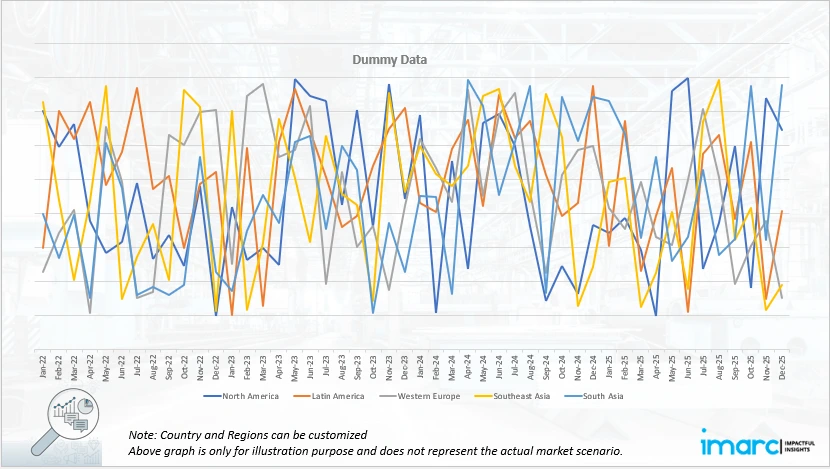
Get real-time access to monthly/quarterly/yearly prices Request Sample
During the second quarter of 2026, the sorghum prices in the USA reached 145 USD/MT in June. Prices rose sharply as limited domestic supply strained market availability and bolstered seller leverage. The demand from livestock feed producers and ethanol refiners remained strong, further tightening supplies. The impact of recent weather-related disruptions on sorghum cultivation added pressure throughout the quarter.
During the second quarter of 2026, the sorghum prices in India reached 255 USD/MT in June. Prices increased significantly due to rising domestic consumption and strong export activities to neighboring countries. Concerns over monsoon irregularities affecting production levels also contributed to the upward trend. Demand from cereal processors and livestock feed operations remained robust, supporting firm market conditions.
During the second quarter of 2026, the sorghum prices in Niger reached 436 USD/MT in June. Prices moved upward following increased local demand and export activities, which tightened supply chains. Market challenges related to political instability and logistical disruptions amplified replacement costs for importers and local traders. Demand from staple food producers remained consistent, contributing to the firm pricing environment.
During the second quarter of 2026, the sorghum prices in Mali reached 361 USD/MT in June. Prices increased as domestic availability was constrained by agricultural yield disruptions. Mali's sorghum production faced challenges from changing climatic conditions, reducing prompt market flexibility. Demand from local food processing industries and export markets supported steady procurement.
During the second quarter of 2026, the sorghum prices in Italy reached 235 USD/MT in June. Prices recorded a moderate increase driven by import cost pressures and increased demand from food and beverage industries. Changes in European agricultural policies and feedstock sourcing strategies affected inventory strategies. The stable demand from both human consumption and animal feed sectors provided a solid consumption base.
Sorghum Prices Outlook Q3 2025
- USA: USD 136/MT
- India: USD 247/MT
- Niger: USD 412/MT
- Mali: USD 341/MT
- Italy: USD 235/MT
During the third quarter of 2025, the sorghum prices in the USA reached 136 USD/MT in September. Values eased as export demand cooled and harvest arrivals increased onshore; elevators and traders paced sales to manage storage capacity. Feed buyers reduced spot purchases while logistics efficiency allowed deliveries to proceed on schedule, easing short-term upward pressure and encouraging more flexible commercial terms.
During the third quarter of 2025, the sorghum prices in India reached 247 USD/MT in September. Market levels softened as fresh-crop arrivals improved availability and millers moderated purchases to align with processing needs. Transport links from producing regions remained dependable, enabling smoother aggregation. Traders reduced urgency in offers, allowing distributors to rotate stocks gradually without forcing price recovery in spot channels.
During the third quarter of 2025, the sorghum prices in Niger reached 412 USD/MT in September. Pricing values eased as harvest flows expanded collection volumes and cross-border movement into neighboring markets increased. Humanitarian and commercial demand persisted but was met with larger supplies, enabling traders to broaden sale windows. Improved truck access to aggregation centers supported steadier distribution and reduced immediate upward pressure.
During the third quarter of 2025, the sorghum prices in Mali reached 341 USD/MT in September. Market prices declined as a stronger-than-expected harvest relieved prior tightness and allowed aggregators to rebuild inventories. Spot premiums narrowed while processors adjusted timing of purchases to match steady milling schedules. Road freight reliability improved in major collecting corridors, helping stabilize supplies to coastal and domestic consuming hubs.
During the third quarter of 2025, the sorghum prices in Italy reached 235 USD/MT in September. Prices softened as import consignments and local carryover stocks satisfied mill and feed compounder needs. Buyers prioritized competitive, scheduled shipments over opportunistic spot buying. Port throughput remained consistent, supporting timely inland distribution and limiting short-term supply disruptions that might otherwise have sustained firmer pricing.
Sorghum Prices Outlook Q2 2025
- USA: USD 154/MT
- India: USD 255/MT
- Niger: USD 447/MT
- Mali: USD 368/MT
- Italy: USD 244/MT
During the second quarter of 2025, the sorghum prices in the USA reached 154 USD/MT in June. Seasonal expectations and forward-selling by producers shaped market flows, with demand from feed integrators supporting regular offtake. Export interest remained active to select destinations, and terminal operators handled throughput reliably, allowing elevators to manage inventory rotations while maintaining orderly commercial activity.
During the second quarter of 2025, the sorghum prices in India reached 255 USD/MT in June. Milling and feed demand sustained steady purchases, and procurement from major producing states remained coordinated. Transport capacity from collection points supported continuous movement into central markets. Traders balanced forward commitments and spot availability in anticipation of upcoming planting and harvest schedules, keeping the market well-organized.
During the second quarter of 2025, the sorghum prices in Niger reached 447 USD/MT in June. Commercial and cross-border buying kept demand robust amid earlier tightness, and aggregation at collection centers improved following logistical interventions. Road access variances persisted in some districts, but planned trucking cycles mitigated major delays. Buyers and humanitarian agencies coordinated volumes to ensure consistent supply to priority consumption areas.
During the second quarter of 2025, the sorghum prices in Mali reached 368 USD/MT in June. Demand from local millers and feed processors remained steady, supporting organized purchasing. Aggregators scheduled shipments to coastal and domestic processors while managing farmer deliveries at collection points. Internal transport operations were managed to smooth timing, enabling distributors to align stock positions with immediate processing requirements.
During the second quarter of 2025, the sorghum prices in Italy reached 244 USD/MT in June. Buyers maintained disciplined procurement alongside scheduled import arrivals, and feed compounders prioritized continuity of supply. Port operations and inland transport coordinated effectively to ensure timely deliveries, and traders managed currency and freight variables when timing purchases, supporting predictable market functioning.
Regional Coverage
The report provides a detailed analysis of the market across different regions, each with unique pricing dynamics influenced by localized market conditions, supply chain intricacies, and geopolitical factors. This includes price trends, price forecast and supply and demand trends for each region, along with spot prices by major ports. The report also provides coverage of FOB and CIF prices, as well as the key factors influencing sorghum prices.
Europe Sorghum Price Trend
Q2 2026:
The sorghum price index in Europe moved upward as tighter delivered supply, export demand, and logistics constraints supported firmer offers. Port congestion periodically restricted shipments and raised replacement concerns among grain blenders. Feedstock volatility also kept production economics under pressure, even when agricultural input costs eased later in the quarter. Demand from food sectors, brewing industries, animal feed, and staple grain production offered consistent support. Italian integrated plants continued operating reliably, maintaining supply continuity and preventing a more severe shortage. Buyers generally purchased against immediate needs because inventories remained comfortable in several markets. Export orders absorbed part of the available material and reduced downward pricing pressure.
Q3 2025:
As per the sorghum price index, pricing in Europe moved lower as generous import availability from Black Sea and North African suppliers reduced reliance on prompt domestic sourcing. Feed manufacturers emphasized margin protection by favoring staggered contracts and controlled delivery intervals. Smooth port handling and dependable inland logistics supported regular flows, giving buyers confidence to pace procurement. Processors in Northern Italy and Spain adjusted formulations toward lower-cost imported consignments and emphasized longer tender schedules. Overall, purchasing behavior remained cautious as mills balanced cost control with predictable supply access, reducing spot-market volatility while protecting downstream margins.
Q2 2025:
European markets operated with orderly import and distribution flows. Contract tendering dominated buying behavior, with feed compounders aligning purchases to steady processing timetables and prioritizing delivery certainty. Logistical coordination at Black Sea trans-shipment points and Mediterranean terminals enabled millers to limit spot exposure. Procurement teams emphasized freight-cost optimization and inland storage rotation, while traders balanced currency and logistics risks in scheduling shipments. These operational choices supported stable availability for both feed and industrial users and prevented abrupt price swings during the quarter.
Detailed price information for sorghum can also be provided for an extensive list of European countries.
| Region | Countries Covered |
|---|---|
| Europe | Germany, France, United Kingdom, Italy, Spain, Russia, Turkey, Netherlands, Poland, Sweden, Belgium, Austria, Ireland, Switzerland, Norway, Denmark, Romania, Finland, Czech Republic, Portugal, and Greece, among other European countries. |
North America Sorghum Price Trend
Q2 2026:
The sorghum price index in North America rose strongly as constrained prompt availability and active livestock feed demand tightened market balances. Demand from ethanol production, cereal processing, and food manufacturing supported steady procurement. Export demand absorbed regional volumes and reduced spot flexibility, strengthening seller negotiating power. Climatic variations impacting sorghum harvests intensified production pressure throughout much of the quarter. Logistics inefficiencies and higher insurance and delivered costs added further support to replacement values. Grain supply concerns encouraged buyers to protect inventories and maintain regular purchasing instead of delaying orders. Producers kept offers firm as domestic availability remained relatively tight.
Q3 2025:
As per the sorghum price index, North American prices eased this quarter amid larger U.S. harvest inflows and reduced urgency from feed integrators. Elevators prioritized optimized storage operations and staggered sales programs, while exporters sequenced loadings with less premium for immediate shipment. Terminal throughput remained reliable, enabling processors to time purchases to match consumption rather than chase spot spikes. Market participants focused on inventory management and flexible sales terms, allowing liquidity to remain sufficient without pushing bids higher, and supporting orderly commercial activity across origin and export hubs.
Q2 2025:
North American trade featured disciplined procurement and active export planning. Buyers coordinated domestic feed needs with international shipment schedules, and terminal operators optimized loadout windows to avoid congestion. Producers used forward-sale mechanisms informed by planting and weather outlooks, while elevators managed stock rotations to maintain flow. These practices fostered pragmatic market functioning, where predictable logistics and measured commercial behavior reduced speculative buying and kept supply chains responsive to evolving seasonal conditions.
Specific sorghum historical data within the United States and Canada can also be provided.
| Region | Countries Covered |
|---|---|
| North America | United States and Canada |
Middle East and Africa Sorghum Price Trend
Q2 2026:
The sorghum prices across the Middle East and Africa followed an upward trend, supported by stronger feed demand, limited local production flexibility, and increased reliance on imports in several markets. Sorghum remained an important feed grain for livestock producers, particularly in regions where buyers sought alternatives to other grains with tighter availability. Weather related production challenges affected cultivation conditions in parts of Africa, creating uncertainty around local supply availability and encouraging buyers to secure additional stocks. Demand from poultry, dairy, and animal feed sectors remained steady, supporting procurement activity throughout the quarter.
Q3 2025:
Across the Middle East and Africa, regional pricing shifted lower as expanded harvest volumes in Niger and Mali improved supply and reduced dependence on costly imports. Humanitarian and commercial buyers adjusted procurement cadence to absorb increased local volumes, allowing more grain to move from collection points to coastal hubs. Improvements in trucking rotations and access to aggregation centers eased previous bottlenecks, permitting traders to offer more competitive bids into regional demand centers. This redistribution dynamic lowered short-term premiums and allowed several neighboring markets to source more domestically rather than relying on higher-priced external shipments.
Q2 2025:
Procurement in the Middle East and Africa concentrated on preserving supply continuity for both relief and commercial channels. Aggregators coordinated collection campaigns and trucking schedules to maintain steady throughput to coastal unloading points, and planned rotations mitigated delays in known trouble spots. Buyers prioritized dependable delivery windows over opportunistic spot coverage, aligning purchases with consumption needs for vulnerable populations and domestic processors. Infrastructure interventions in select districts improved access and reduced emergency purchasing, supporting a more measured and reliable distribution pattern.
Region-wise data and information on specific countries within these regions can also be provided.
| Region | Countries Covered |
|---|---|
| Middle East & Africa | Saudi Arabia, UAE, Israel, Iran, South Africa, Nigeria, Oman, Kuwait, Qatar, Iraq, Egypt, Algeria, and Morocco, among other Middle Eastern and African countries. |
Asia Pacific Sorghum Price Trend
Q2 2026:
Sorghum prices across Asia Pacific followed an upward trend, supported by stronger feed demand, active import requirements, and tighter availability in some supply channels. Growing demand from livestock producers encouraged regular procurement as sorghum remained an important alternative feed grain in several markets. China’s continued interest in sorghum imports supported regional trade activity, particularly as buyers looked to diversify grain sources for feed requirements. Supply conditions were affected by changing harvest outcomes and export availability from major producing regions, which encouraged buyers to secure additional volumes. India and other Asian markets recorded active trade flows as suppliers responded to regional demand requirements.
Q3 2025:
In the Asia Pacific region, pricing eased as higher throughput from India and dependable transport networks increased nearby availability for South and Southeast Asian importers. State-level procurement programs and regular export shipments from Indian origins enabled exporters to offer competitive, scheduled consignments without steep premia. Feed compounders adjusted ordering toward shorter, more frequent shipments to manage working capital while maintaining feed continuity. Port operations across South and Southeast Asia processed consignments efficiently, enabling timely reallocation and reducing immediate spot-tightness, which encouraged more deliberate purchasing and lowered short-term upward pressure.
Q2 2025:
The regional market emphasized structured purchasing and shipment planning. Importers synchronized vessel arrivals with domestic mill demand to minimize demurrage and manage currency exposure, while traders scheduled exports to align with regional feed intakes. Domestic mills in India and other production centers maintained steady throughput, and logistic corridors between South Asia and Southeast Asian hubs functioned reliably. These operational practices supported predictable flows, enabling buyers to favor contracted deliveries over urgent spot calls and maintain orderly supply coverage across the quarter.
This sorghum price analysis can be expanded to include a comprehensive list of countries within the region.
| Region | Countries Covered |
|---|---|
| Asia Pacific | China, India, Indonesia, Pakistan, Bangladesh, Japan, Philippines, Vietnam, Thailand, South Korea, Malaysia, Nepal, Taiwan, Sri Lanka, Hongkong, Singapore, Australia, and New Zealand, among other Asian countries. |
Latin America Sorghum Price Trend
Q2 2026:
Latin America's sorghum market is heavily influenced by its abundant natural reserves, particularly in Chile and Brazil. However, political instability and different regulatory frameworks can cause significant fluctuation in sorghum prices.
Q3 2025:
The abundance of natural resources in Latin America, particularly in important nations like Chile and Brazil, greatly influences the continent's sorghum industry. However, political unpredictability and differing regulatory regimes frequently cause swings in sorghum prices, which lead to market instability.
Q2 2025:
Infrastructure challenges and logistical inefficiencies often impact the supply chain, affecting Latin America’s ability to meet international demand consistently. Moreover, the sorghum price index, economic fluctuations, and currency devaluation are critical factors that need to be considered when analyzing sorghum pricing trends in this region.
This comprehensive review can be extended to include specific countries within Latin America.
| Region | Countries Covered |
|---|---|
| Latin America | Brazil, Mexico, Argentina, Columbia, Chile, Ecuador, and Peru, among other Latin American countries. |
Sorghum Pricing Report, Market Analysis, and News
IMARC's latest publication, “Sorghum Prices, Trend, Chart, Demand, Market Analysis, News, Historical and Forecast Data Report 2026 Edition,” presents a comprehensive examination of the sorghum market, offering insights into both global and regional trends influencing prices. This report explores the spot price of sorghum at major markets and evaluates the composition of prices, including FOB and CIF terms. It also presents detailed sorghum prices trend analysis by region, covering North America, Europe, Asia Pacific, Latin America, and Middle East and Africa. The factors affecting sorghum pricing, such as supply-demand dynamics, climatic influences, and sector-specific developments, are meticulously evaluated. This all-encompassing report enables stakeholders to stay informed with the latest market news, regulatory updates, and technological advancements, guiding strategic decision-making and forecasting.
Sorghum Industry Analysis
The global sorghum market size reached 59.73 Million Tons in 2025. By 2034, IMARC Group anticipates the market to reach 67.4 Million Tons, highlighting a projected CAGR of 1.35% during 2026-2034. The market's growth is mainly driven by the increasing demand for sustainable biofuels, rising livestock feed requirements, and the crop's adaptability to various climatic conditions.
Latest News and Developments:
- April 2025: A study on the genetic potential of exotic sorghum germplasm demonstrated that by using the backcross-nested association mapping (BCNAM) breeding approach, beneficial alleles from exotic sorghum germplasm could be successfully transferred into an Ethiopian elite genetic background. The resulting lines showed promising performance under moisture-stress conditions, indicating potential for drought-resilient sorghum varieties.
- February 2025: Bharat Petroleum Corporation Limited (BPCL) partnered with National Sugar Institute (NSI) to advance “sweet sorghum” as a sustainable biofuel source. The collaboration involves INR 5 crore in funding to optimize sorghum yields, enhance juice extraction/fermentation methods, and utilize leftover biomass for compressed biogas (CBG) and other value-added uses.
Product Description
Sorghum is a versatile crop used worldwide for food, animal feed, and industrial applications. It is valued for its drought tolerance and adaptability to different climates, making it a critical resource in arid regions. Sorghum grains are packed with essential nutrients and are used to produce flour, food products, alcoholic beverages, and biofuels. Its high fiber content also supports soil health when used as a cover crop. Sorghum plays a vital role in the livestock industry, serving as a primary feedstock for cattle, poultry, and aquaculture. Additionally, ongoing research is exploring its potential in reducing greenhouse gas emissions and promoting sustainable agricultural practices globally.
Report Coverage
| Key Attributes | Details |
|---|---|
| Product Name | Sorghum |
| Report Features | Exploration of Historical Trends and Market Outlook, Industry Demand, Industry Supply, Gap Analysis, Challenges, Sorghum Price Analysis, and Segment-Wise Assessment. |
| Currency/Units | US$ (Data can also be provided in local currency) or Metric Tons |
| Region/Countries Covered | The current coverage includes analysis at the global and regional levels only. Based on your requirements, we can also customize the report and provide specific information for the following countries: Asia Pacific: China, India, Indonesia, Pakistan, Bangladesh, Japan, Philippines, Vietnam, Thailand, South Korea, Malaysia, Nepal, Taiwan, Sri Lanka, Hongkong, Singapore, Australia, and New Zealand Europe: Germany, France, United Kingdom, Italy, Spain, Russia, Turkey, Netherlands, Poland, Sweden, Belgium, Austria, Ireland, Switzerland, Norway, Denmark, Romania, Finland, Czech Republic, Portugal and Greece North America: United States and Canada Latin America: Brazil, Mexico, Argentina, Columbia, Chile, Ecuador, and Peru Middle East & Africa: Saudi Arabia, UAE, Israel, Iran, South Africa, Nigeria, Oman, Kuwait, Qatar, Iraq, Egypt, Algeria, and Morocco The list of countries presented is not exhaustive. Information on additional countries can be provided if required by the client. |
| Information Covered for Key Suppliers |
|
| Customization Scope | The report can be customized as per the requirements of the customer |
| Report Price and Purchase Option |
Plan A: Monthly Updates - Annual Subscription
Plan B: Quarterly Updates - Annual Subscription
Plan C: Biannually Updates - Annual Subscription
|
| Post-Sale Analyst Support | 360-degree analyst support after report delivery |
| Delivery Format | PDF and Excel through email (We can also provide the editable version of the report in PPT/Word format on special request) |
Key Benefits for Stakeholders:
- IMARC’s report presents a detailed analysis of sorghum pricing, covering global and regional trends, spot prices at key ports, and a breakdown of FOB and CIF prices.
- The study examines factors affecting sorghum price trend, including input costs, supply-demand shifts, and geopolitical impacts, offering insights for informed decision-making.
- The competitive landscape review equips stakeholders with crucial insights into the latest market news, regulatory changes, and technological advancements, ensuring a well-rounded, strategic overview for forecasting and planning.
- IMARC offers various subscription options, including monthly, quarterly, and biannual updates, allowing clients to stay informed with the latest market trends, ongoing developments, and comprehensive market insights. The sorghum price charts ensure our clients remain at the forefront of the industry.
Need more help?
- Speak to our experienced analysts for insights on the current market scenarios.
- Include additional segments and countries to customize the report as per your requirement.
- Gain an unparalleled competitive advantage in your domain by understanding how to utilize the report and positively impacting your operations and revenue.
- For further assistance, please connect with our analysts.
 Request Customization
 Inquire Before Buying
 Speak to an Analyst
 Request Brochure
Benefits of Customization
- Personalize this research
- Triangulate with your data
- Get data as per your format and definition
- Gain a deeper dive into a specific application, geography, customer, or competitor
- Any level of personalization
Get in Touch With Us
UNITED STATES
Phone: +1-201-971-6302
INDIA
Phone: +91-120-433-0800
UNITED KINGDOM
Phone: +44-753-714-6104
Email: [email protected]
Client Testimonials




.webp)




.webp)













Related Reports

Why Choose Us
IMARC offers trustworthy, data-centric insights into commodity pricing and evolving market trends, enabling businesses to make well-informed decisions in areas such as procurement, strategic planning, and investments. With in-depth knowledge spanning more than 1000 commodities and a vast global presence in over 150 countries, we provide tailored, actionable intelligence designed to meet the specific needs of diverse industries and markets.
1000
+Commodities
150
+Countries Covered
3000
+Clients
20
+Industry

Robust Methodologies & Extensive Resources
IMARC delivers precise commodity pricing insights using proven methodologies and a wealth of data to support strategic decision-making.

Subscription-Based Databases
Our extensive databases provide detailed commodity pricing, import-export trade statistics, and shipment-level tracking for comprehensive market analysis.

Primary Research-Driven Insights
Through direct supplier surveys and expert interviews, we gather real-time market data to enhance pricing accuracy and trend forecasting.

Extensive Secondary Research
We analyze industry reports, trade publications, and market studies to offer tailored intelligence and actionable commodity market insights.
Trusted by 3000+ industry leaders worldwide to drive data-backed decisions. From global manufacturers to government agencies, our clients rely on us for accurate pricing, deep market intelligence, and forward-looking insights.