
South Africa Mattress Market Size, Share, Trends and Forecast by Product, Distribution Channel, Size, Application, and Province, 2026-2034
South Africa Mattress Market Summary:
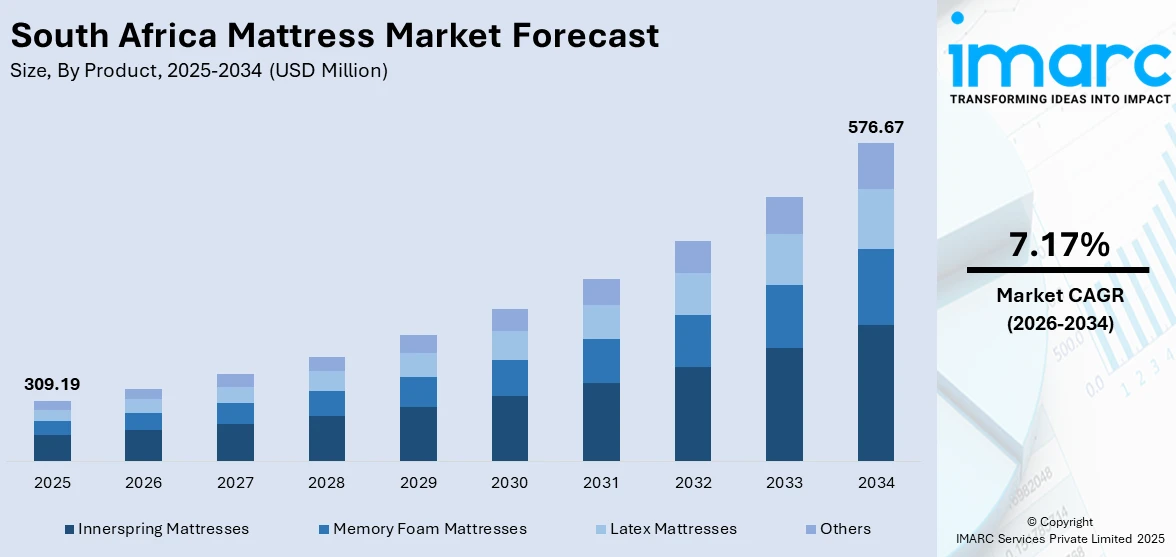
The South Africa mattress market size was valued at USD 309.19 Million in 2025 and is projected to reach USD 576.67 Million by 2034, growing at a compound annual growth rate of 7.17% from 2026-2034.
The South Africa mattress market is experiencing steady expansion driven by increasing consumer awareness of sleep health and wellness. Rising urbanization, growing household formation, and expanding hospitality sector developments are fostering demand for quality sleep products. The market benefits from evolving consumer preferences toward premium comfort solutions, technological advancements in mattress materials, and expanding retail infrastructure across major metropolitan regions.
Key Takeaways and Insights:
- By Product: Innerspring mattresses dominate the market with a share of 31% in 2025, owing to their affordability, widespread availability, and proven durability that resonates with cost-conscious consumers. Traditional coil-based construction continues delivering reliable support preferred by households across diverse income segments.
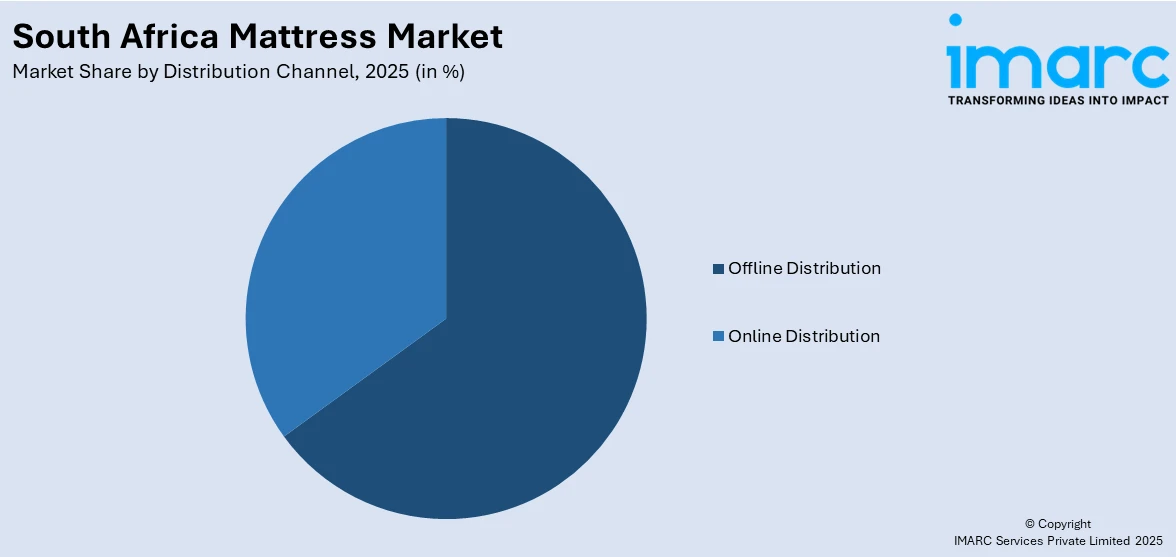
- By Distribution Channel: Offline distribution leads the market with a share of 65% in 2025. This dominance is driven by consumer preference for physical product testing, personalized sales assistance, and immediate purchase gratification that furniture showrooms and specialty bedding retailers effectively provide.
- By Size: Queen size exhibits a clear dominance in the market with 30% share in 2025, reflecting strong consumer preference for spacious sleeping surfaces that accommodate couples while fitting standard bedroom dimensions and offering balanced comfort-to-price ratios.
- By Application: Domestic represents the leading segment with a market share of 74% in 2025, driven by household replacement cycles, growing nuclear family formations, and rising homeownership rates that sustain consistent residential mattress demand throughout metropolitan and suburban areas.
- By Province: Gauteng is the largest region with 32% share in 2025, driven by the concentration of South Africa's population in Johannesburg and Pretoria metropolitan areas, higher disposable incomes, and robust retail infrastructure supporting mattress purchases.
- Key Players: Key players drive the South Africa mattress market by expanding product portfolios, improving comfort and support technologies, and strengthening nationwide distribution networks. Their investments in marketing, affordability initiatives, and partnerships with furniture retailers boost awareness, accelerate adoption, and ensure consistent product availability across diverse consumer segments.
To get more information on this market Request Sample
The South Africa mattress market is positioned for sustained growth as multiple structural factors converge to drive demand across residential and commercial segments. Increasing health consciousness among consumers is reshaping purchasing decisions, with buyers increasingly prioritizing sleep quality as an essential component of overall wellness. The direct correlation between proper spinal alignment, pressure relief, and restorative sleep quality has elevated mattress selection beyond basic functionality toward health-focused investment decisions. Gauteng province continues experiencing significant population growth and sustained domestic migration from other regions, establishing itself as the country's most densely populated economic hub. This demographic concentration in urban centers creates sustained demand for household furnishings including mattresses. Rising disposable incomes, expanding middle-class households, and growing urban residential construction further reinforce market expansion. The hospitality sector recovery and tourism industry growth additionally stimulate commercial mattress procurement across hotels, guesthouses, and accommodation establishments nationwide. Evolving consumer preferences toward premium comfort solutions and technological advancements in mattress materials continue reshaping purchasing patterns across diverse market segments.
South Africa Mattress Market Trends:
Growing Health and Sleep Wellness Consciousness
Consumer awareness regarding sleep health and its impact on overall well-being is reshaping mattress purchasing behavior across South Africa. Health-conscious buyers increasingly recognize the connection between quality sleep surfaces and physical wellness outcomes. Medical professionals and wellness advocates emphasize ergonomic sleep solutions for spinal health management. This trend drives demand for mattresses featuring therapeutic benefits including pressure relief, temperature regulation, and antimicrobial properties that support holistic wellness approaches among educated urban consumers.
Digital Transformation and E-commerce Expansion
Digital transformation is reshaping how South African consumers research, compare, and purchase mattresses. Online platforms enable comprehensive product comparisons, customer reviews, and transparent pricing that empower informed decision-making. Social media marketing and influencer partnerships effectively reach younger demographics prioritizing authentic recommendations. Virtual mattress fitting tools and augmented reality applications help consumers make informed decisions without physical store visits. Mobile commerce growth and secure payment systems further accelerate digital mattress purchases across diverse consumer segments.
Eco-friendly and Sustainable Mattress Materials
Environmental consciousness is driving growing demand for eco-friendly and organic mattresses as consumers prioritize sustainability in purchasing decisions. Manufacturers increasingly incorporate certified wood, reclaimed timber, recycled materials, and environmentally friendly finishes that reduce emissions and toxic chemical exposure. Sustainable production practices addressing environmental concerns resonate with conscious consumers seeking responsible consumption options. This shift toward green mattress alternatives reflects broader societal trends emphasizing environmental responsibility and health-conscious material choices throughout household furnishing categories.
Market Outlook 2026-2034:
The South Africa mattress market demonstrates robust growth potential as favorable demographic trends, rising urbanization, and evolving consumer preferences converge to drive sustained demand expansion. Continued population migration toward major metropolitan centers, particularly Gauteng and Western Cape provinces, supports consistent household formation and residential furnishing requirements. The market generated a revenue of USD 309.19 Million in 2025 and is projected to reach a revenue of USD 576.67 Million by 2034, growing at a compound annual growth rate of 7.17% from 2026-2034. Hospitality sector expansion, including new hotel developments and accommodation upgrades, contributes significantly to commercial mattress procurement. Technological innovations in sleep products, growing health awareness, and expanding retail infrastructure position the market for continued momentum throughout the forecast period.
South Africa Mattress Market Report Segmentation:
|
Segment Category |
Leading Segment |
Market Share |
|
Product |
Innerspring Mattresses |
31% |
|
Distribution Channel |
Offline Distribution |
65% |
|
Size |
Queen Size |
30% |
|
Application |
Domestic |
74% |
|
Province |
Gauteng |
32% |
Product Insights:
- Innerspring Mattresses
- Memory Foam Mattresses
- Latex Mattresses
- Others
Innerspring mattresses dominates with a market share of 31% of the total South Africa mattress market in 2025.
Innerspring mattresses maintain market leadership through their proven durability, widespread availability, and competitive pricing that resonates with value-conscious South African consumers. Traditional coil-based construction delivers reliable support characteristics that have established lasting consumer trust across diverse household income segments. The technology's familiarity and established manufacturing base ensure consistent product availability through extensive retail distribution networks serving both urban and suburban markets nationwide. Retailers prominently feature innerspring mattress collections given their strong consumer recognition and established demand patterns. The segment's accessible price positioning makes quality sleep solutions attainable for budget-conscious households seeking dependable comfort without premium expenditure.
The innerspring segment benefits from continuous product innovation incorporating advanced coil configurations, comfort layers, and edge support systems that enhance sleep quality while maintaining competitive pricing. Manufacturers invest in research and development to improve support technologies, breathability features, and motion isolation capabilities that address evolving consumer expectations. Consumer preference for physical product testing before purchase further reinforces innerspring mattress sales through traditional retail channels, where customers can directly experience firmness levels and support characteristics before making purchasing decisions.
Distribution Channel Insights:
Access the comprehensive market breakdown Request Sample
- Online Distribution
- Offline Distribution
Offline distribution leads with a share of 65% of the total South Africa mattress market in 2025.
Offline distribution channels maintain dominant market positioning as South African consumers strongly prefer physical product evaluation before mattress purchases. Furniture showrooms, specialty bedding retailers, and department stores provide essential tactile experiences enabling customers to assess comfort levels, firmness preferences, and material quality firsthand. Personalized sales consultations, expert guidance, and immediate product availability reinforce traditional retail advantages over emerging digital alternatives. Consumer financing options, flexible payment plans, and comprehensive delivery services further strengthen offline retail appeal, while established trust relationships between customers and local bedding specialists encourage repeat purchases and brand loyalty.
Pepkor Lifestyle's acquisition of Shoprite's furniture business for approximately R3.2 billion in 2024-2025 demonstrates ongoing consolidation and investment strengthening offline retail infrastructure across Southern Africa. The segment benefits from consumer financing options, delivery services, and post-purchase support that physical retailers effectively provide. Established distribution networks spanning major metropolitan centers, regional towns, and suburban shopping centers ensure comprehensive market coverage supporting sustained offline channel dominance. In-store sleep consultations, mattress trials, and personalized recommendations further enhance customer confidence, encouraging informed purchasing decisions and fostering long-term brand loyalty.
Size Insights:
- Twin or Single Size
- Twin XL Size
- Full or Double Size
- Queen Size
- King Size Mattress
- Others
The queen size exhibits a clear dominance with 30% share of the total South Africa mattress market in 2025.
Queen size mattresses command market leadership through their optimal balance of sleeping surface area, bedroom space efficiency, and value proposition that appeals to couples and individuals seeking spacious comfort. Standard dimensions accommodate typical bedroom layouts while providing generous sleeping area without overwhelming limited room configurations. The size category delivers favorable comfort-to-cost ratios that resonate with middle-income households representing the market's core consumer demographic. Versatile compatibility with standard bed frames, headboards, and bedroom furniture sets further enhances queen size appeal among consumers seeking coordinated sleeping environments.
Urban residential construction trends favoring medium-sized bedroom configurations further reinforce queen size mattress demand across metropolitan housing developments. Bedding retailers consistently report queen size as their bestselling category, prompting manufacturers to prioritize product development and promotional activities targeting this segment. Growing young professional and newly married couple demographics particularly favor queen size options that balance spatial requirements with budget considerations and bedroom aesthetic preferences. Marketing campaigns and seasonal promotions frequently spotlight queen size offerings, reinforcing consumer awareness and purchase intent while establishing this size category as the practical standard for contemporary South African households.

Application Insights:
- Domestic
- Commercial
Domestic represent the leading segment with 74% share of the total South Africa mattress market in 2025.
Domestic applications dominate mattress consumption as household replacement cycles, new home formations, and rising homeownership rates generate consistent residential demand. Growing nuclear family structures, increasing urbanization, and expanding middle-class populations drive household furnishing requirements across metropolitan areas. Consumer spending on bedroom comfort upgrades reflects heightened awareness of sleep quality importance for health and productivity outcomes. Evolving lifestyle preferences and changing household compositions further multiply dwelling units requiring complete bedroom furnishing solutions throughout urban and suburban communities.
South Africa's substantial urban population concentration creates significant residential mattress demand within major cities and surrounding townships. Housing developments targeting first-time homebuyers and young professionals generate sustained replacement and new purchase activity throughout the domestic segment. Seasonal promotional campaigns, extended payment options, and furniture bundle offerings effectively stimulate household mattress purchases across diverse income brackets and geographic regions. Retailer financing programs and layaway schemes make quality mattresses accessible to budget-conscious consumers, expanding market penetration across various socioeconomic segments. Home improvement trends and bedroom renovation projects additionally contribute to domestic mattress demand as households invest in enhanced sleeping environments.
Provincial Insights:
- Gauteng
- KwaZulu-Natal
- Western Cape
- Mpumalanga
- Eastern Cape
- Others
Gauteng dominates with a market share of 32% of the total South Africa mattress market in 2025.
Gauteng province maintains market leadership through its concentration of South Africa's largest urban population centers, highest disposable income levels, and most developed retail infrastructure. Johannesburg and Pretoria metropolitan areas house significant portions of the national population, generating substantial residential and commercial mattress demand. The province's economic activity attracts continuous domestic migration that sustains household formation and furnishing requirements. Major business districts, industrial zones, and service sector employment opportunities draw working-age populations seeking career advancement and improved living standards.
Gauteng's position as South Africa's economic heartland creates concentrated mattress demand driven by dense residential developments and thriving commercial establishments. The province's robust retail presence, including furniture chains, specialty bedding stores, and shopping centers, ensures comprehensive product availability and competitive pricing throughout urban and suburban communities. Corporate offices, hospitality establishments, and healthcare facilities further contribute to commercial mattress procurement within the province. Well-established distribution networks and logistics infrastructure enable efficient product delivery across the region. Higher average household incomes support premium mattress purchases while diverse retail options cater to budget-conscious consumers seeking quality sleep solutions.
Market Dynamics:
Growth Drivers:
Why is the South Africa Mattress Market Growing?
Rising Consumer Awareness of Sleep Health and Wellness
The growing recognition of sleep's fundamental importance to overall health and well-being is significantly transforming mattress purchasing decisions across South Africa. Consumers increasingly understand the direct correlation between quality sleep surfaces and physical wellness outcomes including spinal alignment, pressure point relief, and restorative rest quality. Health-conscious buyers are prioritizing investment in premium sleep solutions that deliver therapeutic benefits supporting long-term wellness objectives. Medical professionals and wellness advocates consistently emphasize the role of ergonomic sleep environments in managing chronic conditions, reducing fatigue, and enhancing cognitive performance. This health-focused consumer behavior drives demand for specialized mattresses featuring advanced support technologies, temperature regulation capabilities, and antimicrobial properties. Educational campaigns by healthcare organizations and bedding manufacturers have successfully elevated public understanding of sleep hygiene principles and mattress selection criteria that promote healthier sleeping patterns.
Expanding Hospitality Sector and Tourism Industry Recovery
South Africa's hospitality sector continues expanding with significant hotel development projects and accommodation upgrades driving commercial mattress procurement across the country. New luxury and mid-range hotel openings in Cape Town, Johannesburg, and other tourism destinations create substantial institutional demand for quality bedding products. The tourism industry recovery brings increasing international arrivals and domestic travel that sustain hotel occupancy rates and encourage accommodation operators to invest in guest room upgrades. Major hospitality groups are announcing expansion plans and property refurbishments that require procurement of mattresses meeting international comfort standards. The growing emphasis on guest experience quality positions comfortable sleep environments as essential competitive differentiators for accommodation providers. Business travel, conference tourism, and leisure visitors collectively generate sustained commercial mattress demand while encouraging operators to maintain replacement cycles ensuring optimal guest satisfaction throughout their establishments.
Accelerating Urbanization and Population Growth
South Africa's continuing urbanization trend significantly drives mattress market expansion as population concentration in metropolitan areas generates sustained household formation and residential furnishing requirements. Rural-to-urban migration patterns consistently channel population growth toward major cities where housing developments, apartment complexes, and residential communities create ongoing demand for household goods including mattresses. The nuclear family expansion and changing household composition structures multiply dwelling units requiring complete bedroom furnishing solutions. Urban residential construction targeting young professionals, first-time homebuyers, and growing families sustains replacement and new purchase activity across domestic market segments. Metropolitan infrastructure development improves retail accessibility while expanding consumer exposure to diverse mattress options and promotional offerings. The concentration of economic opportunities in urban centers attracts working-age populations who establish independent households requiring essential furnishings that support comfortable living standards and daily productivity.
Market Restraints:
What Challenges the South Africa Mattress Market is Facing?
Intense Competition Among Local and International Brands
The South Africa mattress market faces significant competitive pressure as numerous local and international brands actively compete for market share. This saturated competitive landscape creates pricing pressures that compress profit margins and challenge manufacturers to differentiate offerings through quality, innovation, and marketing strategies. New market entrants face considerable barriers establishing brand recognition and distribution networks against well-established competitors with loyal customer bases and extensive retail presence.
Fluctuating Raw Material Prices
Mattress manufacturers contend with volatile raw material costs including foam chemicals, steel for innerspring systems, fabric materials, and packaging components that directly impact production expenses and pricing strategies. Global supply chain disruptions and currency fluctuations affect import costs for materials not locally sourced. These unpredictable cost variations challenge manufacturers in maintaining consistent pricing while preserving profit margins and competitive positioning across different market segments.
Economic Instability Affecting Consumer Spending
South Africa's broader economic challenges including high unemployment, inflation pressures, and constrained household disposable incomes directly impact discretionary spending on durable goods such as mattresses. Economic uncertainty encourages consumers to defer large purchases, extend mattress replacement cycles, or select lower-priced alternatives that may compromise quality preferences. These macroeconomic headwinds particularly affect premium segment sales while intensifying price competition across budget and mid-range categories.
Competitive Landscape:
The South Africa mattress market exhibits a dynamic competitive environment characterized by the presence of established international brands, local manufacturers, and specialty bedding retailers competing across diverse price segments and distribution channels. Market participants differentiate through product innovation, brand positioning, retail partnerships, and value propositions targeting specific consumer demographics. Competition intensifies around comfort technologies, material quality, warranty offerings, and after-sales service capabilities. Retailers increasingly emphasize in-store experiences, sleep consultations, and financing options to attract and retain customers. Strategic partnerships between manufacturers and retail chains strengthen market positioning while consolidation activities reshape distribution landscapes. Online direct-to-consumer entrants introduce competitive pressure through transparent pricing and convenient delivery models. The market rewards participants who effectively balance quality, affordability, and accessibility while building sustainable brand relationships with consumers.
Recent Developments:
- In May 2025, Pepkor Holdings Limited announced strong interim results for the six months ended March 2025, with its Lifestyle division (including Sleepmasters, Bradlows, and Russells) delivering solid performance with 6.3% like-for-like sales growth, outperforming the market in key product categories including bedding and furniture.
South Africa Mattress Market Report Coverage:
| Report Features | Details |
|---|---|
| Base Year of the Analysis | 2025 |
| Historical Period | 2020-2025 |
| Forecast Period | 2026-2034 |
| Units | Million USD |
| Scope of the Report |
Exploration of Historical Trends and Market Outlook, Industry Catalysts and Challenges, Segment-Wise Historical and Future Market Assessment:
|
| Products Covered | Innerspring Mattresses, Memory Foam Mattresses, Latex Mattresses, Others |
| Distribution Channels Covered | Online Distribution, Offline Distribution |
| Sizes Covered | Twin or Single Size, Twin XL Size, Full or Double Size, Queen Size, King Size Mattress, Others |
| Applications Covered | Domestic, Commercial |
| Regions Covered | Gauteng, KwaZulu-Natal, Western Cape, Mpumalanga, Eastern Cape, Others |
| Customization Scope | 10% Free Customization |
| Post-Sale Analyst Support | 10-12 Weeks |
| Delivery Format | PDF and Excel through Email (We can also provide the editable version of the report in PPT/Word format on special request) |
Frequently Asked Questions About the South Africa Mattress Market Report
The South Africa mattress market size was valued at USD 309.19 Million in 2025.
The South Africa mattress market is expected to grow at a compound annual growth rate of 7.17% from 2026-2034 to reach USD 576.67 Million by 2034.
Innerspring mattresses dominated the market with a share of 31%, driven by their proven durability, competitive pricing, widespread retail availability, and consumer preference for traditional coil-based support systems.
Key factors driving the South Africa mattress market include rising consumer awareness of sleep health, expanding hospitality sector developments, accelerating urbanization, growing household formation rates, and increasing middle-class disposable incomes.
Major challenges include intense competition among local and international brands, fluctuating raw material prices affecting production costs, economic instability constraining consumer spending, supply chain disruptions, and pricing pressures impacting profit margins.
Need more help?
- Speak to our experienced analysts for insights on the current market scenarios.
- Include additional segments and countries to customize the report as per your requirement.
- Gain an unparalleled competitive advantage in your domain by understanding how to utilize the report and positively impacting your operations and revenue.
- For further assistance, please connect with our analysts.
 Request Customization
 Speak to an Analyst
 Request Brochure
 Inquire Before Buying
Benefits of Customization
- Personalize this research
- Triangulate with your data
- Get data as per your format and definition
- Gain a deeper dive into a specific application, geography, customer, or competitor
- Any level of personalization
Get in Touch With Us
UNITED STATES
Phone: +1-201-971-6302
INDIA
Phone: +91-120-433-0800
UNITED KINGDOM
Phone: +44-753-714-6104
Email: [email protected]
Client Testimonials




.webp)




.webp)













Related Reports

Choose your plan
*Please note that the prices mentioned below are starting prices for each bundle type. Kindly contact our team for further details.*
Single User License
- 1 User License, Access on 2 Devices
- PDF Report + Excel Dataset (Password Protected)
- Lifetime Access
- No Printing Rights
- 10% Free Report Customization
- 10–12 Weeks of Analyst Support
Five User License
- Access for 5 Users, 2 Devices per User
- PDF Report + Excel Dataset (Password Protected)
- Lifetime Access
- Dedicated Account Manager
- 12–14 Weeks of Analyst Support
- No Printing Rights
- 15% Free Report Customization
- 25% Discount on Your Next Purchase
Corporate User License
- Unlimited User Access (Within Your Organization)
- PDF Report + Excel Dataset
- Lifetime Access
- Dedicated Account Manager
- 14–20 Weeks of Analyst Support
- No Printing Rights
- 20% Free Report Customization
- 30% Discount on Your Next Purchase
Essential Insights
What's included:
3 reports
- Lifetime Access
- PDF Reports
- Excel Datasets
- 2 Weeks of Free Analyst Support
- 2 User Licenses
- Access on 2 Devices
- Printing Rights
- Complimentary PowerPoint (PPT) Version
- Complimentary License Upgrade
Professional Access
What's included:
5 reports
- Lifetime Access
- PDF Reports
- Excel Datasets
- 8 Weeks of Free Analyst Support
- 2 User Licenses
- Access on 2 Devices
- Printing Rights
- Complimentary PowerPoint (PPT) Version
- Complimentary License Upgrade
Business Advantage
What's included:
8 reports
- Lifetime Access
- PDF Reports
- Excel Datasets
- 14 Weeks of Free Analyst Support
- 2 User Licenses
- Access on 2 Devices
- Printing Rights
- Complimentary PowerPoint (PPT) Version
- Complimentary License Upgrade
Enterprise Intelligence
What's included:
10 reports
- Lifetime Access
- PDF Reports
- Excel Datasets
- 20 Weeks of Free Analyst Support
- 2 User Licenses
- Access on 2 Devices
- Printing Rights
- Complimentary PowerPoint (PPT) Version
- Complimentary License Upgrade