
South Africa Recliner Chair Market Size, Share, Trends and Forecast by Product Type, Seating Arrangement, Materials, Distribution Channel, End Users, and Province, 2026-2034
South Africa Recliner Chair Market Summary:
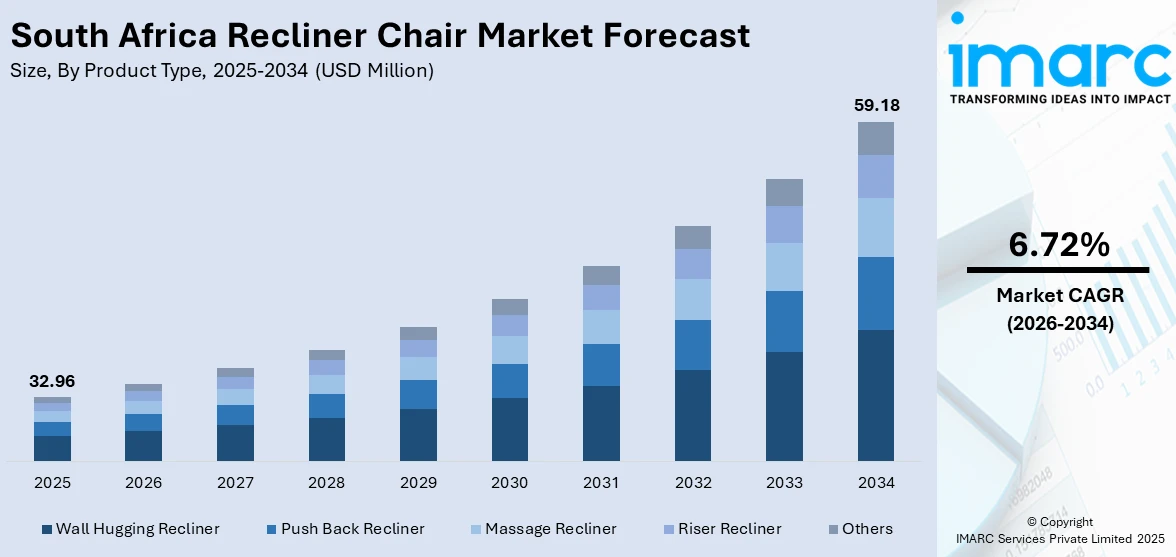
The South Africa recliner chair market size was valued at USD 32.96 Million in 2025 and is projected to reach USD 59.18 Million by 2034, growing at a compound annual growth rate of 6.72% from 2026-2034.
The South Africa recliner chair market is witnessing steady expansion driven by increasing consumer preference for comfortable and ergonomic seating solutions. Rising urbanization, growing middle-class incomes, and evolving lifestyle preferences are propelling demand across residential and commercial segments. The market benefits from enhanced product availability through diverse distribution channels, while manufacturers focus on innovative designs combining functionality with aesthetic appeal to capture the growing South Africa recliner chair market share.
Key Takeaways and Insights:
- By Product Type: Wall hugging recliner dominates the market with a share of 26% in 2025, owing to its space-saving capabilities that appeal to urban consumers with limited living spaces. Rising urbanization and the growing preference for compact yet functional furniture are accelerating demand for this product type across South African households.
- By Seating Arrangement: Single seater recliner leads the market with a share of 60% in 2025, reflecting strong consumer preference for personalized comfort solutions. The segment benefits from affordability, versatility in placement across different room configurations, and the growing trend of individual relaxation spaces within residential settings.
- By Material: Leather exhibits a clear dominance in the market with 45% share in 2025, driven by its premium aesthetics, durability, and easy maintenance characteristics. Rising disposable incomes among middle-class consumers and the association of leather furniture with luxury and sophistication are bolstering segment expansion.
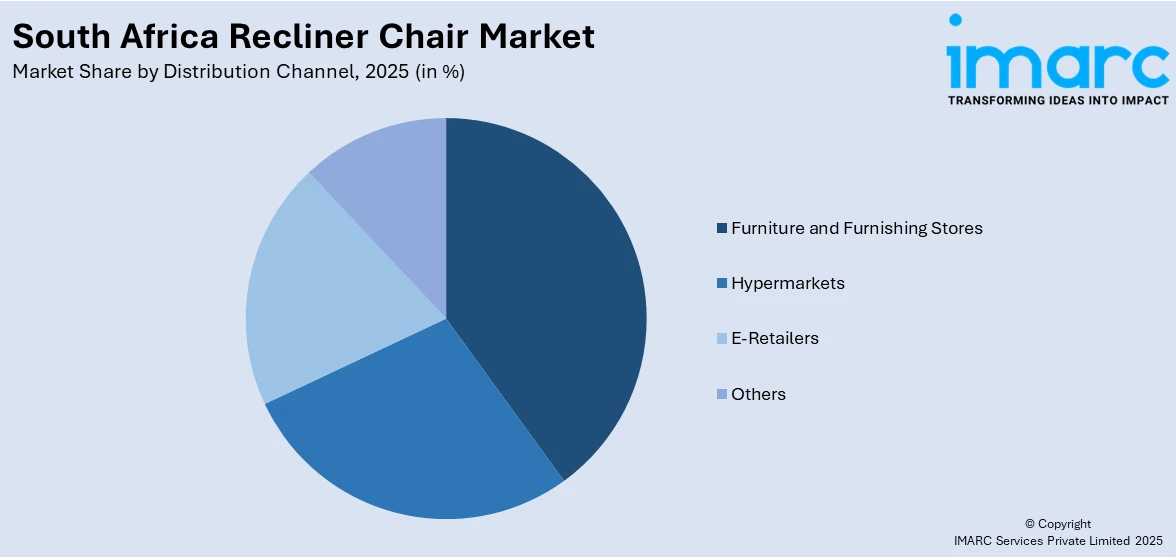
- By Distribution Channel: Furniture and furnishing stores represent the biggest segment with a market share of 33% in 2025, as consumers prefer hands-on shopping experiences for evaluating comfort, quality, and design before purchase. These stores offer product demonstrations, expert guidance, and immediate availability that enhance customer confidence.
- By End Users: Residential dominates the market with a share of 70% in 2025, owing to increasing household spending on home furnishings and the growing emphasis on creating comfortable living environments. Rising homeownership rates and home improvement trends continue driving residential segment growth.
- By Province: Gauteng is the largest region with 29% share in 2025, driven by its status as South Africa's economic hub with the highest concentration of urban population, retail infrastructure, and disposable income levels. Johannesburg's thriving furniture retail sector and expanding middle-class base are key growth enablers.
- Key Players: Key players drive the South Africa recliner chair market by expanding product portfolios, improving comfort technologies, and strengthening nationwide distribution networks. Their investments in local manufacturing, marketing initiatives, and partnerships with retail chains boost awareness and accelerate adoption.
To get more information on this market Request Sample
The South Africa recliner chair market is experiencing robust growth as consumers increasingly prioritize comfort, ergonomic support, and stylish home furnishings. Urbanization trends are reshaping furniture preferences, with compact, space-efficient designs gaining traction among apartment dwellers in major cities. The market benefits from rising disposable incomes and expanding middle-class populations, particularly in metropolitan areas where lifestyle aspirations drive premium furniture purchases. Manufacturers are responding to evolving consumer demands by introducing innovative features such as massage functions, heating elements, and integrated technology including USB charging ports. The broader furniture industry's positive trajectory continues supporting specialized segments like recliner chairs as consumer spending on home furnishings strengthens. The residential segment continues dominating demand as homeowners invest in quality seating solutions that enhance relaxation and well-being. Distribution channels are diversifying, with e-commerce platforms complementing traditional furniture stores to reach broader consumer segments. Strategic partnerships between manufacturers and retailers are strengthening market penetration while localization initiatives support domestic production capabilities.
South Africa Recliner Chair Market Trends:
Space-Efficient Wall Hugging Design Adoption
The South Africa recliner chair market growth is being propelled by increasing adoption of wall hugging recliner designs that maximize living space utilization. These space-saving models allow consumers to position furniture closer to walls while maintaining full reclining functionality, making them ideal for apartments and smaller homes prevalent in metropolitan areas. The trend aligns with modern minimalist interior design aesthetics that prioritize functionality without compromising comfort. Manufacturers are innovating with sleek profiles and streamlined mechanisms that appeal to space-conscious consumers across metropolitan centers.
Integration of Smart Comfort Technologies
Consumer demand for technologically enhanced furniture is reshaping the recliner chair market landscape. Modern recliners increasingly incorporate features including built-in massage systems, heating elements, USB charging ports, and wireless connectivity options. These innovations cater to tech-savvy consumers seeking multifunctional furniture that addresses wellness and convenience needs. Home entertainment setups are driving demand for cinema-style recliners with integrated cup holders and storage compartments. Manufacturers are leveraging technology integration to differentiate products and capture premium market segments seeking elevated relaxation experiences.
Rising Preference for Premium Leather Upholstery
Consumer preferences are shifting toward premium leather-upholstered recliners that offer durability, sophistication, and easy maintenance. Genuine leather furnishings are increasingly associated with luxury and long-term value, driving demand among affluent consumer segments. The trend reflects broader lifestyle aspirations and willingness to invest in quality home furnishings. Manufacturers are expanding leather recliner portfolios with diverse color options and grain finishes to accommodate varied interior design preferences. Growing environmental consciousness is also spurring interest in sustainably sourced and ethically produced leather alternatives.
Market Outlook 2026-2034:
The South Africa recliner chair market is poised for sustained expansion throughout the forecast period, driven by favorable demographic trends, rising urbanization, and evolving consumer lifestyle preferences. Growing awareness of ergonomic furniture benefits and increasing household spending on home comfort solutions will propel market development. The market generated a revenue of USD 32.96 Million in 2025 and is projected to reach a revenue of USD 59.18 Million by 2034, growing at a compound annual growth rate of 6.72% from 2026-2034. Expanding distribution networks, e-commerce growth, and strategic retail partnerships will enhance product accessibility across diverse consumer segments. Manufacturers focusing on localization, innovation, and value-oriented offerings are well-positioned to capitalize on emerging opportunities within this dynamic market landscape.
South Africa Recliner Chair Market Report Segmentation:
|
Segment Category |
Leading Segment |
Market Share |
|
Product Type |
Wall Hugging Recliner |
26% |
|
Seating Arrangement |
Single Seater Recliner |
60% |
|
Materials |
Leather |
45% |
|
Distribution Channel |
Furniture and Furnishing Stores |
33% |
|
End Users |
Residential |
70% |
|
Province |
Gauteng |
29% |
Product Type Insights:
- Wall Hugging Recliner
- Push Back Recliner
- Massage Recliner
- Riser Recliner
- Others
Wall hugging recliner dominates with a market share of 26% of the total South Africa recliner chair market in 2025.
Wall hugging recliners have emerged as the preferred choice among South African consumers seeking space-efficient seating solutions for urban living environments. These innovative designs require minimal clearance from walls while delivering full reclining functionality, making them ideal for apartments and smaller homes prevalent in metropolitan areas. The segment benefits from growing urbanization trends driving demand for furniture that maximizes limited living spaces without compromising comfort or style. Modern engineering allows these recliners to operate within inches of walls, preserving valuable floor space while providing complete reclining capability that rivals traditional designs.
The wall hugging recliner segment is further propelled by aesthetic versatility and integration with contemporary interior design preferences. Manufacturers are introducing diverse style options ranging from sleek modern profiles to classic designs that accommodate varied consumer tastes. The product category appeals to younger demographics establishing first homes and older consumers downsizing to manageable living spaces. Retailers report strong demand for wall hugging models featuring premium upholstery options, indicating consumer willingness to invest in quality space-saving furniture that combines practicality with sophisticated design elements.
Seating Arrangement Insights:
- Single Seater Recliner
- Multi Seater Recliner
Single seater recliner leads with a share of 60% of the total South Africa recliner chair market in 2025.
Single seater recliners dominate the South African market due to their affordability, versatility, and alignment with individual comfort preferences. These compact units enable consumers to create personalized relaxation zones within living spaces without requiring substantial floor area. The segment appeals to diverse demographics including young professionals, elderly individuals seeking therapeutic seating, and homeowners designing dedicated media or reading corners. Entry-level pricing makes single seaters accessible gateway purchases introducing consumers to recliner furniture benefits while fitting comfortably within household budgets. The flexibility to position single units independently allows creative room arrangements accommodating various spatial configurations.
Market expansion in single seater recliners reflects broader lifestyle trends emphasizing personal wellness and home-based relaxation. Consumers increasingly view individual recliners as investments in comfort and health, particularly those featuring ergonomic designs supporting posture and reducing physical strain. The growing remote work culture has intensified demand for comfortable individual seating solutions that support extended periods of sitting. South African manufacturers have established significant market presence by offering quality single seater options with features including lumbar support and adjustable mechanisms catering to diverse consumer requirements across residential applications.
Materials Insights:
- Leather
- Fabric
- Others
Leather exhibits a clear dominance with 45% share of the total South Africa recliner chair market in 2025.
Leather recliners command the largest material segment share due to their premium positioning, durability, and aspirational appeal among South African consumers. Genuine leather upholstery offers exceptional longevity, developing attractive patina over time while maintaining structural integrity. The material resonates with affluent consumer segments associating leather furniture with sophistication and quality craftsmanship. Easy maintenance characteristics further enhance leather's appeal for busy households seeking practical yet elegant furnishing solutions adaptable to various interior design schemes. Temperature regulation properties provide comfort across diverse climate conditions found throughout South African regions, making leather suitable for year-round use.
The leather recliner segment benefits from expanding product diversity including full-grain, top-grain, and bonded leather options accommodating varied budget levels. South African retailers have established dedicated recliner collections featuring genuine leather home theatre suites positioned across entry-level to premium pricing tiers. Consumer preference for leather intensifies during promotional periods, with retailers reporting strong demand during seasonal sales events when premium leather recliners become more accessible to broader market segments. The enduring popularity of leather reflects consumer appreciation for timeless elegance combined with practical durability.
Distribution Channel Insights:
Access the comprehensive market breakdown Request Sample
- Furniture and Furnishing Stores
- Hypermarkets
- E-Retailers
- Others
Furniture and furnishing stores represent the leading segment with 33% share of the total South Africa recliner chair market in 2025.
Furniture and furnishing stores maintain market leadership by providing experiential shopping environments where consumers can physically evaluate recliner comfort, quality, and functionality before purchasing. These specialized retailers offer comprehensive product ranges, expert sales guidance, and showroom displays enabling customers to compare options across styles and price points. The channel benefits from consumer preference for tactile assessment of furniture purchases, particularly for significant investments like recliners requiring personal comfort verification. Trained sales professionals assist customers in understanding product features, materials, and warranty terms that inform purchasing decisions.
Major furniture retail chains including Russells, Bradlows, and Rochester operate extensive store networks across South African provinces providing broad market coverage. These established brands benefit from consumer trust developed through decades of market presence and reliable after-sales service. Pepkor Holdings, parent company of these brands, continues expanding physical retail presence through strategic acquisitions and store network growth. The planned acquisition of Shoprite's furniture business for approximately R3.2 Billion announced in September 2024 demonstrates continued investment in expanding physical retail presence to capture growing furniture demand across diverse consumer segments.
End Users Insights:
- Residential
- Commercial
- Others
Residential prevails the market with 70% share of the total South Africa recliner chair market in 2025.
The residential segment dominates recliner chair demand driven by increasing household investment in comfortable home furnishings and growing emphasis on creating relaxation spaces within living environments. Rising homeownership rates combined with home improvement trends encourage consumers to upgrade seating arrangements with quality recliners offering enhanced comfort and aesthetic appeal. The segment benefits from lifestyle shifts prioritizing home-based leisure activities including streaming entertainment and remote work arrangements requiring supportive seating solutions. Consumers increasingly view their homes as sanctuaries deserving premium furniture investments that enhance daily living experiences and support physical well-being throughout extended periods of use.
Residential recliner demand reflects broader furnishing market dynamics with positive growth driven by consumer investment in multifunctional spaces serving entertainment, relaxation, and work purposes. The trend toward home theatre installations has propelled demand for cinema-style recliner suites offering premium entertainment experiences comparable to commercial venues. Manufacturers are responding by developing residential-focused product lines featuring family-friendly fabrics, modular configurations, and integrated technology addressing diverse household requirements across urban and suburban markets. The aging population's preference for remaining in homes further supports residential segment expansion as supportive seating becomes essential.
Provincial Insights:
- Gauteng
- KwaZulu-Natal
- Western Cape
- Mpumalanga
- Eastern Cape
- Others
Gauteng comprises the largest region with 29% share of the total South Africa recliner chair market in 2025.
Gauteng province leads the South African recliner chair market owing to its position as the nation's economic powerhouse with the highest concentration of urban population, retail infrastructure, and disposable income levels. Johannesburg and Pretoria metropolitan areas host numerous furniture retail outlets, showrooms, and manufacturing facilities serving substantial consumer demand. The province benefits from concentrated middle-class populations demonstrating strong purchasing power for premium home furnishings and willingness to invest in quality comfort solutions. Extensive shopping mall developments provide furniture retailers with premium locations attracting high foot traffic and affluent consumer segments seeking quality recliner options.
Market dynamics in Gauteng reflect broader urbanization trends with the province experiencing continued residential development and household formation driving sustained furniture demand. Major furniture manufacturers and retailers maintain headquarters and distribution operations in Gauteng, ensuring product availability and efficient logistics. International expansion is evidenced by Saloni Furniture opening a new 1,000 square meter corporate store in Johannesburg during 2024, highlighting the province's attractiveness for furniture retail investment.

Market Dynamics:
Growth Drivers:
Why is the South Africa Recliner Chair Market Growing?
Rising Urbanization and Middle-Class Expansion
The South Africa recliner chair market is experiencing significant growth driven by accelerating urbanization and expanding middle-class populations across major metropolitan centers. Urban migration patterns are reshaping housing landscapes with increasing demand for furniture solutions suited to apartment living and modern residential configurations. The country's urban population continues expanding steadily, with projections indicating further growth in coming decades as economic opportunities attract residents to city centers. This demographic shift creates substantial opportunities for recliner manufacturers targeting urban consumers seeking comfortable, space-efficient seating solutions. Rising disposable incomes among the growing middle class enable increased spending on premium home furnishings, with consumers prioritizing quality and comfort in furniture purchases. Metropolitan areas demonstrate particularly strong demand driven by concentrated populations, retail infrastructure, and lifestyle aspirations favoring comfortable living environments.
Growing Aging Population Demanding Ergonomic Furniture
Demographic shifts toward an aging population are propelling demand for ergonomic recliner chairs that provide comfort, support, and assistance for elderly users. Riser recliners featuring lift mechanisms are gaining particular traction among elderly consumers and caregivers seeking products that enhance mobility and independence. Healthcare awareness regarding furniture's impact on physical wellness is driving preference for recliners offering lumbar support, adjustable positioning, and pressure relief features beneficial for aging users. The retirement housing sector expansion creates additional demand channels as residential facilities for elderly populations increasingly specify quality recliner furniture for common areas and individual residences. Manufacturers are responding with product lines specifically designed addressing elderly user requirements including easy-operation controls and stability features.
Expansion of E-commerce and Digital Retail Channels
Digital transformation of furniture retail is accelerating market growth by enhancing product accessibility and consumer convenience across South Africa. E-commerce platforms are experiencing substantial expansion with the Online channels enable consumers to browse extensive recliner selections, compare prices, and access products regardless of geographic location or proximity to physical stores. Major retailers including Takealot and specialized furniture e-commerce platforms are investing in enhanced digital experiences featuring detailed product visualization, customer reviews, and streamlined delivery services. The shift toward omnichannel retail strategies combines online convenience with physical showroom experiences, allowing consumers to research products digitally before confirming comfort preferences in-store. E-commerce growth particularly benefits consumers in underserved regions lacking extensive furniture retail infrastructure, democratizing access to quality recliner products previously concentrated in major urban centers.
Market Restraints:
What Challenges the South Africa Recliner Chair Market is Facing?
High Upfront Costs and Import Dependency
The South Africa recliner chair market faces significant challenges from high product costs driven by import dependency and currency fluctuations affecting affordability. Premium recliner chairs often require imported components including specialized mechanisms, motors, and quality upholstery materials that increase manufacturing costs. Currency volatility amplifies price sensitivity, making imported products and components more expensive during periods of rand weakness. These cost pressures limit market accessibility for price-sensitive consumer segments and constrain demand growth particularly among lower-income households aspiring to upgrade home furnishings.
Limited Consumer Awareness in Rural Markets
Rural and semi-urban areas demonstrate limited awareness regarding recliner chair benefits and product availability, constraining market expansion beyond metropolitan centers. Distribution infrastructure challenges restrict product accessibility in remote regions where traditional furniture remains predominant. Consumer education regarding ergonomic benefits, comfort features, and value propositions requires substantial investment to penetrate underserved markets effectively. Limited showroom presence outside major cities prevents consumers from experiencing products firsthand, reducing purchase confidence for significant furniture investments.
Economic Instability and Consumer Spending Pressures
Macroeconomic challenges including high unemployment rates, inflationary pressures, and interest rate fluctuations impact consumer spending on discretionary purchases like furniture. South Africa's unemployment rate exceeding thirty percent constrains household budgets and prioritizes essential expenditures over comfort-oriented furnishing investments. Economic uncertainty encourages consumer caution regarding significant purchases, extending decision timelines and reducing impulse buying behaviors that support furniture retail. Credit market conditions and consumer debt levels further influence purchasing capacity for furniture items typically acquired through installment financing arrangements.
Competitive Landscape:
The South Africa recliner chair market features a competitive landscape comprising domestic manufacturers, international brands, and diversified retail groups competing across multiple segments. Market participants differentiate through product innovation, pricing strategies, distribution network expansion, and customer service excellence. Leading retail groups leverage extensive store networks and brand portfolios to capture diverse consumer segments from value-oriented to premium positioning. Local manufacturers emphasize domestic production capabilities, customization options, and responsive supply chains serving retailer requirements. Strategic partnerships between manufacturers and retailers strengthen market penetration while supporting localization initiatives aligned with government industrial policy objectives. Competitive dynamics increasingly incorporate e-commerce capabilities and omnichannel strategies as digital transformation reshapes consumer purchasing behaviors across the furniture sector.
Recent Developments:
- In September 2025, Coricraft, a leading South African furniture retailer and manufacturer, announced successful import replacement totaling R79.59 Million through its localization initiative supported by the Localisation Support Fund. The program shifted production of upholstered seating to its Epping facility in Cape Town, creating 23 jobs and achieving 38% improvement in sewing efficiency while supporting over 500 total jobs across the value chain.
South Africa Recliner Chair Market Report Coverage:
| Report Features | Details |
|---|---|
| Base Year of the Analysis | 2025 |
| Historical Period | 2020-2025 |
| Forecast Period | 2026-2034 |
| Units | Million USD |
| Scope of the Report |
Exploration of Historical Trends and Market Outlook, Industry Catalysts and Challenges, Segment-Wise Historical and Future Market Assessment:
|
| Product Types Covered | Wall Hugging Recliner, Push Back Recliner, Massage Recliner, Riser Recliner, Others |
| Seating Arrangements Covered | Single Seater Recliner, Multi Seater Recliner |
| Materials Covered | Leather, Fabric, Others |
| Distribution Channels Covered | Furniture and Furnishing Stores, Hypermarkets, E-Retailers, Others |
| End Users Covered | Residential, Commercial, Others |
| Regions Covered | Gauteng, KwaZulu-Natal, Western Cape, Mpumalanga, Eastern Cape, Others |
| Customization Scope | 10% Free Customization |
| Post-Sale Analyst Support | 10-12 Weeks |
| Delivery Format | PDF and Excel through Email (We can also provide the editable version of the report in PPT/Word format on special request) |
Frequently Asked Questions About the South Africa Recliner Chair Market Report
The South Africa recliner chair market size was valued at USD 32.96 Million in 2025.
The South Africa recliner chair market is expected to grow at a compound annual growth rate of 6.72% from 2026-2034 to reach USD 59.18 Million by 2034.
Wall hugging recliner dominated the market with a share of 26%, driven by its space-saving design capabilities that appeal to urban consumers seeking functional furniture solutions for compact living environments.
Key factors driving the South Africa recliner chair market include rising urbanization and middle-class expansion, growing aging population demanding ergonomic furniture, expansion of e-commerce retail channels, and increasing consumer focus on home comfort.
Major challenges include high upfront costs and import dependency affecting affordability, limited consumer awareness in rural markets, economic instability impacting discretionary spending, currency fluctuations increasing imported component costs, and distribution infrastructure constraints.
Need more help?
- Speak to our experienced analysts for insights on the current market scenarios.
- Include additional segments and countries to customize the report as per your requirement.
- Gain an unparalleled competitive advantage in your domain by understanding how to utilize the report and positively impacting your operations and revenue.
- For further assistance, please connect with our analysts.
 Request Customization
 Speak to an Analyst
 Request Brochure
 Inquire Before Buying
Benefits of Customization
- Personalize this research
- Triangulate with your data
- Get data as per your format and definition
- Gain a deeper dive into a specific application, geography, customer, or competitor
- Any level of personalization
Get in Touch With Us
UNITED STATES
Phone: +1-201-971-6302
INDIA
Phone: +91-120-433-0800
UNITED KINGDOM
Phone: +44-753-714-6104
Email: [email protected]
Client Testimonials




.webp)




.webp)













Related Reports

Choose your plan
*Please note that the prices mentioned below are starting prices for each bundle type. Kindly contact our team for further details.*
Single User License
- 1 User License, Access on 2 Devices
- PDF Report + Excel Dataset (Password Protected)
- Lifetime Access
- No Printing Rights
- 10% Free Report Customization
- 10–12 Weeks of Analyst Support
Five User License
- Access for 5 Users, 2 Devices per User
- PDF Report + Excel Dataset (Password Protected)
- Lifetime Access
- Dedicated Account Manager
- 12–14 Weeks of Analyst Support
- No Printing Rights
- 15% Free Report Customization
- 25% Discount on Your Next Purchase
Corporate User License
- Unlimited User Access (Within Your Organization)
- PDF Report + Excel Dataset
- Lifetime Access
- Dedicated Account Manager
- 14–20 Weeks of Analyst Support
- No Printing Rights
- 20% Free Report Customization
- 30% Discount on Your Next Purchase
Essential Insights
What's included:
3 reports
- Lifetime Access
- PDF Reports
- Excel Datasets
- 2 Weeks of Free Analyst Support
- 2 User Licenses
- Access on 2 Devices
- Printing Rights
- Complimentary PowerPoint (PPT) Version
- Complimentary License Upgrade
Professional Access
What's included:
5 reports
- Lifetime Access
- PDF Reports
- Excel Datasets
- 8 Weeks of Free Analyst Support
- 2 User Licenses
- Access on 2 Devices
- Printing Rights
- Complimentary PowerPoint (PPT) Version
- Complimentary License Upgrade
Business Advantage
What's included:
8 reports
- Lifetime Access
- PDF Reports
- Excel Datasets
- 14 Weeks of Free Analyst Support
- 2 User Licenses
- Access on 2 Devices
- Printing Rights
- Complimentary PowerPoint (PPT) Version
- Complimentary License Upgrade
Enterprise Intelligence
What's included:
10 reports
- Lifetime Access
- PDF Reports
- Excel Datasets
- 20 Weeks of Free Analyst Support
- 2 User Licenses
- Access on 2 Devices
- Printing Rights
- Complimentary PowerPoint (PPT) Version
- Complimentary License Upgrade