
South East Asia Cosmetic Surgery Market Size, Share, Trends and Forecast by Procedure, Gender, Age Group, End User, and Country, 2026-2034
South East Asia Cosmetic Surgery Market Summary:
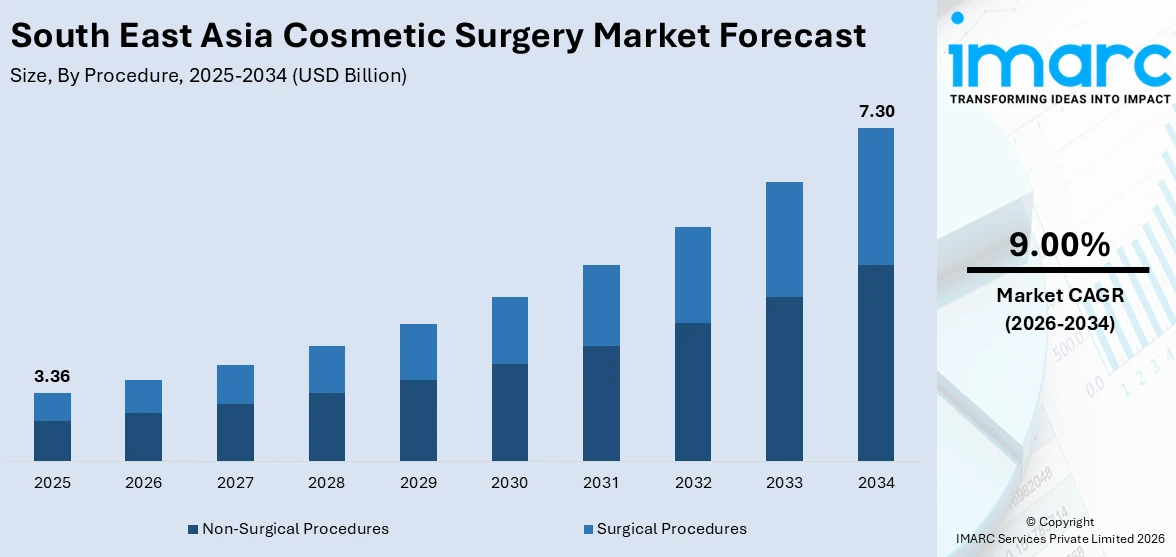
The South East Asia cosmetic surgery market size was valued at USD 3.36 Billion in 2025 and is projected to reach USD 7.30 Billion by 2034, growing at a compound annual growth rate of 9.00% from 2026-2034.
The South East Asia cosmetic surgery market is experiencing robust expansion as rising beauty consciousness, evolving societal norms, and growing medical tourism converge to stimulate demand across the region. Advances in minimally invasive techniques, wider availability of non-surgical treatments, and the proliferation of aesthetic clinics are encouraging broader consumer participation. Increasing disposable incomes, favorable demographics, and the influence of social media-driven beauty standards are further catalyzing adoption. Enhanced healthcare infrastructure, expanding insurance accessibility, and government support for medical tourism are strengthening the ecosystem, positioning the region as a prominent destination for aesthetic procedures and supporting sustained South East Asia cosmetic surgery market share.
Key Takeaways and Insights:
- By Procedure: Non-surgical procedures dominate the market with a share of 58% in 2025, driven by growing consumer preference for minimally invasive treatments such as botulinum toxin and hyaluronic acid injections that offer quick recovery, lower risk profiles, and natural-looking enhancements.
- By Gender: Female leads the market with a share of 70% in 2025, demonstrating the widespread desire among women of all ages for both surgical and non-surgical aesthetic improvements targeted at body contouring, face rejuvenation, and anti-aging procedures.
- By Age Group: 30 to 54 represents the largest segment with a market share of 52% in 2025, due to increased awareness of the indications of aging and the ability to afford cosmetic operations that target skin renewal, volume restoration, and wrinkle reduction.
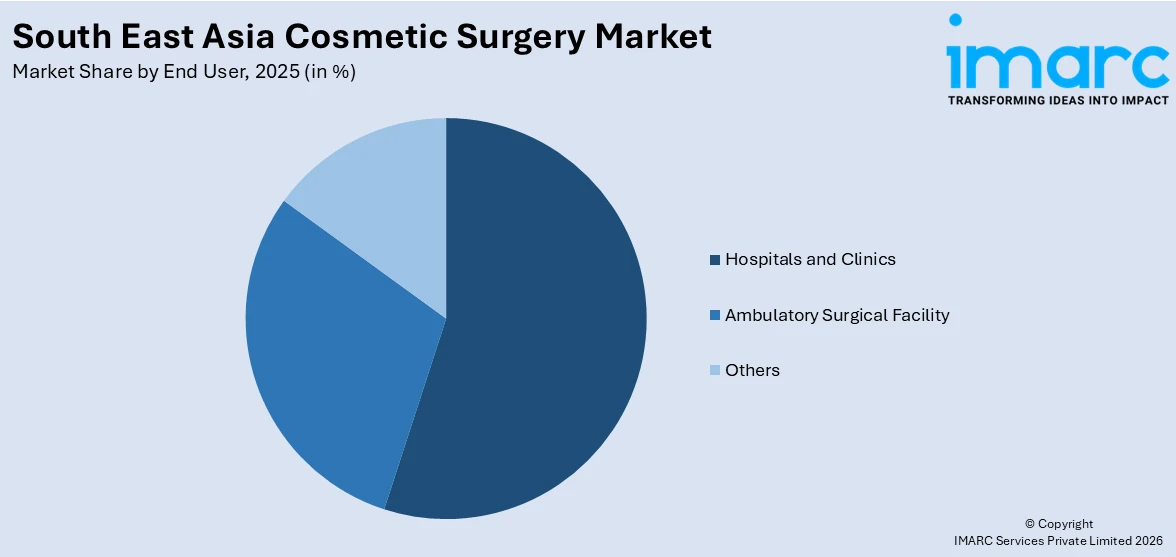
- By End User: Hospitals and clinics hold the biggest share with 55% in 2025, supported by advanced medical infrastructure, internationally accredited facilities, and the availability of skilled surgeons who attract both domestic and international patients.
- Key Players: Leading companies in the South East Asia cosmetic surgery market are strengthening their positions through strategic acquisitions, technology upgrades, clinic network expansion, and partnerships that enhance service delivery and broaden geographic reach across the region.
To get more information on this market Request Sample
The South East Asia cosmetic surgery market is advancing steadily, propelled by a confluence of medical tourism growth, technological innovation, and shifting consumer attitudes toward aesthetic enhancements. The region has established itself as a globally recognized destination for both surgical and non-surgical procedures, with countries such as Thailand, Singapore, and Malaysia leading the way through world-class healthcare facilities and experienced practitioners. Increasing adoption of non-invasive treatments like botulinum toxin, dermal fillers, and laser-based therapies is broadening the consumer base beyond traditional demographics. For instance, in June 2025, the International Society of Aesthetic Plastic Surgery (ISAPS) hosted its Olympiad World Congress in Singapore, attracting over 1,400 plastic surgeons from 90 countries and highlighting the region’s growing prominence in global aesthetic medicine. Rising urbanization, expanding middle-class populations, and the growing influence of social media platforms are further accelerating demand. Government initiatives promoting medical tourism and regulatory improvements in patient safety standards are creating a more supportive environment for sustained market development across the region.
South East Asia Cosmetic Surgery Market Trends:
Surge in Demand for Non-Invasive Aesthetic Treatments
South East Asia is witnessing a significant shift toward non-surgical cosmetic procedures as consumers increasingly favor treatments with minimal downtime and lower risk profiles. Botulinum toxin injections, hyaluronic acid fillers, and laser-based skin rejuvenation therapies are gaining traction among younger demographics seeking preventive and enhancement-focused care. The growing accessibility of these treatments through dermatology clinics, medical spas, and hospital-based aesthetic centers is expanding the consumer base beyond traditional demographics. Advancements in injectable formulations and energy-based technologies are further enhancing treatment safety and efficacy, encouraging repeat visits and long-term consumer loyalty. This growing preference for non-invasive options is reshaping the South East Asia cosmetic surgery market growth.
Expansion of Medical Tourism for Cosmetic Procedures
The region continues to strengthen its position as a global hub for aesthetic medical tourism, with patients traveling from across Asia, the Middle East, Europe, and Oceania for affordable, high-quality treatments. Thailand, Singapore, and Malaysia are at the forefront of this trend, offering internationally accredited hospitals, experienced surgeons, and competitive pricing that often represents significant savings compared to Western markets. Governments across the region are actively promoting health tourism through dedicated visa programs, marketing campaigns, and public-private partnerships that enhance the overall patient experience. Ongoing infrastructure development, expanding direct international flight connectivity, and the region's well-established reputation for hospitality and comprehensive aftercare continue to attract a growing number of international patients seeking cosmetic procedures.
Social Media and Digital Platforms Shaping Beauty Standards
Social media platforms such as Instagram, TikTok, and YouTube are profoundly influencing cosmetic surgery decisions across South East Asia, particularly among millennials and Generation Z consumers. Before-and-after content, influencer endorsements, and virtual consultations are normalizing aesthetic enhancements and driving consumer awareness. The convergence of content and commerce on digital platforms is creating new patient acquisition channels, making aesthetic clinics more discoverable and accessible to a broader audience. Growing digital literacy and smartphone penetration across the region's young, urban populations are amplifying these trends, creating a self-reinforcing cycle of awareness, aspiration, and adoption of cosmetic procedures. This digital transformation is accelerating patient acquisition and broadening the addressable market for aesthetic clinics across the region.
Market Outlook 2026-2034:
The South East Asia cosmetic surgery market is positioned for sustained growth over the forecast period, underpinned by expanding medical tourism ecosystems, continuous advancements in minimally invasive technologies, and growing consumer willingness to invest in aesthetic self-care. The market generated a revenue of USD 3.36 Billion in 2025 and is projected to reach a revenue of USD 7.30 Billion by 2034, growing at a compound annual growth rate of 9.00% from 2026-2034. Increasing urbanization, higher disposable incomes, and the expanding middle-class population across Indonesia, Thailand, Vietnam, and the Philippines are expected to broaden the consumer base significantly. Enhanced regulatory frameworks, the proliferation of internationally accredited clinics, and the growing integration of AI-driven diagnostic and treatment planning tools are poised to improve procedural safety and patient outcomes. Strategic investments by global aesthetic companies in the region, combined with the continued influence of social media and digital marketing, will further accelerate demand for both surgical and non-surgical cosmetic procedures.
South East Asia Cosmetic Surgery Market Report Segmentation:
| Segment Category | Leading Segment | Market Share |
|---|---|---|
| Procedure | Non-Surgical Procedures | 58% |
| Gender | Female | 70% |
| Age Group | 30 to 54 | 52% |
| End User | Hospitals and Clinics | 55% |
Procedure Insights:
- Surgical Procedures
- Breast Augmentation
- Liposuction
- Eyelid Surgery
- Abdominoplasty
- Rhinoplasty
- Others
- Non-Surgical Procedures
- Botulinum Toxin
- Hyaluronic Acid
- Hair Removal
- Nonsurgical Fat Reduction
- Photo Rejuvenation
- Others
Non-surgical procedures dominate with a market share of 58% of the total South East Asia cosmetic surgery market in 2025.
Non-surgical cosmetic procedures have emerged as the preferred choice among consumers across South East Asia, driven by their accessibility, affordability, and the minimal recovery time they require. Botulinum toxin injections, hyaluronic acid fillers, laser hair removal, and photo rejuvenation therapies are increasingly sought after by individuals seeking subtle yet effective aesthetic improvements without the risks associated with surgical interventions. The growing availability of these treatments through dermatology clinics, medical spas, and hospital-based aesthetic centers has expanded access to a broader demographic, including younger consumers who view non-invasive treatments as part of their routine wellness and self-care regimen.
The rising influence of social media beauty standards and the normalization of aesthetic self-care among younger consumers are further accelerating demand for non-invasive options across the region. Technological advancements in injectable formulations, energy-based skin treatments, and nonsurgical body contouring devices are enhancing treatment efficacy and safety, encouraging repeat visits and long-term consumer loyalty. South East Asian markets are particularly receptive to these innovations, with urban centers in Thailand, Singapore, and Indonesia witnessing rapid proliferation of aesthetic clinics offering premium non-surgical services that cater to evolving consumer expectations for natural-looking, low-risk enhancements.
Gender Insights:
- Female
- Male
Female leads the market with a share of 70% of the total South East Asia cosmetic surgery market in 2025.
The market for cosmetic surgery in South East Asia is still dominated by women, who seek a variety of surgical and non-surgical procedures for anti-aging, body contouring, breast augmentation, and facial rejuvenation. Women of all ages and financial levels are being encouraged to spend in cosmetic upgrades by the cultural emphasis on physical appearance, the impact of beauty gurus on social media, and the growing availability of reasonably priced aesthetic solutions. Spending on cosmetic operations is further supported throughout the region by rising female workforce participation and financial independence, allowing women to prioritize their own well-being and aesthetic self-improvement.
Patient engagement and retention in the area are being strengthened by the growth of women-focused aesthetic service options, such as customized wellness programs and combo treatment packages. In South East Asia, a lot of hospitals and clinics now provide integrated beauty and wellness centers that are tailored to female patients and combine spa-like experiences with medical-grade treatments. Southeast Asian women's growing cultural acceptance of cosmetic procedures is expanding the customer funnel and encouraging first-time treatments among women who previously thought aesthetic enhancements were inaccessible or socially unacceptable. This acceptance is bolstered by regional beauty trends made popular by Korean and Thai entertainment media.
Age Group Insights:
- 13 to 29
- 30 to 54
- 55 and Above
30 to 54 is the largest segment, accounting for 52% of the total South East Asia cosmetic surgery market in 2025.
Due to the onset of obvious aging signs like fine lines, wrinkles, volume loss, and skin laxity, which encourage people to seek both preventive and corrective aesthetic treatments, the 30 to 54 age group makes up the largest consumer segment in the South East Asian cosmetic surgery market. This group usually has the means to purchase high-end cosmetic procedures and has a strong desire to investigate cutting-edge treatment alternatives, such as botulinum toxin and injectable fillers, as well as surgical procedures like abdominoplasty and eyelid surgery. The desire to keep a youthful and self-assured physical look is further reinforced by their established employment and active social activities.
The desire to present a polished, young image, social interactions, and workplace competition all have a rising impact on consumers in this age group, which results in higher per-capita spending on cosmetic services. This demographic is being successfully engaged by clinics in Thailand, Singapore, and Malaysia that offer personalized anti-aging treatment regimens, combination therapy protocols, and loyalty-based pricing structures. Additionally, as consumers in their thirties adopt maintenance-focused approaches to long-term aesthetic care, the addressable market within this cohort is growing due to increased awareness of preventive aesthetics and the advantages of early intervention.
End User Insights:
Access the comprehensive market breakdown Request Sample
- Ambulatory Surgical Facility
- Hospitals and Clinics
- Others
Hospitals and clinics hold the largest share at 55% of the total South East Asia cosmetic surgery market in 2025.
With their well-established infrastructure, cutting-edge medical technology, and access to board-certified plastic surgeons, hospitals and clinics are the main means of providing cosmetic surgery treatments in South East Asia. Both local and foreign patients looking for secure, dependable, and all-encompassing aesthetic care are drawn to internationally recognized facilities in Thailand, Singapore, and Malaysia. From intricate surgical operations to high-end non-surgical therapies, these institutions provide a wide range of procedures under strict quality and safety guidelines that boost patient confidence and promote positive clinical outcomes for a variety of procedure categories.
Hospitals' ability to combine multidisciplinary treatment, post-operative surveillance, and emergency management capabilities that independent clinics might not be able to provide further strengthens their competitive stance in the cosmetic surgery market. Numerous top hospital chains in the area are making investments in specialized aesthetic wings and centers of excellence that blend clinical knowledge with patient experiences at the hospitality level. Because these facilities provide the comprehensive care infrastructure and international accreditation that foreign patients seek when traveling for cosmetic treatments, the increasing number of medical tourists, who frequently prefer hospital-based settings for complex procedures, is further propelling revenue growth for this segment.
Country Insights:
- Indonesia
- Thailand
- Singapore
- Philippines
- Vietnam
- Malaysia
- Others
As the demand for both surgical and non-surgical aesthetic operations is driven by increased urbanization, rising disposable incomes, and growing beauty consciousness, Indonesia's cosmetic surgery business is growing quickly. With the help of growing clinic networks and enhancing healthcare infrastructure, the youthful and technologically savvy populace is driving the use of injectable treatments and skin rejuvenation therapies in key cities like Jakarta and Surabaya.
Thailand's world-class hospital infrastructure, internationally skilled doctors, and thriving medical tourism ecosystem continue to make it the region's top destination for cosmetic surgery. Bangkok is the main center for aesthetic operations, drawing clients from Asia, the Middle East, and Oceania with affordable prices and excellent care. Long-term growth is supported by the government's ongoing promotion of health tourism.
High-end service delivery, cutting-edge medical technology, and strict regulatory control define Singapore's cosmetic surgery sector, drawing wealthy patients from both domestic and foreign countries. The city-state is a high-value location for intricate surgical and non-invasive cosmetic operations because of its solid reputation as a medical center, the abundance of highly accredited facilities, and the vibrant ecology of aesthetic clinics.
A burgeoning middle class with more disposable income, social media impact, and growing beauty consciousness are all contributing to the Philippines' rising desire for cosmetic operations. Major cities like Metro Manila are becoming hubs for easily accessible and reasonably priced cosmetic care, and non-surgical procedures like skin whitening treatments, dermal fillers, and botulinum toxin injections are especially well-liked.
The market for cosmetic surgery in Vietnam is growing as the nation's young population seeks aesthetic improvements, helped along by the country's booming economy and developing healthcare system. With growing interest in eyelid surgery, rhinoplasty, and non-invasive skin treatments, Ho Chi Minh City and Hanoi are becoming well-liked travel destinations for both local patients and regional medical tourists looking for reasonably priced cosmetic operations.
Malaysia's cosmopolitan population with a wide range of aesthetic tastes, competitive pricing, and an advanced healthcare system all contribute to the country's cosmetic surgery business. The increasing number of licensed aesthetic clinics and hospitals is encouraging a greater uptake of both surgical and minimally invasive cosmetic procedures, and the government's Malaysia Healthcare Travel Council actively advertises the nation as a medical tourism destination.
Market Dynamics:
Growth Drivers:
Why is the South East Asia Cosmetic Surgery Market Growing?
Flourishing Medical Tourism Ecosystem
Cosmetic surgery is a big attraction for patients from other countries, and South East Asia has become one of the world's top destinations for medical tourism. Countries having internationally approved hospital facilities, highly skilled surgeons, and globally competitive pricing for aesthetic operations include Thailand, Singapore, and Malaysia. Patients from Europe, the Middle East, Australia, and East Asia are drawn to the surgery due to its substantial cost advantage over comparable procedures in Western markets. Through targeted visa schemes, advertising efforts, and public-private partnerships that improve the patient experience, governments around the area are aggressively pushing medical tourism. Further lowering obstacles for patients from outside is the development of direct international flight connectivity to important medical tourism centers. These marketing initiatives, along with the area's longstanding reputation for friendliness and thorough aftercare, are strengthening South East Asia's position as a competitive destination for cosmetic surgery travel worldwide.
Rising Influence of Social Media and Digital Beauty Standards
In South East Asia, social media sites like YouTube, Instagram, and TikTok are radically changing how people view beauty and behave as consumers. The proliferation of beauty tutorials, influencer endorsements, and before-and-after transformation content has normalized cosmetic operations and reduced the psychological hurdles to obtaining aesthetic modifications. Younger customers are becoming more interested in preventive treatments, face contouring, and skin rejuvenation as a result of being exposed to carefully crafted beauty standards, especially among millennials and Generation Z. Aesthetic clinics are now easier to find and reach because of this digital revolution, opening up new avenues for patient acquisition. The demand for beauty and aesthetic services is being further accelerated by the confluence of digital platform commerce and content. A self-reinforcing loop of awareness, aspiration, and adoption of cosmetic treatments is being created by the rising digital literacy and smartphone prevalence among young, urban populations in South East Asia.
Increasing Disposable Incomes and Expanding Middle Class
The steady economic growth in South East Asian nations is creating more consumers with the means to pay for cosmetic surgery and other discretionary medical treatments. Rising disposable incomes, growing urbanization, and evolving lifestyle aspirations are causing consumer purchasing habits to change toward aesthetic self-care and personal wellbeing. The expanding middle class in Indonesia, Vietnam, the Philippines, and Thailand is driving demand for both surgical and non-surgical treatment categories because they increasingly view cosmetic procedures as cost-effective lifestyle investments rather than luxury expenditures. As women and younger professionals in metropolitan areas gain financial independence, the consumer base for cosmetic services continues to diversify. Cosmetic clinics in the area are using competitive pricing strategies, flexible financing options, and installment payment plans to make procedures more affordable and accessible. Wider market penetration and consistent revenue growth are encouraged by this.
Market Restraints:
What Challenges the South East Asia Cosmetic Surgery Market is Facing?
Regulatory Inconsistencies Across Regional Markets
For market participants and patient safety, the absence of uniform regulatory frameworks governing cosmetic surgery techniques across South East Asian nations poses serious difficulties. Significant differences exist between countries in standards for surgeon credentials, clinic accreditation, advertising strategies, and product approvals, which makes cross-border service delivery more difficult and erodes consumer trust. In addition to permitting unregistered clinics and unqualified practitioners to operate, inconsistent implementation of current laws raises the possibility of unfavorable outcomes and contributes to unfavorable opinions of the business as a whole.
Shortage of Qualified Cosmetic Surgery Professionals
In many South East Asian nations, the scarcity of board-certified plastic surgeons and skilled aestheticians continues to be a major barrier to industry expansion. In addition to raising operating expenses and perhaps lowering service quality in impoverished areas, the scarcity of experienced practitioners increases competition among clinics for qualified staff. Compared to the quickly increasing demand for aesthetic procedures, training pipelines for cosmetic surgeons are comparatively restricted, which results in a shortage of workers, especially in secondary cities and less developed markets.
High Costs of Advanced Cosmetic Procedures
Even with the region's cost advantages over Western markets, a sizable section of the populace is nevertheless put off by the high cost of sophisticated surgical and non-surgical cosmetic operations. Complex procedures that need for high-end injectables, foreign medical equipment, and specialist surgical knowledge may be too expensive for middle-class and lower-class patients. The region's total potential market for high-end aesthetic services is constrained by the lack of comprehensive health insurance coverage for elective cosmetic operations, which exacerbates affordability issues.
Competitive Landscape:
The competitive structure of the cosmetic surgery market in South East Asia is moderately fragmented, with independent practices, chains of specialty aesthetic clinics, and hospital groups with international accreditation fighting for market share. To draw in top-tier local and foreign patients, major hospitals in Thailand, Singapore, and Malaysia take advantage of their international reputations, extensive service offerings, and JCI certification. on the meantime, competition at the mid-market level is getting more intense due to the growth of boutique aesthetic clinics that specialize on non-surgical procedures. Key competitive strategies as businesses look to improve service capabilities and consolidate market position throughout the region include geographic expansion, technology alliances, and strategic acquisitions.
South East Asia Cosmetic Surgery Market Report Coverage:
| Report Features | Details |
|---|---|
| Base Year of the Analysis | 2025 |
| Historical Period | 2020-2025 |
| Forecast Period | 2026-2034 |
| Units | Billion USD |
| Scope of the Report | Exploration of Historical Trends and Market Outlook, Industry Catalysts and Challenges, Segment-Wise Historical and Future Market Assessment:
|
| Procedures Covered |
|
| Genders Covered | Female, Male |
| Age Groups Covered | 13 To 29, 30 To 54, 55 and Above |
| End Users Covered | Ambulatory Surgical Facility, Hospitals and Clinics, Others |
| Countries Covered | Indonesia, Thailand, Singapore, Philippines, Vietnam, Malaysia, Others |
| Customization Scope | 10% Free Customization |
| Post-Sale Analyst Support | 10-12 Weeks |
| Delivery Format | PDF and Excel through Email (We can also provide the editable version of the report in PPT/Word format on special request) |
Frequently Asked Questions About the South East Asia Cosmetic Surgery Market Report
The South East Asia cosmetic surgery market size was valued at USD 3.36 Billion in 2025.
The South East Asia cosmetic surgery market is expected to grow at a compound annual growth rate of 9.00% from 2026-2034 to reach USD 7.30 Billion by 2034.
Non-surgical procedures dominated the market with a share of 58%, driven by growing consumer preference for minimally invasive treatments offering quick recovery, minimal downtime, and natural-looking aesthetic enhancements.
Key factors driving the South East Asia cosmetic surgery market include flourishing medical tourism ecosystems, rising social media influence on beauty standards, increasing disposable incomes, expanding middle-class populations, and advancing minimally invasive technologies.
Major challenges include regulatory inconsistencies across regional markets, shortages of qualified cosmetic surgery professionals, high costs of advanced procedures, limited insurance coverage, and safety concerns associated with unregulated clinics.
Need more help?
- Speak to our experienced analysts for insights on the current market scenarios.
- Include additional segments and countries to customize the report as per your requirement.
- Gain an unparalleled competitive advantage in your domain by understanding how to utilize the report and positively impacting your operations and revenue.
- For further assistance, please connect with our analysts.
 Request Customization
 Speak to an Analyst
 Request Brochure
 Inquire Before Buying
Benefits of Customization
- Personalize this research
- Triangulate with your data
- Get data as per your format and definition
- Gain a deeper dive into a specific application, geography, customer, or competitor
- Any level of personalization
Get in Touch With Us
UNITED STATES
Phone: +1-201-971-6302
INDIA
Phone: +91-120-433-0800
UNITED KINGDOM
Phone: +44-753-714-6104
Email: [email protected]
Client Testimonials




.webp)




.webp)













Related Reports

Choose your plan
*Please note that the prices mentioned below are starting prices for each bundle type. Kindly contact our team for further details.*
Single User License
- 1 User License, Access on 2 Devices
- PDF Report + Excel Dataset (Password Protected)
- Lifetime Access
- No Printing Rights
- 10% Free Report Customization
- 10–12 Weeks of Analyst Support
Five User License
- Access for 5 Users, 2 Devices per User
- PDF Report + Excel Dataset (Password Protected)
- Lifetime Access
- Dedicated Account Manager
- 12–14 Weeks of Analyst Support
- No Printing Rights
- 15% Free Report Customization
- 25% Discount on Your Next Purchase
Corporate User License
- Unlimited User Access (Within Your Organization)
- PDF Report + Excel Dataset
- Lifetime Access
- Dedicated Account Manager
- 14–20 Weeks of Analyst Support
- No Printing Rights
- 20% Free Report Customization
- 30% Discount on Your Next Purchase
Essential Insights
What's included:
3 reports
- Lifetime Access
- PDF Reports
- Excel Datasets
- 2 Weeks of Free Analyst Support
- 2 User Licenses
- Access on 2 Devices
- Printing Rights
- Complimentary PowerPoint (PPT) Version
- Complimentary License Upgrade
Professional Access
What's included:
5 reports
- Lifetime Access
- PDF Reports
- Excel Datasets
- 8 Weeks of Free Analyst Support
- 2 User Licenses
- Access on 2 Devices
- Printing Rights
- Complimentary PowerPoint (PPT) Version
- Complimentary License Upgrade
Business Advantage
What's included:
8 reports
- Lifetime Access
- PDF Reports
- Excel Datasets
- 14 Weeks of Free Analyst Support
- 2 User Licenses
- Access on 2 Devices
- Printing Rights
- Complimentary PowerPoint (PPT) Version
- Complimentary License Upgrade
Enterprise Intelligence
What's included:
10 reports
- Lifetime Access
- PDF Reports
- Excel Datasets
- 20 Weeks of Free Analyst Support
- 2 User Licenses
- Access on 2 Devices
- Printing Rights
- Complimentary PowerPoint (PPT) Version
- Complimentary License Upgrade