
South Korea Herbal Supplements Market Size, Share, Trends and Forecast by Product Type, Formulation, Consumer, and Region, 2026-2034
South Korea Herbal Supplements Market Summary:
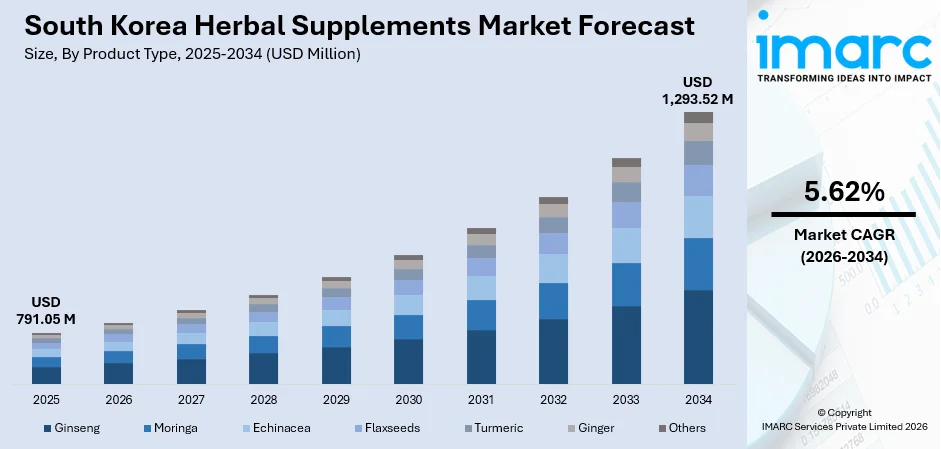
The South Korea herbal supplements market size was valued at USD 791.05 Million in 2025 and is projected to reach USD 1,293.52 Million by 2034, growing at a compound annual growth rate of 5.62% from 2026-2034.
The South Korea herbal supplements market is experiencing robust growth, driven by deeply rooted cultural traditions of botanical medicine, a rapidly aging population requiring preventive wellness solutions, and expanding consumer preference for natural health alternatives over synthetic formulations. The convergence of advanced nutraceutical innovation, heightened health consciousness among younger demographics, and strong government-backed regulatory frameworks supporting functional food development are collectively strengthening the South Korea herbal supplements market share.
Key Takeaways and Insights:
- By Product Type: Ginseng dominates the market with a share of 38.7% in 2025, owing to its centuries-old medicinal heritage in Korean traditional medicine, scientifically validated adaptogenic properties, and widespread availability across multiple formulations including extracts, tonics, and capsules.
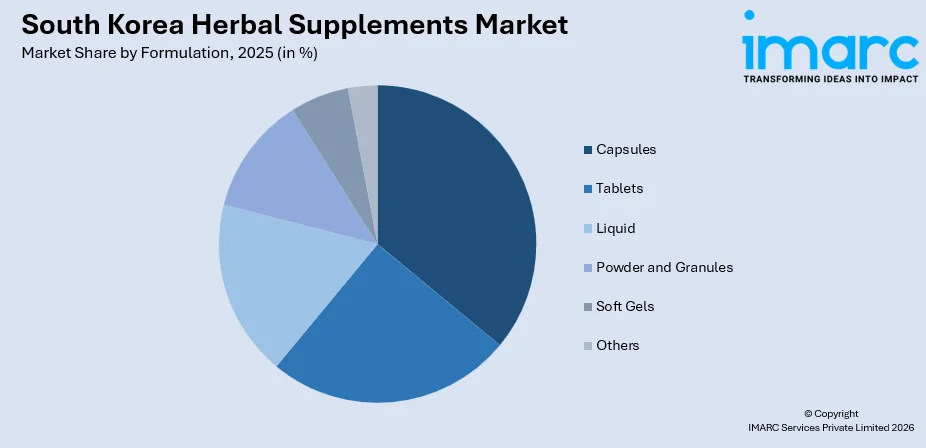
- By Formulation: Capsules lead the market with a share of 34.5% in 2025, driven by consumer preference for convenient, precisely dosed delivery formats that offer extended shelf life and eliminate the bitter taste profiles commonly associated with raw herbal ingredients.
- By Consumer: Adult represents the largest segment with a market share of 52.6% in 2025, reflecting the proactive health management approach among working-age professionals seeking natural supplements for stress relief, immunity enhancement, and chronic disease prevention.
- By Region: Seoul Capital Area comprises the largest region with 47.2% share in 2025, driven by the dense concentration of residents, higher disposable incomes, and the presence of advanced retail infrastructure including premium pharmacies and digital commerce platforms.
- Key Players: The market is highly competitive, led by established traditional medicine brands, pharmaceutical companies, and premium health food players. Competition focuses on product credibility, clinical backing, and heritage ingredients like ginseng. Innovation in functional blends, convenient formats, and strong retail and online presence drives differentiation.
To get more information on this market Request Sample
South Korea's herbal supplements market is anchored in a rich tradition of botanical medicine that continues to evolve through modern scientific validation and product innovation. The nation's cultural affinity for herbal remedies, particularly ginseng, turmeric, and traditional medicinal plants, creates a strong foundation for sustained market expansion. Consumer awareness regarding preventive healthcare has intensified, with the country officially entering "super-aged" society status in December 2024, as the population aged 65 and above reached 10.24 million, accounting for 20% of the total population. This demographic shift is accelerating demand for herbal supplements targeting joint health, cognitive function, and immune support. The proliferation of e-commerce platforms such as Coupang, Naver Shopping, and KakaoTalk has transformed purchasing patterns, enabling broader accessibility to herbal supplement products. Meanwhile, the Ministry of Food and Drug Safety continues to strengthen its regulatory framework, recognizing an expanding list of functional ingredients that bolsters consumer confidence and drives category innovation.
South Korea Herbal Supplements Market Trends:
Rise of K-wellness and functional botanical beverages
The K-wellness movement is reshaping herbal supplement consumption by fusing traditional botanical ingredients with contemporary lifestyle branding. South Korean consumers increasingly seek herbal formulations in ready-to-drink formats, functional shots, and beauty-from-within products that align with the broader cultural phenomenon of holistic self-care. As such, in January 2025, Korea Ginseng Corporation launched its GLPro Core and GLPro Doublecut liquid supplement products targeting blood sugar management, selling over 20,000 sets within the first month of domestic release.
Personalized herbal nutrition and digital health integration
Personalized wellness is gaining significant traction as consumers demand condition-specific herbal supplement regimens tailored to individual health profiles. The combination of artificial intelligence-based nutrition platforms with DNA-targeted supplement systems allows manufacturers to create personalized herbal solutions which address stress relief, cognitive improvement and metabolic health needs. South Korea's personalized nutrition and supplements market generated substantial revenue, underscoring the growing consumer appetite for individualized botanical health solutions.
Expansion of convenience retail channels for herbal supplements
Traditional distribution barriers are dissolving as herbal supplements become increasingly available through non-traditional retail outlets, including convenience stores and specialty health chains. This accessibility expansion is attracting younger consumer demographics who prioritize convenience and impulse purchasing opportunities. For instance, in July 2025, CU convenience store chain secured health supplement sales permits across more than 6,000 locations nationwide, launching comprehensive herbal supplement offerings through collaborations with established pharmaceutical manufacturers.
Market Outlook 2026-2034:
The South Korea herbal supplements market is expected to grow steadily during the forecast period, supported by demographic shifts, favorable regulations, and rising consumer preference for natural health products. Wider availability through retail and e-commerce, along with innovation in formats and ingredient blends, is expanding the customer base. An aging population, stronger export networks, and increasing clinical support for traditional botanicals such as ginseng, turmeric, and ginger are driving sustained demand. Research indicates turmeric reduced all-cause mortality by 61% across eight randomized controlled trials. It lowered the need for intubation or mechanical ventilation by 65% and reduced clinical deterioration by 64%, while improving overall symptom resolution by 36%. In addition, the government’s supportive approach toward health functional foods and the growing use of herbal ingredients in beauty, wellness, and pharmaceutical products are opening new growth opportunities beyond conventional supplement categories. The market generated a revenue of USD 791.05 Million in 2025 and is projected to reach a revenue of USD 1,293.52 Million by 2034, growing at a compound annual growth rate of 5.62% from 2026-2034.
South Korea Herbal Supplements Market Report Segmentation:
|
Segment Category |
Leading Segment |
Market Share |
|
Product Type |
Ginseng |
38.7% |
|
Formulation |
Capsules |
34.5% |
|
Consumer |
Adult |
52.6% |
|
Region |
Seoul Capital Area |
47.2% |
Product Type Insights:
- Moringa
- Echinacea
- Flaxseeds
- Turmeric
- Ginger
- Ginseng
- Others
Ginseng dominates with a market share of 38.7% of the total South Korea herbal supplements market in 2025.
Ginseng serves as the most important herbal supplement in South Korea because it forms an essential part of the country's cultural heritage and its traditional medical practices which have existed for many centuries. The ingredient receives substantial government backing through three specific programs which include cultivation subsidies, quality certification initiatives and dedicated export promotion programs that the Ministry of Agriculture Food and Rural Affairs manages. South Korea ranks among the top countries globally for both ginseng production and distribution. The established production system delivers reliable product availability which enables businesses to set market prices for their domestic supplement products.
The scientific validation of ginseng's therapeutic properties continues to expand its appeal across diverse consumer segments. The Ministry of Food and Drug Safety officially recognized blood sugar control as the 7th approved functionality of red ginseng in 2024, following existing approvals for immune enhancement, fatigue reduction, blood circulation improvement, antioxidant activity, memory support, and menopausal health benefits. This expanding functional claim portfolio enables manufacturers to develop targeted product lines addressing specific health concerns, thereby attracting health-conscious consumers seeking evidence-based natural alternatives to conventional pharmaceutical interventions for chronic disease management.
Formulation Insights:
Access the comprehensive market breakdown Request Sample
- Tablets
- Capsules
- Liquid
- Powder and Granules
- Soft Gels
- Others
Capsules lead with a share of 34.5% of the total South Korea herbal supplements market in 2025.
Capsules maintain their leadership position in the formulation segment owing to their superior convenience, precise dosage control, and ability to effectively mask the naturally bitter taste profiles characteristic of many herbal ingredients. The encapsulation format offers extended shelf stability compared to liquid or powder alternatives, making it particularly appealing for consumers integrating herbal supplements into daily wellness routines.
The capsule format also benefits from its compatibility with advanced manufacturing technologies, including microencapsulation and controlled-release mechanisms, that enhance bioavailability and ingredient efficacy. South Korean contract manufacturers, recognized globally for their technical capabilities, leverage sophisticated encapsulation processes to develop premium herbal supplement products that meet stringent international quality standards. By mid-2024, over 37,000 health supplement products were registered with the Ministry of Food and Drug Safety, reflecting the extensive product diversification occurring within capsule and other encapsulated delivery formats that continues to drive formulation innovation.
Consumer Insights:
- Pregnant Women
- Adult
- Pediatric
- Geriatric
Adult accounts for the highest revenue with a 52.6% share of the total South Korea herbal supplements market in 2025.
The adult consumer segment dominates the market, driven by working-age professionals aged 30 to 59 who proactively manage stress, fatigue, metabolic health, and age-related wellness concerns through herbal supplementation. This demographic possesses the discretionary income necessary to access premium and personalized botanical products and demonstrates strong engagement with digital health platforms that facilitate informed purchasing decisions.
Adults are increasingly gravitating toward herbal supplements that offer multifunctional benefits, combining traditional ingredients like ginseng and turmeric with scientifically validated botanical compounds for comprehensive wellness support. The growing prevalence of lifestyle-related conditions, including metabolic syndrome, chronic fatigue, and stress-induced disorders among working professionals, is intensifying demand for natural preventive health solutions.
Regional Insights:
- Seoul Capital Area
- Yeongnam (Southeastern Region)
- Honam (Southwestern Region)
- Hoseo (Central Region)
- Others
Seoul Capital Area represents the leading segment with a 47.2% share of the total South Korea herbal supplements market in 2025.
The Seoul Capital Area commands the largest regional share, driven by its concentration of over 26 Million residents who constitute more than 50% of the national population. The region generates approximately half of South Korea's total gross domestic product, supporting higher disposable incomes and greater consumer spending capacity on premium health supplements. The metropolitan area's advanced digital commerce infrastructure, dense pharmacy and health specialty store networks, and proximity to major herbal supplement manufacturers and research institutions create a highly favorable ecosystem for sustained market growth and innovation adoption.
Strong healthcare awareness and preventive health trends among urban consumers further reinforce demand in the Seoul Capital Area. The presence of leading hospitals, wellness clinics, and research centers supports higher acceptance of clinically backed herbal products. Active marketing, influencer-driven campaigns, and rapid product launches often debut in this region before expanding nationwide. In addition, efficient logistics networks and same-day delivery services enhance product accessibility, encouraging repeat purchases and faster adoption of premium and functional herbal supplement offerings.
Market Dynamics:
Growth Drivers:
Why is the South Korea Herbal Supplements Market Growing?
Rapidly aging population driving preventive healthcare adoption
South Korea's demographic transformation is creating unprecedented demand for herbal supplements targeting age-related health concerns. The elderly population has more than doubled in just 16 years, rising from 4.95 Million in 2008. This demographic shift is significantly expanding the consumer base for herbal supplements addressing joint health, bone density, cognitive function, cardiovascular wellness, and immune system support. Traditional Korean botanical ingredients, including ginseng, turmeric, and ginger, are culturally trusted among older adults who prefer natural approaches to maintaining health and managing chronic conditions.
Expanding regulatory recognition of herbal functional ingredients
The Ministry of Food and Drug Safety's progressive regulatory framework is strengthening consumer confidence and enabling product innovation in the herbal supplements sector. As of June 2025, Korea recognizes 28 approved nutrients, 69 functional ingredients, and 444 individually approved functional ingredients, providing manufacturers with an extensive palette of validated botanical compounds for product development. The regulatory approval process, which requires clinical trial data and scientific evidence for functional claims, ensures product credibility and differentiates Korean herbal supplements in both domestic and international markets. This robust regulatory infrastructure encourages investment in research and development, as manufacturers pursue new functional ingredient approvals that expand the therapeutic scope of herbal supplement offerings. The framework also facilitates export growth by establishing quality benchmarks recognized across global markets.
Digital commerce transformation and omnichannel retail expansion
The rapid evolution of South Korea's digital retail ecosystem is dramatically improving herbal supplement accessibility and consumer engagement. E-commerce platforms account for approximately 67.9% of health supplement purchases in the country, with platforms such as Coupang, Naver Shopping, and KakaoTalk enabling consumers to access extensive product selections, detailed reviews, and competitive pricing. This digital dominance is particularly pronounced among millennial and Generation Z consumers who research health products extensively online before purchasing. The convergence of social commerce, influencer-driven marketing, and subscription-based wellness programs is creating new distribution pathways for herbal supplement brands.
Market Restraints:
What Challenges the South Korea Herbal Supplements Market is Facing?
Stringent regulatory compliance and approval complexities
The rigorous regulatory requirements administered by the Ministry of Food and Drug Safety, while ensuring product quality, create substantial barriers for market entry and product innovation. Manufacturers seeking functional ingredient recognition must submit comprehensive clinical trial data, undergo extensive safety evaluations, and maintain strict compliance with labeling standards and manufacturing protocols. These requirements increase development timelines and costs, particularly for smaller companies and international entrants unfamiliar with Korean regulatory processes. The mandatory re-evaluation of functional ingredients every ten years adds ongoing compliance burdens.
Counterfeit products and quality inconsistency concerns
The proliferation of counterfeit and substandard herbal supplement products through unregulated online channels poses significant challenges to consumer trust and market integrity. Cross-border e-commerce has facilitated the entry of unverified products that bypass Korean regulatory oversight, creating safety concerns and confusion among consumers. The prevalence of products making unsubstantiated health claims undermines the credibility of legitimate manufacturers who invest heavily in quality assurance and clinical validation. This erosion of consumer confidence requires ongoing vigilance and enforcement by regulatory authorities.
Taste and formulation challenges limiting broader adoption
Many herbal supplement ingredients, particularly botanical extracts and phytochemical concentrates, possess inherently bitter taste profiles and unpleasant sensory characteristics that deter potential consumers. Despite advances in microencapsulation, polymer coating, and flavor-masking technologies, achieving palatable formulations that retain therapeutic efficacy remains technically challenging and cost-intensive. These sensory barriers are particularly significant among younger consumers and pediatric demographics who prioritize taste alongside health benefits, limiting the market's ability to expand beyond established consumer segments.
Competitive Landscape:
The South Korea herbal supplements market exhibits a moderately consolidated competitive structure, with established domestic conglomerates and specialized nutraceutical companies holding prominent market positions. Competition is intensified by the presence of advanced contract manufacturers who serve both domestic brands and international clients seeking premium-quality herbal formulations. Key competitive strategies include investment in clinical research to secure new functional ingredient approvals, development of innovative delivery formats such as liquid shots and pill-and-shot combinations, and expansion into international markets through strategic partnerships. Digital marketing capabilities and e-commerce optimization are increasingly critical differentiators as consumer purchasing behavior continues shifting toward online channels.
Recent Developments:
- In September 2025, Coupang launched U.S. wellness brand Lemme in South Korea, marking its first direct entry into the market. Thirteen products, including probiotic, ashwagandha, green tea, and sea moss-based herbal supplements, are now available. The move expands access to science-backed vitamins, capsules, gummies, and tinctures for Korean consumers.
- In September 2025, Greenspace Herbs entered South Korea’s USD 5 Billion health functional food market with its Quantum Ayurveda and Quantum Generics lines. The company blends traditional Ayurvedic herbal supplements with modern science and precision tools, targeting a tech-savvy population where over 80 percent of households consume health supplements.
South Korea Herbal Supplements Market Report Coverage:
|
Report Features |
Details |
|
Base Year of the Analysis |
2025 |
|
Historical Period |
2020-2025 |
|
Forecast Period |
2026-2034 |
|
Units |
Million USD |
|
Scope of the Report |
Exploration of Historical Trends and Market Outlook, Industry Catalysts and Challenges, Segment-Wise Historical and Future Market Assessment:
|
|
Product Types Covered |
Moringa, Echinacea, Flaxseeds, Turmeric, Ginger, Ginseng, Others |
|
Formulations Covered |
Tablets, Capsules, Liquid, Powder and Granules, Soft Gels, Others |
|
Consumers Covered |
Pregnant Women, Adult, Pediatric, Geriatric |
|
Regions Covered |
Seoul Capital Area, Yeongnam (Southeastern Region), Honam (Southwestern Region), Hoseo (Central Region), Others |
|
Customization Scope |
10% Free Customization |
|
Post-Sale Analyst Support |
10-12 Weeks |
|
Delivery Format |
PDF and Excel through Email (We can also provide the editable version of the report in PPT/Word format on special request) |
Frequently Asked Questions About the South Korea Herbal Supplements Market Report
The South Korea herbal supplements market size was valued at USD 791.05 Million in 2025.
The South Korea herbal supplements market is expected to grow at a compound annual growth rate of 5.62% from 2026-2034 to reach USD 1,293.52 Million by 2034.
Ginseng dominated the market with a share of 38.7%, driven by its deep cultural heritage in Korean traditional medicine, scientifically validated health benefits across seven recognized functionalities, and strong government support for cultivation and export promotion.
Key factors driving the South Korea herbal supplements market include the rapidly aging population, expanding regulatory recognition of botanical functional ingredients, rising digital commerce penetration, and growing consumer preference for natural preventive health solutions.
Major challenges include stringent regulatory compliance requirements for functional ingredient approval, proliferation of counterfeit products through unregulated cross-border e-commerce channels, taste and formulation barriers limiting broader consumer adoption, high research and development costs, and intensifying competition from synthetic supplement alternatives.
Need more help?
- Speak to our experienced analysts for insights on the current market scenarios.
- Include additional segments and countries to customize the report as per your requirement.
- Gain an unparalleled competitive advantage in your domain by understanding how to utilize the report and positively impacting your operations and revenue.
- For further assistance, please connect with our analysts.
 Request Customization
 Speak to an Analyst
 Request Brochure
 Inquire Before Buying
Benefits of Customization
- Personalize this research
- Triangulate with your data
- Get data as per your format and definition
- Gain a deeper dive into a specific application, geography, customer, or competitor
- Any level of personalization
Get in Touch With Us
UNITED STATES
Phone: +1-201-971-6302
INDIA
Phone: +91-120-433-0800
UNITED KINGDOM
Phone: +44-753-714-6104
Email: [email protected]
Client Testimonials




.webp)




.webp)













Related Reports

Choose your plan
*Please note that the prices mentioned below are starting prices for each bundle type. Kindly contact our team for further details.*
Single User License
- 1 User License, Access on 2 Devices
- PDF Report + Excel Dataset (Password Protected)
- Lifetime Access
- No Printing Rights
- 10% Free Report Customization
- 10–12 Weeks of Analyst Support
Five User License
- Access for 5 Users, 2 Devices per User
- PDF Report + Excel Dataset (Password Protected)
- Lifetime Access
- Dedicated Account Manager
- 12–14 Weeks of Analyst Support
- No Printing Rights
- 15% Free Report Customization
- 25% Discount on Your Next Purchase
Corporate User License
- Unlimited User Access (Within Your Organization)
- PDF Report + Excel Dataset
- Lifetime Access
- Dedicated Account Manager
- 14–20 Weeks of Analyst Support
- No Printing Rights
- 20% Free Report Customization
- 30% Discount on Your Next Purchase
Essential Insights
What's included:
3 reports
- Lifetime Access
- PDF Reports
- Excel Datasets
- 2 Weeks of Free Analyst Support
- 2 User Licenses
- Access on 2 Devices
- Printing Rights
- Complimentary PowerPoint (PPT) Version
- Complimentary License Upgrade
Professional Access
What's included:
5 reports
- Lifetime Access
- PDF Reports
- Excel Datasets
- 8 Weeks of Free Analyst Support
- 2 User Licenses
- Access on 2 Devices
- Printing Rights
- Complimentary PowerPoint (PPT) Version
- Complimentary License Upgrade
Business Advantage
What's included:
8 reports
- Lifetime Access
- PDF Reports
- Excel Datasets
- 14 Weeks of Free Analyst Support
- 2 User Licenses
- Access on 2 Devices
- Printing Rights
- Complimentary PowerPoint (PPT) Version
- Complimentary License Upgrade
Enterprise Intelligence
What's included:
10 reports
- Lifetime Access
- PDF Reports
- Excel Datasets
- 20 Weeks of Free Analyst Support
- 2 User Licenses
- Access on 2 Devices
- Printing Rights
- Complimentary PowerPoint (PPT) Version
- Complimentary License Upgrade