
Test Benches Market Size, Share, Trends and Forecast by Component, Bench Type, Stand Type, Material Type, Application, Region, 2026-2034
Test Benches Market Size and Share:
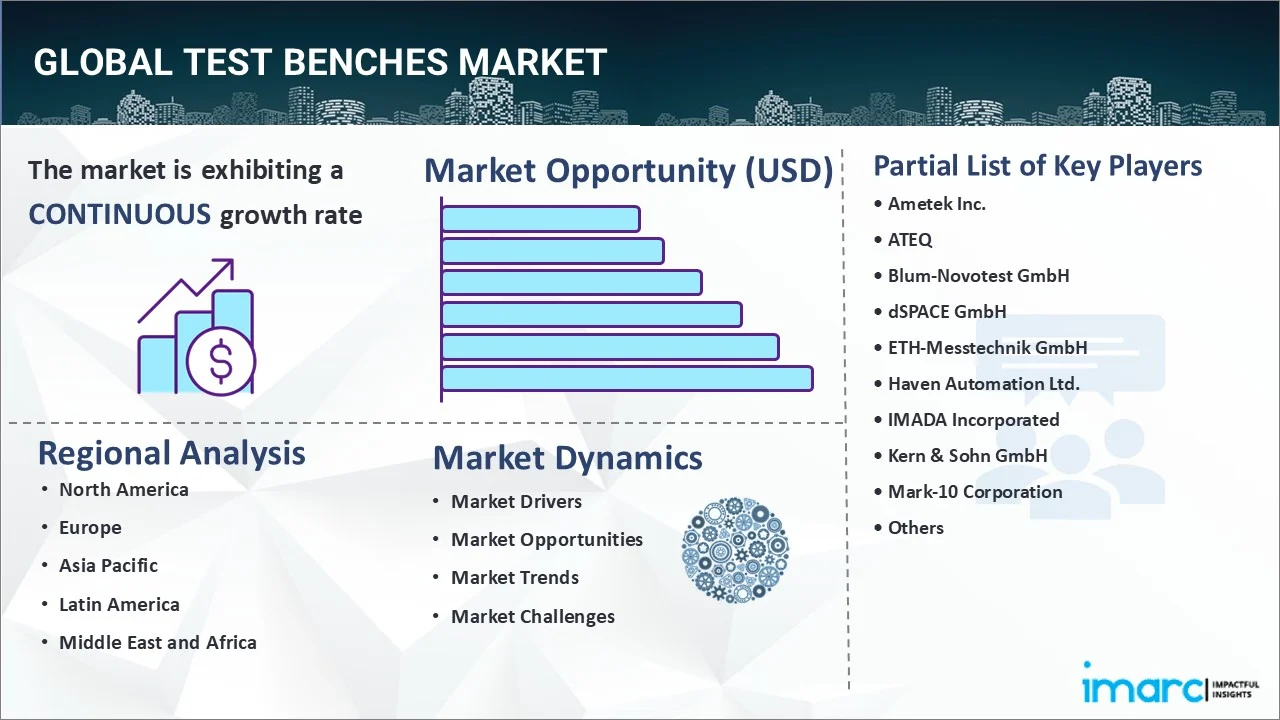
The global test benches market size was valued at USD 1.44 Billion in 2025. Looking forward, IMARC Group estimates the market to reach USD 2.03 Billion by 2034, exhibiting a CAGR of 3.90% from 2026-2034. Asia Pacific currently dominates the market, holding a market share of 42%. The market is driven by automation, advanced sensors, and intelligent data acquisition systems. Modular and versatile platforms enable efficient testing across diverse applications, including electronics, automotive, and semiconductor sectors. Integration of real-time monitoring and analytics enhances precision, operational efficiency, and workflow optimization. Regional expansion and adoption of energy-efficient, sustainable solutions further support market evolution. These factors collectively shape competitive dynamics and industry development, influencing global trends and technological adoption, ultimately impacting the overall test benches market share.
|
Report Attribute
|
Key Statistics
|
|---|---|
|
Base Year
|
2025
|
|
Forecast Years
|
2026-2034
|
|
Historical Years
|
2020-2025
|
|
Market Size in 2025
|
USD 1.44 Billion |
|
Market Forecast in 2034
|
USD 2.03 Billion |
| Market Growth Rate 2026-2034 | 3.90% |
The proliferation of electric vehicle architectures necessitates comprehensive validation protocols for battery assemblies, powertrain components, and thermal management systems. Manufacturers deploy specialized rigs to simulate real-world stress conditions, evaluate high-voltage circuit integrity, and assess charging infrastructure compatibility. In September 2025, Freudenberg Sealing Technologies launched a large-ring test bench in Weinheim, Germany, enabling precise validation of high-performance seals for wind turbines, tunnel boring machines, and other heavy industry applications. Furthermore, regulatory mandates concerning emissions standards and safety certifications compel automotive producers to implement rigorous testing regimens throughout product development cycles. Aerospace applications require verification of flight-critical components under extreme temperature fluctuations and mechanical loads. Industrial automation initiatives prioritize equipment reliability, prompting investments in sophisticated measurement systems that deliver precise force, torque, and pressure data. Semiconductor fabrication demands wafer-level validation to ensure chip performance meets operational specifications. The convergence of miniaturization trends and performance expectations across electronics manufacturing drives sustained demand for precision testing apparatus capable of handling delicate components while maintaining measurement accuracy.
To get more information on this market Request Sample
Manufacturing operations in the United States, representing 86% concentration within regional activity, emphasize automation integration and advanced analytics capabilities. Domestic producers leverage testing infrastructure to maintain competitive positioning through accelerated time-to-market cycles and enhanced product quality. Stringent regulatory oversight within aerospace and defense sectors mandates comprehensive validation protocols, driving sustained capital expenditure on testing equipment. The transition toward reshoring critical manufacturing functions stimulates investments in domestic testing facilities equipped with state-of-the-art measurement systems. Research institutions collaborate with industrial partners to develop next-generation validation methodologies incorporating artificial intelligence algorithms for anomaly detection. Medical device manufacturers require compliance with exacting standards, necessitating controlled testing environments that document performance characteristics across operational parameters. Energy sector applications demand verification of grid-tied inverters and renewable generation equipment, supporting infrastructure modernization initiatives. The emphasis on domestic supply chain resilience encourages localized testing capabilities, reducing dependency on offshore validation services while ensuring rapid iteration during product development phases.
Test Benches Market Trends:
Integration of Digital Twin Technologies
Manufacturing enterprises increasingly adopt virtual modeling frameworks that replicate physical testing scenarios within computational environments. These digital representations enable engineers to simulate multiple operational conditions simultaneously, identifying potential failure modes before committing resources to physical prototyping. Real-time sensor data streams from actual testing apparatus feed into simulation platforms, creating closed-loop validation systems that continuously refine predictive models. This convergence reduces material waste associated with destructive testing while accelerating design iteration cycles. Industries handling complex assemblies benefit from visualizing component interactions under various load conditions, facilitating optimization of structural configurations. The methodology supports remote collaboration among geographically dispersed engineering teams, democratizing access to sophisticated testing capabilities. Cloud-based analytics platforms aggregate performance data across multiple installations, enabling benchmarking exercises that identify best practices. As computational power continues expanding, the fidelity of virtual testing environments approaches physical equivalents, potentially transforming traditional validation workflows across manufacturing sectors.
Expansion of Modular Testing Architectures
Manufacturers prioritize flexible configurations that accommodate diverse product portfolios without requiring complete equipment replacement. Modular designs incorporate interchangeable fixtures, adjustable load application systems, and reconfigurable sensor arrays that adapt to varying component geometries. In July 2025, EDUR inaugurated its new test facility in Kiel, Germany, featuring five advanced test bench stations. The upgraded system enhances pump testing efficiency, accuracy, and safety, supporting global standards and high-purity sector requirements. Moreover, this architectural approach maximizes capital efficiency by extending equipment lifespan across evolving product lines. Automotive suppliers serving multiple original equipment manufacturers benefit from versatile platforms capable of validating components with disparate specifications. Electronics producers handling rapid product refresh cycles leverage modular systems to quickly transition between testing protocols. The standardization of interface specifications facilitates integration with existing data acquisition infrastructure, minimizing implementation complexity. Calibration procedures streamline through automated recognition of installed modules, reducing setup time between testing operations. Aftermarket upgrade pathways enable incremental enhancement of measurement capabilities as technology advances, protecting initial capital investments. These strategies reflect key test benches market trends, enhancing operational efficiency, workforce versatility, and long-term adaptability.
Enhanced Focus on Environmental Simulation Capabilities
Validation protocols increasingly incorporate climatic chambers, vibration tables, and combined stress platforms that replicate harsh operational environments. In November 2025, Keysight Technologies launched the i7090 Massively Parallel and Scalable Board Test System in the U.S., a compact, modular platform unifying multiple PCBA tests with up to 20 parallel cores for high-volume efficiency. Further, products destined for extreme temperature ranges undergo thermal cycling assessments that verify material stability and electronic component reliability. Humidity exposure tests evaluate corrosion resistance of protective coatings and seal integrity under moisture ingress conditions. Vibration profiling mimics transportation stresses and operational dynamics, identifying potential mechanical failure points before field deployment. Aerospace components undergo altitude simulation testing within controlled pressure environments, ensuring functionality across flight envelope extremes. Automotive electronics face combined temperature-vibration sequences representing underhood installation conditions, validating long-term durability expectations. Renewable energy equipment endures accelerated weathering protocols that compress decades of environmental exposure into abbreviated testing periods. The sophistication of environmental simulation capabilities enables manufacturers to substantiate warranty claims with empirical evidence, reducing liability exposure while demonstrating product robustness. Certification authorities increasingly mandate comprehensive environmental validation as prerequisite for market access, particularly within safety-critical applications requiring demonstrated reliability across operational lifecycles.
Test Benches Industry Segmentation:
IMARC Group provides an analysis of the key trends in each segment of the global test benches market, along with forecast at the global, regional, and country[RM4] levels from 2026-2034. The market has been categorized based oncomponent, bench type, stand type, material type and application.
Analysis by Component:
To get detailed segment analysis of this market Request Sample
- Hardware
- Software
Hardware continues to dominate the test benches market growth, accounting for 72% of overall adoption. This segment emphasizes robust, high-performance components that ensure precision, reliability, and long-term operational efficiency. Engineers increasingly rely on advanced mechanical structures, sensors, and actuators that can withstand rigorous testing cycles while maintaining accurate measurements. The focus is on durability and adaptability, allowing hardware systems to support multiple test configurations without frequent recalibration. Integration with intelligent control systems enhances real-time monitoring, enabling faster detection of deviations and streamlined test workflows. Additionally, the evolution of modular hardware platforms allows for easier upgrades and maintenance, reducing downtime. The widespread adoption of hardware components in test benches highlights their critical role in supporting the growing demands of engineering, manufacturing, and quality assurance processes. This dominance reinforces the hardware-centric approach in modern test benches, ensuring reliable and precise performance across diverse applications.
Analysis by Bench Type:
- Valve
- Force
- Torque
- Others
Valve-type benches represent 36% of the test bench landscape, reflecting their specialized role in controlling and regulating fluid or gas flows during testing. These benches are designed to accurately simulate operational conditions for components requiring precise pressure, flow, or temperature regulation. Enhanced control systems, paired with high-quality valve mechanisms, ensure repeatability and consistency across multiple test cycles. Engineers appreciate the ability to fine-tune operational parameters dynamically, which supports both component validation and process optimization. These benches are particularly valuable in sectors where fluid dynamics, pneumatic, or hydraulic systems are critical. The trend towards automated, digitally monitored valve benches further improves efficiency, enabling remote data collection and real-time adjustment during testing. With growing demands for precise simulation and controlled testing environments, valve-type benches remain an essential tool for high-accuracy evaluations in engineering, manufacturing, and research laboratories.
Analysis by Stand Type:
- Manual
- Motorized
Motorized test benches hold a 55% share of the market, reflecting their widespread adoption for applications requiring dynamic motion, precise positioning, and automated operation. These benches integrate advanced motors with intelligent control systems to perform repeatable and consistent testing procedures. The motorized capability allows for seamless adjustment of speed, force, and direction, supporting a variety of testing protocols without manual intervention. Such benches are increasingly used in quality assurance, research, and production environments, where accuracy and operational efficiency are critical. Additionally, the combination of motorized stands with data acquisition systems enables real-time monitoring and enhanced decision-making during tests. The flexibility and reliability of motorized test benches make them suitable for diverse testing scenarios, from simple performance evaluations to complex simulations. Their ability to improve productivity while reducing human error underscores their continuing prominence in modern test bench setups.
Analysis by Material Type:
- Valve
- Motors
- Furniture
- Others
Motors form 35% of the materials used in test benches, reflecting their importance as core functional components. High-efficiency, durable motors ensure consistent performance under varying loads, speeds, and operational conditions. The selection of advanced motor technologies allows benches to simulate real-world stresses accurately while maintaining precision and reliability. Engineers benefit from motors that integrate seamlessly with control systems, enabling automated testing and precise data collection. Innovations in motor materials and design contribute to reduced wear, lower energy consumption, and longer operational lifespans, improving overall bench efficiency. Additionally, these motors support modular configurations, allowing flexible adaptation to new testing requirements without replacing the entire setup. The critical role of motors in enabling dynamic, high-precision operations positions them as a foundational element in modern test benches, reinforcing their continued demand across engineering, automotive, semiconductor, and electronics sectors.
Analysis by Application:
- Semiconductor and Electronics
- Manufacturing and Engineering
- Automotive and Transportation
- Power Generation and Utilities
- Oil and Gas
- Others
Semiconductor and electronics applications account for 28% of test bench utilization, reflecting the sector’s demand for precise, high reliability testing solutions. Test benches in this segment are designed to validate performance, durability, and operational efficiency of electronic components, including sensors, circuits, and semiconductors. These benches often incorporate fine-tuned measurement systems, automated handling, and data acquisition tools to simulate real-world conditions and assess component behavior accurately. The trend toward compact, modular designs allows for rapid reconfiguration and efficient testing of multiple device types. Engineers increasingly rely on integrated software platforms for monitoring, reporting, and analyzing results, ensuring that devices meet rigorous quality standards before deployment. With semiconductor and electronics products becoming increasingly sophisticated, test benches tailored for this sector are critical in supporting innovation, ensuring reliability, and maintaining high standards across research, development, and manufacturing processes.
Regional Analysis:
To get more information on the regional analysis of this market Request Sample
- North America
- United States
- Canada
- Asia-Pacific
- China
- Japan
- India
- South Korea
- Australia
- Indonesia
- Others
- Europe
- Germany
- France
- United Kingdom
- Italy
- Spain
- Russia
- Others
- Latin America
- Brazil
- Mexico
- Others
- Middle East and Africa
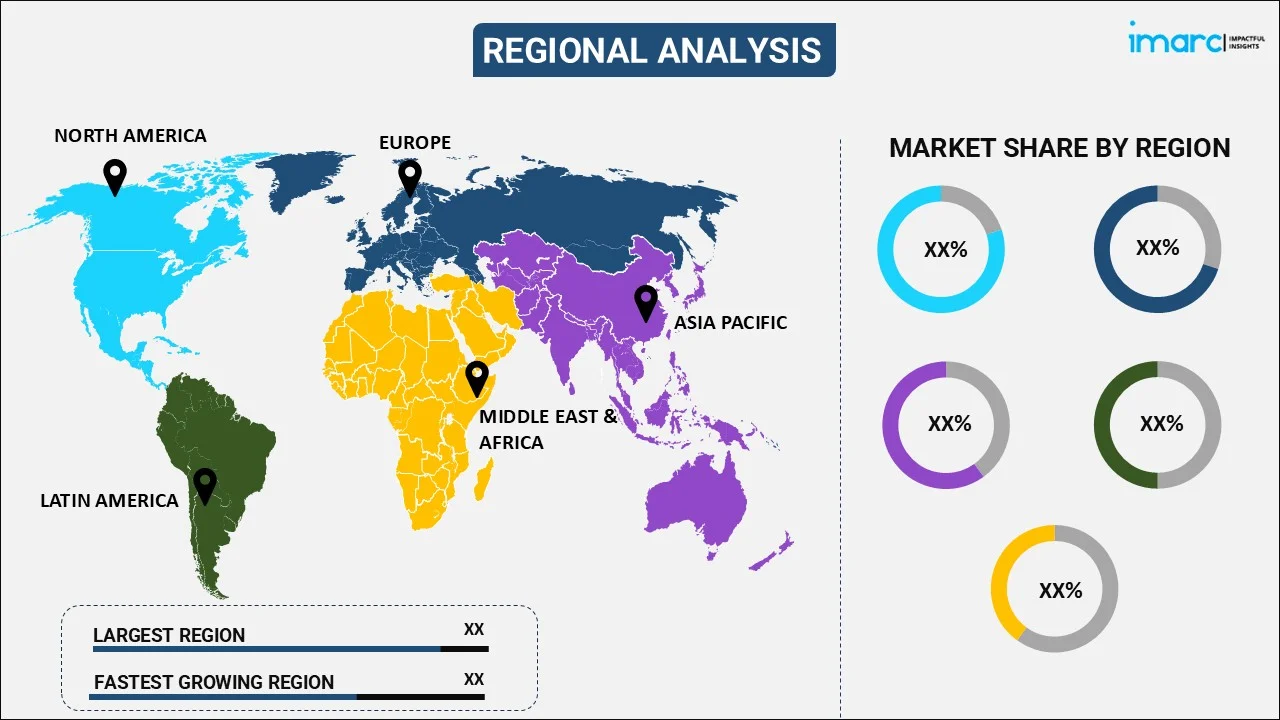
The Asia-Pacific region represents 42% of the test bench market, reflecting its significant role in manufacturing, electronics, and industrial engineering. Rapid industrialization, technology adoption, and a growing focus on quality assurance drive demand for versatile and high-performance test benches across the region. Facilities increasingly implement automated systems and digitally connected platforms to improve efficiency, reduce errors, and optimize operational workflows. The region also emphasizes modular and scalable solutions that can adapt to a diverse range of applications, from electronics testing to automotive and energy sectors. Investment in research and development, coupled with skilled engineering workforces, supports the integration of innovative test bench technologies. As industries expand and quality requirements rise, Asia-Pacific continues to emerge as a leading market for test benches, highlighting the importance of reliable, efficient, and adaptable testing infrastructure to sustain growth across multiple sectors.
Key Regional Takeaways:
United States Test Benches Market Analysis
The domestic marketplace demonstrates robust demand driven by aerospace, defense, and automotive sectors requiring advanced validation capabilities. Manufacturing reshoring initiatives stimulate investments in domestic testing infrastructure, reducing reliance on offshore qualification services. Stringent regulatory frameworks governing safety-critical applications mandate comprehensive testing protocols, supporting sustained capital equipment expenditure. Research institutions collaborate with industrial partners developing next-generation measurement methodologies incorporating artificial intelligence and machine learning algorithms. Medical device manufacturers require validation under exacting standards, necessitating controlled environments documenting performance characteristics. Energy sector modernization drives demand for power electronics testing equipment supporting grid integration of renewable generation assets. Semiconductor fabrication expansion supports domestic supply chain resilience objectives, creating opportunities for wafer-level testing apparatus. Workforce development programs address skilled technician shortages, ensuring operational expertise matches technological sophistication. Regional manufacturing clusters benefit from shared testing facilities reducing individual capital burdens while maintaining competitive capabilities. The emphasis on innovation and quality positioning creates favorable conditions for advanced testing technology adoption across diverse industrial segments.
North America Test Benches Market Analysis
Regional dynamics reflect mature industrial base with established quality assurance practices and comprehensive regulatory oversight. Cross-border supply chains between manufacturing facilities necessitate harmonized testing standards supporting component interchangeability. Automotive industry concentration within traditional manufacturing corridors maintains steady demand for powertrain and safety system validation equipment. Aerospace clusters surrounding major airframe producers require specialized testing capabilities for structural components and propulsion systems. Energy sector diversity spanning conventional and renewable generation creates varied testing requirements across equipment types. Electronics manufacturing serving consumer, industrial, and defense applications drives demand for versatile testing platforms accommodating rapid product evolution. Investment in automation technologies enhances productivity while addressing labor availability constraints affecting manufacturing operations. Collaborative research initiatives between academic institutions and industrial partners advance testing methodologies and measurement science. Environmental compliance requirements stimulate demand for emissions testing and efficiency characterization equipment. The region maintains technological leadership through continuous innovation and adoption of emerging testing technologies supporting competitive manufacturing capabilities.
Asia Pacific Test Benches Market Analysis
This territory commands the global positioning, reflecting concentration of electronics manufacturing, automotive production, and semiconductor fabrication capacity. Rapid industrialization across emerging economies drives substantial investments in quality infrastructure supporting export-oriented manufacturing strategies. Government initiatives promoting domestic technology development stimulate demand for advanced testing capabilities reducing foreign dependency. Electronics assembly operations serving global brands require comprehensive validation protocols ensuring specification compliance. Automotive industry expansion, particularly electric vehicle production, necessitates specialized testing equipment for battery systems and power electronics. Semiconductor manufacturing capacity additions support strategic objectives of technological self-sufficiency, creating opportunities for wafer-level testing apparatus. Infrastructure development projects require validation of power generation equipment, industrial machinery, and construction materials. Workforce availability and competitive labor costs attract multinational corporations establishing regional testing facilities. Growing domestic consumer markets incentivize local manufacturers to enhance product quality through rigorous testing protocols. The combination of manufacturing scale, technological advancement, and strategic industrial policies positions this region as primary growth driver within global testing equipment markets.
Europe Test Benches Market Analysis
Established manufacturing traditions emphasize precision engineering and quality assurance, sustaining demand for sophisticated testing equipment. Automotive industry concentration across multiple countries requires comprehensive validation infrastructure supporting complex supply chains. Regulatory frameworks governing product safety, environmental impact, and performance characteristics mandate extensive testing protocols. Aerospace sector encompasses complete value chain from materials processing through final assembly, necessitating diverse testing capabilities. Renewable energy equipment manufacturing supports continental sustainability objectives, driving demand for turbine, inverter, and energy storage validation systems. Medical device industry concentration requires specialized testing meeting stringent regulatory approval processes. Research and development intensity across industrial sectors maintains demand for advanced measurement systems supporting innovation activities. Cross-border collaboration initiatives facilitate technology transfer and standardization of testing methodologies. Workforce skills and engineering expertise enable operation of sophisticated testing installations. The emphasis on quality, precision, and regulatory compliance sustains mature market for testing equipment despite moderate economic growth rates.
Latin America Test Benches Market Analysis
Industrial development across the territory creates growing demand for quality assurance infrastructure supporting manufacturing expansion. Automotive industry presence, particularly in major economies, requires testing capabilities for domestically produced components and assemblies. Mining and resource extraction operations necessitate validation of equipment durability under harsh environmental conditions. Agricultural machinery manufacturing serves regional market demands while developing export capabilities. Electronics assembly operations require testing infrastructure ensuring product quality meets international standards. Infrastructure development projects stimulate demand for construction materials testing and equipment validation. Foreign direct investment brings technology transfer and quality management practices requiring supporting testing capabilities. Workforce development initiatives address skills gaps limiting adoption of advanced testing technologies. Regional economic integration efforts promote harmonization of quality standards and testing protocols. While smaller than established markets, growth trajectories reflect ongoing industrialization and increasing emphasis on manufacturing quality and competitiveness within global supply chains.
Middle East and Africa Test Benches Market Analysis
Energy sector dominance drives demand for equipment validation supporting oil and gas operations, power generation, and emerging renewable installations. Infrastructure development projects require extensive materials testing and equipment validation ensuring project quality and longevity. Automotive assembly operations require testing capabilities supporting regional production and import quality verification. Manufacturing diversification initiatives beyond hydrocarbon sectors stimulate demand for testing infrastructure across various industries. Aerospace sector development, particularly in Gulf states, necessitates specialized testing capabilities for maintenance, repair, and overhaul activities. Mining operations require equipment durability validation under extreme environmental conditions. Construction boom across urban centers demands materials testing ensuring structural integrity and safety compliance. Technology adoption patterns reflect mixture of established multinational facilities with advanced capabilities and emerging local operations building quality infrastructure. Workforce development challenges affect operational sophistication and maintenance of complex testing installations. Strategic economic diversification objectives supported by government initiatives create opportunities for testing equipment suppliers as manufacturing capabilities expand beyond traditional resource extraction focus.
Competitive Landscape:
The competitive landscape of the test benches market outlook is characterized by continuous innovation, technological integration, and diversification of product offerings to meet evolving industrial and research requirements. Key players focus on developing versatile platforms that combine automation, advanced sensors, and real-time data acquisition, enabling precise and efficient testing across multiple applications. Modular and configurable designs are increasingly preferred, allowing users to adapt test benches to various components, stand types, and operational environments. Companies are also emphasizing the integration of intelligent software for enhanced monitoring, analytics, and predictive capabilities, ensuring accurate performance assessments and streamlined workflows. Regional expansion and tailored solutions for high-demand sectors, such as semiconductor, electronics, automotive, and power generation, further define the competitive dynamics. This strategic focus on innovation, flexibility, and value-added features is expected to influence growth patterns and market positioning in the coming years, making the test benches market forecast a reflection of evolving technological adoption and operational efficiency trends globally.
The report provides a comprehensive analysis of the competitive landscape in the test benches market with detailed profiles of all major companies, including:
- Ametek Inc.
- ATEQ
- Blum-Novotest GmbH
- dSPACE GmbH
- ETH-Messtechnik GmbH
- Haven Automation Ltd.
- IMADA Incorporated
- Kern & Sohn GmbH
- Mark-10 Corporation
- MCD Elektronik GmbH
- Mecmesin Limited
- Nidec Motor Corporation (Nidec Corporation)
- Think PC Progetti Srl
Latest News and Developments:
- September 2025: Gantner Instruments launched the 2025 GI.bench data acquisition software, offering faster data throughput, streamlined configuration, and enhanced automation. The update features a browser-style measurement explorer, real-time dashboards, and built-in Python integration, enabling engineers to monitor, analyze, and report test results efficiently across diverse devices and setups.
- April 2025: Keysight Technologies launched the Next-Generation Embedded Security Testbench in the U.S., a scalable PXIe-based platform that simplifies security testing for modern chips and embedded devices. The modular solution enhances flexibility, improves test reliability, and accelerates side-channel and fault injection evaluations, addressing growing complexities in device security.
Test Benches Market Report Scope:
|
Report Features |
Details |
|
Base Year of the Analysis |
2025 |
|
Historical Period |
2020-2025 |
|
Forecast Period |
2026-2034 |
|
Units |
Billion USD |
|
Scope of the Report |
Exploration of Historical Trends and Market Outlook, Industry Catalysts and Challenges, Segment-Wise Historical and Future Market Assessment:
|
|
Components Covered |
Hardware, Software |
|
Bench Types Covered |
Valve, Force, Torque, Others |
|
Stand Types Covered |
Manual, Motorized |
|
Material Types Covered |
Valve, Motors, Furniture, Others |
|
Applications Covered |
Semiconductor and Electronics, Manufacturing and Engineering, Automotive and Transportation, Power Generation and Utilities, Oil and Gas, Others |
|
Region Covered |
Asia Pacific, Europe, North America, Latin America, Middle East and Africa |
|
Countries Covered |
United States, Canada, Germany, France, United Kingdom, Italy, Spain, Russia, China, Japan, India, South Korea, Australia, Indonesia, Brazil, Mexico |
|
Companies Covered |
Ametek Inc., ATEQ, Blum-Novotest GmbH, dSPACE GmbH, ETH-Messtechnik GmbH, Haven Automation Ltd., IMADA Incorporated, Kern & Sohn GmbH, Mark-10 Coporation, MCD Elektronik GmbH, Mecmesin Limited, Nidec Motor Corporation (Nidec Corporation), Think PC Progetti Srl |
|
Customization Scope |
10% Free Customization |
|
Post-Sale Analyst Support |
10-12 Weeks |
|
Delivery Format |
PDF and Excel through Email (We can also provide the editable version of the report in PPT/Word format on special request) |
Key Benefits for Stakeholders:
- IMARC’s report offers a comprehensive quantitative analysis of various market segments, historical and current market trends, market forecasts, and dynamics of the test benches market from 2020-2034.
- The research study provides the latest information on the market drivers, challenges, and opportunities in the global test benches market.
- The study maps the leading, as well as the fastest-growing, regional markets. It further enables stakeholders to identify the key country-level markets within each region.
- Porter's Five Forces analysis assists stakeholders in assessing the impact of new entrants, competitive rivalry, supplier power, buyer power, and the threat of substitution. It helps stakeholders to analyze the level of competition within the test benches industry and its attractiveness.
- Competitive landscape allows stakeholders to understand their competitive environment and provides an insight into the current positions of key players in the market.
Frequently Asked Questions About the Test Benches Market Report Report
The test benches market was valued at USD 1.44 Billion in 2025.
The test benches market is projected to exhibit a CAGR of 3.90% during 2026-2034, reaching a value of USD 2.03 Billion by 2034.
Growing industrialization coupled with factory automation requirements across automotive, semiconductor, aerospace, and manufacturing sectors propels market expansion. Electric vehicle proliferation necessitates comprehensive battery and powertrain validation protocols while regulatory mandates concerning safety and emissions standards drive sustained testing infrastructure investments.
Asia-Pacific leads the test benches market with a 42% share, driven by concentrated electronics manufacturing, growing automotive production, and extensive semiconductor fabrication. Regional dominance is further reinforced by government-supported industrial development programs, fostering technological adoption, advanced testing infrastructure, and operational efficiency across diverse sectors, solidifying its position in the global market.
Some of the major players in the test benches market include Ametek Inc., ATEQ, Blum-Novotest GmbH, dSPACE GmbH, ETH-Messtechnik GmbH, Haven Automation Ltd., IMADA Incorporated, Kern & Sohn GmbH, Mark-10 Coporation, MCD Elektronik GmbH, Mecmesin Limited, Nidec Motor Corporation (Nidec Corporation), Think PC Progetti Srl, etc.
Need more help?
- Speak to our experienced analysts for insights on the current market scenarios.
- Include additional segments and countries to customize the report as per your requirement.
- Gain an unparalleled competitive advantage in your domain by understanding how to utilize the report and positively impacting your operations and revenue.
- For further assistance, please connect with our analysts.
 Request Customization
 Speak to an Analyst
 Request Brochure
 Inquire Before Buying
Benefits of Customization
- Personalize this research
- Triangulate with your data
- Get data as per your format and definition
- Gain a deeper dive into a specific application, geography, customer, or competitor
- Any level of personalization
Get in Touch With Us
UNITED STATES
Phone: +1-201-971-6302
INDIA
Phone: +91-120-433-0800
UNITED KINGDOM
Phone: +44-753-714-6104
Email: [email protected]
Client Testimonials




.webp)




.webp)













Related Reports

Choose your plan
*Please note that the prices mentioned below are starting prices for each bundle type. Kindly contact our team for further details.*
Single User License
- 1 User License, Access on 2 Devices
- PDF Report + Excel Dataset (Password Protected)
- Lifetime Access
- No Printing Rights
- 10% Free Report Customization
- 10–12 Weeks of Analyst Support
Five User License
- Access for 5 Users, 2 Devices per User
- PDF Report + Excel Dataset (Password Protected)
- Lifetime Access
- Dedicated Account Manager
- 12–14 Weeks of Analyst Support
- No Printing Rights
- 15% Free Report Customization
- 25% Discount on Your Next Purchase
Corporate User License
- Unlimited User Access (Within Your Organization)
- PDF Report + Excel Dataset
- Lifetime Access
- Dedicated Account Manager
- 14–20 Weeks of Analyst Support
- No Printing Rights
- 20% Free Report Customization
- 30% Discount on Your Next Purchase
Essential Insights
What's included:
3 reports
- Lifetime Access
- PDF Reports
- Excel Datasets
- 2 Weeks of Free Analyst Support
- 2 User Licenses
- Access on 2 Devices
- Printing Rights
- Complimentary PowerPoint (PPT) Version
- Complimentary License Upgrade
Professional Access
What's included:
5 reports
- Lifetime Access
- PDF Reports
- Excel Datasets
- 8 Weeks of Free Analyst Support
- 2 User Licenses
- Access on 2 Devices
- Printing Rights
- Complimentary PowerPoint (PPT) Version
- Complimentary License Upgrade
Business Advantage
What's included:
8 reports
- Lifetime Access
- PDF Reports
- Excel Datasets
- 14 Weeks of Free Analyst Support
- 2 User Licenses
- Access on 2 Devices
- Printing Rights
- Complimentary PowerPoint (PPT) Version
- Complimentary License Upgrade
Enterprise Intelligence
What's included:
10 reports
- Lifetime Access
- PDF Reports
- Excel Datasets
- 20 Weeks of Free Analyst Support
- 2 User Licenses
- Access on 2 Devices
- Printing Rights
- Complimentary PowerPoint (PPT) Version
- Complimentary License Upgrade