
Timothy Grass Prices, Trend, Chart, Market Analysis, News, Demand, Historical and Forecast Data Report 2026 Edition
Timothy Grass Price Trend, Index and Forecast
Track the latest insights on timothy grass price trend and forecast with detailed analysis of regional fluctuations and market dynamics across North America, Latin America, Central Europe, Western Europe, Eastern Europe, Middle East, North Africa, West Africa, Central and Southern Africa, Central Asia, Southeast Asia, South Asia, East Asia, and Oceania.
Timothy Grass Prices Outlook Q1 2026
- USA: USD 5482/MT
- Germany: USD 4203/MT
- France: USD 5108/MT
- South Africa: USD 2995/MT
- India: USD 4854/MT
Timothy Grass Price Chart
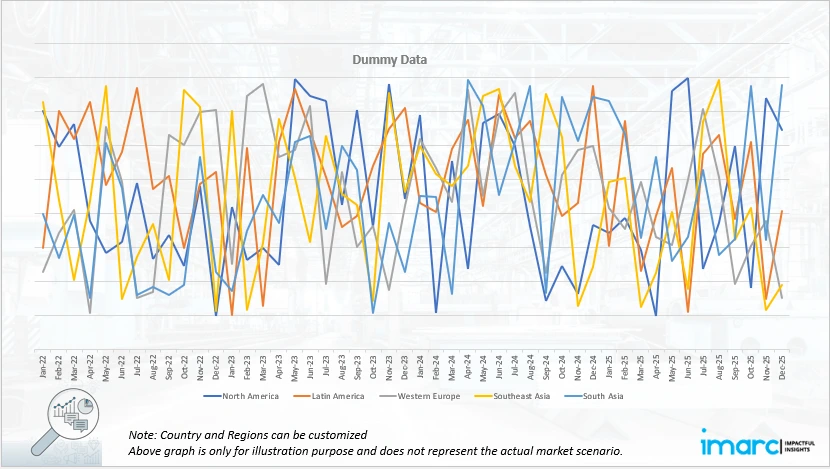
Get real-time access to monthly/quarterly/yearly prices Request Sample
During the first quarter of 2026, the timothy grass prices in the USA reached 5482 USD/MT in March. Prices moved upward as demand from livestock feed buyers improved and purchasing activity stayed firm across the quarter. Limited availability of premium forage grades supported higher offers from suppliers, especially as buyers focused on stable quality and dependable shipments. Weather related concerns in key producing areas also added support, as market participants remained cautious about near term supply.
During the first quarter of 2026, the timothy grass prices in Germany reached 4203 USD/MT in March. Prices increased as feed producers and livestock farms maintained consistent buying activity during the quarter. Imported forage availability remained restricted, which supported firmer supplier quotations. Demand for high quality grass hay also stayed steady due to its use in dairy and small animal feed applications.
During the first quarter of 2026, the timothy grass prices in France reached 5108 USD/MT in March. Prices strengthened as livestock and equine feed demand remained stable across the quarter. Buyers showed a preference for good quality forage, which supported premium pricing in the market. Supply from export origins remained controlled, creating firm conditions for importers and distributors. Rising storage, transport, and handling costs also lifted delivered prices.
During the first quarter of 2026, the timothy grass prices in South Africa reached 2995 USD/MT in March. Prices rose as local feed demand improved and imported forage costs remained firm. Livestock farms continued to purchase timothy grass for balanced feed programs, while premium quality supply stayed limited. Currency related cost pressure also influenced import pricing, making landed cargoes more expensive for buyers.
During the first quarter of 2026, the timothy grass prices in India reached 4854 USD/MT in March. Prices increased as demand from dairy farms, feed processors, and specialty animal feed buyers stayed firm. Imported forage availability remained limited, which supported stronger supplier offers during the quarter. Buyers continued to prefer timothy grass for its palatability, fiber value, and use in premium feed blends.
Timothy Grass Prices Outlook Q3 2025
- USA: USD 4963/MT
- Germany: USD 3882/MT
- France: USD 4760/MT
- South Africa: USD 2812/MT
- India: USD 4375/MT
During the third quarter of 2025, the timothy grass prices in the USA reached 4963 USD/MT in September. Prices increased as heightened demand from the animal nutrition and equine feed sectors raised procurement volumes. Weather-related constraints affected harvest schedules, tightening availability. Buyers secured additional lots due to stronger consumption patterns, encouraging suppliers to lift offers across major trading hubs.
During the third quarter of 2025, the timothy grass prices in Germany reached 3882 USD/MT in September. Upward pricing was driven by active requirements from premium livestock feed producers. Limited field productivity, influenced by regional weather variability, reduced supply availability. Import activity played a role as buyers sought consistent quality, contributing to firmer offers across agricultural markets.
During the third quarter of 2025, the timothy grass prices in France reached 4760 USD/MT in September. Prices rose due to increased intake from dairy and equine nutrition sectors, alongside constrained hay yields in several producing regions. Producers recorded stronger contracting activity during the season, and stable logistics conditions supported distribution despite elevated demand.
During the third quarter of 2025, the timothy grass prices in South Africa reached 2812 USD/MT in September. Prices increased as domestic feed manufacturers expanded procurement to support livestock production cycles. Weather irregularities affected harvest patterns, resulting in periodic supply tightness. Import reliance for certain grades also contributed to upward adjustments.
During the third quarter of 2025, the timothy grass prices in India reached 4375 USD/MT in September. Upward pricing reflected strong interest from dairy, small ruminant, and equine feed sectors. Uneven monsoon conditions influenced cultivation and drying efficiency, restricting overall yield. These factors contributed to firmer supplier quotations throughout the quarter.
Timothy Grass Prices Outlook Q2 2025
- USA: USD 4840/MT
- Germany: USD 3760/MT
- France: USD 4690/MT
- South Africa: USD 2740/MT
- India: USD 4230/MT
During the second quarter of 2025, the timothy grass prices in the USA reached 4840 USD/MT in June. Procurement activity aligned with seasonal feed planning across dairy and equine sectors. Harvest progress and field conditions influenced supplier scheduling, while distribution networks ensured timely movement of bales to regional feed processors.
During the second quarter of 2025, the timothy grass prices in Germany reached 3760 USD/MT in June. Market activity was shaped by contracting from livestock and specialty feed producers who structured intake according to expected usage levels. Field preparation and early-season crop development guided availability for suppliers and distributors.
During the second quarter of 2025, the timothy grass prices in France reached 4690 USD/MT in June. Purchasing behavior reflected feed requirements across dairy, equine, and mixed farming operations. Producers coordinated storage and handling practices to support supply continuity during varying field conditions, enabling reliable delivery to agricultural buyers.
During the second quarter of 2025, the timothy grass prices in South Africa reached 2740 USD/MT in June. Sourcing patterns were influenced by ongoing livestock feed programs, with processors planning intake around pasture performance and supplemental feeding needs. Transportation routes from producing regions supported consistent market interaction.
During the second quarter of 2025, the timothy grass prices in India reached 4230 USD/MT in June. Downstream dairy and livestock operations organized procurement according to nutrition scheduling. Production zones managed harvesting and curing activities to align with climate conditions, and buyers focused on securing volumes that matched their feed formulation cycles.
Regional Coverage
The report provides a detailed analysis of the market across different regions, each with unique pricing dynamics influenced by localized market conditions, supply chain intricacies, and geopolitical factors. This includes price trends, price forecast and supply and demand trends for each region, along with spot prices by major ports. The report also provides coverage of FOB and CIF prices, as well as the key factors influencing timothy grass prices.
Europe Timothy Grass Price Trend
Q1 2026:
The timothy grass price index in Europe moved upward as feed demand improved and import availability remained tight. Buyers in major consuming markets showed firm interest in premium forage grades, especially for dairy, equine, and small animal feed uses. Suppliers maintained stronger offers as replacement costs stayed elevated and shipment availability from major exporting origins was limited. Seasonal inventory building also supported the market as buyers tried to secure consistent supply before possible weather related disruptions.
Q3 2025:
As per the timothy grass price index, Europe experienced upward pricing as Germany and France recorded stronger demand from dairy, equine, and mixed-livestock feed programs. Weather inconsistencies across northern and western regions limited yield uniformity, prompting buyers to secure contracted volumes earlier. Import activity rose as processors sought consistent moisture and quality grades, raising landed costs relative to domestic alternatives. Increased interest from high-performance feed operations further tightened supply availability, while stable intra-EU logistics eased distribution despite heightened competition for premium-grade bales. Collectively, these factors reinforced the upward pricing trajectory across major European feed markets.
Q2 2025:
Market activity across Europe was shaped by feed planning for dairy, equine, and general livestock operations. Early-season field development varied across producing regions, influencing bale readiness and the timing of initial cuts. Buyers placed orders to synchronize with anticipated operational needs, emphasizing forage quality, density, and storage suitability. Cross-border hauling within the EU facilitated coordination between surplus and deficit zones, while distributors worked to balance inventory positions with projected seasonal consumption. Procurement strategies reflected the importance of consistent supply to maintain stable feed programs across diverse agricultural sectors.
Detailed price information for timothy grass can also be provided for an extensive list of European countries.
| Region | Countries Covered |
|---|---|
| Europe | Germany, France, United Kingdom, Italy, Spain, Russia, Turkey, Netherlands, Poland, Sweden, Belgium, Austria, Ireland, Switzerland, Norway, Denmark, Romania, Finland, Czech Republic, Portugal, and Greece, among other European countries. |
North America Timothy Grass Price Trend
Q1 2026:
The timothy grass price index in North America increased as domestic and export demand strengthened. Livestock feed users continued to purchase premium forage, while overseas buyers showed renewed interest in securing supply. Weather concerns in producing areas supported cautious selling, as suppliers expected tighter availability for select grades. Export channels remained active, particularly for high quality timothy grass used in dairy and specialty animal feed. Higher storage and inland freight costs also supported stronger delivered prices.
Q3 2025:
As per the timothy grass price index, North America saw prices strengthen as equine, dairy, and specialty feed producers increased procurement. Weather-related yield variability across prominent US growing states elevated concerns about future availability, encouraging early contracting. Export interest from select Asian markets added an additional pull on inventories, amplifying competition between domestic and foreign buyers. Producers emphasized careful curing and storage management to meet elevated quality requirements, while logistics networks reported increased movement toward major livestock corridors. These combined conditions contributed to sustained upward pricing throughout the region.
Q2 2025:
Activity during the quarter was influenced by sourcing needs across dairy, equine, and ruminant nutrition programs. Early cutting cycles and field conditions varied, guiding how suppliers prepared and stored hay for upcoming demand periods. Producers coordinated shipments to align with feed formulation schedules, ensuring appropriate grade selection for different livestock applications. Transportation networks supported steady bale movement into agricultural zones, with distributors managing inventory to balance differing buyer requirements. Regional feed operators structured procurement around forecasted animal performance needs and seasonal consumption expectations.
Specific timothy grass historical data within the United States and Canada can also be provided.
| Region | Countries Covered |
|---|---|
| North America | United States and Canada |
Middle East and Africa Timothy Grass Price Trend
Q1 2026:
In the Middle East and Africa, timothy grass prices rose as import costs stayed firm and demand from livestock farms improved. Many buyers depended on imported forage due to limited local availability of comparable quality grass hay. Demand from dairy and animal feed users remained stable, supporting stronger offers from suppliers. Currency pressure and shipping expenses also lifted landed costs in several markets. Importers managed purchases carefully but could not delay essential feed requirements for long.
Q3 2025:
Timothy grass prices in the Middle East and Africa moved upward as heavy reliance on imported forage exposed buyers to global pricing shifts. Gulf-region dairy and camel-rearing operations expanded intake, favoring consistent fiber quality for performance-driven nutrition programs. South Africa’s increase in domestic pricing contributed to regional firmness, especially as localized production faced periodic climate-driven constraints. Import-dependent African markets saw higher delivered prices due to freight duration, handling requirements, and tighter supply windows. Buyers advanced procurement cycles to secure adequate volumes, reinforcing upward momentum across multiple MEA feed sectors.
Q2 2025:
Regional demand patterns were shaped by the needs of dairy, livestock, and camel husbandry operations that rely on structured feeding programs. Importers coordinated shipments from North American and European producers, planning around vessel schedules and port throughputs to ensure alignment with feed cycles. Inland transport considerations influenced bale routing and storage decisions, particularly in areas with limited local forage production. Buyers emphasized moisture consistency and quality attributes suitable for high-performance dairy applications. These procurement practices ensured continuity in feed supply as agricultural operators prepared for seasonal requirements.
Region-wise data and information on specific countries within these regions can also be provided.
| Region | Countries Covered |
|---|---|
| Middle East & Africa | Saudi Arabia, UAE, Israel, Iran, South Africa, Nigeria, Oman, Kuwait, Qatar, Iraq, Egypt, Algeria, and Morocco, among other Middle Eastern and African countries. |
Asia Pacific Timothy Grass Price Trend
Q1 2026:
In Asia Pacific, timothy grass prices increased as demand from dairy, livestock, and small animal feed markets remained firm. Buyers in several countries showed stronger interest in premium forage after earlier inventory drawdowns. Import availability was limited for high quality grades, which supported stronger supplier offers. Ocean freight and inland distribution expenses also added pressure to delivered prices. Some buyers attempted to delay purchases, but steady feed requirements kept procurement active. Exporters maintained firm quotations due to healthy demand from multiple Asian destinations.
Q3 2025:
Asia Pacific recorded upward pricing momentum, driven by India’s strong livestock and dairy-sector demand and increased interest from equine operators across various regional markets. Limited domestic production capacity in several APAC countries heightened reliance on imports from North America and Europe, raising procurement costs. Weather-driven variation in India’s harvest and curing cycles tightened availability, prompting suppliers to adopt firmer quotations. Import-dependent markets across Southeast Asia evaluated quality grades more carefully due to rising feed performance expectations. These combined sourcing pressures supported widespread upward pricing across multiple APAC feed applications.
Q2 2025:
APAC feed markets organized sourcing according to livestock, dairy, and equine nutritional schedules, with harvesting progress in India guided by monsoon patterns. Countries lacking large-scale domestic forage production coordinated imports to maintain consistent feeding programs. Buyers monitored bale characteristics such as color, density, and moisture to match animal-specific requirements. Maritime routes operated predictably, allowing distributors to schedule arrivals in alignment with local consumption cycles. Regional feed operators maintained structured procurement to ensure reliable forage availability for ongoing agricultural and livestock commitments.
This timothy grass price analysis can be expanded to include a comprehensive list of countries within the region.
| Region | Countries Covered |
|---|---|
| Asia Pacific | China, India, Indonesia, Pakistan, Bangladesh, Japan, Philippines, Vietnam, Thailand, South Korea, Malaysia, Nepal, Taiwan, Sri Lanka, Hongkong, Singapore, Australia, and New Zealand, among other Asian countries. |
Latin America Timothy Grass Price Trend
Q1 2026:
The market for timothy grass in Latin America is primarily driven by the region's abundant natural resources, especially in nations like Chile and Brazil. However, the price of timothy grass can fluctuate significantly due to political unpredictability and uneven regulatory regimes.
Q3 2025:
Latin America's timothy grass market is predominantly influenced by its rich natural reserves, particularly in countries like Chile and Brazil. However, political instability and inconsistent regulatory frameworks can lead to significant volatility in timothy grass prices.
Q2 2025:
Infrastructure challenges and logistical inefficiencies often impact the supply chain, affecting Latin America’s ability to meet international demand consistently. Moreover, the timothy grass price index, economic fluctuations, and currency devaluation are critical factors that need to be considered when analyzing timothy grass pricing trends in this region.
This comprehensive review can be extended to include specific countries within Latin America.
| Region | Countries Covered |
|---|---|
| Latin America | Brazil, Mexico, Argentina, Columbia, Chile, Ecuador, and Peru, among other Latin American countries. |
Timothy Grass Pricing Report, Market Analysis, and News
IMARC's latest publication, “Timothy Grass Prices, Trend, Chart, Demand, Market Analysis, News, Historical and Forecast Data Report 2026 Edition,” presents a detailed examination of the timothy grass market, providing insights into both global and regional trends that are shaping prices. This report delves into the spot price of timothy grass at major ports and analyzes the composition of prices, including FOB and CIF terms. It also presents detailed timothy grass prices trend analysis by region, covering North America, Europe, Asia Pacific, Latin America, and Middle East and Africa. The factors affecting timothy grass pricing, such as the dynamics of supply and demand, geopolitical influences, and sector specific developments, are thoroughly explored. This comprehensive report helps stakeholders stay informed with the latest market news, regulatory updates, and technological progress, facilitating informed strategic decision-making and forecasting.
Timothy Grass Industry Analysis
The global timothy grass industry size reached USD 133.1 Million in 2025. By 2034, IMARC Group expects the market to reach USD 323.7 Million, at a projected CAGR of 10.38% during 2026-2034. Growth is driven by expanding consumption of premium forage across dairy, equine, and ruminant sectors, supported by rising livestock performance standards, increasing focus on nutritional optimization, and broader international trade of high-quality hay products.
Latest News and Developments:
- July 2025: Researchers from Lund University (Sweden) reported an immunology breakthrough showing that an unmutated human antibody precursor exhibited high-affinity binding to timothy grass pollen allergen Phl p 5. The study demonstrated that naïve B-cells can inherently recognize this major allergen, suggesting that the human immune system may be predisposed to initiate allergic sensitization even without prior exposure.
Product Description
Scientifically known as Phleum pratense, timothy grass is a perennial cool-season grass native to Europe that is grown as a feed crop in temperate climates all over the world. It usually grows to a height of two to three feet and is distinguished by its cylindrical flower spikes and fine, densely packed leaves. Timothy grass is ideally suited to cool, humid areas and grows well in soils that are moist and well-drained.
Timothy grass is highly valuable in agricultural settings, mainly because it provides cattle with high-quality feed. It is especially well-suited for ruminant animals, such as sheep, horses, and cattle, due to its moderate protein content and high fiber content. Because of the grass's high digestibility, animals can absorb nutrients and digest food more effectively.
Report Coverage
| Key Attributes | Details |
|---|---|
| Product Name | Timothy Grass |
| Report Features | Exploration of Historical Trends and Market Outlook, Industry Demand, Industry Supply, Gap Analysis, Challenges, Timothy Grass Price Analysis, and Segment-Wise Assessment. |
| Currency/Units | US$ (Data can also be provided in local currency) or Metric Tons |
| Region/Countries Covered | The current coverage includes analysis at the global and regional levels only. Based on your requirements, we can also customize the report and provide specific information for the following countries: Asia Pacific: China, India, Indonesia, Pakistan, Bangladesh, Japan, Philippines, Vietnam, Thailand, South Korea, Malaysia, Nepal, Taiwan, Sri Lanka, Hongkong, Singapore, Australia, and New Zealand Europe: Germany, France, United Kingdom, Italy, Spain, Russia, Turkey, Netherlands, Poland, Sweden, Belgium, Austria, Ireland, Switzerland, Norway, Denmark, Romania, Finland, Czech Republic, Portugal and Greece North America: United States and Canada Latin America: Brazil, Mexico, Argentina, Columbia, Chile, Ecuador, and Peru Middle East & Africa: Saudi Arabia, UAE, Israel, Iran, South Africa, Nigeria, Oman, Kuwait, Qatar, Iraq, Egypt, Algeria, and Morocco The list of countries presented is not exhaustive. Information on additional countries can be provided if required by the client. |
| Information Covered for Key Suppliers |
|
| Customization Scope | The report can be customized as per the requirements of the customer |
| Report Price and Purchase Option |
Plan A: Monthly Updates - Annual Subscription
Plan B: Quarterly Updates - Annual Subscription
Plan C: Biannually Updates - Annual Subscription
|
| Post-Sale Analyst Support | 360-degree analyst support after report delivery |
| Delivery Format | PDF and Excel through email (We can also provide the editable version of the report in PPT/Word format on special request) |
Key Benefits for Stakeholders:
- IMARC’s report presents a detailed analysis of timothy grass pricing, covering global and regional trends, spot prices at key ports, and a breakdown of FOB and CIF prices.
- The study examines factors affecting timothy grass price trend, including input costs, supply-demand shifts, and geopolitical impacts, offering insights for informed decision-making.
- The competitive landscape review equips stakeholders with crucial insights into the latest market news, regulatory changes, and technological advancements, ensuring a well-rounded, strategic overview for forecasting and planning.
- IMARC offers various subscription options, including monthly, quarterly, and biannual updates, allowing clients to stay informed with the latest market trends, ongoing developments, and comprehensive market insights. The timothy grass price charts ensure our clients remain at the forefront of the industry.
Need more help?
- Speak to our experienced analysts for insights on the current market scenarios.
- Include additional segments and countries to customize the report as per your requirement.
- Gain an unparalleled competitive advantage in your domain by understanding how to utilize the report and positively impacting your operations and revenue.
- For further assistance, please connect with our analysts.
 Request Customization
 Inquire Before Buying
 Speak to an Analyst
 Request Brochure
Benefits of Customization
- Personalize this research
- Triangulate with your data
- Get data as per your format and definition
- Gain a deeper dive into a specific application, geography, customer, or competitor
- Any level of personalization
Get in Touch With Us
UNITED STATES
Phone: +1-201-971-6302
INDIA
Phone: +91-120-433-0800
UNITED KINGDOM
Phone: +44-753-714-6104
Email: [email protected]
Client Testimonials




.webp)




.webp)













Related Reports

Why Choose Us
IMARC offers trustworthy, data-centric insights into commodity pricing and evolving market trends, enabling businesses to make well-informed decisions in areas such as procurement, strategic planning, and investments. With in-depth knowledge spanning more than 1000 commodities and a vast global presence in over 150 countries, we provide tailored, actionable intelligence designed to meet the specific needs of diverse industries and markets.
1000
+Commodities
150
+Countries Covered
3000
+Clients
20
+Industry

Robust Methodologies & Extensive Resources
IMARC delivers precise commodity pricing insights using proven methodologies and a wealth of data to support strategic decision-making.

Subscription-Based Databases
Our extensive databases provide detailed commodity pricing, import-export trade statistics, and shipment-level tracking for comprehensive market analysis.

Primary Research-Driven Insights
Through direct supplier surveys and expert interviews, we gather real-time market data to enhance pricing accuracy and trend forecasting.

Extensive Secondary Research
We analyze industry reports, trade publications, and market studies to offer tailored intelligence and actionable commodity market insights.
Trusted by 3000+ industry leaders worldwide to drive data-backed decisions. From global manufacturers to government agencies, our clients rely on us for accurate pricing, deep market intelligence, and forward-looking insights.