
Titanium Tetrachloride Prices, Trend, Chart, Demand, Market Analysis, News, Historical and Forecast Data Report 2026 Edition
Titanium Tetrachloride Price Trend, Index and Forecast
Track the latest insights on titanium tetrachloride price trend and forecast with detailed analysis of regional fluctuations and market dynamics across North America, Latin America, Central Europe, Western Europe, Eastern Europe, Middle East, North Africa, West Africa, Central and Southern Africa, Central Asia, Southeast Asia, South Asia, East Asia, and Oceania.
Titanium Tetrachloride Prices Outlook Q2 2026
- USA: USD 2773/MT
- China: USD 1092/MT
- Japan: USD 1566/MT
- Germany: USD 2442/MT
- France: USD 2545/MT
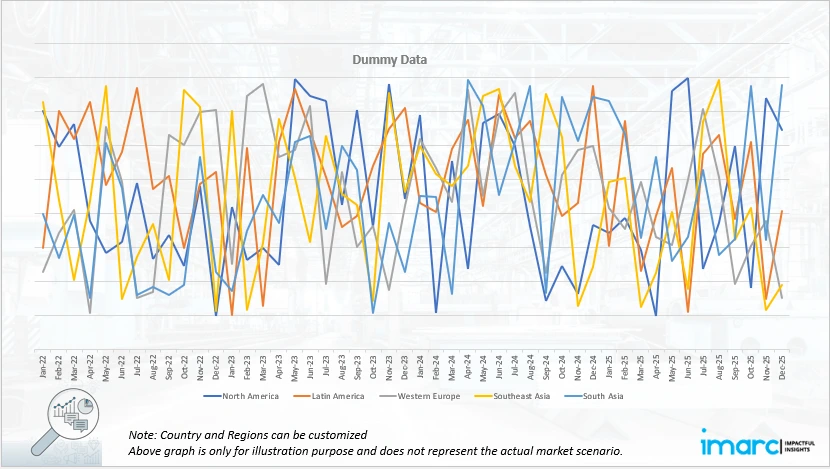
Titanium Tetrachloride Price Chart
Get real-time access to monthly/quarterly/yearly prices Request Sample
During the second quarter of 2026, the titanium tetrachloride prices in the USA reached 2773 USD/MT in June. Prices moved upward as stronger demand from industrial applications supported firm market conditions. Consumption from aerospace, chemical processing, titanium metal, and pigment related applications remained steady throughout the quarter, maintaining regular procurement from downstream manufacturers. Producers faced higher costs for titanium bearing raw materials, chlorine, energy, and processing, which increased production expenses and encouraged firmer supplier quotations.
During the second quarter of 2026, the titanium tetrachloride prices in China reached 1092 USD/MT in June. Prices rose significantly as strong industrial demand and limited supply availability tightened domestic market conditions. Purchasing remained active from titanium dioxide pigment manufacturers, titanium metal producers, and other chemical processing industries, supporting consistent consumption throughout the quarter. Higher costs for titanium bearing feedstocks, chlorine, energy, and processing placed additional pressure on manufacturing economics.
During the second quarter of 2026, the titanium tetrachloride prices in Japan reached 1566 USD/MT in June. Prices increased sharply as import dependence and firm demand from electronics, automotive, chemical, and advanced material applications strengthened market conditions. Manufacturers maintained regular procurement to support production schedules, while limited domestic supply flexibility increased sensitivity to international sourcing conditions. Delayed shipments and changing transportation costs raised replacement concerns among downstream buyers and encouraged cautious inventory management.
During the second quarter of 2026, the titanium tetrachloride prices in Germany reached 2442 USD/MT in June. Prices moved upward as local supply constraints and robust industrial activity supported firmer market conditions. Demand from chemical processing, titanium dioxide pigment, specialty catalyst, and titanium related applications remained steady, helping absorb available material. Producers faced pressure from higher raw material, chlorine, energy, and processing expenses, which influenced production economics and replacement costs.
During the second quarter of 2026, the titanium tetrachloride prices in France reached 2545 USD/MT in June. Prices rose as firm demand from aerospace, titanium related manufacturing, pigments, and chemical processing applications supported regular market activity. Aerospace supply chains maintained procurement for titanium materials, while pigment and specialty chemical manufacturers provided additional support to consumption. Challenges in securing titanium bearing raw materials and other production inputs placed pressure on manufacturing costs and reduced supply flexibility.
Titanium Tetrachloride Prices Outlook Q3 2025
- USA: USD 2663/MT
- China: USD 977/MT
- Japan: USD 1364/MT
- Germany: USD 2294/MT
- France: USD 2320/MT
During the third quarter of 2025, the titanium tetrachloride prices in the USA reached 2663 USD/MT in September. Prices moved upward as demand from titanium dioxide production and downstream pigment manufacturing increased. Stable operating rates at integrated producers supported consumption. Buyers advanced procurement aligned with production planning, while controlled availability and logistics coordination influenced sourcing decisions across the supply chain.
During the third quarter of 2025, the titanium tetrachloride prices in China reached 977 USD/MT in September. Prices declined due to softer demand from titanium dioxide producers and moderated operating rates at downstream facilities. Adequate domestic supply and cautious purchasing behavior reduced procurement urgency. Buyers focused on inventory optimization and short-term sourcing rather than forward commitments.
During the third quarter of 2025, the titanium tetrachloride prices in Japan reached 1364 USD/MT in September. Prices moved downward as demand from titanium sponge and pigment production softened. Reduced industrial activity and restrained export-oriented consumption influenced procurement volumes. Domestic availability supported flexible sourcing, allowing buyers to align purchases closely with confirmed production needs.
During the third quarter of 2025, the titanium tetrachloride prices in Germany reached 2294 USD/MT in September. Prices increased as demand from specialty titanium dioxide applications and industrial processing strengthened. Higher utilization at downstream facilities supported buying interest. Buyers emphasized securing material aligned with manufacturing schedules and regulatory compliance requirements.
During the third quarter of 2025, the titanium tetrachloride prices in France reached 2320 USD/MT in September. Prices moved upward due to strong demand from pigment manufacturing and specialty chemical applications. Increased offtake from downstream processors supported procurement activity. Buyers structured sourcing around confirmed production runs and distribution planning.
Titanium Tetrachloride Prices Outlook Q2 2025
- USA: USD 2580/MT
- Germany: USD 2240/MT
- Japan: USD 1470/MT
- China: USD 1010/MT
- France: USD 2086/MT
During the second quarter of 2025, the titanium tetrachloride prices in the USA reached 2580 USD/MT in June. As per the titanium tetrachloride price chart, the market moved in a narrow range with a mild upward bias. This movement reflected a steady balance between demand and supply. Consumption levels were healthy but not overheated, particularly with consistent pull from the automotive and coatings industries where titanium dioxide applications drive procurement. Suppliers maintained controlled output, which prevented any major swings in availability and kept the market orderly.
During the second quarter of 2025, the titanium tetrachloride prices in Germany reached 2240 USD/MT in June. The market reflected a tightening supply chain and fluctuating demand signals that pushed prices upward. The quarter began under pressure from operational issues at major production sites and lean stock positions, which gave early momentum to sellers. As spot transactions became more common, domestic buyers faced reduced availability, which bolstered price gains. The upward movement in titanium dioxide prices added to this trend, since it directly influenced titanium tetrachloride demand through downstream linkage.
During the second quarter of 2025, titanium tetrachloride prices in Japan reached 1470 USD/MT in June. Prices in Japan moved lower under the combined weight of oversupply and soft downstream demand. The index registered small losses in April, but pressure intensified in May as cheaper Chinese imports began flowing into the Japanese market, keeping sellers under strain. Demand from construction and coatings segments failed to lift consumption, reinforcing a bearish tone. Even though port activity and logistics were running efficiently, the abundance of material kept spot prices under stress.
During the second quarter of 2025, the titanium tetrachloride prices in China reached 1010 USD/MT in June. The period reflected downward momentum for titanium tetrachloride in China. In April, prices slipped slightly, but this gave way to sharper losses in May, driven by a wave of cheaper imports and weak consumption from both construction and coatings. Buyers held back on fresh purchases, sensing further softness, and this amplified the bearish tone. By June, even as intra-Asia freight charges edged higher, the overall landed cost environment stayed muted because pigment markets were under pressure and coatings demand in global markets had yet to show signs of revival.
During the second quarter of 2025, the titanium tetrachloride prices in France reached 2086 USD/MT in June. In May, the tone of the market turned bullish as inventories tightened and production setbacks emerged at key facilities. These operational challenges curtailed availability, pushing buyers into the spot market and creating competition for limited volumes. The squeeze in local supply began to lay the foundation for firmer pricing, even before broader cost pressures fully set in. By June, the market gained further momentum. A rise in titanium dioxide values spilled over into titanium tetrachloride, as the two products are closely linked through downstream processing.
Regional Coverage
The report provides a detailed analysis of the market across different regions, each with unique pricing dynamics influenced by localized market conditions, supply chain intricacies, and geopolitical factors. This includes price trends, price forecast and supply and demand trends for each region, along with spot prices by major ports. The report also provides coverage of FOB and CIF prices, as well as the key factors influencing titanium tetrachloride prices.
Europe Titanium Tetrachloride Price Trend
Q2 2026:
The titanium tetrachloride price index in Europe moved upward as tighter supply availability, active export demand, and logistics constraints supported firmer market quotations. Demand from aerospace, chemical processing, titanium dioxide pigments, titanium metal, and specialty applications remained steady, helping absorb available regional inventories. Export commitments reduced supply flexibility and strengthened supplier negotiating positions in the spot market. Port congestion and transportation delays periodically restricted shipments and increased replacement concerns among downstream buyers. Producers also faced pressure from titanium bearing raw material, chlorine, energy, and processing costs, which influenced production economics.
Q3 2025:
As per the titanium tetrachloride price index, Europe experienced upward price movement, led by increases in France and Germany. Demand from titanium dioxide production, specialty pigments, and industrial chemical applications supported regional consumption. French producers increased sourcing for pigment manufacturing, while German demand was driven by specialty and high-purity applications. Regional production integration and established supply chains supported availability. Buyers aligned procurement with confirmed manufacturing schedules, regulatory compliance requirements, and downstream demand visibility.
Q2 2025:
Prices in Europe showed notable swings before firming by the end of June. The quarter began with some instability, but conditions tightened in May when restricted inventories and operational challenges at key production facilities limited output. This created momentum in spot transactions, which began absorbing available supply and helped lift prices. By June, the upward movement gained further strength. The spike in prices pushed up demand for titanium tetrachloride as a feedstock, while elevated energy tariffs and reduced throughput added cost pressure across the supply chain. Export demand, particularly from major destinations added another layer of firmness, shrinking local availability further. Producers, already facing higher raw material expenses for ilmenite and rutile, passed through rising production costs, reinforcing bullish sentiment.
This analysis can be extended to include detailed titanium tetrachloride price information for a comprehensive list of countries.
| Region | Countries Covered |
|---|---|
| Europe | Germany, France, United Kingdom, Italy, Spain, Russia, Turkey, Netherlands, Poland, Sweden, Belgium, Austria, Ireland, Switzerland, Norway, Denmark, Romania, Finland, Czech Republic, Portugal, and Greece, among other European countries. |
North America Titanium Tetrachloride Price Trend
Q2 2026:
The titanium tetrachloride price index in North America rose significantly as limited supply availability and steady industrial demand tightened regional market balances. Consumption from aerospace, titanium metal, chemical processing, pigment, and selected electronics related applications supported regular procurement throughout the quarter. Export requirements absorbed part of regional production and reduced material available for prompt domestic transactions, strengthening seller negotiating positions. Producers also faced higher expenses associated with titanium bearing feedstocks, chlorine, energy, processing, and specialized handling requirements. Logistics constraints and transportation delays further affected replenishment schedules and increased replacement concerns among buyers.
Q3 2025:
As per the titanium tetrachloride price index, North America experienced upward price movement, driven by increases in the USA. Demand from titanium dioxide producers and downstream pigment manufacturing supported consumption. Integrated production structures influenced sourcing strategies, with buyers advancing procurement to align with operating schedules. Domestic availability and logistics coordination supported supply continuity, while procurement decisions focused on meeting industrial demand without expanding inventory positions.
Q2 2025:
Prices in North America during the second quarter of the year moved slightly upward, mainly due to the balance between supply and demand. Producers managed to keep supply steady, preventing any sudden jumps, and downstream consumption was stable enough to support incremental price gains. The absence of strong disruptions meant that prices stayed on a fairly predictable course without unexpected swings. Besides, logistical stability also played a part in supporting pricing. There were no significant bottlenecks reported at ports or inland freight corridors across the United States. The absence of logistical disruptions ensured that supply chains functioned without extra expense feeding into price adjustments. Moreover, spot pricing through the quarter stayed within a narrow range. Movements were influenced more by upstream feedstock costs than by abrupt demand changes. With limited shocks on either side of the supply-demand balance, titanium tetrachloride remained a measured market in Q2.
Specific titanium tetrachloride historical data within the United States and Canada can also be provided.
| Region | Countries Covered |
|---|---|
| North America | United States and Canada |
Middle East and Africa Titanium Tetrachloride Price Trend
Q2 2026:
The study includes titanium tetrachloride price trends across the Middle East and Africa, taking into consideration variables such as regional industrial expansion, natural resource availability, and geopolitical factors that influence market pricing.
Q3 2025:
As per titanium tetrachloride price chart, the prices in the Middle East and Africa fluctuated due to a complex interplay of factors, primarily driven by supply chain disruptions, seasonal demand shifts, and geopolitical influences.
Q2 2025:
The report explores the titanium tetrachloride pricing trends and titanium tetrachloride price chart in the Middle East and Africa, considering factors like regional industrial growth, the availability of natural resources, and geopolitical tensions that uniquely influence market prices.
In addition to region-wise data, information on titanium tetrachloride prices for countries can also be provided.
| Region | Countries Covered |
|---|---|
| Middle East & Africa | Saudi Arabia, UAE, Israel, Iran, South Africa, Nigeria, Oman, Kuwait, Qatar, Iraq, Egypt, Algeria, and Morocco, among other Middle Eastern and African countries. |
Asia Pacific Titanium Tetrachloride Price Trend
Q2 2026:
Titanium tetrachloride prices in Asia Pacific moved upward due to increased raw material costs, logistical challenges, and consistent demand from manufacturing sectors. China faced limited availability and enhanced production constraints during the quarter, with port congestion and shipping logistics occasionally hampering movement. Japan also experienced higher import costs and logistical uncertainties, prompting buyers to prioritize scheduled procurement. Demand from aerospace and chemical manufacturing provided a steady consumption base across the region. Producers continued to offer firm pricing as input costs remained high.
Q3 2025:
As per the titanium tetrachloride price index, Asia Pacific experienced downward price movement, led by declines in China and Japan. Softer demand from titanium dioxide and titanium sponge production reduced regional consumption. In China, moderated operating rates influenced procurement volumes, while Japanese buyers adjusted sourcing due to restrained industrial activity. Domestic production capacity supported availability, allowing buyers to limit purchases to near-term operational requirements.
Q2 2025:
Prices in Asia Pacific were shaped by weak fundamentals across both supply and demand. The quarter began with a modest decline in April, but conditions worsened in May as bearish sentiment strengthened. The main driver was a steady inflow of low-cost Chinese imports, which weighed heavily on regional market prices. Demand from downstream sectors, particularly construction and coatings, remained subdued, which amplified the oversupply pressures in the spot market. Even though automotive paints showed resilience, this was not enough to offset the broader weakness in consumption. By June, the pricing environment stayed under pressure despite a temporary rise in intra-Asia freight costs. The higher shipping rates did not significantly alter landed costs as TiO₂ prices remained soft and global coatings demand was sluggish. Spot prices in Japan were particularly vulnerable, as supply was abundant and logistical bottlenecks were absent, ensuring consistent flow of material into the market.
This titanium tetrachloride price analysis can be expanded to include a comprehensive list of countries within the region.
| Region | Countries Covered |
|---|---|
| Asia Pacific | China, India, Indonesia, Pakistan, Bangladesh, Japan, Philippines, Vietnam, Thailand, South Korea, Malaysia, Nepal, Taiwan, Sri Lanka, Hongkong, Singapore, Australia, and New Zealand, among other Asian countries. |
Latin America Titanium Tetrachloride Price Trend
Q2 2026:
The titanium tetrachloride market in Latin America is primarily driven by industrial growth in countries like Brazil and Mexico. However, economic fluctuations and trade policy changes could lead to volatile titanium tetrachloride price movements.
Q3 2025:
Latin America's titanium tetrachloride market is predominantly influenced by its rich natural reserves, particularly in countries like Chile and Brazil. However, political instability and inconsistent regulatory frameworks can lead to significant volatility in titanium tetrachloride prices.
Q2 2025:
Infrastructure challenges and logistical inefficiencies often impact the supply chain, affecting Latin America’s ability to meet international demand consistently. Moreover, the titanium tetrachloride price index, economic fluctuations, and currency devaluation are critical factors that need to be considered when analyzing titanium tetrachloride pricing trends in this region.
This comprehensive review can be extended to include specific countries within the region.
| Region | Countries Covered |
|---|---|
| Latin America | Brazil, Mexico, Argentina, Columbia, Chile, Ecuador, and Peru, among other Latin American countries. |
Titanium Tetrachloride Pricing Report, Market Analysis, and News
IMARC's latest publication, “Titanium Tetrachloride Prices, Trend, Chart, Demand, Market Analysis, News, Historical and Forecast Data Report 2026 Edition,” offers a thorough analysis of the titanium tetrachloride market, providing insights into both global and regional trends influencing prices. This report investigates the spot prices of titanium tetrachloride at major terminals and examines the structure of pricing, including FOB and CIF terms. It also provides a detailed titanium tetrachloride price trend analysis by region, covering North America, Europe, Asia Pacific, Latin America, and the Middle East and Africa. Factors influencing titanium tetrachloride pricing, such as supply and demand dynamics, geopolitical factors, and industry-specific developments, are extensively analyzed. This comprehensive report assists stakeholders in staying updated with the latest market news, regulatory changes, and technological advancements, facilitating informed strategic decision-making and forecasting.

Titanium Tetrachloride Industry Analysis
The global titanium tetrachloride market size reached USD 11.38 Billion in 2025. By 2034, IMARC Group expects the market to reach USD 16.12 Billion, at a projected CAGR of 3.95% during 2026-2034. Market growth is primarily fueled by rising demand in the chemical industry, increased applications in manufacturing, and advances in aerospace technologies.
Latest News and Developments:
- January 2026: Zunyi Titanium announced that it had officially begun construction of its 20,000 t/a sponge titanium supporting project in December 2025, marking a significant expansion in China’s titanium materials manufacturing capacity. The expansion is specifically aimed at optimizing production structure and breaking bottlenecks, and it significantly enhances the production capacity of titanium tetrachloride and magnesium without increasing total sponge titanium output, marking a key step in the company’s upgrading strategy and regional industry development.
Product Description
Titanium tetrachloride is a volatile inorganic compound widely used as an important intermediate in the production of titanium metal, titanium dioxide, and other titanium compounds. It is commonly produced by chlorinating titanium bearing raw materials in the presence of carbon. Titanium tetrachloride is a key feedstock in the production of titanium metal through processes such as the Kroll process and is also used in manufacturing titanium dioxide pigments. In the chemical industry, it is used in certain catalyst systems, including Ziegler Natta catalysts for polyolefin production. Titanium tetrachloride is highly reactive with moisture and therefore requires carefully controlled handling, storage, and transportation. Its role as a titanium precursor supports applications across aerospace, automotive, pigments, chemicals, electronics, and other advanced material industries where titanium based products are required.
Report Coverage
| Key Attributes | Details |
|---|---|
| Product Name | Titanium Tetrachloride |
| Report Features | Exploration of Historical Trends and Market Outlook, Industry Demand, Industry Supply, Gap Analysis, Challenges, Titanium Tetrachloride Price Analysis, and Segment-Wise Assessment. |
| Currency/Units | US$ (Data can also be provided in local currency) or Metric Tons |
| Region/Countries Covered | The current coverage includes analysis at the global and regional levels only. Based on your requirements, we can also customize the report and provide specific information for the following countries: Asia Pacific: China, India, Indonesia, Pakistan, Bangladesh, Japan, Philippines, Vietnam, Thailand, South Korea, Malaysia, Nepal, Taiwan, Sri Lanka, Hongkong, Singapore, Australia, New Zealand Europe: Germany, France, United Kingdom, Italy, Spain, Russia, Turkey, Netherlands, Poland, Sweden, Belgium, Austria, Ireland, Switzerland, Norway, Denmark, Romania, Finland, Czech Republic, Portugal, Greece North America: United States, Canada Latin America: Brazil, Mexico, Argentina, Columbia, Chile, Ecuador, Peru Middle East & Africa: Saudi Arabia, UAE, Israel, Iran, South Africa, Nigeria, Oman, Kuwait, Qatar, Iraq, Egypt, Algeria, Morocco The list of countries presented is not exhaustive. Information on additional countries can be provided if required by the client. |
| Information Covered for Key Suppliers |
|
| Customization Scope | The report can be customized as per the requirements of the customer |
| Report Price and Purchase Option |
Plan A: Monthly Updates - Annual Subscription
Plan B: Quarterly Updates - Annual Subscription
Plan C: Biannually Updates - Annual Subscription
|
| Post-Sale Analyst Support | 360-degree analyst support after report delivery |
| Delivery Format | PDF and Excel through email (We can also provide the editable version of the report in PPT/Word format on special request) |
Key Benefits for Stakeholders:
- IMARC’s report presents a detailed analysis of titanium tetrachloride pricing, covering global and regional trends, spot prices at key ports, and a breakdown of Ex Works, FOB, and CIF prices.
- The study examines factors affecting titanium tetrachloride price trend, including raw material costs, supply-demand shifts, geopolitical impacts, and industry developments, offering insights for informed decision-making.
- The competitive landscape review equips stakeholders with crucial insights into the latest market news, regulatory changes, and technological advancements, ensuring a well-rounded, strategic overview for forecasting and planning.
- IMARC offers various subscription options, including monthly, quarterly, and biannual updates, allowing clients to stay informed with the latest market trends, ongoing developments, and comprehensive market insights. The titanium tetrachloride price charts ensure our clients remain at the forefront of the industry.
Need more help?
- Speak to our experienced analysts for insights on the current market scenarios.
- Include additional segments and countries to customize the report as per your requirement.
- Gain an unparalleled competitive advantage in your domain by understanding how to utilize the report and positively impacting your operations and revenue.
- For further assistance, please connect with our analysts.
 Request Customization
 Inquire Before Buying
 Speak to an Analyst
 Request Brochure
Benefits of Customization
- Personalize this research
- Triangulate with your data
- Get data as per your format and definition
- Gain a deeper dive into a specific application, geography, customer, or competitor
- Any level of personalization
Get in Touch With Us
UNITED STATES
Phone: +1-201-971-6302
INDIA
Phone: +91-120-433-0800
UNITED KINGDOM
Phone: +44-753-714-6104
Email: [email protected]
Client Testimonials




.webp)




.webp)













Related Reports

Why Choose Us
IMARC offers trustworthy, data-centric insights into commodity pricing and evolving market trends, enabling businesses to make well-informed decisions in areas such as procurement, strategic planning, and investments. With in-depth knowledge spanning more than 1000 commodities and a vast global presence in over 150 countries, we provide tailored, actionable intelligence designed to meet the specific needs of diverse industries and markets.
1000
+Commodities
150
+Countries Covered
3000
+Clients
20
+Industry

Robust Methodologies & Extensive Resources
IMARC delivers precise commodity pricing insights using proven methodologies and a wealth of data to support strategic decision-making.

Subscription-Based Databases
Our extensive databases provide detailed commodity pricing, import-export trade statistics, and shipment-level tracking for comprehensive market analysis.

Primary Research-Driven Insights
Through direct supplier surveys and expert interviews, we gather real-time market data to enhance pricing accuracy and trend forecasting.

Extensive Secondary Research
We analyze industry reports, trade publications, and market studies to offer tailored intelligence and actionable commodity market insights.
Trusted by 3000+ industry leaders worldwide to drive data-backed decisions. From global manufacturers to government agencies, our clients rely on us for accurate pricing, deep market intelligence, and forward-looking insights.