
Travel Accommodation Market Size, Share, Trends and Forecast by Type, Price Point, Mode of Booking, Application, and Region, 2026-2034
Travel Accommodation Market Overview:
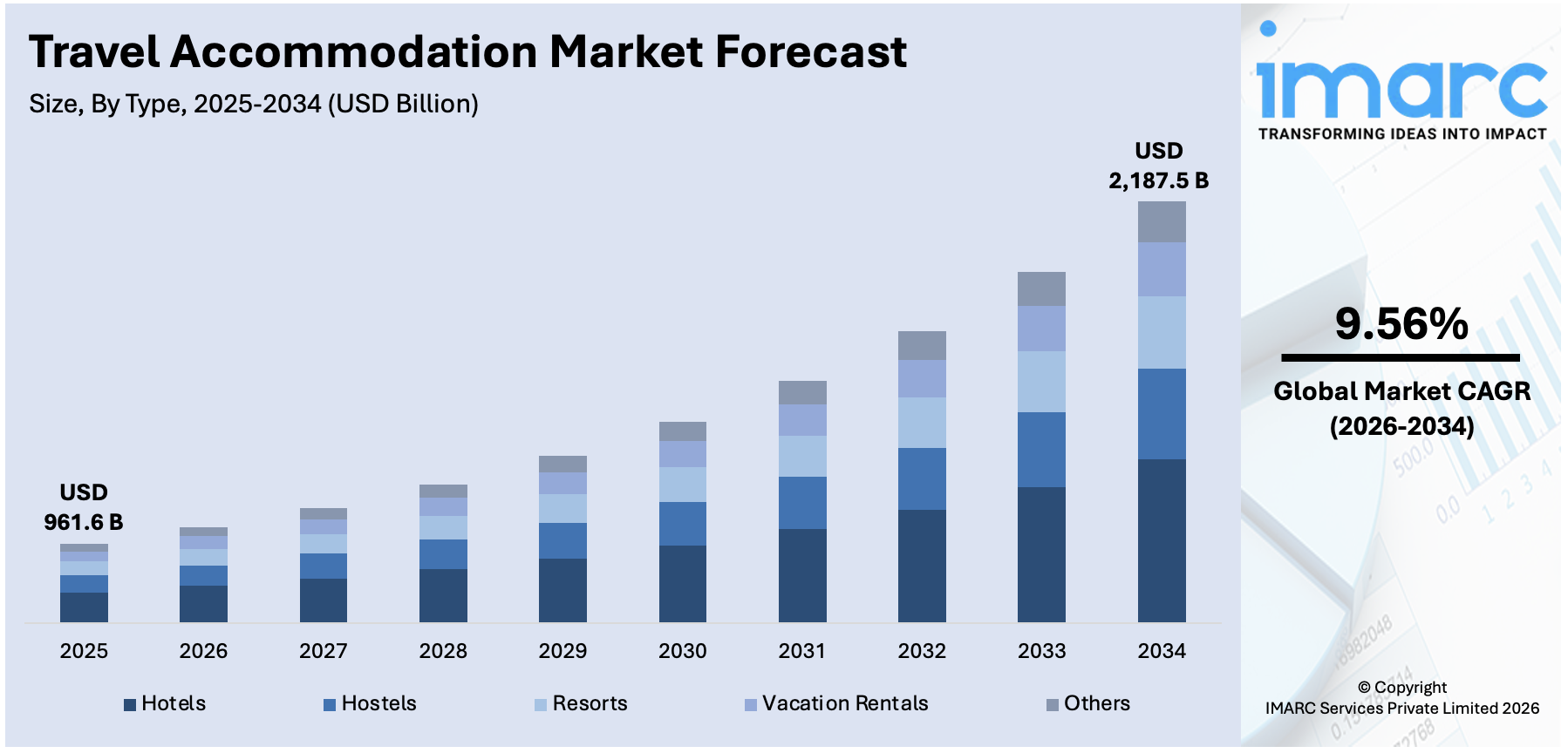
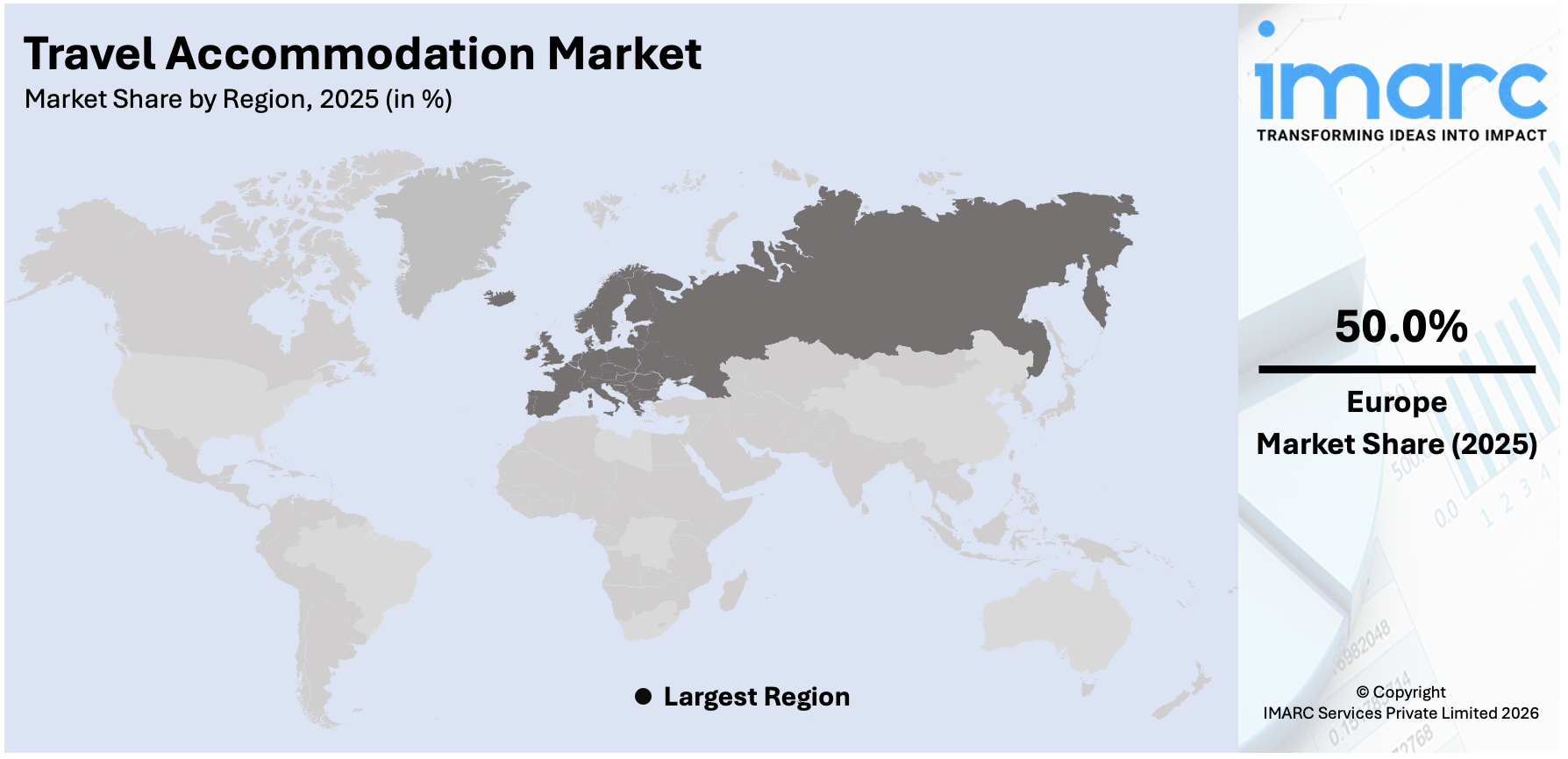
The global travel accommodation market size was valued at USD 961.6 Billion in 2025. Looking forward, IMARC Group estimates the market to reach USD 2,187.5 Billion by 2034, exhibiting a CAGR of 9.56% from 2026-2034. Europe currently dominates the market, holding a share of 50.0% in the market. Growing disposable incomes, a greater reliance on online booking systems that improve ease and transparency, and the quick development of traveler tastes for distinctive, customized experiences are the main factors driving the market's expansion in international tourism. Furthermore, the incorporation of intelligent technology such as digital concierge services, contactless check-ins, and artificial intelligence-driven pricing tools is extending market prospects and improving visitor experiences.
|
Report Attribute
|
Key Statistics
|
|---|---|
|
Base Year
|
2025 |
|
Forecast Years
|
2026-2034
|
|
Historical Years
|
2020-2025
|
| Market Size in 2025 | USD 961.6 Billion |
| Market Forecast in 2034 | USD 2,187.5 Billion |
| Market Growth Rate (2026-2034) | 9.56% |
The rise of online travel agencies (OTAs) and mobile applications is making travel planning and booking more accessible. Travelers benefit from streamlined booking experiences, price comparisons, and last-minute deals, making accommodations more attractive and convenient. Furthermore, the use of smart technologies like artificial intelligence (AI)-driven pricing tools, digital concierge services, and contactless check-ins is enhancing guest experiences and impelling the travel accommodation market growth. This integration helps providers optimize operations and cater to tech-savvy travelers. Apart from this, the growing awareness about environmental conservation is leading to the adoption of eco-friendly accommodations, such as green-certified hotels and sustainable resorts. Travelers prioritize establishments that reduce carbon footprints, use renewable energy, and support local communities. Additionally, improvements in transportation infrastructure, including new airports and better road networks, is making previously inaccessible destinations reachable. This development is driving the demand for accommodations in remote and offbeat locations.
To get more information on this market Request Sample
The United States plays a crucial role in the market, driven by the increasing popularity of corporate travel, including conferences and events. Many establishments now provide tailored amenities such as high-speed internet, workspaces, and conference facilities. Besides this, the emergence of innovative tools and platforms is providing travelers with affordable booking choices while allowing hotels to improve their direct booking percentages. These platforms target tech-minded users, providing smooth compatibility with well-known browsers and applications, thereby bolstering travel accommodation market share. In 2024, Directo made its official entry into the US market, providing a Chrome extension that assists travelers in locating accommodation deals without commissions while enabling hotels to increase direct bookings. Boasting more than 100,000 users and USD 1 Million in pre-seed funding, the platform intends to transform the travel booking experience. Travelers can obtain the extension at no cost from the Chrome Store.
Travel Accommodation Market Trends:
Surge in International Tourism and Cross-Border Travel
Global middle-class expansion fuels unprecedented international travel growth as rising prosperity enables individuals across emerging economies to explore destinations beyond domestic borders. Improved transportation infrastructure, including expanded air connectivity and efficient rail networks, reduces barriers to international movement while decreasing travel costs. Cultural exchange aspirations drive demand for authentic destination experiences, prompting travelers to seek accommodations that facilitate immersion in local customs, culinary traditions, and heritage sites. Digital platforms empower travelers to research destinations comprehensively, compare accommodation options effectively, and secure reservations confidently regardless of geographic location. This democratization of travel information enables informed decision-making while expanding market opportunities for accommodation providers serving diverse traveler segments. Government tourism promotion initiatives amplify destination visibility through coordinated marketing campaigns, visa facilitation programs, and infrastructure investments that enhance visitor experiences and encourage repeat visitation patterns throughout the forecast period.
Digital Transformation Through Online Booking Ecosystems
Sophisticated online travel agencies and mobile applications revolutionize accommodation discovery, comparison, and reservation processes through intuitive user interfaces and comprehensive property information. Real-time availability visibility eliminates booking uncertainties while dynamic pricing mechanisms enable travelers to identify optimal value propositions aligned with budget parameters and preference specifications. User-generated content, including verified reviews, photographic documentation, and experiential ratings, provides transparency that informs selection decisions while establishing accountability standards for accommodation providers. Artificial intelligence integration personalizes search results based on historical preferences, behavioral patterns, and contextual factors that enhance relevance while streamlining discovery processes. Seamless payment processing, flexible cancellation policies, and instant confirmation mechanisms reduce transaction friction while building consumer confidence in digital booking channels. Integration with complementary travel services, including transportation, activities, and dining reservations, creates comprehensive itinerary planning solutions that enhance convenience while increasing platform engagement and transaction values.
Personalization and Experiential Accommodation Preferences
Contemporary travelers prioritize memorable experiences over standardized accommodations, seeking properties that reflect destination character, cultural authenticity, and distinctive design aesthetics. Boutique establishments, heritage properties, and locally-inspired accommodations satisfy desires for unique environments that transcend generic hotel experiences while facilitating genuine connections with destinations. Culinary offerings emphasizing regional ingredients, traditional preparation methods, and locally-sourced products attract gastronomy enthusiasts seeking authentic flavors that complement destination exploration. Immersive cultural programming, including artisan workshops, heritage tours, and community interactions, differentiates properties while creating memorable moments that extend beyond basic lodging provisions. Flexible space configurations accommodating remote work requirements, extended stays, and collaborative gatherings reflect evolving lifestyle patterns while expanding accommodation utility beyond traditional leisure purposes. Wellness-focused amenities, including fitness facilities, spa services, and mindfulness programming, address holistic health priorities while creating additional value propositions that justify premium positioning and enhance competitive differentiation throughout the market landscape.
Travel Accommodation Industry Segmentation:
IMARC Group provides an analysis of the key trends in each segment of the global travel accommodation market, along with forecast at the global, regional, and country levels from 2026-2034. The market has been categorized based on type, price point, mode of booking, and application.
Analysis by Type:
- Hotels
- Hostels
- Resorts
- Vacation Rentals
- Others
Hotels dominate the market with a 53.6% share in 2025. Hotels lead the market by providing a variety of choices that meet different client preferences, ranging from affordable lodging to opulent experiences, enabling them to attract a wide array of travelers. Additionally, hotels typically provide a range of amenities including dining options, gyms, and meeting spaces, making them appealing for both recreational and corporate guests. Their well-developed infrastructure and service benchmarks foster a feeling of dependability and uniformity, an essential element for travelers in search of a stress-free experience. Besides this, the brand awareness and loyalty initiatives provided by leading hotel chains cultivate a feeling of reliability and familiarity among travelers, promoting repeat patronage. Furthermore, hotels gain advantages from their prime locations in important tourist spots and commercial centers, improving accessibility and ease for visitors. The broad marketing and distribution systems of hotel chains enhance their presence and accessibility in the marketplace.
Analysis by Price Point:
- Economy
- Mid-Range
- Luxury
The mid-range segment dominates the market by successfully balancing cost and quality, thus appealing to a diverse array of travelers such as families, business people, and solo explorers. This segment benefits from technological advancements such as online booking platforms and mobile apps, which enhance accessibility and boost its popularity. Evolving user preferences for personalized experiences also play a significant role as the mid-range accommodations can offer an array of amenities like well-appointed rooms, on-site dining, and recreational facilities to meet these demands. The segment's flexibility in responding to market trends and its ability to serve both leisure and business travelers reinforces its leading position. Overall, by focusing on reliable comfort and quality, mid-range accommodations are successfully capturing a significant market share by addressing the diverse needs of a discerning clientele.
Analysis by Mode Of Booking:
- Direct Booking
- Online Travel Agency
- Others
Direct booking leads the market with 46.5% of market share in 2025. The direct booking segment holds a dominant position in the market, offering travelers greater control and customization over their reservations. By engaging directly with accommodation providers, guests can personalize their stay, negotiate terms, and avail themselves of specific amenities, leading to a tailored experience. Furthermore, direct bookings frequently present financial benefits like exclusive offers and discounts, avoiding third-party fees and attracting cost-conscious travelers. The trust element is also crucial; direct bookings facilitate open and dependable communication among guests and providers, nurturing trust and improving the overall experience. Loyalty programs that provide room enhancements, exclusive offers, and point collection additionally encourage this booking approach. The rise of intuitive websites and mobile apps has also played a significant role in the popularity of direct bookings by offering a simple and convenient platform for travelers to research, compare, and secure their lodging.
Analysis by Application:
Access the comprehensive market breakdown Request Sample
- Leisure
- Professional
- Others
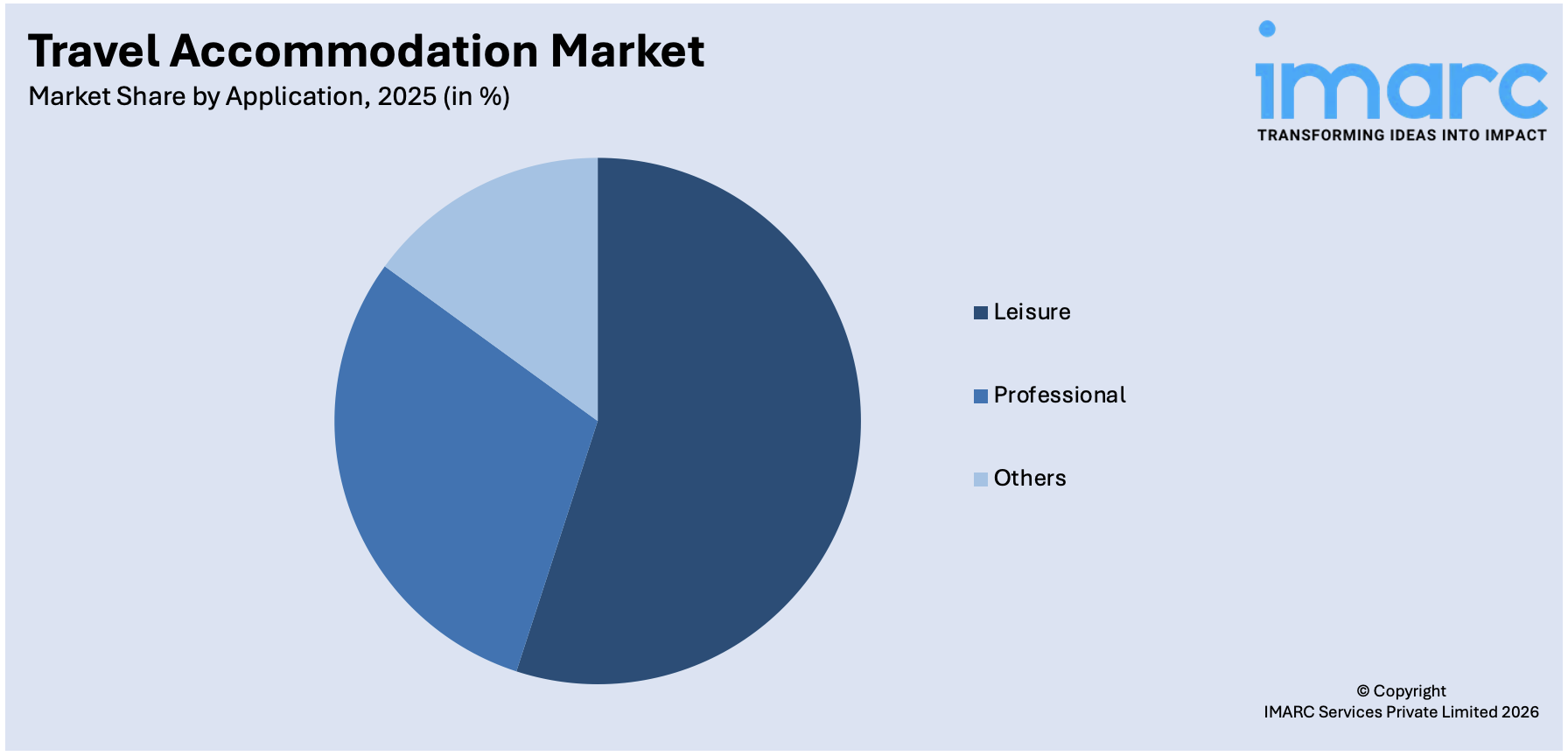
Leisure currently leads the overall industry with 62.6% of market share in 2025. Leisure holds the biggest market share on account of the increasing disposable incomes and expanding middle-class population across various regions, which, in turn, are resulting in a rise in leisure travel. Additionally, evolving user preferences for personalized and memorable experiences are shifting the focus towards the leisure segment. Accommodations that offer distinct atmospheres, local culture, and recreational facilities align with the desires of leisure travelers, driving their preference for such options over traditional lodging. Furthermore, the rise of online booking platforms and digital marketing is making it easier for leisure travelers to discover and access a wide range of accommodations, thereby increasing the visibility and accessibility of leisure-oriented properties. This ease of booking aligns with the spontaneous nature of leisure travel, contributing to the segment's dominance.
Regional Analysis:
To get more information on the regional analysis of this market Request Sample
- North America
- United States
- Canada
- Asia Pacific
- China
- Japan
- India
- South Korea
- Australia
- Indonesia
- Others
- Europe
- Germany
- France
- United Kingdom
- Italy
- Spain
- Russia
- Others
- Latin America
- Brazil
- Mexico
- Others
- Middle East and Africa
Europe holds the largest market share, driven by a combination of elements such as its abundant cultural heritage, varied landscapes, and historic sites, which draw a continuous influx of both international and local visitors. The region's strong transportation network, highlighted by effective rail systems and widespread flight links, improves its accessibility, thereby increasing its attractiveness. Options for accommodation in Europe are varied, encompassing everything from upscale hotels to quaint bed and breakfasts, satisfying different budgets and preferences. This extensive selection of options guarantees that Europe caters to a diverse range of travelers. Furthermore, Europe's emphasis on sustainability and environmentally conscious lodgings corresponds effectively with the rising interest in responsible travel. The area enjoys a consistent, year-round flow of visitors drawn to its historic and renowned attractions, minimizing fluctuations in demand. Joint marketing initiatives by governments and tourism agencies enhance Europe's competitive edge, reinforcing its leading status in the market. In 2024, a&o Hostels planned to invest Euro 500 Million (USD 526.63 Million) in expansion by transforming office and retail spaces into hostel accommodations across Europe. One of them is the a&o Florence, set to open in summer 2024, aiming to become Europe’s first net-zero hostel chain by 2025.
Key Regional Takeaways:
United States Travel Accommodation Market Analysis
Robust domestic tourism combined with significant international visitation sustains strong accommodation demand across diverse market segments and geographic regions throughout the country. Corporate travel recovery supports business-oriented properties in metropolitan centers and conference destinations, while leisure demand drives occupancy in recreational markets and cultural attractions. Premium segment expansion reflects consumer willingness to invest in elevated experiences featuring distinctive design, exceptional service, and comprehensive amenity packages that justify higher rate structures. Technology adoption accelerates as properties implement advanced systems for revenue optimization, guest communication, and operational efficiency that enhance competitiveness while controlling costs. Direct booking initiatives gain momentum as properties develop sophisticated digital platforms that reduce distribution costs while strengthening customer relationships through loyalty programs and personalized engagement. Regional diversity creates varied opportunities as accommodation providers customize offerings to match local market characteristics, traveler demographics, and competitive dynamics that define success parameters across different markets.
Europe Travel Accommodation Market Analysis
The travel accommodation market in Europe is growing steadily, primarily driven by tourism demand and the changing patterns of travels. European Travel Commission, for instance, reported over 700 million international tourists visiting Europe in 2023 with an increase in demand for accommodations in most destinations. Destinations like France, Italy, and Spain had more than a 5% increase in bookings compared to the previous year. Rising with the sharing economy through platforms such as Airbnb is disrupting traditional hotel models as it appeals to travellers for more affordable or unique accommodation. The luxury segment is also being driven by higher numbers of high-net-worth individuals visiting Europe. Sustainable tourism initiatives by governments help in the development of sustainable accommodation options, which add to the region's increasing share of the global travel accommodation market.
Asia Pacific Travel Accommodation Market Analysis
Rapid economic development drives unprecedented growth as expanding middle classes throughout the region increase travel participation rates and accommodation consumption patterns. Urban development creates demand for business-oriented properties serving corporate travelers, while resort destinations attract leisure visitors seeking relaxation, cultural experiences, and recreational activities. Infrastructure investments improve accessibility to previously remote destinations, creating new market opportunities for accommodation providers willing to establish presences in emerging locations. Domestic tourism growth supplements international visitation, creating diversified demand sources that reduce vulnerability to external market disruptions while supporting sustainable business development. Budget segment expansion addresses price-sensitive travelers seeking value-oriented accommodations that deliver essential amenities without premium positioning or luxury service levels. Digital payment adoption and mobile booking preferences influence distribution strategies as properties optimize online presence and develop capabilities that match evolving consumer expectations throughout the region.
Latin America Travel Accommodation Market Analysis
Tourism sector revitalization drives accommodation demand recovery as international visitation rebounds and domestic travel participation increases across key markets throughout the region. Natural attractions including beaches, rainforests, and mountain landscapes attract adventure travelers and nature enthusiasts seeking unique experiences unavailable in other global destinations. Cultural richness encompassing indigenous traditions, colonial heritage, and contemporary artistic expression creates differentiated appeal that attracts culturally curious travelers seeking authentic experiences. Investment inflows support accommodation development across luxury, midscale, and budget segments as developers recognize market potential and favorable growth trajectories in emerging destinations. Sustainable tourism emphasis aligns with conservation priorities while attracting environmentally conscious travelers seeking responsible travel options that minimize negative impacts. Economic development improves domestic purchasing power while expanding middle-class participation in leisure travel activities that support accommodation demand growth throughout the forecast period.
Middle East and Africa Travel Accommodation Market Analysis
Infrastructure development improves destination accessibility while creating foundations for tourism industry expansion across previously underserved markets throughout both regions. Luxury segment strength reflects affluent international visitation from Europe, Asia, and North America seeking premium experiences in distinctive destination environments. Business travel associated with natural resource industries, technology sectors, and regional commerce supports accommodation demand in commercial centers and economic hubs. Government diversification strategies prioritize tourism development as economic engines that create employment, attract foreign investment, and reduce dependence on traditional revenue sources. Eco-tourism growth in Africa leverages wildlife assets, natural landscapes, and conservation initiatives that attract international travelers seeking authentic safari experiences and nature-based adventures. Emerging market potential attracts international hospitality operators seeking growth opportunities while domestic entrepreneurship develops accommodation offerings that serve evolving local travel preferences throughout the regions.
Competitive Landscape:
Top companies in the sector are intentionally enhancing their offerings to meet evolving user demands. They are utilizing advanced technologies such as AI, IoT, and mobile integrations to deliver customized experiences and improve operational efficiency. Sustainable investments, including eco-friendly approaches and green certifications, are becoming increasingly significant to meet the demands of environmentally conscious travelers. Improving partnerships with online travel agencies, metasearch tools, and loyalty programs is aiding in client retention and acquisition. Furthermore, companies are expanding their services by diversifying lodging options to cater to luxury, budget, and alternative accommodation demands. They are adopting aggressive expansion strategies of major hospitality brands into untapped regions. By entering new markets, companies are addressing the rising demand for diverse and high-quality accommodations. In 2024, Hilton revealed intentions to grow its global presence by entering five new markets: Bermuda, Paraguay, Nepal, Laos, and Timor-Leste. The growth features inaugural openings for acclaimed brands such as Hilton Garden Inn, DoubleTree, and Tapestry Collection in these areas.
The report provides a comprehensive analysis of the competitive landscape in the travel accommodation market with detailed profiles of all major companies, including:
- A&O Hotels and Hostels GmbH
- Accor S.A.
- Airbnb Inc.
- Hilton Worldwide Inc.
- Hyatt Hotels Corporation
- Marriott International Inc.
- OYO Rooms
- Radisson Hotel Group
- Red Lion Hotels Corporation (Sonesta International Hotels Corporation)
- Wyndham Destinations
Travel Accommodation Market News:
- August 2025: RateGain Travel Technologies and Profitroom have partnered strategically to provide improved revenue and distribution capabilities to hotels in the Middle East and Africa. Through the partnership, RateGain's channel management system and Profitroom's hotel technology are combined to provide hotels with real-time access to more than 400 demand partners worldwide. By maintaining uniform rates and availability across all booking platforms, hoteliers can lower the likelihood of overbookings and pricing problems.
- July 2025: The online travel agency platform Yatra and OYO have partnered to increase OYO's visibility in the business travel market, especially in important corporate hubs and transit corridors like Delhi-NCR, Mumbai, Bangalore, Chennai, Kolkata, and Ahmedabad. More than 500 hotels operated by OYO have already been added on Yatra's platform for the first time as a result of this partnership. For business visitors around India, it offers hotels under mid-range and premium brands include SUNDAY, Palette, Clubhouse, Townhouse, Townhouse Oak, and Collection O.
- May 2025: One of the biggest hospitality organizations in India, the Indian Hotels Company Limited (IHCL), has announced a strategic alliance with digital travel site Agoda. Through this partnership, Agoda's premium products are extended globally, giving passengers access to IHCL's top-notch property portfolio via Agoda's platform. Through the arrangement, Agoda's worldwide clientele will have access to 250 of IHCL's operating properties, including well-known brands like Taj, SeleQtions, Vivanta, Ginger, and the recently introduced Claridges Collection.ares, and multi-vendor pricing. With features like one-click onboarding and detailed expense dashboards, OOO enhances corporate travel efficiency, emphasizing policy adherence and cost-effectiveness.
Travel Accommodation Market Report Scope:
| Report Features | Details |
|---|---|
| Base Year of the Analysis | 2025 |
| Historical Period | 2020-2025 |
| Forecast Period | 2026-2034 |
| Units | Billion USD |
| Scope of the Report | Exploration of Historical Trends and Market Outlook, Industry Catalysts and Challenges, Segment-Wise Historical and Future Market Assessment:
|
| Types Covered | Hotels, Hostels, Resorts, Vacation Rentals, Others |
| Price Points Covered | Economy, Mid-Range, Luxury |
| Mode of Bookings Covered | Direct Booking, Online Travel Agency, Others |
| Applications Covered | Leisure, Professional, Others |
| Regions Covered | Asia Pacific, Europe, North America, Latin America, Middle East and Africa |
| Countries Covered | United States, Canada, Germany, France, United Kingdom, Italy, Spain, Russia, China, Japan, India, South Korea, Australia, Indonesia, Brazil, Mexico |
| Companies Covered | A&O Hotels and Hostels GmbH, Accor S.A., Airbnb Inc., Hilton Worldwide Inc., Hyatt Hotels Corporation, Marriott International Inc., OYO Rooms, Radisson Hotel Group, Red Lion Hotels Corporation (Sonesta International Hotels Corporation), Wyndham Destinations, etc. |
| Customization Scope | 10% Free Customization |
| Post-Sale Analyst Support | 10-12 Weeks |
| Delivery Format | PDF and Excel through Email (We can also provide the editable version of the report in PPT/Word format on special request) |
Key Benefits for Stakeholders:
- IMARC’s report offers a comprehensive quantitative analysis of various market segments, historical and current market trends, market forecasts, and dynamics of the travel accommodation market from 2020-2034.
- The research study provides the latest information on the market drivers, challenges, and opportunities in the global travel accommodation market.
- The study maps the leading, as well as the fastest-growing, regional markets. It further enables stakeholders to identify the key country-level markets within each region.
- Porter's Five Forces analysis assists stakeholders in assessing the impact of new entrants, competitive rivalry, supplier power, buyer power, and the threat of substitution. It helps stakeholders to analyze the level of competition within the travel accommodation industry and its attractiveness.
- Competitive landscape allows stakeholders to understand their competitive environment and provides an insight into the current positions of key players in the market.
Frequently Asked Questions About the Travel Accommodation Market Report
The travel accommodation market was valued at USD 961.6 Billion in 2025.
IMARC estimates the travel accommodation market to exhibit a CAGR of 9.56% during 2026-2034, reaching a value of USD 2,187.5 Billion by 2034.
The market is primarily driven by growth in international tourism fueled by rising disposable incomes, increasing reliance on online booking platforms enhancing convenience and transparency, and rapid development in traveler preferences for unique, personalized experiences. Additionally, the integration of smart technologies like artificial intelligence-driven pricing tools, digital concierge services, and contactless check-ins is enhancing guest experiences while expanding market opportunities.
Hotels are the most popular type of accommodation, holding a 53.6% of the share in the market. They attract diverse travelers with a range of amenities, reliable services, and prime locations in key destinations.
Europe currently dominates the travel accommodation market driven by its diverse cultural heritage, extensive tourism infrastructure, well-connected transportation networks, and increasing popularity as a year-round destination among international and domestic travelers.
Some of the major players in the travel accommodation market include A&O Hotels and Hostels GmbH, Accor S.A., Airbnb Inc., Hilton Worldwide Inc., Hyatt Hotels Corporation, Marriott International Inc., OYO Rooms, Radisson Hotel Group, Red Lion Hotels Corporation (Sonesta International Hotels Corporation), and Wyndham Destinations, among others.
Need more help?
- Speak to our experienced analysts for insights on the current market scenarios.
- Include additional segments and countries to customize the report as per your requirement.
- Gain an unparalleled competitive advantage in your domain by understanding how to utilize the report and positively impacting your operations and revenue.
- For further assistance, please connect with our analysts.
 Request Customization
 Speak to an Analyst
 Request Brochure
 Inquire Before Buying
Benefits of Customization
- Personalize this research
- Triangulate with your data
- Get data as per your format and definition
- Gain a deeper dive into a specific application, geography, customer, or competitor
- Any level of personalization
Get in Touch With Us
UNITED STATES
Phone: +1-201-971-6302
INDIA
Phone: +91-120-433-0800
UNITED KINGDOM
Phone: +44-753-714-6104
Email: [email protected]
Client Testimonials




.webp)




.webp)













Related Reports

Choose your plan
*Please note that the prices mentioned below are starting prices for each bundle type. Kindly contact our team for further details.*
Single User License
- 1 User License, Access on 2 Devices
- PDF Report + Excel Dataset (Password Protected)
- Lifetime Access
- No Printing Rights
- 10% Free Report Customization
- 10–12 Weeks of Analyst Support
Five User License
- Access for 5 Users, 2 Devices per User
- PDF Report + Excel Dataset (Password Protected)
- Lifetime Access
- Dedicated Account Manager
- 12–14 Weeks of Analyst Support
- No Printing Rights
- 15% Free Report Customization
- 25% Discount on Your Next Purchase
Corporate User License
- Unlimited User Access (Within Your Organization)
- PDF Report + Excel Dataset
- Lifetime Access
- Dedicated Account Manager
- 14–20 Weeks of Analyst Support
- No Printing Rights
- 20% Free Report Customization
- 30% Discount on Your Next Purchase
Essential Insights
What's included:
3 reports
- Lifetime Access
- PDF Reports
- Excel Datasets
- 2 Weeks of Free Analyst Support
- 2 User Licenses
- Access on 2 Devices
- Printing Rights
- Complimentary PowerPoint (PPT) Version
- Complimentary License Upgrade
Professional Access
What's included:
5 reports
- Lifetime Access
- PDF Reports
- Excel Datasets
- 8 Weeks of Free Analyst Support
- 2 User Licenses
- Access on 2 Devices
- Printing Rights
- Complimentary PowerPoint (PPT) Version
- Complimentary License Upgrade
Business Advantage
What's included:
8 reports
- Lifetime Access
- PDF Reports
- Excel Datasets
- 14 Weeks of Free Analyst Support
- 2 User Licenses
- Access on 2 Devices
- Printing Rights
- Complimentary PowerPoint (PPT) Version
- Complimentary License Upgrade
Enterprise Intelligence
What's included:
10 reports
- Lifetime Access
- PDF Reports
- Excel Datasets
- 20 Weeks of Free Analyst Support
- 2 User Licenses
- Access on 2 Devices
- Printing Rights
- Complimentary PowerPoint (PPT) Version
- Complimentary License Upgrade