
UAE Corporate Wellness Market Size, Share, Trends and Forecast by Service, Category, Delivery, Organization Size, and Region, 2026-2034
UAE Corporate Wellness Market Summary:
The UAE corporate wellness market size increased from USD 360.88 Million in 2025 to USD 381.18 Million in 2026 and is projected to reach USD 590.58 Million by 2034, growing at a compound annual growth rate of 5.63% from 2026-2034.
The UAE corporate wellness market is witnessing robust growth as organizations increasingly prioritize employee health and well-being as strategic business imperatives. Rising healthcare costs, growing awareness of mental health, and supportive government policies are accelerating adoption of comprehensive wellness programs. Employers are embracing holistic approaches that integrate physical fitness, nutritional guidance, stress management, and psychological support to enhance workforce productivity and organizational performance.
Key Takeaways and Insights:
-
By Service: Fitness dominates the market with a share of 28.05% in 2025, owing to growing health consciousness among employees and increasing corporate investment in physical activity programs. Rising prevalence of lifestyle diseases and sedentary work patterns are fueling demand for fitness services.
-
By Category: Fitness and nutrition consultants lead the market with a share of 45.12% in 2025. This dominance is driven by organizations seeking expert-guided wellness interventions that deliver personalized fitness regimens and dietary recommendations tailored to diverse workforce requirements.
-
By Delivery: Offsite represents the largest segment with a market share of 60.09% in 2025, reflecting the flexibility offered by external wellness facilities and virtual platforms that enable employees to engage in health activities beyond traditional workplace boundaries.
-
By Organization Size: Large scale organizations exhibit a clear dominance in the market with 50.1% share in 2025, driven by substantial resources enabling comprehensive wellness program implementation and the strategic recognition of employee well-being as essential to organizational success.
-
Key Players: Key players drive the UAE corporate wellness market by expanding service portfolios, developing innovative digital wellness platforms, and establishing strategic partnerships with healthcare providers. Their investments in technology integration, personalized wellness solutions, and corporate partnerships strengthen market positioning and accelerate adoption across diverse organizational segments.
The UAE corporate wellness market is advancing rapidly as organizations recognize the direct correlation between employee well-being and business performance. Government-led initiatives, including the National Strategy for Wellbeing 2031 and the Dubai Fitness Challenge, have significantly influenced corporate attitudes toward workplace health programs. Companies are increasingly viewing employee wellness as a strategic investment rather than a discretionary benefit, with comprehensive programs encompassing physical fitness, mental health support, nutritional guidance, and work-life balance initiatives. A survey by Bupa Global indicates that 88% of UAE companies plan to increase their spending on employee well-being initiatives in 2025, motivated by measurable returns on wellness investment. The market is also witnessing strong adoption of digital wellness technologies, including wearable fitness trackers, mental health applications, and AI-powered health platforms that deliver personalized recommendations. Rising healthcare costs are compelling organizations to adopt preventive health measures, while the diverse expatriate workforce is driving demand for culturally sensitive and multilingual wellness solutions that address varied employee needs across the region.
UAE Corporate Wellness Market Trends:
Digital Wellness Technology Integration
The UAE corporate wellness market is experiencing significant transformation through digital technology adoption. Organizations are implementing wearable fitness trackers, wellness mobile applications, and AI-driven health platforms to deliver personalized employee wellness experiences. These technologies enable real-time health monitoring, customized workout recommendations, and data-driven insights that inform corporate wellness strategies. Virtual reality meditation rooms and gamified wellness challenges are increasingly popular among progressive employers. The integration of digital solutions allows organizations to track participation rates and measure program effectiveness while accommodating hybrid work arrangements that have become prevalent across the UAE corporate landscape.
Mental Health and Psychological Well-being Focus
Mental health has emerged as a central priority within UAE corporate wellness programs, reflecting global awareness trends and regional government support. The Federal Mental Health Law enacted in May 2024 protects workers against discrimination and promotes workplace mental health initiatives. Organizations are integrating Employee Assistance Programs offering confidential counseling services, stress management workshops, and mindfulness training. Mental health days are increasingly being offered as standard employee benefits. UAE corporate wellness market growth is being propelled by employers recognizing that psychological well-being directly influences productivity, engagement, and retention, prompting investments in comprehensive mental health support systems.
Holistic and Hybrid Wellness Service Models
UAE organizations are transitioning from traditional fitness-focused programs toward holistic wellness approaches encompassing physical, mental, financial, and social well-being. Hybrid service models combining multiple wellness components under unified platforms are gaining traction as employers seek comprehensive employee support solutions. Programs now routinely incorporate nutritional counseling, financial wellness education, and work-life balance initiatives alongside conventional fitness offerings. This integrated approach addresses the multifaceted nature of employee well-being and aligns with evolving workforce expectations for supportive and inclusive workplace environments that prioritize overall quality of life.
Market Outlook 2026-2034:
The UAE corporate wellness market is positioned for sustained expansion as organizations continue prioritizing employee health as a strategic business imperative. Government support through the National Wellbeing Strategy 2031 and regulatory frameworks promoting workplace health standards will further accelerate market development. The market generated a revenue of USD 360.88 Million in 2025, which is expected to reach USD 381.18 Million in 2026 and further grow to USD 590.58 Million by 2034, expanding at a compound annual growth rate of 5.63% from 2026-2034. Technological innovations, including artificial intelligence and virtual wellness platforms, are expected to enhance personalization capabilities. Growing mental health awareness and expanding corporate emphasis on employee retention will sustain investment momentum across all organization sizes.
UAE Corporate Wellness Market Report Segmentation:
| Segment Category | Leading Segment | Market Share |
|---|---|---|
| Service | Fitness | 28.05% |
| Category | Fitness and Nutrition Consultants | 45.12% |
| Delivery | Offsite | 60.09% |
| Organization Size | Large Scale Organizations | 50.01% |
Service Insights:
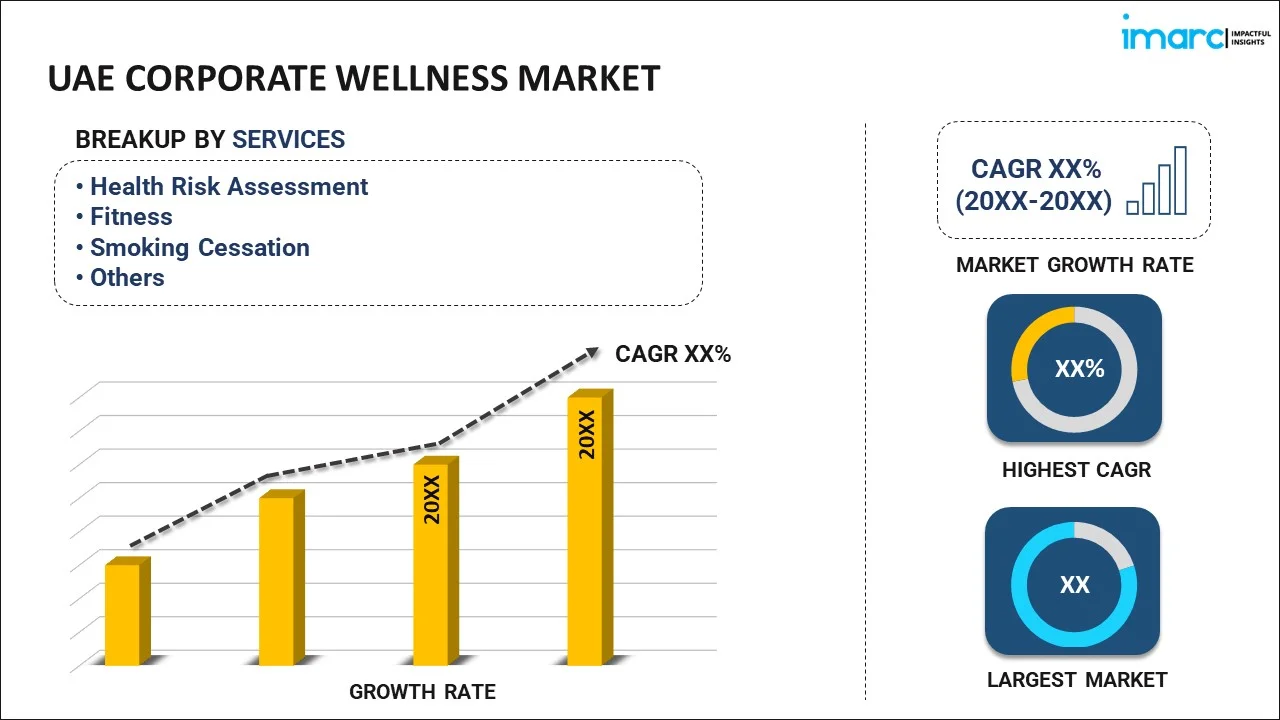
To get detailed segment analysis of this market, Request Sample
- Health Risk Assessment
- Fitness
- Smoking Cessation
- Health Screening
- Nutrition and Weight Management
- Stress Management
- Others
Fitness dominates with a market share of 28.05% of the total UAE corporate wellness market in 2025.
The fitness segment leads the UAE corporate wellness market as organizations increasingly recognize physical activity as foundational to employee health and productivity. Employers are investing in corporate gym memberships, on-site fitness facilities, and partnerships with wellness providers to encourage active lifestyles among their workforces. The Dubai Fitness Challenge, which attracted more than 2.73 Million participants in 2024, has elevated awareness of physical fitness across the corporate sector and broader community. Rising sedentary work patterns and the prevalence of lifestyle diseases have also heightened employer focus on physical activity programs, prompting organizations to integrate structured exercise initiatives into their employee benefits packages.
Corporate fitness initiatives in the UAE encompass diverse offerings including group exercise classes, personal training sessions, and wellness challenges that promote team engagement and healthy competition. Organizations are integrating fitness tracking technologies to monitor participation and measure program outcomes, enabling data-driven optimization of wellness investments. The segment benefits from growing consumer focus on health consciousness and increasing corporate understanding that physically active employees demonstrate higher energy levels, improved mental clarity, and reduced absenteeism rates, making fitness programs essential components of comprehensive workplace wellness strategies.
Category Insights:
- Fitness and Nutrition Consultants
- Psychological Therapists
- Organizations/Employers
Fitness and nutrition consultants lead with a share of 45.12% of the total UAE corporate wellness market in 2025.
Fitness and nutrition consultants dominate the UAE corporate wellness market as employers in the country seek expert-guided interventions to address employee health comprehensively. These professionals deliver personalized fitness regimens and dietary recommendations tailored to individual employee needs, ensuring measurable health outcomes that align with organizational wellness objectives. Organizations value the credibility and expertise that certified consultants bring to workplace wellness programs, recognizing their ability to design evidence-based interventions. A 2024 survey indicated that 69% of UAE employees consider wellness initiatives a key workplace benefit, driving corporate investment in professional consultation services.
The demand for fitness and nutrition consultants is bolstered by increasing awareness of the connection between diet, physical activity, and workplace productivity. Consultants are integrating technology platforms to deliver remote coaching and monitor client progress, expanding accessibility across dispersed workforces operating in hybrid environments. Corporate partnerships with leading wellness providers ensure quality service delivery and consistent program implementation across multiple office locations. The segment continues to expand as organizations recognize that expert guidance maximizes return on wellness investment through improved employee health outcomes, enhanced engagement levels, and stronger workforce retention.
Delivery Insights:
- Onsite
- Offsite
Offsite exhibits a clear dominance with a 60.09% share of the total UAE corporate wellness market in 2025.
The offsite delivery segment leads the UAE corporate wellness market, reflecting the flexibility and convenience offered by external wellness facilities and digital platforms. Organizations increasingly partner with fitness centers, wellness retreats, and virtual service providers to deliver employee health programs beyond traditional workplace boundaries. The proliferation of hybrid work arrangements has amplified demand for offsite solutions that accommodate remote and distributed workforces, enabling employees to access wellness services regardless of their physical work location. This delivery model aligns with evolving workplace dynamics and employee preferences for flexible wellness engagement options.
Offsite wellness delivery provides employees with access to specialized facilities, diverse program options, and professional-grade equipment that may exceed organizational capabilities for on-premises installations. Corporate gym membership partnerships and wellness app subscriptions enable cost-effective program deployment without substantial capital investment in infrastructure or facility maintenance. The segment benefits from the UAE's well-developed fitness industry ecosystem, with numerous premium facilities and digital platforms available throughout major commercial centers in Dubai, Abu Dhabi, and other emirates, ensuring employees can conveniently access quality wellness services near their homes or workplaces.
Organization Size Insights:
- Small Scale Organizations
- Medium Scale Organizations
- Large Scale Organizations
Large scale organizations represent the leading segment with a 50.1% share of the total UAE corporate wellness market in 2025.
Large scale organizations dominate the UAE corporate wellness market due to substantial financial resources enabling comprehensive program implementation and the strategic recognition of employee well-being as essential to organizational success. Major corporations in commercial districts have established sophisticated wellness infrastructures encompassing on-site fitness facilities, dedicated wellness teams, and extensive vendor partnerships that deliver holistic employee health support. Multinational companies operating in the UAE have imported global best practices while adapting programs to local cultural requirements and workforce demographics, ensuring wellness initiatives resonate with diverse employee populations across various nationalities and backgrounds.
Large enterprises leverage economies of scale to negotiate favorable terms with wellness providers and invest in advanced technologies including AI-powered health platforms and comprehensive employee health analytics that track program effectiveness. These organizations demonstrate measurable returns on wellness investment through reduced healthcare costs, improved productivity metrics, and enhanced talent retention rates. Their leadership in wellness adoption establishes industry benchmarks that influence market standards across the UAE corporate landscape, encouraging medium and small enterprises to develop competitive wellness offerings for their own workforce populations.
Regional Insights:
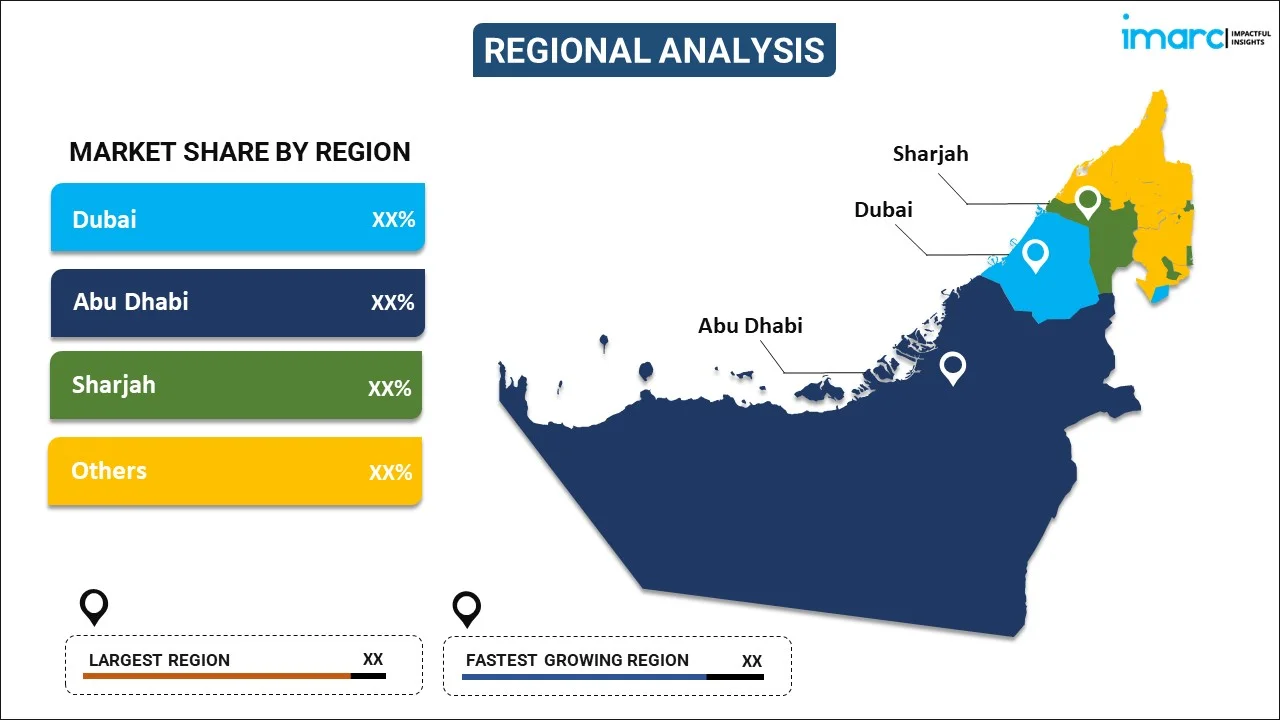
To get detailed regional analysis of this marketRequest Sample
- Dubai
- Abu Dhabi
- Sharjah
- Others
Dubai maintains overwhelming market presence as the dominant hub for wellness operators across the UAE. The region benefits from concentration of multinational corporate headquarters, premium office developments, and government-led initiatives including the Dubai Fitness Challenge. Advanced business infrastructure in commercial districts such as Dubai Internet City and Dubai International Financial Centre provides ideal conditions for comprehensive corporate wellness program implementation and service provider establishment.
Abu Dhabi region is experiencing growth, driven by government sector adoption and substantial multinational presence. The Abu Dhabi Public Health Center has launched initiatives promoting mental and physical health in workplaces, including certification programs for compliant organizations. The emirate's healthcare infrastructure and regulatory framework support structured wellness program development across public and private sector organizations.
Sharjah is emerging as a growing destination for corporate wellness services, benefiting from expanding commercial development and increasing corporate presence. The emirate offers cost-effective alternatives for organizations seeking comprehensive wellness programs while maintaining proximity to Dubai's established service provider ecosystem. Growing awareness of employee health importance among Sharjah-based businesses is driving steady demand expansion across wellness service categories.
Market Dynamics:
Growth Drivers:
Why is the UAE Corporate Wellness Market Growing?
Government Initiatives and Regulatory Support
The UAE government has implemented comprehensive initiatives promoting workplace health and employee well-being, significantly influencing corporate attitudes toward wellness programs. The National Strategy for Wellbeing positions the country as a global leader in quality of life, with specific provisions targeting workplace environments. The Dubai Health Authority and Abu Dhabi Public Health Center have launched programs including the Healthy Workplace Certification, which provides official recognition to companies meeting specific wellness criteria. These certifications have become valuable for corporate branding and talent attraction, encouraging widespread program adoption across various industry sectors. Regulatory frameworks including Federal Decree Law on the Regulation of Labour Relations in the Private Sector obligate employers to provide safe and appropriate work environments, creating compliance incentives for wellness investment. The Federal Mental Health Law further strengthens workplace mental health protections and reduces discrimination, compelling organizations to establish supportive psychological health infrastructure. Government endorsement of workplace wellness has shifted corporate perceptions, positioning employee health programs as strategic necessities rather than optional benefits, while creating accountability mechanisms that drive consistent implementation across public and private sector organizations throughout the emirates.
Rising Employee Productivity and Retention Focus
Organizations across the UAE are increasingly recognizing the direct correlation between employee well-being and business performance, driving substantial investment in comprehensive wellness programs. Companies understand that healthier employees demonstrate higher productivity, reduced absenteeism, and greater job satisfaction, translating into measurable financial returns that justify wellness expenditure. Research consistently validates that organizations prioritizing employee well-being experience enhanced profitability and reduced sick leave rates, reinforcing corporate wellness investment strategies across diverse industries. In the competitive UAE labor market, wellness programs serve as differentiating factors for talent acquisition and retention, particularly among younger workforce segments who prioritize employer support for personal health and work-life balance. The high concentration of multinational corporations has introduced global best practices in employee wellness, elevating standards across the regional corporate landscape and establishing wellness programs as essential rather than optional employee benefits. Organizations increasingly view comprehensive wellness offerings as competitive advantages in attracting skilled professionals, while recognizing that employee health directly influences organizational performance, innovation capacity, and long-term business sustainability in the dynamic UAE economic environment.
Increasing Healthcare Costs and Preventive Health Awareness
Rising healthcare costs in the UAE are compelling organizations to adopt preventive health measures through corporate wellness programs as a cost-mitigation strategy. The UAE maintains one of the most expensive healthcare systems globally, with costs affecting both individuals and businesses substantially and creating financial pressures that incentivize proactive health management approaches. Recent government mandates require all private-sector employers across all emirates to provide health insurance coverage for foreign employees, increasing employer healthcare obligations and incentivizing preventive interventions that reduce long-term medical expenditure. Lifestyle diseases including obesity and diabetes affect significant portions of the UAE adult population, generating substantial healthcare expenditure that organizations seek to reduce through proactive wellness initiatives targeting behavioral modification and health education. Employers recognize that investment in employee health programs delivers substantial returns through reduced medical claims, decreased insurance premiums, and improved workforce availability, making preventive wellness economically compelling. The financial burden of treating chronic conditions has prompted forward-thinking organizations to prioritize early intervention and health promotion activities that address risk factors before they develop into costly medical conditions requiring extensive treatment.
Market Restraints:
What Challenges the UAE Corporate Wellness Market is Facing?
Difficulty in Measuring Return on Investment
Organizations in the UAE face substantial challenges in quantifying the tangible benefits of wellness programs, creating hesitation for long-term investment commitments. Conventional measures including employee engagement rates offer limited insight into actual productivity gains or health outcomes. Differentiating the effects of workplace wellness from other factors influencing employee performance and healthcare costs remains particularly challenging for smaller businesses with limited analytics capabilities, constraining market expansion.
Cultural Barriers and Mental Health Stigma
Despite growing awareness, discussing mental health and stress remains challenging within certain traditional sectors of the UAE corporate environment. Some employees perceive seeking psychological support as a sign of weakness, limiting participation in mental wellness programs. Organizations must navigate cultural sensitivities while promoting open conversations about emotional well-being and providing appropriate support mechanisms that respect diverse workforce backgrounds and expectations.
Limited Accessibility for Small and Medium Enterprises
Small and medium-sized enterprises face significant barriers in implementing comprehensive corporate wellness programs due to budget constraints and limited administrative resources. While large organizations can leverage economies of scale and dedicated wellness teams, smaller businesses struggle to justify investment in extensive wellness infrastructure. This disparity creates market segmentation challenges and limits overall penetration potential across the UAE corporate landscape.
Competitive Landscape:
The UAE corporate wellness market is characterized by a diverse competitive landscape comprising international wellness providers, regional healthcare organizations, and specialized fitness operators. Competition is intensifying as organizations increasingly recognize the strategic importance of employee well-being, driving service providers to differentiate through technology integration, personalized program delivery, and comprehensive service portfolios. Market participants are focusing on expanding service offerings beyond traditional fitness to encompass mental health support, nutritional guidance, and financial wellness education. Strategic partnerships between wellness providers and corporate clients are becoming more prevalent, with long-term contracts ensuring consistent program implementation. Digital platform development and data analytics capabilities are emerging as key competitive differentiators, enabling providers to demonstrate measurable outcomes and optimize program effectiveness.
UAE Corporate Wellness Market Report Coverage:
| Report Features | Details |
|---|---|
| Base Year of the Analysis | 2025 |
| Historical Period | 2020-2025 |
| Forecast Period | 2026-2034 |
| Units | Million USD |
| Scope of the Report | Exploration of Historical and Forecast Trends, Industry Catalysts and Challenges, Segment-Wise Historical and Predictive Market Assessment:
|
| Services Covered | Health Risk Assessment, Fitness, Smoking Cessation, Health Screening, Nutrition and Weight Management, Stress Management, Others |
| Categories Covered | Fitness and Nutrition Consultants, Psychological Therapists, Organizations/Employers |
| Deliveries Covered | Onsite, Offsite |
| Organization Sizes Covered | Small Scale Organizations, Medium Scale Organizations, Large Scale Organizations |
| Regions Covered | Dubai, Abu Dhabi, Sharjah, Others |
| Customization Scope | 10% Free Customization |
| Post-Sale Analyst Support | 10-12 Weeks |
| Delivery Format | PDF and Excel through Email (We can also provide the editable version of the report in PPT/Word format on special request) |
Frequently Asked Questions About the UAE Corporate Wellness Market Report
The UAE corporate wellness market size increased from USD 360.88 Million in 2025 to USD 381.18 Million in 2026
The UAE corporate wellness market is expected to grow at a compound annual growth rate of 5.63% from 2026-2034 to reach USD 590.58 Million by 2034.
Fitness dominated the market with a share of 28.05%, driven by growing health consciousness among employees, increasing corporate investment in physical activity programs, and rising prevalence of lifestyle diseases across the UAE workforce.
Key factors driving the UAE corporate wellness market include government initiatives promoting workplace health, rising focus on employee productivity and retention, increasing healthcare costs, growing mental health awareness, and expanding adoption of digital wellness technologies.
Major challenges include difficulty measuring return on investment for wellness programs, cultural barriers around mental health discussions, limited accessibility for small and medium enterprises, inconsistent program participation rates, and the need for culturally sensitive solutions addressing the diverse expatriate workforce.
Need more help?
- Speak to our experienced analysts for insights on the current market scenarios.
- Include additional segments and countries to customize the report as per your requirement.
- Gain an unparalleled competitive advantage in your domain by understanding how to utilize the report and positively impacting your operations and revenue.
- For further assistance, please connect with our analysts.
 Request Customization
 Speak to an Analyst
 Request Brochure
 Inquire Before Buying
Benefits of Customization
- Personalize this research
- Triangulate with your data
- Get data as per your format and definition
- Gain a deeper dive into a specific application, geography, customer, or competitor
- Any level of personalization
Get in Touch With Us
UNITED STATES
Phone: +1-201-971-6302
INDIA
Phone: +91-120-433-0800
UNITED KINGDOM
Phone: +44-753-714-6104
Email: [email protected]
Client Testimonials




.webp)




.webp)













Related Reports

Choose your plan
*Please note that the prices mentioned below are starting prices for each bundle type. Kindly contact our team for further details.*
Single User License
- 1 User License, Access on 2 Devices
- PDF Report + Excel Dataset (Password Protected)
- Lifetime Access
- No Printing Rights
- 10% Free Report Customization
- 10–12 Weeks of Analyst Support
Five User License
- Access for 5 Users, 2 Devices per User
- PDF Report + Excel Dataset (Password Protected)
- Lifetime Access
- Dedicated Account Manager
- 12–14 Weeks of Analyst Support
- No Printing Rights
- 15% Free Report Customization
- 25% Discount on Your Next Purchase
Corporate User License
- Unlimited User Access (Within Your Organization)
- PDF Report + Excel Dataset
- Lifetime Access
- Dedicated Account Manager
- 14–20 Weeks of Analyst Support
- No Printing Rights
- 20% Free Report Customization
- 30% Discount on Your Next Purchase
Essential Insights
What's included:
3 reports
- Lifetime Access
- PDF Reports
- Excel Datasets
- 2 Weeks of Free Analyst Support
- 2 User Licenses
- Access on 2 Devices
- Printing Rights
- Complimentary PowerPoint (PPT) Version
- Complimentary License Upgrade
Professional Access
What's included:
5 reports
- Lifetime Access
- PDF Reports
- Excel Datasets
- 8 Weeks of Free Analyst Support
- 2 User Licenses
- Access on 2 Devices
- Printing Rights
- Complimentary PowerPoint (PPT) Version
- Complimentary License Upgrade
Business Advantage
What's included:
8 reports
- Lifetime Access
- PDF Reports
- Excel Datasets
- 14 Weeks of Free Analyst Support
- 2 User Licenses
- Access on 2 Devices
- Printing Rights
- Complimentary PowerPoint (PPT) Version
- Complimentary License Upgrade
Enterprise Intelligence
What's included:
10 reports
- Lifetime Access
- PDF Reports
- Excel Datasets
- 20 Weeks of Free Analyst Support
- 2 User Licenses
- Access on 2 Devices
- Printing Rights
- Complimentary PowerPoint (PPT) Version
- Complimentary License Upgrade