
UAE Weight Loss Market Size, Share, Trends and Forecast by Diet, Equipment, Service, Gender, and Age Group, 2026-2034
UAE Weight Loss Market Summary:
The UAE weight loss market size was valued at USD 1,210 Million in 2025 and is projected to reach USD 1,870 Million by 2034, growing at a compound annual growth rate of 4.93% from 2026-2034.
The market's growth trajectory is driven by escalating obesity rates, government-led health initiatives combating lifestyle diseases, and the rapid proliferation of digital fitness solutions across the Emirates. The UAE government has positioned obesity reduction as a strategic health priority, launching comprehensive programs. Moreover, rising health consciousness, technological advancements in artificial intelligence (AI)-powered fitness applications, and expanding access to wearable devices are transforming how people approach weight management, expanding the UAE weight loss market share.
Key Takeaways and Insights:
-
By Diet: Supplements dominate the market with 46% in 2025, driven by increasing consumer awareness of preventive healthcare and nutritional supplementation
-
By Equipment: Fitness equipment leads the market with a share of 69% share in 2025, reflecting strong demand for home workout solutions and technology-integrated exercise devices
-
By Service: Online weight loss programs represent the largest segment with a market share of 35% in 2025, capitalizing on digital transformation and consumer preferences for flexible, accessible solutions
-
By Gender: Women lead the market with a share of 60% in 2025, supported by proliferation of female-focused fitness centers and culturally-sensitive wellness programs
-
By Age Group: Consumers between 31 to 60 years of age represents the largest segment with a market share of 48% in 2025, exhibiting higher disposable incomes and stronger commitment to preventive health measures
-
Key Players: In the UAE weight loss market, leading companies are enhancing their offerings by incorporating personalized fitness plans, expanding their digital presence, partnering with health experts, growing gym networks, and utilizing e-commerce platforms to improve accessibility and customer engagement.
The UAE weight loss market operates within a unique ecosystem characterized by one of the world's highest per-capita incomes and a modern, technology-driven lifestyle that has catalyzed sedentary behavior patterns and unhealthy dietary habits. The proliferation of fast food chains, online delivery platforms, and convenience outlets has made high-calorie processed foods readily accessible, contributing to obesity rates that rank among the highest globally. In 2024, The UAE weight loss market operates within a unique ecosystem characterized by one of the world's highest per-capita incomes and a modern, technology-driven lifestyle that has catalyzed sedentary behavior patterns and unhealthy dietary habits. The proliferation of fast food chains, online delivery platforms, and convenience outlets has made high-calorie processed foods readily accessible, contributing to obesity rates that rank among the highest globally. In 2024, Biongevity, a frontrunner in revolutionary health solutions, has launched a cutting-edge AI-driven health and wellness application, a system crafted to equip users with tailored fitness and health management resources and the world’s first Longevity Fitness Challenge aimed at motivating the UAE’s residents to prioritize health and fitness daily. Biongevity is a prominent healthcare center in Dubai that specializes in longevity genetics and precision medicine, providing solutions that enable consumers to live longer through preventive life-cycle management, enhancing individual lifespan with minimal medical intervention. The implementation of its initiatives is supported by the technology-focused environment, modern infrastructure, and health-oriented population of the UAE.
UAE Weight Loss Market Trends:
Digital Transformation and AI-Powered Fitness Solutions Revolutionizing Weight Management
Digital fitness platforms and artificial intelligence-driven applications are fundamentally transforming weight management approaches across the UAE. The UAE health and wellness market reached approximately USD 19.03 Million in 2024, with smartphone penetration rising. In 2025, A former rugby player from Britain has introduced his smartphone app Athlo, often referred to as the Airbnb for fitness in Dubai. Athlo enables gym members to sell their unused sessions and recoup 60 percent of their funds, tackling what he describes as the ‘subscription fatigue’ affecting the wellness sector. Matthew Mansell, 39, established Athlo after departing from his finance job and ending several gym memberships that he couldn't afford or fully use.
Heightened Adoption of Wearable Technology and Connected Health Devices
Wearable fitness technology has become integral to the UAE's weight loss ecosystem, with the wearable market is growing. Smartwatches, fitness trackers, and heart rate monitors enable continuous monitoring of activity levels, sleep patterns, stress indicators, and caloric expenditure. These devices sync seamlessly with mobile applications, providing data-driven insights that enhance user engagement and support evidence-based decision-making. The integration of wearables with virtual coaching services and community fitness platforms creates comprehensive health management systems. Users increasingly rely on these technologies to track progress, maintain accountability, and receive personalized recommendations that optimize weight loss outcomes and promote sustainable lifestyle modifications. Arab Health, the most significant and impactful healthcare event in the region, is set to tackle the fast expansion of wearable medical devices in the Middle East and Africa (MEA), a market expected to hit $3.29bn by 2033. Set to occur from January 27 to 30, 2025 at the Dubai World Trade Centre (DWTC), Arab Health 2025 is anticipated to draw in excess of 60,000 attendees and over 3,800 exhibitors, representing a notable achievement in the event’s history.
Expansion of Online Weight Loss Programs and Virtual Coaching Services
The transition toward digital fitness solutions has accelerated dramatically, with online weight loss programs emerging as the fastest-growing service segment. Virtual classes, hybrid memberships combining in-person and online sessions, and telehealth nutrition consultations offer unprecedented convenience and privacy. These platforms provide accessible alternatives to traditional fitness centers, particularly appealing to individuals with demanding work schedules, cultural preferences for private exercise environments, and those seeking flexible workout timing options. In 2025, Abu Dhabi has introduced the area's inaugural Personalised Weight Management Programme to aid residents in controlling their weight and avoiding severe health issues. The initiative seeks to reduce the likelihood of illnesses such as type 2 diabetes, cardiovascular issues, and certain cancers, enhancing life quality and supporting individuals in living longer, as reported by Abu Dhabi Media Office. A project launched by the Department of Health – Abu Dhabi (DoH) and the Abu Dhabi Public Health Centre (ADPHC), this is the inaugural program of its sort in the Middle East that integrates digital health monitoring, insurance assistance, and personalized medical care.
Market Outlook 2026-2034:
Government initiatives including the Masar programme's expansion and the Personalized Weight Management Programme launched is driving institutional adoption of evidence-based weight management protocols. The market generated a revenue of USD 1,210 Million in 2025 and is projected to reach a revenue of USD 1,870 Million by 2034, growing at a compound annual growth rate of 4.93% from 2026-2034. The integration of AI in fitness applications, expansion of wearable device capabilities, and proliferation of virtual coaching platforms will reshape service delivery models. Corporate wellness program adoption is accelerating, with UAE companies planning to expand such initiatives, creating substantial B2B market opportunities for weight management service providers and creating sustained momentum throughout the forecast period.
UAE Weight Loss Market Report Segmentation:
|
Segment Category |
Leading Segment |
Market Share |
|
Diet |
Supplements |
46% |
|
Equipment |
Fitness Equipment |
69% |
|
Service |
Online Weight Loss Programs |
35% |
|
Gender |
Women |
60% |
|
Age Group |
Consumers Between 31 to 60 Years of Age |
48% |
Diet Insights:
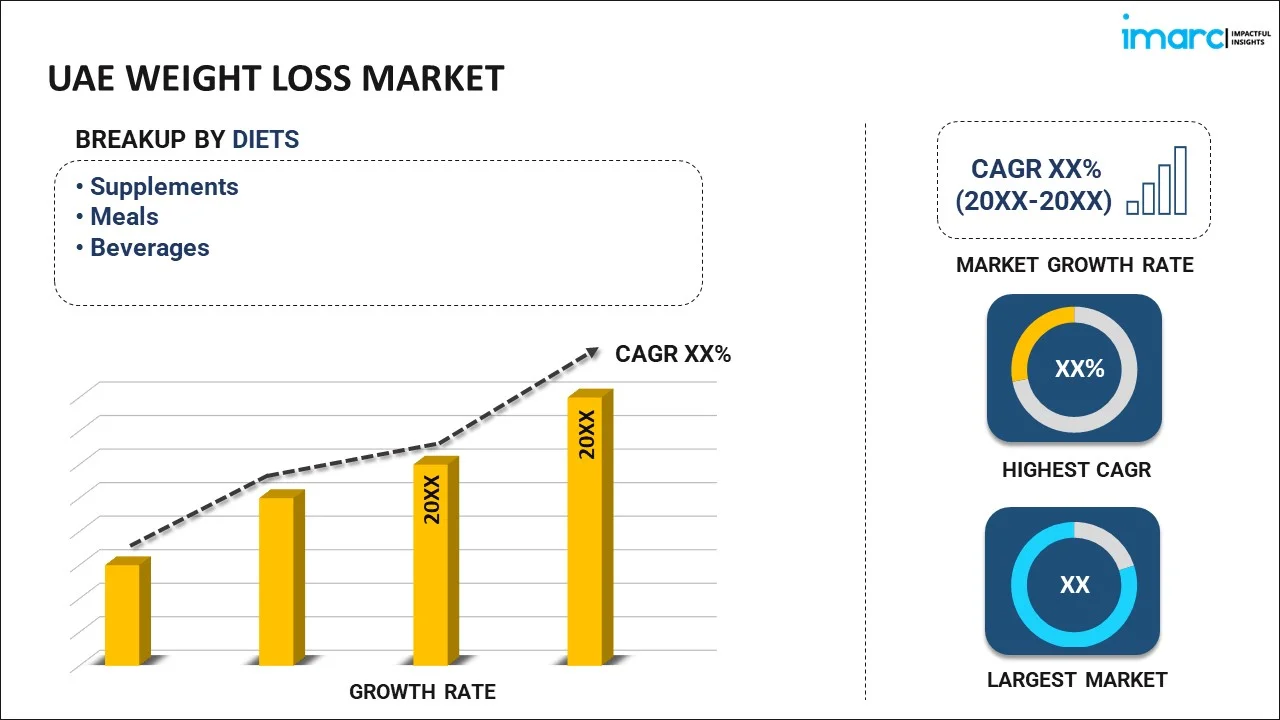
To get more information on this market, Request Sample
- Supplements
- Meals
- Beverages
Supplements dominate with a market share of 46% of the total UAE weight loss market in 2025.
Supplements dominate the UAE weight loss market's diet segment, driven by escalating consumer awareness regarding preventive healthcare and nutritional optimization. The supplements category encompasses weight management formulations, meal replacement powders, protein supplements, fat burners, and appetite suppressants. Rising health consciousness combined with high disposable incomes enables consumers to invest in premium supplement brands offering scientifically-formulated products. The UAE dietary supplements market is growing, with weight management products representing a substantial portion. Distribution through pharmacies, health food stores, supermarkets, and expanding e-commerce platforms ensures widespread accessibility across demographic segments.
Weight loss meals and meal replacement products have gained traction as consumers seek convenient nutrition solutions supporting caloric restriction and portion control. Pre-packaged meal delivery services offering macro-balanced, calorie-controlled options cater to busy professionals lacking time for meal preparation. These services provide structured eating plans developed by nutritionists and dietitians, ensuring adequate nutrient intake while facilitating weight reduction. The segment benefits from increasing awareness of the relationship between dietary quality and weight management outcomes, prompting consumers to prioritize nutritious meal options over processed alternatives.
Equipment Insights:
- Fitness Equipment
- Cardio Vascular Equipment
- Strength Training Equipment
- Others
- Surgical Equipment
- Minimally Invasive/Bariatric Equipment
- Non-Invasive Equipment
Fitness equipment leads with a share of 69% of the total UAE weight loss market in 2025.
Fitness equipment commands the majority share within the equipment segment, reflecting strong consumer demand for home workout solutions and technology-integrated exercise devices. The proliferation of residential developments incorporating fitness facilities, combined with real estate developers emphasizing wellness-focused community amenities, has accelerated equipment adoption. Home gym installations have increased substantially, driven by consumer preferences for convenient, private exercise environments. Cardiovascular equipment including treadmills, ellipticals, stationary bikes, and rowing machines leads sales, enabling calorie-burning activities essential for weight loss. The integration of connected fitness technology, virtual training programs, and interactive workout experiences enhances equipment value propositions and drives premium segment growth.
Strength training equipment represents a growing subsegment as consumers recognize the metabolic benefits of resistance exercise for sustainable weight management. Free weights, resistance bands, multi-functional home gym systems, and specialized strength training machines cater to diverse fitness levels and space constraints. The wearable technology market supports equipment usage through real-time performance tracking and progress monitoring. Additionally, functional training equipment emphasizing movements that improve daily activity performance gains popularity, particularly among consumers seeking holistic fitness approaches beyond pure aesthetics.
Service Insights:
- Fitness Centers and Health Clubs
- Consulting Service
- Surgical Clinics
- Online Weight Loss Programs
- Others
Online weight loss programs exhibits a clear dominance with a 35% share of the total UAE weight loss market in 2025.
Online weight loss programs have emerged as the dominant service category, capitalizing on digital transformation trends and consumer preferences for flexible, accessible weight management solutions. These platforms offer comprehensive services including virtual personal training, nutrition coaching, progress tracking, community support forums, and educational resources. Subscription-based models provide recurring revenue streams while ensuring continuous user engagement through regular content updates and personalized recommendations. In 2025, Abu Dhabi's Department of Health has introduced a prototype for a "gym of the future" fueled by artificial intelligence, aimed at aiding individuals in improving their health both physically and metabolically, along with their mental well-being. The intelligent facility is equipped with screens filled with cameras and sensors, incorporating posture analysis tools, biometric scanners, and AI-powered assistants, enabling the gym to gather real-time data for tailored fitness, nutrition, and recovery plans.
Virtual coaching services combine the expertise of certified nutritionists, fitness trainers, and behavioral psychologists with technological platforms enabling remote consultations, real-time feedback, and accountability mechanisms. Consumers appreciate the privacy, convenience, and cost-effectiveness of online programs compared to traditional in-person services. The integration with wearable devices and health tracking applications creates seamless ecosystems that monitor activity levels, dietary intake, sleep quality, and weight fluctuations. Artificial intelligence algorithms analyze user data to generate adaptive recommendations that optimize program effectiveness based on individual response patterns and progress trajectories.
Gender Insights:
- Men
- Women
Women lead with a share of 60% of the total UAE weight loss market in 2025.
Women constitute the majority demographic within the UAE weight loss market, reflecting cultural dynamics, targeted marketing strategies, and proliferation of female-focused wellness facilities. The rise of female-only fitness centers has addressed cultural preferences for gender-segregated exercise environments, removing barriers to participation and enabling women who previously avoided mixed-gender facilities to engage in fitness activities. These specialized centers offer culturally-sensitive programming, female trainers fluent in Arabic and English, and facilities designed specifically for women's comfort and privacy. The trend toward holistic wellness combining physical fitness with mental health practices resonates particularly strongly among female consumers seeking comprehensive well-being solutions.
Marketing campaigns emphasizing body positivity, health empowerment, and wellness rather than purely aesthetic outcomes have successfully engaged female audiences. Social media platforms play instrumental roles in shaping perceptions and inspiring lifestyle modifications, with influencers and fitness personalities targeting female demographics. Additionally, increased female workforce participation and rising educational attainment correlate with higher health consciousness and willingness to invest in preventive health measures. The segment spans diverse age groups, with younger women gravitating toward digital fitness solutions and older cohorts preferring traditional fitness center memberships and personalized consulting services.

Age Group Insights:
- Consumers Between 31 to 60 Years of Age
- Consumers Between 15 to 30 Years
- Consumers with Age More Than 60 Years
- Consumer with Age Below 15 Years
Consumers between 31 to 60 years of age exhibits a clear dominance with a 48% share of the total UAE weight loss market in 2025.
The 31 to 60 years age demographic represents the primary market segment, driven by multiple convergent factors including higher disposable incomes, greater awareness of lifestyle disease risks, and increased commitment to preventive health measures. This cohort experiences heightened health consciousness as age-related metabolic changes, family medical histories, and emerging health concerns prompt proactive weight management efforts. Professional responsibilities and career advancement often correlate with sedentary work patterns and business-related dining, necessitating structured weight loss interventions. The segment exhibits strong purchasing power and willingness to invest in premium services including personal training, nutrition consulting, and advanced technological solutions supporting sustainable lifestyle modifications.
Consumers within this age range demonstrate sophisticated understanding of evidence-based weight management principles, seeking programs that integrate scientific nutritional guidance, personalized exercise prescriptions, and behavioral modification strategies. Corporate wellness programs increasingly target this demographic, recognizing that employee health directly impacts productivity, healthcare costs, and organizational performance. The 31 to 60 years cohort shows particular receptiveness to hybrid service models combining in-person consultations with digital monitoring and virtual support systems, appreciating the flexibility such approaches offer for managing competing personal and professional obligations.
Market Dynamics:
Growth Drivers:
Why is the UAE Weight Loss Market Growing?
Government-Led Health and Wellness Initiatives Combating Obesity Epidemic
The government has elevated obesity reduction to strategic health priority status, implementing comprehensive programs that drive weight loss market expansion across multiple channels. The National Strategy for Wellbeing 2031 seeks to position the UAE as a global leader in life quality. It relies on a national structure consisting of three primary tiers including individuals, society, and the nation. It encompasses 14 elements and 9 strategic goals, which involve improving individuals' wellbeing by encouraging healthy and active living, fostering good mental health, and embracing positive thinking. These government initiatives generate demand for weight loss products and services while building supportive ecosystems that facilitate sustained behavior modification.
Escalating Obesity Rates and Heightened Health Consciousness Across Demographics
The United Arab Emirates has made minimal advancements in reaching the targets for diet-related non-communicable diseases (NCDs). 44.2% of women aged 18 and older and 30.9% of men in the same age group are experiencing obesity. The obesity rates in the United Arab Emirates exceed the regional averages of 10.3% for females and 7.5% for males. Simultaneously, diabetes is projected to impact 17.4% of adult females and 17.3% of adult males. This health crisis stems from rapid urbanization, rising incomes, and modern lifestyle patterns characterized by minimal physical activity and high consumption of calorie-dense processed foods. The proliferation of fast food chains, cafes, takeaway restaurants, and online delivery platforms has transformed dietary habits, making unhealthy options readily accessible while nutritious alternatives require greater effort to obtain.
Technological Advancements and High Smartphone Penetration Enabling Digital Solutions
With smartphone penetration reaching 98 percent and over 9 million users in the UAE, mobile technology has become the primary gateway for accessing weight loss solutions and health management resources. The percentage of the population in the United Arab Emirates using the internet was reported as 100% in 2024, according to the World Bank's development indicators gathered from officially acknowledged sources. The prevalence of tech-savvy consumers combined with high disposable incomes has accelerated adoption of innovative weight management technologies including artificial intelligence-driven apps, wearable devices, and connected fitness equipment. Digital platforms offer unprecedented convenience, personalization, and accessibility, particularly appealing to younger demographics and busy professionals seeking flexible alternatives to traditional gym memberships and in-person consultations. The integration of wearables with fitness applications creates comprehensive health ecosystems that monitor progress, provide real-time feedback, and maintain user engagement through gamification and social connectivity features.
Market Restraints:
What Challenges the UAE Weight Loss Market is Facing?
Extreme Climate Conditions Limiting Outdoor Physical Activity Participation
The UAE's exceptionally high temperatures for most of the year, frequently exceeding 40 degrees Celsius during summer months, significantly restrict outdoor exercise options including jogging, cycling, team sports, and recreational activities. This climatic constraint creates dependency on indoor fitness facilities, air-conditioned environments, and home-based workout solutions, potentially increasing barriers to entry for price-sensitive consumers unable to afford gym memberships or home equipment investments. The limited outdoor exercise opportunities reduce spontaneous physical activity and necessitate deliberate planning to engage in fitness activities, creating friction that may discourage inconsistent exercisers from maintaining regular routines.
Cultural Factors and Traditional Attire Reducing Weight Management Awareness
Traditional Emirati clothing such as dish-dash worn by men and abayas worn by women features loose, flowing designs that effectively conceal body shape and excess weight. This cultural practice results in reduced visual awareness among population segments regarding their weight status, leading to delayed recognition of weight-related health issues. Unlike societies where body-conscious clothing makes weight changes immediately apparent, the UAE's traditional dress codes can mask obesity, diminishing the urgency for weight management interventions and limiting market penetration among specific demographic groups who may not recognize their need for weight loss solutions until health complications manifest.
Regulatory Compliance and Product Standardization Creating Market Entry Barriers
The UAE weight loss market operates under stringent regulations enforced by the Emirates Authority for Standardization and Metrology and the Ministry of Health and Prevention. Compliance with product registration requirements, labeling specifications, ingredient disclosure standards, and safety protocols poses substantial challenges for manufacturers and service providers. The approval process for weight loss medications, including GLP-1 receptor agonists, requires comprehensive documentation, clinical evidence, and regulatory submissions that delay market entry and limit consumer access to innovative pharmaceutical solutions. These regulatory requirements, while protecting consumer safety, create barriers for new market entrants and may constrain product variety available to consumers.
Competitive Landscape:
In the UAE weight loss market, key players are adopting various strategies to improve their business performance. Many companies are integrating personalized weight loss programs, offering customized fitness and nutrition plans tailored to individual needs. This approach has gained traction due to its focus on long-term health and wellness rather than quick fixes. Digital transformation is also a significant focus, with businesses expanding their online presence and developing mobile apps for fitness tracking, meal planning, and virtual coaching. This allows for greater accessibility and customer engagement, reaching a wider audience beyond physical locations. Additionally, partnerships with health professionals, nutritionists, and wellness experts are becoming increasingly common, as companies strive to provide credible, expert-backed solutions. The expansion of gym networks and fitness centers, along with a growing emphasis on e-commerce, enables brands to cater to the diverse needs of consumers, making products and services more accessible across different regions of the UAE.
Recent Developments:
-
In October 2025, Purpose Brands LLC declared the official launch of the inaugural Anytime Fitness club in Dubai, United Arab Emirates (UAE). The rights to franchise the Anytime Fitness brand in Dubai belong to Purple Fitness LLC, with the main club set to open on November 1 in the central area of the Arjan community, Al Barsha South 3, Dubai.
-
In February 2025, UBX, the fastest-growing boxing and strength fitness franchise globally, has achieved another significant milestone by launching its inaugural location in the United Arab Emirates (UAE). The debut of UBX Marina Gate in Dubai expands the brand's presence to eight nations worldwide and underscores their impressive growth path.
UAE Weight Loss Market Report Coverage:
| Report Features | Details |
|---|---|
| Base Year of the Analysis | 2025 |
| Historical Period | 2020-2025 |
| Forecast Period | 2026-2034 |
| Units | Million USD |
| Scope of the Report |
Exploration of Historical Trends and Market Outlook, Industry Catalysts and Challenges, Segment-Wise Historical and Future Market Assessment:
|
| Diets Covered | Supplements, Meals, Beverages |
| Equipments Covered |
|
| Services Covered | Fitness Centers and Health Clubs, Consulting Service, Surgical Clinics, Online Weight Loss Programs, Others |
| Genders Covered | Men, Women |
| Age Groups Covered | Consumers Between 31 to 60 Years of Age, Consumers Between 15 to 30 Years, Consumers with Age More Than 60 Years, Consumer with Age Below 15 Years |
| Customization Scope | 10% Free Customization |
| Post-Sale Analyst Support | 10-12 Weeks |
| Delivery Format | PDF and Excel through Email (We can also provide the editable version of the report in PPT/Word format on special request) |
Frequently Asked Questions About the UAE Weight Loss Market Report Report
The UAE weight loss market size was valued at USD 1,210 Million in 2025.
The UAE weight loss market is expected to grow at a compound annual growth rate of 4.93% from 2026-2034 to reach USD 1,870 Million by 2034.
Supplements dominate the service segment with 46% market share, escalating consumer awareness regarding preventive healthcare and nutritional optimization. The supplements category encompasses weight management formulations, meal replacement powders, protein supplements, fat burners, and appetite suppressants.
The market is driven by government-led health initiatives including the Masar programme and personalized weight management program, escalating obesity rates affecting the GDP by 2035, and technological advancements with smartphone penetration rising, thereby enabling digital fitness solutions and AI-powered applications.
Major challenges include extreme climate conditions restricting outdoor physical activities, cultural factors where traditional attire conceals excess weight reducing awareness, and stringent regulatory compliance requirements creating market entry barriers for new products and services.
Need more help?
- Speak to our experienced analysts for insights on the current market scenarios.
- Include additional segments and countries to customize the report as per your requirement.
- Gain an unparalleled competitive advantage in your domain by understanding how to utilize the report and positively impacting your operations and revenue.
- For further assistance, please connect with our analysts.
 Request Customization
 Speak to an Analyst
 Request Brochure
 Inquire Before Buying
Benefits of Customization
- Personalize this research
- Triangulate with your data
- Get data as per your format and definition
- Gain a deeper dive into a specific application, geography, customer, or competitor
- Any level of personalization
Get in Touch With Us
UNITED STATES
Phone: +1-201-971-6302
INDIA
Phone: +91-120-433-0800
UNITED KINGDOM
Phone: +44-753-714-6104
Email: [email protected]
Client Testimonials




.webp)




.webp)













Related Reports

Choose your plan
*Please note that the prices mentioned below are starting prices for each bundle type. Kindly contact our team for further details.*
Single User License
- 1 User License, Access on 2 Devices
- PDF Report + Excel Dataset (Password Protected)
- Lifetime Access
- No Printing Rights
- 10% Free Report Customization
- 10–12 Weeks of Analyst Support
Five User License
- Access for 5 Users, 2 Devices per User
- PDF Report + Excel Dataset (Password Protected)
- Lifetime Access
- Dedicated Account Manager
- 12–14 Weeks of Analyst Support
- No Printing Rights
- 15% Free Report Customization
- 25% Discount on Your Next Purchase
Corporate User License
- Unlimited User Access (Within Your Organization)
- PDF Report + Excel Dataset
- Lifetime Access
- Dedicated Account Manager
- 14–20 Weeks of Analyst Support
- No Printing Rights
- 20% Free Report Customization
- 30% Discount on Your Next Purchase
Essential Insights
What's included:
3 reports
- Lifetime Access
- PDF Reports
- Excel Datasets
- 2 Weeks of Free Analyst Support
- 2 User Licenses
- Access on 2 Devices
- Printing Rights
- Complimentary PowerPoint (PPT) Version
- Complimentary License Upgrade
Professional Access
What's included:
5 reports
- Lifetime Access
- PDF Reports
- Excel Datasets
- 8 Weeks of Free Analyst Support
- 2 User Licenses
- Access on 2 Devices
- Printing Rights
- Complimentary PowerPoint (PPT) Version
- Complimentary License Upgrade
Business Advantage
What's included:
8 reports
- Lifetime Access
- PDF Reports
- Excel Datasets
- 14 Weeks of Free Analyst Support
- 2 User Licenses
- Access on 2 Devices
- Printing Rights
- Complimentary PowerPoint (PPT) Version
- Complimentary License Upgrade
Enterprise Intelligence
What's included:
10 reports
- Lifetime Access
- PDF Reports
- Excel Datasets
- 20 Weeks of Free Analyst Support
- 2 User Licenses
- Access on 2 Devices
- Printing Rights
- Complimentary PowerPoint (PPT) Version
- Complimentary License Upgrade