
United States Bamboos Market Size, Share, Trends and Forecast by Application, and Region, 2026-2034
United States Bamboos Market Summary:
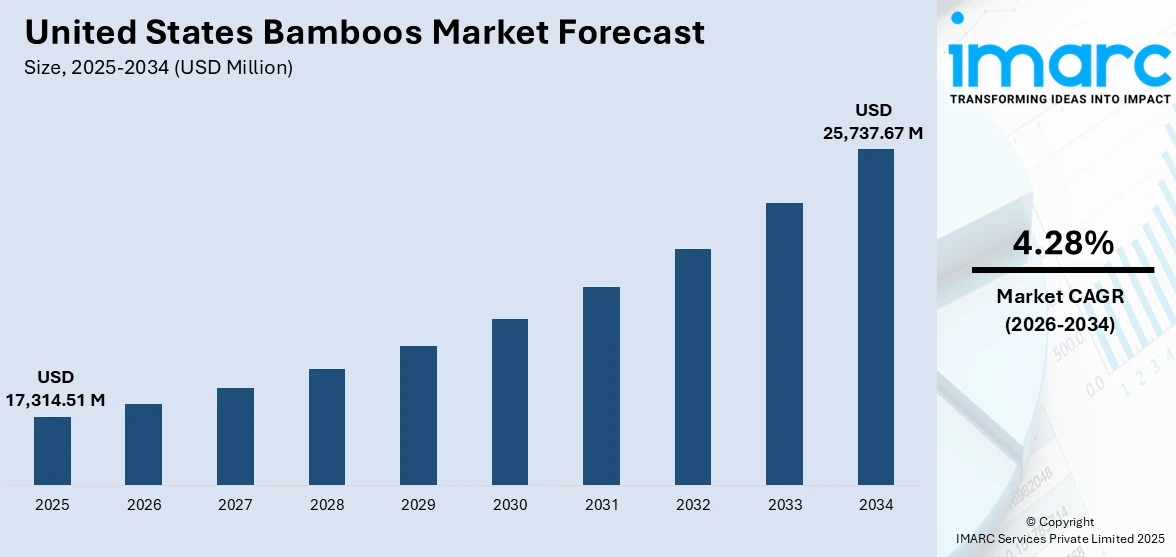
The United States bamboos market size was valued at USD 17,314.51 Million in 2025 and is projected to reach USD 25,737.67 Million by 2034, growing at a compound annual growth rate of 4.28% from 2026-2034.
The United States bamboos market is experiencing robust expansion, driven by increasing adoption of sustainable building materials, rising consumer preferences for eco-friendly products, and the growing bamboo integration across industrial applications. Favorable green building regulations and heightened environmental awareness are accelerating market demand. Advancements in processing technologies and broadening applications across construction, furniture, and food sectors are further strengthening the market share.
Key Takeaways and Insights:
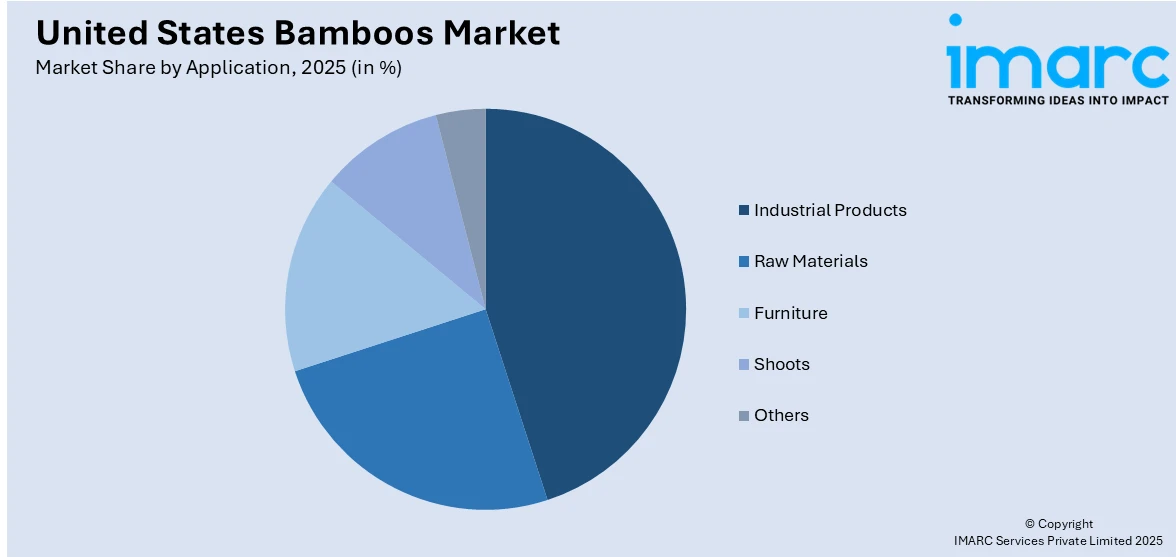
- By Application: Industrial products dominate the market with a share of 38.2% in 2025, propelled by strong demand for construction materials, furniture, flooring, and paneling. Their durability, sustainability, and versatility make bamboo a preferred choice for industrial applications.
- By Region: West leads the market with a share of 35.7% in 2025, driven by pioneering green building codes, strong environmental consciousness among consumers, and the concentration of bamboo product manufacturers and distributors along the Pacific Coast.
- Key Players: Key players drive the United States bamboos market by expanding product portfolios, investing in innovative processing technologies, strengthening distribution networks, and forging partnerships with green building certification bodies to accelerate sustainable material adoption and increase market penetration.
To get more information on this market Request Sample
The United States bamboos market is advancing, as sustainability-focused policies, rising environmental consciousness, and evolving construction practices converge to strengthen demand for bamboo-derived products across diverse industries. Federal and state-level regulatory frameworks favoring renewable and low-carbon materials are creating a highly supportive environment for bamboo adoption across multiple industries. The thriving construction sector, in particular, is witnessing accelerated integration of bamboo products as developers seek sustainable alternatives that meet stringent green building certification requirements. In October 2025, in the United States, construction spending was projected at a seasonally adjusted annual rate of USD 2,175.2 Billion, 0.5 percent (±0.7 percent) higher than the September estimate of USD 2,164.3 Billion. Consumer demand for biodegradable and responsibly sourced goods is further broadening the scope of bamboo applications in furniture, personal care, and food products. The convergence of technological advancements in bamboo processing, favorable trade policies, and shifting consumer preferences towards environmentally responsible products is anticipated to sustain robust momentum across the value chain.
United States Bamboos Market Trends:
Rising Integration of Bamboo in Green Building Applications
The United States construction industry is increasingly incorporating bamboo-based materials into sustainable building projects as architects and developers prioritize renewable, low-embodied-carbon alternatives to traditional timber and synthetic products. Bamboo flooring, structural panels, and engineered wood products are gaining broad acceptance in both residential and commercial applications, supported by evolving green certification frameworks that recognize bamboo as a compliant material for energy-efficient and environmentally responsible construction practices. This trend is reshaping material selection processes across the country's building and renovation sectors.
Expansion of Bamboo-Based Consumer and Lifestyle Products
Bamboo is establishing a growing presence in consumer lifestyle categories, including kitchenware, personal care items, textiles, and packaging alternatives. Increasing consumer awareness about environmental sustainability and the harmful effects of single-use plastics is driving preference for bamboo-based alternatives across everyday household applications. Retailers and e-commerce platforms are expanding their bamboo product assortments significantly, reflecting high demand for biodegradable, renewable household goods that align with evolving eco-conscious purchasing behaviors and sustainability-driven consumption patterns.
Advancements in Bamboo Processing and Engineered Technologies
Innovations in bamboo lamination, strand-woven technology, and moisture-resistant treatments are significantly enhancing the structural performance and durability of bamboo-based industrial products. These processing advancements are enabling bamboo materials to meet demanding load-bearing, fire-resistance, and dimensional stability requirements, previously unattainable with conventional bamboo processing methods. Improved processing capabilities are expanding bamboo applicability in prefabricated construction systems, modular housing components, and high-performance interior finishes, accelerating the United States bamboos market growth.
Market Outlook 2026-2034:
The United States bamboos market is positioned for sustained growth over the forecast period, supported by strengthening regulatory emphasis on sustainable construction, expanding consumer demand for eco-friendly products, and continuous innovation in bamboo processing technologies. The growing adoption of bamboo across industrial, furniture, and food applications is creating diversified revenue streams that enhance market resilience. The market generated a revenue of USD 17,314.51 Million in 2025 and is projected to reach a revenue of USD 25,737.67 Million by 2034, growing at a compound annual growth rate of 4.28% from 2026-2034. Increasing integration of bamboo materials into green building certification programs and the broadening of distribution channels through e-commerce are expected to further strengthen demand.
United States Bamboos Market Report Segmentation:
|
Segment Category |
Leading Segment |
Market Share |
|
Application |
Industrial Products |
38.2% |
|
Region |
West |
35.7% |
Application Insights:
Access the comprehensive market breakdown Request Sample
- Raw Materials
- Industrial Products
- Furniture
- Shoots
- Others
Industrial products dominate with a market share of 38.2% of the total United States bamboos market in 2025.
Industrial products represent the largest application segment in the United States bamboos market, encompassing engineered flooring, construction panels, structural lumber, and bamboo-based composite materials. The segment's dominance is underpinned by growing demand from the sustainable construction sector, where bamboo offers a viable renewable alternative to conventional timber and synthetic building materials. Increasing awareness about environmental sustainability among architects, builders, and developers is driving adoption, while government incentives for green building practices further support market growth.
The industrial products segment continues to benefit from advancements in strand-woven and laminated bamboo processing technologies that enhance structural performance, moisture resistance, and dimensional stability. These innovations are enabling bamboo materials to meet stringent load-bearing and fire-resistance standards required in modern construction applications. Improved finishing techniques and coating technologies are expanding the aesthetic appeal of bamboo products. Manufacturers are also developing modular bamboo components for faster assembly and reduced construction timelines.
Regional Insights:
- Northeast
- Midwest
- South
- West
West leads with a share of 35.7% of the total United States bamboos market in 2025.
West dominates the United States bamboos market, driven by California's pioneering green building regulations and strong environmental consciousness among consumers and developers. In the summer of 2023, California established itself as the first state in the country to require embodied carbon reduction in its building regulations. As of August 2023, CALGreen, officially known as the California Green Building Standards Code – Part 11, Title 24, California Code of Regulations, was revised to restrict embodied carbon emissions during the construction, renovation, or adaptive reuse of existing structures. This mandate is positioning the region as the leading hub for sustainable construction material adoption and directly strengthening bamboo product demand across both commercial and residential sectors throughout the West.
Bamboo products are efficiently distributed across the West and to other states, due to the region’s sophisticated logistics networks and well-established port infrastructure. High-quality production of engineered bamboo panels, floors, and composites is ensured by the proximity of manufacturing centers in California and Oregon to raw material suppliers, experienced personnel, and specialized processing facilities. Adoption is further fueled by partnerships with sustainable design consultancies and green building companies. Large-scale commercial and residential projects are delivered on schedule because of investments in warehousing, transportation, and regional supply chains, which strengthens the West's hegemony in the United States bamboo market.
Market Dynamics:
Growth Drivers:
Why is the United States Bamboos Market Growing?
Strengthening Green Building Regulations and Certification Frameworks
The growing impact of green building certification programs and changing environmental rules that give preference to low-carbon, renewable building materials are driving the bamboo market in the United States. Adoption of bamboo is being facilitated nationwide by state and federal efforts aimed at lowering the carbon footprint of the construction industry. Architects, developers, and contractors are encouraged to include bamboo-based goods in building designs and restoration projects as green building standards increasingly acknowledge bamboo as a compatible material for sustainable construction. The demand for bamboo as a structurally sound substitute for traditional timber and synthetic materials is increasing due to the incorporation of embodied carbon standards into state building codes. Bamboo products are securing an increasing role in residential, commercial, and institutional building projects across the country as these certification programs broaden their material acceptance criteria and changing regulatory frameworks require progressively lower carbon intensity in construction activities.
Rising Consumer Preference for Sustainable and Eco-Friendly Products
In the United States, customers' growing environmental consciousness is driving the demand for bamboo-based substitutes in a variety of product categories, such as furniture, building supplies, home goods, and personal hygiene products. In everyday applications, consumers are choosing biodegradable, renewable, and ethically sourced items over traditional synthetic or plastic-based alternatives due to shifting attitudes regarding sustainability. Bamboo's quick growth cycle, remarkable capacity to sequester carbon, and low need for fertilizer or pesticides make it a very appealing renewable resource for customers of all economic levels and demographics who care about the environment. In response to this increasing demand, retailers and e-commerce sites are increasing the range of bamboo products that they provide. Manufacturers are also innovating with new bamboo-based designs and composite materials to meet evolving consumer preferences and expand usage across both household and commercial applications.
Technological Advancements in Bamboo Processing and Product Development
Continuous innovation in bamboo processing technologies is expanding the range and quality of bamboo-based products available in the market, driving sustained growth across multiple application segments. Advancements in strand-woven engineering, lamination techniques, moisture-resistant treatments, and composite fabrication are enabling bamboo materials to achieve structural performance characteristics that compete with and often exceed those of traditional hardwoods and engineered wood products in demanding applications. These technological improvements are addressing historical concerns regarding dimensional stability, moisture sensitivity, and load-bearing capacity that previously limited bamboo adoption in demanding construction applications and high-performance commercial environments. Prefabricated bamboo panel systems and modular construction components are further broadening the material's applicability in contemporary building practices, reducing construction timelines and waste generation. The ongoing investments in research and development (R&D) by domestic manufacturers are creating increasingly sophisticated product lines that meet the technical specifications required by modern construction codes, interior design standards, and industrial applications across diverse project types.
Market Restraints:
What Challenges the United States Bamboos Market is Facing?
Limited Domestic Production and Processing Infrastructure
The United States bamboos market faces constraints from insufficient domestic bamboo cultivation and processing capacity, resulting in heavy reliance on imports from countries, including China, India, and Thailand. The absence of large-scale local processing facilities restricts the availability of value-added bamboo products, increases supply chain vulnerabilities, and elevates costs associated with international sourcing and logistics, limiting the pace of market expansion and reducing competitiveness against domestically manufactured alternatives.
Quality Standardization and Certification Gaps
Inconsistent quality standards and the absence of unified certification protocols for bamboo products in the United States create challenges for market participants. Variability in moisture content, dimensional stability, and structural performance across imported bamboo materials complicates quality assurance processes and leads to elevated product rejection rates, reducing confidence among builders, architects, and consumers in bamboo's reliability as a construction and industrial material across diverse applications.
Higher Upfront Costs Compared to Conventional Alternatives
Bamboo products generally command premium pricing compared to conventional timber, synthetic, and composite alternatives, creating a significant barrier to mass market adoption. The higher upfront costs associated with bamboo flooring, construction materials, and furniture deter price-sensitive consumers and commercial buyers, particularly in segments where cost competitiveness is a primary purchasing criterion, limiting broader market penetration despite the long-term sustainability and durability benefits that bamboo offers.
Competitive Landscape:
The United States bamboos market features a moderately fragmented competitive landscape with a mix of established domestic manufacturers and international suppliers vying for market share across diverse product categories. Companies are differentiating themselves through product innovations, sustainable sourcing certifications, expanded distribution networks, and strategic alignment with green building certification requirements. Strategic focus on engineered bamboo technologies, green building compliance, and direct-to-consumer (D2C) channels is intensifying competition across the value chain. Manufacturers are investing in advanced processing techniques, portfolio diversification, and partnerships with construction and retail stakeholders to strengthen their market positioning.
Recent Developments:
- In February 2025, Smith&Fong unveiled its newest Plyboo Pro™ product series: bamboo plywood intended for kitchen cabinetry. It was introduced at the NKBA Kitchen & Bath Industry Show® (KBIS) during Design & Construction Week (DCW) at the Las Vegas Convention Center. Created for homeowners, designers, and cabinet makers wanting sustainability without sacrificing style, this new collection provided an environmentally friendly option to conventional wood used in cabinetry.
United States Bamboos Market Report Coverage:
|
Report Features |
Details |
|
Base Year of the Analysis |
2025 |
|
Historical Period |
2020-2025 |
|
Forecast Period |
2026-2034 |
|
Units |
Million USD |
|
Scope of the Report |
Exploration of Historical Trends and Market Outlook, Industry Catalysts and Challenges, Segment-Wise Historical and Future Market Assessment:
|
|
Applications Covered |
Raw Materials, Industrial Products, Furniture, Shoots, Others |
|
Regions Covered |
Northeast, Midwest, South, West |
|
Customization Scope |
10% Free Customization |
|
Post-Sale Analyst Support |
10-12 Weeks |
|
Delivery Format |
PDF and Excel through Email (We can also provide the editable version of the report in PPT/Word format on special request) |
Frequently Asked Questions About the United States Bamboos Market Report
The United States bamboos market size was valued at USD 17,314.51 Million in 2025.
The United States bamboos market is expected to grow at a compound annual growth rate of 4.28% from 2026-2034 to reach USD 25,737.67 Million by 2034.
Industrial products dominated the market with a share of 38.2%, driven by growing adoption of bamboo-based construction materials, engineered flooring, and structural panels supported by expanding green building certification requirements across commercial and residential projects.
Key factors driving the United States bamboos market include strengthening green building regulations, rising consumer preferences for sustainable products, technological advancements in bamboo processing, and expanding applications across the construction, furniture, and food sectors.
Major challenges include limited domestic production infrastructure, quality standardization gaps, higher upfront costs compared to conventional alternatives, heavy reliance on imports, and insufficient processing capacity for value-added bamboo products in the United States.
Need more help?
- Speak to our experienced analysts for insights on the current market scenarios.
- Include additional segments and countries to customize the report as per your requirement.
- Gain an unparalleled competitive advantage in your domain by understanding how to utilize the report and positively impacting your operations and revenue.
- For further assistance, please connect with our analysts.
 Request Customization
 Speak to an Analyst
 Request Brochure
 Inquire Before Buying
Benefits of Customization
- Personalize this research
- Triangulate with your data
- Get data as per your format and definition
- Gain a deeper dive into a specific application, geography, customer, or competitor
- Any level of personalization
Get in Touch With Us
UNITED STATES
Phone: +1-201-971-6302
INDIA
Phone: +91-120-433-0800
UNITED KINGDOM
Phone: +44-753-714-6104
Email: [email protected]
Client Testimonials




.webp)




.webp)













Related Reports

Choose your plan
*Please note that the prices mentioned below are starting prices for each bundle type. Kindly contact our team for further details.*
Single User License
- 1 User License, Access on 2 Devices
- PDF Report + Excel Dataset (Password Protected)
- Lifetime Access
- No Printing Rights
- 10% Free Report Customization
- 10–12 Weeks of Analyst Support
Five User License
- Access for 5 Users, 2 Devices per User
- PDF Report + Excel Dataset (Password Protected)
- Lifetime Access
- Dedicated Account Manager
- 12–14 Weeks of Analyst Support
- No Printing Rights
- 15% Free Report Customization
- 25% Discount on Your Next Purchase
Corporate User License
- Unlimited User Access (Within Your Organization)
- PDF Report + Excel Dataset
- Lifetime Access
- Dedicated Account Manager
- 14–20 Weeks of Analyst Support
- No Printing Rights
- 20% Free Report Customization
- 30% Discount on Your Next Purchase
Essential Insights
What's included:
3 reports
- Lifetime Access
- PDF Reports
- Excel Datasets
- 2 Weeks of Free Analyst Support
- 2 User Licenses
- Access on 2 Devices
- Printing Rights
- Complimentary PowerPoint (PPT) Version
- Complimentary License Upgrade
Professional Access
What's included:
5 reports
- Lifetime Access
- PDF Reports
- Excel Datasets
- 8 Weeks of Free Analyst Support
- 2 User Licenses
- Access on 2 Devices
- Printing Rights
- Complimentary PowerPoint (PPT) Version
- Complimentary License Upgrade
Business Advantage
What's included:
8 reports
- Lifetime Access
- PDF Reports
- Excel Datasets
- 14 Weeks of Free Analyst Support
- 2 User Licenses
- Access on 2 Devices
- Printing Rights
- Complimentary PowerPoint (PPT) Version
- Complimentary License Upgrade
Enterprise Intelligence
What's included:
10 reports
- Lifetime Access
- PDF Reports
- Excel Datasets
- 20 Weeks of Free Analyst Support
- 2 User Licenses
- Access on 2 Devices
- Printing Rights
- Complimentary PowerPoint (PPT) Version
- Complimentary License Upgrade