
United States Eye Testing Equipment Market Report by Device (Slit Lamp, Biometer, Perimeter, Tonometer, Optical Coherence Tomography (OCT), Fundus Camera, Autorefractor and Keratometer, and Others), Application (General Examination, Glaucoma, Cataract, and Others), End User (Hospitals, Eye Clinics, Optometry Academic Institutes), and Region 2026-2034
Market Overview:
United States eye testing equipment market size reached USD 846.9 Million in 2025. Looking forward, IMARC Group expects the market to reach USD 1,536.1 Million by 2034, exhibiting a growth rate (CAGR) of 6.63% during 2026-2034. The increasing prevalence of vision-related disorders, the aging population, technological advancements, rising awareness of eye health, adoption of teleophthalmology, supportive government initiatives, collaborative innovations, and favorable reimbursement policies represent some of the key factors driving the market.
|
Report Attribute
|
Key Statistics
|
|---|---|
|
Base Year
|
2025
|
|
Forecast Years
|
2026-2034
|
|
Historical Years
|
2020-2025
|
|
Market Size in 2025
|
USD 846.9 Million |
|
Market Forecast in 2034
|
USD 1,536.1 Million |
| Market Growth Rate 2026-2034 | 6.63% |
Access the full market insights report Request Sample
United States Eye Testing Equipment Market Analysis:
- Key Market Drivers: The market growth is mainly fueled by rising incidence of age-related ophthalmic conditions such as diabetic retinopathy, glaucoma, and macular degeneration. Further, advancements in diagnostic technologies, rising healthcare spending, and awareness of preventive eye care are also major drivers for market growth.
- Major Market Trends: Artificial intelligence (AI) integration and digitalization of operations are revolutionary trends in the United States eye testing equipment market growth. The use of portable diagnostic machines, teleophthalmology solutions, and cloud-based data management systems are transforming conventional eye care delivery models, improving accessibility and diagnostic accuracy in various patient populations.
- Competitive Landscape: The market is moderately consolidated with industry leaders concentrating on research and development programs. Technology firms and healthcare providers forming strategic alliances are increasingly becoming the norm, while the distribution of the market share does attest to continuous innovation in imaging technology and diagnostic software applications.
- Challenges and Opportunities: High initial capital requirements for equipment and regulatory compliance are chronic challenges. But there are opportunities in rural healthcare growth, incorporation of AI-based diagnostics, and cost-effective screening solutions to develop that can drive the United States eye testing equipment market analysis through better patient outcomes and efficient operations.
Eye testing equipment refers to a range of specialized tools and devices used by optometrists, ophthalmologists, and eye care professionals to assess and diagnose various aspects of vision and ocular health. These instruments play a crucial role in comprehensive eye examinations, enabling practitioners to evaluate visual acuity, refractive errors, eye alignment, and overall eye health. Some of the standard eye testing equipment includes phoropters, which allow for precise determination of refractive errors and prescription lens requirements, as well as autorefractors and keratometers for objective measurements of these parameters. Besides this, slit lamps are utilized to examine the anterior segment of the eye, including the cornea, iris, and lens, while tonometers measure intraocular pressure, an essential indicator for conditions like glaucoma. Additionally, ophthalmoscopes are employed to assess the retina, optic nerve, and blood vessels at the back of the eye, and visual field analyzers are used to evaluate peripheral vision, aiding in the detection of conditions such as glaucoma or neurological disorders. The continuous advancement of technology in eye testing equipment enhances diagnostic precision, allowing for early detection and management of various eye disorders and contributing to the overall maintenance of optimal visual health.
United States Eye Testing Equipment Market Trends:
Artificial Intelligence and Machine Learning Technologies Integration
Integration of AI and ML technologies is a paradigm shift in diagnostic precision and operational effectiveness in the eye care industry. Contemporary eye testing equipment increasingly integrates AI algorithms which can automatically scan and categorize all kinds of ocular afflictions, such as diabetic retinopathy, glaucoma, and age-related macular degeneration, with accuracy levels that are often higher than conventional manual examination approaches. These smart systems interpret retinal photographs, optical coherence tomography scans, and visual field tests to deliver real-time diagnostic feedback in less time, improving diagnostic confidence. The use of ML algorithms allows diagnostic performance to improve continuously as systems learn from large databases of clinical cases, resulting in better pattern recognition and earlier disease identification. This technological advancement assists ophthalmologists and optometrists with making better-informed clinical decisions, eventually enhancing patient outcomes through timely intervention and customized treatment plans that are in keeping with contemporary principles of precision medicine.
Growth of Teleophthalmology and Remote Diagnostic Solutions
The growth of teleophthalmology and remote diagnostic solutions has revolutionized conventional eye care delivery models. Remote diagnostic technology now allows eye care clinicians to perform complete examinations with portable, networked devices that can send high-resolution imaging data to specialists to review and consult. This development has proved particularly useful in the reduction of health disparities in rural and underserved communities where there may not be adequate access to specialized eye care services. State-of-the-art portable fundus cameras, smartphone-based diagnostic devices, and cloud computing-based data management software enable real-time collaboration among primary care physicians and ophthalmologists, ensuring timely expert assessment for patients irrespective of geographical limitations. Combination of secure communication technologies and electronic health record systems enables extensive coordination of patient care while being strictly maintained under privacy and security standards that are critical to clinical practice in the digital healthcare paradigm.
Evolution of Multi-Modal Imaging and Integrated Diagnostic Platforms
The evolution of multi-modal imaging and integrated diagnostic platforms is an important step forward in clinical productivity and diagnostic depth in current eye care practice. Contemporary integrated systems integrate several imaging modalities such as optical coherence tomography, fundus photography, fluorescein angiography, and visual field testing into single platforms that integrate these measures into complete ocular evaluations through single-session examinations. These advanced systems optimize clinical workflows by obviating the use of several independent devices and decreasing the time needed for patient examination while at the same time increasing diagnostic capability through cross-referential evaluation of complementary imaging information. Advanced software algorithms integrated into these systems allow automatic correlation of results from different imaging modalities, delivering clinicians with complete diagnostic reports that enable more accurate staging of diseases and treatment planning. This emerging technological convergence facilitates evidence-based clinical decision-making and enhances patient satisfaction through shorter appointment times and more comprehensive diagnostic assessments that evaluate several facets of ocular health, propelling, United States eye testing equipment market share.
United States Eye Testing Equipment Market Segmentation:
IMARC Group provides an analysis of the key trends in each segment of the market, along with forecasts at the country level for 2026-2034. Our report has categorized the market based on device, application, and end user.
Device Insights:
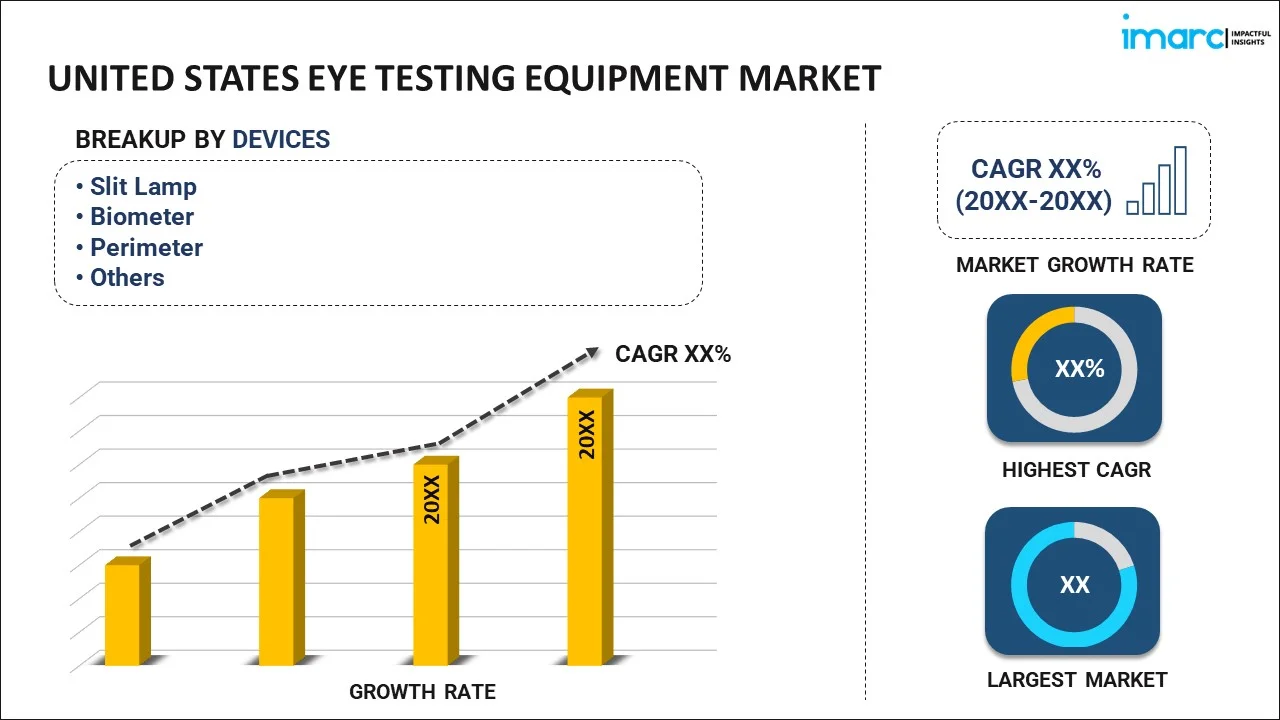
- Slit Lamp
- Biometer
- Perimeter
- Tonometer
- Optical Coherence Tomography (OCT)
- Fundus Camera
- Autorefractor and Keratometer
- Others
The report has provided a detailed breakup and analysis of the market based on the device. This includes slit lamp, biometer, perimeter, tonometer, optical coherence tomography (OCT), fundus camera, autorefractor and keratometer, and others.
Application Insights:
- General Examination
- Glaucoma
- Cataract
- Others
A detailed breakup and analysis of the market based on the application have also been provided in the report. This includes general examination, glaucoma, cataract, and others.
End User Insights:
- Hospitals
- Eye Clinics
- Optometry Academic Institutes
The report has provided a detailed breakup and analysis of the market based on the end user. This includes hospitals, eye clinics, and optometry academic institutes.
Regional Insights:
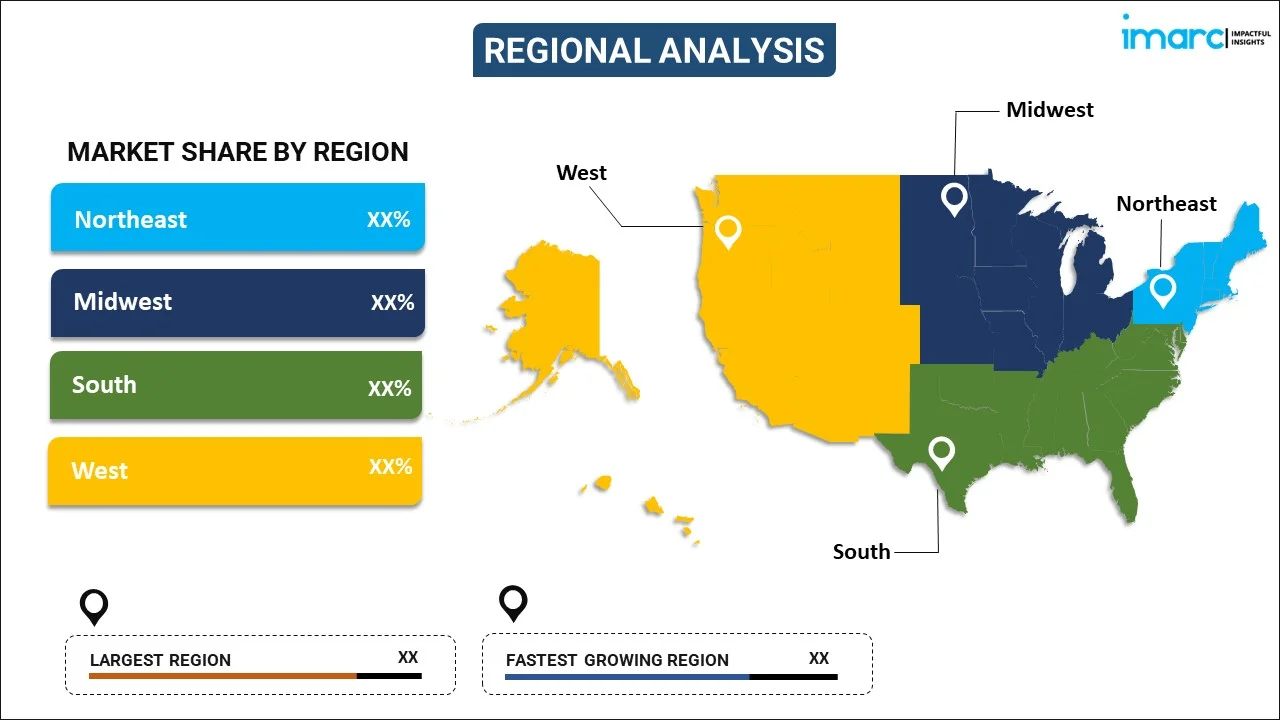
To get detailed regional analysis of this market Request Sample
- Northeast
- Midwest
- South
- West
The report has also provided a comprehensive analysis of all the major regional markets, which include Northeast, Midwest, South, and West.
Competitive Landscape:
The market research report has also provided a comprehensive analysis of the competitive landscape in the market. Competitive analysis such as market structure, key player positioning, top winning strategies, competitive dashboard, and company evaluation quadrant has been covered in the report. Also, detailed profiles of all major companies have been provided. Some of the key players include:
- Heine USA Ltd.
- Luneau Technology USA
- NIDEK USA Inc.
- Topcon Corporation
- ZEISS Group
(Please note that this is only a partial list of the key players, and the complete list is provided in the report.)
Recent News and Developments:
- September 2025: OpZira Inc. was launched following Alcon’s acquisition of LumiThera. Headquartered in Pennsylvania and led by former LumiThera CEO Clark Tedford, the company introduces the AdaptDx Pro and NOVA Vision Testing System, offering advanced diagnostic tools for early detection and monitoring of ocular diseases in the United States.
- November 2024: Konan Medical USA launched the objectiveFIELD Analyzer (OFA), an FDA 510(k)-cleared visual fieldtesting device. Utilizing multifocal pupillographic objective perimetry, the OFA offers fully objective, electrode-free assessments of visual function, enabling clinicians to evaluate visual field abnormalities efficiently across the United States.
United States Eye Testing Equipment Market Report Coverage:
| Report Features | Details |
|---|---|
| Base Year of the Analysis | 2025 |
| Historical Period | 2020-2025 |
| Forecast Period | 2026-2034 |
| Units | Million USD |
| Scope of the Report | Exploration of Historical and Forecast Trends, Industry Catalysts and Challenges, Segment-Wise Historical and Predictive Market Assessment:
|
| Devices Covered | Slit Lamp, Biometer, Perimeter, Tonometer, Optical Coherence Tomography (OCT), Fundus Camera, Autorefractor and Keratometer, Others |
| Applications Covered | General Examination, Glaucoma, Cataract, Others |
| End Users Covered | Hospitals, Eye Clinics, Optometry Academic Institutes |
| Regions Covered | Northeast, Midwest, South, West |
| Companies Covered | Heine USA Ltd., Luneau Technology USA, NIDEK USA Inc., Topcon Corporation, ZEISS Group, etc. (Please note that this is only a partial list of the key players, and the complete list is provided in the report.) |
| Customization Scope | 10% Free Customization |
| Post-Sale Analyst Support | 10-12 Weeks |
| Delivery Format | PDF and Excel through Email (We can also provide the editable version of the report in PPT/Word format on special request) |
Key Benefits for Stakeholders:
- IMARC’s industry report offers a comprehensive quantitative analysis of various market segments, historical and current market trends, market forecasts, and dynamics of the United States eye testing equipment market from 2020-2034.
- The research report provides the latest information on the market drivers, challenges, and opportunities in the United States eye testing equipment market.
- Porter's five forces analysis assist stakeholders in assessing the impact of new entrants, competitive rivalry, supplier power, buyer power, and the threat of substitution. It helps stakeholders to analyze the level of competition within the United States eye testing equipment industry and its attractiveness.
- Competitive landscape allows stakeholders to understand their competitive environment and provides an insight into the current positions of key players in the market.
Frequently Asked Questions About the United States Eye Testing Equipment Market Report
The eye testing equipment market in the United States was valued at USD 846.9 Million in 2025.
The United States eye testing equipment market is projected to exhibit a CAGR of 6.63% during 2026-2034, reaching a value of USD 1,536.1 Million by 2034.
The increasing prevalence of vision-related disorders, aging population, technological advancements, rising awareness of eye health, adoption of teleophthalmology, supportive government initiatives, collaborative innovations, and favorable reimbursement policies represent the key market drivers.
Need more help?
- Speak to our experienced analysts for insights on the current market scenarios.
- Include additional segments and countries to customize the report as per your requirement.
- Gain an unparalleled competitive advantage in your domain by understanding how to utilize the report and positively impacting your operations and revenue.
- For further assistance, please connect with our analysts.
 Request Customization
 Speak to an Analyst
 Request Brochure
 Inquire Before Buying
Benefits of Customization
- Personalize this research
- Triangulate with your data
- Get data as per your format and definition
- Gain a deeper dive into a specific application, geography, customer, or competitor
- Any level of personalization
Get in Touch With Us
UNITED STATES
Phone: +1-201-971-6302
INDIA
Phone: +91-120-433-0800
UNITED KINGDOM
Phone: +44-753-714-6104
Email: [email protected]
Client Testimonials




.webp)




.webp)













Related Reports

Choose your plan
*Please note that the prices mentioned below are starting prices for each bundle type. Kindly contact our team for further details.*
Single User License
- 1 User License, Access on 2 Devices
- PDF Report + Excel Dataset (Password Protected)
- Lifetime Access
- No Printing Rights
- 10% Free Report Customization
- 10–12 Weeks of Analyst Support
Five User License
- Access for 5 Users, 2 Devices per User
- PDF Report + Excel Dataset (Password Protected)
- Lifetime Access
- Dedicated Account Manager
- 12–14 Weeks of Analyst Support
- No Printing Rights
- 15% Free Report Customization
- 25% Discount on Your Next Purchase
Corporate User License
- Unlimited User Access (Within Your Organization)
- PDF Report + Excel Dataset
- Lifetime Access
- Dedicated Account Manager
- 14–20 Weeks of Analyst Support
- No Printing Rights
- 20% Free Report Customization
- 30% Discount on Your Next Purchase
Essential Insights
What's included:
3 reports
- Lifetime Access
- PDF Reports
- Excel Datasets
- 2 Weeks of Free Analyst Support
- 2 User Licenses
- Access on 2 Devices
- Printing Rights
- Complimentary PowerPoint (PPT) Version
- Complimentary License Upgrade
Professional Access
What's included:
5 reports
- Lifetime Access
- PDF Reports
- Excel Datasets
- 8 Weeks of Free Analyst Support
- 2 User Licenses
- Access on 2 Devices
- Printing Rights
- Complimentary PowerPoint (PPT) Version
- Complimentary License Upgrade
Business Advantage
What's included:
8 reports
- Lifetime Access
- PDF Reports
- Excel Datasets
- 14 Weeks of Free Analyst Support
- 2 User Licenses
- Access on 2 Devices
- Printing Rights
- Complimentary PowerPoint (PPT) Version
- Complimentary License Upgrade
Enterprise Intelligence
What's included:
10 reports
- Lifetime Access
- PDF Reports
- Excel Datasets
- 20 Weeks of Free Analyst Support
- 2 User Licenses
- Access on 2 Devices
- Printing Rights
- Complimentary PowerPoint (PPT) Version
- Complimentary License Upgrade