
United States Frozen Meat Market Size, Share, Trends and Forecast by Product Type, Distribution Channel, and End-User, 2026-2034
United States Frozen Meat Market Summary:
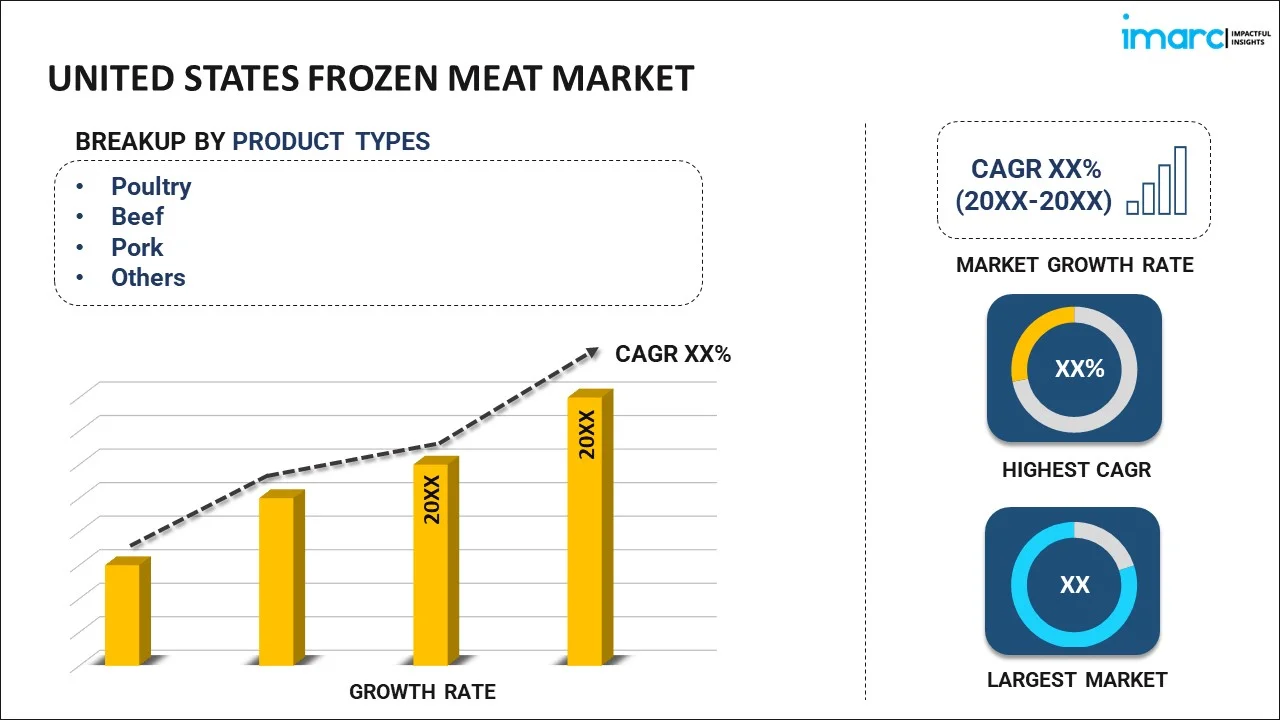
The United States frozen meat market size was valued at USD 66.06 Billion in 2025 and is projected to reach USD 84.58 Billion by 2034, growing at a compound annual growth rate of 2.78% from 2026-2034. The United States frozen meat market is presently experiencing sustained growth as consumers increasingly prioritize convenience and protein-rich meal solutions. Advancements in freezing technologies and robust cold chain infrastructure support product quality and distribution efficiency. Rising demand for ready-to-cook poultry, beef, and pork products from both retail and foodservice channels continues to expand the United States frozen meat market share.
Key Takeaways and Insights:
- By Product Type: Poultry dominates the market with a share of 42% in 2025, owing to its affordability, versatility in cooking applications, and growing consumer preference for lean protein sources. Widespread availability through retail and foodservice channels strengthens poultry's market position.
- By Distribution Channel: Supermarkets and hypermarkets lead the market with a share of 50% in 2025. This dominance is driven by extensive product variety, competitive pricing strategies, and established cold chain logistics that ensure product freshness and accessibility for consumers.
- By End-User: Retail exhibits a clear dominance in the market with 78% share in 2025, reflecting strong household purchasing patterns and consumer demand for convenient meal preparation options available through grocery stores and online platforms.
- Key Players: Key players drive the United States frozen meat market by expanding product portfolios, enhancing freezing technologies, and strengthening nationwide distribution networks. Their investments in innovation, quality assurance, and strategic partnerships boost consumer confidence and accelerate market penetration. Some of the key players operating in the market include Agrika International Inc., Ajc International, Inc., Ben E. Keith Company, Brecon Foods Inc., Conagra Brands, Inc., El Monterey Inc., Foster Farms Inc., Jbs Pilgrims, Koch Foods Incorporated, Sanderson Farms, Inc., Stouffer’s (Nestlé S.A.), and Tyson Foods, Inc.
In order to satisfy changing consumer demands, producers are investing in product innovation and operational efficiency, which is driving the growth of the frozen meat market in the United States. America's well-established cold storage infrastructure helps the market by guaranteeing product integrity across distribution networks. Value-added frozen meat products, such as pre-marinated cuts, seasoned variants, and ready-to-cook options, have proliferated in response to the increased demand from time-constrained households for quick dinner solutions. By providing a wide variety of frozen meat options combined with special pricing and loyalty programs, supermarkets and hypermarkets are able to preserve their dominant retail position. Additionally, new distribution options are being created by the emergence of e-commerce grocery platforms, allowing customers to access a variety of frozen meat products through easy home delivery services that preserve the integrity of the cold chain throughout the expansion of the frozen meat industry in the United States.
United States Frozen Meat Market Trends:
Rising Demand for Convenient Protein Solutions
The increasing preference for convenient meal preparation is transforming frozen meat consumption patterns across American households. Busy lifestyles and dual-income families are driving demand for ready-to-cook frozen meat products that minimize preparation time while delivering nutritional value. In September 2024, Amy's Kitchen launched its frozen breakfast range featuring organic burritos, wraps, and entrees, reflecting the broader industry trend toward convenient, health-conscious frozen meal options.
Advancements in Freezing and Packaging Technologies
Technological innovations in flash-freezing and modified atmosphere packaging are enhancing frozen meat quality and extending shelf life without compromising nutritional value. These advancements address historical consumer perceptions about frozen products while enabling manufacturers to offer premium cuts and specialty items. In October 2024, Kraft Heinz expanded its 360CRISP technology platform with Delimex Crispy Quesadillas featuring frozen chicken varieties, demonstrating microwave-ready innovations that deliver pan-fried texture and taste.
Expansion of Health-Oriented Frozen Meat Products
Manufacturers are developing lean, organic, and antibiotic-free protein choices to cater to changing dietary tastes as a result of consumer health consciousness. As consumers place a higher value on transparency and nutritional quality, demand for clean-label products with few ingredients and sustainable sourcing keeps growing across retail channels. The trend for healthier frozen meat substitutes is a reflection of broader wellness trends that impact consumer choices. As a result, manufacturers are expanding their portfolios of healthier products to meet modern customer demands for high-quality, ethically produced protein solutions.
Market Outlook 2026-2034:
The United States frozen meat market is positioned for continued expansion as manufacturers respond to shifting consumer preferences and technological advancements reshape product offerings. Growing emphasis on convenience and nutrition is expected to accelerate demand for value-added frozen poultry, beef, and pork products across retail and foodservice channels. The market generated a revenue of USD 66.06 Billion in 2025 and is projected to reach a revenue of USD 84.58 Billion by 2034, growing at a compound annual growth rate of 2.78% from 2026-2034. Enhanced cold chain infrastructure investments and e-commerce expansion will support distribution efficiency and market accessibility. Innovations in sustainable packaging and freezing technologies are anticipated to address environmental concerns while maintaining product quality, positioning frozen meat as an essential component of American dietary patterns.
United States Frozen Meat Market Report Segmentation:
|
Segment Category |
Leading Segment |
Market Share |
|
Product Type |
Poultry |
42% |
|
Distribution Channel |
Supermarkets and Hypermarkets |
50% |
|
End-User |
Retail |
78% |
Product Type Insights:
To get detailed segment analysis of this market, Request Sample
- Poultry
- Beef
- Pork
- Seafood
- Others
Poultry dominates with a market share of 42% of the total United States frozen meat market in 2025.
Frozen poultry products maintain market leadership due to their versatility, nutritional profile, and competitive pricing compared to other protein categories. Chicken remains the most widely consumed meat in the United States, underscoring its integral role in American dietary habits. The frozen poultry segment benefits from efficient production systems, established supply chains, and consistent quality standards that enable year-round availability across retail and foodservice distribution channels nationwide. Advanced freezing technologies preserve texture and flavor while extending shelf life, making frozen poultry an attractive option for budget-conscious households seeking reliable protein sources.
Consumer demand for convenient frozen poultry options continues strengthening as manufacturers expand product portfolios with value-added offerings. In June 2024, Pilgrim's Pride launched a refreshed brand identity alongside a flavor-forward nugget lineup, introducing exciting varieties to invigorate the frozen chicken category that represents over 40% of the frozen cooked chicken market. The introduction of premium cuts, organic options, and pre-seasoned varieties addresses evolving consumer preferences for both convenience and quality, positioning frozen poultry as a cornerstone of household meal planning strategies.
Distribution Channel Insights:
- Supermarkets and Hypermarkets
- Convenience Stores
- Online
- Others
Supermarkets and hypermarkets lead with a share of 50% of the total United States frozen meat market in 2025.
Supermarkets and hypermarkets preserve their distributional edge owing to their comprehensive lines of frozen foods, competitive pricing, and comprehensive product offerings versatile enough to meet varying consumer preferences. Supermarkets and hypermarkets capitalize on their well-developed cold chain and strategic locations to ensure accessibility and fresh availability of products. Supermarkets, functioning as one-stop shopping destinations, empower consumers to buy various kinds of frozen meat products, thereby increasing customer retention and encouraging frequent purchasing. Even sophisticated refrigeration and freezing facilities coupled with strategically designed frozen food aisles in supermarkets promote optimal storage, thereby preserving the fresh nature of products while encouraging aesthetically appealing and attention-grabbing packaging and presenting.
The major grocery retailing organizations keep increasing their innovations for the expanded freezer section with improved merchandising plans for attracting growing demands from consumers. The supermarket chains offer a broad network for distributing frozen meat products with several manufacturers, along with diverse brand names. The promotional events like discounts, rewards, or special feature displays of products tend to attract the consumers, along with the private label frozen meat products that cater to price-conscious consumers staying for quality at favorable price points.

End-User Insights:
- Retail
- Institutional
Retail represents the leading segment with 78% share of the total United States frozen meat market in 2025.
The retail segment dominates end user consumption as American households increasingly incorporate frozen meat products into regular meal preparation routines. Approximately 98% of United States households purchase meat products, with frozen options gaining prominence due to their extended shelf life, convenience, and ability to reduce food waste. The proliferation of secondary home freezers has expanded household storage capacity, enabling consumers to stock larger quantities of frozen meat products and capitalize on promotional pricing opportunities available through retail channels. Growing preference for home-cooked meals continues reinforcing retail purchasing patterns as families seek nutritious protein options that accommodate varying schedules and dietary requirements.
Retail frozen meat sales demonstrate resilience as consumers balance value considerations with quality expectations across product categories. In 2024, frozen meat sales in the United States rose 6% to reach 14 Billion dollars, reflecting sustained household demand for convenient protein options. The expansion of e-commerce grocery platforms is further strengthening retail distribution, with over 138 Million American shoppers purchasing grocery products online, creating additional touchpoints for frozen meat accessibility and consumption growth.
Market Dynamics:
Growth Drivers:
Why is the United States Frozen Meat Market Growing?
Increasing Consumer Preference for Convenient Meal Solutions
The growing demand for convenient meal preparation options is significantly driving frozen meat market expansion as American households adapt to increasingly busy lifestyles. Dual-income families and time-constrained consumers are prioritizing frozen meat products that offer quick preparation without compromising nutritional value or taste quality. The trend toward home-centric cooking, accelerated by changing work patterns and economic considerations, positions frozen meat as an essential pantry staple for modern households seeking efficient meal solutions. Manufacturers are responding by expanding portfolios with pre-seasoned, pre-marinated, and ready-to-cook frozen meat options that minimize preparation time while delivering restaurant-quality results. In June 2025, Tyson Foods launched Tyson Mega Dino Nuggets containing 13 grams of protein per serving, exemplifying innovation targeting convenience-focused consumers seeking protein-packed frozen options. The proliferation of value-added frozen meat products across retail channels demonstrates sustained demand for convenient protein solutions that align with contemporary lifestyle requirements.
Robust Cold Chain Infrastructure Development
Continuous investment in cold chain infrastructure is strengthening frozen meat distribution capabilities and ensuring product quality throughout supply networks. Advanced refrigeration systems, temperature monitoring technologies, and expanded cold storage capacity enable manufacturers and retailers to maintain optimal conditions from processing facilities to consumer freezers. Third-party logistics providers are expanding refrigerated warehouse networks to meet growing demand, with leading operators adding millions of square feet of cold storage capacity since 2019. In November 2024, CJ Logistics America opened a state-of-the-art 270,000 square foot cold storage warehouse in Georgia, strategically positioned in a key poultry production region to support frozen meat distribution. These infrastructure investments enhance supply chain reliability, reduce product waste, and enable broader market accessibility for frozen meat products nationwide.
Rising Protein Consumption and Health Consciousness
Increasing consumer focus on protein-rich diets is accelerating frozen meat demand as Americans prioritize nutritional value in food purchasing decisions. Health-conscious consumers recognize frozen meat as an efficient way to incorporate quality protein into daily meals while managing food budgets and reducing waste. The shift toward higher protein intake spans demographic segments, with growing numbers of consumers actively seeking to increase protein consumption as part of healthier lifestyle choices. Frozen meat products are increasingly perceived as viable alternatives to fresh meat, offering comparable nutritional profiles with enhanced convenience and longer storage capabilities. Dietary trends emphasizing lean proteins and balanced macronutrient intake continue driving consumer interest in frozen poultry, beef, and pork options that deliver essential nutrients without extensive meal preparation requirements. The convergence of health awareness and convenience preferences positions frozen meat favorably for sustained market growth as manufacturers respond with improved product formulations and expanded offerings targeting wellness-oriented shoppers.
Market Restraints:
What Challenges the United States Frozen Meat Market is Facing?
High Cold Chain Operational Costs
Maintaining frozen meat quality throughout distribution networks requires substantial investment in refrigeration equipment, temperature-controlled vehicles, and specialized warehousing facilities. Rising energy costs and equipment maintenance expenses create financial pressures for manufacturers, distributors, and retailers operating cold chain logistics. Smaller market participants face particular challenges in establishing cost-effective cold storage capabilities, limiting their competitive positioning against larger, vertically integrated companies with established infrastructure investments.
Consumer Perception Challenges
Despite technological advancements in freezing techniques, certain consumers maintain perceptions that frozen meat products offer inferior quality compared to fresh alternatives. Concerns regarding texture, taste, and nutritional content of frozen products continue influencing purchasing decisions among quality-conscious consumers. Addressing these perception barriers requires sustained educational efforts and product innovations that demonstrate frozen meat quality while overcoming historical misconceptions about frozen food products.
Raw Material Price Volatility
Fluctuations in livestock feed costs, animal supply constraints, and agricultural commodity pricing create uncertainty for frozen meat manufacturers and impact product pricing strategies. Cattle inventory contraction and variable pork supplies affect production planning and profit margins across the industry, requiring manufacturers to continuously adapt sourcing strategies and operational efficiencies. These supply-side pressures complicate market forecasting and may lead to consumer price sensitivity that influences purchasing behavior and product selection, challenging manufacturers to balance cost management with maintaining competitive retail pricing.
Competitive Landscape:
The United States frozen meat market exhibits a competitive environment characterized by major integrated processors alongside regional specialty producers competing across product categories. Leading manufacturers leverage extensive production capabilities, established distribution networks, and strong brand recognition to maintain market positions while pursuing product innovation and operational efficiencies. Competition intensifies as companies expand value-added product portfolios, invest in sustainable sourcing practices, and enhance customer service capabilities. Strategic partnerships between processors, distributors, and retailers strengthen supply chain coordination and market accessibility. Companies increasingly differentiate through quality certifications, organic offerings, and convenience-focused product development that addresses evolving consumer preferences while competing for retail shelf space and foodservice contracts.
Some of the key players include:
- Agrika International Inc.
- Ajc International, Inc.
- Ben E. Keith Company
- Brecon Foods Inc.
- Conagra Brands, Inc.
- El Monterey Inc.
- Foster Farms Inc.
- Jbs Pilgrims
- Koch Foods Incorporated
- Sanderson Farms, Inc.
- Stouffer’s (Nestlé S.A.)
- Tyson Foods, Inc.
United States Frozen Meat Market Report Coverage:
| Report Features | Details |
|---|---|
| Base Year of the Analysis | 2025 |
| Historical Period | 2020-2025 |
| Forecast Period | 2026-2034 |
| Units | Billion USD |
| Segment Coverage |
|
| Product Types Covered | Poultry, Beef, Pork, Seafood, Others |
| Distribution Channels Covered | Supermarkets and Hypermarkets, Convenience Stores, Online, Others |
| End-Users Covered | Retail, Institutional |
| Companies Covered | Agrika International Inc., Ajc International, Inc., Ben E. Keith Company, Brecon Foods Inc., Conagra Brands, Inc. El Monterey Inc., Foster Farms Inc., Jbs Pilgrims, Koch Foods Incorporated, Sanderson Farms, Inc., Stouffer’s (Nestlé S.A.) and Tyson Foods Inc. |
| Customization Scope | 10% Free Customization |
| Post-Sale Analyst Support | 10-12 Weeks |
| Delivery Format | PDF and Excel through Email (We can also provide the editable version of the report in PPT/Word format on special request) |
Frequently Asked Questions About the United States Frozen Meat Market Report
The United States frozen meat market size was valued at USD 66.06 Billion in 2025.
The United States frozen meat market is expected to grow at a compound annual growth rate of 2.78% from 2026-2034 to reach USD 84.58 Billion by 2034.
Poultry dominated the market with a share of 42%, driven by affordability, versatility in cooking applications, and consumer preference for lean protein sources across retail and foodservice channels.
Key factors driving the United States frozen meat market include increasing demand for convenient meal solutions, robust cold chain infrastructure development, rising protein consumption trends, and expanding retail distribution networks.
Major challenges include high cold chain operational costs, consumer perception barriers regarding frozen product quality, raw material price volatility, livestock supply constraints, and competition for retail shelf space.
Need more help?
- Speak to our experienced analysts for insights on the current market scenarios.
- Include additional segments and countries to customize the report as per your requirement.
- Gain an unparalleled competitive advantage in your domain by understanding how to utilize the report and positively impacting your operations and revenue.
- For further assistance, please connect with our analysts.
 Request Customization
 Speak to an Analyst
 Request Brochure
 Inquire Before Buying
Benefits of Customization
- Personalize this research
- Triangulate with your data
- Get data as per your format and definition
- Gain a deeper dive into a specific application, geography, customer, or competitor
- Any level of personalization
Get in Touch With Us
UNITED STATES
Phone: +1-201-971-6302
INDIA
Phone: +91-120-433-0800
UNITED KINGDOM
Phone: +44-753-714-6104
Email: [email protected]
Client Testimonials




.webp)




.webp)













Related Reports

Choose your plan
*Please note that the prices mentioned below are starting prices for each bundle type. Kindly contact our team for further details.*
Single User License
- 1 User License, Access on 2 Devices
- PDF Report + Excel Dataset (Password Protected)
- Lifetime Access
- No Printing Rights
- 10% Free Report Customization
- 10–12 Weeks of Analyst Support
Five User License
- Access for 5 Users, 2 Devices per User
- PDF Report + Excel Dataset (Password Protected)
- Lifetime Access
- Dedicated Account Manager
- 12–14 Weeks of Analyst Support
- No Printing Rights
- 15% Free Report Customization
- 25% Discount on Your Next Purchase
Corporate User License
- Unlimited User Access (Within Your Organization)
- PDF Report + Excel Dataset
- Lifetime Access
- Dedicated Account Manager
- 14–20 Weeks of Analyst Support
- No Printing Rights
- 20% Free Report Customization
- 30% Discount on Your Next Purchase
Essential Insights
What's included:
3 reports
- Lifetime Access
- PDF Reports
- Excel Datasets
- 2 Weeks of Free Analyst Support
- 2 User Licenses
- Access on 2 Devices
- Printing Rights
- Complimentary PowerPoint (PPT) Version
- Complimentary License Upgrade
Professional Access
What's included:
5 reports
- Lifetime Access
- PDF Reports
- Excel Datasets
- 8 Weeks of Free Analyst Support
- 2 User Licenses
- Access on 2 Devices
- Printing Rights
- Complimentary PowerPoint (PPT) Version
- Complimentary License Upgrade
Business Advantage
What's included:
8 reports
- Lifetime Access
- PDF Reports
- Excel Datasets
- 14 Weeks of Free Analyst Support
- 2 User Licenses
- Access on 2 Devices
- Printing Rights
- Complimentary PowerPoint (PPT) Version
- Complimentary License Upgrade
Enterprise Intelligence
What's included:
10 reports
- Lifetime Access
- PDF Reports
- Excel Datasets
- 20 Weeks of Free Analyst Support
- 2 User Licenses
- Access on 2 Devices
- Printing Rights
- Complimentary PowerPoint (PPT) Version
- Complimentary License Upgrade