
United States Genomics Market Size, Share, Trends and Forecast by Component, Technology, Application, End User, and Region, 2026-2034
United States Genomics Market Summary:
The United States genomics market size was valued at USD 15.64 Billion in 2025 and is projected to reach USD 72.75 Billion by 2034, growing at a compound annual growth rate of 18.62% from 2026-2034.
The United States genomics market is experiencing robust growth driven by increasing adoption of precision medicine approaches across healthcare systems and expanding applications in oncology diagnostics, rare disease identification, and pharmacogenomics. Major research institutions and healthcare networks are integrating genomic testing into clinical workflows, while pharmaceutical and biotechnology companies leverage genomic insights for drug discovery and development programs. Government initiatives including the NIH All of Us Research Program continue to advance population-scale genomic research, accelerating the translation of genomic discoveries into clinical practice and driving sustained demand for genomic products and services across the United States genomics market share.
Key Takeaways and Insights:
-
By Component: Products dominate the market with a share of 68% in 2025, driven by extensive demand for sequencing instruments, consumables, and reagents essential for genomic research and clinical diagnostics applications.
-
By Technology: Sequencing leads the market with a share of 48% in 2025, attributed to continuous advancements in next-generation sequencing platforms offering enhanced accuracy, scalability, and cost efficiency.
-
By Application: Biomarkers discovery represents the largest segment with a market share of 26% in 2025, owing to its critical role in identifying therapeutic targets for oncology and supporting precision medicine treatment strategies.
-
By End User: Research centers hold the largest share of 36% in 2025, reflecting substantial investments by academic institutions and government-funded research organizations in genomic studies.
-
Key Players: The United States genomics market demonstrates moderate to high competitive intensity, with established multinational corporations competing alongside innovative biotechnology startups across product segments. Market leaders focus on technological innovation, strategic partnerships with healthcare providers, and expansion of clinical applications to strengthen market positioning.
The United States genomics market occupies a leadership position globally, supported by world-class research infrastructure, substantial federal funding, and pioneering healthcare institutions advancing genomic medicine. The ecosystem benefits from strong public-private partnerships accelerating the translation of genomic discoveries into clinical applications. Federal programs including the National Human Genome Research Institute and the All of Us Research Program continue to drive innovation and establish comprehensive genomic databases for research advancement. These initiatives support genome center expansions utilizing advanced sequencing technologies to generate genetic data from participants of diverse backgrounds. The integration of artificial intelligence (AI) and machine learning (ML) with genomic data analysis is transforming biomarker discovery and drug development pipelines, while declining sequencing costs expand accessibility across clinical and research settings.
United States Genomics Market Trends:
Expansion of Multiomics Integration in Research and Clinical Applications
The convergence of genomics with proteomics, metabolomics, and transcriptomics is creating comprehensive biological insights that enhance disease understanding and treatment development. Research institutions and pharmaceutical companies increasingly adopt multiomics approaches to identify complex disease mechanisms and therapeutic targets. Leading technology providers continue expanding their portfolios of omics solutions spanning genomics, spatial transcriptomics, single cell analysis, CRISPR technologies, and epigenetics, enabling researchers to derive breakthrough insights around disease drivers and accelerate precision medicine applications across clinical settings.
Rising Adoption of Liquid Biopsy Technologies for Non-Invasive Cancer Detection
Liquid biopsy technologies utilizing circulating tumor DNA and cell-free DNA analysis are gaining significant traction for cancer screening, monitoring treatment response, and detecting minimal residual disease. Healthcare providers increasingly implement these non-invasive testing methods as alternatives to traditional tissue biopsies, improving patient comfort and enabling real-time monitoring of tumor evolution. Clinical laboratories and oncology centers continue expanding liquid biopsy offerings to support personalized treatment strategies and early cancer detection programs.
Artificial Intelligence Integration Transforming Genomic Data Analysis
Machine learning algorithms and artificial intelligence platforms are revolutionizing the interpretation of complex genomic datasets, enabling faster identification of clinically significant variants and improving diagnostic accuracy. Cloud-based bioinformatics solutions are democratizing access to advanced analytical capabilities, allowing smaller research institutions and clinical laboratories to leverage sophisticated genomic analysis tools. The Broad Institute of MIT and Harvard partnered with Manifold in January 2025 to bring a unique life science research and development platform incorporating AI capabilities to investigators worldwide.
Market Outlook 2026-2034:
The United States genomics market demonstrates strong growth potential supported by expanding clinical applications in oncology, rare disease diagnostics, and pharmacogenomics, alongside increasing integration of genomic testing into standard healthcare protocols across hospital systems and reference laboratories. Technological innovations including long-read sequencing platforms, single-cell analysis solutions, spatial transcriptomics capabilities, and AI-powered interpretation tools continue to enhance the utility and accessibility of genomic technologies, enabling healthcare providers to deliver more precise diagnostic and therapeutic solutions to patients nationwide. The market generated a revenue of USD 15.64 Billion in 2025 and is projected to reach a revenue of USD 72.75 Billion by 2034, growing at a compound annual growth rate of 18.62% from 2026-2034.
United States Genomics Market Report Segmentation:
|
Segment Category |
Leading Segment |
Market Share |
|
Component |
Products |
68% |
|
Technology |
Sequencing |
48% |
|
Application |
Biomarkers Discovery |
26% |
|
End User |
Research Centers |
36% |
Component Insights:
- Products
- Instruments and Software
- Consumables and Reagents
- Services
- Core Genomics Services
- NGS-Based Services
- Biomarker Translation Services
- Computational Services
- Others
The products dominate with a market share of 68% of the total United States genomics market in 2025.
The products segment encompasses sequencing instruments, consumables, reagents, microarray platforms, and associated software essential for genomic research and clinical applications. This category maintains leadership position driven by continuous technological advancements that improve sequencing accuracy, throughput, and cost efficiency. Research institutions, clinical laboratories, and pharmaceutical companies consistently invest in upgrading equipment to access latest capabilities, while recurring demand for consumables and reagents provides stable revenue streams supporting market expansion across genomic testing applications.
Product innovation continues to reshape the competitive landscape as manufacturers introduce next-generation platforms with enhanced capabilities. For instance, in October 2024, Illumina unveiled the MiSeq i100 Series of benchtop sequencing systems designed to deliver breakthrough simplicity, faster run times, comprehensive analysis capabilities, and significant sustainability advancements. The systems incorporate technology and chemistry from the NovaSeq X Series and include eighteen end-to-end workflows across ten applications covering small whole-genome sequencing for microbiology and targeted NGS panels for infectious disease and oncology.
Technology Insights:
- Sequencing
- Microarray
- Polymerase Chain Reaction
- Nucleic Acid Extraction and Purification
- Others
The sequencing leads with a share of 48% of the total United States genomics market in 2025.
Sequencing, such as next-generation sequencing technologies, have transformed genomic research and clinical diagnostics through dramatic improvements in speed, accuracy, and cost reduction. The segment benefits from expanding applications in whole-genome sequencing, exome sequencing, and targeted panels for oncology and inherited disease testing. Healthcare providers increasingly rely on sequencing for precision medicine applications, driving adoption across hospital systems, reference laboratories, and research institutions pursuing personalized treatment approaches.
Technological advancements continue to enhance sequencing capabilities and expand clinical utility. In June 2024, Illumina completed integration of its XLEAP-SBS chemistry into all reagents for NextSeq 1000 and NextSeq 2000 next-generation sequencing instruments, enabling improved sequencing with faster run times, better quality, and higher output at lower cost per kit. The enhanced chemistry facilitates larger NGS projects without raising budgets and supports greater adoption of multiomic approaches in research settings.
Application Insights:
- Functional Genomics
- Epigenomics
- Biomarkers Discovery
- Pathway Analysis
- Others
The biomarkers discovery holds the largest share with 26% of the total United States genomics market in 2025.
Biomarker discovery applications drive significant investment in genomic technologies as pharmaceutical companies, research institutions, and clinical laboratories seek to identify genetic mutations, protein expressions, and metabolic markers that inform treatment decisions. The segment plays a critical role in oncology research, enabling identification of therapeutic targets and companion diagnostic development. Integration of genomics-based biomarker discovery with drug development pipelines accelerates clinical trial design and supports precision medicine treatment approaches.
Multi-institutional collaborations are advancing biomarker-driven clinical research initiatives across the United States. In October 2024, leading cancer research organizations launched patient enrollment for myeloMATCH, a portfolio of precision medicine clinical trials overseen by the National Cancer Institute focusing on myelodysplastic syndrome and acute myeloid leukemia. The program aims to enroll patients in the United States and Canada with biomarker-driven treatment options available throughout their care journey.

End User Insights:
- Research Centers
- Hospitals and Clinics
- Pharmaceutical and Biotechnology Companies
- Others
The research centers hold the highest share of 36% of the total United States genomics market in 2025.
Research centers and government-funded research organizations drive substantial demand for genomic products and services through their comprehensive research programs spanning disease mechanisms, drug discovery, and population genomics studies. These centers benefit from federal funding through NIH programs and maintain state-of-the-art genomics infrastructure enabling large-scale sequencing projects and collaborative research initiatives. Their role as training grounds for genomics professionals further supports ecosystem development.
Leading research centers continue expanding genomics capabilities through strategic investments and partnerships. The Broad Institute of MIT and Harvard, which houses one of the largest genome sequencing centers worldwide, engages scientists from partner institutions and industry in collaborative research programs. Their technologies and discoveries are powering multiple clinical trials of innovative treatments for chronic conditions including cancer and heart disease, and have contributed to FDA accelerated approvals for patients who previously had limited treatment options.
Regional Insights:
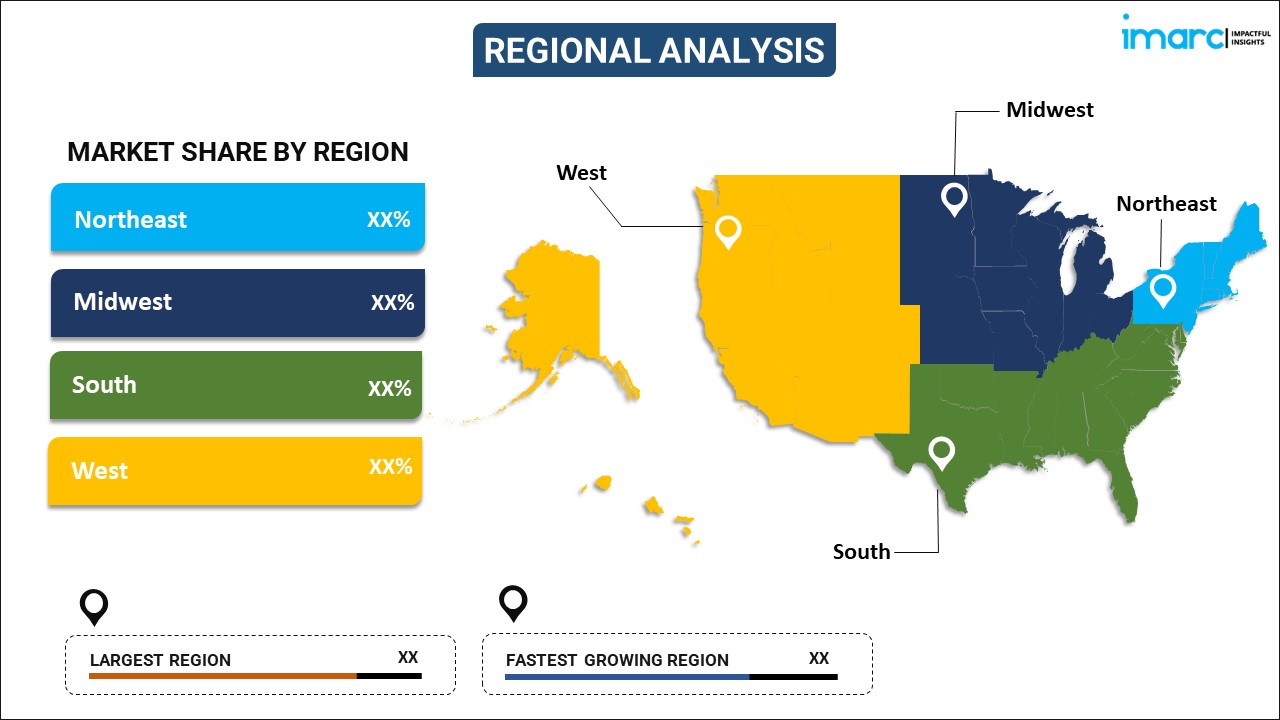
- Northeast
- Midwest
- South
- West
The Northeast represents one of the dominant genomics hubs anchored by world-class research institutions including the Broad Institute of MIT and Harvard, Memorial Sloan Kettering Cancer Center, and prestigious academic medical centers concentrated in the Boston-Cambridge and New York metropolitan areas. The region benefits from substantial NIH funding, deep venture capital networks supporting biotechnology startups, and strong academic-industry collaboration driving innovation in precision medicine and clinical genomics applications.
The Midwest demonstrates growing prominence in genomics through established research universities including University of Chicago and Northwestern University, combined with expanding manufacturing capabilities and clinical laboratory networks. The region hosts leading healthcare systems integrating genomic testing into clinical practice while biotechnology companies establish operations attracted by competitive costs, skilled workforce availability, and strong educational institutions producing genomics professionals for industry growth.
The South exhibits accelerating genomics activity centered around Texas medical centers and North Carolina's Research Triangle Park, housing major pharmaceutical and biotechnology operations. Houston's Texas Medical Center, the world's largest medical complex, received NIH funding between 2020-2024 for healthcare and life sciences initiatives. State incentives, expanding healthcare infrastructure, and growing biomanufacturing investments position the region for sustained genomics market expansion.
The West maintains leadership in genomics innovation driven by San Diego's concentration of sequencing technology companies, the San Francisco Bay Area biotechnology ecosystem, and major academic research programs. San Diego directly employed life science workers and contributed substantial amount in total economic output. The region houses headquarters of leading genomics companies and benefits from robust venture capital funding, extensive clinical trial infrastructure, and strong academic-industry partnerships advancing precision medicine applications.
Market Dynamics:
Growth Drivers:
Why is the United States Genomics Market Growing?
Expanding Applications of Precision Medicine Across Healthcare Systems
The integration of genomic testing into clinical practice continues expanding as healthcare providers recognize the value of precision medicine approaches for improving patient outcomes and treatment efficiency. Oncology applications lead adoption with tumor profiling guiding targeted therapy selection, while pharmacogenomics testing helps optimize drug dosing and reduce adverse reactions. Healthcare systems increasingly implement genomic testing protocols for inherited disease screening, prenatal diagnostics, and risk assessment programs. The myeloMATCH precision medicine clinical trial launched in October 2024 exemplifies this trend, utilizing next-generation sequencing technology to provide next-day genomic testing results matching patients with appropriate targeted therapies based on their unique biomarker profiles.
Substantial Government Funding Supporting Genomic Research Infrastructure
Federal investment through National Institutes of Health programs provides foundational support for genomic research advancement and infrastructure development across the United States. The All of Us Research Program continues building one of the most diverse biomedical data resources globally, generating comprehensive genomic databases supporting precision medicine research. Government funding supports technology development, workforce training, and clinical translation initiatives that accelerate market growth. The National Human Genome Research Institute maintains programs supporting talented early-career researchers pursuing innovative genomics research, while federal initiatives fund genome center expansions including the April 2025 award to HudsonAlpha Institute for long-read whole genome sequencing capabilities.
Technological Innovation Reducing Sequencing Costs and Expanding Accessibility
Continuous advancement in sequencing platforms, chemistry, and analytical software drives dramatic reductions in per-genome costs while improving data quality and throughput. These improvements expand accessibility of genomic testing across clinical laboratories, research institutions, and emerging applications in agriculture and consumer genomics. Innovation in long-read sequencing, single-cell analysis, and multiomics integration opens new research possibilities and clinical applications previously constrained by technological limitations. Industry leaders continue investing in research and development to maintain competitive positioning, with major companies announcing strategic initiatives targeting sustained revenue growth through innovations including constellation mapped read technology and expanded multiomics portfolio offerings.
Market Restraints:
What Challenges the United States Genomics Market is Facing?
Data Privacy and Security Concerns Affecting Consumer Confidence
High-profile data breaches and concerns regarding genetic data security have impacted consumer participation in direct-to-consumer testing programs, reducing sample availability for population-scale research initiatives. Healthcare organizations face increasing regulatory requirements for protecting genomic information, requiring substantial investments in cybersecurity infrastructure and compliance programs that add operational complexity.
Reimbursement Uncertainties for Emerging Genomic Applications
Variable insurance coverage and reimbursement policies for genomic testing create market access barriers, particularly for novel applications lacking established clinical utility evidence. Healthcare providers face challenges in demonstrating cost-effectiveness to payers, while patients encounter out-of-pocket expenses that limit testing adoption outside established oncology and rare disease applications.
Skilled Workforce Shortages in Bioinformatics and Genomic Analysis
The rapid expansion of genomic data generation outpaces availability of qualified professionals capable of interpreting complex datasets and translating findings into clinical actionable insights. Research institutions and healthcare organizations compete for limited talent in bioinformatics, genetic counseling, and clinical genomics, constraining operational capacity and market expansion potential.
Competitive Landscape:
The United States genomics market exhibits a consolidated competitive structure in sequencing platforms with established players maintaining substantial market positions, while demonstrating fragmentation across consumables, services, and specialized applications. Market leaders pursue strategies combining organic innovation with strategic acquisitions to expand product portfolios and address emerging clinical applications. Companies increasingly differentiate through integrated solutions offering sample-to-insight workflows, cloud-based analytics platforms, and comprehensive customer support services. Competitive dynamics emphasize technological innovation, regulatory expertise for clinical applications, and partnerships with healthcare systems and pharmaceutical companies for market access expansion.
Recent Developments:
- February 2025: Foundation Medicine announced plans to launch two new germline tests, FoundationOne Germline and FoundationOne Germline More, in the United States to identify genetic variants associated with hereditary cancers for healthcare providers to understand underlying challenges for patients and families.
- July 2024: Thermo Fisher Scientific partnered with the National Cancer Institute on the myeloMATCH precision medicine umbrella trial utilizing next-generation sequencing technology to match acute myeloid leukemia and myelodysplastic syndrome patients with appropriate clinical trials across North America.
United States Genomics Market Report Coverage:
| Report Features | Details |
|---|---|
| Base Year of the Analysis | 2025 |
| Historical Period | 2020-2025 |
| Forecast Period | 2026-2034 |
| Units | Billion USD |
| Scope of the Report | Exploration of Historical Trends and Market Outlook, Industry Catalysts and Challenges, Segment-Wise Historical and Future Market Assessment:
|
| Components Covered |
|
| Technologies Covered | Sequencing, Microarray, Polymerase Chain Reaction, Nucleic Acid Extraction and Purification, Others |
| Applications Covered | Functional Genomics, Epigenomics, Biomarkers Discovery, Pathway Analysis, Others |
| End Users Covered | Research Centers, Hospitals and Clinics, Pharmaceutical and Biotechnology Companies, Others |
| Regions Covered | Northeast, Midwest, South, West |
| Customization Scope | 10% Free Customization |
| Post-Sale Analyst Support | 10-12 Weeks |
| Delivery Format | PDF and Excel through Email (We can also provide the editable version of the report in PPT/Word format on special request) |
Frequently Asked Questions About the United States Genomics Market Report
The United States genomics market size was valued at USD 15.64 Billion in 2025.
The United States genomics market is expected to grow at a compound annual growth rate of 18.62% from 2026-2034 to reach USD 72.75 Billion by 2034.
Products dominated the United States genomics market with a 68% share in 2025, driven by extensive demand for sequencing instruments, consumables, and reagents essential for genomic research and clinical diagnostics applications across healthcare and research institutions.
Key factors driving the United States genomics market include expanding precision medicine applications across healthcare systems, substantial government funding through NIH programs supporting research infrastructure, and continuous technological innovation reducing sequencing costs while improving accessibility.
Major challenges include data privacy and security concerns affecting consumer confidence in genetic testing programs, variable reimbursement policies creating market access barriers for emerging applications, and skilled workforce shortages in bioinformatics and genomic analysis limiting operational capacity.
Need more help?
- Speak to our experienced analysts for insights on the current market scenarios.
- Include additional segments and countries to customize the report as per your requirement.
- Gain an unparalleled competitive advantage in your domain by understanding how to utilize the report and positively impacting your operations and revenue.
- For further assistance, please connect with our analysts.
 Request Customization
 Speak to an Analyst
 Request Brochure
 Inquire Before Buying
Benefits of Customization
- Personalize this research
- Triangulate with your data
- Get data as per your format and definition
- Gain a deeper dive into a specific application, geography, customer, or competitor
- Any level of personalization
Get in Touch With Us
UNITED STATES
Phone: +1-201-971-6302
INDIA
Phone: +91-120-433-0800
UNITED KINGDOM
Phone: +44-753-714-6104
Email: [email protected]
Client Testimonials




.webp)




.webp)













Related Reports

Choose your plan
*Please note that the prices mentioned below are starting prices for each bundle type. Kindly contact our team for further details.*
Single User License
- 1 User License, Access on 2 Devices
- PDF Report + Excel Dataset (Password Protected)
- Lifetime Access
- No Printing Rights
- 10% Free Report Customization
- 10–12 Weeks of Analyst Support
Five User License
- Access for 5 Users, 2 Devices per User
- PDF Report + Excel Dataset (Password Protected)
- Lifetime Access
- Dedicated Account Manager
- 12–14 Weeks of Analyst Support
- No Printing Rights
- 15% Free Report Customization
- 25% Discount on Your Next Purchase
Corporate User License
- Unlimited User Access (Within Your Organization)
- PDF Report + Excel Dataset
- Lifetime Access
- Dedicated Account Manager
- 14–20 Weeks of Analyst Support
- No Printing Rights
- 20% Free Report Customization
- 30% Discount on Your Next Purchase
Essential Insights
What's included:
3 reports
- Lifetime Access
- PDF Reports
- Excel Datasets
- 2 Weeks of Free Analyst Support
- 2 User Licenses
- Access on 2 Devices
- Printing Rights
- Complimentary PowerPoint (PPT) Version
- Complimentary License Upgrade
Professional Access
What's included:
5 reports
- Lifetime Access
- PDF Reports
- Excel Datasets
- 8 Weeks of Free Analyst Support
- 2 User Licenses
- Access on 2 Devices
- Printing Rights
- Complimentary PowerPoint (PPT) Version
- Complimentary License Upgrade
Business Advantage
What's included:
8 reports
- Lifetime Access
- PDF Reports
- Excel Datasets
- 14 Weeks of Free Analyst Support
- 2 User Licenses
- Access on 2 Devices
- Printing Rights
- Complimentary PowerPoint (PPT) Version
- Complimentary License Upgrade
Enterprise Intelligence
What's included:
10 reports
- Lifetime Access
- PDF Reports
- Excel Datasets
- 20 Weeks of Free Analyst Support
- 2 User Licenses
- Access on 2 Devices
- Printing Rights
- Complimentary PowerPoint (PPT) Version
- Complimentary License Upgrade