
United States Pollution Mask Market Size, Share, Trends and Forecast by Product Type, Filter Type, Particulate Matter, Standard Ratings, Distribution Channel, and Region, 2026-2034
United States Pollution Mask Market Summary:
The United States pollution mask market size was valued at USD 1.53 Billion in 2025 and is projected to reach USD 3.3 Billion by 2034, growing at a compound annual growth rate of 8.94% from 2026-2034.
The United States pollution mask market is experiencing robust expansion, driven by escalating air quality concerns, stringent workplace safety regulations, and heightened public health awareness. Increasing wildfire incidents across western states, rising industrial emissions in urban centers, and growing occupational safety mandates are amplifying demand for respiratory protection solutions. Technological advancements in filtration media, expanding healthcare infrastructure requirements, and consumer preference for certified protective equipment are reshaping the United States pollution mask market share.
Key Takeaways and Insights:
-
By Product Type: Disposable dominates the market with a share of 58% in 2025, owing to cost-effectiveness, convenience in single-use applications, and widespread utilization across healthcare and industrial settings. Rising hygiene consciousness is fueling the market expansion.
-
By Filter Type: Particulate filter leads the market with a share of 60% in 2025. This dominance is driven by superior efficiency in capturing airborne particles, regulatory compliance requirements, and extensive applications in healthcare and construction sectors.
-
By Particulate Matter: PM 2.5 represents the largest segment with a market share of 55% in 2025, driven by the growing awareness about fine particulate health risks and increasing demand for masks capable of filtering microscopic pollution particles.
-
By Standard Ratings: N95 exhibits a clear dominance in the market with 67% share in 2025, reflecting strong consumer preference for National Institute for Occupational Safety and Health (NIOSH)-certified respiratory protection that filters a significant portion of airborne particles effectively.
-
By Distribution Channel: Institutional sales comprise the largest segment with 62% share in 2025, driven by bulk procurement by healthcare facilities, manufacturing plants, and government agencies ensuring consistent protective equipment supply.
-
Key Players: Key players drive the United States pollution mask market by expanding production capacities, enhancing filtration technologies, and strengthening distribution networks. Their investments in research, domestic manufacturing, and strategic partnerships boost market penetration and ensure reliable supply across healthcare and industrial segments. Some of the key players operating in the market include 3M Company, Honeywell International Inc., Kimberley-Clark Corporation, Vogmask (Ohlone Press LLC), Reckitt Benckiser Group plc., Foss Performance Materials LLC, Prestige Ameritech, and Makrite Industries, Inc.
The United States pollution mask market is advancing, as healthcare institutions, industrial enterprises, and individual consumers embrace comprehensive respiratory protection solutions amid escalating environmental and occupational health challenges. Regulatory frameworks, including Occupational Safety and Health Administration (OSHA) respiratory protection standards and NIOSH certification requirements are establishing stringent quality benchmarks that drive product innovations and manufacturing excellence. The United States Environmental Protection Agency (EPS) strengthened the National Ambient Air Quality Standards for PM2.5 in February 2024, setting the primary annual standard to 9 micrograms per cubic meter to protect public health. Growing wildfire frequency across California and western states, coupled with urban air pollution concerns, is expanding consumer awareness and demand for certified pollution masks. Manufacturers are responding by investing in advanced filtration technologies, sustainable materials, and domestic production capabilities to ensure supply chain resilience and meet evolving market requirements.
United States Pollution Mask Market Trends:
Rising Wildfire-Driven Demand for Respiratory Protection
Escalating wildfire activities across western states are significantly boosting the demand for certified pollution masks as communities seek protection from hazardous smoke exposure. Climate change-induced extreme weather patterns are extending wildfire seasons and increasing fire intensity, creating sustained market demand beyond traditional industrial applications. In January 2025, 3M partnered with Direct Relief to distribute 5 million N95 respirators to communities affected by the devastating Los Angeles wildfires, demonstrating the critical role of respiratory protection during environmental emergencies and supporting the United States pollution mask market growth.
Integration of Advanced Filtration Technologies
The assimilation of advanced filtration technologies is offering a favorable market outlook in the United States. Manufacturers are incorporating innovative filtration media and antimicrobial coatings to enhance protection efficiency and user comfort. Advanced electrostatic filter technologies, nano-fiber materials, and multi-layer constructions are improving particulate capture rates while reducing breathing resistance. These technological advancements address the growing consumer expectations for superior performance, enabling masks to filter ultrafine particles more effectively and supporting diverse applications across healthcare, industrial, and personal protection segments.
Broadening of Retail outlets
The broadening of retail outlets is fueling the market growth by improving product visibility and consumer access. As per IMARC Group, the United States retail market size reached USD 7,589.7 Billion in 2025. Pollution masks are increasingly available through pharmacies, supermarkets, convenience stores, and online platforms, making purchases easier and faster. Wider retail presence supports impulse buying and bulk purchases, especially during high pollution or health alert periods. Expanded distribution networks also enable brands to reach diverse consumer segments, boosting sales volumes and supporting consistent market growth across urban and suburban areas.
Market Outlook 2026-2034:
The United States pollution mask market outlook remains strongly positive as environmental health concerns, workplace safety requirements, and public health awareness continue driving sustained demand growth. The market generated a revenue of USD 1.53 Billion in 2025 and is projected to reach a revenue of USD 3.3 Billion by 2034, growing at a compound annual growth rate of 8.94% from 2026-2034. Regulatory evolution, technological innovations in filtration media, expanding healthcare infrastructure, and climate-related environmental challenges are positioning the market for continued expansion throughout the forecast period.
United States Pollution Mask Market Report Segmentation:
| Segment Category | Leading Segment | Market Share |
|---|---|---|
| Product Type | Disposable | 58% |
| Filter Type | Particulate Filter | 60% |
| Particulate Matter | PM 2.5 | 55% |
| Standard Ratings | N95 | 67% |
| Distribution Channel | Institutional Sales | 62% |
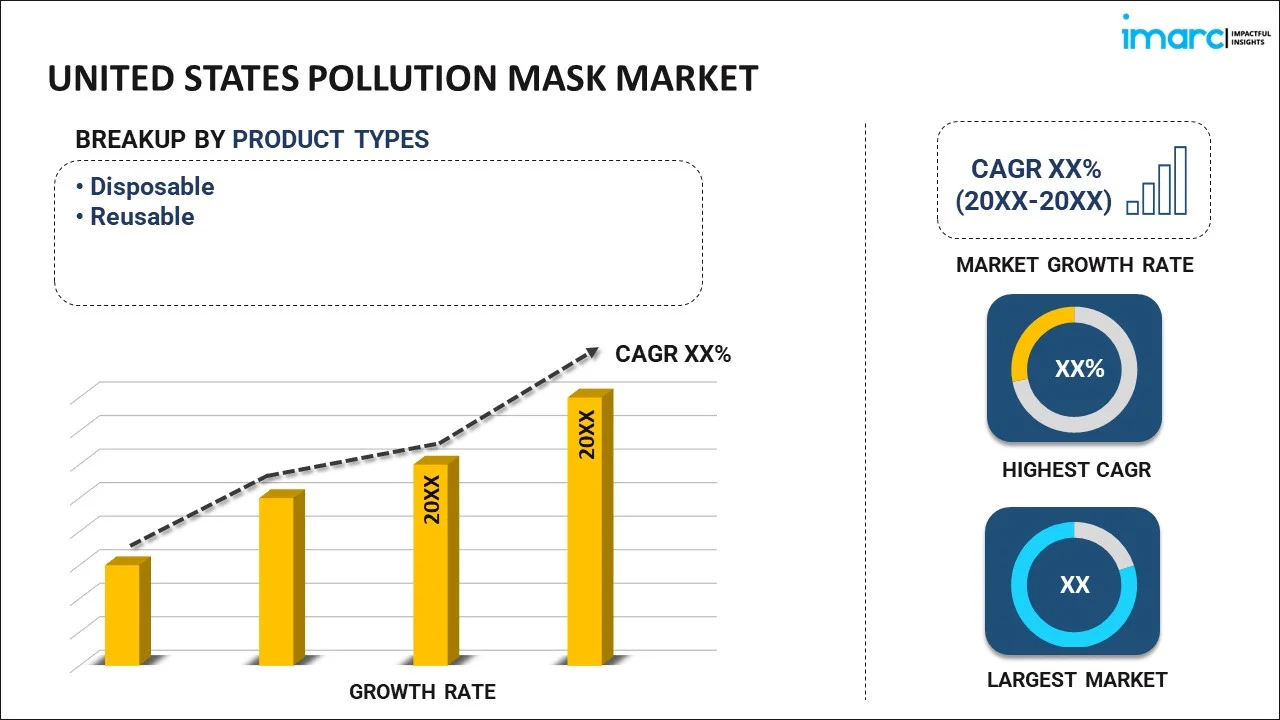
Breakup by Product Type:
To get detailed segment analysis of this market , Request Sample
- Disposable
- Reusable
Disposable dominates with a market share of 58% of the total United States pollution mask market in 2025.
Disposable pollution masks maintain market leadership through their cost-effectiveness, hygiene benefits, and convenience for single-use applications across healthcare and industrial environments. These masks eliminate cleaning requirements and cross-contamination risks while providing reliable filtration performance for diverse workplace hazards. The construction sector consumes millions of disposable N95-equivalent masks for worker protection against dust, silica particles, and airborne contaminants during demolition and renovation activities.
The disposable segment benefits from extensive distribution networks spanning pharmacies, retail outlets, and online platforms that ensure widespread accessibility for institutional and individual consumers. Manufacturing advancements have enabled mass production of high-quality disposable respirators at competitive price points, supporting bulk procurement by hospitals, manufacturing facilities, and emergency response agencies. Regulatory compliance requirements and infection control protocols in healthcare settings further reinforce sustained demand for single-use respiratory protection solutions.
Filter Type Insights:
- Particulate Filter
- Gas and Odor Filter
- Combination Filter
- Others
Particulate filter leads with a share of 60% of the total United States pollution mask market in 2025.
Particulate filter masks dominate the market due to their exceptional efficiency in capturing airborne particles, including dust, pollen, bacteria, and virus-carrying droplets. These filters utilize advanced electrostatic media technology that attracts and traps microscopic particles while maintaining comfortable breathing resistance. The American Lung Association reported in its 2024 State of the Air report that 131 Million Americans were exposed to unhealthy levels of air pollution, driving substantial demand for effective particulate filtration solutions.
The particulate filter segment benefits from stringent NIOSH certification requirements that establish clear performance standards and consumer confidence. Healthcare facilities rely extensively on particulate filtering respirators for infection control during aerosol-generating procedures and patient care activities. Industrial applications, spanning the construction, mining, and manufacturing sectors, require particulate protection against occupational hazards, supporting consistent demand growth across diverse end-use segments.
Particulate Matter Insights:
- PM 0.3
- PM 1
- PM 2.5
- PM 10
PM 2.5 represents the leading segment with a 55% share of the total United States pollution mask market in 2025.
PM 2.5 masks dominate the market as fine particulate matter poses the greatest health risks due to its ability to penetrate deep into the respiratory system and enter the bloodstream. Growing scientific evidence linking PM2.5 exposure to cardiovascular disease, respiratory conditions, and premature mortality has heightened consumer awareness and demand for effective filtration solutions.
The PM 2.5 segment benefits from increased public communication about air quality indices and health advisories that educate consumers about fine particulate hazards. Wildfire smoke events generating substantial PM2.5 concentrations have created seasonal demand spikes across affected regions, particularly in western states experiencing escalating fire activity. Regulatory tightening of ambient air quality standards further emphasizes the importance of personal respiratory protection against fine particulate matter.
Standard Ratings Insights:
- N95
- N99
- N100
- P95
- P100
N95 exhibits a clear dominance with a 67% share of the total United States pollution mask market in 2025.
N95 respirators command market leadership through their NIOSH-certified capability to filter at least 95% of airborne particles, establishing them as the benchmark standard for respiratory protection across healthcare and industrial applications. These masks provide an optimal balance between filtration efficiency, breathability, and cost-effectiveness that appeals to diverse user segments.
The N95 segment benefits from extensive regulatory recognition, including OSHA respiratory protection requirements and CDC infection control guidelines that specifically recommend these respirators for healthcare workers. Widespread familiarity among medical professionals, industrial workers, and general consumers enhances market penetration and repeat purchasing behavior. Manufacturing investments by leading companies have expanded domestic N95 production capacity, ensuring supply chain resilience and consistent availability across distribution channels.
Distribution Channel Insights:
- Institutional Sales
- Retail Sales
- Offline Sales
- Online Sales
Institutional sales dominate with a market share of 62% of the total United States pollution mask market in 2025.
Institutional sales lead the market through bulk procurement by healthcare systems, manufacturing enterprises, construction companies, and government agencies requiring consistent respiratory protection supplies. These institutional buyers prioritize quality certification, regulatory compliance, and supply reliability over individual unit pricing considerations. Hospitals and healthcare networks maintain substantial inventory levels to ensure adequate protection for medical staff during routine operations and emergency surge situations.
The institutional segment benefits from established distributor relationships, negotiated pricing contracts, and dedicated procurement processes that streamline large-volume purchasing. Government stockpiling initiatives ensure emergency preparedness while generating consistent baseline demand. OSHA workplace safety regulations mandate employer provision of appropriate respiratory protection, creating sustained institutional purchasing requirements across manufacturing, construction, and hazardous materials handling industries.
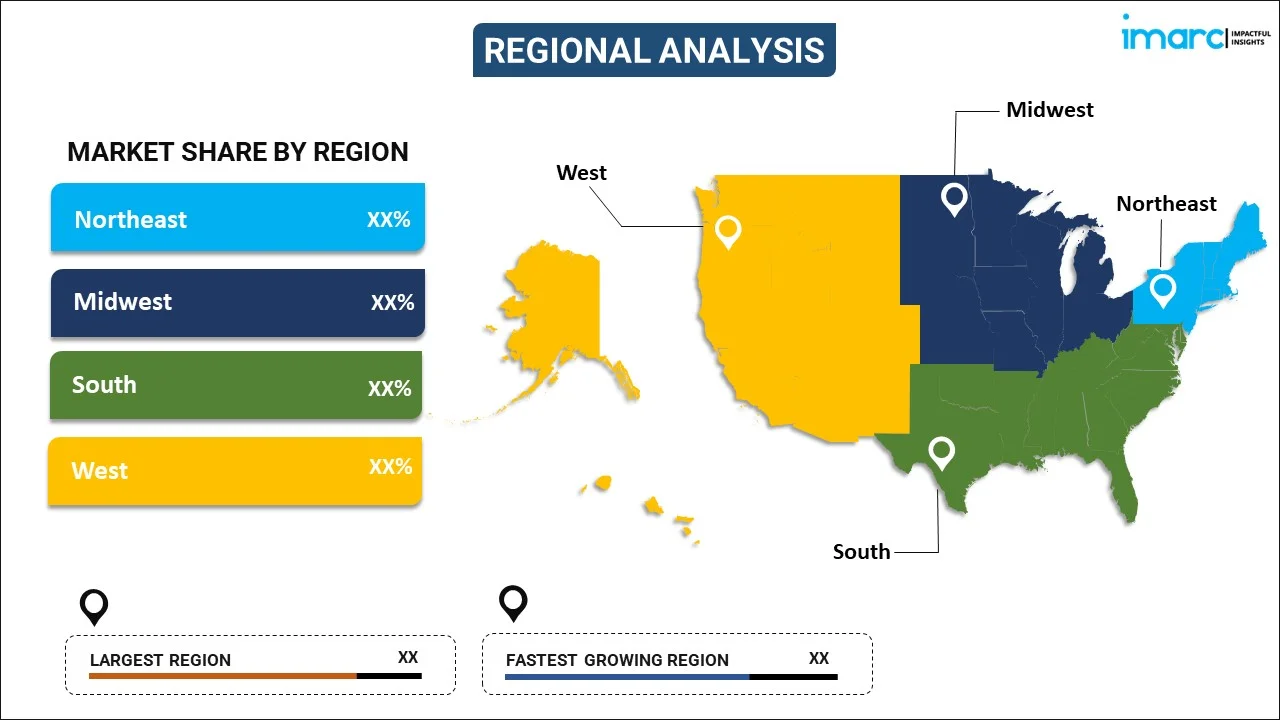
Breakup by Region:
To get detailed regional analysis of this market , Request Sample
- Northeast
- Midwest
- South
- West
The Northeast demonstrates strong pollution mask demand, driven by dense urban populations, substantial healthcare infrastructure, and significant industrial activity requiring respiratory protection compliance. Major metropolitan areas, including New York, Boston, and Philadelphia, generate concentrated demand from hospitals, manufacturing facilities, and construction projects.
The Midwest maintains steady market growth supported by extensive manufacturing operations, agricultural activities, and mining industries that require occupational respiratory protection. Healthcare systems across major cities, including Chicago and Detroit, contribute substantial institutional demand.
The South holds prominence in the market due to higher industrial activities, construction growth, and frequent exposure to dust and airborne pollutants. Rapid urban expansion and a large workforce in manufacturing and infrastructure projects increase routine mask usage. Additionally, higher population density in several southern states supports stronger retail demand.
The West represents a rapidly growing market, owing to recurring wildfire smoke, urban air quality concerns, and strong environmental awareness. States in this region frequently experience poor air conditions, increasing regular mask usage. Higher adoption of health-focused products and better access to premium masks further support market leadership.
Market Dynamics:
Growth Drivers:
Why is the United States Pollution Mask Market Growing?
Escalating Wildfire Activity and Air Quality Emergencies
Climate change-driven wildfire intensity and frequency are generating unprecedented demand for respiratory protection across western states and smoke-affected regions nationwide. Extended wildfire seasons, larger burn areas, and extreme weather patterns are exposing millions of Americans to hazardous air quality conditions requiring certified pollution masks. The devastating Los Angeles wildfires in January 2025 burned nearly 40,000 acres and destroyed over 16,200 homes, triggering mass evacuations and creating urgent demand for respiratory protection equipment across affected communities. Air quality indices reaching hazardous levels during fire events prompt public health advisories recommending N95 respirator use, driving consumer awareness and purchasing behavior beyond traditional industrial applications. These emergencies are encouraging households to stockpile pollution masks as part of disaster preparedness rather than treating them as occasional-use products. As wildfire-related air quality crises become more frequent, pollution masks are increasingly viewed as essential personal safety items, supporting sustained market growth beyond peak fire seasons.
Expansion of Industrial and Construction Activities
Strong growth in industrial, manufacturing, and construction activities across the United States is fueling the demand for pollution masks. As per AGC, in the first quarter of 2023, the United States had over 919,000 construction establishments. Workers in these sectors are routinely exposed to dust, fumes, chemicals, and particulate matter. Pollution masks are widely used as part of basic workplace safety equipment to reduce inhalation risks. Infrastructure development projects, urban redevelopment, and manufacturing expansion increase the number of workers requiring respiratory protection. Employers are also placing greater emphasis on occupational health and safety, driving bulk purchases of masks. In addition to regulated industrial use, many workers continue to use masks outside work environments due to prolonged exposure. This steady, large-scale consumption from industrial sectors provides a stable foundation for market growth.
Product Innovations and Improved Comfort
Product innovations and improved comfort are significantly propelling the United States pollution mask market expansion by removing key barriers to regular use. Manufacturers are developing masks with higher filtration efficiency while keeping them lightweight and breathable, making them suitable for extended wear. Soft inner linings, adjustable nose clips, and ergonomic designs improve fit and reduce skin irritation, encouraging daily usage. Innovations, such as reusable filters, washable materials, and anti-odor features, appeal to cost-conscious and environmentally aware consumers. Stylish designs and low-profile shapes have also increased acceptance in public settings, especially among commuters and urban users. Improved comfort makes pollution masks practical for diverse applications, including outdoor activities, workplaces, and travel. As performance and user experience improve simultaneously, consumers are more willing to invest in premium products, increasing repeat purchases and overall market value across the United States.
Market Restraints:
What Challenges the United States Pollution Mask Market is Facing?
Supply Chain Vulnerabilities and Import Dependencies
Supply chain vulnerabilities and import dependencies are limiting the growth of the United States pollution mask market by creating fluctuations in product availability and pricing. Heavy reliance on imported raw materials and finished masks exposes manufacturers to logistics disruptions, trade uncertainties, and longer lead times. These challenges increase production costs and delay order fulfillment, affecting market stability. As a result, companies face difficulties meeting sudden demand spikes, while buyers experience inconsistent supply and higher prices, slowing overall market expansion.
Counterfeit Products and Quality Control Concerns
Proliferation of counterfeit and substandard pollution masks threatens consumer safety and market integrity. Fraudulent products failing to meet certified filtration standards can compromise user protection while eroding confidence in legitimate respiratory protection equipment. Regulatory enforcement and consumer education efforts are ongoing to address this market challenge.
Environmental Sustainability Pressures
Disposable mask waste generation raises environmental concerns as single-use respiratory protection products contribute to landfill accumulation. Growing sustainability consciousness among consumers and regulatory attention to plastic waste are creating pressure for recyclable materials and biodegradable alternatives. Manufacturers face challenges balancing environmental responsibility with filtration performance and cost requirements.
Competitive Landscape:
The United States pollution mask market exhibits a moderately concentrated competitive structure with established multinational corporations commanding significant market share alongside specialized domestic manufacturers. Leading players compete through product innovations, manufacturing scale, distribution network strength, and brand recognition built through decades of industry presence. Companies are investing in advanced filtration technologies, domestic production capacity expansion, and strategic partnerships to strengthen competitive positioning. Market participants differentiate through NIOSH certification portfolios, comfort-focused design features, and sustainability initiatives addressing environmental concerns. Competitive dynamics increasingly emphasize supply chain resilience, rapid response capabilities during emergency events, and comprehensive product offerings spanning healthcare, industrial, and consumer protection applications.
Some of the key players include:
- 3M Company
- Honeywell International Inc.
- Kimberley-Clark Corporation
- Vogmask (Ohlone Press LLC)
- Reckitt Benckiser Group plc.
- Foss Performance Materials LLC
- Prestige Ameritech
- Makrite Industries, Inc.
Report Coverage:
| Report Features | Details |
|---|---|
| Base Year of the Analysis | 2025 |
| Historical Period | 2020-2025 |
| Forecast Period | 2026-2034 |
| Units | Billion USD |
| Scope of the Report | Exploration of Historical Trends and Market Outlook, Industry Catalysts and Challenges, Segment-Wise Historical and Future Market Assessment:
|
| Product Type Covered |
Disposable, Reusable |
| Filter Type Covered |
Particulate Filter, Gas and Odor Filter, Combination Filter, Others |
| Particulate Matter Covered |
PM 0.3, PM 1, PM 2.5, PM 10 |
| Standard Ratings Covered |
N95, N99, N100, P95, P100 |
| Distribution Channel Covered |
Institutional Sales, Retail Sales, Offline Sales, Online Sales |
| Region Covered | Northeast, Midwest, South, West |
| Companies Covered | 3M Company, Honeywell International Inc., Kimberley-Clark Corporation, Vogmask (Ohlone Press LLC), Reckitt Benckiser Group plc., Foss Performance Materials LLC, Prestige Ameritech and Makrite Industries, Inc. |
| Customization Scope | 10% Free Customization |
| Post-Sale Analyst Support | 10-12 Weeks |
| Delivery Format | PDF and Excel through Email (We can also provide the editable version of the report in PPT/Word format on special request) |
Frequently Asked Questions About the United States Pollution Mask Market Report
The United States pollution mask market size was valued at USD 1.53 Billion in 2025.
The United States pollution mask market is expected to grow at a compound annual growth rate of 8.94% from 2026-2034 to reach USD 3.3 Billion by 2034.
Disposable dominated the market with a share of 58%, due to its low cost, easy availability, and convenience for single-use applications. It requires no maintenance, offers consistent filtration performance, and is widely preferred in healthcare, industrial, and daily-use environments.
Key factors driving the United States pollution mask market include escalating wildfire activities and air quality emergencies, stringent workplace safety regulations, growing public health awareness, expanding healthcare infrastructure, and increasing consumer health consciousness.
Major challenges include supply chain vulnerabilities and import dependencies, counterfeit products threatening market integrity, environmental sustainability pressures regarding disposable waste, price competition from low-cost manufacturers, and consumer confusion regarding appropriate protection levels.
Need more help?
- Speak to our experienced analysts for insights on the current market scenarios.
- Include additional segments and countries to customize the report as per your requirement.
- Gain an unparalleled competitive advantage in your domain by understanding how to utilize the report and positively impacting your operations and revenue.
- For further assistance, please connect with our analysts.
 Request Customization
 Speak to an Analyst
 Request Brochure
 Inquire Before Buying
Benefits of Customization
- Personalize this research
- Triangulate with your data
- Get data as per your format and definition
- Gain a deeper dive into a specific application, geography, customer, or competitor
- Any level of personalization
Get in Touch With Us
UNITED STATES
Phone: +1-201-971-6302
INDIA
Phone: +91-120-433-0800
UNITED KINGDOM
Phone: +44-753-714-6104
Email: [email protected]
Client Testimonials




.webp)




.webp)













Related Reports

Choose your plan
*Please note that the prices mentioned below are starting prices for each bundle type. Kindly contact our team for further details.*
Single User License
- 1 User License, Access on 2 Devices
- PDF Report + Excel Dataset (Password Protected)
- Lifetime Access
- No Printing Rights
- 10% Free Report Customization
- 10–12 Weeks of Analyst Support
Five User License
- Access for 5 Users, 2 Devices per User
- PDF Report + Excel Dataset (Password Protected)
- Lifetime Access
- Dedicated Account Manager
- 12–14 Weeks of Analyst Support
- No Printing Rights
- 15% Free Report Customization
- 25% Discount on Your Next Purchase
Corporate User License
- Unlimited User Access (Within Your Organization)
- PDF Report + Excel Dataset
- Lifetime Access
- Dedicated Account Manager
- 14–20 Weeks of Analyst Support
- No Printing Rights
- 20% Free Report Customization
- 30% Discount on Your Next Purchase
Essential Insights
What's included:
3 reports
- Lifetime Access
- PDF Reports
- Excel Datasets
- 2 Weeks of Free Analyst Support
- 2 User Licenses
- Access on 2 Devices
- Printing Rights
- Complimentary PowerPoint (PPT) Version
- Complimentary License Upgrade
Professional Access
What's included:
5 reports
- Lifetime Access
- PDF Reports
- Excel Datasets
- 8 Weeks of Free Analyst Support
- 2 User Licenses
- Access on 2 Devices
- Printing Rights
- Complimentary PowerPoint (PPT) Version
- Complimentary License Upgrade
Business Advantage
What's included:
8 reports
- Lifetime Access
- PDF Reports
- Excel Datasets
- 14 Weeks of Free Analyst Support
- 2 User Licenses
- Access on 2 Devices
- Printing Rights
- Complimentary PowerPoint (PPT) Version
- Complimentary License Upgrade
Enterprise Intelligence
What's included:
10 reports
- Lifetime Access
- PDF Reports
- Excel Datasets
- 20 Weeks of Free Analyst Support
- 2 User Licenses
- Access on 2 Devices
- Printing Rights
- Complimentary PowerPoint (PPT) Version
- Complimentary License Upgrade