
United States Sanitary Napkin Market Size, Share, Trends and Forecast by Type, Distribution Channel, and Region, 2026-2034
United States Sanitary Napkin Market Summary:
The United States sanitary napkin market size was valued at USD 5.98 Billion in 2025 and is projected to reach USD 7.92 Billion by 2034, growing at a compound annual growth rate of 3.17% from 2026-2034.
The United States sanitary napkin market is expanding steadily, fueled by increasing menstrual health awareness, rising female workforce participation, and growing demand for sustainable products. Product innovations featuring advanced absorbent technologies and organic materials continue to attract health-conscious consumers. Additionally, the proliferation of e-commerce platforms and subscription-based delivery models is enhancing product accessibility and driving United States sanitary napkin market share.
Key Takeaways and Insights:
- By Type: Menstrual pad dominates the market with a share of 74% in 2025, owing to its widespread consumer acceptance, superior absorbency, and availability in various sizes and styles. Continuous innovations in ultra-thin designs and organic materials are supporting sustained preference among health-conscious users seeking reliable menstrual protection.
- By Distribution Channel: Supermarkets and hypermarkets lead the market with a share of 34% in 2025. This dominance is driven by widespread accessibility, one-stop shopping convenience, and extensive product variety allowing consumers to compare brands and prices under one roof while benefiting from promotional offers.
- By Region: South represents the largest region with 35% share in 2025, driven by the region's substantial female population concentration, diverse consumer preferences influenced by cultural and economic factors, and expanding retail infrastructure in metropolitan areas including Texas and Florida.
- Key Players: Key players drive the United States sanitary napkin market by expanding product portfolios, investing in sustainable materials, and enhancing absorbency technologies. Their strategic marketing campaigns, celebrity endorsements, and partnerships with retailers boost awareness and ensure consistent product availability across diverse consumer segments nationwide.
The United States sanitary napkin market is experiencing robust growth, supported by heightened consumer awareness regarding menstrual hygiene and wellness. The expanding female workforce, coupled with rising disposable incomes, is encouraging women to prioritize high-quality menstrual care products that offer comfort and reliability throughout their daily activities. Social media campaigns and educational initiatives are normalizing menstruation discussions, reducing stigma, and fostering positive attitudes toward feminine hygiene products among diverse demographics. The market is witnessing a significant shift towards organic and eco-friendly alternatives, with manufacturers investing in biodegradable materials and sustainable packaging solutions to address growing environmental consciousness. Product innovations featuring advanced absorbent technologies, ultra-thin designs, and hypoallergenic materials continue attracting health-conscious consumers seeking safer alternatives free from synthetic chemicals. E-commerce platforms and subscription services are revolutionizing purchasing habits by offering convenience, discretion, and personalized product selections, enabling consumers to access diverse options including premium and niche brands from the comfort of their homes.
United States Sanitary Napkin Market Trends:
Rising Demand for Organic and Eco-Friendly Products
Consumer awareness regarding environmental sustainability and personal health is driving significant demand for organic sanitary napkins in the United States. Women are increasingly seeking products made from biodegradable materials, organic cotton, and plant-based alternatives free from synthetic chemicals and harmful additives. According to the World Health Organization's Bulletin published in November 2024, annual production and use of 12 billion disposable menstrual products globally contributes an estimated 245,000 tonnes of carbon dioxide annually, with over 80% of menstrual products in Europe and the United States ending up in landfills where disposable pads take 500 to 800 years to decompose. Manufacturers are responding by introducing eco-friendly product lines featuring sustainable packaging and compostable materials that appeal to environmentally conscious consumers prioritizing both menstrual health and planetary wellness.
E-Commerce and Subscription-Based Service Expansion
The proliferation of e-commerce platforms and subscription-based delivery models is transforming how American consumers purchase sanitary napkins. Online shopping offers convenience, discretion, and access to diverse product ranges including premium and niche brands unavailable in traditional retail outlets. According to the US Census Bureau's Quarterly Retail E-Commerce Sales Report, e-commerce sales accounted for 16.2% of total retail sales in the third quarter of 2024, marking a year-over-year increase of 7.3% compared to the same quarter in 2023. Subscription services deliver products directly to consumers' doorsteps at regular intervals, eliminating last-minute shopping inconveniences and ensuring consistent product availability while often providing cost savings through bundled offerings.
Advanced Absorbent Technologies and Ultra-Thin Designs
Technological innovations in absorbent materials and product design are reshaping consumer expectations in the sanitary napkin market. Advanced features including super-absorbent polymers, moisture-locking systems, and breathable fabrics are enhancing comfort and leak protection. In March 2025, Procter & Gamble launched Always Pocket Flexfoam featuring its innovative Flexfoam technology that delivers "zero leaks, zero feel, and zero bunching" in a compact, portable design, with Always and Tampax becoming the first-ever period care partners at Coachella 2025. Ultra-thin pad designs offer discreet protection without compromising absorbency, while innovations such as flexible wings, odor control technologies, and hypoallergenic materials cater to diverse consumer preferences and active lifestyle requirements.
Market Outlook 2026-2034:
The United States sanitary napkin market outlook remains positive, driven by sustained consumer focus on menstrual health and hygiene awareness across diverse demographic segments. Growing acceptance of feminine hygiene discussions, supported by social media campaigns, educational initiatives, and celebrity endorsements, continues to reduce stigma and encourage product adoption among younger generations. Product innovations emphasizing sustainability, eco-friendly materials, comfort, and advanced leak protection technologies will continue shaping market dynamics and consumer preferences throughout the forecast period. The market generated a revenue of USD 5.98 Billion in 2025 and is projected to reach a revenue of USD 7.92 Billion by 2034, growing at a compound annual growth rate of 3.17% from 2026-2034.
United States Sanitary Napkin Market Report Segmentation:
|
Segment Category |
Leading Segment |
Market Share |
|
Type |
Menstrual Pad |
74% |
|
Distribution Channel |
Supermarkets and Hypermarkets |
34% |
|
Region |
South |
35% |
Type Insights:
To get detailed segment analysis of this market Request Sample
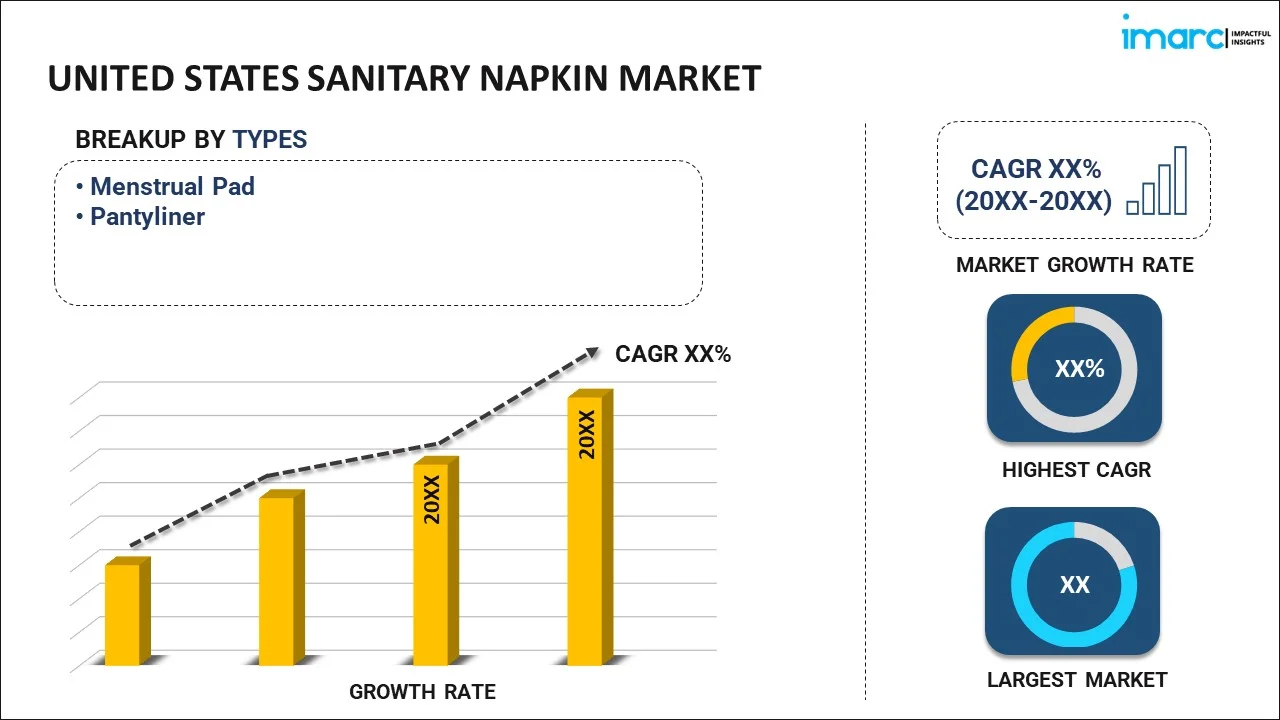
- Menstrual Pad
- Pantyliner
Menstrual pad dominates with a market share of 74% of the total United States sanitary napkin market in 2025.
Menstrual pads maintain overwhelming dominance in the United States market due to their widespread acceptance, convenience, and effectiveness in managing moderate to heavy menstrual flow across diverse consumer demographics. The segment benefits from established brand loyalty, extensive product availability across retail channels, and continuous innovations in absorbent technologies that enhance comfort and leak protection. Consumer familiarity with pad usage, combined with minimal learning curve compared to alternative menstrual products, reinforces sustained preference among women seeking reliable, hassle-free menstrual care solutions throughout their cycles.
The segment benefits from continuous product innovations including ultra-thin designs, advanced super-absorbent materials, breathable fabrics, and organic cotton variants that cater to evolving consumer preferences for comfort and sustainability. Manufacturers are introducing hypoallergenic options free from synthetic fragrances, dyes, and harsh chemicals, appealing to health-conscious consumers seeking safer alternatives for sensitive skin. Night-use pads featuring enhanced leak protection, extended coverage, and flexible wings for secure fit further expand product offerings addressing diverse user menstrual requirements.
Distribution Channel Insights:
- Supermarkets and Hypermarkets
- Pharmacies
- Convenience Stores
- Online
- Specialty Stores
- Others
Supermarkets and hypermarkets lead with a share of 34% of the total United States sanitary napkin market in 2025.
Supermarkets and hypermarkets dominate distribution channels owing to widespread accessibility and one-stop shopping convenience that allows consumers to purchase sanitary napkins alongside regular groceries and household essentials. American households consistently shop at supermarkets on a weekly basis, creating regular exposure to dedicated feminine care aisles and driving habitual purchasing behavior among female consumers. The extensive store networks across urban, suburban, and rural areas ensure convenient access to menstrual products, while familiar shopping environments encourage routine purchases during regular grocery trips throughout the month.
These retailers stock extensive product ranges spanning premium to economy brands, catering to diverse socioeconomic segments and varying consumer preferences for quality, absorbency, and price points. Promotional pricing strategies, bundle offers, multi-pack discounts, and loyalty program rewards significantly influence purchasing decisions, encouraging consumers to choose supermarkets over alternative distribution channels. Strategic product placement in high-traffic store sections and dedicated feminine care aisles enhances visibility, facilitates impulse purchases, and provides valuable opportunities for comprehensive brand comparison before final purchase decisions.
Regional Insights:
To get detailed regional analysis of this market Request Sample
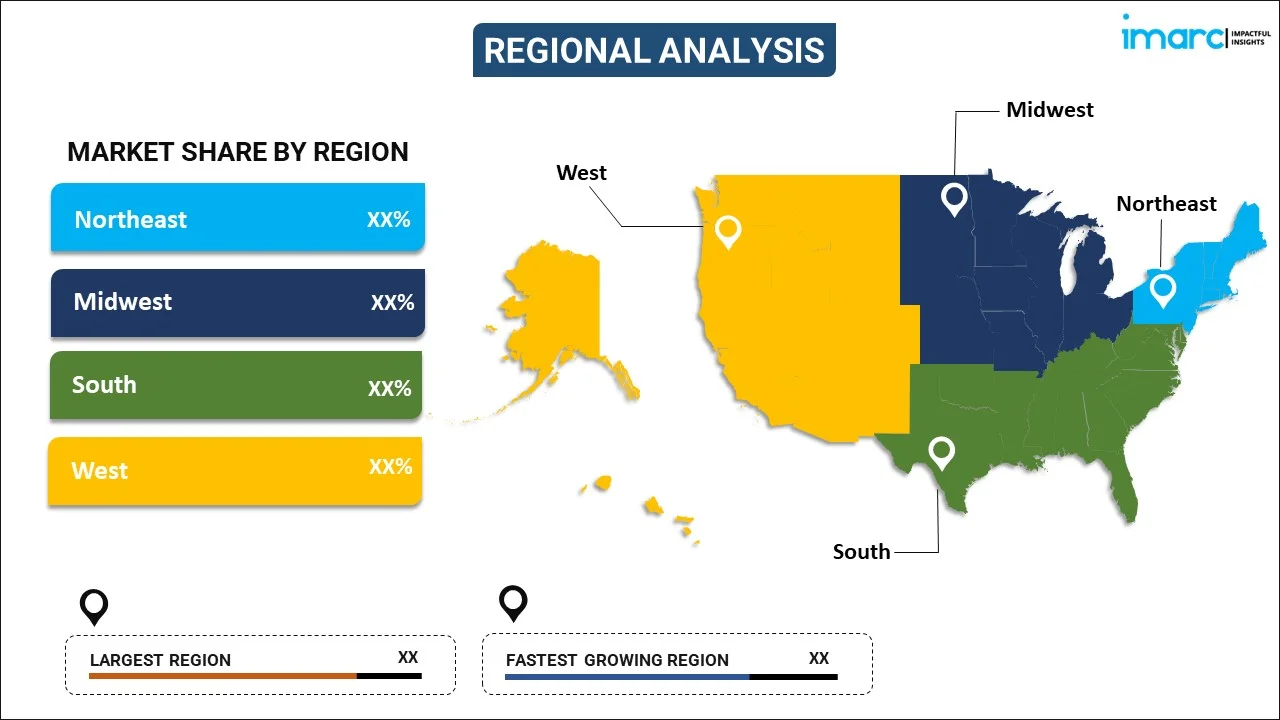
- Northeast
- Midwest
- South
- West
The South exhibits a clear dominance with a 35% share of the total United States sanitary napkin market in 2025.
The South leads the United States sanitary napkin market, driven by its substantial female population concentration across major metropolitan areas including Texas, Florida, and Georgia. Consumer preferences in this region vary considerably, influenced by diverse cultural backgrounds, economic conditions, and social factors that collectively shape purchasing behavior and brand loyalty. The region benefits from rapidly expanding retail infrastructure, widespread supermarket networks, and growing e-commerce penetration that significantly enhances product accessibility across both densely populated urban centers and developing suburban communities throughout the South.
Increasing awareness campaigns promoting menstrual health education across Southern states are encouraging product adoption among younger demographics and first-time users. Rising disposable incomes coupled with growing female workforce participation rates support sustained demand for premium, organic, and eco-friendly sanitary napkins. Leading manufacturers are strategically expanding distribution networks, establishing regional partnerships, and tailoring marketing strategies to effectively address diverse regional preferences and cultural sensitivities, ensuring consistent product availability and brand visibility across varying market segments within this demographically significant and economically vibrant region.
Market Dynamics:
Growth Drivers:
Why is the United States Sanitary Napkin Market Growing?
Increasing Menstrual Health Awareness and Education
Rising awareness regarding menstrual health and hygiene is significantly driving demand for sanitary napkins across the United States. Government initiatives, non-profit organizations, and comprehensive sex education programs have been instrumental in breaking stigma and spreading menstrual health knowledge among diverse demographics. Social media campaigns and celebrity endorsements normalize menstruation discussions, encouraging acceptance of sanitary napkins over traditional alternatives. Educational institutions are increasingly incorporating menstrual hygiene management into health curricula, ensuring younger generations develop informed approaches toward feminine care. In April 2024, Houston Airports became the first airport system in the United States to offer free period product dispensers, providing organic cotton pads through smart vending machines, demonstrating institutional commitment toward improving menstrual product accessibility. These collective efforts foster positive attitudes toward feminine hygiene products, expanding the consumer base and sustaining market growth.
Product Innovation and Technological Advancements
Steady innovations in products through the use of advanced technologies are some of the major drivers for the United States sanitary napkins market. A lot of investment has been seen in the research and development of innovative products for sanitary napkins. This has been for the development of products that are highly comfortable, absorbent as well as protective. Advanced technologies such as super-absorbent materials, moisture management technology, as well as breathable materials, have greatly improved the functionality of sanitary napkins. The use of ultra-thin materials has improved discretion without sacrificing performance.
Expanding Distribution Channels and Retail Accessibility
In addition, the increased availability of various channels of distribution is acting as a major promoting factor for the accessibility of sanitary napkins across the United States market. Supermarkets, hypermarkets, pharmacies, and convenience stores act as an important physical channel of distribution to ensure the availability of the product across urban and rural areas. The increased online purchasing platform options across the United States have really changed the dynamics of consumer purchasing, with options to ensure confidentiality and access to a wide range of products, including the purchasing of various niche and costly brands anywhere and anytime. Subscription-based home delivery options remove the inconvenience of consumer purchasing, with products reaching the consumer on a periodic basis. Omnichannel retailing options ensure streamlined purchasing across online as well as physical platforms. Specialized health and wellness retail stores also address the needs of health-conscious consumers interested in purchasing natural and eco-sustainable products.
Market Restraints:
What Challenges the United States Sanitary Napkin Market is Facing?
Environmental Concerns from Disposable Products
Environmental awareness creates strong challenges for the market for disposable sanitary napkins. Normal sanitary napkins contain plastic parts that take approximately hundreds of years to decompose. With the increase in awareness concerning the impact created in the environment, the usage of other alternatives such as menstrual cups and cloth sanitary pads is gaining popularity.
Price Sensitivity in Low-Income Class Consumers
The issue of affordability continues to hamper the use of sanitary napkins, especially for the poorer sections of society. The more premium products boasting cutting-edge technology and organic composition are the costlier options, thus obstructing easier entry into the market. The challenge of period poverty is still a reality for poorer members of society who fail to afford the basic items.
Competition from Alternative Menstrual Products
The growing use of alternative sanitary products poses a challenge to the competition for traditional sanitary pads. Menstrual cups, period underwear, and cloth sanitary pads are increasingly becoming popular with environmentally and financially-conscious people looking for sustainable solutions to sanitary requirements. The value proposition offered by these new products outweighs the use of disposable sanitary products.
Competitive Landscape:
The market for sanitary napkins in the United States is highly competitive in nature, with established large-scale players as well as new entrants in the niche marketplace. The top companies are engaged in rigorous R&D activities for the development of enhanced features for consumer satisfaction pertaining to comfort, absorbency, and sustainable options. The companies are focusing on intensive marketing campaigns and wide distributions networks for their products. The major players are using differentiation in the marketing approach by using natural materials in sanitary napkins and other advanced technologies in leak guards and ultra-thin designs.
Recent Developments:
- In May 2024, Edgewell Personal Care expanded its Carefree feminine care portfolio by introducing new pads alongside existing liners. The newly launched pads feature VEOCEL Lyocell fibers with Dry Technology, providing enhanced multi-fluid and odor control. The launch was supported by the Protection for the Protectors campaign celebrating mothers.
- In April 2024, Kimberly-Clark introduced Liv by Kotex, a new product line offering dual protection against periods and bladder leaks. The pads feature a multi-layer core and leakblock sides providing up to 100% leak-free protection and ten times more dryness than period-only pads, addressing evolving feminine hygiene needs among diverse consumer segments.
United States Sanitary Napkin Market Report Scope:
| Report Features | Details |
|---|---|
| Base Year of the Analysis | 2025 |
| Historical Period | 2020-2025 |
| Forecast Period | 2026-2034 |
| Units | Billion USD |
| Scope of the Report | Exploration of Historical Trends and Market Outlook, Industry Catalysts and Challenges, Segment-Wise Historical and Future Market Assessment:
|
| Types Covered | Menstrual Pad, Pantyliner |
| Distribution Channels Covered | Supermarkets and Hypermarkets, Pharmacies, Convenience Stores, Online, Specialty Stores, Others |
| Regions Covered | Northeast, Midwest, South, West |
| Customization Scope | 10% Free Customization |
| Post-Sale Analyst Support | 10-12 Weeks |
| Delivery Format | PDF and Excel through Email (We can also provide the editable version of the report in PPT/Word format on special request) |
Frequently Asked Questions About the United States Sanitary Napkin Market Report
The United States sanitary napkin market size was valued at USD 5.98 Billion in 2025.
The United States sanitary napkin market is expected to grow at a compound annual growth rate of 3.17% from 2026-2034 to reach USD 7.92 Billion by 2034.
Menstrual pad dominated the market with a share of 74%, driven by widespread consumer acceptance, superior absorbency features, and availability in various sizes and styles catering to diverse preferences.
Key factors driving the United States sanitary napkin market include increasing menstrual health awareness, product innovations with advanced technologies, expanding distribution channels, and growing demand for organic and eco-friendly alternatives.
Major challenges include environmental concerns regarding disposable product waste, price sensitivity among low-income consumers limiting accessibility, competition from alternative menstrual products including cups and reusable pads, and addressing period poverty affecting economically disadvantaged populations.
Need more help?
- Speak to our experienced analysts for insights on the current market scenarios.
- Include additional segments and countries to customize the report as per your requirement.
- Gain an unparalleled competitive advantage in your domain by understanding how to utilize the report and positively impacting your operations and revenue.
- For further assistance, please connect with our analysts.
 Request Customization
 Speak to an Analyst
 Request Brochure
 Inquire Before Buying
Benefits of Customization
- Personalize this research
- Triangulate with your data
- Get data as per your format and definition
- Gain a deeper dive into a specific application, geography, customer, or competitor
- Any level of personalization
Get in Touch With Us
UNITED STATES
Phone: +1-201-971-6302
INDIA
Phone: +91-120-433-0800
UNITED KINGDOM
Phone: +44-753-714-6104
Email: [email protected]
Client Testimonials




.webp)




.webp)













Related Reports

Choose your plan
*Please note that the prices mentioned below are starting prices for each bundle type. Kindly contact our team for further details.*
Single User License
- 1 User License, Access on 2 Devices
- PDF Report + Excel Dataset (Password Protected)
- Lifetime Access
- No Printing Rights
- 10% Free Report Customization
- 10–12 Weeks of Analyst Support
Five User License
- Access for 5 Users, 2 Devices per User
- PDF Report + Excel Dataset (Password Protected)
- Lifetime Access
- Dedicated Account Manager
- 12–14 Weeks of Analyst Support
- No Printing Rights
- 15% Free Report Customization
- 25% Discount on Your Next Purchase
Corporate User License
- Unlimited User Access (Within Your Organization)
- PDF Report + Excel Dataset
- Lifetime Access
- Dedicated Account Manager
- 14–20 Weeks of Analyst Support
- No Printing Rights
- 20% Free Report Customization
- 30% Discount on Your Next Purchase
Essential Insights
What's included:
3 reports
- Lifetime Access
- PDF Reports
- Excel Datasets
- 2 Weeks of Free Analyst Support
- 2 User Licenses
- Access on 2 Devices
- Printing Rights
- Complimentary PowerPoint (PPT) Version
- Complimentary License Upgrade
Professional Access
What's included:
5 reports
- Lifetime Access
- PDF Reports
- Excel Datasets
- 8 Weeks of Free Analyst Support
- 2 User Licenses
- Access on 2 Devices
- Printing Rights
- Complimentary PowerPoint (PPT) Version
- Complimentary License Upgrade
Business Advantage
What's included:
8 reports
- Lifetime Access
- PDF Reports
- Excel Datasets
- 14 Weeks of Free Analyst Support
- 2 User Licenses
- Access on 2 Devices
- Printing Rights
- Complimentary PowerPoint (PPT) Version
- Complimentary License Upgrade
Enterprise Intelligence
What's included:
10 reports
- Lifetime Access
- PDF Reports
- Excel Datasets
- 20 Weeks of Free Analyst Support
- 2 User Licenses
- Access on 2 Devices
- Printing Rights
- Complimentary PowerPoint (PPT) Version
- Complimentary License Upgrade