
United States Socks Market Report by Product (Casual, Formal, Athletic, and Others), Material (Nylon, Cotton, Polyester, Wool, Waterproof Breathable Membrane, and Others), Application (Men, Women, Children), Distribution Channel (Supermarkets and Hypermarkets, Convenience Stores, Online Stores, and Others), and Region 2026-2034
United States Socks Market Overview:
United States socks market size reached USD 759.1 Million in 2025. Looking forward, IMARC Group expects the market to reach USD 862.2 Million by 2034, exhibiting a growth rate (CAGR) of 1.43% during 2026-2034. The growing emphasis on fashion and personalization, rising preferences of individuals for unique and eye-catching designs, colors, and patterns to complement their outfits, and increasing reliance on e-commerce platforms represent some of the key factors driving the market, thereby contributing to the overall growth of the United States socks market share.
|
Report Attribute
|
Key Statistics
|
|---|---|
|
Base Year
|
2025 |
|
Forecast Years
|
2026-2034
|
|
Historical Years
|
2020-2025
|
| Market Size in 2025 | USD 759.1 Million |
| Market Forecast in 2034 | USD 862.2 Million |
| Market Growth Rate (2026-2034) | 1.43% |
Access the full market insights report Request Sample
United States Socks Market Analysis:
- Key Market Drivers: Increased consumer emphasis on comfort, style, and performance fuels demand for quality socks, supporting United States socks market growth. Improved sports participation and fitness activity stimulate interest in functional styles with wicking and cushioning capabilities. Enhanced awareness of sustainable inputs and improved durability also drive steady market growth.
- Key Market Trends: The U.S. sock industry is experiencing growing demand for sustainable and organic products like bamboo and recycled fibers. Youths are attracted to fashion-forward styles and personalization possibilities. Furthermore, technology advances in seamless knitting, compression, and odor management are improving comfort and performance in casual, athletic, and dress segments.
- Competitive Landscape: The market has a blend of traditional fashion brands and new niche players with a focus on premium, eco-friendly, and performance-driven socks. Brands focus on differentiation across product innovation, design diversity, and raw material quality. Retail stores and e-commerce sites increasingly promote multiple collections based on lifestyle and seasonal consumer trends.
- Challenges and Opportunities: Increased raw material prices and changing consumer tastes are threats to producers. Yet increasing demand for sustainable, locally made, and technology-infused socks presents opportunities for innovation. Increasing availability of e-commerce platforms and the popularity of athleisure continue to promote brand exposure and product diversification in the market.
Socks can be made from a wide range of materials, each offering different properties, such as breathability, warmth, moisture-wicking, and durability. It is available in various designs, colors, patterns, and lengths, including ankle and crew. It often has an elastic band at the top to help it stay in place. It also has extra padding or reinforcement at the toes and heels for added comfort and durability. It acts as a barrier between the foot and the shoe, thereby prevent friction, blisters, and discomfort. It can provide insulation and regulate foot temperature, keeping feet warm in cold weather and cool in hot weather. It helps wick moisture away from the feet, keeping them dry and reducing the risk of fungal infections. It is commonly worn for daily activities, providing comfort and protection. Besides this, it is also used by individuals with specific foot conditions. Besides this, as it can add a fashionable element to an outfit, the demand for socks is increasing in the United States.
United States Socks Market Trends:
Rising Demand for Sustainable and Eco-Friendly Socks
The United States socks market demand is experiencing a robust transition toward sustainability as customers increasingly value eco-friendly buying habits. Companies are concentrating on creating socks using organic cotton, bamboo fiber, recycled polyester, and other biodegradable materials to minimize environmental footprints. This follows the overall push toward sustainable fashion, where openness in sourcing and production has become of paramount importance. The development in recycling textiles and dyeing with less water use also adds to the popularity of green socks. The increased awareness of sustainable fashion among millennials and Gen Z consumers also speeds up this transition. Stores are meeting this by increasing their lines of eco-friendly socks, frequently touting their carbon footprint savings and low-impact production methods. As sustainability keeps shaping consumer habits, the call for green, ethically made socks will likely stay a top trend in the U.S. market.
Increased Demand for Performance and Athletic Socks
Performance socks are gaining popularity in the United States owing to increased involvement in sporting activities, fitness, and outdoor pursuits. Such socks are engineered with such sophisticated features as moisture-wicking materials, arch compression, cushioned insoles, and seamless toe construction to optimize comfort and minimize the likelihood of blisters. The popularity of athleisure clothing has also synthesized the distinction between athletic and street wear, creating greater demand for high-performance socks that are wearable both on a daily basis and during exercise. The emergence of material technology breakthroughs, such as spandex blends and antimicrobial materials, also enhances durability as well as hygiene. Moreover, the growing popularity of home workouts and amateur sports activities has driven the sales of performance socks across various demographics. As buyers look for comfort, functionality, and fashion in their shoe accessories, performance socks remain one of the fastest-growing categories in the U.S. socks industry.
Growing Use of Fashion-Friendly and Custom Socks
The United States socks market forecast indicates that the American socks market is moving beyond functionality, with fashion-oriented and custom socks receiving strong acceptance. Buyers are increasingly treating socks as an expression of themselves, adding vibrant color, patterns, and textures to their personal style. This evolving fashion awareness has seen the increasing popularity of themed, seasonal, and designer-inspired socks that complement different styles of outfits. There has also been a rising demand for personalization, with consumers preferring to choose customized designs that suit individual tastes or lifestyle. Online platforms and design software have facilitated the ease with which consumers can design their own custom socks in small quantities, fueling the trend. Additionally, streetwear culture and social media influence have further promoted interest in statement socks, turning them into trendy accessories. As fashion-forward consumers continue to value individuality, the use of trendy and personally designed socks is likely to enhance their place within the U.S. market.
United States Socks Market Segmentation:
IMARC Group provides an analysis of the key trends in each segment of the market, along with forecasts at the country level for 2026-2034. Our report has categorized the market based on product, material, application, and distribution channel.
Product Insights:
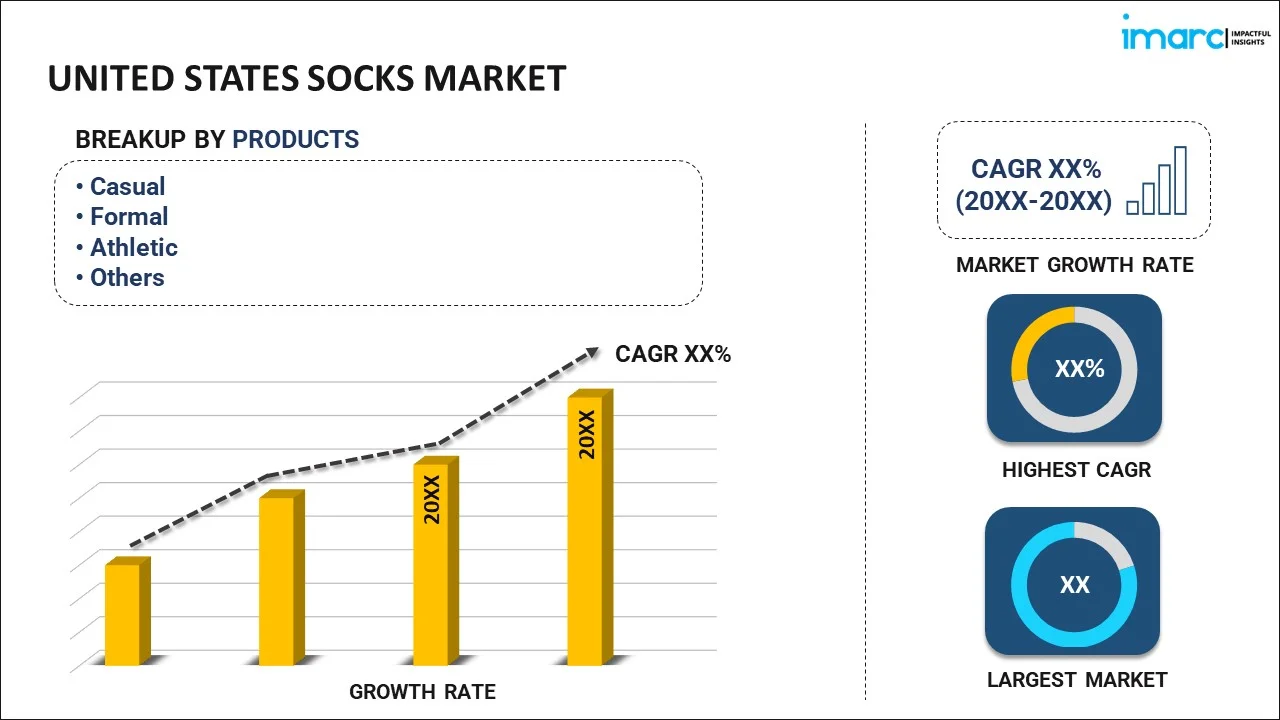
To get detailed segment analysis of this market Request Sample
- Casual
- Formal
- Athletic
- Others
The report has provided a detailed breakup and analysis of the market based on the product. This includes casual, formal, athletic, and others.
Material Insights:
- Nylon
- Cotton
- Polyester
- Wool
- Waterproof Breathable Membrane
- Others
A detailed breakup and analysis of the market based on the material have also been provided in the report. This includes nylon, cotton, polyester, wool, waterproof breathable membrane, and others.
Application Insights:
- Men
- Women
- Children
The report has provided a detailed breakup and analysis of the market based on the application. This includes men, women, and children.

Distribution Channel Insights:
- Supermarkets and Hypermarkets
- Convenience Stores
- Online Stores
- Others
A detailed breakup and analysis of the market based on the distribution channel have also been provided in the report. This includes supermarkets and hypermarkets, convenience stores, online stores, and others.
Regional Insights:
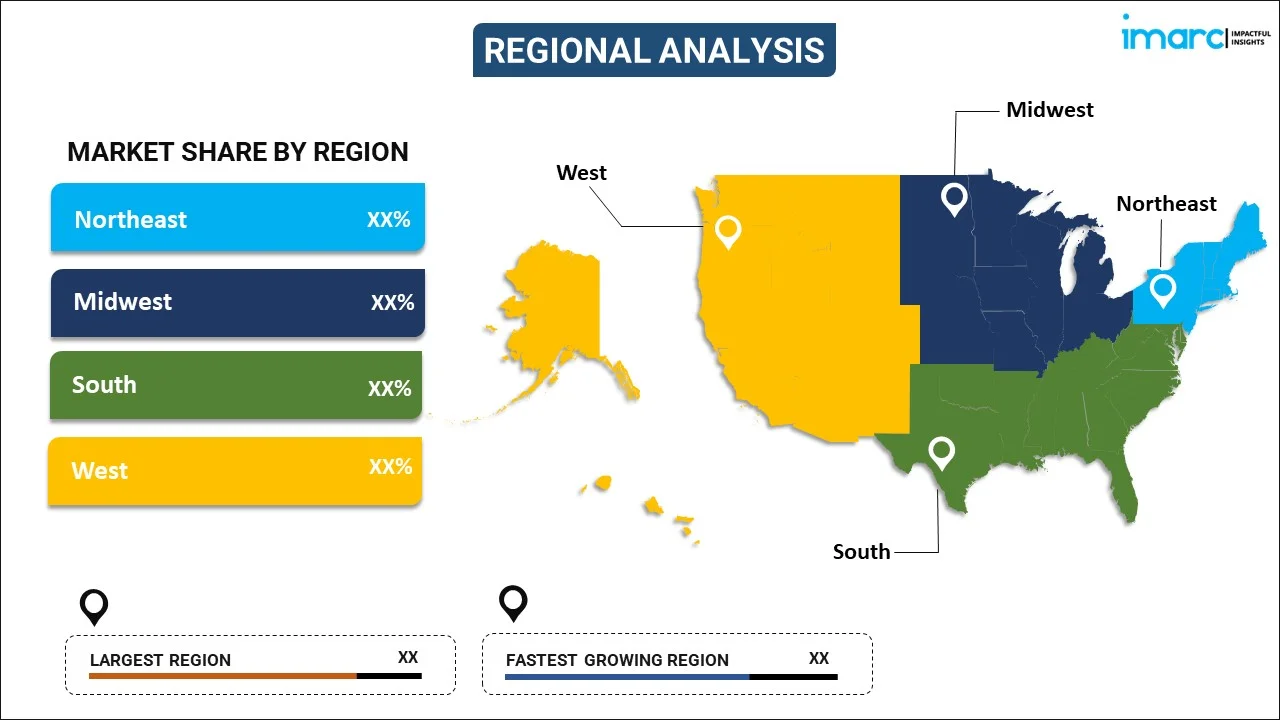
To get detailed regional analysis of this market Request Sample
- Northeast
- Midwest
- South
- West
The report has also provided a comprehensive analysis of all the major regional markets, which include Northeast, Midwest, South, and West.
Competitive Landscape:
The market research report has also provided a comprehensive analysis of the competitive landscape. Competitive analysis such as market structure, key player positioning, top winning strategies, competitive dashboard, and company evaluation quadrant has been covered in the report. Also, detailed profiles of all major companies have been provided.
United States Socks Market News:
- June 2025 – North Carolina: The New American Hosiery Company announced it will begin operations on July 1, 2025, merging Wilson Brown Sock Company, Circufiber Inc., and assets from TH Hosiery Mills. Based in Statesville and Rockwell, the venture focuses on performance and clinical hosiery textiles, highlighting U.S. manufacturing revival and innovation in smart and industrial socks.
- December 2024 – United States: Blue Tree Technology LLC launched a new bamboo-based sock collection, emphasizing eco-friendly materials and comfort for online consumers. The initiative reflects growing material innovation in the U.S. sock market, as smaller e-commerce brands adopt sustainable fibres like bamboo to differentiate their products and appeal to environmentally conscious buyers.
United States Socks Market Report Coverage:
| Report Features | Details |
|---|---|
| Base Year of the Analysis | 2025 |
| Historical Period | 2020-2025 |
| Forecast Period | 2026-2034 |
| Units | Million USD |
| Scope of the Report | Exploration of Historical Trends and Market Outlook, Industry Catalysts and Challenges, Segment-Wise Historical and Future Market Assessment:
|
| Products Covered | Casual, Formal, Athletic, Others |
| Materials Covered | Nylon, Cotton, Polyester, Wool, Waterproof Breathable Membrane, Others |
| Applications Covered | Men, Women, Children |
| Distribution Channels Covered | Supermarkets and Hypermarkets, Convenience Stores, Online Stores, Others |
| Regions Covered | Northeast, Midwest, South, West |
| Customization Scope | 10% Free Customization |
| Post-Sale Analyst Support | 10-12 Weeks |
| Delivery Format | PDF and Excel through Email (We can also provide the editable version of the report in PPT/Word format on special request) |
Key Benefits for Stakeholders:
- IMARC’s industry report offers a comprehensive quantitative analysis of various market segments, historical and current market trends, market forecasts, and dynamics of the United States socks market from 2020-2034.
- The research report provides the latest information on the market drivers, challenges, and opportunities in the United States socks market.
- Porter's five forces analysis assist stakeholders in assessing the impact of new entrants, competitive rivalry, supplier power, buyer power, and the threat of substitution. It helps stakeholders to analyze the level of competition within the United States socks industry and its attractiveness.
- Competitive landscape allows stakeholders to understand their competitive environment and provides an insight into the current positions of key players in the market.
Frequently Asked Questions About the United States Socks Market Report
The socks market in the United States was valued at USD 759.1 Million in 2025.
The socks market in the United States is projected to exhibit a CAGR of 1.43% during 2026-2034, reaching a value of USD 862.2 Million by 2034.
The United States socks market is driven by growing consumer demand for comfort and performance-enhancing products, rising interest in sustainable and eco-friendly materials, and the influence of fashion trends promoting stylish and customizable designs. Additionally, increased sports participation and expanding e-commerce channels further support market growth.
Need more help?
- Speak to our experienced analysts for insights on the current market scenarios.
- Include additional segments and countries to customize the report as per your requirement.
- Gain an unparalleled competitive advantage in your domain by understanding how to utilize the report and positively impacting your operations and revenue.
- For further assistance, please connect with our analysts.
 Request Customization
 Speak to an Analyst
 Request Brochure
 Inquire Before Buying
Benefits of Customization
- Personalize this research
- Triangulate with your data
- Get data as per your format and definition
- Gain a deeper dive into a specific application, geography, customer, or competitor
- Any level of personalization
Get in Touch With Us
UNITED STATES
Phone: +1-201-971-6302
INDIA
Phone: +91-120-433-0800
UNITED KINGDOM
Phone: +44-753-714-6104
Email: [email protected]
Client Testimonials




.webp)




.webp)













Related Reports

Choose your plan
*Please note that the prices mentioned below are starting prices for each bundle type. Kindly contact our team for further details.*
Single User License
- 1 User License, Access on 2 Devices
- PDF Report + Excel Dataset (Password Protected)
- Lifetime Access
- No Printing Rights
- 10% Free Report Customization
- 10–12 Weeks of Analyst Support
Five User License
- Access for 5 Users, 2 Devices per User
- PDF Report + Excel Dataset (Password Protected)
- Lifetime Access
- Dedicated Account Manager
- 12–14 Weeks of Analyst Support
- No Printing Rights
- 15% Free Report Customization
- 25% Discount on Your Next Purchase
Corporate User License
- Unlimited User Access (Within Your Organization)
- PDF Report + Excel Dataset
- Lifetime Access
- Dedicated Account Manager
- 14–20 Weeks of Analyst Support
- No Printing Rights
- 20% Free Report Customization
- 30% Discount on Your Next Purchase
Essential Insights
What's included:
3 reports
- Lifetime Access
- PDF Reports
- Excel Datasets
- 2 Weeks of Free Analyst Support
- 2 User Licenses
- Access on 2 Devices
- Printing Rights
- Complimentary PowerPoint (PPT) Version
- Complimentary License Upgrade
Professional Access
What's included:
5 reports
- Lifetime Access
- PDF Reports
- Excel Datasets
- 8 Weeks of Free Analyst Support
- 2 User Licenses
- Access on 2 Devices
- Printing Rights
- Complimentary PowerPoint (PPT) Version
- Complimentary License Upgrade
Business Advantage
What's included:
8 reports
- Lifetime Access
- PDF Reports
- Excel Datasets
- 14 Weeks of Free Analyst Support
- 2 User Licenses
- Access on 2 Devices
- Printing Rights
- Complimentary PowerPoint (PPT) Version
- Complimentary License Upgrade
Enterprise Intelligence
What's included:
10 reports
- Lifetime Access
- PDF Reports
- Excel Datasets
- 20 Weeks of Free Analyst Support
- 2 User Licenses
- Access on 2 Devices
- Printing Rights
- Complimentary PowerPoint (PPT) Version
- Complimentary License Upgrade