
United States Sports and Energy Drinks Market: Industry Trends, Share, Size, Growth, Opportunity and Forecast 2026-2034
United States Sports and Energy Drinks Market Size, Share, Trends & Forecast (2026-2034)
The United States sports and energy drinks market size increased from USD 7.6 Billion in 2025 to USD 7.8 Billion in 2026 and is projected to reach USD 10.3 Billion by 2034, growing at a CAGR of 3.46% during 2026-2034. The market is driven by rising health consciousness, active lifestyles, fitness participation, and demand for convenient hydration and performance-enhancing beverages. Isotonic leads the product type at 61.8% in the sports drinks market. Nearly 82% of US consumers prioritize wellness, while 90% of Millennials and Gen Z continue to spend on healthy foods even during economic uncertainty. This strong wellness focus is boosting demand for sports and energy drinks with natural ingredients, electrolytes, vitamins, low sugar, and functional benefits. Non-Alcoholic leads the product at 92.6% in the energy drinks market. Supermarkets and hypermarkets lead the distribution channel at 42.8% in the sports drinks market, and convenience stores lead at 38.4% in the energy drinks market.
Market Snapshot
|
Metric |
Value |
|
Base Year Market Size (2025) |
USD 7.6 Billion |
|
Market Size (2026) |
USD 7.8 Billion |
|
Forecast Market Size (2034) |
USD 10.3 Billion |
|
CAGR (2026-2034) |
3.46% |
|
Base Year |
2025 |
|
Historical Period |
2020-2025 |
|
Forecast Period |
2026-2034 |
|
Dominant Sports Drinks Product Type |
Isotonic (61.8%, 2025) |
|
Dominant Energy Drinks Product |
Non-Alcoholic (92.6%, 2025) |
| Dominant Sports Drinks Distribution Channel |
Supermarkets and Hypermarkets (42.8%, 2025) |
| Dominant Energy Drinks Distribution Channel |
Convenience Stores (38.4%, 2025) |
|
Sports Drinks Leading Region |
South (34.7%, 2025) |
|
Energy Drinks Leading Region |
South (35.2%, 2025) |
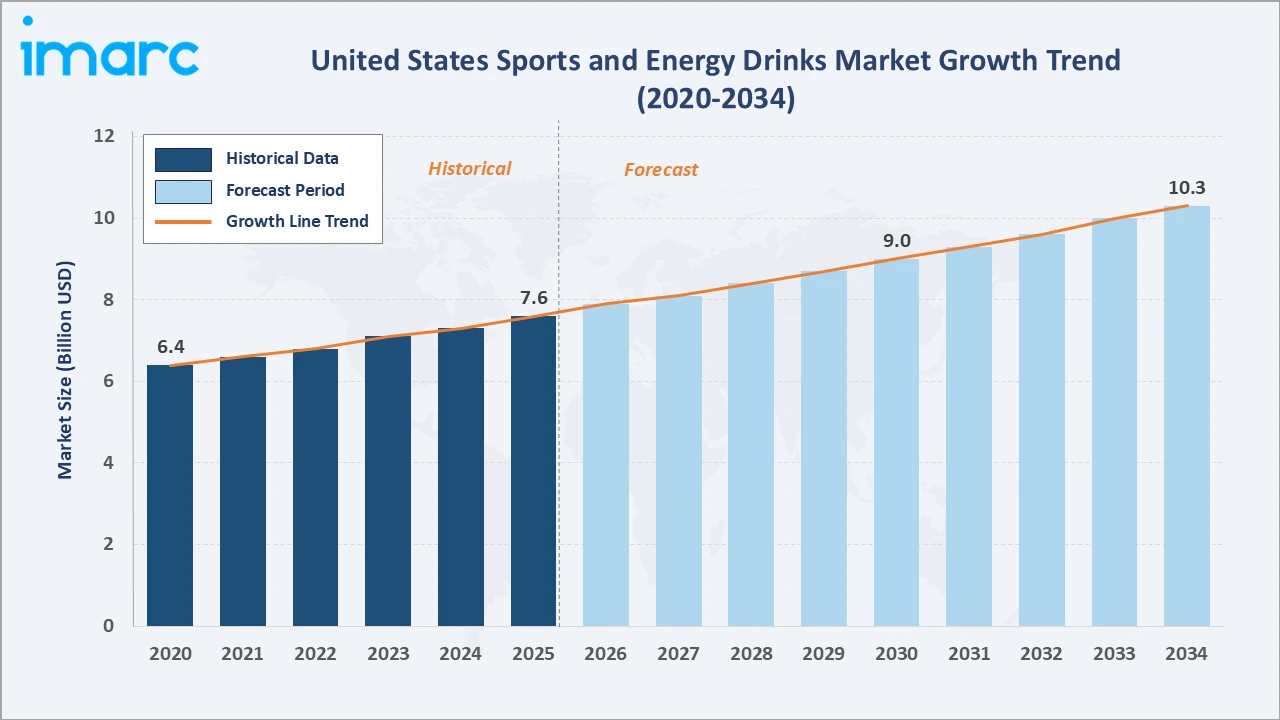
The United States sports and energy drinks market grew from USD 6.4 Billion in 2020 to USD 7.6 Billion in 2025, reaching an estimated USD 7.8 Billion in 2026. Reflecting steady demand from health-conscious consumers, fitness enthusiasts, and busy professionals. The market is expected to reach USD 9.0 Billion by 2030, supported by rising preference for functional hydration, energy-boosting beverages, and low-sugar formulations. By 2034, it is projected to reach USD 10.3 Billion, driven by innovation in clean-label, electrolyte-rich, natural, and performance-focused drinks. Overall, the market shows consistent long-term growth, supported by wellness trends and expanding consumption occasions.
To get more information on this market, Request Sample
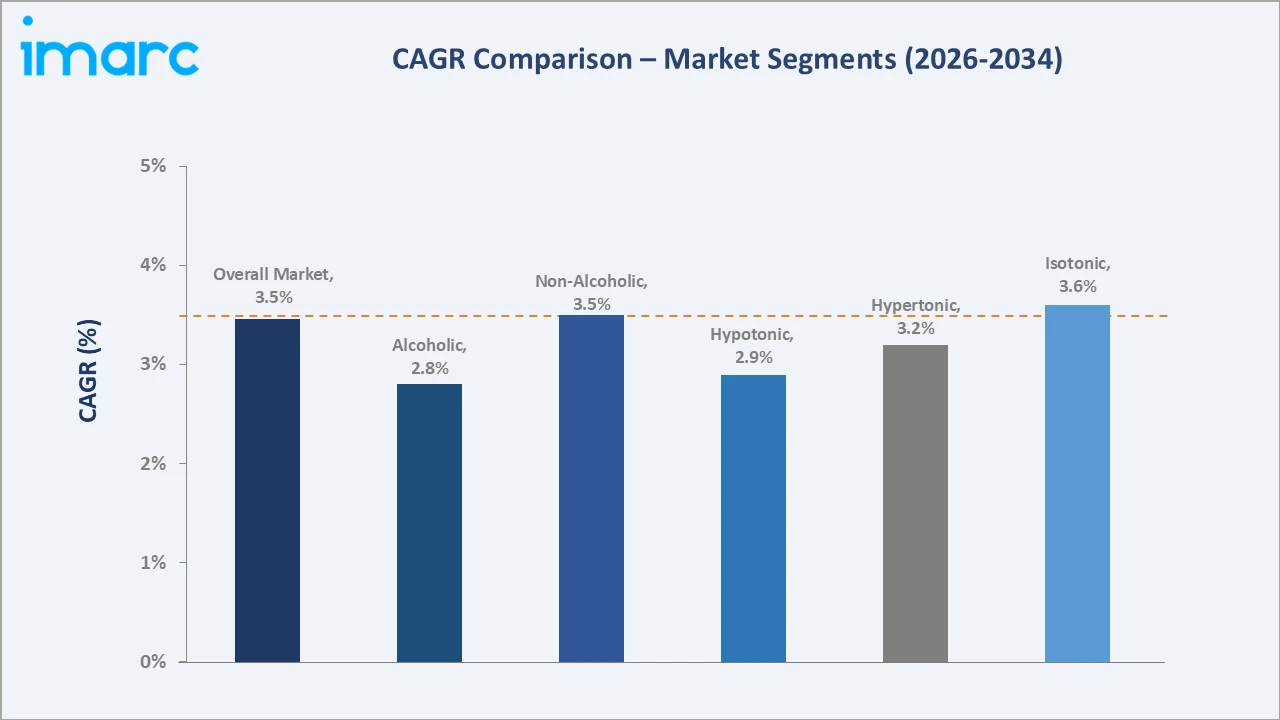
Isotonic sports drinks grow fastest at ~3.6% CAGR through science-backed clean-label electrolyte reformulation. Non-alcoholic energy drinks grow at ~3.5% CAGR through functional nootropic and fitness-positioned variants.
Executive Summary
The United States sports and energy drinks market is expanding steadily, supported by rising wellness awareness, active lifestyles, and demand for convenient functional beverages. Consumers are increasingly choosing drinks with electrolytes, vitamins, natural caffeine, low sugar, and clean-label ingredients. Brands are responding with innovative hydration, energy, recovery, and performance-focused products targeting fitness users, students, professionals, and everyday consumers. Growth is further supported by strong retail availability, online sales, sports sponsorships, and flavor innovation. Overall, the market is moving beyond traditional athletic use toward mainstream daily consumption. Isotonic at 61.8% of sports drinks and non-alcoholic at 92.6% of energy drinks dominate both segments. South region leads both at 34.7% and 35.2%, respectively.
Key Market Insights
|
Market |
Insight |
Data |
|
Sports Drinks Market |
Product Type |
Isotonic - 61.8% share (2025) |
|
Distribution Channel |
Supermarkets and Hypermarkets – 42.8% market share (2025) |
|
|
Region |
South – 34.7% share (2025) |
|
|
Energy Drinks Market |
Product |
Non-Alcoholic - 92.6% share (2025) |
|
Distribution Channel |
Convenience Stores – 38.4% share (2025) |
|
|
Region |
South – 35.2% share (2025) |
Key Analytical Observations Supporting The Above Data:
- Isotonic at 61.8% in the Sports Drinks Market: Isotonic drinks lead the sports drinks market as they quickly replace fluids, electrolytes, and carbohydrates lost during exercise. Their balanced formulation makes them widely preferred by athletes, gym-goers, and active consumers for hydration and energy support.
- Non-Alcoholic at 92.6% in the Energy Drinks Market: Non-alcoholic energy drinks lead the market as they offer quick energy, alertness, and convenience without alcohol-related restrictions. Their wide availability, broad consumer acceptance, and suitability for students, professionals, athletes, and daily users support their dominance.
- Supermarkets and Hypermarkets at 42.8% in the Sports Drinks Market: Supermarkets and hypermarkets lead the sports drinks market due to their wide product availability, strong brand visibility, and frequent promotional offers.
- Convenience Stores at 38.4% in the Energy Drinks Market: Convenience stores lead the energy drinks market due to impulse purchases, quick accessibility, and strong demand from on-the-go consumers. Their extended hours, chilled displays, and single-serve availability make them a preferred channel for energy drink purchases.
- South at 34.7% and 35.2% in the Sports Drinks Market and the Energy Drinks Market: South leads due to its large population base, warm climate, strong sports culture, and high demand for hydration and energy beverages. Growth is further supported by extensive retail networks, convenience stores, fitness centers, and outdoor activity participation.
United States Sports and Energy Drinks Market Overview
The United States sports and energy drinks market encompasses sports drinks, energy drinks, hydration beverages, electrolyte drinks, functional energy products, and performance-focused beverages. It serves athletes, fitness enthusiasts, students, working professionals, and on-the-go consumers seeking hydration, stamina, alertness, and recovery support. The market includes both ready-to-drink and powdered formats distributed through supermarkets, hypermarkets, convenience stores, gyms, online platforms, and specialty retailers. Growth is supported by wellness trends, active lifestyles, flavor innovation, and demand for low-sugar, clean-label, vitamin-enriched, and natural ingredient-based formulations. Macroeconomic factors include rising disposable incomes, increasing health and wellness spending, expanding fitness participation, and growing urbanization, which support demand for sports and energy drinks.
Market Dynamics
To evaluate market opportunities, Request Sample
Market Drivers
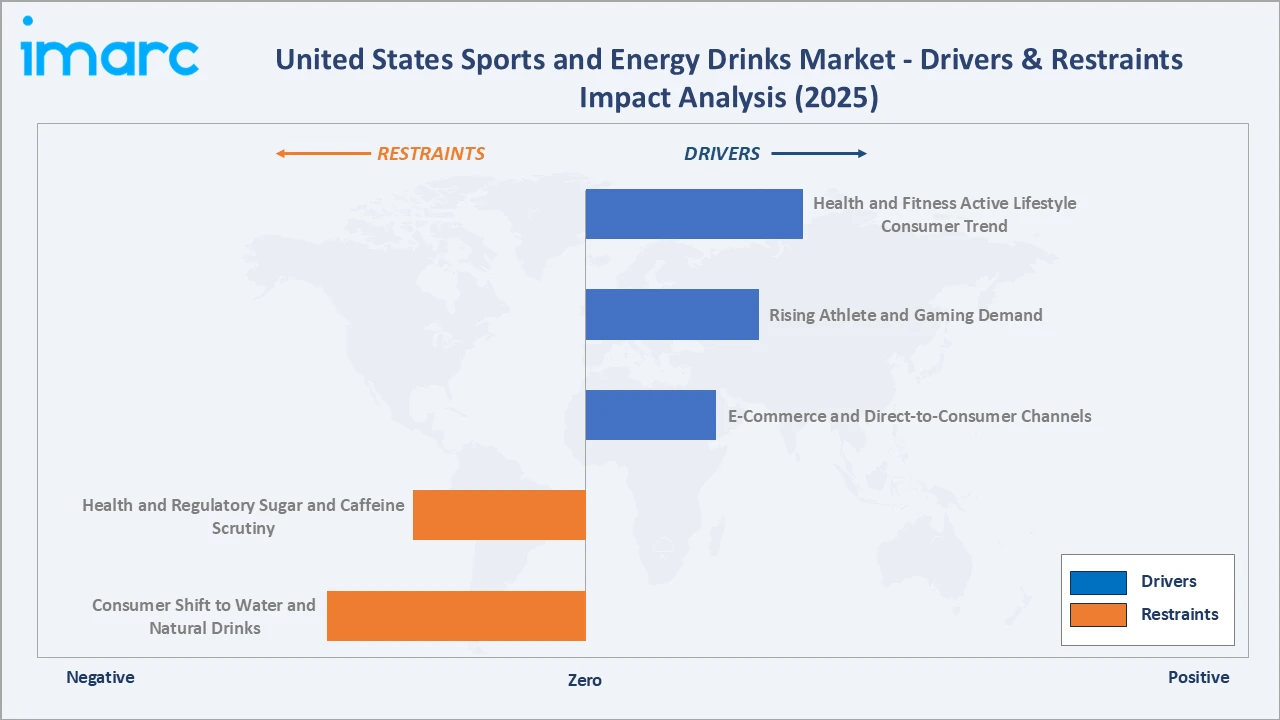
- Health and Fitness Active Lifestyle Consumer Trend: Consumers increasingly seek beverages that support hydration, stamina, recovery, and daily energy needs. Rising gym participation, outdoor activities, sports culture, and wellness-focused routines are boosting demand for electrolyte-rich sports drinks and functional energy beverages. A new nationwide survey by the Health & Fitness Association (HFA) shows that Americans are planning to spend USD 60 billion in 2026 on health, fitness, exercise goals, and New Year’s resolutions. Among the 56% of US adults setting personal goals this year, 54%, or around 82 million Americans, are focusing on health, fitness, and exercise, making it the leading resolution category for 2026. This trend is encouraging brands to launch healthier formulations that appeal not only to athletes but also to everyday active consumers.
- Rising Athlete and Gaming Demand: Athletes seek hydration and performance-enhancing beverages, while gamers increasingly consume energy drinks to improve focus, alertness, and endurance during extended gaming sessions. The expansion of esports, fitness culture, and competitive sports has broadened the consumer base for functional beverages. In response, manufacturers are introducing products with natural caffeine, electrolytes, amino acids, and vitamins tailored to the needs of both athletes and gamers. This trend is significantly expanding consumption beyond traditional sports applications.
- E-Commerce and Direct-to-Consumer Channels: E-commerce and direct-to-consumer channels make products more accessible through online platforms, brand websites, and subscription models. These channels allow companies to launch niche, functional, and personalized beverage offerings directly to consumers. Online sales also support bulk purchasing, variety packs, and targeted promotions for fitness users, gamers, and health-conscious buyers. This trend is helping brands improve customer engagement, gather consumer insights, and expand beyond traditional retail shelves.
Market Restraints
- Health and Regulatory Sugar and Caffeine Scrutiny: Consumers and regulators become more cautious about high sugar, artificial additives, and excessive caffeine intake. Concerns over obesity, diabetes, heart health, and youth caffeine consumption can limit demand for traditional high-sugar sports drinks and strong energy beverages. Regulatory pressure on labeling, marketing claims, and ingredient transparency may also increase compliance costs for manufacturers. As a result, brands are being pushed to reformulate products with lower sugar, natural sweeteners, cleaner ingredients, and safer caffeine levels, which can affect pricing, taste, and margins.
- Consumer Shift to Water and Natural Drinks: Consumer shift to water and natural drinks is hampering the market as many health-conscious consumers move toward bottled water, coconut water, infused water, herbal drinks, and natural hydration alternatives. This shift reduces demand for traditional sugary sports drinks and highly caffeinated energy beverages. Consumers increasingly prefer clean-label, low-calorie, and naturally functional drinks with fewer artificial ingredients. As a result, brands face pressure to reformulate products, diversify portfolios, and compete with healthier beverage categories.
Market Opportunities
- Women-Targeted Fitness Energy Drinks: Women-targeted fitness energy drinks present a significant opportunity as more women participate in fitness, sports, and active wellness routines. Consumers are increasingly seeking beverages formulated with natural caffeine, electrolytes, vitamins, collagen, and low-sugar ingredients that support energy, hydration, and recovery. This trend is encouraging brands to develop products with tailored nutritional benefits, lighter flavor profiles, and women-focused branding.
- International Brand Expansion into the US: International brand expansion is an opportunity as global brands bring new flavors, formulations, packaging formats, and lifestyle positioning to American consumers. In January 2026, BLU Energy Drink, a globally recognized energy beverage brand available in over 40 countries, officially launched its full brand and product portfolio in the United States. For its US debut, the company launched its complete flavor range, new multi-pack formats, and refreshed packaging tailored specifically for American consumers. These launches increase product variety and intensify innovation across the category.
Market Challenges
- Strong Competition and Brand Saturation: Strong competition and brand saturation are major challenges due to the presence of numerous established brands, private labels, and new entrants competing for consumer attention. Intense competition increases marketing, promotional, and innovation costs while making it difficult for companies to differentiate their products. Frequent product launches and aggressive pricing strategies further pressure profit margins. As a result, brands must continuously invest in unique formulations, functional benefits, and premium positioning to retain market share.
- Concerns Over Artificial Additives and Preservatives: Concerns over artificial additives and preservatives are challenging as consumers increasingly prefer clean-label, natural, and minimally processed beverages. Ingredients such as artificial colors, sweeteners, flavors, and preservatives can reduce trust among health-conscious buyers. This forces brands to reformulate products using natural alternatives, which may raise production costs and affect taste consistency. As a result, companies must balance performance, shelf life, flavor, and clean-label expectations to remain competitive.
Emerging Market Trends
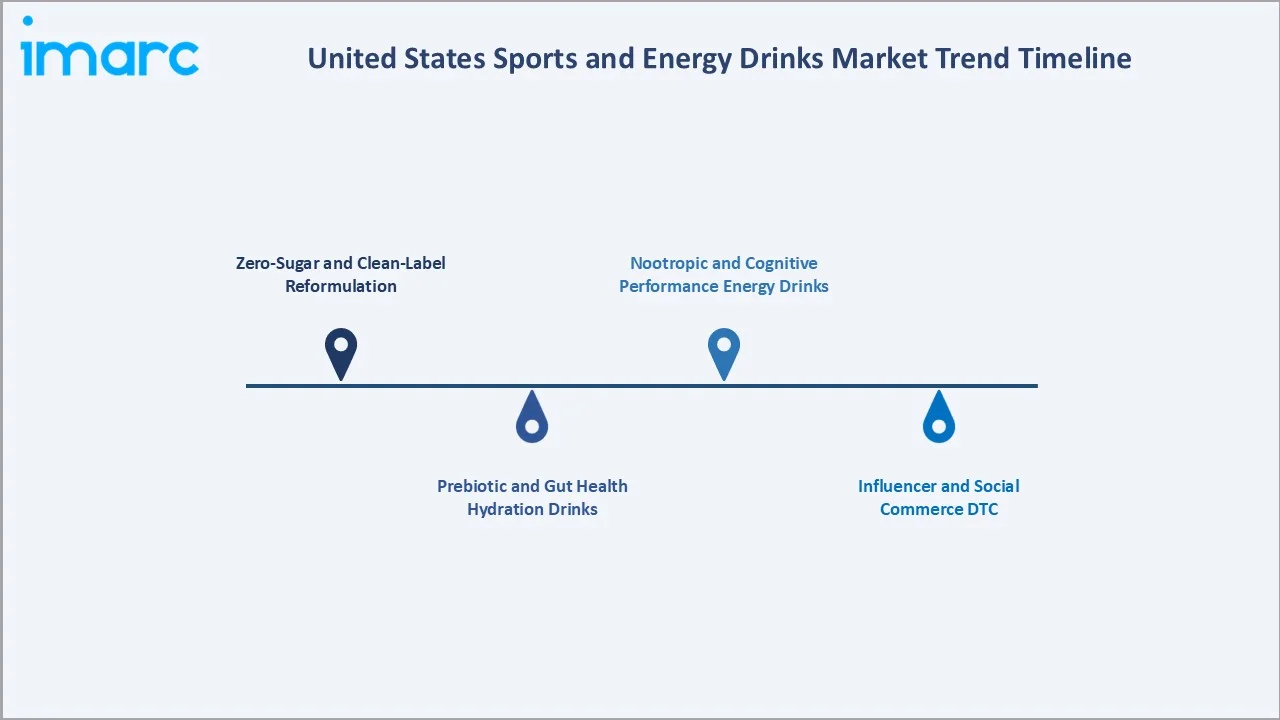
1. Zero-Sugar and Clean-Label Reformulation
Zero-sugar and clean-label reformulation is emerging as consumers seek healthier sports and energy drinks with fewer calories, natural ingredients, and no artificial additives. Brands are replacing high sugar content with natural sweeteners, electrolytes, vitamins, plant-based caffeine, and functional ingredients. This trend helps companies address health concerns while maintaining energy, hydration, and performance benefits. It also supports premium positioning and appeals to fitness-focused, wellness-driven, and younger consumers.
2. Prebiotic and Gut Health Hydration Drinks
Prebiotic and gut health hydration drinks are emerging as consumers increasingly seek beverages that support hydration, digestion, and overall wellness in one format. Brands are adding probiotics, prebiotics, electrolytes, vitamins, and natural ingredients to differentiate from traditional sports and energy drinks. In July 2025, PepsiCo launched Pepsi Prebiotic Cola, a next-generation cola designed to meet evolving consumer preferences for healthier beverages. The drink contains 5 grams of cane sugar, 30 calories, and no artificial sweeteners, while delivering Pepsi’s signature taste. It also includes 3 grams of prebiotic fiber, combining classic refreshment with added functional health benefits.
3. Influencer and Social Commerce DTC
Influencer and social commerce DTC are emerging as sports and energy drink brands use fitness creators, athletes, gamers, and lifestyle influencers to drive product awareness and trust. Social platforms enable brands to promote new flavors, limited editions, subscriptions, and bundle packs directly to consumers. This trend supports faster product discovery, community-led marketing, and personalized engagement. It also helps smaller and premium brands compete with established players by building loyal digital consumer communities.
4. Nootropic and Cognitive Performance Energy Drinks
Nootropic and cognitive performance energy drinks are emerging as consumers seek energy drinks that support focus, alertness, memory, and mental clarity. Brands are adding ingredients such as natural caffeine, L-theanine, B vitamins, adaptogens, and amino acids to move beyond basic stimulation. This trend is gaining traction among students, gamers, professionals, and productivity-focused consumers. It also helps brands differentiate through functional benefits and premium positioning in the competitive energy drinks market.
Industry Value Chain Analysis
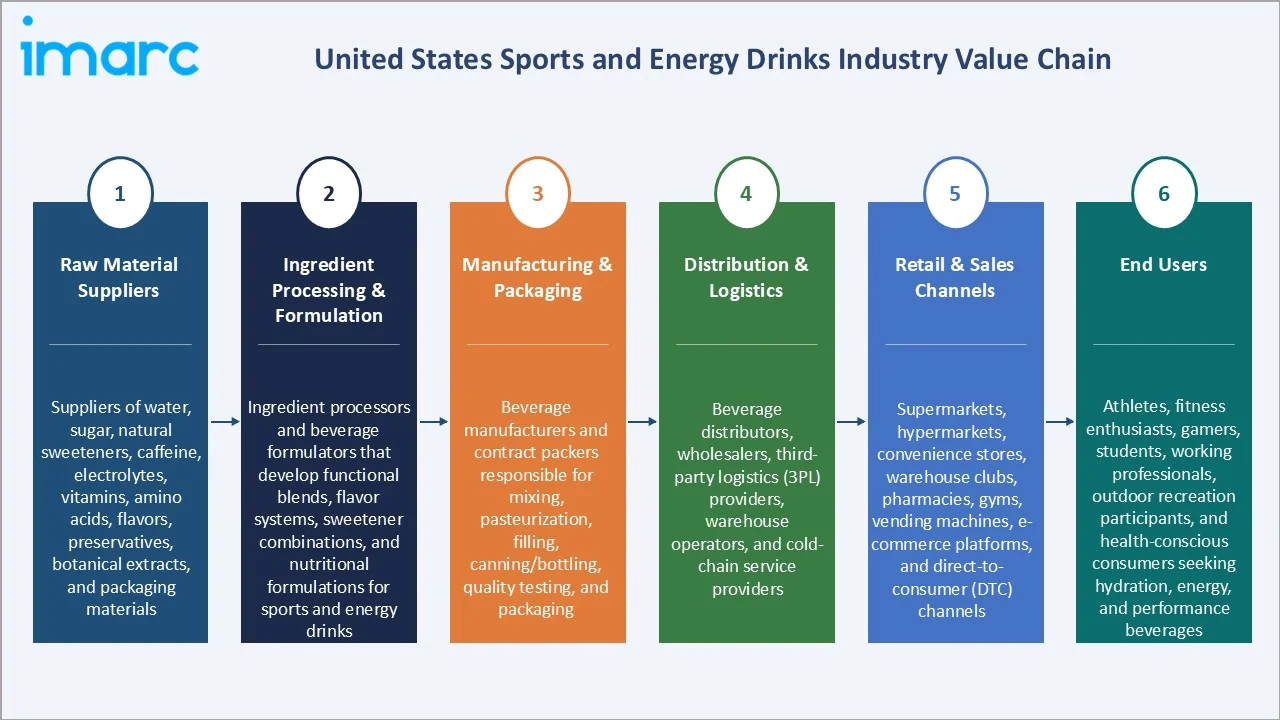
The United States sports and energy drinks value chain integrates raw material suppliers, ingredient processing & formulation, manufacturing & packaging, distribution & logistics, retail & sales channels, and end users.
|
Stage |
Key Participants |
|
Raw Material Suppliers |
Suppliers of water, sugar, natural sweeteners, caffeine, electrolytes, vitamins, amino acids, flavors, preservatives, botanical extracts, and packaging materials. |
|
Ingredient Processing & Formulation |
Ingredient processors and beverage formulators that develop functional blends, flavor systems, sweetener combinations, and nutritional formulations for sports and energy drinks. |
|
Manufacturing & Packaging |
Beverage manufacturers and contract packers responsible for mixing, pasteurization, filling, canning/bottling, quality testing, and packaging. |
|
Distribution & Logistics |
Beverage distributors, wholesalers, third-party logistics (3PL) providers, warehouse operators, and cold-chain service providers. |
|
Retail & Sales Channels |
Supermarkets, hypermarkets, convenience stores, warehouse clubs, pharmacies, gyms, vending machines, e-commerce platforms, and direct-to-consumer (DTC) channels. |
|
End Users |
Athletes, fitness enthusiasts, gamers, students, working professionals, outdoor recreation participants, and health-conscious consumers seeking hydration, energy, and performance beverages. |
The most value-added stage is ingredient processing and formulation, as it defines the drink’s functional benefits, taste, nutrition profile, and brand differentiation. This stage adds value through electrolytes, caffeine, vitamins, amino acids, nootropics, natural sweeteners, and clean-label formulations. It helps brands create premium, targeted products for athletes, gamers, professionals, and health-conscious consumers.
Technology Landscape in the United States Sports and Energy Drinks Industry
Formulation and Functional Ingredient Technology
Formulation and functional ingredient technology enable beverages with targeted health and performance benefits. Manufacturers are incorporating electrolytes, natural caffeine, amino acids, B vitamins, adaptogens, nootropics, probiotics, and plant-based ingredients to enhance hydration, energy, recovery, and cognitive performance. Advances in ingredient delivery and flavor masking are also improving taste while supporting clean-label and low-sugar formulations. These innovations help brands differentiate their products and meet evolving consumer demand for multifunctional beverages.
Digital and E-Commerce Technology
Digital and e-commerce technology enables brands to reach consumers through online marketplaces, DTC websites, mobile apps, and subscription platforms. Companies are using data analytics, targeted ads, influencer marketing, and social commerce to personalize promotions and launch new flavors faster. In February 2026, Josie Beverages launched its energy drink range in the United States, available through DrinkJosie.com, Amazon, and TikTok Shop. The drinks are positioned as functional energy beverages with zero sugar, zero calories, and no crash. It is available in four flavors: Tangerine, Lemon Lime, Mixed Berry, and Cucumber.
Flavor Masking and Taste Optimization Technology
Flavor masking and taste optimization technology improves the taste of functional ingredients such as caffeine, amino acids, electrolytes, vitamins, botanicals, and nootropics. It helps reduce bitterness, aftertaste, and mineral notes while maintaining product performance. These technologies are especially important for zero-sugar, clean-label, and natural formulations. By improving flavor consistency and consumer acceptance, they support repeat purchases and stronger brand differentiation.
Market Segmentation Analysis
The report covers the following segments:
|
Market |
Segment Category |
Leading Segment |
Market Share |
Year |
|
Sports Drinks Market |
Product Type |
Isotonic |
61.8% |
2025 |
|
Packaging Type |
🔒 |
🔒 |
2025 |
|
|
Distribution Channel |
Supermarkets and Hypermarkets |
42.8% |
2025 |
|
|
Region |
South |
34.7% |
2025 |
|
|
Energy Drinks Market |
Product |
Non-Alcoholic |
92.6% |
2025 |
|
Type |
🔒 |
🔒 |
2025 |
|
|
Packaging Type |
🔒 |
🔒 |
2025 |
|
|
Distribution Channel |
Convenience Stores |
38.4% |
2025 |
|
|
Target Consumer |
🔒 |
🔒 |
2025 |
|
|
Region |
South |
35.2% |
2025 |

Sports Drinks Market - By Product Type
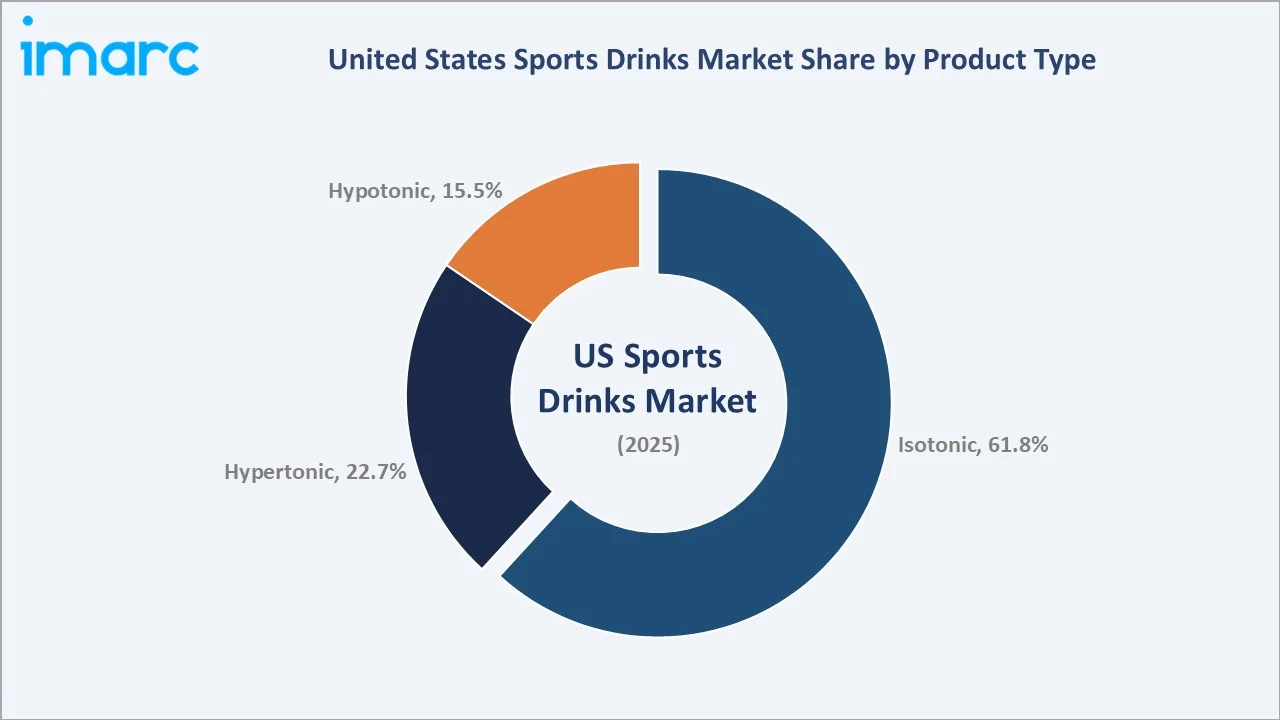
Isotonic leads at 61.8% (2025) as they quickly replenish fluids, electrolytes, and carbohydrates lost during physical activity. Their balanced composition supports hydration, energy, and recovery, making them widely preferred by athletes, gym-goers, and active consumers.
To access detailed market analysis, Request Sample
Hypertonic at 22.7% reflects carbohydrate-rich endurance and recovery drinks. Hypotonic at 15.5% reflects light-hydration beverages. Hypotonic grows through wellness-oriented consumers seeking everyday hydration without added sugar calories.
Energy Drinks Market - By Product
Non-alcoholic leads at 92.6% (2025) as they provide a convenient source of energy, alertness, and mental focus without the effects of alcohol. Their wide availability, functional ingredients, and strong appeal among students, professionals, gamers, and fitness enthusiasts continue to drive category dominance.
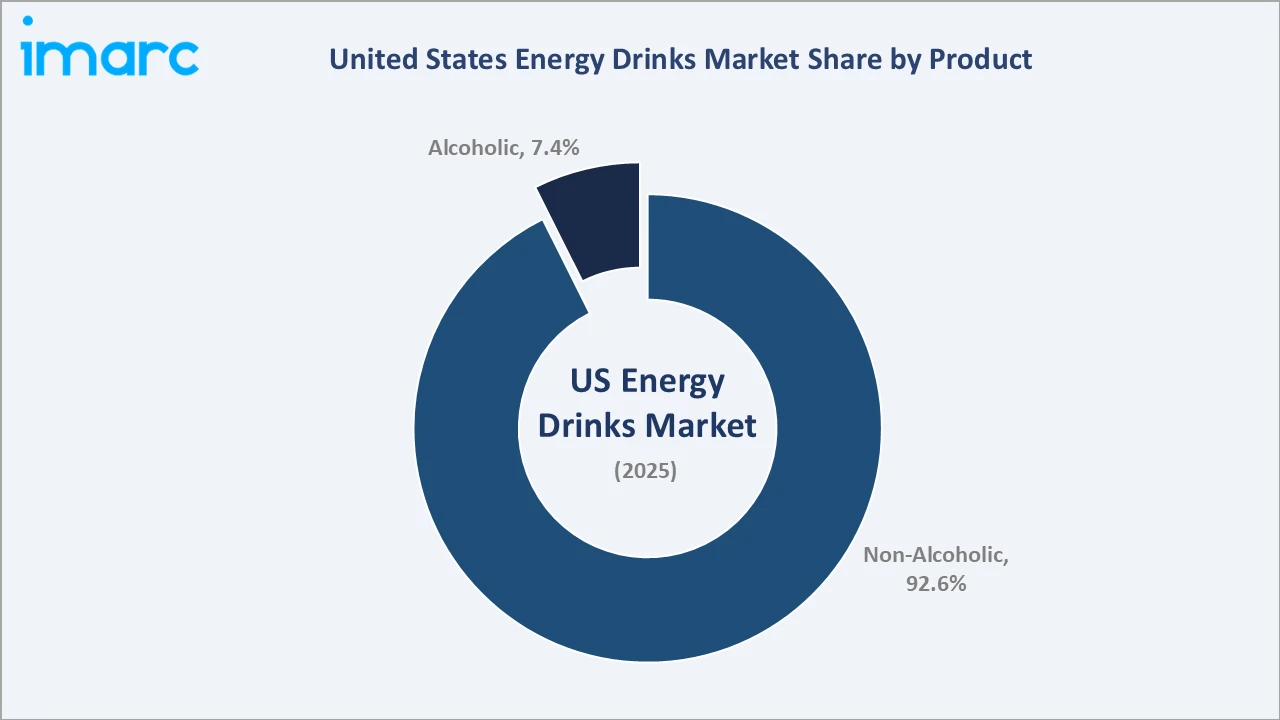
Alcoholic at 7.4% reflects a niche adult entertainment segment. This segment remains structurally limited, serving adult off-premise and nightlife occasions with modest volume growth.
Sports Drinks Market - By Distribution Channel
Supermarkets and hypermarkets lead at 42.8%, due to wide product availability, strong brand visibility, and frequent discounts or promotional offers. They allow consumers to compare multiple brands, flavors, and pack sizes in one place, supporting high-volume purchases.
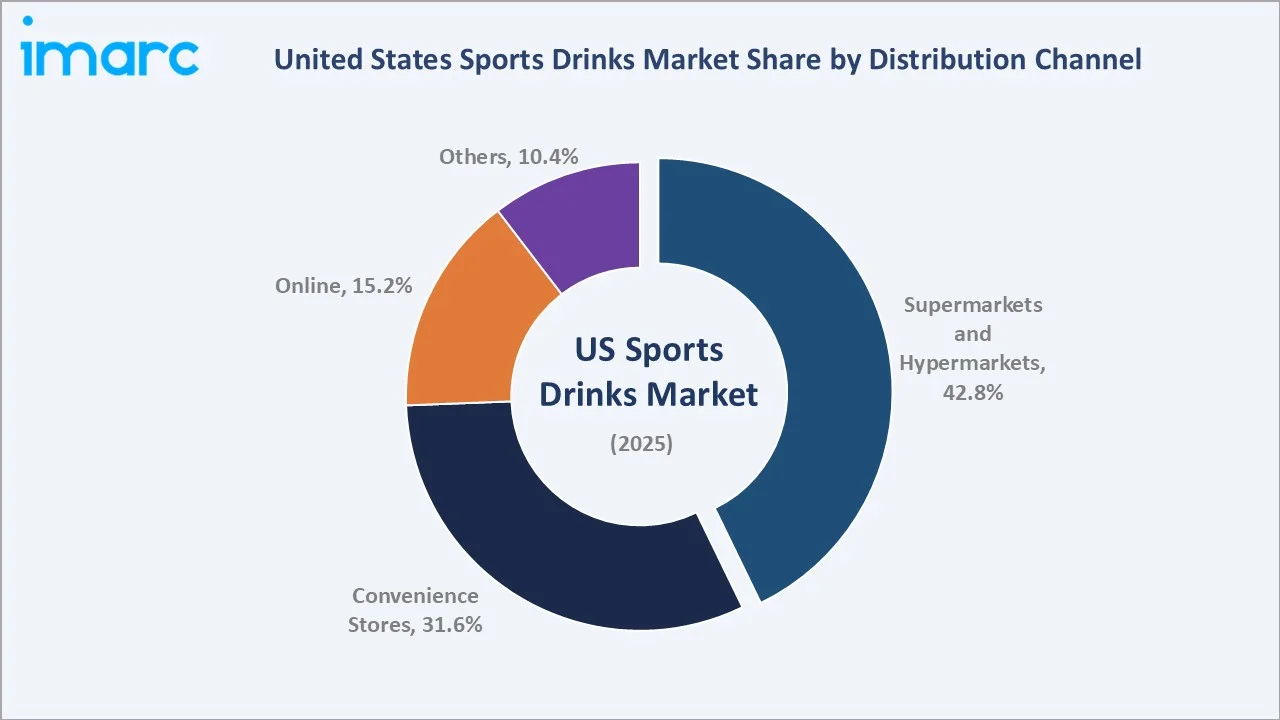
Convenience stores at 31.6% reflect consumers' preference for quick, on-the-go purchases, supported by widespread store availability and impulse buying of ready-to-drink beverages. Online at 15.2% reflect the growing adoption of e-commerce and direct-to-consumer channels, offering convenience, subscription services, and access to a wider range of brands and product variants. Others at 10.4% include warehouse clubs, pharmacies, gyms and fitness centers, vending machines, specialty nutrition stores, and institutional sales channels.
Energy Drinks Market - By Distribution Channel
Convenience stores lead at 38.4%, due to strong impulse buying, quick accessibility, and high demand from on-the-go consumers. Their chilled displays, extended operating hours, and single-serve formats make them a preferred channel for energy drink purchases.
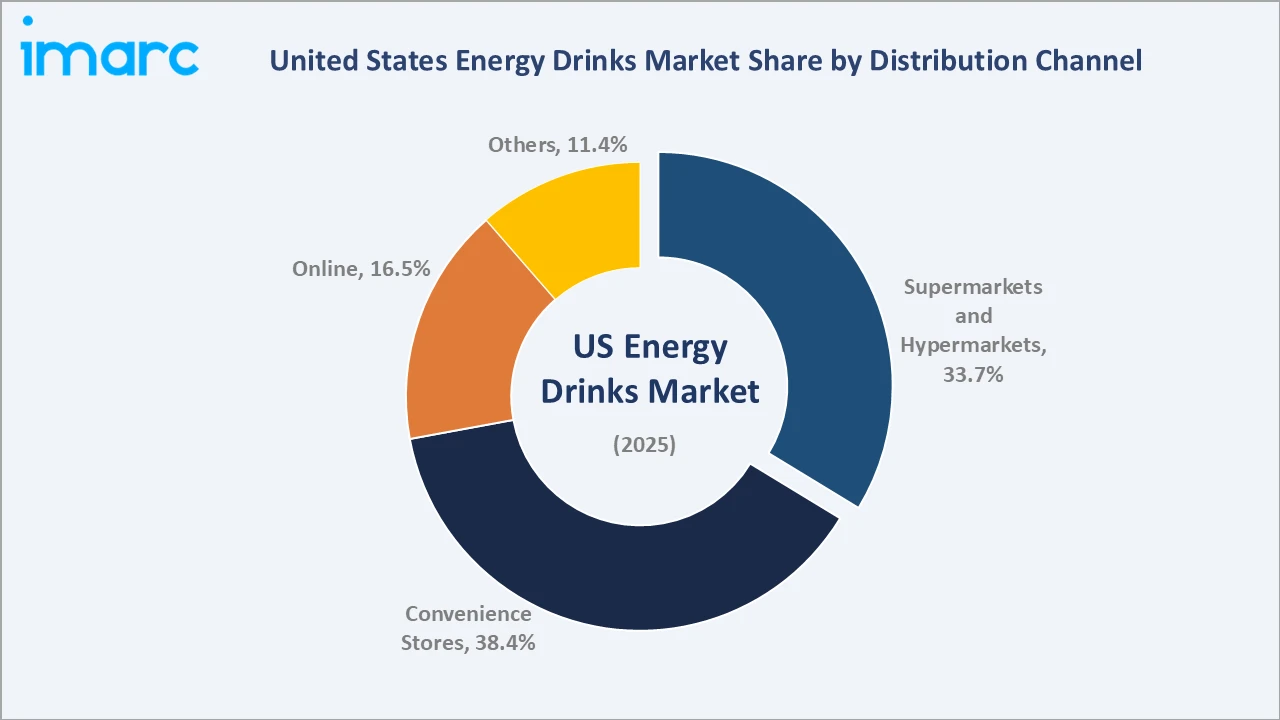
Supermarkets and hypermarkets at 33.7% reflect strong consumer preference for bulk purchases, multi-pack formats, discounts, and access to a wide range of energy drink brands and flavors. Online at 16.5% reflects rising demand for e-commerce, subscription packs, DTC sales, and access to niche, imported, and functional energy drink brands. Others at 11.4% include gyms, vending machines, pharmacies, warehouse clubs, specialty nutrition stores, and institutional channels supporting targeted energy drink consumption.
Regional Market Insights
|
Region |
Sports Drinks Share (2025) |
Energy Drinks Share (2025) |
Key United States Sports and Energy Drinks Market Drivers & Characteristics |
|
South |
34.7% |
35.2% |
Supported by a large population, warm climate, strong outdoor sports participation, and high demand for hydration and energy beverages. |
|
West |
26.5% |
27.8% |
Driven by health-conscious consumers, fitness culture, premium functional beverages, and widespread adoption of clean-label, low-sugar, and plant-based drink innovations. |
|
Northeast |
22.1% |
21.3% |
Benefits from high urbanization, busy lifestyles, and a large base of professionals and students, supporting demand for convenient ready-to-drink sports and energy beverages through modern retail channels. |
|
Midwest |
16.7% |
15.7% |
Supported by organized sports participation, expanding retail distribution, and increasing consumer interest in affordable functional beverages for hydration and energy support. |
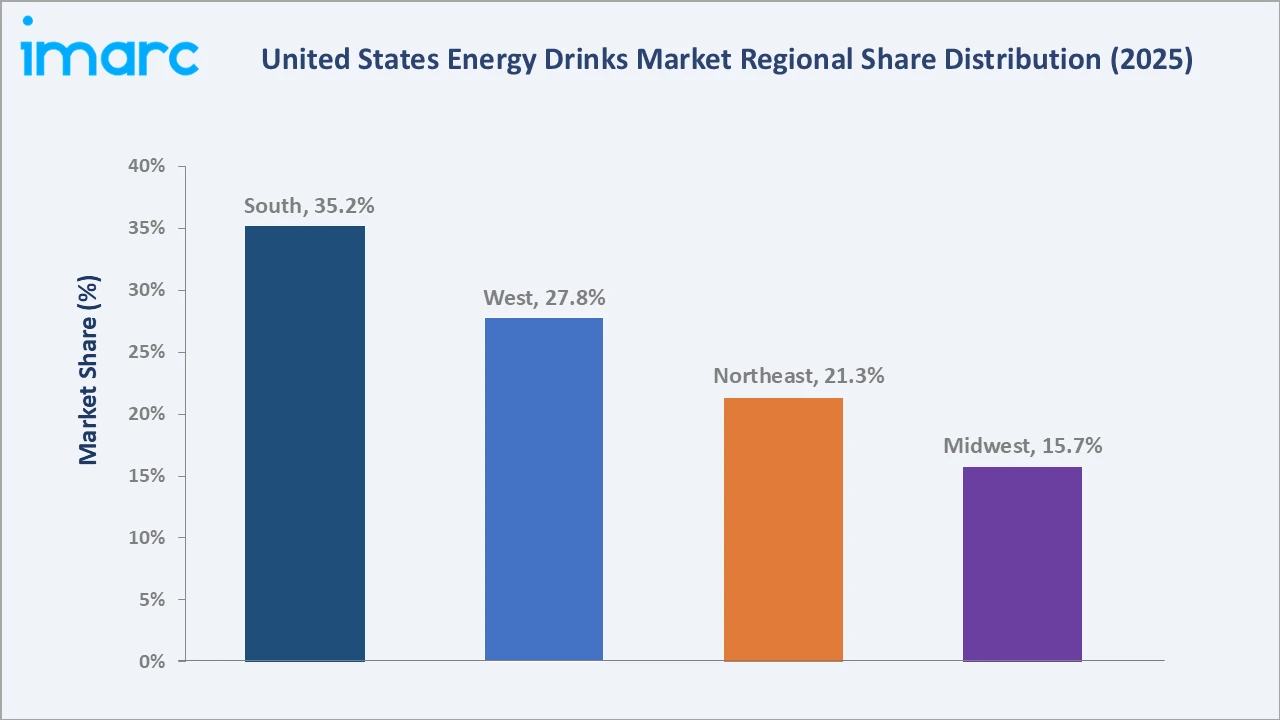
The South leads both sports drinks (34.7%) and energy drinks (35.2%), supported by a warm climate, large population base, outdoor activities, and strong hydration demand. The West's 26.5% and 27.8% shows strong growth due to fitness culture, wellness-focused consumers, and adoption of premium functional beverages.
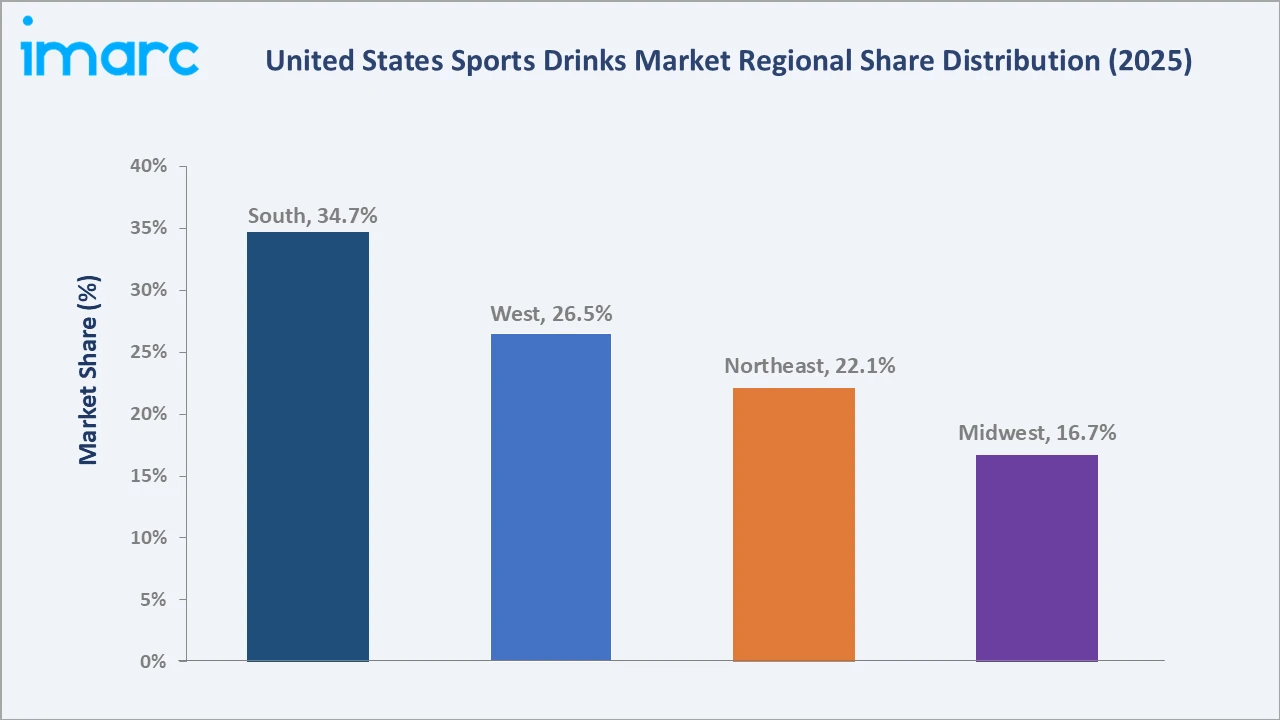
The Northeast’s 22.1% and 21.3% benefits from urban lifestyles, students, professionals, and demand for convenient ready-to-drink products. The Midwest’s 16.7% and 15.7% reflect steady consumption supported by organized sports, retail availability, and affordable beverage formats.
Competitive Landscape
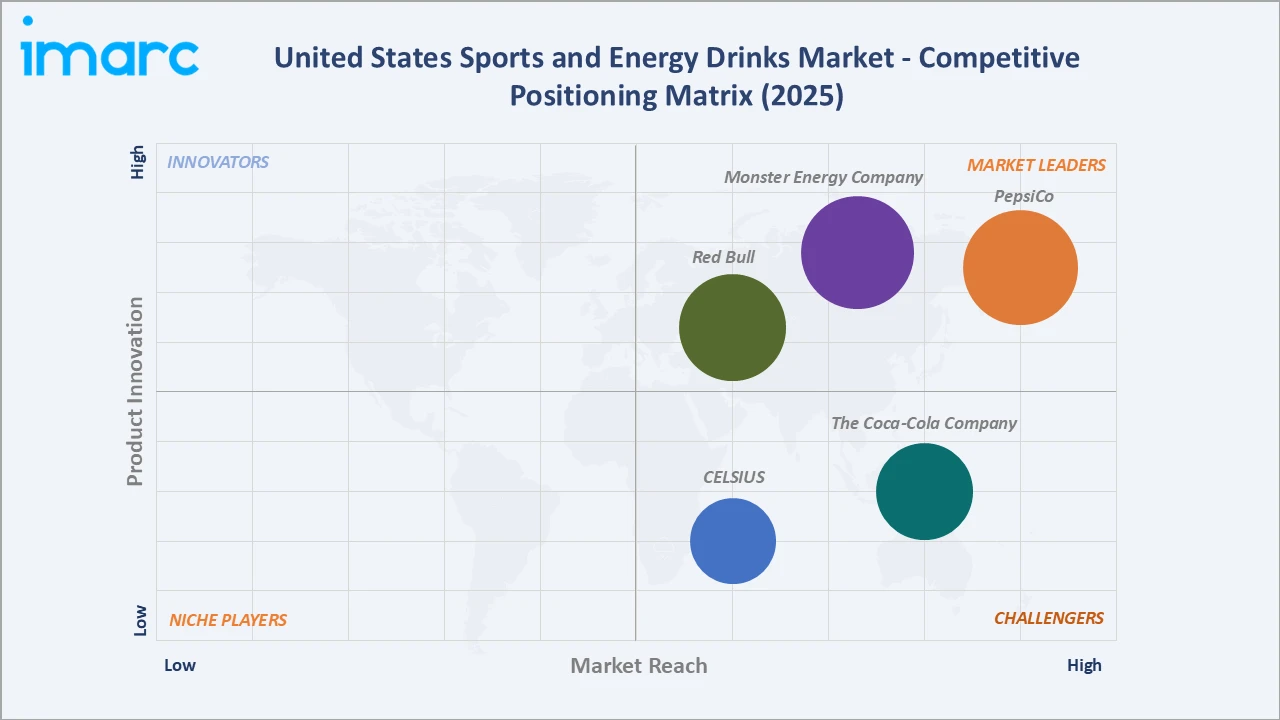
The United States sports and energy drinks market is highly competitive, with leading global beverage companies, specialized functional drink brands, and emerging clean-label startups competing for share. Major players focus on flavor innovation, zero-sugar formulations, functional ingredients, and athlete or influencer-led branding. Competition is also driven by strong distribution through convenience stores, supermarkets, gyms, e-commerce, and DTC platforms.
|
Company |
Key Brands |
Market Position |
Core Strength |
|
PepsiCo |
Gatorade, Mountain Dew, Muscle Milk, |
Market Leader |
PepsiCo dominates the US sports and energy drink markets through an expansive portfolio focused on functional hydration, zero-sugar options, and protein. Their strategy combines their legacy market share with aggressive investments to target modern consumer fitness needs. |
|
Monster Energy Company |
Monster Energy |
Market Leader |
Monster Energy Company drives the United States energy drink and sports beverage market through its rebellious brand identity, expansive product portfolio, and aggressive extreme sports sponsorships. |
|
Red Bull |
Red Bull |
Market Leader |
In the United States, Red Bull is a dominant force in the energy drink market and a transformative pioneer in sports marketing. Rather than using traditional advertising, it positions itself as an extreme sports and lifestyle brand, while maintaining a massive retail footprint across the country. |
|
The Coca‑Cola Company |
Powerade |
Strong Challenger |
The Coca-Cola Company commands a major portion of the US sports and energy drink market by employing a dual-brand sports strategy. Its active portfolio primarily drives market share through the Powerade brand. |
|
CELSIUS |
CELSIUS |
Strong Challenger |
CELSIUS transformed the US energy drink market by pioneering the "functional fitness" category. By swapping weight-loss marketing for a "Live Fit" wellness narrative, it leverages clean ingredients, green tea extracts, and zero sugar to target everyday high-achievers alongside athletes, securing its spot as one of the top brands. |
New entrants are targeting niches such as nootropic energy, natural caffeine, women-focused fitness drinks, and probiotic hydration. Overall, brands must continuously innovate in taste, health positioning, packaging, and digital marketing to maintain consumer loyalty.
Key Company Profiles
PepsiCo
PepsiCo is one of the leading participants in the US sports and energy drinks market, offering a broad portfolio of performance hydration and energy beverage brands. The company has a strong presence through Gatorade, the market-leading sports drink brand, and also competes in the energy drinks segment with its products and other functional beverage innovations. PepsiCo leverages its extensive manufacturing capabilities, nationwide distribution network, and strong retail partnerships across supermarkets, convenience stores, e-commerce platforms, and foodservice channels.
- Key Brands: Gatorade, Mountain Dew, Muscle Milk.
- Strategic Focus: Centers on strengthening its leadership in hydration through Gatorade while expanding its presence in functional and energy beverages. The company emphasizes zero-sugar, low-calorie, electrolyte-rich, and performance-focused formulations to meet evolving wellness trends.
Monster Energy Company
Monster Energy Company is a major player in the US energy drinks market, known for its strong portfolio of energy beverage brands targeting athletes, gamers, students, and young active consumers. The company competes primarily through its flagship Monster Energy brand, along with low-calorie, zero-sugar, performance, coffee-based, and lifestyle-oriented variants. It benefits from strong distribution across convenience stores, supermarkets, gas stations, vending channels, and online platforms.
- Key Brands: Monster Energy
- Strategic Focus: Centers on strengthening its core energy drink portfolio through bold branding, flavor innovation, and lifestyle-led marketing. The company focuses on zero-sugar, low-calorie, performance, and functional energy variants to attract health-conscious and active consumers.
Market Concentration Analysis
The United States sports and energy drinks market is moderately to highly concentrated, with a few large beverage companies holding strong positions. These players benefit from nationwide distribution, strong retail shelf space, brand loyalty, and heavy marketing investments. However, the market also includes many emerging functional beverage startups focused on clean-label, zero-sugar, nootropic, natural caffeine, and wellness-oriented products. Competition is increasing as niche brands expand through e-commerce, Amazon, gyms, and specialty retailers. Overall, large companies dominate volume sales, while smaller brands are gaining share in premium and functional segments.
Investment & Growth Opportunities
Highest Growth Segments
Isotonic zero-sugar sports drinks (~3.6% CAGR), non-alcoholic functional energy (~3.5% CAGR), women-targeted fitness energy (~5% CAGR from emerging), Hispanic consumer Electrolit (~5% CAGR), online DTC subscription (~6% CAGR), and South Sun Belt region both segments (~3.8% CAGR) represent US sports and energy drinks highest-growth investment vectors through 2034.
Investment Themes
- Zero-sugar clean-label sports and energy drink reformulation: Investment is accelerating in beverages with natural sweeteners, functional ingredients, and clean-label formulations as consumers increasingly seek healthier, low-calorie, and minimally processed drink options.
- Women-targeted and fitness-positioned energy drinks: Companies are investing in products tailored for women, featuring balanced energy, hydration, wellness ingredients, and lifestyle-focused branding to address the growing female fitness and active lifestyle consumer segment.
Future Market Outlook (2026-2034)
The United States sports and energy drinks market is expected to increase from USD 7.6 Billion in 2025 to USD 7.8 Billion in 2026 and further to USD 10.3 Billion by 2034, delivering a 3.46% CAGR over the forecast period through zero-sugar clean-label innovation across both sports and energy drink categories, functional ingredient evolution (prebiotics, nootropics, adaptogens), women-targeted and fitness-positioned energy drink segment expansion, Hispanic consumer sports drink growth, and South Sun Belt region continued population and active lifestyle demand. The market's anchor value of USD 9.0 Billion in 2030 represents the US sports and energy drinks market at clean-label functional mainstream inflection.
Three structural forces define United States sports and energy drinks growth through 2034: rising wellness-focused consumption, demand for functional performance beverages, and rapid channel expansion. Consumers are shifting toward zero-sugar, clean-label, electrolyte-rich, nootropic, and natural caffeine-based drinks. Fitness culture, gaming, active lifestyles, and daily productivity needs are broadening consumption beyond traditional athletes. E-commerce, DTC platforms, convenience stores, and social commerce are also improving product access and brand visibility.
Research Methodology
Primary Research
Primary research comprised interviews with beverage manufacturers, distributors, retailers, ingredient suppliers, and industry experts. It helped validate market trends, product demand, pricing patterns, channel performance, and consumer preferences. Insights were also gathered on functional ingredients, zero-sugar reformulation, and emerging sports and energy drink innovations.
Secondary Research
Secondary research encompassed company reports, industry publications, trade journals, government sources, retail data, and beverage market databases. It helped assess market size, competitive positioning, product launches, distribution trends, and consumer behavior. The research also covered health and wellness trends, regulatory developments, and innovation in functional sports and energy drinks.
Forecasting Models
Forecasting models combined historical market performance, macroeconomic indicators, consumer spending patterns, and industry-specific demand drivers to estimate future market growth. Market forecasts were validated using trend analysis, bottom-up and top-down approaches, and expert insights. The models also considered evolving health and wellness trends, product innovation, regulatory developments, and distribution channel expansion through 2034.
Frequently Asked Questions About the United States Sports and Energy Drinks Market Report
The United States sports and energy drinks market size is estimated at USD 7.8 Billion in 2026, driven by rising health and fitness awareness, active lifestyles, and growing demand for hydration, stamina, recovery, and mental alertness. Product innovation in zero-sugar, clean-label, electrolyte-rich, natural caffeine, and functional formulations is further supporting market growth.
The United States sports and energy drinks market grows at 3.46% CAGR during 2026-2034, reaching USD 10.3 Billion by 2034. The CAGR reflects health-fitness consumer trend, zero-sugar clean innovation, women-targeted and Hispanic demographic growth, and DTC e-commerce channel expansion.
Isotonic sports drinks match body fluid concentration, delivering balanced electrolytes and carbohydrates for exercise above-60-minutes. Hypertonic sports drinks have a higher concentration than body fluids, delivering more carbohydrates for endurance and recovery above-2-hour exercise. Hypotonic sports drinks have a lower concentration than body fluids for rapid fluid absorption during light activity, yoga, and everyday wellness hydration.
Energy drinks lead in convenience stores (38.4%) because they are usually bought as quick, single-serve, impulse purchases by commuters, students, drivers, and workers seeking instant energy. Chilled displays, gas stations, and extended store hours strongly support this consumption behavior. Sports drinks lead in supermarkets and hypermarkets (42.8%) because consumers often buy them in multi-packs for workouts, household use, team sports, and hydration needs. Supermarkets also offer wider brand choices, larger pack sizes, and promotional discounts, making them better suited for planned sports drink purchases.
The South leads both sports drinks (34.7%) and energy drinks (35.2%) due to its warm climate, large population base, and strong demand for hydration and energy beverages. Growth is further supported by outdoor activities, sports culture, long commuting patterns, convenience store density, and high consumption of chilled ready-to-drink beverages.
Leading companies include PepsiCo, Monster Energy Company, Red Bull, The Coca‑Cola Company, and CELSIUS, among others.
The market is projected to reach approximately USD 9.0 Billion by 2030, supported by rising demand for hydration, energy, and functional beverages. Growth will be driven by active lifestyles, fitness trends, zero-sugar innovation, and wider retail and online availability.
Three priority investment opportunities in the US sports and energy drinks market include zero-sugar and clean-label beverages, driven by rising health-conscious consumer demand for low-calorie and natural formulations. Functional drinks enriched with electrolytes, nootropics, adaptogens, probiotics, and plant-based ingredients offer strong growth potential by addressing hydration, recovery, and cognitive wellness needs. Women-focused fitness beverages and premium lifestyle energy drinks also present attractive opportunities as brands expand targeted product portfolios. In addition, investments in e-commerce, direct-to-consumer (DTC) channels, and digital marketing are enabling companies to strengthen consumer engagement and accelerate market penetration.
Need more help?
- Speak to our experienced analysts for insights on the current market scenarios.
- Include additional segments and countries to customize the report as per your requirement.
- Gain an unparalleled competitive advantage in your domain by understanding how to utilize the report and positively impacting your operations and revenue.
- For further assistance, please connect with our analysts.
 Request Customization
 Speak to an Analyst
 Request Brochure
 Inquire Before Buying
Benefits of Customization
- Personalize this research
- Triangulate with your data
- Get data as per your format and definition
- Gain a deeper dive into a specific application, geography, customer, or competitor
- Any level of personalization
Get in Touch With Us
UNITED STATES
Phone: +1-201-971-6302
INDIA
Phone: +91-120-433-0800
UNITED KINGDOM
Phone: +44-753-714-6104
Email: [email protected]
Client Testimonials




.webp)




.webp)













Related Reports

Choose your plan
*Please note that the prices mentioned below are starting prices for each bundle type. Kindly contact our team for further details.*
Single User License
- 1 User License, Access on 2 Devices
- PDF Report + Excel Dataset (Password Protected)
- Lifetime Access
- No Printing Rights
- 10% Free Report Customization
- 10–12 Weeks of Analyst Support
Five User License
- Access for 5 Users, 2 Devices per User
- PDF Report + Excel Dataset (Password Protected)
- Lifetime Access
- Dedicated Account Manager
- 12–14 Weeks of Analyst Support
- No Printing Rights
- 15% Free Report Customization
- 25% Discount on Your Next Purchase
Corporate User License
- Unlimited User Access (Within Your Organization)
- PDF Report + Excel Dataset
- Lifetime Access
- Dedicated Account Manager
- 14–20 Weeks of Analyst Support
- No Printing Rights
- 20% Free Report Customization
- 30% Discount on Your Next Purchase
Essential Insights
What's included:
3 reports
- Lifetime Access
- PDF Reports
- Excel Datasets
- 2 Weeks of Free Analyst Support
- 2 User Licenses
- Access on 2 Devices
- Printing Rights
- Complimentary PowerPoint (PPT) Version
- Complimentary License Upgrade
Professional Access
What's included:
5 reports
- Lifetime Access
- PDF Reports
- Excel Datasets
- 8 Weeks of Free Analyst Support
- 2 User Licenses
- Access on 2 Devices
- Printing Rights
- Complimentary PowerPoint (PPT) Version
- Complimentary License Upgrade
Business Advantage
What's included:
8 reports
- Lifetime Access
- PDF Reports
- Excel Datasets
- 14 Weeks of Free Analyst Support
- 2 User Licenses
- Access on 2 Devices
- Printing Rights
- Complimentary PowerPoint (PPT) Version
- Complimentary License Upgrade
Enterprise Intelligence
What's included:
10 reports
- Lifetime Access
- PDF Reports
- Excel Datasets
- 20 Weeks of Free Analyst Support
- 2 User Licenses
- Access on 2 Devices
- Printing Rights
- Complimentary PowerPoint (PPT) Version
- Complimentary License Upgrade