
United States Squalene Market Report by Source Type (Animal, Vegetable, Synthetic), Application (Cosmetics, Food, Pharmaceuticals, and Others), and Region 2026-2034
Market Overview:
United States squalene market size reached USD 41.5 Million in 2025. Looking forward, IMARC Group expects the market to reach USD 83.5 Million by 2034, exhibiting a growth rate (CAGR) of 8.08% during 2026-2034. The ongoing R&D activities aimed at discovering new applications for squalene, such as its potential in medical treatments or as a dietary supplement, are driving the market.
|
Report Attribute
|
Key Statistics
|
|---|---|
|
Base Year
|
2025
|
|
Forecast Years
|
2026-2034
|
|
Historical Years
|
2020-2025
|
|
Market Size in 2025
|
USD 41.5 Million |
|
Market Forecast in 2034
|
USD 83.5 Million |
| Market Growth Rate 2026-2034 | 8.08% |
Access the full market insights report Request Sample
United States Squalene Market Analysis:
- Major Market Drivers: United States squalene market share is rising rapidly through biotechnology innovation and sustainable sourcing imperatives. Growing consumer demand for clean beauty products, pharmaceutical applications in vaccine adjuvants, and regulatory support for biomanufacturing accelerate adoption. Precision fermentation technologies enable scalable production from plant-based sources, addressing environmental concerns while meeting rising demand across cosmetics and healthcare sectors.
- Key Market Trends: The shift toward plant-derived and biosynthetic squalene dominates market evolution. Precision-fermentation facilities concentrated in biotechnology hubs produce pharmaceutical-grade materials, while premium skincare brands integrate sustainable alternatives. Regulatory frameworks favor domestic biomanufacturing, reducing dependency on marine sources. Consumer preference for cruelty-free formulations drives innovation in extraction methodologies and United States squalene market outlook remains exceptionally promising.
- Competitive Landscape: The market demonstrates moderate consolidation with established biotechnology firms leading innovation. Domestic producers leverage advanced fermentation techniques and proprietary purification processes to deliver high-purity materials. Strategic partnerships between cosmetic corporations and biotech startups strengthen supply chains. Emerging companies focus on cost-effective production while maintaining quality standards across pharmaceutical and cosmetic applications throughout the competitive landscape.
- Challenges and Opportunities: Supply chain complexities from agricultural feedstock variability present operational challenges alongside high production costs for fermentation-based alternatives. However, expanding pharmaceutical applications for vaccine adjuvants, growing nutraceutical sector demand, and increasing sustainability mandates create significant opportunities. Enhanced production scalability and regulatory support for bio-based ingredients position the United States squalene market forecast for sustained expansion.
Squalene is a natural compound found in various sources, including shark liver oil, olive oil, and some plant-based oils. Chemically classified as triterpene, squalene is a key precursor in the biosynthesis of steroids and essential compounds in the human body. It plays a crucial role in maintaining skin hydration and elasticity. Squalene is widely used in the cosmetic and skincare industry for its moisturizing properties, as it helps prevent water loss from the skin and promotes a smooth, supple texture. Additionally, squalene has been investigated for its potential health benefits, such as antioxidant and anti-inflammatory properties. In recent years, there has been a shift toward sustainable and plant-derived sources of squalene to address environmental concerns associated with harvesting it from shark liver oil.
United States Squalene Market Trends:
Biotechnological Production Advancement
The United States leads global innovation in biotechnology-driven squalene production through precision fermentation methodologies. Concentrated research facilities across major biotechnology corridors, particularly the San Francisco Bay Area and Boston, develop scalable synthetic routes that eliminate agricultural limitations. These advanced bioprocesses deliver pharmaceutical-grade purity exceeding traditional extraction methods while maintaining consistent quality standards. Yeast-based fermentation platforms utilize genetically optimized strains achieving enhanced productivity through metabolic pathway engineering. The executive commitment to transitioning domestic chemical manufacturing toward bioproduction by the coming decades creates favorable policy frameworks supporting infrastructure development. Manufacturing facilities implement controlled bioprocesses generating repeatable purity specifications below residual solvent thresholds required for vaccine adjuvants and lipid nanoparticle delivery systems. This technological sophistication positions domestic producers to capture pharmaceutical market segments demanding stringent quality compliance while addressing sustainability requirements.
Regulatory Framework Supporting Sustainable Sourcing
Federal environmental policies actively discourage marine-derived inputs, creating momentum toward plant-based and synthetic alternatives throughout the cosmetics and pharmaceutical industries. Regulatory classifications under environmental protection frameworks reduce compliance friction for biosynthetic materials, encouraging domestic manufacturers to transition production methods. The strategic emphasis on developing bio-based supply chains aligns with broader sustainability goals across government agencies, channeling grants toward scale-up infrastructure for fermentation facilities. Pharmaceutical regulatory pathways recognize the biocompatibility advantages of plant-derived materials in vaccine formulations and therapeutic applications. Industry stakeholders benefit from streamlined approval processes for sustainable alternatives while maintaining safety and efficacy standards. This regulatory environment accelerates market adoption by reducing barriers to entry for innovative production technologies. Consumer advocacy for ethical sourcing reinforces policy developments, creating alignment between commercial interests and environmental stewardship objectives that reshape ingredient selection across personal care and healthcare sectors.
Pharmaceutical Application Expansion
The pharmaceutical sector increasingly specifies high-purity squalene for advanced drug delivery platforms and vaccine adjuvant systems. Clinical applications requiring precise emulsion formulations drive demand for materials meeting pharmaceutical manufacturing standards. Biotechnology companies secure long-term supply agreements with pharmaceutical manufacturers developing lipid-based delivery vehicles for oncology and infectious disease therapeutics. Vaccine production facilities incorporate squalene-based adjuvants enhancing immune response efficacy, particularly for influenza and emerging disease prevention programs. The integration into nanoparticle delivery systems supports cutting-edge therapeutic development requiring biocompatible lipid components. Research institutions collaborate with ingredient suppliers to optimize formulation parameters for novel medical applications. This pharmaceutical growth trajectory creates premium market segments commanding higher pricing while establishing sustained demand channels. The convergence of biotechnology innovation with healthcare needs positions squalene as an essential component in next-generation medical technologies requiring sophisticated ingredient specifications and reliable supply chains.
United States Squalene Market Segmentation:
IMARC Group provides an analysis of the key trends in each segment of the market, along with forecasts at the country level for 2026-2034. Our report has categorized the market based on source type and application.
Source Type Insights:
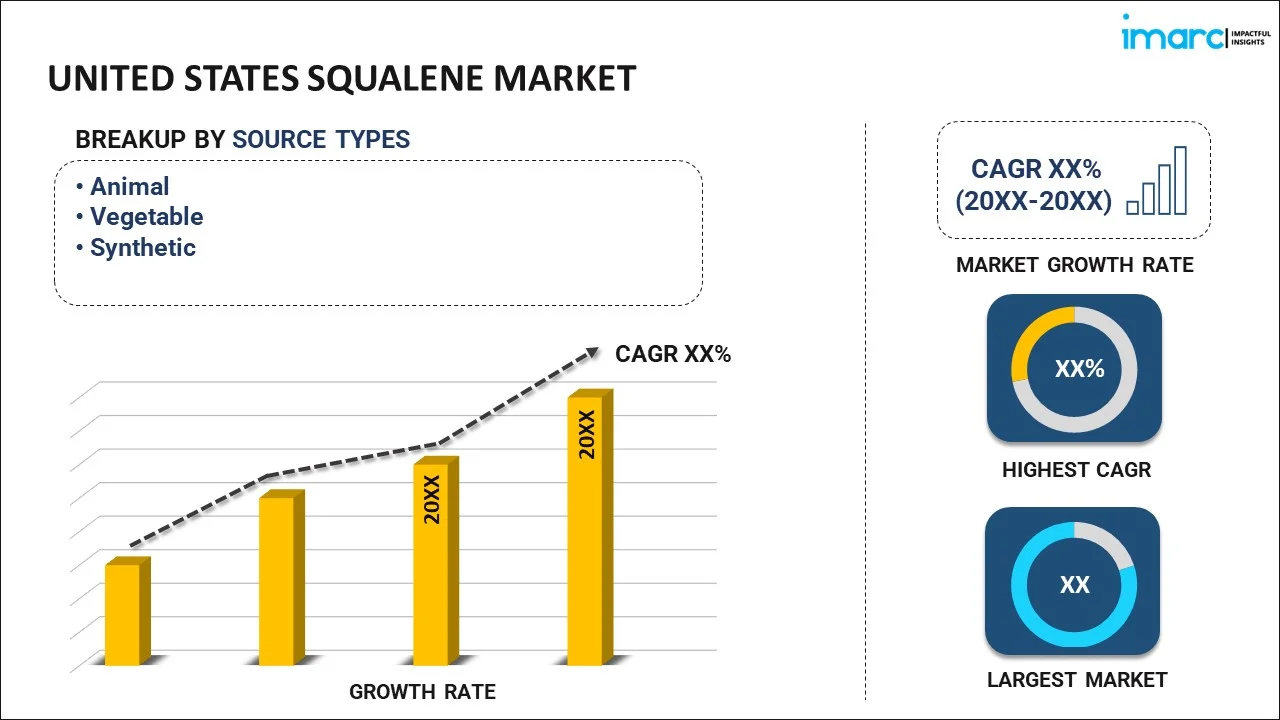
To get detailed segment analysis of this market Request Sample
- Animal
- Vegetable
- Synthetic
The report has provided a detailed breakup and analysis of the market based on the source type. This includes animal, vegetable, and synthetic.
Application Insights:
- Cosmetics
- Food
- Pharmaceuticals
- Others
A detailed breakup and analysis of the market based on the application have also been provided in the report. This includes cosmetics, food, pharmaceuticals, and others.
Regional Insights:
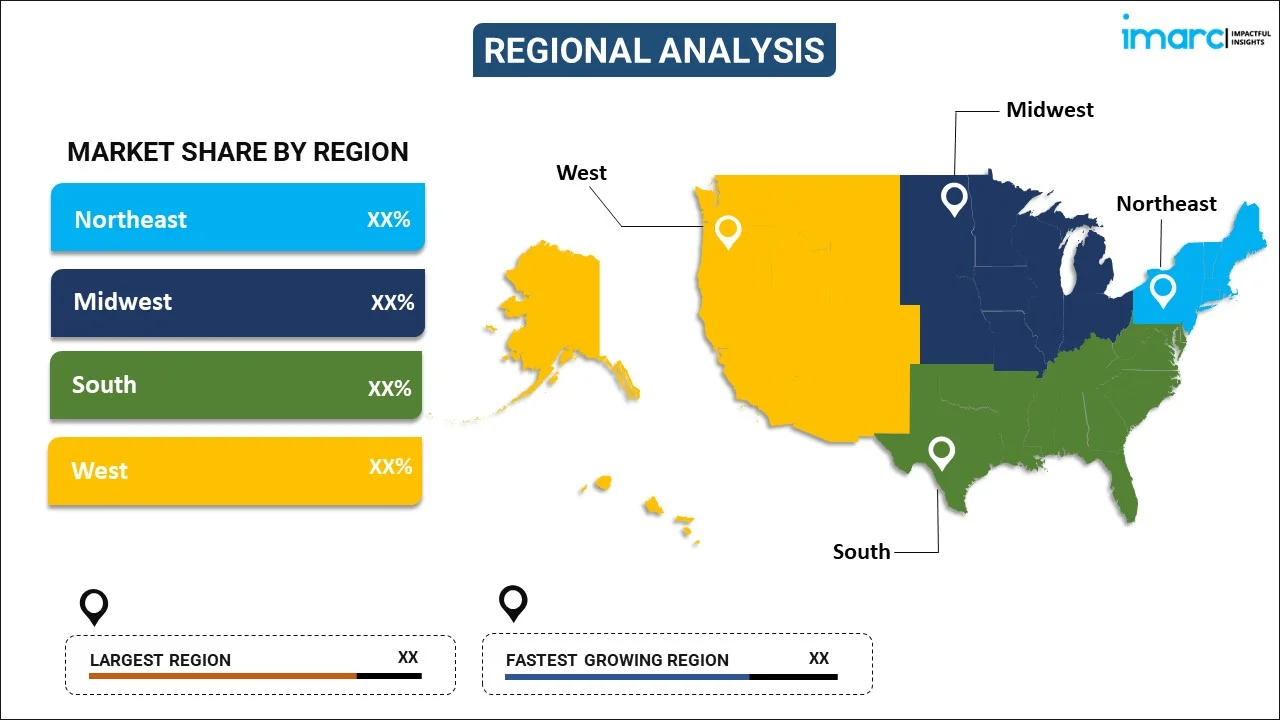
To get detailed regional analysis of this market Request Sample
- Northeast
- Midwest
- South
- West
The report has also provided a comprehensive analysis of all the major regional markets, which include Northeast, Midwest, South, and West.
Competitive Landscape:
The market research report has also provided a comprehensive analysis of the competitive landscape. Competitive analysis such as market structure, key player positioning, top winning strategies, competitive dashboard, and company evaluation quadrant has been covered in the report. Also, detailed profiles of all major companies have been provided.
United States Squalene Market Report Coverage:
| Report Features | Details |
|---|---|
| Base Year of the Analysis | 2025 |
| Historical Period | 2020-2025 |
| Forecast Period | 2026-2034 |
| Units | Million USD |
| Scope of the Report | Exploration of Historical and Forecast Trends, Industry Catalysts and Challenges, Segment-Wise Historical and Predictive Market Assessment:
|
| Source Types Covered | Animal, Vegetable, Synthetic |
| Applications Covered | Cosmetics, Food, Pharmaceuticals, Others |
| Regions Covered | Northeast, Midwest, South, West |
| Customization Scope | 10% Free Customization |
| Post-Sale Analyst Support | 10-12 Weeks |
| Delivery Format | PDF and Excel through Email (We can also provide the editable version of the report in PPT/Word format on special request) |
Key Benefits for Stakeholders:
- IMARC’s industry report offers a comprehensive quantitative analysis of various market segments, historical and current market trends, market forecasts, and dynamics of the United States squalene market from 2020-2034.
- The research report provides the latest information on the market drivers, challenges, and opportunities in the United States squalene market.
- Porter's five forces analysis assist stakeholders in assessing the impact of new entrants, competitive rivalry, supplier power, buyer power, and the threat of substitution. It helps stakeholders to analyze the level of competition within the United States squalene industry and its attractiveness.
- Competitive landscape allows stakeholders to understand their competitive environment and provides an insight into the current positions of key players in the market.
Frequently Asked Questions About the United States Squalene Market Report
The squalene market in the United States was valued at USD 41.5 Million in 2025.
The squalene market in the United States is projected to exhibit a CAGR of 8.08% during 2026-2034, reaching a value of USD 83.5 Million by 2034.
The expanding pharmaceutical sector serves as a pivotal driver, particularly through squalene applications in vaccine adjuvants enhancing immunization effectiveness.Heightened research activities exploring novel therapeutic applications contribute to market expansion.Rising health consciousness coupled with recognition of beneficial properties bolsters utilization in dietary supplements.Growing preference for natural, sustainable ingredients across cosmetics drives demand for plant-derived alternatives.The shift from shark-derived sources toward cruelty-free options reflects intensifying sustainability concerns and consumer environmental priorities.
Need more help?
- Speak to our experienced analysts for insights on the current market scenarios.
- Include additional segments and countries to customize the report as per your requirement.
- Gain an unparalleled competitive advantage in your domain by understanding how to utilize the report and positively impacting your operations and revenue.
- For further assistance, please connect with our analysts.
 Request Customization
 Speak to an Analyst
 Request Brochure
 Inquire Before Buying
Benefits of Customization
- Personalize this research
- Triangulate with your data
- Get data as per your format and definition
- Gain a deeper dive into a specific application, geography, customer, or competitor
- Any level of personalization
Get in Touch With Us
UNITED STATES
Phone: +1-201-971-6302
INDIA
Phone: +91-120-433-0800
UNITED KINGDOM
Phone: +44-753-714-6104
Email: [email protected]
Client Testimonials




.webp)




.webp)













Related Reports

Choose your plan
*Please note that the prices mentioned below are starting prices for each bundle type. Kindly contact our team for further details.*
Single User License
- 1 User License, Access on 2 Devices
- PDF Report + Excel Dataset (Password Protected)
- Lifetime Access
- No Printing Rights
- 10% Free Report Customization
- 10–12 Weeks of Analyst Support
Five User License
- Access for 5 Users, 2 Devices per User
- PDF Report + Excel Dataset (Password Protected)
- Lifetime Access
- Dedicated Account Manager
- 12–14 Weeks of Analyst Support
- No Printing Rights
- 15% Free Report Customization
- 25% Discount on Your Next Purchase
Corporate User License
- Unlimited User Access (Within Your Organization)
- PDF Report + Excel Dataset
- Lifetime Access
- Dedicated Account Manager
- 14–20 Weeks of Analyst Support
- No Printing Rights
- 20% Free Report Customization
- 30% Discount on Your Next Purchase
Essential Insights
What's included:
3 reports
- Lifetime Access
- PDF Reports
- Excel Datasets
- 2 Weeks of Free Analyst Support
- 2 User Licenses
- Access on 2 Devices
- Printing Rights
- Complimentary PowerPoint (PPT) Version
- Complimentary License Upgrade
Professional Access
What's included:
5 reports
- Lifetime Access
- PDF Reports
- Excel Datasets
- 8 Weeks of Free Analyst Support
- 2 User Licenses
- Access on 2 Devices
- Printing Rights
- Complimentary PowerPoint (PPT) Version
- Complimentary License Upgrade
Business Advantage
What's included:
8 reports
- Lifetime Access
- PDF Reports
- Excel Datasets
- 14 Weeks of Free Analyst Support
- 2 User Licenses
- Access on 2 Devices
- Printing Rights
- Complimentary PowerPoint (PPT) Version
- Complimentary License Upgrade
Enterprise Intelligence
What's included:
10 reports
- Lifetime Access
- PDF Reports
- Excel Datasets
- 20 Weeks of Free Analyst Support
- 2 User Licenses
- Access on 2 Devices
- Printing Rights
- Complimentary PowerPoint (PPT) Version
- Complimentary License Upgrade