
United States Transfection Technologies Market Size, Share, Trends and Forecast by Product Type, Application, Transfection Method, Technology, End User, and Region, 2026-2034
United States Transfection Technologies Market Summary:
The United States transfection technologies market size was valued at USD 437.04 Million in 2025 and is projected to reach USD 729.39 Million by 2034, growing at a compound annual growth rate of 5.86% from 2026-2034.
The United States transfection technologies market is experiencing robust growth, driven by expanding biomedical research activities, increasing adoption of gene and cell therapies, and rising investments in precision medicine. Technological advancements in non-viral delivery systems, growing demand for efficient nucleic acid delivery platforms, and expanding applications in vaccine development are accelerating market expansion across the academic, pharmaceutical, and biotechnology sectors.
Key Takeaways and Insights:
- By Product Type: Reagent dominates the market with a share of 56% in 2025, owing to widespread use in research laboratories, cost-effectiveness for routine transfection protocols, and continuous product innovations. Increasing adoption of lipid-based and polymer-based reagents across pharmaceutical and academic settings is fueling segment expansion.
- By Application: Bio-medical research leads the market with a share of 43% in 2025, driven by extensive utilization in gene expression studies, protein functional analysis, and drug discovery programs. Expanding research initiatives at academic institutions and pharmaceutical companies are supporting the dominance of this application segment.
- By Transfection Method: Lipofection comprises the largest segment with a market share of 30% in 2025, reflecting its established efficacy, ease of use, and lower cytotoxicity compared to other methods. Continued advancements in lipid formulations and broad applicability across cell types sustain its market leadership.
- By Technology: Viral-vector based transfection exhibits a clear dominance with 41% share in 2025, underscoring its critical role in gene therapy development, chimeric antigen receptor (CAR) T-cell manufacturing, and vaccine production. Strong efficacy in delivering genetic material to target cells maintains its prominent position.
- By End User: Pharmaceutical and biotechnology companies prevail the market with a share of 43% in 2025, reflecting their extensive investments in gene therapy pipelines, biologics manufacturing, and innovative therapeutic development. Strong focus on precision medicine and cell-based therapies drives demand.
- By Region: South represents the largest region with 30% share in 2025, driven by expanding biotechnology infrastructure in states like Texas and North Carolina, growing pharmaceutical manufacturing investments, and rising presence of academic research institutions.
- Key Players: Major market participants drive growth through continuous product innovations, strategic acquisitions, manufacturing expansions, and research collaborations. Leading companies focus on developing advanced transfection platforms, enhancing reagent efficiency, and expanding distribution networks to strengthen market positioning.
The United States transfection technologies market is advancing, as life sciences organizations intensify investments in genetic research, therapeutic development, and personalized medicine initiatives. The convergence of gene therapy commercialization, clustered regularly interspaced short palindromic repeats (CRISPR)-based editing applications, and messenger ribonucleic acid (mRNA) therapeutics development is creating sustained demand for efficient nucleic acid delivery solutions. Research institutions, pharmaceutical companies, and contract development organizations are increasingly adopting sophisticated transfection platforms to accelerate drug discovery and therapeutic manufacturing. By mid-August 2024, investments from the National Institute of Health (NIH) in the life sciences and healthcare industry totaled USD 26.4 Billion, demonstrating the substantial funding supporting transfection technology adoption. The expansion of cell and gene therapy clinical trials, growing utilization of viral vector production methods, and rising demand for high-throughput screening capabilities are reinforcing market expansion.
United States Transfection Technologies Market Trends:
Integration of Automation and Artificial Intelligence (AI)
Automated transfection workflows and AI-driven optimization systems are transforming laboratory operations, improving experimental reproducibility, and accelerating research timelines. As per IMARC Group, the United States AI market size reached USD 41,532.7 Million in 2025 and is set to attain USD 112,187.7 Million by 2034. These technological integrations enable precise control of transfection parameters, reduce reagent waste, and support high-throughput screening applications. Academic institutions and pharmaceutical companies are increasingly adopting automated platforms to enhance productivity across research and manufacturing operations.
Rising Demand for Gene Therapy Manufacturing Support
The expanding gene therapy pipeline is driving substantial demand for transfection technologies that support viral vector production at commercial scale. The US FDA anticipated approving 10 to 20 cell and gene therapy products annually by 2025, creating sustained requirements for efficient transfection platforms. Contract development and manufacturing organizations are expanding production capabilities while pharmaceutical companies invest in in-house transfection infrastructure. The growing complexity of CAR T-cell therapies and adeno-associated virus vector production necessitates advanced transfection solutions supporting scalable, reproducible manufacturing processes.
Strong Biopharmaceutical and Academic Research Ecosystem
The market benefits from a robust biopharmaceutical industry and a dense network of academic and research institutions, driving sustained demand for transfection technologies. Collaborations between universities, biotech firms, and contract research organizations accelerate technology adoption and innovations. Significant investments in research and development (R&D) and robust protection of intellectual property promote the creation of innovative transfection platforms. This well-established ecosystem supports continuous experimentation, product refinement, and clinical translation, positioning the United States as a leading market for transfection technologies.
Market Outlook 2026-2034:
The United States transfection technologies market outlook remains positive, as gene therapy commercialization accelerates, precision medicine initiatives expand, and biotechnology investments strengthen. Sustained R&D activities, coupled with growing regulatory approvals for cell and gene therapies, are creating favorable conditions for market expansion. The market generated a revenue of USD 437.04 Million in 2025 and is projected to reach a revenue of USD 729.39 Million by 2034, growing at a compound annual growth rate of 5.86% from 2026-2034. Technological advancements in electroporation systems, improved lipid nanoparticle formulations, and expanding applications in mRNA therapeutics development are anticipated to drive sustained growth of the market throughout the forecast period.
United States Transfection Technologies Market Report Segmentation:
|
Segment Category |
Leading Segment |
Market Share |
|
Product Type |
Reagent |
56% |
|
Application |
Bio-Medical Research |
43% |
|
Transfection Method |
Lipofection |
30% |
|
Technology |
Viral-Vector Based Transfection |
41% |
|
End User |
Pharmaceutical and Biotechnology Companies |
43% |
|
Region |
South |
30% |
Product Type Insights:
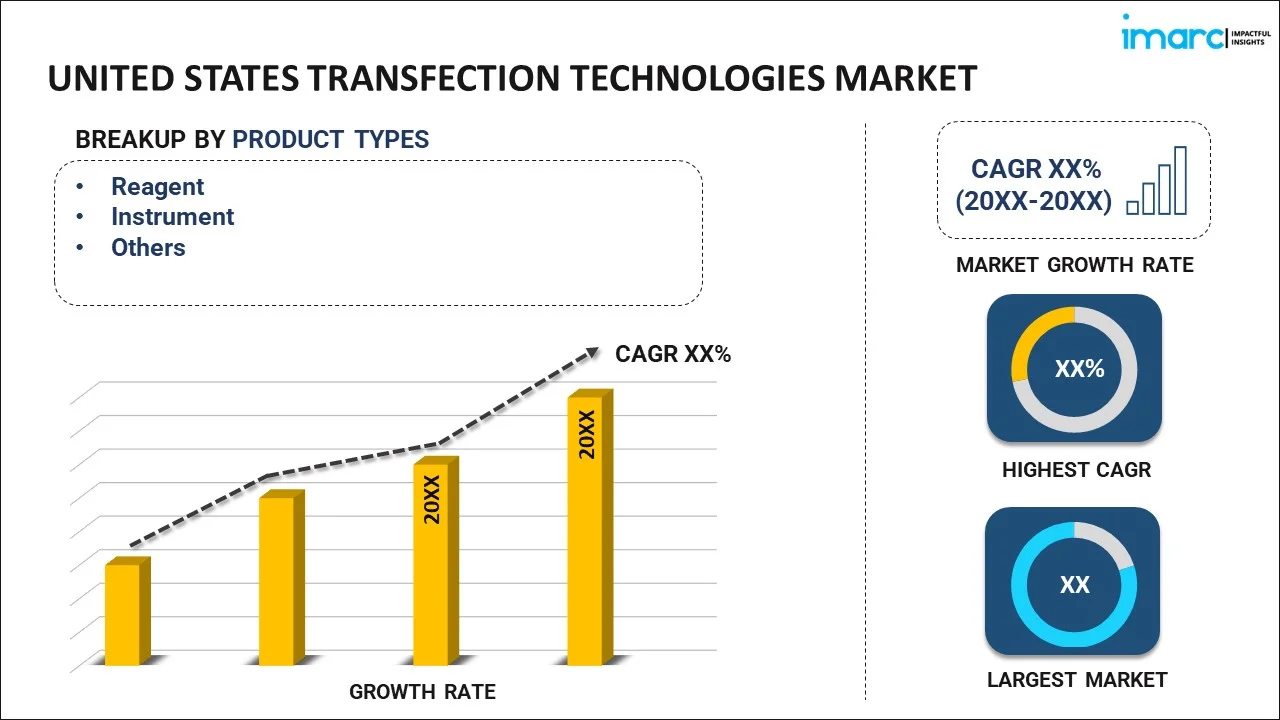
To get detailed segment analysis of this market, Request Sample
- Reagent
- Instrument
- Others
Reagent dominates with a market share of 56% of the total United States transfection technologies market in 2025.
Reagent maintains its dominant position through widespread adoption across research laboratories, pharmaceutical development facilities, and academic institutions conducting gene expression studies and functional genomics research. The availability of highly efficient transfection reagents enables researchers to achieve optimal nucleic acid delivery with minimal cytotoxicity. In May 2024, Merck completed its USD 600 Million acquisition of Mirus Bio, a life science company based in Madison, United States, expanding its viral-vector transfection expertise and strengthening its reagent portfolio for the growing gene therapy manufacturing sector.
Continued innovations in lipid-based and polymer-based reagent formulations support the segment's expansion, with manufacturers developing specialized products for challenging cell types and high-throughput applications. The recurring consumable nature of transfection reagents ensures sustained demand as research programs scale, while competitive pricing strategies and product portfolio expansions enable broader market penetration. Researchers increasingly rely on commercially available reagent systems that offer reproducible results, comprehensive technical support, and validated protocols across diverse experimental applications.
Application Insights:
- Therapeutic Delivery
- Bio-Medical Research
- Protein Production
- Others
Bio-medical research leads with a share of 43% of the total United States transfection technologies market in 2025.
Bio-medical research applications drive substantial demand for transfection technologies as academic institutions, research centers, and pharmaceutical companies intensify investigations into gene function, disease mechanisms, and therapeutic targets. Transfection techniques enable researchers to manipulate gene expression, study protein interactions, and validate potential drug candidates across diverse disease areas. Many biotechnology firms are implementing advanced non-viral transfection protocols, demonstrating widespread adoption for research applications.
In the United States, the expansion of CRISPR-based genome editing research, ribonucleic acid (RNA) interference studies, and functional genomics initiatives sustains robust demand for efficient transfection platforms. Research institutions are investing in high-throughput transfection systems that enable parallel experimentation and accelerate discovery timelines. The growing emphasis on understanding molecular pathways underlying complex diseases, including cancer, neurological disorders, and genetic conditions, continues driving transfection technology utilization across the biomedical research community.
Transfection Method Insights:
- Lipofection
- Electroporation
- Nucleofection
- Cotransfection
- Cationic Lipid Transfection
- In-Vivo Transfection
- Others
Lipofection prevails the market with a share of 30% of the total United States transfection technologies market in 2025.
Lipofection maintains its leading position through proven efficiency in delivering nucleic acids across a wide range of cell types while minimizing cytotoxic effects. The method's versatility, ease of implementation, and compatibility with standard laboratory workflows support its widespread adoption in R&D settings. Lipofectamine reagents are widely accepted as the gold-standard for safe delivery of exogenous DNA or RNA into cells, achieving high transfection efficiency through optimized intracellular trafficking mechanisms that avoid lysosomal degradation.
Continuous advancements in lipid formulations enhance transfection efficiency while reducing toxicity profiles, making lipofection increasingly suitable for sensitive cell types and primary cells. The method's scalability from research applications to manufacturing processes supports its utilization across both discovery and production environments in the United States. Researchers value the reproducibility and well-characterized performance of lipofection-based systems, enabling consistent experimental outcomes and reliable data generation across diverse research programs in the country.
Technology Insights:
- Physical Transfection
- Biochemical Based Transfection
- Viral-Vector Based Transfection
Viral-vector based transfection exhibits a clear dominance with a 41% share of the total United States transfection technologies market in 2025.
Viral-vector based transfection technologies dominate due to their critical role in gene therapy manufacturing, CAR T-cell production, and vaccine development applications. The technology's high transduction efficiency and ability to deliver genetic material to difficult-to-transfect cell types position it as essential for therapeutic applications. Viral-vectors also support stable and long-term gene expression, which is crucial for durable clinical outcomes. Their proven track record in late-stage clinical trials builds strong confidence among developers.
The expansion of gene therapy pipelines and growing FDA approvals for viral vector-based treatments are driving investments in manufacturing infrastructure and production capabilities. In the United States, pharmaceutical and biotechnology companies are increasingly establishing in-house viral vector production facilities while contract development organizations expand capacity to meet rising demand. Technological innovations in vector engineering, production optimization, and quality control methods are enhancing manufacturing efficiency and product quality across the segment.
End User Insights:
- Research Centers and Academic Institutes
- Hospitals and Clinics
- Pharmaceutical and Biotechnology Companies
- Others
Pharmaceutical and biotechnology companies comprise the leading segment with a 43% share of the total United States transfection technologies market in 2025.
Pharmaceutical and biotechnology companies drive transfection technology demand through extensive investments in gene therapy development, biologics manufacturing, and innovative therapeutic programs. These organizations require sophisticated transfection platforms supporting drug discovery, preclinical development, and commercial-scale production. High-throughput screening and rapid cell line development further increase reliance on efficient transfection tools. The need to improve yield, reproducibility, and scalability across R&D workflows strengthens adoption. Additionally, competitive pressure to shorten development timelines encourages continuous upgrades to advanced transfection technologies.
The growing emphasis on precision medicine, cell therapies, and personalized treatment approaches sustains robust demand from pharmaceutical and biotechnology end users. As per IMARC Group, the United States cell therapy market size reached USD 3.9 Billion in 2024. Companies are expanding research and manufacturing infrastructure while forming strategic partnerships with technology providers to access advanced transfection solutions. The increasing complexity of therapeutic pipelines and stringent regulatory requirements are driving adoption of good manufacturing practices (GMP)-compliant transfection systems that ensure product quality and manufacturing consistency.
Regional Insights:
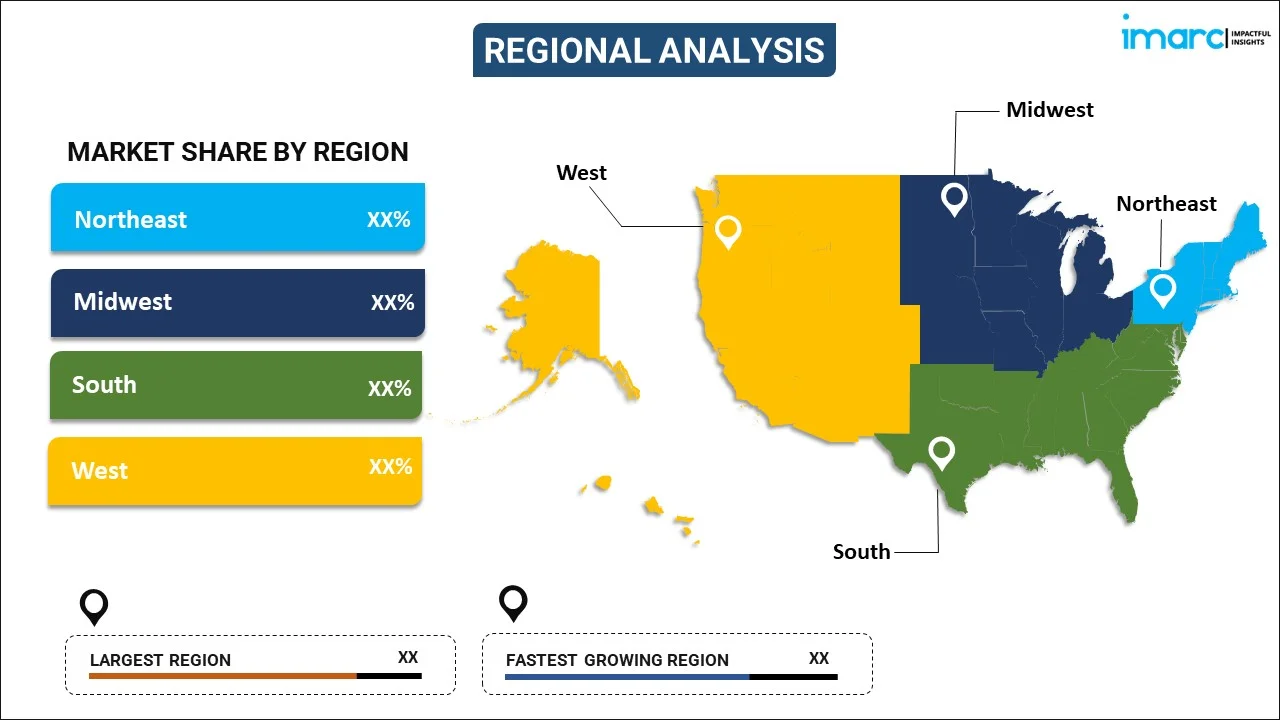
To get detailed regional analysis of this market, Request Sample
- Northeast
- Midwest
- South
- West
South represents the largest region with a market share of 30% of the total United States transfection technologies market in 2025.
South leads the United States transfection technologies market through expanding biotechnology infrastructure, growing pharmaceutical manufacturing investments, and strengthening academic research capabilities. In 2024, North Carolina emerged as a premier biomanufacturing hub, with the state employing 75,000 life sciences professionals and hosting over 840 life sciences companies driving transformative change in pharmaceutical manufacturing, gene and cell therapy, and contract research. The Research Triangle region hosts several leading life sciences companies, creating a concentrated demand center for transfection technologies.
South's favorable business environment, competitive operating costs, skilled workforce availability, and supportive regulatory frameworks continue to attract biotechnology and pharmaceutical investments that drive transfection technology demand. Strategic initiatives from state governments and academic institutions are strengthening the regional life sciences ecosystem. Strong collaborations between universities, research institutes, and industry accelerate innovation and technology adoption across the region. The presence of advanced biomanufacturing training programs across the region ensures a steady pipeline of skilled talent.
Market Dynamics:
Growth Drivers:
Why is the United States Transfection Technologies Market Growing?
Expanding Cell and Gene Therapy Pipeline
The United States is experiencing rapid expansion in cell and gene therapy development, creating sustained demand for transfection technologies that support therapeutic manufacturing and research applications. The growing pipeline of investigational therapies targeting previously untreatable genetic conditions, oncological diseases, and rare disorders is driving investments in production infrastructure and transfection capabilities. In 2023-2024, the FDA had approximately 2,500 active investigational new drug applications for cell and gene therapies on file, with around 1,300 active applications specifically for gene therapies. This robust clinical development activity creates continuous requirements for efficient transfection platforms supporting both research and manufacturing operations. In the United States, companies are establishing dedicated gene therapy manufacturing facilities while expanding partnerships with contract development organizations to meet production demands.
Rising Investments in Biotechnology R&D Activities
Substantial investments in biotechnology R&D are fueling demand for advanced transfection technologies across the academic, pharmaceutical, and biotechnology sectors. In September 2024, the National Science Foundation revealed plans to establish four biotech, research centers focused on engineering advancements that would support the country’s advanced manufacturing, energy and environment, as well as health and infrastructure. Federal funding programs, private venture capital investments, and corporate research expenditures are supporting expanded utilization of transfection platforms for drug discovery, functional genomics, and therapeutic development. Academic institutions are upgrading laboratory capabilities while pharmaceutical companies increase internal research investments, collectively driving market expansion. Growing emphasis on translational research is accelerating the shift from basic studies to clinical-stage applications requiring reliable transfection tools. Additionally, collaborations between academia and industry are increasing technology transfer, boosting adoption of scalable and high-efficiency transfection solutions.
Technological Advancements in Transfection Platforms
Continuous innovations in transfection technologies are enhancing efficiency, scalability, and ease of use, supporting broader adoption across diverse applications. Technology providers are introducing advanced electroporation platforms, refined lipid-based carriers, and polymer systems that deliver genetic material more efficiently while minimizing cellular stress. Automation and integrated workflow solutions are reducing manual handling, improving consistency, and enabling higher-throughput experimentation in laboratory and manufacturing settings. These advancements support diverse use cases, ranging from routine gene expression studies to complex cell and gene therapy development. Improved system design also allows greater compatibility with sensitive and hard-to-transfect cell types, expanding application potential. The incorporation of AI and machine learning (ML) tools further enhances protocol optimization by enabling data-driven parameter selection and predictive performance modeling. Collectively, these innovations are accelerating research timelines, lowering operational complexity, and strengthening the role of transfection technologies in modern biotechnology and pharmaceutical development ecosystems.
Market Restraints:
What Challenges the United States Transfection Technologies Market is Facing?
High Cost of Advanced Transfection Systems
The substantial capital investment required for advanced transfection equipment and specialized reagents presents accessibility challenges for smaller research institutions and emerging biotechnology companies. High-end electroporation systems and automated transfection platforms represent significant procurement expenditures, potentially limiting adoption among resource-constrained organizations. The recurring costs associated with proprietary reagents and consumables further contribute to overall operational expenses.
Technical Complexity and Cell Type Variability
Transfection efficiency varies significantly across different cell types, with primary cells and certain therapeutic cell populations presenting particular challenges for consistent nucleic acid delivery. Hard-to-transfect cells often require extensive protocol optimization, specialized reagents, or alternative methods, adding complexity and time to research workflows. The variability in transfection outcomes can impact experimental reproducibility and create challenges for standardizing manufacturing processes.
Regulatory Compliance Requirements
Stringent regulatory requirements for transfection technologies used in therapeutic manufacturing necessitate comprehensive validation, quality control documentation, and GMP-compliant processes that increase operational complexity and costs. Organizations must invest in regulatory expertise, quality management systems, and validated equipment to meet compliance standards. The evolving regulatory landscape for cell and gene therapies requires continuous adaptation of manufacturing processes and documentation practices.
Competitive Landscape:
The United States transfection technologies market exhibits moderate consolidation with established life sciences companies commanding significant market presence through comprehensive product portfolios and extensive distribution networks. Market leaders pursue strategic acquisitions, product innovations, and partnership formations to strengthen competitive positioning and expand technological capabilities. The competitive environment is characterized by continuous investments in R&D activities, manufacturing capacity expansion, and customer support infrastructure. Companies differentiate through product performance, regulatory compliance support, application-specific solutions, and integrated platform offerings that address evolving customer requirements across research and manufacturing applications.
Recent Developments:
- In September 2025, Made Scientific, a prominent cell therapy contract development and manufacturing organization (CDMO) based in the United States, and Basilard BioTech revealed a strategic partnership aimed at expediting the advancement and implementation of Basilard BioTech’s nanomechanical gene delivery system, Celletto™. Celletto™ achieves remarkably high transfection efficiency while maintaining cell viability and functionality by generating a controlled, temporary disruption to the cell membrane with nanoneedles to directly deliver nucleic acids, or any construct, into the nucleus of any cell type each time.
United States Transfection Technologies MarketReport Coverage:
| Report Features | Details |
|---|---|
| Base Year of the Analysis | 2025 |
| Historical Period | 2020-2025 |
| Forecast Period | 2026-2034 |
| Units | Million USD |
| Scopr of the Report |
Exploration of Historical Trends and Market Outlook, Industry Catalysts and Challenges, Segment-Wise Historical and Future Market Assessment:
|
| Product Types Covered | Reagent, Instrument, Others |
| Applications Covered | Therapeutic Delivery, Bio-Medical Research, Protein Production, Others |
| Transfection Methods Covered | Lipofection, Electroporation, Nucleofection, Cotransfection, Cationic Lipid Transfection, In-Vivo Transfection, Others |
| Technologies Covered | Physical Transfection, Biochemical Based Transfection, Viral-Vector Based Transfection |
| End Users Covered | Research Centers and Academic Institutes, Hospitals and Clinics, Pharmaceutical and Biotechnology Companies, Others |
| Region Covered | Northeast, Midwest, South, West |
| Customization Scope | 10% Free Customization |
| Post-Sale Analyst Support | 10-12 Weeks |
| Delivery Format | PDF and Excel through Email (We can also provide the editable version of the report in PPT/Word format on special request) |
Frequently Asked Questions About the United States Transfection Technologies Market Report
The United States transfection technologies market size was valued at USD 437.04 Million in 2025.
The United States transfection technologies market is expected to grow at a compound annual growth rate of 5.86% from 2026-2034 to reach USD 729.39 Million by 2034.
Reagent dominated the market with a share of 56%, driven by widespread utilization in research laboratories, cost-effectiveness for routine transfection protocols, and continuous product innovations supporting diverse research applications.
Key factors driving the United States transfection technologies market include expanding cell and gene therapy pipelines, rising biotechnology research investments, technological advancements in transfection platforms, and growing demand for viral vector manufacturing.
Major challenges include high costs of advanced transfection systems, technical complexity in transfecting difficult cell types, stringent regulatory compliance requirements for therapeutic applications, and variability in transfection efficiency across different cell populations.
Need more help?
- Speak to our experienced analysts for insights on the current market scenarios.
- Include additional segments and countries to customize the report as per your requirement.
- Gain an unparalleled competitive advantage in your domain by understanding how to utilize the report and positively impacting your operations and revenue.
- For further assistance, please connect with our analysts.
 Request Customization
 Speak to an Analyst
 Request Brochure
 Inquire Before Buying
Benefits of Customization
- Personalize this research
- Triangulate with your data
- Get data as per your format and definition
- Gain a deeper dive into a specific application, geography, customer, or competitor
- Any level of personalization
Get in Touch With Us
UNITED STATES
Phone: +1-201-971-6302
INDIA
Phone: +91-120-433-0800
UNITED KINGDOM
Phone: +44-753-714-6104
Email: [email protected]
Client Testimonials




.webp)




.webp)













