
Vanadium Prices, Trend, Chart, Demand, Market Analysis, News, Historical and Forecast Data Report 2026 Edition
Vanadium Price Trend, Index and Forecast
Track the latest insights on vanadium price trend and forecast with detailed analysis of regional fluctuations and market dynamics across North America, Latin America, Central Europe, Western Europe, Eastern Europe, Middle East, North Africa, West Africa, Central and Southern Africa, Central Asia, Southeast Asia, South Asia, East Asia, and Oceania.
Vanadium Prices Outlook Q2 2026
- USA: USD 13756/MT
- China: USD 8837/MT
- India: USD 14507/MT
- Canada: USD 12086/MT
- Netherlands: USD 13722/MT
Vanadium Price Chart
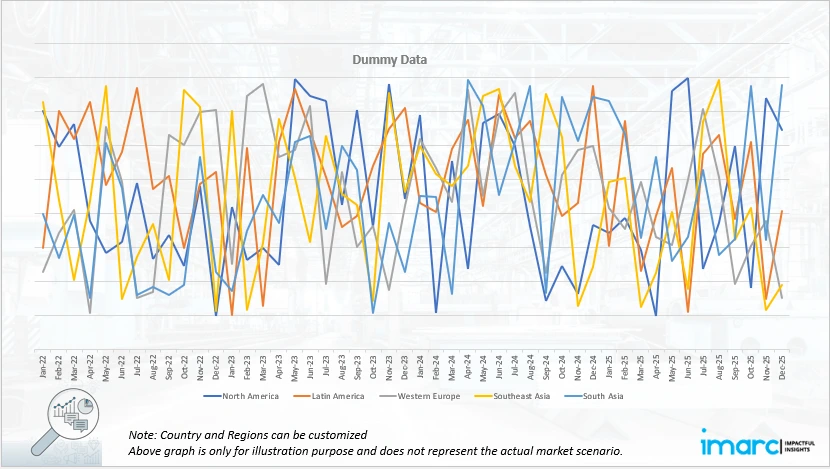
Get real-time access to monthly/quarterly/yearly prices Request Sample
During the second quarter of 2026, the vanadium prices in the USA reached 13756 USD/MT in June. Prices posted a strong quarterly increase as tight seaborne availability and firm spring procurement lifted replacement costs. Steel mills restocked ferrovanadium for infrastructure and high strength steel requirements, while demand from energy storage projects added further competition for available material. Import dependence kept buyers sensitive to shipping schedules, customs clearance, freight conditions, and changes in overseas supply.
During the second quarter of 2026, the vanadium prices in China reached 8837 USD/MT in June. The market recorded a modest quarterly increase as firmer feedstock conditions and steady steel sector procurement supported offers during much of the period. Demand from vanadium flow battery manufacturing and energy storage deployment provided an additional outlet for vanadium products, helping reinforce market sentiment beyond traditional steel consumption.
During the second quarter of 2026, the vanadium prices in India reached 14507 USD/MT in June. Prices strengthened notably as tighter import availability coincided with sustained alloy demand from domestic steel producers. Indian mills continued to require ferrovanadium for higher strength steel grades used across infrastructure, engineering, transportation, and industrial applications. Limited prompt availability of imported feedstock increased replacement risk for traders and encouraged firmer offers, especially when buyers needed material for near term production schedules.
During the second quarter of 2026, the vanadium prices in Canada reached 12086 USD/MT in June. Prices moved only slightly higher as the market balanced steady industrial consumption against improving availability from external suppliers. Canadian demand remained tied mainly to specialty steel, fabricated metal products, energy related equipment, and emerging storage applications. Measures supporting domestic steel production and public procurement helped maintain confidence in downstream alloy consumption.
During the second quarter of 2026, the vanadium prices in the Netherlands reached 13722 USD/MT in June. Prices increased modestly as European steel mills maintained regular ferrovanadium procurement and elevated feedstock costs supported supplier offers. Rotterdam remained an important entry and distribution point for seaborne material, making local pricing sensitive to import timing, warehouse availability, freight conditions, and replacement costs. Earlier in the quarter, slower arrivals and tighter feedstock availability encouraged firmer negotiations, while energy costs also supported conversion economics across the regional alloy chain.
Vanadium Prices Outlook Q3 2025
- USA: USD 9766/MT
- China: USD 8491/MT
- India: USD 12758/MT
- Canada: USD 11469/MT
- Netherlands: USD 13101/MT
During the third quarter of 2025, the vanadium prices in the USA reached 9766 USD/MT in September. Prices increased as firm consumption from the alloy, aerospace, and energy-storage sectors supported higher procurement activity. Some tightening emerged due to fluctuations in upstream mining output and intermittent delays in converter operations. Rising operational expenses for processing and upgrading vanadium feedstock added to an overall upward pricing environment.
During the third quarter of 2025, the vanadium prices in China reached 8491 USD/MT in September. Prices declined as downstream steel and chemical users moderated production, reducing immediate raw material demand. Supply remained ample, supported by continuous plant operation and predictable feedstock availability. Improved logistics helped stabilize internal distribution, promoting a softer sentiment and encouraging buyers to delay purchases.
During the third quarter of 2025, the vanadium prices in India reached 12758 USD/MT in September. Values eased slightly as demand from specialty alloys, tool steel, and catalyst applications stabilized at moderate levels. Domestic supply was adequate, helped by consistent conversion activity and steady ore availability. Lower freight-related constraints and smoother import movement also contributed to a restrained pricing atmosphere.
During the third quarter of 2025, the vanadium prices in Canada reached 11469 USD/MT in September. Prices increased as demand from advanced alloy manufacturing and industrial steel applications strengthened. Supply tightened at intervals due to variations in mining yields and processing throughput. Enhanced export interest and costlier feedstock-handling operations further encouraged upward adjustments by suppliers during this quarter.
During the third quarter of 2025, the vanadium prices in the Netherlands reached 13101 USD/MT in September. Prices declined as buying momentum softened within the steel, catalyst, and chemical-processing segments. Sufficient access to imported vanadium ensured stable availability across major European trading hubs. Improved maritime and inland logistics also eased pressures, reinforcing the gentle downward direction in quotations.
Vanadium Prices Outlook Q2 2025
- USA: USD 9584/MT
- China: USD 8655/MT
- India: USD 12874/MT
- Canada: USD 11200/MT
- Netherlands: USD 13355/MT
During the second quarter of 2025, the vanadium prices in the USA reached 9584 USD/MT in June. As per the vanadium price chart, prices in the United States experienced upward pressure, influenced by a combination of domestic demand, global supply constraints, and shifts in energy storage technologies. The growing adoption of vanadium redox flow batteries (VRFBs) for large-scale energy storage applications contributed to increased demand for high-purity vanadium.
During the second quarter of 2025, the vanadium prices in China reached 8655 USD/MT in June. The demand for vanadium remained strong, particularly due to its increased use in high-strength steel production (rebar standards) and the growing adoption of VRFBs for energy storage. This consistent demand helped support prices, especially as China’s steel sector continued to implement more stringent requirements for rebar strength.
During the second quarter of 2025, vanadium prices in India reached 12874 USD/MT in June. India's steel industry remained a significant consumer of vanadium, primarily used as an alloying agent to enhance strength and durability. The country's commitment to infrastructure development and urbanization sustained the demand for high-strength steel products, thereby supporting the need for vanadium.
During the second quarter of 2025, the vanadium prices in Canada reached 11200 USD/MT in June. Canada's vanadium prices were influenced by a combination of reduced domestic production and increasing demand from the steel and energy storage sectors, setting the stage for a tighter market and potential price hikes.
During the second quarter of 2025, the vanadium prices in the Netherlands reached 13355 USD/MT in June. Vanadium prices were influenced by the growing adoption of VRFBs for energy storage, particularly in renewable energy applications. This demand was increased by Europe's shift to sustainable energy sources, which changed the dynamics of the market. Additionally, fluctuating energy prices affected production costs for vanadium processing, contributing to price volatility.
Vanadium Prices Outlook Q1 2025
- USA: USD 9341/MT
- China: USD 8978/MT
- India: USD 13030/MT
- Europe: USD 11930/MT
During the first quarter of 2025, the vanadium prices in the USA reached 9341 USD/MT (Vanadium Pentoxide) in March. Mining issues, trade policies, and environmental regulations impacted vanadium production and supply, further contributing to price volatility. Besides, the adoption of vanadium redox flow batteries (VRFBs) for large-scale energy storage solutions contributed to increased demand.
During the first quarter of 2025, the vanadium prices in China reached 8978 USD/MT (Vanadium Pentoxide) in March. As evident by the vanadium price chart, changes in Chinese rebar standards influenced prices as it requires steel manufacturers to use more vanadium to meet quality requirements. This additional demand for vanadium contributed to overall pricing trend.
During the first quarter of 2025, the vanadium prices in India reached 13030 USD/MT (Vanadium Pentoxide) in March. The overall market in India seemed to be in a state of equilibrium, with neither significant demand nor supply shocks causing prices to go up or down drastically. Demand for ferro vanadium from steel mills was reportedly weak, leading to limited buying activity and suppressing price trend.
During the first quarter of 2025, the vanadium prices in Europe reached 11930 USD/MT (Vanadium Pentoxide) in March. The growing adoption of vanadium redox flow batteries (VRFBs) for energy storage, especially in renewable energy applications, increased demand for high-purity vanadium. Europe's transition towards sustainable energy sources amplified this demand, influencing market dynamics.
.webp)
Regional Coverage
The report provides a detailed analysis of the market across different regions, each with unique pricing dynamics influenced by localized market conditions, supply chain intricacies, and geopolitical factors. This includes price trends, price forecast and supply and demand trends for each region, along with spot prices by major ports. The report also provides coverage of FOB and CIF prices, as well as the key factors influencing vanadium prices.
Europe Vanadium Price Trend
Q2 2026:
The vanadium price index in Europe remained supported by firm replacement costs, constrained feedstock availability, and regular alloy procurement from steel producers. Prices moved upward during the quarter, but the rise remained moderate because buying activity was disciplined and port inventories gradually improved. Besides, market conditions reflected the balance between steady mill demand and seaborne supply, with slower arrivals supporting offers earlier in the period. Elevated vanadium pentoxide input costs and regional energy expenses also discouraged deep supplier discounts.
Q3 2025:
As per the vanadium price index, European prices softened as steel mills across Germany, France, and the Benelux region reduced vanadium-intensive steel grades due to slower infrastructure activity and weaker fabrication orders. The Netherlands’ declining prices heavily influenced regional sentiment because of its role as a major European import hub, where rising inventories pressured suppliers to adjust quotations downward. Increased arrivals from South African and Brazilian producers bolstered supply more quickly than anticipated. With limited pull from alloy and catalyst manufacturers, distributors deliberately lowered stock positions, contributing to a steadily easing pricing environment across northern and western Europe.
Q2 2025:
Prices in Europe experienced moderate fluctuations, influenced by a combination of supply constraints, evolving demand dynamics, and geopolitical factors. European vanadium prices witnessed a gradual increase, supported by rising demand for VRFBs in renewable energy storage applications. This demand was amplified by Europe's shift toward sustainable energy sources, which altered market dynamics. Besides, the geopolitical landscape had a direct effect on the international vanadium market, impacting raw material supply and supply channels.
Q1 2025:
As per the vanadium price index, demand for high-purity vanadium has surged due to the rising use of vanadium redox flow batteries (VRFBs) for energy storage, particularly in renewable energy applications. This demand was increased by Europe's shift to sustainable energy sources, which changed the dynamics of the market. Besides, Europe's stringent environmental regulations and the push for sustainable materials influenced vanadium production processes and costs. Additionally, fluctuating energy prices in Europe affected production costs for vanadium processing, contributing to price volatility.
Detailed price information for vanadium can also be provided for an extensive list of European countries.
| Region | Countries Covered |
|---|---|
| Europe | Germany, France, United Kingdom, Italy, Spain, Russia, Turkey, Netherlands, Poland, Sweden, Belgium, Austria, Ireland, Switzerland, Norway, Denmark, Romania, Finland, Czech Republic, Portugal, and Greece, among other European countries. |
North America Vanadium Price Trend
Q2 2026:
The vanadium price index in North America was supported by tight seaborne supply, active steel mill restocking, and elevated replacement risk. The region strengthened during the quarter, led by a pronounced increase in the USA, while Canada recorded a much milder gain. Infrastructure steel requirements and demand for high strength alloys encouraged earlier procurement, and energy storage projects added another source of vanadium consumption. Import dependence made the market sensitive to shipping schedules, customs processing, freight, insurance, and overseas feedstock availability. During the earlier part of the quarter, leaner inventories strengthened supplier negotiating power and encouraged precautionary buying.
Q3 2025:
As per the vanadium price index, North American prices moved upward, led by gains in both the USA and Canada. Demand strengthened in the aerospace manufacturing corridors of Washington, Ohio, and Quebec, where vanadium-bearing superalloys posted increased offtake. Canadian mining operations faced intermittent production variability stemming from localized labor constraints, limiting the volume of material entering the regional supply chain. The U.S. renewable storage sector, especially vanadium redox flow battery pilot installations, lifted interest in high-purity material. Freight stabilization along the U.S.–Canada border helped maintain predictable deliveries, yet rising operational costs at converter facilities across the Midwest contributed to broad upward momentum.
Q2 2025:
North America's vanadium production remained limited. This reliance on secondary sources, such as spent catalysts and slag from steel production, contributed to supply constraints. The steel industry continued to be the dominant consumer of vanadium in North America, utilizing it as an alloying agent to enhance the strength and durability of steel products. Geopolitical uncertainties, including trade tensions and sanctions, also impacted the vanadium market. These factors led to price volatility as market participants adjusted to shifting supply and demand dynamics. Despite these challenges, the strategic importance of vanadium in critical industries, such as defense and energy storage, underscored its value in the North American market.
Q1 2025:
The rising tensions between the US and China created uncertainty and volatility market. These tensions disrupted supply chains, led to price fluctuations, and prompted policymakers to focus on diversifying and securing alternative supply sources. Besides, changes in trade policies, such as tariffs or trade restrictions, disrupted supply chains and affected prices.
Specific vanadium historical data within the United States and Canada can also be provided.
| Region | Countries Covered |
|---|---|
| North America | United States and Canada |
Middle East and Africa Vanadium Price Trend
Q2 2026:
The study includes vanadium price patterns across the Middle East and Africa, taking into consideration variables that have a direct impact on market prices, such as regional industrial expansion, natural resource availability, and geopolitical conflicts.
Q3 2025:
As per vanadium price chart, the prices in the Middle East and Africa fluctuated due to a complex interplay of factors, primarily driven by supply chain disruptions, seasonal demand shifts, and geopolitical influences.
Q2 2025:
The report explores the vanadium pricing trends and vanadium price chart in the Middle East and Africa, considering factors like regional industrial growth, the availability of natural resources, and geopolitical tensions that uniquely influence market prices.
Region-wise data and information on specific countries within these regions can also be provided.
| Region | Countries Covered |
|---|---|
| Middle East & Africa | Saudi Arabia, UAE, Israel, Iran, South Africa, Nigeria, Oman, Kuwait, Qatar, Iraq, Egypt, Algeria, and Morocco, among other Middle Eastern and African countries. |
Asia Pacific Vanadium Price Trend
Q2 2026:
The vanadium prices across Asia Pacific moved higher overall, but the strength of the increase differed sharply between major markets. India showed a stronger rise as tighter import availability met firm steel sector requirements, whereas China recorded only a modest gain because improving domestic supply restrained price momentum. Chinese steel mills maintained routine ferrovanadium procurement, and vanadium flow battery demand provided added support to consumption. Policy attention toward strategic mineral security also reinforced interest in domestic vanadium supply and energy storage uses. However, construction related steel demand remained cautious, and smelter restarts increased prompt availability toward June.
Q3 2025:
Asia Pacific vanadium prices declined broadly, driven primarily by China, where subdued steelmaking activity and constrained demand for micro-alloyed rebar sharply influenced regional sentiment. Major Chinese provinces such as Hebei and Jiangsu reduced vanadium-bearing steel production amid weak construction starts, causing local suppliers to release additional volumes into the Asia Pacific market. Southeast Asian buyers in Indonesia and Vietnam also trimmed vanadium usage as they shifted temporarily toward alternative alloying strategies to control costs in their long steel sectors. With supply remaining abundant and feedstock flows uninterrupted in China, Australia, and emerging Asian processors, downward regional pressure intensified.
Q2 2025:
China, the dominant global producer of vanadium, faced fluctuations in output during Q2 2025. Besides, China's implementation of stricter rebar standards necessitated higher vanadium content in steel production, thereby increasing consumption. Moreover, the adoption of VRFBs for large-scale energy storage solutions gained momentum, particularly in renewable energy sectors, as these batteries' long-duration storage capabilities made them suitable for grid-scale applications, driving demand for high-purity vanadium.
Q1 2025:
China's government actively promoted vanadium redox flow batteries (VRFBs) as a key technology for energy storage, particularly for grid-scale applications. Besides, Chinese rebar standards have been modified, requiring higher vanadium content in steel. This change in standards increases the demand for vanadium in the steel industry, further contributing to the overall demand surge. Trade policies and import-export tariffs in the Asia Pacific region also impacted the cost and availability of vanadium, adding another layer of complexity to price trends.
This vanadium price analysis can be expanded to include a comprehensive list of countries within the region.
| Region | Countries Covered |
|---|---|
| Asia Pacific | China, India, Indonesia, Pakistan, Bangladesh, Japan, Philippines, Vietnam, Thailand, South Korea, Malaysia, Nepal, Taiwan, Sri Lanka, Hongkong, Singapore, Australia, and New Zealand, among other Asian countries. |
Latin America Vanadium Price Trend
Q2 2026:
Latin America's vanadium market is heavily influenced by its abundant natural reserves, particularly in Chile and Brazil. However, political uncertainty and varied regulatory regimes can cause significant volatility in vanadium pricing.
Q3 2025:
The abundance of natural resources in Latin America, particularly in important nations like Chile and Brazil, greatly influences the continent's vanadium industry. However, political unpredictability and differing regulatory regimes frequently cause swings in vanadium prices, which lead to market instability.
Q2 2025:
Infrastructure challenges and logistical inefficiencies often impact the supply chain, affecting Latin America’s ability to meet international demand consistently. Moreover, the vanadium price index, economic fluctuations, and currency devaluation are critical factors that need to be considered when analyzing vanadium pricing trends in this region.
This comprehensive review can be extended to include specific countries within Latin America.
| Region | Countries Covered |
|---|---|
| Latin America | Brazil, Mexico, Argentina, Columbia, Chile, Ecuador, and Peru, among other Latin American countries. |
Vanadium Pricing Report, Market Analysis, and News
IMARC's latest publication, “Vanadium Prices, Trend, Chart, Demand, Market Analysis, News, Historical and Forecast Data Report 2026 Edition,” presents a detailed examination of the vanadium market, providing insights into both global and regional trends that are shaping prices. This report delves into the spot price of vanadium at major ports and analyzes the composition of prices, including FOB and CIF terms. It also presents detailed vanadium prices trend analysis by region, covering North America, Europe, Asia Pacific, Latin America, and Middle East and Africa. The factors affecting vanadium pricing, such as the dynamics of supply and demand, geopolitical influences, and sector specific developments, are thoroughly explored. This comprehensive report helps stakeholders stay informed with the latest market news, regulatory updates, and technological progress, facilitating informed strategic decision-making and forecasting.
Vanadium Industry Analysis
The global vanadium industry size reached 106.14 Thousand Tons in 2025. By 2034, IMARC Group expects the market to reach 136.06 Thousand Tons, at a projected CAGR of 2.80% during 2026-2034. Market expansion is driven by increasing applications in high-strength steel, aerospace alloys, catalysts, and emerging energy-storage technologies, supported by ongoing industrialization and advances in metallurgical processes.
Latest News and Developments:
- July 2025: VFlowTech announced a strategic partnership with IIT Delhi to extract vanadium from refinery waste (petcoke cinder), aiming to produce battery-grade vanadium pentoxide (V₂O₅). This is part of a push to build a “circular vanadium ecosystem” in India, supporting long-duration battery technology and domestic supply self-reliance.
Product Description
Vanadium is a transition metal with the chemical symbol V and atomic number 23. In pure form, it is a soft, silvery gray, ductile metal with good structural stability and resistance to corrosion under suitable conditions. Commercial vanadium is commonly supplied through products including ferrovanadium, vanadium pentoxide, vanadium metal, and vanadium aluminum master alloys. Ferrovanadium is widely used as an alloying additive in steel because vanadium can improve strength, hardness, wear resistance, and performance at elevated temperatures. Vanadium is also used in titanium alloys for aerospace components, where strength and heat resistance are important. Vanadium pentoxide serves as a catalyst in chemical processing and is used in ceramics, pigments, and other chemical applications. Vanadium compounds are also central to vanadium redox flow batteries, where dissolved vanadium ions in different oxidation states store and release electrical energy for stationary power storage.
Report Coverage
| Key Attributes | Details |
|---|---|
| Product Name | Vanadium |
| Report Features | Exploration of Historical Trends and Market Outlook, Industry Demand, Industry Supply, Gap Analysis, Challenges, Vanadium Price Analysis, and Segment-Wise Assessment. |
| Currency/Units | US$ (Data can also be provided in local currency) or Metric Tons |
| Region/Countries Covered | The current coverage includes analysis at the global and regional levels only. Based on your requirements, we can also customize the report and provide specific information for the following countries: Asia Pacific: China, India, Indonesia, Pakistan, Bangladesh, Japan, Philippines, Vietnam, Thailand, South Korea, Malaysia, Nepal, Taiwan, Sri Lanka, Hongkong, Singapore, Australia, and New Zealand Europe: Germany, France, United Kingdom, Italy, Spain, Russia, Turkey, Netherlands, Poland, Sweden, Belgium, Austria, Ireland, Switzerland, Norway, Denmark, Romania, Finland, Czech Republic, Portugal and Greece North America: United States and Canada Latin America: Brazil, Mexico, Argentina, Columbia, Chile, Ecuador, and Peru Middle East & Africa: Saudi Arabia, UAE, Israel, Iran, South Africa, Nigeria, Oman, Kuwait, Qatar, Iraq, Egypt, Algeria, and Morocco The list of countries presented is not exhaustive. Information on additional countries can be provided if required by the client. |
| Information Covered for Key Suppliers |
|
| Customization Scope | The report can be customized as per the requirements of the customer |
| Report Price and Purchase Option |
Plan A: Monthly Updates - Annual Subscription
Plan B: Quarterly Updates - Annual Subscription
Plan C: Biannually Updates - Annual Subscription
|
| Post-Sale Analyst Support | 360-degree analyst support after report delivery |
| Delivery Format | PDF and Excel through email (We can also provide the editable version of the report in PPT/Word format on special request) |
Key Benefits for Stakeholders:
- IMARC’s report presents a detailed analysis of vanadium pricing, covering global and regional trends, spot prices at key ports, and a breakdown of ex-works, FOB, and CIF prices.
- The study examines factors affecting vanadium price trend, including supply-demand shifts and geopolitical impacts, offering insights for informed decision-making.
- The competitive landscape review equips stakeholders with crucial insights into the latest market news, regulatory changes, and technological advancements, ensuring a well-rounded, strategic overview for forecasting and planning.
- IMARC offers various subscription options, including monthly, quarterly, and biannual updates, allowing clients to stay informed with the latest market trends, ongoing developments, and comprehensive market insights. The vanadium price charts ensure our clients remain at the forefront of the industry.
Need more help?
- Speak to our experienced analysts for insights on the current market scenarios.
- Include additional segments and countries to customize the report as per your requirement.
- Gain an unparalleled competitive advantage in your domain by understanding how to utilize the report and positively impacting your operations and revenue.
- For further assistance, please connect with our analysts.
 Request Customization
 Inquire Before Buying
 Speak to an Analyst
 Request Brochure
Benefits of Customization
- Personalize this research
- Triangulate with your data
- Get data as per your format and definition
- Gain a deeper dive into a specific application, geography, customer, or competitor
- Any level of personalization
Get in Touch With Us
UNITED STATES
Phone: +1-201-971-6302
INDIA
Phone: +91-120-433-0800
UNITED KINGDOM
Phone: +44-753-714-6104
Email: [email protected]
Client Testimonials




.webp)




.webp)













Related Reports

Why Choose Us
IMARC offers trustworthy, data-centric insights into commodity pricing and evolving market trends, enabling businesses to make well-informed decisions in areas such as procurement, strategic planning, and investments. With in-depth knowledge spanning more than 1000 commodities and a vast global presence in over 150 countries, we provide tailored, actionable intelligence designed to meet the specific needs of diverse industries and markets.
1000
+Commodities
150
+Countries Covered
3000
+Clients
20
+Industry

Robust Methodologies & Extensive Resources
IMARC delivers precise commodity pricing insights using proven methodologies and a wealth of data to support strategic decision-making.

Subscription-Based Databases
Our extensive databases provide detailed commodity pricing, import-export trade statistics, and shipment-level tracking for comprehensive market analysis.

Primary Research-Driven Insights
Through direct supplier surveys and expert interviews, we gather real-time market data to enhance pricing accuracy and trend forecasting.

Extensive Secondary Research
We analyze industry reports, trade publications, and market studies to offer tailored intelligence and actionable commodity market insights.
Trusted by 3000+ industry leaders worldwide to drive data-backed decisions. From global manufacturers to government agencies, our clients rely on us for accurate pricing, deep market intelligence, and forward-looking insights.