
Veterinary Reference Laboratory Market Size, Share, Trends and Forecast by Technology, Application, Animal Type, and Region, 2026-2034
Veterinary Reference Laboratory Market Size and Share:
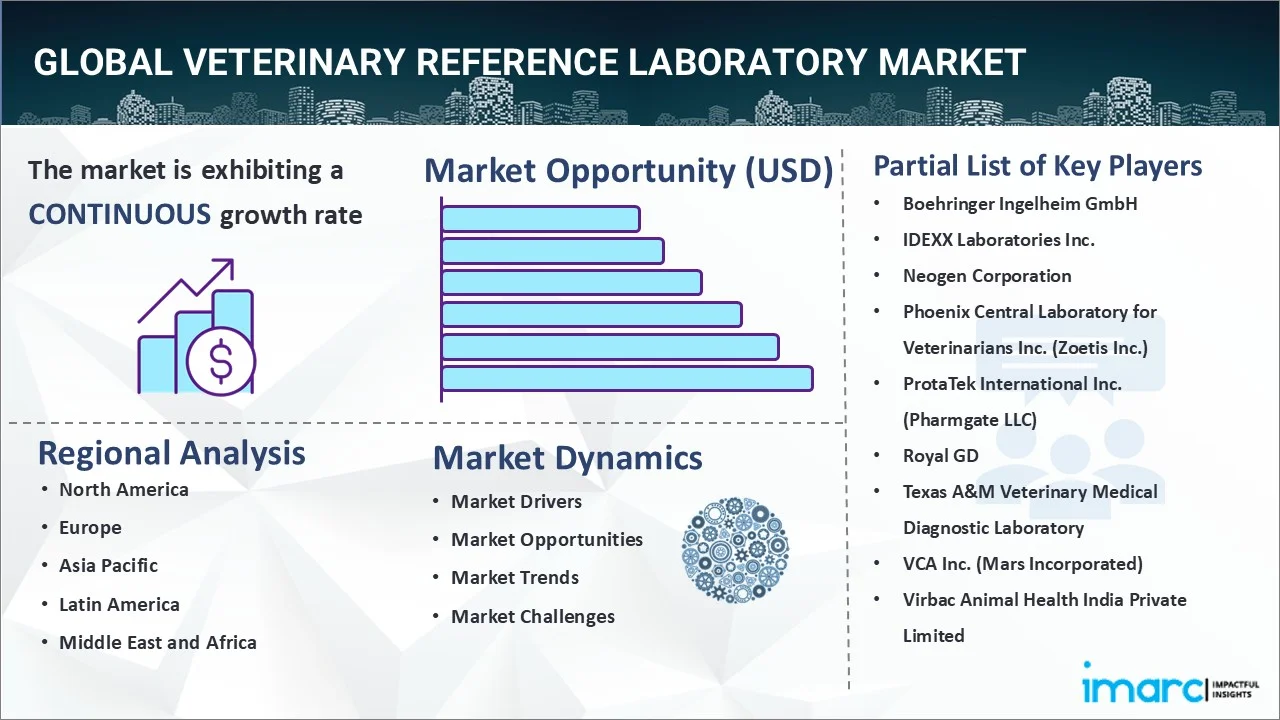
The global veterinary reference laboratory market size was valued at USD 5.02 Billion in 2025. Looking forward, IMARC Group estimates the market to reach USD 12.03 Billion by 2034, exhibiting a CAGR of 9.33% from 2026-2034. North America currently dominates the market, holding a market share of 42% in 2025. The region benefits from a well-established veterinary healthcare infrastructure, high companion animal ownership rates, and strong adoption of advanced diagnostic technologies across both companion and livestock animal care, all contributing to the veterinary reference laboratory market share.
The global veterinary reference laboratory market is driven by the rising prevalence of zoonotic and infectious diseases across livestock and companion animal populations, demanding robust diagnostic capabilities. Growing awareness among animal owners, farmers, and regulatory bodies about the value of early disease detection is increasing laboratory testing utilization. Expanding global trade in animal-derived food products is intensifying food safety testing requirements. Widespread adoption of molecular diagnostics, automation, and digital reporting platforms is transforming service delivery and broadening test menus. The convergence of human and animal health under the One Health framework is directing meaningful policy support and investment toward veterinary diagnostics worldwide.
The United States has emerged as a major region in the veterinary reference laboratory market owing to many factors. The country maintains one of the largest companion animal populations globally, sustaining strong demand for comprehensive veterinary diagnostic services. A mature regulatory environment governed by the USDA and FDA, alongside advanced veterinary education institutions and research infrastructure, supports a sophisticated laboratory testing ecosystem. In May 2025, Zoetis announced the opening of its newest and largest diagnostics reference laboratory at the UPS Healthcare Labport facility in Louisville, Kentucky, expanding national testing capacity and enabling faster, more precise diagnostic results for veterinary clinics across the United States. The growing integration of electronic health records and laboratory information management systems is streamlining diagnostic workflows and improving clinical accuracy. Increasing adoption of pet health insurance is further expanding diagnostic utilization among pet owners, reinforcing the country's veterinary reference laboratory market outlook.
To get more information on this market Request Sample
Veterinary Reference Laboratory Market Trends:
Rising Pet Humanization and Companion Animal Care
The increasing humanization of pets is reshaping veterinary diagnostic demand significantly. As pet owners treat animals as family members, expectations for diagnostic thoroughness have risen substantially. This behavioral shift is generating stronger demand for comprehensive health screening panels, advanced pathology assessments, and specialized diagnostic services that only reference laboratories can provide. Veterinarians are increasingly relying on external reference laboratories for complex biochemistry, endocrinology, and genetic testing beyond in-house diagnostic capabilities. The growing prevalence of chronic conditions such as diabetes, kidney disease, and oncological disorders is increasing laboratory submission frequency. Senior pet care programs and preventive wellness protocols are further driving higher testing volumes across companion animal species.
Technological Advancements in Diagnostic Platforms
Rapid technological advancements are fundamentally transforming veterinary reference laboratory capabilities, enabling faster, more accurate, and cost-effective diagnostic outcomes. The adoption of next-generation sequencing, polymerase chain reaction technologies, and mass spectrometry is broadening available tests and facilitating more precise disease identification. The World Organisation for Animal Health (WOAH) supports global reference laboratory networks that enhance collaboration, standardize diagnostic methods, share expertise, and advance diagnostic capabilities for major animal diseases, strengthening laboratory infrastructure and disease surveillance worldwide. Automated laboratory systems and artificial intelligence-powered diagnostic tools are improving throughput and reducing human error, while cloud-based information management systems enable seamless data sharing between clinicians and laboratories. Digital pathology platforms allowing remote slide review by specialist pathologists are extending service reach across dispersed veterinary markets. These veterinary reference laboratory market trends are positioning advanced diagnostics as a cornerstone of precision veterinary medicine globally.
Growing Emphasis on Food Safety and Livestock Health
The intensification of global food safety regulations and rising consumer demand for pathogen-free animal-derived products are creating substantial growth opportunities for veterinary reference laboratories in the livestock sector. Regulatory authorities across major agricultural nations are mandating pathogen screening, antibiotic residue testing, and disease surveillance in livestock populations, driving increased testing volumes. For example, in January 2025, the U.S. Department of Agriculture’s Animal and Plant Health Inspection Service (APHIS) updated its surveillance policy to enhance testing of turkey flocks for highly pathogenic avian influenza (HPAI), strengthening pathogen monitoring and laboratory diagnostic activities as part of national efforts to protect livestock health and food safety. Outbreaks of diseases such as avian influenza, foot-and-mouth disease, and African swine fever have reinforced the importance of early detection, directing government investment toward veterinary diagnostic infrastructure. The expansion of precision livestock farming practices is generating additional laboratory testing demand. The veterinary reference laboratory market forecast remains optimistic as regulatory frameworks and agricultural trade volumes continue expanding.
Veterinary Reference Laboratory Industry Segmentation:
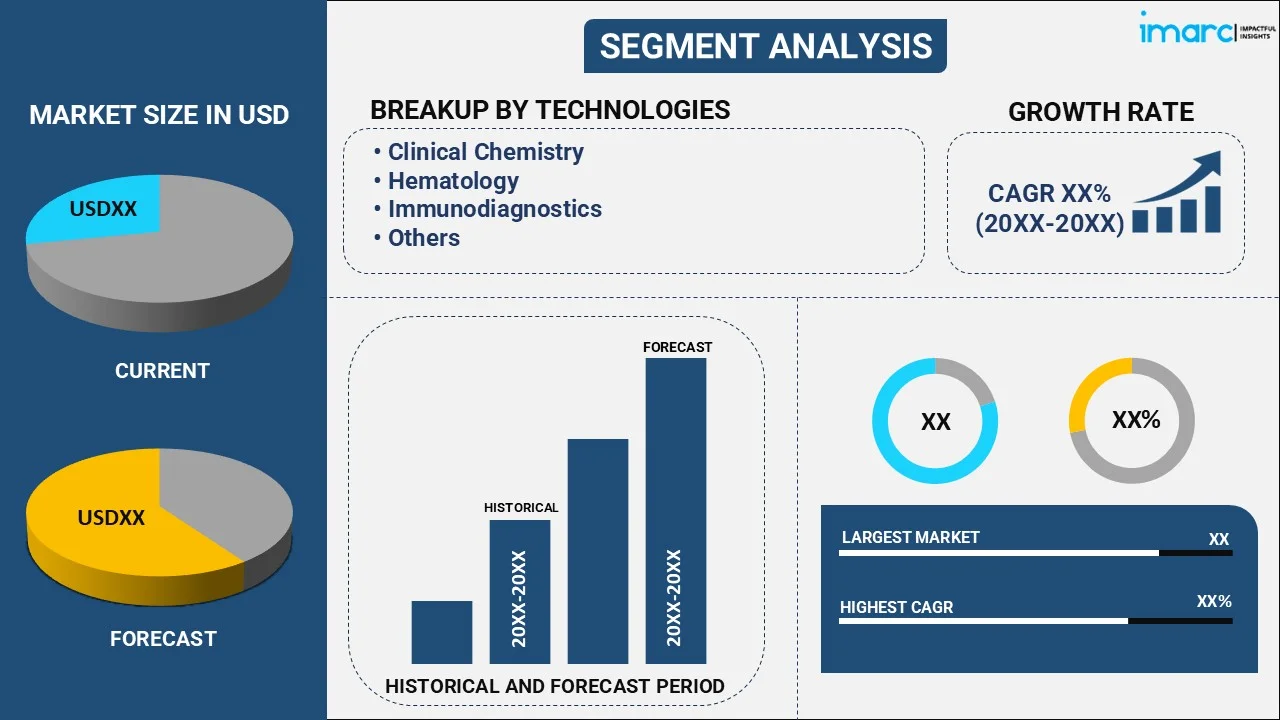
IMARC Group provides an analysis of the key trends in each segment of the global veterinary reference laboratory market, along with forecast at the global, regional, and country levels from 2026-2034. The market has been categorized based on technology, application, and animal type.
Analysis by Technology:
To get detailed segment analysis of this market Request Sample
- Clinical Chemistry
- Hematology
- Immunodiagnostics
- ELISA
- Lateral Flow Rapid Tests
- Others
- Molecular Diagnostics
- PCR
- Microassays
- Others
- Others
Clinical chemistry holds 33% of the market share. Clinical chemistry encompasses a wide range of biochemical assays that evaluate the functional status of major organ systems, including the liver, kidneys, pancreas, and thyroid gland, making it an indispensable component of veterinary diagnostic evaluation. These tests analyze blood and urine samples to detect abnormalities in metabolic processes, electrolyte balance, and enzyme activity, providing veterinarians with essential data for diagnosing systemic diseases, monitoring treatment efficacy, and assessing pre-surgical risk profiles. The broad applicability of clinical chemistry panels across all animal species, from companion animals such as dogs and cats to livestock and exotic animals, underpins its dominant position within the veterinary reference laboratory testing portfolio. Advances in automated analyzers and multi-analyte panels are enabling faster result turnaround times and improved test precision, supporting more informed clinical decision-making.
Analysis by Application:
- Clinical Pathology
- Toxicology
- Productivity Testing
- Others
Clinical pathology leads the market with a share of 38%. Clinical pathology forms the diagnostic foundation of veterinary reference laboratory services, encompassing a comprehensive range of examinations including complete blood counts, serum biochemistry profiles, urinalysis, cytology, and coagulation studies. These evaluations enable veterinarians to systematically assess the health status of animals, identify pathological conditions affecting organ function, and guide treatment decisions across a broad spectrum of diseases. The comprehensive nature of clinical pathology testing makes it applicable to virtually every clinical presentation encountered in veterinary practice, from routine wellness assessments to complex critical care evaluations. The segment's prominence is further supported by the increasing adoption of electronic veterinary records, which facilitate seamless submission of laboratory requests and rapid reporting of results.
Analysis by Animal Type:
- Livestock Animals
- Companion Animals
Companion animals dominates the market, with a share of 63%. The companion animal segment occupies the dominant position in the veterinary reference laboratory market, driven by the dramatic increase in global pet ownership and the corresponding elevation in veterinary care standards for dogs, cats, and other household animals. The humanization of pets has translated into greater willingness among pet owners to invest in advanced diagnostics, including genetic testing, allergy profiling, infectious disease panels, and comprehensive wellness screenings. Companion animals frequently present with complex, multi-system conditions that require specialized laboratory evaluation beyond the capabilities of in-clinic analyzers, creating sustained demand for reference laboratory services. The proliferation of specialty and emergency veterinary hospitals in urban centers has further expanded diagnostic testing volumes for companion animals.
Regional Analysis:
To get more information on the regional analysis of this market Request Sample
- North America
- United States
- Canada
- Asia Pacific
- China
- Japan
- India
- South Korea
- Australia
- Indonesia
- Others
- Europe
- Germany
- France
- United Kingdom
- Italy
- Spain
- Russia
- Others
- Latin America
- Brazil
- Mexico
- Others
- Middle East and Africa
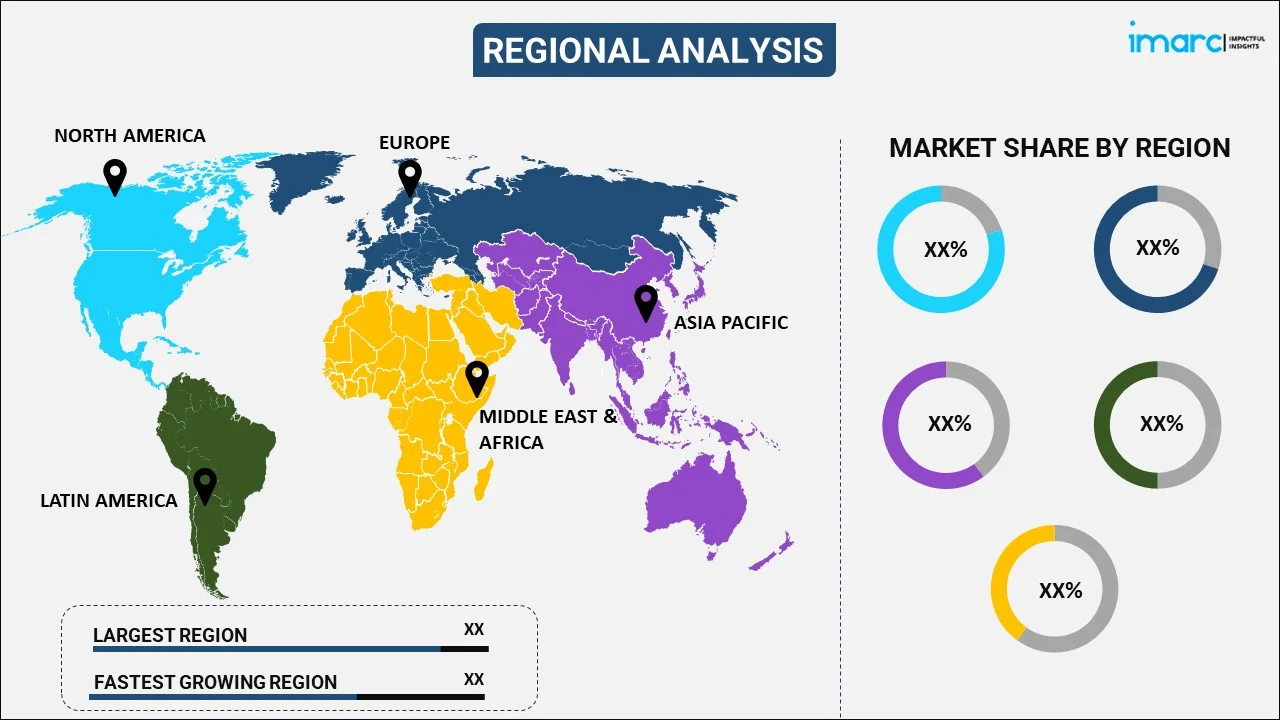
North America, accounting for 42% of the share, enjoys the leading position in the market. North America's leadership in the global veterinary reference laboratory market is underpinned by a confluence of structural advantages, including the world's highest concentration of companion animal ownership, an extensive network of veterinary healthcare facilities, and robust regulatory and accreditation frameworks governing laboratory standards. The region benefits from a mature veterinary services infrastructure, with highly specialized veterinary hospitals, academic institutions, and research centers that generate consistent demand for complex diagnostic testing. The widespread adoption of preventive care protocols and wellness screening programs among North American pet owners creates a steady pipeline of laboratory submissions throughout the year. The region's regulatory bodies, including the USDA and FDA, actively enforce food safety and livestock disease surveillance requirements, generating substantial laboratory testing demand in the agricultural sector as well.
Key Regional Takeaways:
United States Veterinary Reference Laboratory Market Analysis
The United States holds a strong position in North America as the most developed veterinary diagnostics market in the world, supported by decades of investment in veterinary education, research, and healthcare infrastructure. The country's large and diverse companion animal population, combined with a culturally embedded commitment to companion animal wellbeing, sustains exceptional demand for reference laboratory testing across a broad range of diagnostic categories. The US veterinary diagnostics sector benefits from close collaboration between academic veterinary hospitals, private diagnostic laboratories, and regulatory agencies, ensuring high standards of accuracy, accreditation, and quality assurance across all testing platforms. Government-mandated surveillance programs for zoonotic diseases, antimicrobial resistance monitoring, and food safety testing further generate substantial and reliable demand for veterinary reference laboratory services beyond the companion animal sector. The adoption of precision diagnostics, including genomic medicine and biomarker profiling, is accelerating rapidly within the United States as veterinary specialists seek more personalized approaches to disease management. The growing integration of telemedicine and digital pathology platforms is also expanding access to specialist laboratory expertise across geographically distributed veterinary practices nationwide, reinforcing the country's position as a global benchmark for veterinary diagnostic excellence.
Europe Veterinary Reference Laboratory Market Analysis
Europe represents a significant and mature market for veterinary reference laboratory services, characterized by a high density of companion animals, stringent regulatory standards, and well-developed veterinary healthcare infrastructure across its major economies. Countries such as Germany, France, the United Kingdom, and the Netherlands are among the most advanced markets for veterinary diagnostics in the region, supported by strong academic veterinary institutions and active professional associations promoting diagnostic best practices. In September 2026, Zoetis expanded the availability of its advanced Vetscan OptiCell AI‑powered veterinary hematology analyzer into Europe, enhancing point‑of‑care diagnostic capabilities and reinforcing the integration between in‑clinic testing and reference laboratory services across the region. The European Union's comprehensive animal health legislation, including mandatory disease notification and food safety testing requirements, creates consistent regulatory-driven demand for laboratory services across member states. The growing trend toward preventive veterinary care, wellness monitoring, and the adoption of specialist veterinary services is driving higher diagnostic testing volumes for companion animals throughout Western and Northern Europe. Emerging markets in Eastern Europe are also experiencing growth in veterinary services utilization, supported by rising living standards, expanding middle-class pet ownership, and improving access to veterinary care infrastructure, broadening the European market's overall scope and depth.
Asia Pacific Veterinary Reference Laboratory Market Analysis
Asia-Pacific represents a high-growth region for veterinary reference laboratory services, driven by rapid urbanization, rising disposable incomes, and expanding companion animal ownership in key markets such as China, Japan, South Korea, Australia, and India. The region's large livestock sector, encompassing poultry, swine, and aquaculture, generates substantial demand for disease surveillance, productivity testing, and food safety laboratory services. Government initiatives aimed at strengthening national veterinary health systems and biosurveillance capabilities are directing investment toward diagnostic infrastructure. Japan and Australia maintain highly developed veterinary services markets with sophisticated reference laboratory networks, while China and India are rapidly building capacity to support their growing veterinary healthcare sectors. The increasing penetration of corporate veterinary chains and specialty pet hospitals across major urban centers is elevating diagnostic testing standards and driving higher reference laboratory utilization throughout the region.
Latin America Veterinary Reference Laboratory Market Analysis
Latin America presents growing opportunities for veterinary reference laboratory services, underpinned by the region's large agricultural sector and increasing companion animal ownership in urban centers. Brazil and Mexico represent the most developed veterinary services markets in the region, with expanding networks of veterinary hospitals, clinics, and diagnostic laboratories serving both companion and livestock animal populations. Government-mandated food safety programs and disease surveillance requirements for major export commodities, including beef, poultry, and pork, are generating regulatory-driven demand for reference laboratory testing. Rising disposable incomes and increasing urbanization are also supporting broader adoption of companion animal care practices, incrementally expanding the addressable market for veterinary diagnostics services across Latin American markets.
Middle East And Africa Veterinary Reference Laboratory Market Analysis
The Middle East and Africa region represents an emerging market for veterinary reference laboratory services, with growth supported by expanding livestock sectors in Gulf Cooperation Council countries and sub-Saharan Africa, alongside growing companion animal ownership in urban centers. Government investments in food safety infrastructure, national disease surveillance programs, and veterinary public health initiatives are creating foundational demand for reference laboratory capabilities. The region's large camel, sheep, goat, and poultry populations generate specific testing requirements related to productivity, disease monitoring, and export certification. While laboratory infrastructure remains developing relative to mature markets, government-backed capacity building programs are progressively expanding access to advanced veterinary reference laboratory services across the region.
Competitive Landscape:
The global veterinary reference laboratory market is characterized by a moderately consolidated competitive landscape, with a mix of large multinational diagnostic companies, specialized independent laboratories, and academic or government-affiliated institutions competing across various testing segments and geographic markets. Leading market participants are actively investing in expanding their test menus, upgrading laboratory automation infrastructure, and developing proprietary diagnostic platforms to differentiate their service offerings and improve operational efficiency. Strategic acquisitions, laboratory network expansions, and partnerships with veterinary practice chains represent key competitive strategies employed by major players seeking to broaden geographic reach and customer base. The adoption of digital reporting systems, telemedicine-integrated diagnostics, and artificial intelligence-assisted result interpretation is emerging as a new axis of competitive differentiation. Increasing regulatory requirements for laboratory accreditation and quality standards are raising the barrier to entry, favoring established players with robust quality management systems and extensive diagnostic expertise across multiple animal species and testing disciplines.
The report provides a comprehensive analysis of the competitive landscape in the veterinary reference laboratory market with detailed profiles of all major companies, including:
- Boehringer Ingelheim GmbH
- IDEXX Laboratories Inc.
- Neogen Corporation
- Phoenix Central Laboratory for Veterinarians Inc. (Zoetis Inc.)
- ProtaTek International Inc. (Pharmgate LLC)
- Royal GD
- Texas A&M Veterinary Medical Diagnostic Laboratory
- VCA Inc. (Mars Incorporated)
- Virbac Animal Health India Private Limited
Latest News and Developments:
- In February 2026, IDEXX Laboratories, Inc. reported continued expansion of its global veterinary reference laboratory services, driven by rising diagnostic testing volumes and new customer acquisitions. The company highlighted strong growth in reference lab testing, supported by increasing demand for early disease detection, preventive screening, and ongoing innovation in veterinary diagnostic technologies.
- In January 2026, VolitionRx Limited announced partnerships with Midwest Veterinary Laboratory and Bioguard to expand access to its Nu.Q® Vet Cancer Test. Midwest Veterinary Laboratory will offer nationwide testing from February 2026, while Bioguard will provide services across Taiwan and China, strengthening early cancer detection through veterinary reference laboratory networks.
Veterinary Reference Laboratory Market Report Scope:
| Report Features | Details |
|---|---|
| Base Year of the Analysis | 2025 |
| Historical Period | 2020-2025 |
| Forecast Period | 2026-2034 |
| Units | Billion USD |
| Scope of the Report | Exploration of Historical Trends and Market Outlook, Industry Catalysts and Challenges, Segment-Wise Historical and Future Market Assessment:
|
| Technologies Covered |
|
| Applications Covered | Clinical Pathology, Toxicology, Productivity Testing, Others |
| Animal Types Covered | Livestock Animals, Companion Animals |
| Regions Covered | Asia Pacific, Europe, North America, Latin America, Middle East and Africa |
| Countries Covered | United States, Canada, Germany, France, United Kingdom, Italy, Spain, Russia, China, Japan, India, South Korea, Australia, Indonesia, Brazil, Mexico |
| Companies Covered | Boehringer Ingelheim GmbH, IDEXX Laboratories Inc., Neogen Corporation, Phoenix Central Laboratory for Veterinarians Inc. (Zoetis Inc.), ProtaTek International Inc. (Pharmgate LLC), Royal GD, Texas A&M Veterinary Medical Diagnostic Laboratory, VCA Inc. (Mars Incorporated), Virbac Animal Health India Private Limited, etc. |
| Customization Scope | 10% Free Customization |
| Post-Sale Analyst Support | 10-12 Weeks |
| Delivery Format | PDF and Excel through Email (We can also provide the editable version of the report in PPT/Word format on special request) |
Key Benefits for Stakeholders:
- IMARC’s report offers a comprehensive quantitative analysis of various market segments, historical and current market trends, market forecasts, and dynamics of the veterinary reference laboratory market from 2020-2034.
- The research study provides the latest information on the market drivers, challenges, and opportunities in the global veterinary reference laboratory market.
- The study maps the leading, as well as the fastest-growing, regional markets. It further enables stakeholders to identify the key country-level markets within each region.
- Porter's Five Forces analysis assists stakeholders in assessing the impact of new entrants, competitive rivalry, supplier power, buyer power, and the threat of substitution. It helps stakeholders to analyze the level of competition within the veterinary reference laboratory industry and its attractiveness.
- Competitive landscape allows stakeholders to understand their competitive environment and provides an insight into the current positions of key players in the market.
Frequently Asked Questions About the Veterinary Reference Laboratory Market Research Report Report
The veterinary reference laboratory market was valued at USD 5.02 Billion in 2025.
The veterinary reference laboratory market is projected to exhibit a CAGR of 9.33% during 2026-2034, reaching a value of USD 12.03 Billion by 2034.
The veterinary reference laboratory market is driven by rising global pet ownership, increasing zoonotic disease prevalence, growing awareness of animal health, and expanding food safety regulatory requirements. Technological advancements in molecular diagnostics and laboratory automation, combined with the adoption of preventive care protocols and the expansion of specialty veterinary services, are further sustaining market expansion.
North America currently dominates the veterinary reference laboratory market, accounting for a share of 42%. The region's leadership is supported by high companion animal ownership rates, robust veterinary infrastructure, strong regulatory frameworks governing laboratory standards, and widespread adoption of comprehensive diagnostic testing protocols across both companion and livestock animal care sectors.
Some of the major players in the veterinary reference laboratory market include Boehringer Ingelheim GmbH, IDEXX Laboratories Inc., Neogen Corporation, Phoenix Central Laboratory for Veterinarians Inc. (Zoetis Inc.), ProtaTek International Inc. (Pharmgate LLC), Royal GD, Texas A&M Veterinary Medical Diagnostic Laboratory, VCA Inc. (Mars Incorporated), Virbac Animal Health India Private Limited, etc.
Need more help?
- Speak to our experienced analysts for insights on the current market scenarios.
- Include additional segments and countries to customize the report as per your requirement.
- Gain an unparalleled competitive advantage in your domain by understanding how to utilize the report and positively impacting your operations and revenue.
- For further assistance, please connect with our analysts.
 Request Customization
 Speak to an Analyst
 Request Brochure
 Inquire Before Buying
Benefits of Customization
- Personalize this research
- Triangulate with your data
- Get data as per your format and definition
- Gain a deeper dive into a specific application, geography, customer, or competitor
- Any level of personalization
Get in Touch With Us
UNITED STATES
Phone: +1-201-971-6302
INDIA
Phone: +91-120-433-0800
UNITED KINGDOM
Phone: +44-753-714-6104
Email: [email protected]
Client Testimonials




.webp)




.webp)













Related Reports

Choose your plan
*Please note that the prices mentioned below are starting prices for each bundle type. Kindly contact our team for further details.*
Single User License
- 1 User License, Access on 2 Devices
- PDF Report + Excel Dataset (Password Protected)
- Lifetime Access
- No Printing Rights
- 10% Free Report Customization
- 10–12 Weeks of Analyst Support
Five User License
- Access for 5 Users, 2 Devices per User
- PDF Report + Excel Dataset (Password Protected)
- Lifetime Access
- Dedicated Account Manager
- 12–14 Weeks of Analyst Support
- No Printing Rights
- 15% Free Report Customization
- 25% Discount on Your Next Purchase
Corporate User License
- Unlimited User Access (Within Your Organization)
- PDF Report + Excel Dataset
- Lifetime Access
- Dedicated Account Manager
- 14–20 Weeks of Analyst Support
- No Printing Rights
- 20% Free Report Customization
- 30% Discount on Your Next Purchase
Essential Insights
What's included:
3 reports
- Lifetime Access
- PDF Reports
- Excel Datasets
- 2 Weeks of Free Analyst Support
- 2 User Licenses
- Access on 2 Devices
- Printing Rights
- Complimentary PowerPoint (PPT) Version
- Complimentary License Upgrade
Professional Access
What's included:
5 reports
- Lifetime Access
- PDF Reports
- Excel Datasets
- 8 Weeks of Free Analyst Support
- 2 User Licenses
- Access on 2 Devices
- Printing Rights
- Complimentary PowerPoint (PPT) Version
- Complimentary License Upgrade
Business Advantage
What's included:
8 reports
- Lifetime Access
- PDF Reports
- Excel Datasets
- 14 Weeks of Free Analyst Support
- 2 User Licenses
- Access on 2 Devices
- Printing Rights
- Complimentary PowerPoint (PPT) Version
- Complimentary License Upgrade
Enterprise Intelligence
What's included:
10 reports
- Lifetime Access
- PDF Reports
- Excel Datasets
- 20 Weeks of Free Analyst Support
- 2 User Licenses
- Access on 2 Devices
- Printing Rights
- Complimentary PowerPoint (PPT) Version
- Complimentary License Upgrade