
Vietnam Confectionery Market Size, Share, Trends and Forecast by Product Type, Age Group, Price Point, Distribution Channel, and Region, 2026-2034
Vietnam Confectionery Market Summary:
The Vietnam confectionery market size was valued at USD 864.79 Million in 2025 and is projected to reach USD 1,834.76 Million by 2034, growing at a compound annual growth rate of 8.72% from 2026-2034.
Vietnam is turning out to be one of the prominent confectionery markets in the Southeast Asian region. This is because of the young and growing middle-class population with changing eating habits. Cultural events such as Tet and the Mid-Autumn Festival are major contributors to sweets as an integral part of consumption rituals. Moreover, the rising urbanization is resulting in the demand for sweets as a means of convenient indulgence.
Key Takeaways and Insights:
-
By Product Type: Chocolate dominates the market with a share of 58.02% in 2025, driven by rising consumer preference for premium and indulgent treats, increasing gifting culture, and the expanding presence of international chocolate brands alongside emerging domestic artisanal producers.
-
By Age Group: Adult lead the market with a share of 60.05% in 2025, fueled by higher disposable incomes, workplace snacking habits, sophisticated taste preferences, and the growing role of confectionery as personal indulgence and social gifting among working professionals.
-
By Price Point: Economy dominates the market with a share of 50.02% in 2025, owing to the price-conscious nature of mass-market consumers, extensive distribution through traditional retail channels, and the strong positioning of affordable domestic brands catering to everyday consumption needs.
-
By Distribution Channel: Supermarkets and hypermarkets lead the market with a share of 55.03% in 2025, attributed to the rapid expansion of modern retail formats, one-stop shopping convenience, promotional activities, and improved product visibility through strategic shelf placement and seasonal displays.
-
By Region: Southern Vietnam dominates the market with a share of 48% in 2025, driven by Ho Chi Minh City's status as the economic powerhouse, high population density, cosmopolitan consumer preferences, developed retail infrastructure, and concentration of confectionery manufacturing facilities.
-
Key Players: Key players in Vietnam's confectionery market are driving growth through product innovation, expanding distribution networks, and catering to rising consumer demand for premium, convenient, and healthier sweet and snack options, while leveraging modern retail and e-commerce channels.
The Vietnam confectionery market is rapidly evolving as manufacturers respond to changing consumer preferences and dynamic market conditions. In November 2025, Japanese firm Fujiya Vietnam inaugurated a new baked confectionery plant in Tay Ninh Province, beginning local production of “Country Ma’am” cookies to align with Vietnamese tastes and strengthen regional distribution across Asia, highlighting foreign investment and localization trends. The industry combines traditional Vietnamese sweets with international influences, offering diverse product portfolios for different demographic segments. Growing health awareness is driving innovation in reduced‑sugar options and natural ingredients, while confectionery’s cultural role in festivals and celebrations ensures seasonal demand spikes. The market features both multinational brands leveraging global recognition and local producers emphasizing heritage flavors, collectively fostering product innovation and expanding reach across urban and rural markets.
Vietnam Confectionery Market Trends:
Health-Conscious Innovation and Better-for-You Formulations
Vietnamese consumers are increasingly focused on health and wellness, boosting demand for confectionery with reduced sugar, natural ingredients, and functional benefits. In December 2025, a leading Vietnamese company launched low‑sugar versions of its popular cakes and cookies, cutting sugar by up to 50 % and achieving strong sales growth. Manufacturers are responding with higher-cocoa chocolates, sugar-free options, and vitamin-fortified products, reflecting urban consumers’ desire for indulgent treats that support healthier lifestyles while maintaining taste and introducing innovative, health-focused lines.
Premiumization and Artisanal Confectionery Growth
The Vietnamese confectionery market is experiencing strong premiumization, fueled by rising affluence and demand for gourmet offerings. In February 2025, luxury Spanish chocolatier Savall opened its first Hoi An outlet, crafting artisanal chocolates with 100 % Vietnamese ingredients and locally sourced cacao, reflecting the shift toward premium, handcrafted confections. Vietnamese cacao is gaining recognition domestically and internationally, positioning the country as an emerging fine chocolate origin. Consumers increasingly seek superior craftsmanship, unique flavors, and authentic ingredients, driving demand for luxury gift sets and specialty indulgent products.
Digital Commerce and Omnichannel Retail Expansion
E‑commerce and digital channels are transforming Vietnam’s confectionery distribution, enabling brands to reach consumers nationwide. In H1 2025, online retail sales across major platforms hit approximately VND 202.3 trillion (US $7.96 billion), up 41.5 % year-on-year, reflecting strong digital adoption. Social media campaigns, influencer collaborations, and direct-to-consumer sites effectively engage younger shoppers, while food delivery apps and online marketplaces improve accessibility. Seasonal promotions and targeted digital advertising drive impulse purchases, helping brands expand reach, complement traditional retail, and meet growing demand for convenient, personalized shopping experiences.
Market Outlook 2026-2034:
The Vietnam confectionery market is positioned for robust growth throughout the forecast period, supported by favorable demographic trends, rising disposable incomes, and expanding modern retail infrastructure. The market will benefit from continued urbanization, evolving consumer preferences toward premium and innovative products, and the integration of confectionery into Vietnam's rich cultural traditions and gifting occasions. Manufacturers are expected to intensify focus on product differentiation, health-oriented formulations, and sustainable sourcing practices to capture emerging consumer demands. The market generated a revenue of USD 864.79 Million in 2025 and is projected to reach a revenue of USD 1,834.76 Million by 2034, growing at a compound annual growth rate of 8.72% from 2026-2034.
Vietnam Confectionery Market Report Segmentation:
| Segment Category | Leading Segment | Market Share |
|---|---|---|
| Product Type | Chocolate | 58.02% |
| Age Group | Adult | 60.05% |
| Price Point | Economy | 50.02% |
| Distribution Channel | Supermarkets and Hypermarkets | 55.03% |
| Region | Southern Vietnam | 48% |
Product Type Insights:
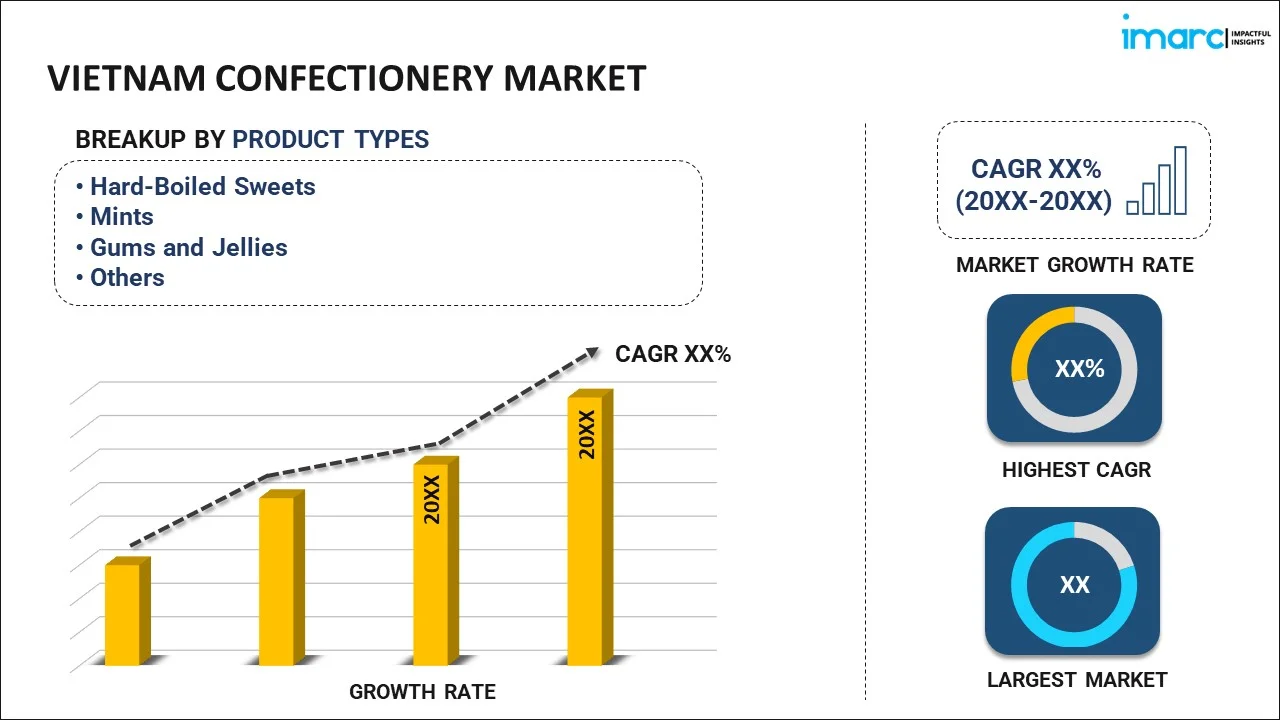
To get more information on this market, Request Sample
- Hard-Boiled Sweets
- Mints
- Gums and Jellies
- Chocolate
- Caramels and Toffees
- Medicated Confectionery
- Fine Bakery Wares
- Others
The chocolate dominates with a market share of 58.02% of the total Vietnam confectionery market in 2025.
Chocolate remains the leading segment in Vietnam’s confectionery market, driven by demand for premium indulgence and its gifting role during festivals. In late 2025, Bourbon Corporation partnered with Ca Cao Trong Duc Company to expand cocoa cultivation in Gia Lai, strengthening supply chains and promoting Vietnamese cacao globally. The market spans affordable mass-market to artisanal bean-to-bar chocolates, with international and domestic brands emphasizing quality, local ingredients, and unique flavors.
The chocolate segment is experiencing innovation through the introduction of products featuring higher cocoa content, reduced sugar formulations, and hybrid offerings combining chocolate with fruits, nuts, and traditional Vietnamese flavors. Seasonal demand peaks during Lunar New Year and Valentine's Day further reinforce chocolate's cultural significance, while expanding café culture and bakery channels are creating additional consumption occasions beyond traditional retail purchases.
Age Group Insights:
- Children
- Adult
- Geriatric
The adult leads with a share of 60.05% of the total Vietnam confectionery market in 2025.
The key consumers of confectionery in Vietnam are adults, impelled by increasing buying power and the expansion of eating times for personal indulgence or professional gifts. Working professionals in urban areas integrate more and more confectionery into daily routines for convenient snacking during work hours, with formats in portable format and single-serve packaging catering to on-the-go lifestyles. Their sophisticated taste preferences allow the premiumization trends and demand for high-quality ingredients.
Grown-up consumers are responsive to health-conscious product innovations, seeking confectionery options that can balance indulgence with nutritional consideration in terms of reduced sugar content, natural ingredients, and functional benefits. The segment also generates high demand for seasonal products, as grown-ups are the main buyers of gift confectionery for Tet celebrations, corporate occasions, and family gatherings to further reinforce the cultural function of sweets in Vietnamese social traditions.
Price Point Insights:
- Economy
- Mid-Range
- Luxury
The economy dominates with a market share of 50.02% of the total Vietnam confectionery market in 2025.
The economy segment dominates Vietnam’s confectionery market, driven by price-sensitive consumers and wide availability through traditional retail. Strong local brands leverage cost-effective production and extensive distribution, securing significant shelf space and sustaining market leadership against imported alternatives, particularly in rural and semi-urban areas where affordability, familiarity, and frequent purchase behavior continue to shape consumer preference and volume demand.
Economy confectionery benefits from widespread availability through small grocers, convenience stores, and traditional markets that serve both urban and rural populations. Manufacturers in this segment focus on value optimization through efficient production processes, local sourcing strategies, and packaging innovations that maintain product quality while meeting consumer price expectations. Promotional activities and volume-based offerings further strengthen the segment's appeal among cost-conscious consumers.
Distribution Channel Insights:
- Supermarkets and Hypermarkets
- Convenience Stores
- Pharmaceutical and Drug Stores
- Online Stores
- Others
The supermarkets and hypermarkets lead with a share of 55.03% of the total Vietnam confectionery market in 2025.
Supermarkets and hypermarkets have established dominance in Vietnam's confectionery distribution landscape, benefiting from the rapid expansion of modern retail formats across major urban centers. These channels offer consumers extensive product variety, competitive pricing through promotional activities, and convenient one-stop shopping experiences that align with evolving lifestyle preferences. Strategic point-of-sale displays, seasonal merchandising, and impulse purchase positioning near checkout areas effectively drive confectionery sales within these retail environments.
Modern trade channels provide manufacturers with valuable shelf space for product visibility and brand building opportunities, particularly for premium and imported confectionery items seeking to establish market presence. The continued expansion of international and domestic supermarket chains into secondary cities and provincial areas is extending modern retail accessibility, creating new growth opportunities for confectionery brands while reshaping traditional distribution dynamics across Vietnam's retail landscape.
Regional Insights:
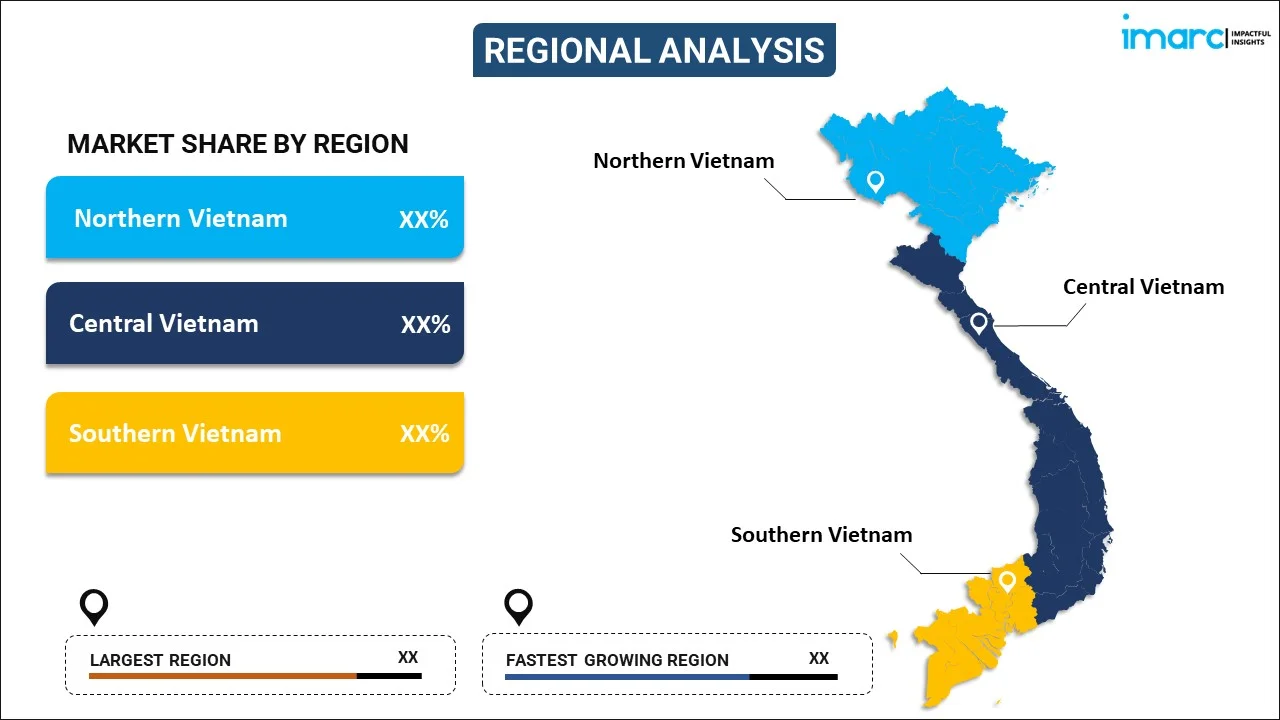
To get detailed regional analysis of this market, Request Sample
- Northern Vietnam
- Central Vietnam
- Southern Vietnam
Southern Vietnam exhibits a clear dominance with a 48% share of the total Vietnam confectionery market in 2025.
Southern Vietnam, anchored by Ho Chi Minh City, maintains its position as the country's leading confectionery market, driven by the region's economic dynamism, high population density, and cosmopolitan consumer preferences. The area benefits from developed retail infrastructure including numerous supermarket chains, convenience store networks, and modern shopping centers that provide extensive product accessibility. Southern consumers demonstrate strong preferences for sweeter taste profiles and exhibit higher receptivity to premium and imported confectionery products.
The region's concentration of manufacturing facilities and distribution networks supports efficient supply chain operations and product freshness, while its position as Vietnam's commercial hub attracts continued investment from both domestic and international confectionery companies. Ho Chi Minh City's thriving café culture and tourism sector create additional consumption channels, with chocolate and premium confectionery gaining prominence as souvenirs and gift items among domestic and international visitors.
Market Dynamics:
Growth Drivers:
Why is the Vietnam Confectionery Market Growing?
Rising Disposable Incomes and Expanding Middle Class
Vietnam’s sustained economic growth is driving a significant expansion of the middle class, increasing discretionary spending on confectionery. According to reports, the middle class is projected to reach 26% of the population by 2026, up from 13 % in 2023, reflecting rising incomes and evolving consumption patterns. Growing household wealth is fueling premiumization, as consumers trade up from economy to mid-range and luxury confectionery products, seeking superior quality, unique flavors, and authentic ingredients, supporting sustained demand growth and the overall expansion of the premium market segment.
Urbanization and Modern Lifestyle Adoption
Rapid urbanization in Vietnam is reshaping consumer behavior, with city dwellers incorporating confectionery into daily routines. According to reports, in 2025, modern retail formats such as supermarkets, convenience stores, and malls accounted for around 27 % of total retail sales, driven by urban population growth and demand for convenience and quality. Urban consumers increasingly prefer portable snacks and innovative packaging. The growth of modern retail, café culture, and food delivery services provides new consumption touchpoints, supporting market growth, product diversification, and greater accessibility beyond traditional retail channels.
Cultural Significance and Festive Gifting Traditions
Confectionery holds deep cultural significance in Vietnam, featuring prominently in Tết, the Mid‑Autumn Festival, weddings, and family gatherings, making sweets an integral part of celebrations and social rituals. In 2025, ahead of the Mid‑Autumn Festival, Ho Chi Minh City’s mooncake market saw major confectionery companies launch new festive products with creative packaging and traditional designs, with demand rising about 20 % year-on-year. These occasions create substantial seasonal demand peaks, and manufacturers leverage festive periods through special edition items, premium gift packaging, and themed collections, reinforcing cultural values, enhancing brand loyalty, and generating recurring sales throughout the year.
Market Restraints:
What Challenges the Vietnam Confectionery Market is Facing?
Growing Health Consciousness and Sugar Concerns
Rising awareness of health and nutrition among Vietnamese consumers is creating headwinds for traditional confectionery products perceived as high in sugar and calories. Growing concerns about obesity and diabetes, particularly among urban populations, are influencing purchasing decisions and shifting demand toward healthier alternatives. Manufacturers face pressure to reformulate products while maintaining taste appeal and affordability.
Raw Material Cost Volatility
Confectionery manufacturers face ongoing challenges from volatility in key raw material costs, including cocoa, sugar, and packaging materials. Global commodity price fluctuations and supply chain disruptions impact production costs and squeeze profit margins, particularly for economy-segment producers operating on thin margins. Managing input cost pressures while maintaining competitive retail pricing requires careful balancing of sourcing strategies and operational efficiencies.
Intense Competition and Market Fragmentation
The Vietnamese confectionery market features intense competition among numerous domestic and international players, creating pricing pressures and requiring continuous investment in marketing and product innovation. Market fragmentation across multiple segments and distribution channels makes it challenging for brands to achieve dominant positions, while retailer bargaining power continues to increase as modern trade channels gain market share.
Competitive Landscape:
The Vietnam confectionery market exhibits a dynamic competitive landscape featuring established multinational corporations, prominent domestic manufacturers, and emerging artisanal producers competing across diverse product segments. The market structure reflects a blend of international brand strength through premium positioning and extensive marketing resources alongside domestic company advantages in local market understanding, distribution reach, and heritage brand equity. Competition intensifies around product innovation, pricing strategies, and distribution expansion as participants seek to capture growing consumer demand. Strategic acquisitions, brand portfolio management, and investments in manufacturing capabilities characterize competitive dynamics as companies position for sustained market development.
Recent Developments:
-
In November 2025, Indonesian consumer goods firm Sari Murni Abadi (SMA) has completed a strategic acquisition of Vietnam’s leading confectionery maker Bibica Corporation from PAN Group, expanding its portfolio from snacks into biscuits and sweets and enhancing cross‑border production and distribution in Southeast Asia.
Vietnam Confectionery Market Report Coverage:
| Report Features | Details |
|---|---|
| Base Year of the Analysis | 2025 |
| Historical Period | 2020-2025 |
| Forecast Period | 2026-2034 |
| Units | Million USD |
| Scope of the Report | Exploration of Historical and Forecast Trends, Industry Catalysts and Challenges, Segment-Wise Historical and Predictive Market Assessment:
|
| Product Types Covered | Hard-Boiled Sweets, Mints, Gums and Jellies, Chocolate, Caramels and Toffees, Medicated Confectionery, Fine Bakery Wares, Others |
| Age Groups Covered | Children, Adult, Geriatric |
| Price Points Covered | Economy, Mid-Range, Luxury |
| Distribution Channels Covered | Supermarkets and Hypermarkets, Convenience Stores, Pharmaceutical and Drug Stores, Online Stores, Others |
| Regions Covered | Northern Vietnam, Central Vietnam, Southern Vietnam |
| Customization Scope | 10% Free Customization |
| Post-Sale Analyst Support | 10-12 Weeks |
| Delivery Format | PDF and Excel through Email (We can also provide the editable version of the report in PPT/Word format on special request) |
Frequently Asked Questions About the Vietnam Confectionery Market Report
The Vietnam confectionery market size was valued at USD 864.79 Million in 2025.
The Vietnam confectionery market is expected to grow at a compound annual growth rate of 8.72% from 2026-2034 to reach USD 1,834.76 Million by 2034.
The chocolate segment dominated the product type category with a market share of 58.02%, driven by rising consumer preference for premium indulgence, expanding gifting culture, and the presence of both international brands and emerging domestic artisanal producers.
Key factors driving the Vietnam confectionery market include rising disposable incomes and expanding middle class, rapid urbanization and modern lifestyle adoption, cultural significance of confectionery in festive gifting traditions, expansion of modern retail channels, and growing premiumization trends among consumers.
Major challenges include growing health consciousness and sugar concerns among consumers, raw material cost volatility affecting production margins, intense competition and market fragmentation, distribution challenges in rural areas, and the need to balance affordability with product innovation demands.
Need more help?
- Speak to our experienced analysts for insights on the current market scenarios.
- Include additional segments and countries to customize the report as per your requirement.
- Gain an unparalleled competitive advantage in your domain by understanding how to utilize the report and positively impacting your operations and revenue.
- For further assistance, please connect with our analysts.
 Request Customization
 Speak to an Analyst
 Request Brochure
 Inquire Before Buying
Benefits of Customization
- Personalize this research
- Triangulate with your data
- Get data as per your format and definition
- Gain a deeper dive into a specific application, geography, customer, or competitor
- Any level of personalization
Get in Touch With Us
UNITED STATES
Phone: +1-201-971-6302
INDIA
Phone: +91-120-433-0800
UNITED KINGDOM
Phone: +44-753-714-6104
Email: [email protected]
Client Testimonials




.webp)




.webp)













Related Reports

Choose your plan
*Please note that the prices mentioned below are starting prices for each bundle type. Kindly contact our team for further details.*
Single User License
- 1 User License, Access on 2 Devices
- PDF Report + Excel Dataset (Password Protected)
- Lifetime Access
- No Printing Rights
- 10% Free Report Customization
- 10–12 Weeks of Analyst Support
Five User License
- Access for 5 Users, 2 Devices per User
- PDF Report + Excel Dataset (Password Protected)
- Lifetime Access
- Dedicated Account Manager
- 12–14 Weeks of Analyst Support
- No Printing Rights
- 15% Free Report Customization
- 25% Discount on Your Next Purchase
Corporate User License
- Unlimited User Access (Within Your Organization)
- PDF Report + Excel Dataset
- Lifetime Access
- Dedicated Account Manager
- 14–20 Weeks of Analyst Support
- No Printing Rights
- 20% Free Report Customization
- 30% Discount on Your Next Purchase
Essential Insights
What's included:
3 reports
- Lifetime Access
- PDF Reports
- Excel Datasets
- 2 Weeks of Free Analyst Support
- 2 User Licenses
- Access on 2 Devices
- Printing Rights
- Complimentary PowerPoint (PPT) Version
- Complimentary License Upgrade
Professional Access
What's included:
5 reports
- Lifetime Access
- PDF Reports
- Excel Datasets
- 8 Weeks of Free Analyst Support
- 2 User Licenses
- Access on 2 Devices
- Printing Rights
- Complimentary PowerPoint (PPT) Version
- Complimentary License Upgrade
Business Advantage
What's included:
8 reports
- Lifetime Access
- PDF Reports
- Excel Datasets
- 14 Weeks of Free Analyst Support
- 2 User Licenses
- Access on 2 Devices
- Printing Rights
- Complimentary PowerPoint (PPT) Version
- Complimentary License Upgrade
Enterprise Intelligence
What's included:
10 reports
- Lifetime Access
- PDF Reports
- Excel Datasets
- 20 Weeks of Free Analyst Support
- 2 User Licenses
- Access on 2 Devices
- Printing Rights
- Complimentary PowerPoint (PPT) Version
- Complimentary License Upgrade