
Vietnam Healthcare Interoperability Solutions Market Size, Share, Trends and Forecast by Type, Level, Deployment, End Use, and Region, 2026-2034
Vietnam Healthcare Interoperability Solutions Market Summary:
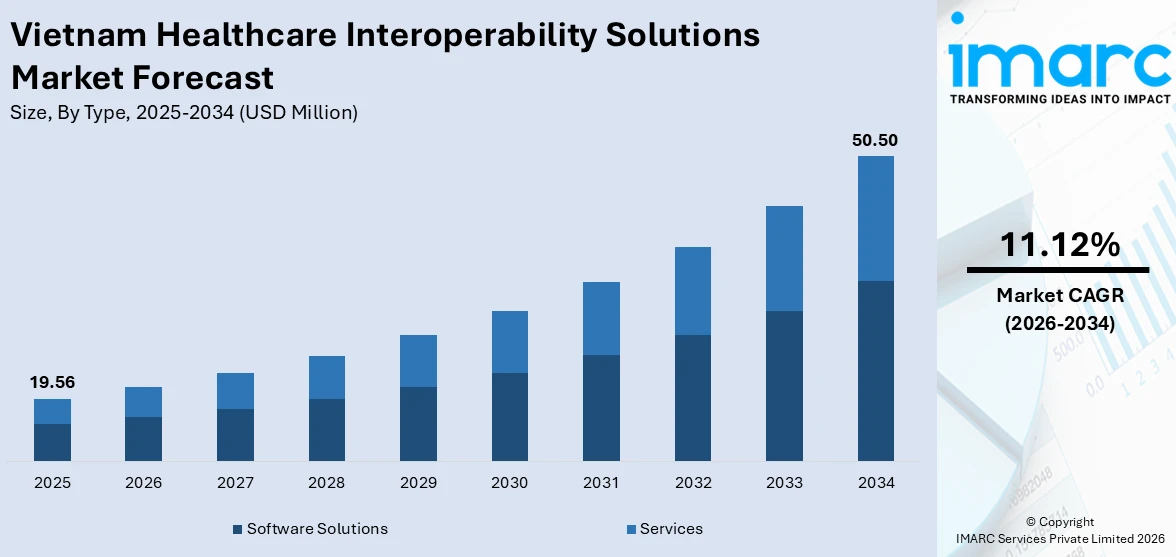
The Vietnam healthcare interoperability solutions market size was valued at USD 19.56 Million in 2025 and is projected to reach USD 50.50 Million by 2034, growing at a compound annual growth rate of 11.12% from 2026-2034.
Vietnam's healthcare interoperability solutions market is expanding rapidly, driven by government-mandated digital transformation initiatives and increasing healthcare infrastructure investments. The Ministry of Health's comprehensive digitalization programs are accelerating adoption of electronic health records and health information exchange platforms across public and private healthcare facilities nationwide. In 2025, the Vietnamese government allocated VND 30 trillion (approximately USD 1.26 Billion) to modernize healthcare infrastructure and advance interoperability standards nationwide.
Key Takeaways and Insights:
- By Type: Software solutions dominate the market with a share of 65.3% in 2025, driven by extensive adoption of electronic health records, hospital information systems, and laboratory information management platforms across healthcare facilities seeking comprehensive digital transformation.
- By Level: Structural interoperability leads the market with a share of 42.0% in 2025, owing to standardized data formatting requirements enabling efficient information exchange between disparate healthcare information systems across facilities nationwide.
- By Deployment: Cloud-based solutions hold the largest share with 59.8% in 2025, reflecting healthcare organizations' preference for scalable, cost-effective platforms that reduce infrastructure investments while enabling remote accessibility.
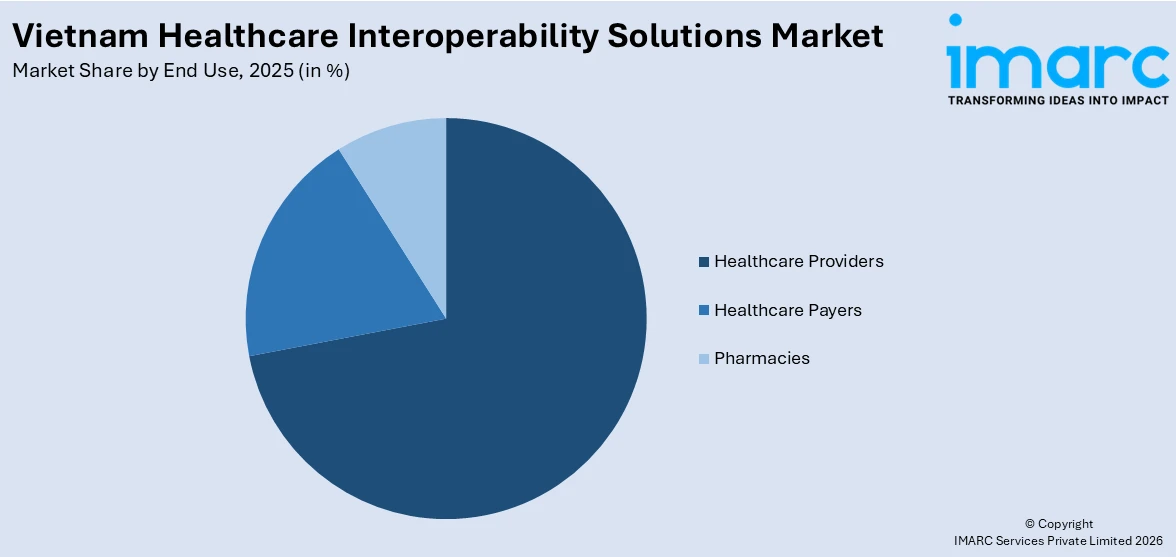
- By End Use: Healthcare providers represent the largest segment with 72.0% in 2025, as hospitals, clinics, and diagnostic centers prioritize interoperability investments to improve patient care coordination and operational efficiency.
- By Region: Southern Vietnam comprises the largest region with 47.5% share in 2025, driven by concentration of advanced healthcare facilities in Ho Chi Minh City and surrounding provinces with higher digital infrastructure investment.
- Key Players: Key players drive the Vietnam healthcare interoperability solutions market by developing integrated platforms, expanding service portfolios, and establishing strategic partnerships with healthcare providers to accelerate digital transformation nationwide.
To get more information on this market Request Sample
Vietnam's healthcare sector is undergoing significant digital transformation as government mandates require all healthcare providers to implement electronic health records by 2025. The Ministry of Health's Smart Health Information Technology Scheme establishes comprehensive interoperability standards between health information systems, electronic medical records, and electronic health records. In October 2024, the Vietnamese government launched electronic health record functionality in the national VNeID application, with over 32 Million accounts subsequently created for streamlined healthcare access.
Vietnam Healthcare Interoperability Solutions Market Trends:
Government-Mandated Electronic Health Record Implementation
Vietnam's government has established mandatory electronic health record adoption requirements for all healthcare facilities, accelerating demand for interoperability solutions. The Digital Transformation Scheme targets comprehensive electronic medical record implementation across public and private hospitals nationwide. Healthcare facilities are investing substantially in standardized health information systems to meet regulatory compliance deadlines while improving patient care coordination and clinical decision-making capabilities through seamless data exchange protocols.
Integration of Artificial Intelligence with Health Information Systems
Healthcare facilities across Vietnam are increasingly integrating artificial intelligence capabilities with their health information systems to enhance diagnostic accuracy and clinical workflows. Major hospitals in Ho Chi Minh City have pioneered AI-driven imaging diagnostics integrated with electronic medical records for improved treatment planning. As such, in April 2025, an AI-driven cervical cancer screening program launched in Ho Chi Minh City aims to screen 260,000 women over five years. Using TruScreen’s non-invasive AI device, the initiative supports early detection, expands access beyond lab-based testing, and aligns with Vietnam’s national screening goals. This technological convergence is driving demand for advanced interoperability solutions capable of supporting real-time data exchange between AI diagnostic tools and existing hospital information management platforms.
Expansion of Telemedicine Infrastructure Requiring Interoperable Platforms
Telemedicine adoption is accelerating across Vietnam, creating substantial demand for interoperability solutions enabling seamless patient data exchange between remote consultation platforms and hospital information systems. For example, in November 2025, the Taiwan Smart Healthcare Alliance expanded into Vietnam by introducing telemedicine solutions focused on teleconsultation, smart operating rooms, and remote care. Partnering with Vietnamese stakeholders, the initiative supports hospital digitization, addresses workforce shortages, and has generated over USD 1.13 Million in overseas orders. Government initiatives have connected over one thousand health centers through telemedicine networks, requiring standardized data sharing protocols. Healthcare providers are prioritizing investments in interoperable platforms that facilitate real-time access to patient records during teleconsultations while maintaining comprehensive documentation across distributed healthcare networks.
Market Outlook 2026-2034:
Vietnam's healthcare interoperability solutions market demonstrates strong growth potential throughout the forecast period, supported by sustained government investment in healthcare digitalization and increasing recognition of interoperability benefits among healthcare stakeholders. The market generated a revenue of USD 19.56 Million in 2025 and is projected to reach a revenue of USD 50.50 Million by 2034, growing at a compound annual growth rate of 11.12% from 2026-2034.
Vietnam Healthcare Interoperability Solutions Market Report Segmentation:
|
Segment Category |
Leading Segment |
Market Share |
|
Type |
Software Solutions |
65.3% |
|
Level |
Structural Interoperability |
42.0% |
|
Deployment |
Cloud-based |
59.8% |
|
End Use |
Healthcare Providers |
72.0% |
|
Region |
Southern Vietnam |
47.5% |
Type Insights:
- Software Solutions
- EHR Interoperability Solutions
- Lab System Interoperability Solutions
- Imaging System Interoperability Solutions
- Healthcare Information Exchange Interoperability Solutions
- Enterprise Interoperability Solutions
- Others
- Services
Software solutions dominate with a market share of 65.3% of the total Vietnam healthcare interoperability solutions market in 2025.
Software solutions have established market leadership in Vietnam's healthcare interoperability landscape, driven by comprehensive digital transformation mandates requiring healthcare facilities to implement electronic health records, hospital information systems, and laboratory information management platforms. The segment benefits from extensive adoption by both public and private healthcare facilities seeking integrated platforms capable of managing clinical documentation, patient registration, diagnostic results, and administrative functions through unified interfaces that enhance operational efficiency.
Leading Vietnamese technology companies have developed comprehensive healthcare software ecosystems specifically designed for local market requirements and regulatory compliance. FPT Software's hospital management platform is operational across over 400 hospitals and clinics throughout Vietnam, demonstrating strong market penetration for locally developed interoperability solutions. The continued expansion of software deployments across healthcare facilities is driven by government requirements for electronic documentation and increasing recognition of benefits including reduced administrative burden, improved care coordination, and enhanced decision support capabilities.
Level Insights:
- Foundational
- Structural
- Semantic
Structural interoperability leads with a share of 42.0% of the total Vietnam healthcare interoperability solutions market in 2025.
Structural interoperability has emerged as the dominant level in Vietnam's healthcare interoperability market, reflecting healthcare organizations' prioritization of standardized data formatting that enables consistent information exchange between disparate systems. This interoperability level defines the format and syntax of data exchange, ensuring that data transferred between systems maintains structural integrity and can be parsed correctly by receiving systems without requiring manual intervention or complex data transformation processes.
Vietnamese healthcare facilities have widely adopted international standards including HL7 and DICOM protocols for structural interoperability implementation, facilitating integration between hospital information systems, laboratory information systems, and radiology information systems. The Ministry of Health's eHealth Architecture Framework Version 2.0 establishes comprehensive guidelines for structural data exchange between healthcare information technology systems, promoting standardized approaches that reduce implementation complexity while ensuring compatibility across Vietnam's evolving healthcare technology ecosystem and enabling efficient patient care coordination.
Deployment Insights:
- Cloud-based
- On-premises
Cloud-based deployment holds the largest share with 59.8% of the total Vietnam healthcare interoperability solutions market in 2025.
Cloud-based deployment has achieved market leadership in Vietnam's healthcare interoperability solutions market, driven by healthcare organizations' preference for scalable platforms that reduce upfront infrastructure investments while enabling seamless remote accessibility for distributed healthcare networks. Cloud solutions offer significant advantages including rapid deployment, automatic software updates, reduced IT maintenance requirements, and enhanced data backup capabilities that appeal to healthcare facilities seeking efficient digital transformation pathways.
Vietnam's technological infrastructure increasingly supports cloud-based healthcare services, with mobile network coverage exceeding ninety-nine percent of households nationwide creating foundational connectivity for cloud platform accessibility. Leading technology providers including Viettel Solutions have developed cloud-based electronic medical record systems deployed across over 200 hospitals, demonstrating strong market acceptance for cloud deployment models. The continued expansion of cloud-based interoperability solutions is supported by government digital transformation initiatives emphasizing scalable technology platforms capable of serving healthcare facilities across diverse geographic regions throughout Vietnam.
End Use Insights:
Access the comprehensive market breakdown Request Sample
- Healthcare Providers
- Hospitals and Clinics
- Long-Term Care Centers
- Diagnostic and Imaging Centers
- Others
- Healthcare Payers
- Pharmacies
Healthcare providers represent the leading segment with a 72.0% share of the total Vietnam healthcare interoperability solutions market in 2025.
Healthcare providers dominate Vietnam's healthcare interoperability solutions market, encompassing hospitals, clinics, diagnostic centers, and long-term care facilities that prioritize interoperability investments to improve patient care coordination, clinical workflows, and operational efficiency. Vietnam's healthcare system includes nearly 1,645 public hospitals and over 384 private hospitals as of November 2025, creating substantial demand for interoperability solutions enabling seamless information exchange across these distributed care delivery networks serving nationwide populations.
Major healthcare facilities are accelerating interoperability investments to meet government digitalization mandates while enhancing care quality. Bach Mai Hospital, among Vietnam's largest public hospitals handling approximately 7,000 to 10,000 outpatients daily, launched its transition to electronic medical records in November 2024, demonstrating commitment to interoperability adoption among leading healthcare providers. The continued expansion of healthcare provider networks and increasing patient volumes are driving sustained demand for interoperability solutions that enable efficient clinical documentation, care coordination, and health information exchange across Vietnam's healthcare ecosystem.
Regional Insights:
- Northern Vietnam
- Central Vietnam
- Southern Vietnam
Southern Vietnam exhibits a clear dominance with a 47.5% share of the total Vietnam healthcare interoperability solutions market in 2025.
Southern Vietnam has established market leadership in healthcare interoperability solutions, driven by the concentration of advanced healthcare facilities, superior digital infrastructure, and substantial technology investments in Ho Chi Minh City and surrounding provinces. The region benefits from higher internet penetration rates, greater government support for health technology adoption, and presence of leading technology companies developing innovative healthcare solutions tailored to local market requirements and clinical workflows.
Ho Chi Minh City's healthcare sector leads national digital transformation efforts, with hospitals implementing artificial intelligence-driven diagnostics, advanced telemedicine networks, and comprehensive electronic medical record systems. Nhan Dan 115 Hospital became Vietnam's first facility to implement AI RAPID software for thrombolysis interventions, while Ho Chi Minh City Oncology Hospital has integrated AI-assisted radiation therapy planning, demonstrating the region's leadership in advanced healthcare technology adoption requiring sophisticated interoperability infrastructure.
Market Dynamics:
Growth Drivers:
Why is the Vietnam Healthcare Interoperability Solutions Market Growing?
Government Digital Transformation Mandates and Healthcare Digitalization Initiatives
Vietnam's government has implemented comprehensive digital transformation mandates specifically targeting healthcare sector modernization, creating strong regulatory drivers for interoperability solution adoption across public and private healthcare facilities nationwide. For instance, Vietnam joined HealthAI’s Global Regulatory Network as a Pioneer Country, strengthening its commitment to responsible AI in healthcare. The partnership supports safe, ethical AI deployment, regulatory capacity building, global knowledge exchange, and improved patient safety while advancing Vietnam’s digital health transformation and international collaboration. Government initiatives require all healthcare facilities to implement electronic medical records by regulatory deadlines, creating mandatory demand for interoperability solutions. The Digital Transformation in Health Care Scheme targets paperless electronic medical record adoption across hospitals nationwide, driving sustained investment in interoperable health information systems that enable compliant clinical documentation and seamless data exchange.
Rising Healthcare Demand and Infrastructure Expansion Requirements
Vietnam's healthcare sector faces mounting service demand driven by population growth, demographic transitions, and rising chronic disease prevalence requiring expanded healthcare infrastructure and improved care coordination capabilities. Healthcare expenditure continues increasing as Vietnam's expanding middle class demands higher quality medical services while government programs extend health insurance coverage toward universal access objectives. Vietnam’s average healthcare spending is about USD 270 per person per year, or roughly VND 7.3 million, with most expenses going toward medicines. The Ministry of Health projects this figure will increase to around USD 328 per capita over the next three years. Major hospitals in urban centers routinely operate beyond capacity, processing millions of outpatient visits annually while requiring interoperable systems for patient registration, clinical documentation, laboratory results management, and care coordination across departments and referral networks serving increasingly complex healthcare needs.
Integration of Emerging Technologies in Healthcare Service Delivery
Healthcare facilities across Vietnam are increasingly adopting emerging technologies including artificial intelligence, telemedicine platforms, and Internet of Medical Things devices that require sophisticated interoperability infrastructure for effective implementation and clinical integration. The expansion of telemedicine services connecting over one thousand health centers nationwide creates substantial demand for interoperability solutions enabling real-time patient data exchange during remote consultations. AI-powered diagnostic tools being deployed in major hospitals require seamless integration with electronic medical records and imaging systems to deliver clinical value. The convergence of multiple healthcare technologies necessitates advanced interoperability platforms capable of facilitating information exchange between diverse systems including hospital information systems, laboratory information systems, radiology information systems, and clinical decision support tools to support comprehensive patient care delivery.
Market Restraints:
What Challenges the Vietnam Healthcare Interoperability Solutions Market is Facing?
Digital Infrastructure Gaps in Rural Healthcare Facilities
Vietnam's rural healthcare facilities face significant digital infrastructure limitations that constrain interoperability solution adoption, with connectivity challenges affecting healthcare centers in remote regions. The digital divide between urban and rural areas creates barriers to implementing comprehensive health information exchange systems requiring reliable network connectivity and adequate technical infrastructure for effective clinical data sharing and system integration across distributed healthcare networks.
Limited Data Privacy and Cybersecurity Framework Development
Rapid healthcare digitalization has elevated concerns regarding data privacy and cybersecurity protection for sensitive patient health information across Vietnam's healthcare sector. The existing regulatory framework for healthcare data protection remains under development, creating implementation uncertainties for organizations deploying interoperability solutions. Healthcare facilities must navigate evolving compliance requirements while protecting patient data across interconnected systems exchanging clinical information between multiple organizational boundaries.
Healthcare Workforce Digital Literacy and Change Management Challenges
Healthcare organizations face challenges related to workforce digital literacy and change management when implementing interoperability solutions requiring significant modifications to established clinical workflows. Medical staff adaptation to new health information systems requires comprehensive training programs and sustained organizational commitment. The transition from paper-based documentation to electronic systems demands substantial investment in user education and ongoing technical support to ensure successful adoption across healthcare facilities.
Competitive Landscape:
Vietnam's healthcare interoperability solutions market features active participation from domestic technology companies and international vendors offering integrated platforms for healthcare digital transformation. Leading Vietnamese corporations including telecommunications and technology conglomerates have established substantial market presence through comprehensive healthcare software ecosystems addressing local regulatory requirements and clinical workflows. The competitive landscape emphasizes partnerships between technology providers and healthcare organizations to accelerate digital transformation initiatives while ensuring implementation success and regulatory compliance.
Recent Developments:
- In January 2026, Vietnam launched the Responsible Healthcare AI Solutions Pioneer Network (V-RHAIN) to promote safe, governed deployment of medical AI. Led by the Ministry of Health, the network connects regulators, hospitals, academia, businesses, and global partners to pilot AI solutions, ensure interoperability, strengthen data governance, and expand responsible healthcare AI nationwide.
- In February 2025, McCrae Hospitals and Orion Health expanded their presence in Vietnam through partnerships with FV Hospital, marking a key step in deploying next-generation hospital information systems. The collaboration includes launching Orion Health’s Virtuoso Patient Portal to improve digital patient journeys, clinician efficiency, and healthcare delivery across Vietnam and Southeast Asia.
Vietnam Healthcare Interoperability Solutions Market Report Coverage:
|
Report Features |
Details |
|
Base Year of the Analysis |
2025 |
|
Historical Period |
2020-2025 |
|
Forecast Period |
2026-2034 |
|
Units |
Million USD |
|
Scope of the Report |
Exploration of Historical Trends and Market Outlook, Industry Catalysts and Challenges, Segment-Wise Historical and Future Market Assessment:
|
|
Types Covered |
|
|
Levels Covered |
Foundational, Structural, Semantic |
|
Deployments Covered |
Cloud-based, On-premises |
|
End Uses Covered |
|
|
Regions Covered |
Northern Vietnam, Central Vietnam, Southern Vietnam |
|
Customization Scope |
10% Free Customization |
|
Post-Sale Analyst Support |
10-12 Weeks |
|
Delivery Format |
PDF and Excel through Email (We can also provide the editable version of the report in PPT/Word format on special request) |
Frequently Asked Questions About the Vietnam Healthcare Interoperability Solutions Market Report
The Vietnam healthcare interoperability solutions market size was valued at USD 19.56 Million in 2025.
The Vietnam healthcare interoperability solutions market is expected to grow at a compound annual growth rate of 11.12% from 2026-2034 to reach USD 50.50 Million by 2034.
Software solutions dominated the market with a share of 65.3%, driven by comprehensive digital transformation mandates requiring healthcare facilities to implement electronic health records and hospital information systems.
Key factors driving the Vietnam healthcare interoperability solutions market include government digital transformation mandates, rising healthcare infrastructure investments, expanding telemedicine adoption, and increasing integration of artificial intelligence in healthcare delivery.
Major challenges include digital infrastructure gaps in rural healthcare facilities, limited data privacy and cybersecurity frameworks, healthcare workforce digital literacy limitations, high implementation costs, and interoperability standardization complexities across diverse healthcare systems.
Need more help?
- Speak to our experienced analysts for insights on the current market scenarios.
- Include additional segments and countries to customize the report as per your requirement.
- Gain an unparalleled competitive advantage in your domain by understanding how to utilize the report and positively impacting your operations and revenue.
- For further assistance, please connect with our analysts.
 Request Customization
 Speak to an Analyst
 Request Brochure
 Inquire Before Buying
Benefits of Customization
- Personalize this research
- Triangulate with your data
- Get data as per your format and definition
- Gain a deeper dive into a specific application, geography, customer, or competitor
- Any level of personalization
Get in Touch With Us
UNITED STATES
Phone: +1-201-971-6302
INDIA
Phone: +91-120-433-0800
UNITED KINGDOM
Phone: +44-753-714-6104
Email: [email protected]
Client Testimonials




.webp)




.webp)













Related Reports

Choose your plan
*Please note that the prices mentioned below are starting prices for each bundle type. Kindly contact our team for further details.*
Single User License
- 1 User License, Access on 2 Devices
- PDF Report + Excel Dataset (Password Protected)
- Lifetime Access
- No Printing Rights
- 10% Free Report Customization
- 10–12 Weeks of Analyst Support
Five User License
- Access for 5 Users, 2 Devices per User
- PDF Report + Excel Dataset (Password Protected)
- Lifetime Access
- Dedicated Account Manager
- 12–14 Weeks of Analyst Support
- No Printing Rights
- 15% Free Report Customization
- 25% Discount on Your Next Purchase
Corporate User License
- Unlimited User Access (Within Your Organization)
- PDF Report + Excel Dataset
- Lifetime Access
- Dedicated Account Manager
- 14–20 Weeks of Analyst Support
- No Printing Rights
- 20% Free Report Customization
- 30% Discount on Your Next Purchase
Essential Insights
What's included:
3 reports
- Lifetime Access
- PDF Reports
- Excel Datasets
- 2 Weeks of Free Analyst Support
- 2 User Licenses
- Access on 2 Devices
- Printing Rights
- Complimentary PowerPoint (PPT) Version
- Complimentary License Upgrade
Professional Access
What's included:
5 reports
- Lifetime Access
- PDF Reports
- Excel Datasets
- 8 Weeks of Free Analyst Support
- 2 User Licenses
- Access on 2 Devices
- Printing Rights
- Complimentary PowerPoint (PPT) Version
- Complimentary License Upgrade
Business Advantage
What's included:
8 reports
- Lifetime Access
- PDF Reports
- Excel Datasets
- 14 Weeks of Free Analyst Support
- 2 User Licenses
- Access on 2 Devices
- Printing Rights
- Complimentary PowerPoint (PPT) Version
- Complimentary License Upgrade
Enterprise Intelligence
What's included:
10 reports
- Lifetime Access
- PDF Reports
- Excel Datasets
- 20 Weeks of Free Analyst Support
- 2 User Licenses
- Access on 2 Devices
- Printing Rights
- Complimentary PowerPoint (PPT) Version
- Complimentary License Upgrade