
Vietnam Healthcare Predictive Analytics Market Size, Share, Trends and Forecast by Product, Deployment Mode, Application, End User, and Region, 2026-2034
Vietnam Healthcare Predictive Analytics Market Summary:
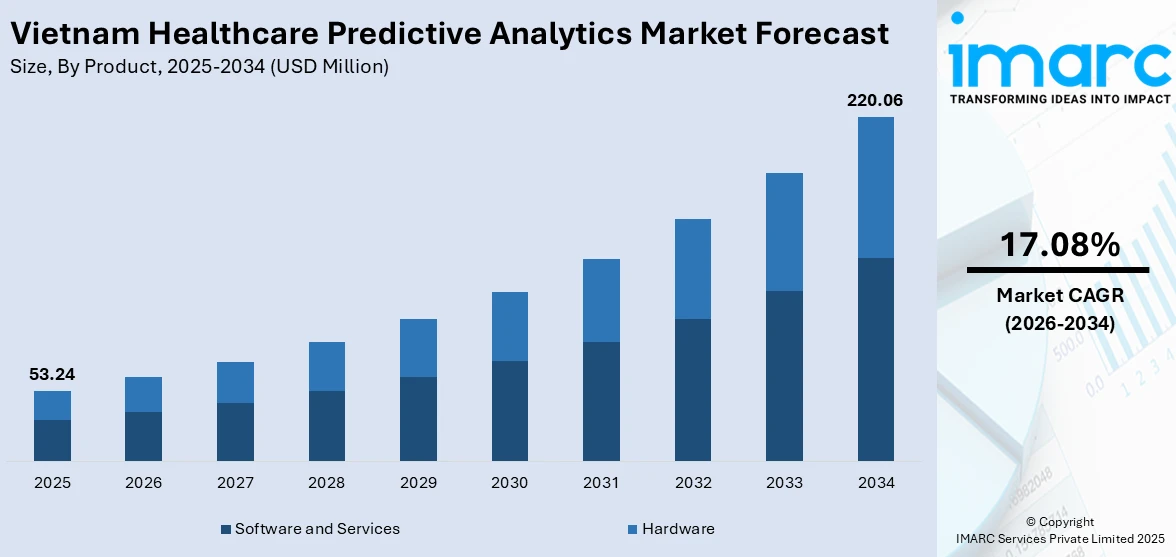
The Vietnam healthcare predictive analytics market size was valued at USD 53.24 Million in 2025 and is projected to reach USD 220.06 Million by 2034, growing at a compound annual growth rate of 17.08% from 2026-2034.
The Vietnam healthcare predictive analytics market is experiencing robust expansion as the country accelerates its healthcare digital transformation agenda and integrates advanced data-driven technologies into clinical and administrative workflows. Increasing government investments in electronic health record systems, rising adoption of cloud-based health information platforms, and the growing prevalence of non-communicable diseases are collectively fueling demand for predictive analytics solutions. Strategic partnerships between domestic technology providers and international healthcare organizations, combined with expanding telemedicine infrastructure and AI-powered diagnostic tools, are further strengthening the Vietnam healthcare predictive analytics market share.
Key Takeaways and Insights:
- By Product: Software and services dominate the market with a share of 68.5% in 2025, driven by the rising integration of analytics platforms with electronic health record systems across Vietnamese hospitals.
- By Deployment Mode: Cloud-based leads the market with a share of 61.7% in 2025, supported by national digital infrastructure investments and growing preference for scalable, remotely accessible healthcare platforms.
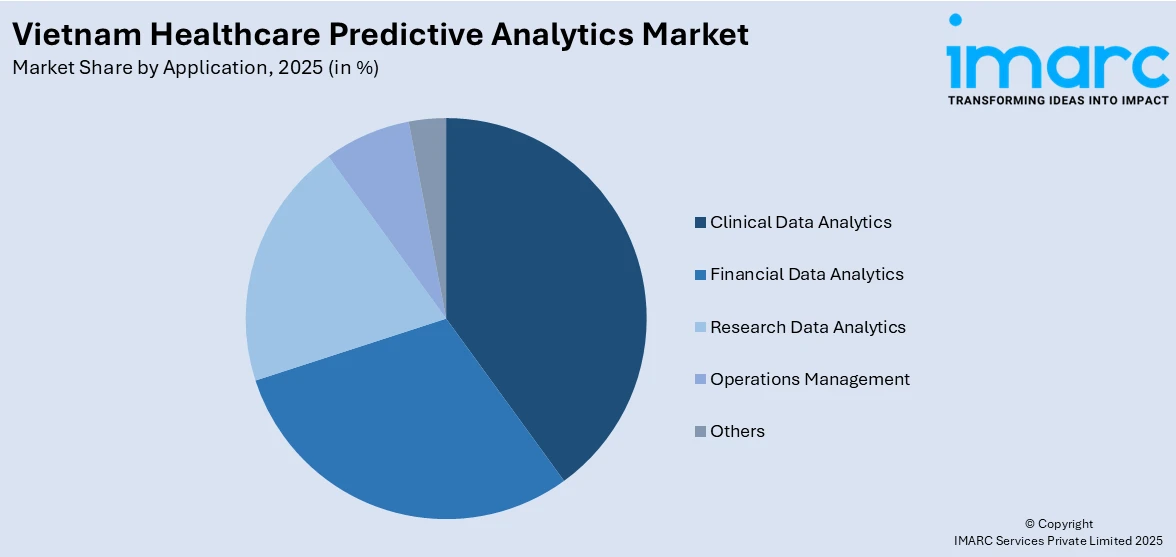
- By Application: Clinical data analytics represents the largest segment with a market share of 36.9% in 2025, reflecting the increasing demand for AI-assisted diagnostics and patient outcome prediction tools.
- By End User: Healthcare provider leads the market with a share of 57.4% in 2025, owing to the expanding hospital networks and the growing adoption of data analytics for clinical decision-making.
- By Region: Southern Vietnam dominated the market with approximately 40.8% revenue share in 2025, driven by the concentration of major healthcare facilities, technology hubs, and higher healthcare expenditure in Ho Chi Minh City.
- Key Players: The Vietnam healthcare predictive analytics market features a dynamic competitive landscape comprising domestic technology companies, international healthcare IT firms, and emerging health-tech startups, all pursuing innovation through AI integration, strategic partnerships, and cloud-based platform development.
To get more information on this market Request Sample
The Vietnam healthcare predictive analytics market is positioned at the intersection of the country’s ambitious digital health transformation and the rising demand for data-driven clinical decision-making. The government’s National Digital Transformation Program has allocated VND 30 trillion (approximately USD 1.26 billion) for healthcare digitalization, with a mandate for comprehensive electronic health records by 2025. This investment is laying the data infrastructure essential for predictive analytics adoption. In July 2025, the Vietnamese Ministry of Health launched the “AI Opportunities for Healthcare Workers” initiative, aiming to train at least 15,000 healthcare professionals between 2025 and 2026 in artificial intelligence applications, equipping the medical workforce with the skills necessary to leverage predictive analytics tools effectively. The convergence of growing patient data volumes, expanding hospital networks handling over 170 million outpatient visits annually, and increasing non-communicable disease burden is accelerating market momentum.
Vietnam Healthcare Predictive Analytics Market Trends:
Integration of AI-Powered Diagnostics into Clinical Workflows
Vietnamese healthcare facilities are increasingly embedding artificial intelligence algorithms into diagnostic pathways, enabling predictive models that identify disease risk patterns before clinical symptoms manifest. This trend is especially prominent in medical imaging and pathology, where machine learning enhances diagnostic accuracy and reduces physician workload. For instance, in February 2023, VinBrain’s DrAid platform, trained on over 2.5 million medical images, has been deployed across more than 100 hospitals in Vietnam, processing AI-assisted diagnostics for over 120,000 patients monthly. This integration reflects a broader shift toward predictive and preventive care delivery models that are reshaping the Vietnam healthcare predictive analytics market growth.
Nationwide Expansion of Electronic Health Record Infrastructure
The Vietnamese government is accelerating the digitization of patient data through a nationwide electronic health record rollout, creating the foundational data ecosystem required for predictive analytics deployment. For instance, in November 2024, Bach Mai Hospital, one of the largest public hospitals in Hanoi, officially launched its transition to electronic medical records, handling records for approximately 7,000 to 10,000 outpatients daily. Over 32 million health records have been digitized nationally, with 14 million integrated into the VNeID electronic identification application. This expanding digital data infrastructure is enabling healthcare providers to harness historical patient information for predictive modeling and personalized treatment planning.
Cloud-Based Healthcare Platform Adoption Driven by Government Digital Strategy
Vietnam’s healthcare sector is increasingly adopting cloud-based platforms as part of the government’s broader push for smart healthcare, aiming to enhance digital integration, data accessibility, and efficiency across medical services. Cloud infrastructure enables hospitals and clinics to access scalable predictive analytics tools without heavy on-premise investment, particularly benefiting resource-constrained facilities. Vietnam currently has 29 data center facilities with approximately 51 megawatts of operational capacity and additional capacity under construction, while approximately 11,000 5G base stations are operational across the country. These infrastructure advancements are enabling real-time data processing, edge computing, and hybrid hosting solutions that are essential for deploying predictive analytics at scale across the healthcare system.
Market Outlook 2026-2034:
The Vietnam healthcare predictive analytics market is poised for sustained expansion as the country’s digital health ecosystem matures and AI adoption intensifies across both public and private healthcare institutions. The convergence of comprehensive electronic health record systems, cloud computing infrastructure, and government-backed AI training initiatives is creating a robust foundation for predictive analytics deployment at scale. Increasing international partnerships and private sector investments in health technology are further broadening access to advanced analytical tools, particularly in clinical decision support and population health management. The market generated a revenue of USD 53.24 Million in 2025 and is projected to reach a revenue of USD 220.06 Million by 2034, growing at a compound annual growth rate of 17.08% from 2026-2034.
Vietnam Healthcare Predictive Analytics Market Report Segmentation:
|
Segment Category |
Leading Segment |
Market Share |
|
Product |
Software and Services |
68.5% |
|
Deployment Mode |
Cloud-based |
61.7% |
|
Application |
Clinical Data Analytics |
36.9% |
|
End User |
Healthcare Provider |
57.4% |
|
Region |
Southern Vietnam |
40.8% |
Product Insights:
- Hardware
- Software and Services
Software and services dominate the market share of 68.5% of the total Vietnam healthcare predictive analytics market in 2025.
The software and services segment dominates Vietnam’s healthcare predictive analytics market, reflecting the sector’s focus on comprehensive analytics platforms, data management solutions, and consulting support rather than standalone hardware. Hospitals are increasingly implementing integrated software systems that combine electronic health records with predictive modeling, helping clinicians identify high-risk patients and improve care pathways. Strategic government initiatives promoting smart health IT and AI integration are further encouraging adoption. These developments are driving the deployment of advanced analytics tools across both clinical and administrative operations, enhancing efficiency and informed decision-making throughout the healthcare system.
The demand for managed analytics services is growing as healthcare providers seek actionable insights without developing in-house technical teams. Collaboration between hospitals and technology providers allows institutions to fully leverage predictive analytics capabilities, improving patient care and operational efficiency. Industry forums and summits are fostering partnerships between health-tech startups and hospital systems, supporting the deployment of digital infrastructure. This expanding ecosystem enables both major urban hospitals and smaller provincial facilities to implement analytics-driven solutions effectively, bridging gaps between data availability, expertise, and practical application in clinical and administrative contexts.
Deployment Mode Insights:
- On-premises
- Cloud-based
Cloud-based leads with a share of 61.7% of the total Vietnam healthcare predictive analytics market in 2025.
Cloud-based solutions have become the leading approach for healthcare predictive analytics in Vietnam, supported by government initiatives promoting digitalization and the inherent benefits of cloud infrastructure, including scalability, cost-effectiveness, and accessibility. Cloud platforms allow smaller clinics and rural facilities to access advanced analytics tools without heavy investment in on-premise systems. By enabling secure, centralized data management, cloud deployment helps hospitals and healthcare providers implement predictive models efficiently, improving patient care, operational planning, and resource allocation across the healthcare ecosystem.
The expansion of data center capacity and advanced network infrastructure is enhancing the deployment of cloud-based healthcare analytics. Partnerships between technology providers and healthcare organizations demonstrate how cloud platforms facilitate secure data sharing, AI model implementation, and real-time predictive insights. Strengthened digital infrastructure enables healthcare institutions of all sizes to leverage sophisticated analytics capabilities, supporting timely decision-making, patient risk assessment, and clinical efficiency, and establishing cloud solutions as a critical backbone for predictive healthcare analytics in Vietnam.
Application Insights:
Access the comprehensive market breakdown Request Sample
- Clinical Data Analytics
- Financial Data Analytics
- Research Data Analytics
- Operations Management
- Others
Clinical data analytics dominate with a market share of 36.9% of the total Vietnam healthcare predictive analytics market in 2025.
Clinical data analytics is the primary application in Vietnam’s healthcare predictive analytics market, reflecting a focus on improving diagnostic accuracy, patient safety, and treatment outcomes through data-driven decision support. The growing availability of clinical information from electronic medical records, imaging systems, and laboratory databases is enabling predictive modeling for disease detection and optimized care. Platforms providing open-source medical imaging datasets exemplify how clinical analytics is being institutionalized, helping hospitals and healthcare providers implement AI-driven insights to enhance clinical workflows and support more effective, proactive patient management.
The increasing prevalence of chronic diseases in Vietnam is driving greater adoption of clinical predictive analytics. Healthcare providers are turning to predictive models to identify at-risk patients early, support proactive interventions, and improve long-term disease management. Industry events and collaborations are fostering knowledge exchange on integrating AI and big data into medical diagnosis and treatment, reinforcing the role of clinical analytics in enhancing healthcare quality. This trend is strengthening predictive analytics adoption across both urban hospitals and regional healthcare facilities.
End User Insights:
- Healthcare Payer
- Healthcare Provider
- Others
The healthcare provider represents the highest revenue with a 57.4% share of the total Vietnam healthcare predictive analytics market in 2025.
Healthcare providers remain the leading end-user segment in Vietnam’s predictive analytics market, driven by the need to efficiently manage patient care while improving clinical outcomes. Hospitals are adopting analytics solutions for patient flow optimization, risk assessment, and personalized treatment planning. Government initiatives promoting the implementation of electronic medical records are accelerating adoption, enabling providers to leverage integrated data systems for more informed decision-making. Both large public hospitals and private healthcare facilities are increasingly prioritizing digital tools and predictive analytics to enhance operational efficiency, patient safety, and overall quality of care, reinforcing their dominant role in the market.
Private healthcare providers are at the forefront of predictive analytics adoption, using proprietary digital platforms to capture real-world data and support data-driven healthcare improvements. By integrating AI diagnostics and personalized medicine into clinical workflows, these systems offer reference models for both private and public providers. This focus on innovation, combined with broader hospital modernization efforts, strengthens the segment’s leadership in the market. The dual momentum of private sector digital transformation and public hospital analytics adoption ensures that healthcare providers remain central to predictive analytics deployment, driving improved efficiency, patient outcomes, and informed clinical decision-making across Vietnam.
Regional Insights:
- Northern Vietnam
- Central Vietnam
- Southern Vietnam
Southern Vietnam exhibits a clear dominance with a 40.8% share of the total Vietnam healthcare predictive analytics market in 2025.
Southern Vietnam leads the healthcare predictive analytics market, anchored by Ho Chi Minh City’s position as the country’s largest economic center and healthcare technology hub. The region benefits from a high concentration of major public and private hospitals, research institutions, and technology startups that collectively drive demand for advanced analytics solutions. For instance, the planned MedArmor AI Hospital in the 700-hectare Duc Hoa 3 Industrial Park in Long An province near Ho Chi Minh City, which will leverage AI to collect and analyze patient health data for preventive screenings and personalized medical guidance, exemplifies the region’s leadership in healthcare innovation.
The region’s strong technology ecosystem, including the presence of leading health-tech companies and international technology partnerships, is further accelerating predictive analytics adoption. Southern Vietnam’s higher healthcare expenditure, larger patient populations, and greater density of healthcare facilities create a substantial data environment conducive to analytics deployment. The Vietnam Healthcare Summit 2025, held at JW Marriott Hotel in Ho Chi Minh City in October 2025, highlighted the region’s role as a platform for healthcare innovation dialogue, bringing together over 200 stakeholders to discuss digital transformation and emerging financial models for scaling health technology across the country.
Market Dynamics:
Growth Drivers:
Why is the Vietnam Healthcare Predictive Analytics Market Growing?
Government-Led Digital Health Transformation Initiatives
The Vietnamese government has positioned healthcare digitalization as a national priority through comprehensive policy frameworks and substantial financial commitments that are directly stimulating predictive analytics adoption. The National Digital Transformation Program targets smart healthcare implementation, encompassing electronic health records, AI-powered diagnostics, and data-driven clinical decision support systems. Resolution 57-NQ/TW identifies science, technology, and digital transformation as breakthrough priorities for national development, while Decision 5316/QD-BYT establishes a strategic roadmap for digital transformation in healthcare through 2030. The government has prioritized healthcare digitalization, investing in infrastructure for electronic health records, telemedicine, and AI integration. Dedicated funding initiatives support projects in AI, big data, cloud computing, and digital systems, enabling the deployment of predictive healthcare analytics across Vietnam and strengthening the nation’s capacity for data-driven clinical decision-making and improved patient care.
Rising Non-Communicable Disease Burden and Aging Population
Vietnam is experiencing a significant epidemiological transition characterized by a growing burden of chronic and non-communicable diseases, creating urgent demand for predictive analytics tools that enable early detection, risk stratification, and proactive disease management. Approximately 12.5 million adults in Vietnam suffer from hypertension, and 3.5 million live with diabetes, according to the Ministry of Health, necessitating continuous monitoring and data-driven intervention strategies. The country’s population of 102,177,431, combined with rapidly increasing life expectancy and an aging demographic profile, is amplifying pressure on the healthcare system to deliver more efficient, personalized care. Predictive analytics solutions address this challenge by enabling healthcare providers to identify high-risk patients, forecast disease progression, and optimize resource allocation, making them essential tools for managing the country’s evolving disease landscape.
Expanding Healthcare Infrastructure and Technology Ecosystem
The rapid growth of Vietnam’s healthcare infrastructure, coupled with an expanding technology ecosystem, is creating fertile ground for predictive analytics adoption. Vietnam currently operates 1,645 hospitals generating massive volumes of clinical data, while Vietnam’s healthcare market is experiencing rapid growth, supported by strong investment and the expansion of hospital networks and specialty services. This development is complemented by a dynamic health-tech startup ecosystem, with companies creating telehealth platforms, AI-powered diagnostic tools, and data analytics solutions. Government initiatives, such as programs to train healthcare professionals in AI applications, are strengthening the workforce and enabling effective use of advanced digital tools. Together, infrastructure growth, innovation in health technology, and targeted workforce development are driving the adoption of predictive analytics across clinical settings, enhancing patient care and operational efficiency throughout the healthcare system.
Market Restraints:
What Challenges the Vietnam Healthcare Predictive Analytics Market is Facing?
Data Quality Limitations and Digital Infrastructure Disparities
Many healthcare facilities in Vietnam, especially in rural and provincial areas, still rely on paper records or inconsistent digital systems. Limited connectivity and uneven data management create challenges for data quality and accessibility, restricting the effectiveness of predictive analytics. Addressing this requires ongoing investment in infrastructure and standardized digital systems across the healthcare sector.
Shortage of Skilled Healthcare IT Workforce
The effective deployment and management of predictive analytics systems requires specialized expertise in data science, machine learning, and healthcare informatics that remains scarce in Vietnam. While government training initiatives are underway, the current gap between available technical talent and the growing demand from healthcare institutions constrains the pace of analytics adoption. This workforce limitation is particularly acute in smaller hospitals and provincial healthcare facilities.
Evolving Data Privacy and Cybersecurity Frameworks
The rapid digitization of healthcare data in Vietnam has outpaced the development of comprehensive data privacy and cybersecurity regulations. Healthcare institutions face uncertainty regarding data governance requirements for predictive analytics applications, particularly concerning patient consent, secondary data use, and cross-institutional data sharing. This regulatory ambiguity creates hesitancy among healthcare providers considering predictive analytics investments.
Competitive Landscape:
The Vietnam healthcare predictive analytics market features a dynamic competitive environment characterized by the convergence of domestic technology companies, international healthcare IT providers, and emerging health-tech startups. Market participants are differentiating through AI-powered platform development, strategic partnerships with hospital networks, and cloud-based service delivery models. Competition is intensifying as both local and international players invest in research and development, expand product portfolios, and pursue collaborations with government agencies and academic institutions. The market structure is evolving from fragmented early-stage competition toward more structured partnerships, with players focusing on interoperability, data integration capabilities, and comprehensive analytics solutions that address the specific needs of Vietnam’s healthcare system.
Recent Developments:
- January 2026: The Vietnam Ministry of Health launched the Vietnam Responsible Health AI Network at a workshop organized by the National Health Information Center. Permanent Deputy Minister Vu Manh Ha noted that the initiative aligned with the AI Law and Resolution 57, promoting responsible AI use and advancing digital health in the country.
- October 2024: SCOR, in partnership with Insmart JSC, launched a predictive engine to enhance life insurance operations in Vietnam. Developed through SCOR Digital Solutions and its BeeTech predictive platform, the tool streamlined processes, improved risk assessment, and advanced data-driven decision-making in the sector.
Vietnam Healthcare Predictive Analytics Market Report Coverage:
|
Report Features |
Details |
|
Base Year of the Analysis |
2025 |
|
Historical Period |
2020-2025 |
|
Forecast Period |
2026-2034 |
|
Units |
Million USD |
|
Scope of the Report |
Exploration of Historical Trends and Market Outlook, Industry Catalysts and Challenges, Segment-Wise Historical and Future Market Assessment:
|
|
Products Covered |
Hardware, Software and Services |
|
Deployment Modes Covered |
On-premises, Cloud-based |
|
Applications Covered |
Clinical Data Analytics, Financial Data Analytics, Research Data Analytics, Operations Management, Others |
|
End Users Covered |
Healthcare Payer, Healthcare Provider, Others |
|
Regions Covered |
Northern Vietnam, Central Vietnam, Southern Vietnam |
|
Customization Scope |
10% Free Customization |
|
Post-Sale Analyst Support |
10-12 Weeks |
|
Delivery Format |
PDF and Excel through Email (We can also provide the editable version of the report in PPT/Word format on special request) |
Frequently Asked Questions About the Vietnam Healthcare Predictive Analytics Market Report
The Vietnam healthcare predictive analytics market size was valued at USD 53.24 Million in 2025.
The Vietnam healthcare predictive analytics market is expected to grow at a compound annual growth rate of 17.08% from 2026-2034 to reach USD 220.06 Million by 2034.
Software and services, representing the largest revenue share of 68.5% in 2025, remains the dominant product segment in Vietnam’s healthcare predictive analytics market, driven by increasing adoption of integrated analytics platforms, managed services, and AI-powered clinical decision support solutions across public and private healthcare institutions.
Key factors driving the Vietnam healthcare predictive analytics market include government-led digital health transformation initiatives, rising non-communicable disease burden requiring data-driven clinical interventions, expanding healthcare infrastructure, growing cloud computing adoption, and increasing international technology partnerships that accelerate AI and analytics deployment across the healthcare system.
Major challenges include data quality limitations and digital infrastructure disparities between urban and rural healthcare facilities, shortage of skilled healthcare IT professionals, evolving data privacy and cybersecurity regulatory frameworks, high implementation costs for smaller institutions, and interoperability issues across diverse health information systems.
Need more help?
- Speak to our experienced analysts for insights on the current market scenarios.
- Include additional segments and countries to customize the report as per your requirement.
- Gain an unparalleled competitive advantage in your domain by understanding how to utilize the report and positively impacting your operations and revenue.
- For further assistance, please connect with our analysts.
 Request Customization
 Speak to an Analyst
 Request Brochure
 Inquire Before Buying
Benefits of Customization
- Personalize this research
- Triangulate with your data
- Get data as per your format and definition
- Gain a deeper dive into a specific application, geography, customer, or competitor
- Any level of personalization
Get in Touch With Us
UNITED STATES
Phone: +1-201-971-6302
INDIA
Phone: +91-120-433-0800
UNITED KINGDOM
Phone: +44-753-714-6104
Email: [email protected]
Client Testimonials




.webp)




.webp)













Related Reports

Choose your plan
*Please note that the prices mentioned below are starting prices for each bundle type. Kindly contact our team for further details.*
Single User License
- 1 User License, Access on 2 Devices
- PDF Report + Excel Dataset (Password Protected)
- Lifetime Access
- No Printing Rights
- 10% Free Report Customization
- 10–12 Weeks of Analyst Support
Five User License
- Access for 5 Users, 2 Devices per User
- PDF Report + Excel Dataset (Password Protected)
- Lifetime Access
- Dedicated Account Manager
- 12–14 Weeks of Analyst Support
- No Printing Rights
- 15% Free Report Customization
- 25% Discount on Your Next Purchase
Corporate User License
- Unlimited User Access (Within Your Organization)
- PDF Report + Excel Dataset
- Lifetime Access
- Dedicated Account Manager
- 14–20 Weeks of Analyst Support
- No Printing Rights
- 20% Free Report Customization
- 30% Discount on Your Next Purchase
Essential Insights
What's included:
3 reports
- Lifetime Access
- PDF Reports
- Excel Datasets
- 2 Weeks of Free Analyst Support
- 2 User Licenses
- Access on 2 Devices
- Printing Rights
- Complimentary PowerPoint (PPT) Version
- Complimentary License Upgrade
Professional Access
What's included:
5 reports
- Lifetime Access
- PDF Reports
- Excel Datasets
- 8 Weeks of Free Analyst Support
- 2 User Licenses
- Access on 2 Devices
- Printing Rights
- Complimentary PowerPoint (PPT) Version
- Complimentary License Upgrade
Business Advantage
What's included:
8 reports
- Lifetime Access
- PDF Reports
- Excel Datasets
- 14 Weeks of Free Analyst Support
- 2 User Licenses
- Access on 2 Devices
- Printing Rights
- Complimentary PowerPoint (PPT) Version
- Complimentary License Upgrade
Enterprise Intelligence
What's included:
10 reports
- Lifetime Access
- PDF Reports
- Excel Datasets
- 20 Weeks of Free Analyst Support
- 2 User Licenses
- Access on 2 Devices
- Printing Rights
- Complimentary PowerPoint (PPT) Version
- Complimentary License Upgrade