
Algae Oil Market Size, Share, Trends and Forecast by Grade, Distribution Channel, Application, and Region, 2026-2034
Algae Oil Market Size, Share, Trends & Forecast (2026-2034)
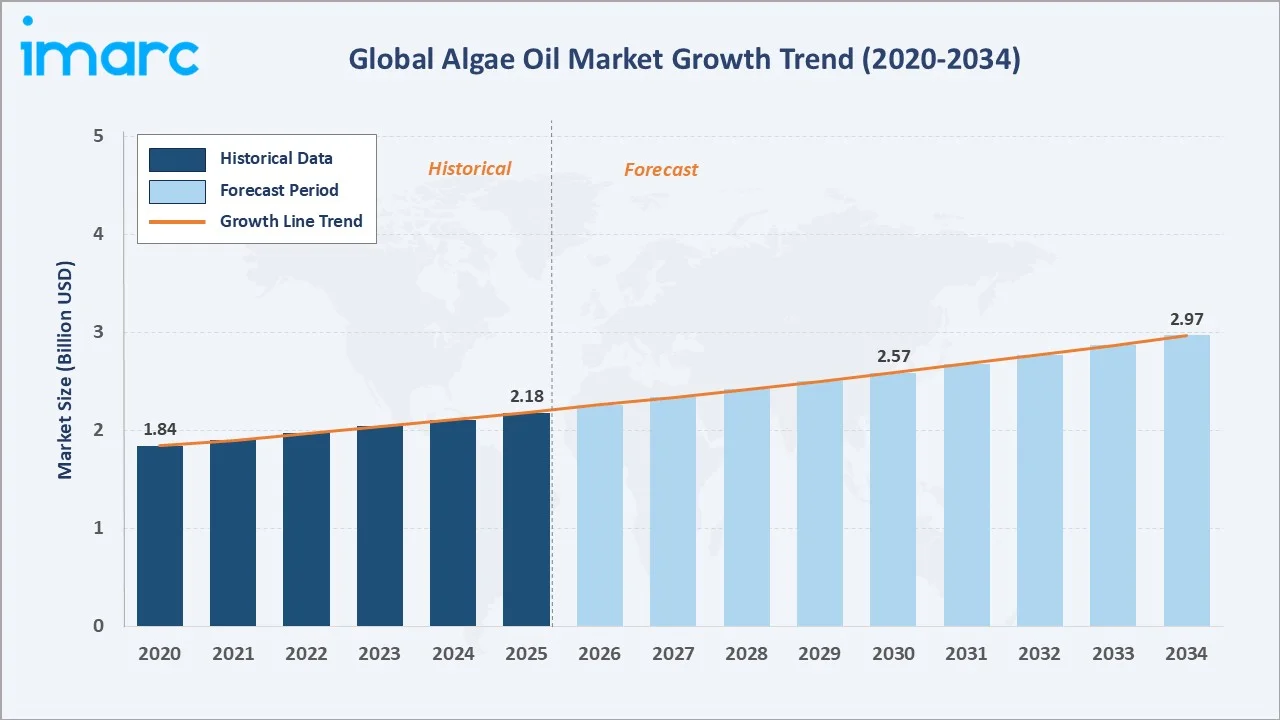
The global algae oil market reached USD 2.18 Billion in 2025 and is projected to reach USD 2.97 Billion by 2034, exhibiting a CAGR of 3.42% during 2026-2034. Surging consumer preference for plant-based omega-3 (DHA/EPA) supplements as a sustainable, vegan-certified alternative to fish oil and the increasing penetration of algae-derived functional ingredients into fortified foods, infant formula, and animal feed are the primary growth catalysts. Health authorities commonly advise consuming around 250–1,000 mg of combined EPA and DHA per day. Algae oil is increasingly preferred as a safe omega-3 source because it generally causes fewer digestive discomforts than fish oil. This favorable safety profile is encouraging wider consumer adoption and supporting the expansion of the algae oil market. Fuel grade leads at 48.6%, direct sales dominate the distribution channel at 36.8%, and North America accounts for the largest regional share at 37.9%.
Market Snapshot
|
Metric |
Value |
|
Market Size (2025) |
USD 2.18 Billion |
|
Forecast Market Size (2034) |
USD 2.97 Billion |
|
CAGR (2026-2034) |
3.42% |
|
Base Year |
2025 |
|
Historical Period |
2020-2025 |
|
Forecast Period |
2026-2034 |
|
Dominant Grade |
Fuel Grade (48.6%, 2025) |
|
Dominant Distribution Channel |
Direct Sales (36.8%, 2025) |
|
Leading Region |
North America (37.9%, 2025) |
The global algae oil market grew steadily from USD 1.84 Billion in 2020 to USD 2.18 Billion in 2025, driven by COVID-19-accelerated supplement demand, growing regulatory support for algae-derived fuels, and the production of EPA and DHA from natural marine algae at an industrial scale. The market is projected to reach USD 2.57 Billion by 2030 and USD 2.97 Billion by 2034.
To get more information on this market, Request Sample
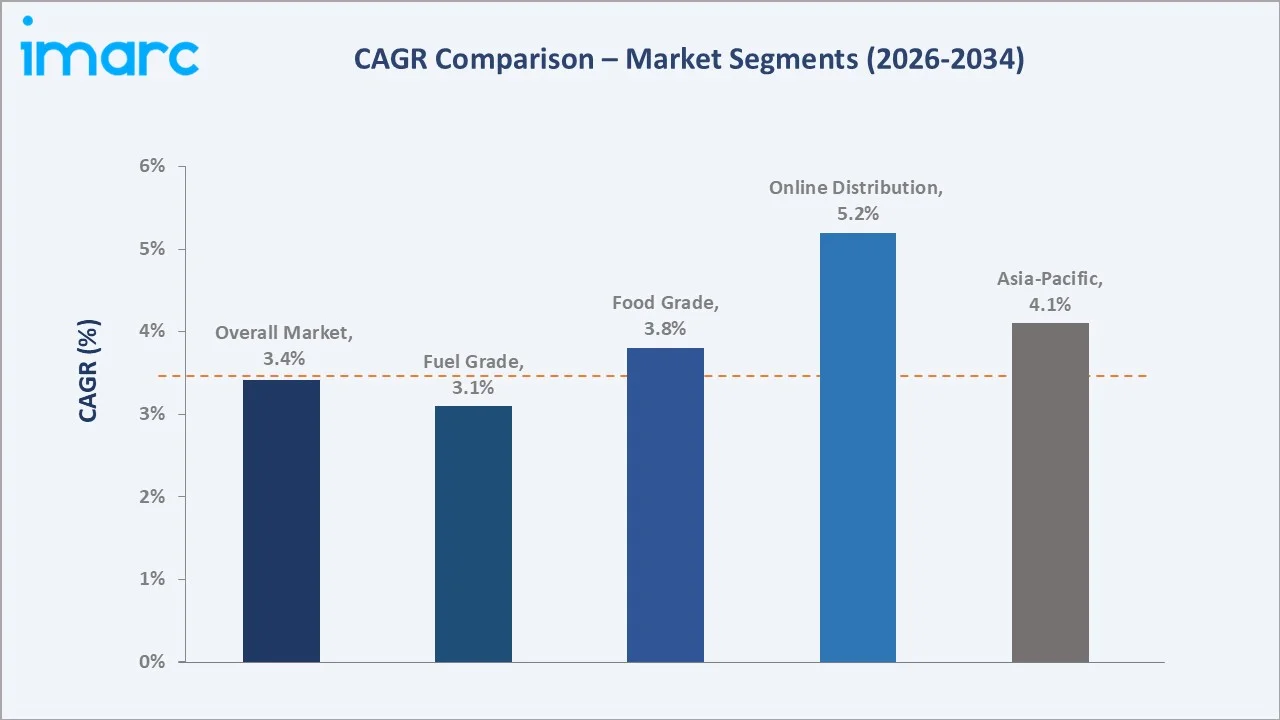
Online distribution channels grow at ~5.2% CAGR, the fastest distribution segment, as direct-to-consumer supplement brands and e-commerce platforms expand algae oil product accessibility. Food grades grow at ~3.8% CAGR through functional food fortification and infant formula applications. Asia-Pacific leads regional growth at ~4.1% CAGR through rapid supplement adoption and aquaculture sector expansion driving algae-based feed demand.
Executive Summary
The global algae oil market occupies a unique intersection of health nutrition, sustainable energy, and food technology, providing a versatile, environmentally superior alternative to both conventional fish-sourced omega-3 oils and petroleum-derived transportation fuels. Algae oil's core advantages, primary DHA and EPA production without the ocean harvest chain, carbon-capture potential during cultivation, rapid biomass growth rates, and compatibility with non-arable land and non-freshwater production, positioning it as one of the most compelling renewable ingredient platforms available across both food and fuel application domains. Market value stood at USD 2.18 Billion in 2025 and is forecast to reach USD 2.97 Billion by 2034, with growth underpinned by converging health consciousness, sustainability mandates, and scaling production technology.
Fuel grade leads at 48.6% (2025), reflecting the largest single application for algae oil by value, advanced biofuel production targeting renewable diesel, sustainable aviation fuel, and marine fuel applications that command government incentives. Direct sales at 36.8% of distribution reflect the significant B2B industrial channel where algae oil producers sell directly to biofuel refiners, food ingredient formulators, and pharmaceutical manufacturers. North America commands 37.9% (2025), driven by the highest per-capita supplement spending globally and the US government's active renewable fuel policy support.
Key Market Insights
|
Insight |
Data |
|
Dominant Grade |
Fuel Grade – 48.6% share (2025) |
|
Dominant Distribution Channel |
Direct Sales – 36.8% share (2025) |
|
Leading Region |
North America – 37.9% share (2025) |
|
Market Opportunity |
Plant-based DHA supplement premiumization; aquaculture algae feed expansion; infant formula fortification |
Key Analytical Observations:
- Fuel Grade at 48.6% (2025): Fuel-grade algae oil, suitable for conversion to renewable diesel, sustainable aviation fuel, and marine biofuels, represents the algae oil market's largest single grade by value. While fuel-grade algae oil faces cost competitiveness challenges versus conventional biodiesel and renewable diesel from waste lipids, government mandates and carbon pricing mechanisms are progressively improving its commercial position, particularly for SAF applications where lower-GHG alternatives are limited.
- Direct Sales at 36.8% (2025): The direct sales channel share reflects algae oil's structural characteristic as a primary ingredient or industrial product rather than a consumer-facing commodity. Biofuel refiners, food ingredient manufacturers, infant formula producers, and pharmaceutical companies purchase algae oil directly from producers in bulk through long-term supply agreements that characterize the direct sales channel.
- North America at 37.9% (2025): North America leads regionally due to strong demand for omega-3 supplements, plant-based nutrition, and sustainable alternatives to fish oil. High consumer health awareness, a well-established nutraceutical industry, and the presence of major algae-based ingredient producers further support regional dominance.
Algae Oil Market Overview
The global algae oil market encompasses oils extracted from microalgae and macroalgae species through photobioreactor cultivation, open pond growing systems, or heterotrophic fermentation, with downstream extraction and refining processes producing oils differentiated by application grade, fatty acid composition, purity specification, and regulatory certification. The market's most important structural characteristic is its positioning as a primary producer of omega-3 fatty acids DHA (docosahexaenoic acid) and EPA (eicosapentaenoic acid), synthesized in the marine food chain by algae as the ultimate biological source, with fish accumulating these fatty acids through algae consumption rather than producing them independently. This positions algae oil as the sustainable origin source for omega-3 nutrition that simultaneously addresses ocean ecosystem pressure, heavy metal contamination concerns, and supply chain traceability limitations of fish oil. Macroeconomic factors include rising disposable incomes, increasing healthcare expenditure, growing consumer spending on nutritional supplements, supportive government policies for sustainable products, expanding vegan and plant-based food industries, and advancements in biotechnology and industrial-scale algae cultivation.
Market Dynamics
To evaluate market opportunities, Request Sample
Market Drivers
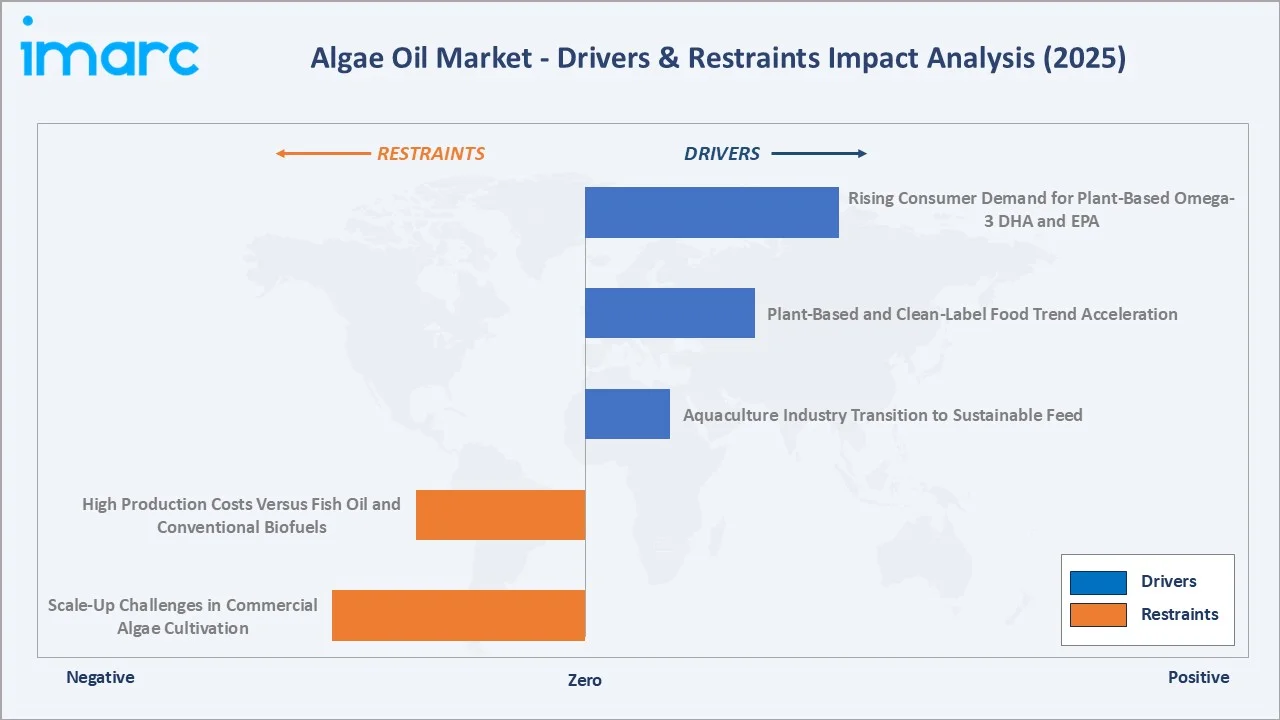
- Rising Consumer Demand for Plant-Based Omega-3 DHA and EPA: Omega-3 supplement growth, driven by cardiovascular health awareness, cognitive development nutrition for infants and elderly populations, and anti-inflammatory dietary management, is creating structural demand for algae oil as the premium, sustainable alternative to fish oil omega-3. In April 2026, Fermentalg launched OMEGA ΩRIGINS EPA/DHA, a new range of omega-3-rich algal oils developed through several years of research. Its patented fermentation process produces naturally high EPA and DHA concentrations without requiring an additional concentration stage. Designed for dietary supplements, functional foods and beverages, and pet nutrition, the range offers application-specific grades and provides brands with a potent, sustainable, and differentiated omega-3 ingredient. Algae oil's key consumer advantages over fish oil are increasingly recognized by health-conscious consumers willing to pay a premium over equivalent fish oil products.
- Plant-Based and Clean-Label Food Trend Acceleration: Consumer demand for foods and supplements free from animal derivatives, heavy metals, and environmental contaminants is accelerating. Algae oil's positioning as a "clean-label" ingredient aligns precisely with the dominant consumer food trend vectors in North America, Europe, and increasingly Asia-Pacific. Infant formula manufacturers are progressively adopting algae oil DHA over fish oil-sourced DHA for both regulatory compliance reliability and parental preference for fish-free, hypoallergenic formulations.
- Aquaculture Industry Transition to Sustainable Feed: Global aquatic animal production will rise to 202 million tons by 2030 and face an existential feed sustainability challenge as wild fish catch fishmeal and fish oil production approaches ecological limits. Algae-based omega-3 oils provide a scalable, land-based alternative omega-3 source for salmon, trout, sea bass, and sea bream aquafeed formulations, enabling aquaculture operators to reduce wild fish incorporation while maintaining the omega-3 nutritional profile of farmed fish.
Market Restraints
- High Production Costs Versus Fish Oil and Conventional Biofuels: Algae oil's fully loaded production cost, encompassing biomass cultivation, harvesting, cell disruption, oil extraction, and refining, remains significantly higher than fish oil and conventional biodiesel from waste vegetable oils. While production costs have declined substantially over the last decade as photobioreactor technology, cultivation yields, and extraction efficiency have improved, the cost gap against commodity alternatives continues to constrain algae oil's addressable market to applications where sustainability premiums, regulatory mandates, or nutritional differentiation justify higher ingredient costs.
- Scale-Up Challenges in Commercial Algae Cultivation: Transitioning algae oil production from pilot-scale and demonstration-scale to full commercial scale has proven more technically and economically challenging than initially projected. Open pond systems achieve lower capital costs but face contamination, water evaporation, and yield variability challenges; closed photobioreactor systems offer superior control but require higher capital and energy inputs per liter of oil produced.
Market Opportunities
- Sustainable Aviation Fuel Feedstock Premium Opportunity: Global sustainable aviation fuel (SAF) production is projected to reach around 2.4 million tons in 2026, equivalent to approximately 0.8% of annual jet fuel demand. Although output nearly doubled from 1 million tons in 2024 to 1.9 million tons in 2025. The SAF market represents algae oil's highest-value fuel-grade application; SAF commands significant price premiums over conventional jet fuel due to carbon credit value and airline voluntary purchasing commitments.
- Precision Fermentation and AI-Optimized Production Efficiency: Heterotrophic algae fermentation, growing oleaginous microalgae in closed fermentation tanks fed sugar carbon sources rather than through photosynthesis, is enabling significantly higher oil productivity per unit volume than phototrophic cultivation. Companies use heterotrophic fermentation for high-purity DHA production at commercial scale, achieving yields that make food-grade algae oil economically competitive with fish oil in high-value applications. AI-driven bioprocess optimization is progressively improving yield, reducing waste, and lowering production costs per gram of DHA or EPA produced.
Market Challenges
- Consumer Price Sensitivity in Mass-Market Applications: While health-conscious premium supplement consumers demonstrate willingness to pay for algae oil DHA at premium prices, mass-market supplement and food applications remain price-sensitive to algae oil's cost premium versus fish oil. Retailers in price-competitive categories, including private-label vitamins, generic supplement brands, and value-tier functional foods, may opt for lower-cost fish oil alternatives unless consumer demand for vegan certification or sustainability specifically justifies higher ingredient costs.
- Regulatory Complexity Across Multiple Application Jurisdictions: Algae oil products require different regulatory approvals depending on grade and geography. Managing this regulatory matrix across jurisdictions adds time and cost to market entry, particularly for smaller algae oil producers seeking global market access.
Emerging Market Trends
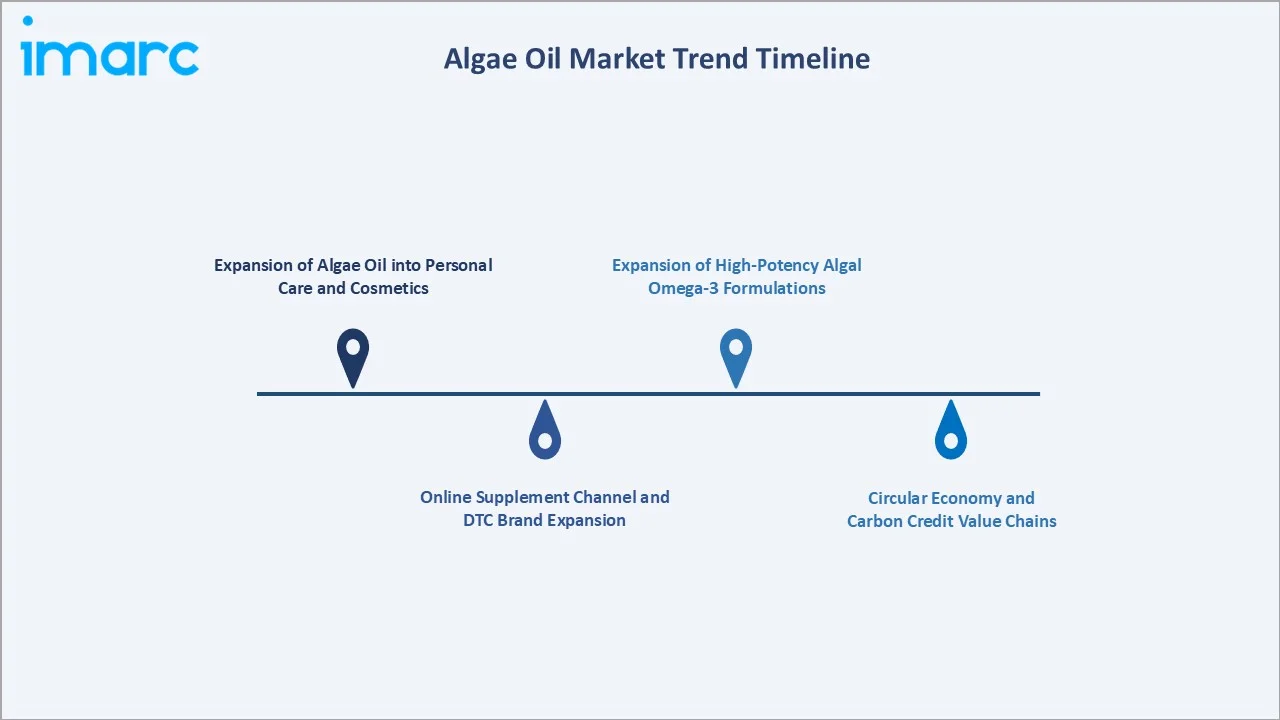
1. Expansion of Algae Oil into Personal Care and Cosmetics
Expansion of algae oil into personal care and cosmetics is emerging as brands seek plant-based, sustainable, and nutrient-rich ingredients for skincare and haircare formulations. Algae oil is valued for its omega fatty acids, antioxidants, and moisturizing properties, which support skin barrier repair, hydration, and anti-aging claims. In April 2026, Checkerspot launched Algolein, a new portfolio of precision-fermented microalgae-based ingredients designed for personal care and cosmetic applications. The range initially includes Algolein TG C18/80, a non-GMO, high-oleic algal oil being commercialized in partnership with La Fabrique Végétale, a specialist in modern cosmetic formulations and ingredient distribution. This is encouraging its use in creams, serums, lotions, shampoos, and premium beauty products.
2. Online Supplement Channel and DTC Brand Expansion
Online supplement channels and DTC brand expansion are emerging as algae oil producers increasingly use e-commerce platforms, subscription models, and direct-to-consumer websites to reach health-conscious buyers. These channels allow brands to communicate vegan, sustainable, and fish-free omega-3 benefits more clearly while collecting customer data and offering personalized products. Lower distribution barriers also help niche brands enter the market faster, expand geographically, and build recurring revenue through repeat purchases.
3. Expansion of High-Potency Algal Omega-3 Formulations
Manufacturers are developing more concentrated DHA and EPA oils to deliver higher nutritional value in smaller doses. In October 2024, dsm-firmenich introduced Life’sDHA B54-0100, its highest-strength algal DHA oil, designed to support smaller and more convenient supplement formats. The ingredient provides 545 mg of DHA and 80 mg of EPA per gram, helping manufacturers produce compact, cost-efficient capsules with concentrated omega-3 content. Its neutral taste and lack of fishy odor also make it suitable for gummies, chews, and confectionery-style products. Produced from algae under controlled conditions, it offers a sustainable and contaminant-free alternative to fish oil.
4. Circular Economy and Carbon Credit Value Chains
Circular economy and carbon credit value chains are emerging as algae oil producers increasingly utilize industrial CO₂ emissions, wastewater, and renewable feedstocks to cultivate algae, reducing environmental impact while creating valuable bioproducts. These production systems support resource efficiency, waste valorization, and lower lifecycle emissions. Companies are also exploring carbon credit generation and ESG-linked revenue opportunities, strengthening the commercial appeal of sustainable algae oil production.
Industry Value Chain Analysis
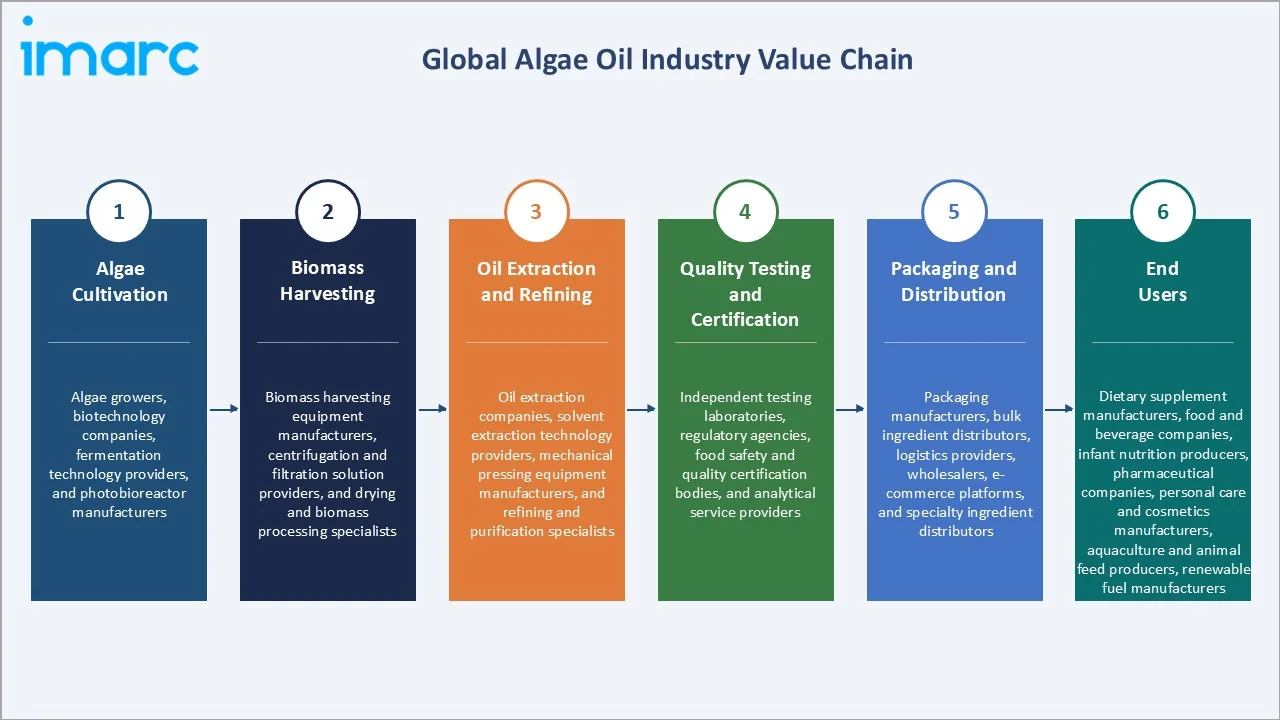
The algae oil value chain integrates algae cultivation, biomass harvesting, oil extraction and refining, quality testing and certification, packaging and distribution, and end-use application across fuel, food, feed, and pharmaceutical markets.
|
Stage |
Key Participants |
|
Algae Cultivation |
Algae growers, biotechnology companies, fermentation technology providers, and photobioreactor manufacturers. |
|
Biomass Harvesting |
Biomass harvesting equipment manufacturers, centrifugation and filtration solution providers, and drying and biomass processing specialists. |
|
Oil Extraction and Refining |
Oil extraction companies, solvent extraction technology providers, mechanical pressing equipment manufacturers, and refining and purification specialists. |
|
Quality Testing and Certification |
Independent testing laboratories, regulatory agencies, food safety and quality certification bodies, and analytical service providers. |
|
Packaging and Distribution |
Packaging manufacturers, bulk ingredient distributors, logistics providers, wholesalers, e-commerce platforms, and specialty ingredient distributors. |
|
End Users |
Dietary supplement manufacturers, food and beverage companies, infant nutrition producers, pharmaceutical companies, personal care and cosmetics manufacturers, aquaculture and animal feed producers, renewable fuel manufacturers. |
Oil extraction and refining are generally the highest value-added stage in the algae oil value chain. This stage determines the oil's purity, omega-3 concentration, stability, and application-specific functionality through advanced extraction, purification, and refining technologies. The resulting premium-quality ingredients command significantly higher margins in nutraceutical, pharmaceutical, and personal care markets.
Technology Landscape in the Algae Oil Industry
Heterotrophic Fermentation Technology
Heterotrophic fermentation technology enables algae to grow in controlled fermentation tanks using organic carbon sources instead of sunlight. This approach delivers higher productivity, consistent oil quality, and year-round production while reducing dependence on climate and land availability. It also supports scalable production of high-purity DHA- and EPA-rich oils for nutraceutical, food, pharmaceutical, and personal care applications, improving manufacturing efficiency and cost competitiveness.
Advanced Algal Oil Processing Technology
Proprietary processing methods preserve molecular integrity, improve oxidation stability, and enhance the nutritional quality of algae oils while minimizing processing losses. In February 2026, GC Rieber VivoMega launched Algae 1045 TG, a high-potency vegan DHA and EPA algal oil for sustainable nutraceutical formulations. Produced using the company’s proprietary SuperLight processing technology, the ingredient is designed to improve oxidation stability, preserve molecular quality, enhance resource efficiency, and minimize production waste.
Microencapsulation Technology
Microencapsulation technology protects sensitive DHA and EPA from oxidation, heat, light, and moisture, thereby extending product shelf life and maintaining nutritional quality. It also masks the characteristic taste and odor of algae oil, enabling its use in functional foods, beverages, infant nutrition, and dietary supplements. This technology improves ingredient stability, expands application versatility, and enhances consumer acceptance across multiple end-use markets.
Market Segmentation Analysis
The report covers the following segments:
|
Segment Category |
Leading Segment |
Market Share |
Year |
|
Grade |
Fuel Grade |
48.6% |
2025 |
|
Distribution Channel |
Direct Sales |
36.8% |
2025 |
|
Application |
Biofuel |
🔒 |
2025 |
|
Region |
North America |
37.9% |
2025 |

By Grade
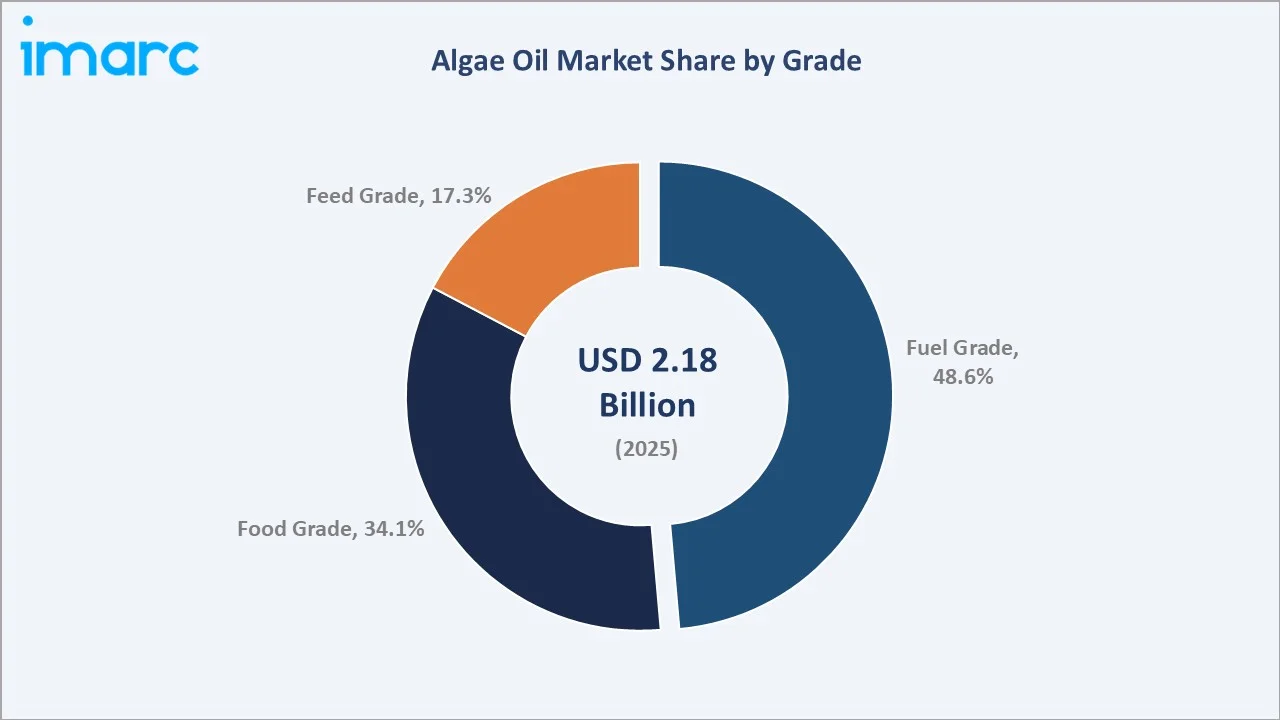
Fuel grade leads at 48.6% (2025), driven by renewable fuel policy mandates and the aviation industry's SAF decarbonization commitments. While fuel-grade algae oil faces cost competitiveness challenges, the SAF application premium sustains fuel-grade demand at premium pricing relative to conventional biodiesel markets.
To access detailed market analysis, Request Sample
Food grade at 34.1% (2025), growing at ~3.8% CAGR encompasses omega-3 dietary supplement softgels and capsules, DHA-fortified infant formula, omega-3-enriched functional foods and beverages, and pharmaceutical-grade fish-free omega-3 formulations. Feed grade at 17.3% (2025) serves aquaculture operators along with poultry and companion animal nutrition applications where omega-3 enrichment adds value to differentiated product categories.
By Distribution Channel
Direct sales leads at 36.8% (2025), reflecting the algae oil market's predominantly B2B industrial structure where producers sell bulk oil directly to biofuel refiners, food ingredient manufacturers, aquafeed formulators, and pharmaceutical ingredient buyers. Direct sales relationships typically involve long-term supply agreements, customized product specifications, co-development programs, and logistical coordination that create customer retention advantages for established producers.
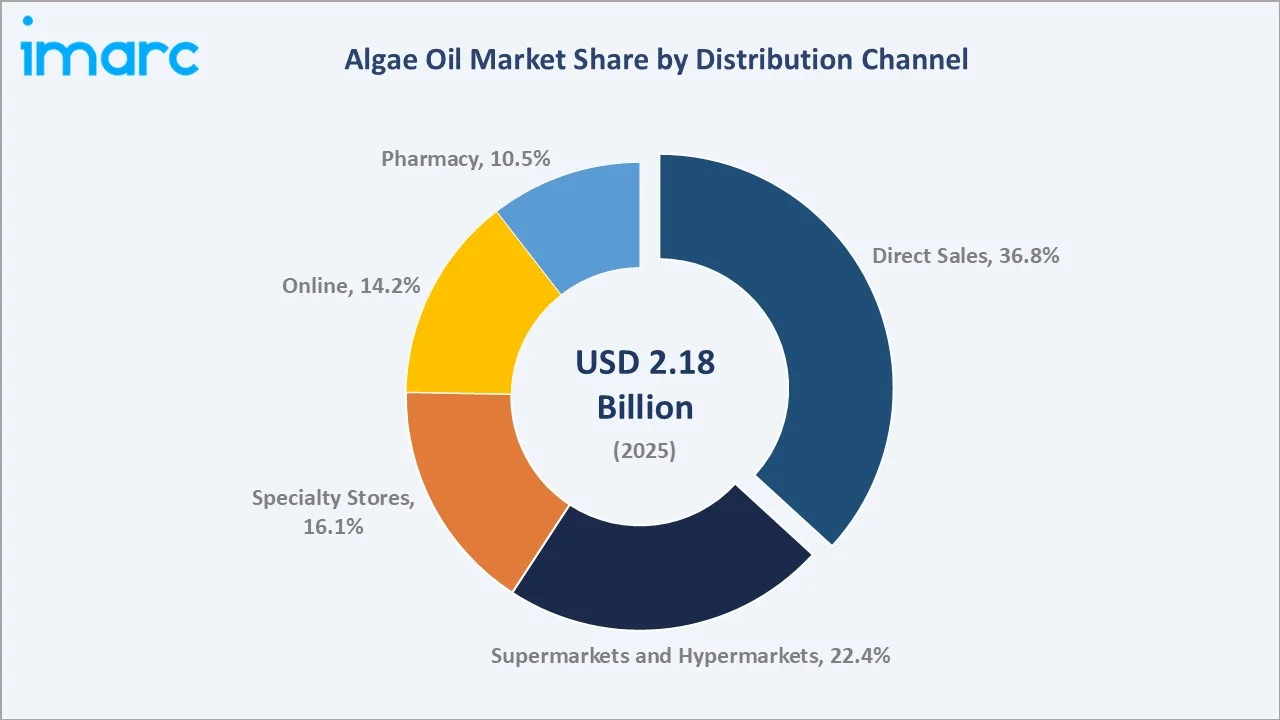
Supermarkets and hypermarkets at 22.4% (2025) serve the mainstream retail supplement aisle where branded algae oil omega-3 products compete with fish oil supplements for consumer shelf space and purchase. Specialty stores at 16.1% include natural food retailers, health food stores, and supplement specialty chains where premium algae oil supplement brands are particularly well-positioned given the health-conscious shopper profile. Online at 14.2%, growing at ~5.2% CAGR, is the fastest-growing channel, driven by DTC supplement brands and international e-commerce platforms reaching consumers beyond traditional retail geographic boundaries. Pharmacy at 10.5% serves prescription omega-3 and clinical supplement dispensing channels, growing with healthcare provider recommendation of algae-derived omega-3 for patients seeking fish-free alternatives.
Regional Market Insights
|
Region |
Share (2025) |
Key Algae Oil Market Drivers & Characteristics |
|
North America |
37.9% |
High consumer health awareness, advanced biotechnology capabilities, and the presence of leading algae oil manufacturers support regional leadership. |
|
Europe |
27.6% |
Supported by stringent sustainability regulations, increasing vegan and clean-label product demand, and strong adoption of algae-derived ingredients across nutraceutical, food, pharmaceutical, and cosmetic applications. |
|
Asia-Pacific |
23.8% |
Rapid urbanization, rising disposable incomes, expanding dietary supplement consumption, and growing aquaculture and infant nutrition industries are driving market expansion. |
|
Latin America |
6.1% |
Supported by growing consumer awareness of preventive healthcare, expanding functional food consumption, and increasing adoption of sustainable ingredients. |
|
Middle East and Africa |
4.6% |
Driven by rising health consciousness, increasing dietary supplement consumption, and government initiatives promoting food security and sustainable agriculture. |
North America's 37.9% regional dominance reflects its strong consumer demand for plant-based omega-3 supplements, advanced biotechnology capabilities, and a well-established nutraceutical industry. Europe, at 27.6%, is supported by stringent sustainability regulations, widespread adoption of vegan products, and growing demand for clean-label ingredients.
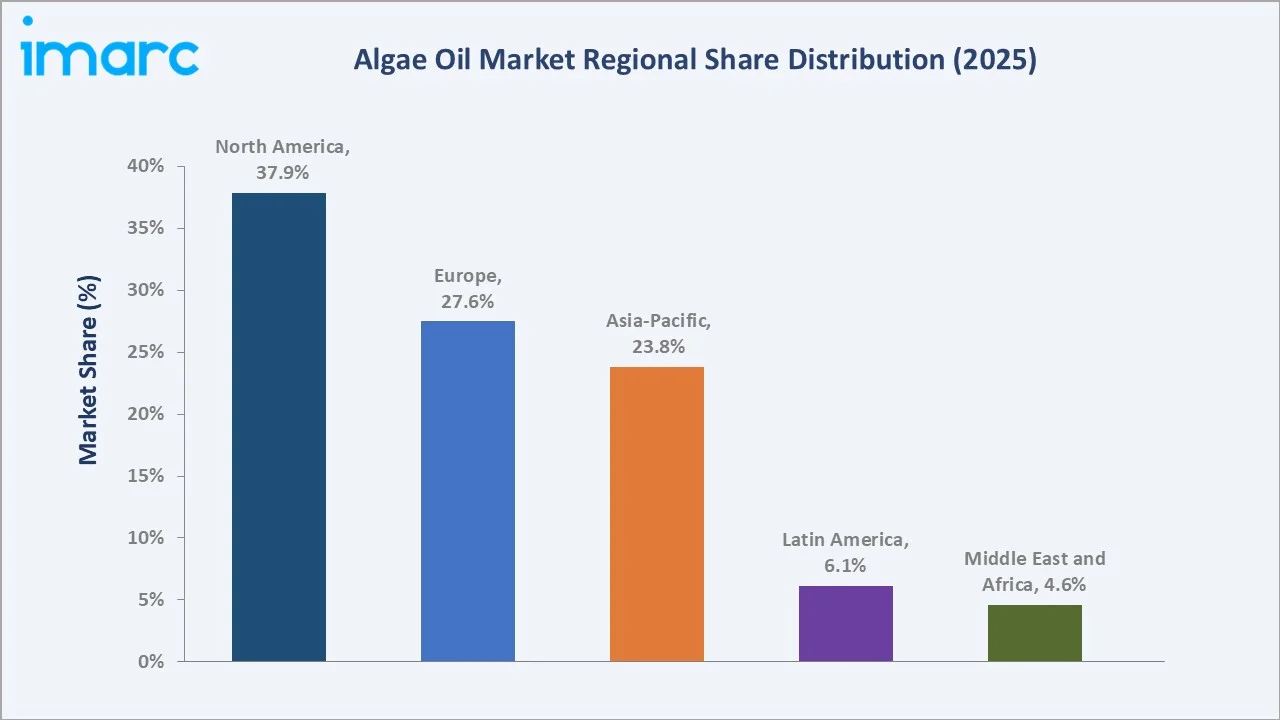
Asia-Pacific, at 23.8% growing at ~4.1% CAGR, is the market's fastest-growing region, driven by rising health awareness, increasing disposable incomes, expanding infant nutrition and aquaculture industries, and significant investments in algae cultivation technologies. Latin America, at 6.1%, is experiencing steady growth as awareness of preventive healthcare and functional nutrition increases. The Middle East and Africa at 4.6% are emerging markets, supported by improving healthcare infrastructure, rising dietary supplement consumption, and growing interest in sustainable food ingredients.
Competitive Landscape
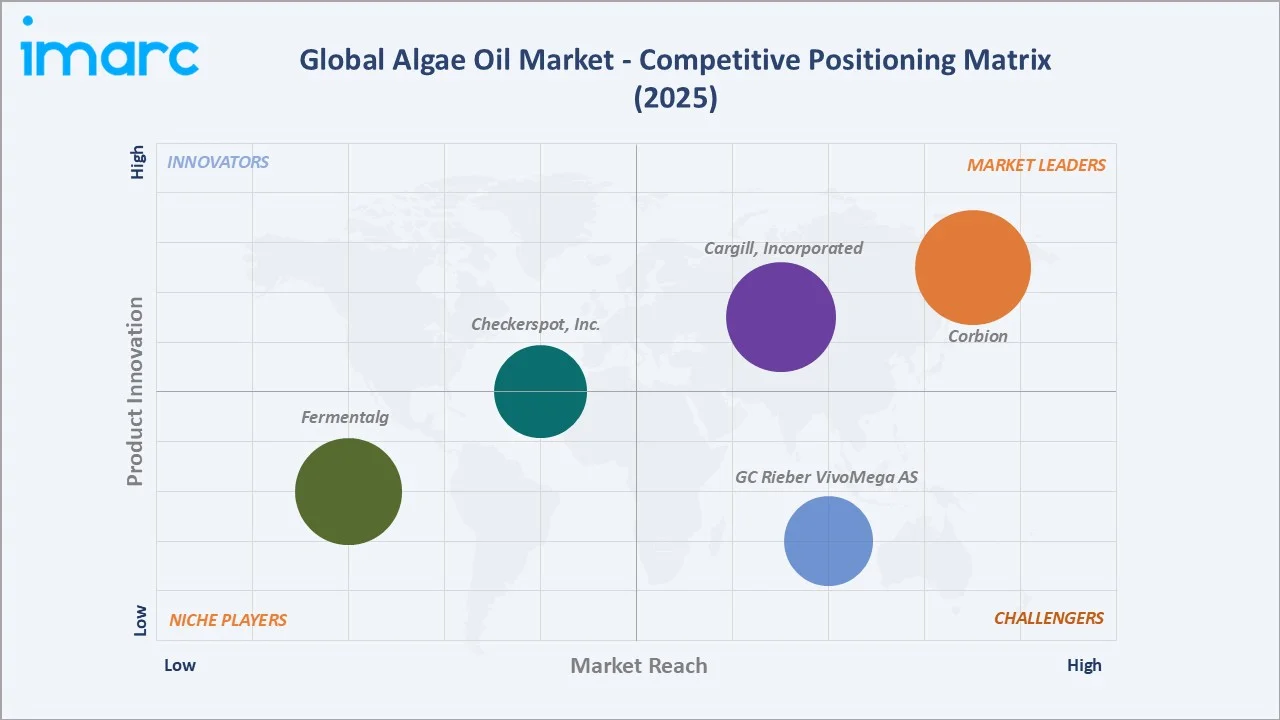
The global algae oil market features a tiered competitive structure: multinational life science and ingredient companies dominating through industrial fermentation capability, established food-grade regulatory credentials, and global ingredient distribution networks; specialized algae cultivators and technology companies competing through proprietary cultivation technology, specific grade expertise, or regional market depth; and venture-backed innovators targeting specific high-value applications.
|
Company |
Key Products |
Market Position |
Core Strength |
|
Corbion |
AlgaVia Algae Oils, AlgaVia High Stability Algae Oil, AlgaVia Ultra Omega-9 Algae Oil |
Market Leader |
Corbion is a major global producer of sustainable, algae-derived omega-3 fatty acids and culinary oils. By using industrial fermentation to grow microalgae, they transform sustainable sugarcane into high-quality ingredients like AlgaVia. |
|
Cargill, Incorporated |
Cargill Algal DHA Oil |
Market Leader |
Cargill, Incorporated play a major role in the algae oil market by integrating microalgae-derived ingredients into two primary sectors: commercial animal feed and human nutritional supplements. |
|
Fermentalg |
ΩRIGINS algal oil |
Niche Player |
Fermentalg is a French biotechnology company specializing in the industrial production of microalgae, playing a major role in the shift toward sustainable, plant-based algal oils. |
|
Checkerspot, Inc. |
Algolein TG c18/80 |
Established Player |
Checkerspot, Inc. plays a pioneering role in the algae oil market by using precision fermentation to engineer sustainable, bio-based alternatives to intensively farmed and petroleum-based fats. |
|
GC Rieber VivoMega AS |
VivoMega Algae Oils |
Challenger |
GC Rieber VivoMega AS acts as a premium innovator and sustainable manufacturer in the algae oil market. By matching the EPA and DHA composition of fish oils, the company enables brands to deliver sustainable plant-based alternatives. |
Competition in the algae oil market is evolving from technology development-stage competition toward commercial scale and cost efficiency differentiation. Producers with established food-grade certifications, proven large-scale production operations, and established B2B ingredient customer relationships hold durable competitive advantages in the food and feed-grade segments.
Key Company Profiles
Corbion
Corbion is a biotechnology company and a leading producer of algae-based omega-3 ingredients. Through its algae platform, the company manufactures high-purity DHA-rich algae oils using proprietary heterotrophic fermentation technology, serving the aquaculture, animal nutrition, dietary supplement, and food industries. Corbion's algae oils provide a sustainable, fish-free alternative to marine-derived omega-3 sources while supporting traceability and consistent product quality.
- Key Products: AlgaVia Algae Oils, AlgaVia High Stability Algae Oil, AlgaVia Ultra Omega-9 Algae Oil.
- Key Developments: In April 2026, Corbion secured a new patent for a liquid suspension of algal biomass featuring a DHA-rich omega-3 profile. The technology uses lysed algal cells dispersed in oil to improve stability and performance in animal feed applications. Developed through the company’s algal fermentation platform, the innovation strengthens Corbion’s product differentiation and reinforces its position in sustainable nutrition.
- Strategic Focus: Expanding its algae-based omega-3 portfolio through advanced heterotrophic fermentation technology and sustainable production. The company is strengthening its position in aquaculture, animal nutrition, dietary supplements, and food applications by delivering high-purity, fish-free DHA ingredients with reliable supply and traceability.
Fermentalg
Fermentalg is a biotechnology company specializing in the development and production of microalgae-derived ingredients for nutrition, health, and environmental applications. The company is a leading innovator in algae-based omega-3 oils, producing high-purity DHA- and EPA-rich ingredients through proprietary heterotrophic fermentation technology. Its algae oil portfolio serves the dietary supplement, functional food, pharmaceutical, and animal nutrition markets, with a strong focus on sustainable, fish-free omega-3 solutions. Through continuous investment in research and development and proprietary fermentation processes, Fermentalg has established itself as a key player in the global algae oil market.
- Key Products: ΩRIGINS algal oil.
- Key Developments: In April 2026, Fermentalg introduced OMEGA ΩRIGINS EPA/DHA, a new range of omega-3-rich algal oils developed through several years of research. Using a patented fermentation process, the products achieve naturally high EPA and DHA concentrations without an additional concentration step. The range includes application-specific grades for dietary supplements, functional foods and beverages, and pet nutrition, offering brands a potent, sustainable, and differentiated ingredient solution.
- Strategic Focus: Expanding its high-value algae-based omega-3 portfolio through proprietary fermentation technologies that deliver high concentrations of DHA and EPA. The company is investing in research and development to improve production efficiency, product performance, and sustainability while serving the dietary supplement, functional food and beverage, pet nutrition, and pharmaceutical markets.
Market Concentration Analysis
The global algae oil market is moderately concentrated, with the top five producers, Corbion, Cargill, Incorporated, Fermentalg, Checkerspot, Inc., and GC Rieber VivoMega AS, collectively estimated to hold approximately 50-60% of global market revenue in 2025. Market concentration is highest in the food and pharmaceutical grade segments, where regulatory certification requirements, production quality consistency, and established customer relationships create significant barriers to entry. The fuel-grade segment is more fragmented, with numerous research-stage and demonstration-scale producers pursuing various production technology approaches. Market concentration is expected to increase modestly through 2034 as commercial-scale production economics favor larger operators, though the premium food and supplement market will continue supporting viable niche positions for specialized producers with strong brand credentials and proprietary production technologies.
Investment & Growth Opportunities
Highest Growth Segments
Online distribution (~5.2% CAGR), Asia-Pacific region (~4.1% CAGR), food grade (~3.8% CAGR), SAF feedstock algae oil (~8-10% niche CAGR), and aquaculture feed-grade algae DHA (~6-7% CAGR) represent the algae oil market's highest-growth investment vectors through 2034.
Investment Themes
- Aquaculture feed DHA expansion: Investment in DHA-rich algae oil production for aquaculture feed is increasing as fish farmers seek sustainable alternatives to fish oil. Algae-derived omega-3 ingredients improve fish nutrition while reducing dependence on marine resources and supporting responsible aquaculture practices. Growing global seafood demand and stricter sustainability standards are expected to drive long-term investment in this segment.
- SAF-specific algae oil production and pathway qualification: Companies are investing in algae oil production technologies tailored for Sustainable Aviation Fuel (SAF) applications to support aviation decarbonization. Investments focus on improving algae cultivation, oil yields, feedstock scalability, and qualifying conversion pathways under international aviation fuel standards. Successful pathway certification can create new commercial opportunities as SAF production and regulatory mandates continue to expand.
Future Market Outlook (2026-2034)
The global algae oil market is projected to grow from USD 2.18 Billion in 2025 to USD 2.97 Billion by 2034, delivering a 3.42% CAGR, steady, sustainable growth reflecting algae oil's expanding commercial viability across multiple high-value application domains while acknowledging the ongoing cost competitiveness challenges that moderate growth in commodity biofuel applications. The anchor value of USD 2.57 Billion in 2030 reflects the compounding effect of aquaculture feed adoption, supplement market premiumization, and biofuel policy support.
Three structural forces will define the algae oil market trajectory through 2034. First, the aquaculture sector's progressive transition from wild-fish-derived to algae-derived omega-3 represents the most significant volume growth driver for the forecast period. Global aquaculture production faces an omega-3 supply constraint that only algae-derived sources can address at sufficient scale without additional pressure on already-strained wild fish stocks. Second, the supplement market's plant-based premiumization trend will continue expanding the addressable market for food-grade algae oil beyond the early-adopter health-conscious consumer cohort toward mainstream supplement users seeking vegan, clean-label, mercury-free omega-3 alternatives to fish oil. Third, biofuel policy mandates will sustain institutional demand for fuel-grade algae oil that is largely price-inelastic within the credit-supported economics framework.
Research Methodology
Primary Research
Primary research comprised in-depth interviews with algae oil producer executives, food ingredient buyers and formulators, supplement brand product development managers, aquaculture feed nutritionists, biofuel policy specialists, and independent life science and renewable energy market analysts. These discussions validated market size estimates, assessed grade-specific demand trends, evaluated competitive positioning, and provided insights into regulatory development timelines, production cost trajectories, and consumer trend drivers across the algae oil market's diverse application segments.
Secondary Research
Secondary research encompassed company annual reports and press releases, novel food authorization decisions, omega-3 industry statistics, EPA and DHA Omega-3s publications, supplement market retail data, aquaculture industry omega-3 nutrition reports, and credible market intelligence sources.
Forecasting Models
Forecasting models were developed using historical algae oil market data, omega-3 supplement market growth rates, aquaculture production and omega-3 feed demand projections, biofuel policy incentive value modeling, production cost trajectory analysis, regional consumer health trend data, and distribution channel shift modeling. Both top-down and bottom-up approaches were validated through primary research.
Report Scope:
| Report Features | Details |
|---|---|
| Base Year of the Analysis | 2025 |
| Historical Period | 2020-2025 |
| Forecast Period | 2026-2034 |
| Units | Billion USD |
| Scope of the Report | Exploration of Historical Trends and Market Outlook, Industry Catalysts and Challenges, Segment-Wise Historical and Predictive Market Assessment:
|
| Grades Covered | Fuel Grade, Food Grade, Feed Grade |
| Distribution Chanels Covered | Direct Sales, Supermarkets and Hypermarkets, Specialty Stores, Pharmacy, Online |
| Applications Covered | Biofuel, Dietary Supplement, Food and Beverage, Animal Feed, Others |
| Regions Covered | Asia Pacific, Europe, North America, Latin America, Middle East and Africa |
| Countries Covered | United States, Canada, Germany, France, United Kingdom, Italy, Spain, Russia, China, Japan, India, South Korea, Australia, Indonesia, Brazil, Mexico |
| Companies Covered | Corbion, Cargill, Incorporated, Fermentalg, Checkerspot Inc., GC Rieber VivoMega AS, etc. |
| Customization Scope | 10% Free Customization |
| Post-Sale Analyst Support | 10-12 Weeks |
| Delivery Format | PDF and Excel through Email (We can also provide the editable version of the report in PPT/Word format on special request) |
Frequently Asked Questions About the Algae Oil Market Report
The global algae oil market reached USD 2.18 Billion in 2025, driven by rising omega-3 supplement demand, biofuel mandates, and growing consumer preference for vegan, fish-free DHA alternatives.
The market grows at 3.42% CAGR during 2026-2034, reaching USD 2.97 Billion by 2034. The CAGR reflects aquaculture feed DHA adoption, supplement market premiumization, SAF biofuel mandate support, and online distribution channel growing at ~5.2% CAGR.
Fuel grade leads at 48.6% (2025), supported by advanced biofuel credits, SAF mandates, and airline SAF voluntary commitments.
Direct sales dominate at 36.8% (2025), reflecting B2B industrial supply of algae oil to biofuel refiners, food ingredient manufacturers, and aquafeed formulators through long-term supply agreements.
North America leads at 37.9% (2025), anchored by the largest per-capita supplement spending, renewable fuel credits, biofuel applications, and leading producers based in North America.
Leading companies include Corbion, Cargill, Incorporated, Fermentalg, Checkerspot, Inc., and GC Rieber VivoMega AS, among others.
The market is projected to reach approximately USD 2.57 Billion by 2030, driven by aquaculture scale-up, Aviation SAF mandate implementation, plant-based supplement market premiumization, and Asia-Pacific supplement and aquaculture demand expansion.
Top opportunities include aquaculture feed DHA scale-up matching specific species EPA+DHA profiles, SAF-qualified algae oil production, DTC online supplement brand building leveraging algae oil sustainability co-marketing, and CO2-utilization algae production systems reducing net production costs through carbon credit revenue.
Need more help?
- Speak to our experienced analysts for insights on the current market scenarios.
- Include additional segments and countries to customize the report as per your requirement.
- Gain an unparalleled competitive advantage in your domain by understanding how to utilize the report and positively impacting your operations and revenue.
- For further assistance, please connect with our analysts.
 Request Customization
 Speak to an Analyst
 Request Brochure
 Inquire Before Buying
Benefits of Customization
- Personalize this research
- Triangulate with your data
- Get data as per your format and definition
- Gain a deeper dive into a specific application, geography, customer, or competitor
- Any level of personalization
Get in Touch With Us
UNITED STATES
Phone: +1-201-971-6302
INDIA
Phone: +91-120-433-0800
UNITED KINGDOM
Phone: +44-753-714-6104
Email: [email protected]
Client Testimonials




.webp)




.webp)













Related Reports

Choose your plan
*Please note that the prices mentioned below are starting prices for each bundle type. Kindly contact our team for further details.*
Single User License
- 1 User License, Access on 2 Devices
- PDF Report + Excel Dataset (Password Protected)
- Lifetime Access
- No Printing Rights
- 10% Free Report Customization
- 10–12 Weeks of Analyst Support
Five User License
- Access for 5 Users, 2 Devices per User
- PDF Report + Excel Dataset (Password Protected)
- Lifetime Access
- Dedicated Account Manager
- 12–14 Weeks of Analyst Support
- No Printing Rights
- 15% Free Report Customization
- 25% Discount on Your Next Purchase
Corporate User License
- Unlimited User Access (Within Your Organization)
- PDF Report + Excel Dataset
- Lifetime Access
- Dedicated Account Manager
- 14–20 Weeks of Analyst Support
- No Printing Rights
- 20% Free Report Customization
- 30% Discount on Your Next Purchase
Essential Insights
What's included:
3 reports
- Lifetime Access
- PDF Reports
- Excel Datasets
- 2 Weeks of Free Analyst Support
- 2 User Licenses
- Access on 2 Devices
- Printing Rights
- Complimentary PowerPoint (PPT) Version
- Complimentary License Upgrade
Professional Access
What's included:
5 reports
- Lifetime Access
- PDF Reports
- Excel Datasets
- 8 Weeks of Free Analyst Support
- 2 User Licenses
- Access on 2 Devices
- Printing Rights
- Complimentary PowerPoint (PPT) Version
- Complimentary License Upgrade
Business Advantage
What's included:
8 reports
- Lifetime Access
- PDF Reports
- Excel Datasets
- 14 Weeks of Free Analyst Support
- 2 User Licenses
- Access on 2 Devices
- Printing Rights
- Complimentary PowerPoint (PPT) Version
- Complimentary License Upgrade
Enterprise Intelligence
What's included:
10 reports
- Lifetime Access
- PDF Reports
- Excel Datasets
- 20 Weeks of Free Analyst Support
- 2 User Licenses
- Access on 2 Devices
- Printing Rights
- Complimentary PowerPoint (PPT) Version
- Complimentary License Upgrade