
Arthroscopy Devices Market Size, Share, Trends and Forecast by Device Type, Arthroscopy Type, End-User, and Region, 2026-2034
Arthroscopy Devices Market Size, Share, Trends & Forecast (2026-2034)
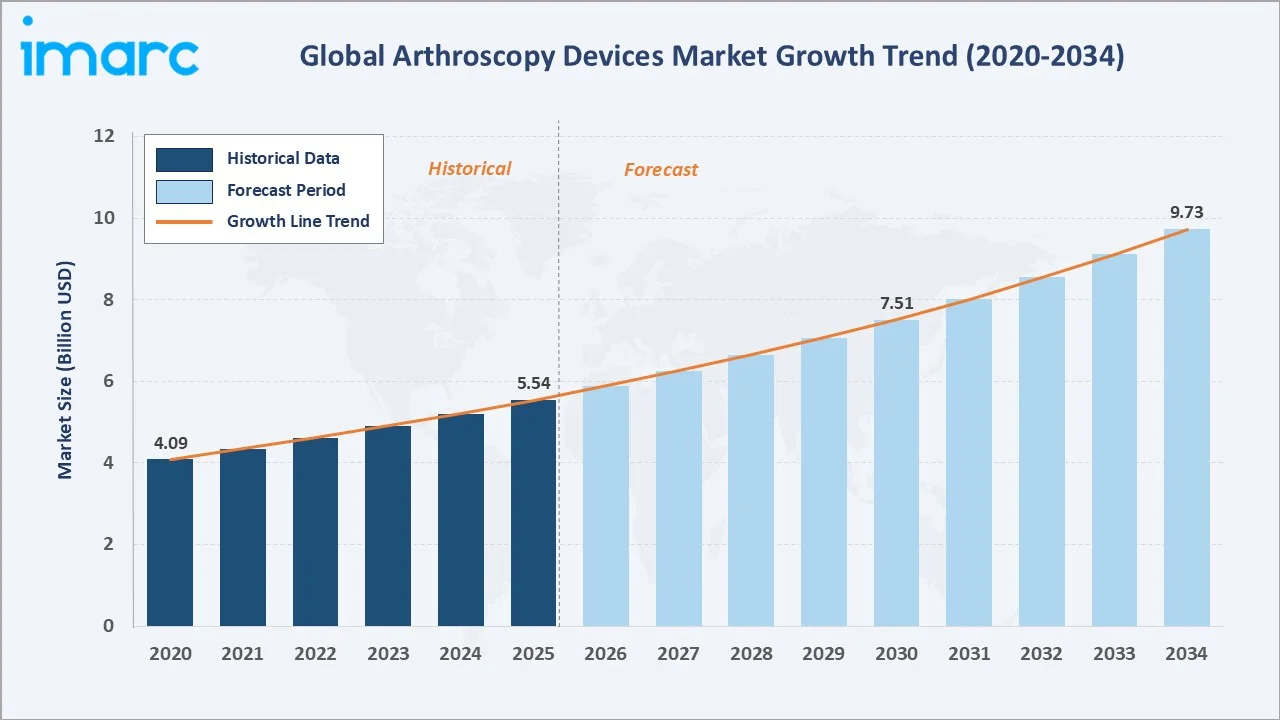
The arthroscopy devices market was valued at USD 5.54 Billion in 2025 and is projected to reach USD 9.73 Billion by 2034, exhibiting a CAGR of 6.27% during 2026-2034. Growth is underpinned by rising sports-related musculoskeletal injuries, expanding adoption of minimally invasive orthopedic procedures, and continuous innovation in visualization and fluid management technologies.
Arthroscope leads the device type segment at 31.8%, hospitals dominate the end-user segment at 56.7%, and North America commands 39.4% regional share.
Market Snapshot
|
Metric |
Value |
|
Market Size (2025) |
USD 5.54 Billion |
|
Forecast Market Size (2034) |
USD 9.73 Billion |
|
CAGR (2026-2034) |
6.27% |
|
Base Year |
2025 |
|
Historical Period |
2020-2025 |
|
Forecast Period |
2026-2034 |
|
Largest Region |
North America (39.4%, 2025) |
|
Second Largest Region |
Europe (28.1%, 2025) |
|
Leading Device Type |
Arthroscope (31.8%, 2025) |
|
Leading End-User |
Hospitals (56.7%, 2025) |
The arthroscopy devices market expanded from USD 4.09 Billion in 2020 to USD 5.54 Billion in 2025, supported by rising incidence of sports and recreational injuries, growing preference for minimally invasive joint procedures, and expanding orthopedic surgical capacity across ambulatory settings. Anchored at USD 7.51 Billion in 2030, the forecast to USD 9.73 Billion by 2034 is driven by continued technology upgrades in visualization and radiofrequency systems and broader adoption of arthroscopy across emerging healthcare markets.
To get more information on this market, Request Sample
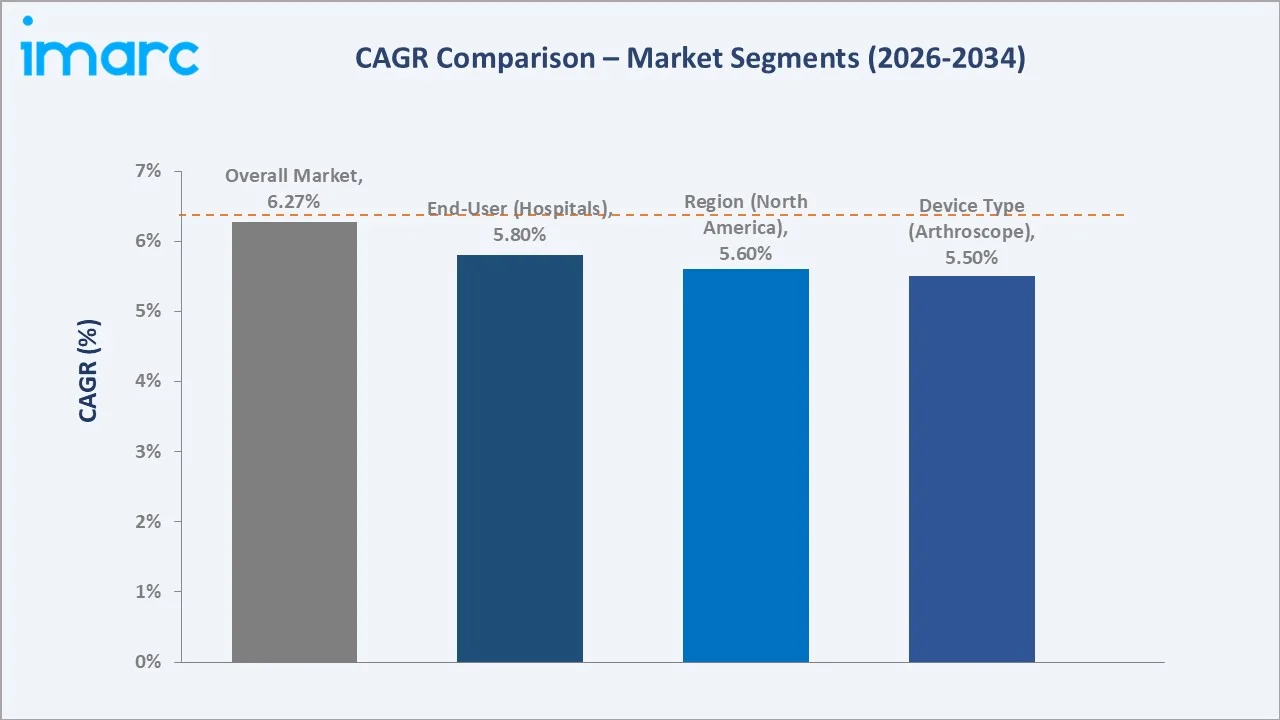
CAGR trajectories across device type, end-user, and regional sub-segments show Asia-Pacific, visualization system, and ambulatory surgical centers expanding faster than the overall 6.27% market CAGR, reflecting rapid technology upgrades, outpatient care expansion, and accelerating healthcare investment in emerging markets.
Executive Summary
The arthroscopy devices market is on a steady growth path, expanding from USD 4.09 Billion in 2020 to USD 9.73 Billion by 2034. Adoption has shifted from open joint surgery toward arthroscopic, minimally invasive approaches across the knee, shoulder, hip, and small joints, supported by shorter recovery times and lower complication rates.
Arthroscope leads the device type segment at 31.8% in 2025, supported by continuous improvements in optics, cannula design, and single-use instrumentation. Hospitals command 56.7% of the end-user segment, driven by advanced surgical infrastructure and the availability of specialized orthopedic and sports medicine departments. North America commands 39.4% of the regional share in 2025, led by high procedure volumes, established reimbursement support, and early adoption of advanced visualization platforms.
Key Market Insights
|
Insight |
Data |
|
Leading Device Type |
Arthroscope - 31.8% share (2025) |
|
Second Largest Device Type |
Arthroscopic Implant - 24.6% share (2025) |
|
Leading End-User |
Hospitals - 56.7% share (2025) |
|
Second Largest End-User |
Ambulatory Surgical Centers - 24.9% share (2025) |
|
Leading Region |
North America - 39.4% share (2025) |
|
Second Largest Region |
Europe - 28.1% share (2025) |
|
Top Companies |
Stryker, Arthrex, Inc., Smith & Nephew plc, Zimmer Biomet, KARL STORZ SE & Co. KG, CONMED Corporation |
Key Analytical Observations Expanding On The Data Above:
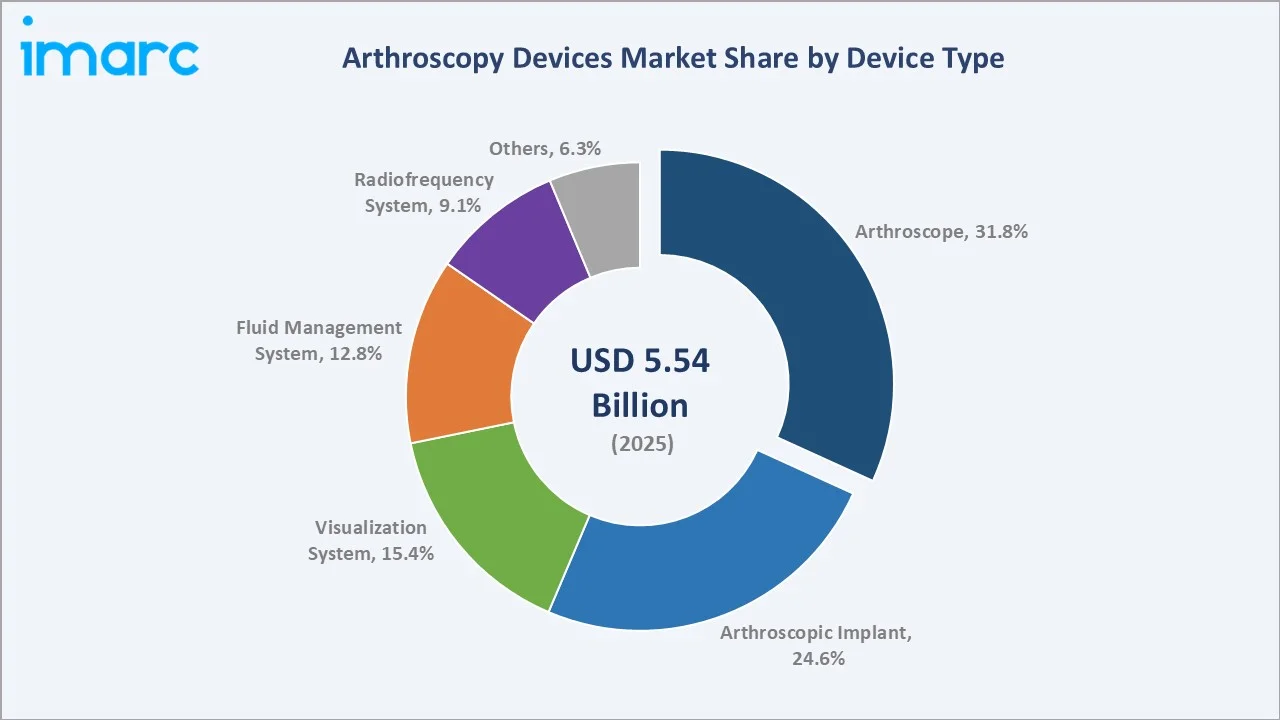
- Arthroscope dominance at 31.8% is supported by steady demand for rigid and flexible arthroscopes across knee and shoulder procedures, continuous fiber-optic and digital imaging upgrades, and repeat consumption of associated disposable components.
- Arthroscopic implant share at 24.6% is fueled by rising use of suture anchors, meniscal repair devices, and soft-tissue fixation systems in sports medicine and joint preservation procedures.
- Hospitals leadership at 56.7% is reinforced by rising procedure volumes, comprehensive orthopedic infrastructure, access to advanced arthroscopic equipment, and the availability of specialized surgical teams for complex joint procedures.
- Ambulatory surgical centers share at 24.9% is expanding as outpatient-oriented reimbursement models and shorter-stay arthroscopic procedures shift volume away from traditional inpatient settings.
- North America at 39.4% is anchored by high per-capita orthopedic surgery rates, established reimbursement frameworks, and early adoption of digital visualization and radiofrequency platforms.
Arthroscopy Devices Market Overview
Arthroscopy devices encompass arthroscopes, arthroscopic implants, visualization systems, fluid management systems, radiofrequency systems, and related instrumentation used to diagnose and treat joint disorders through minimally invasive access. These devices enable surgeons to visualize, repair, and reconstruct soft tissue and cartilage in the knee, shoulder, hip, ankle, elbow, and wrist with smaller incisions than open surgery.
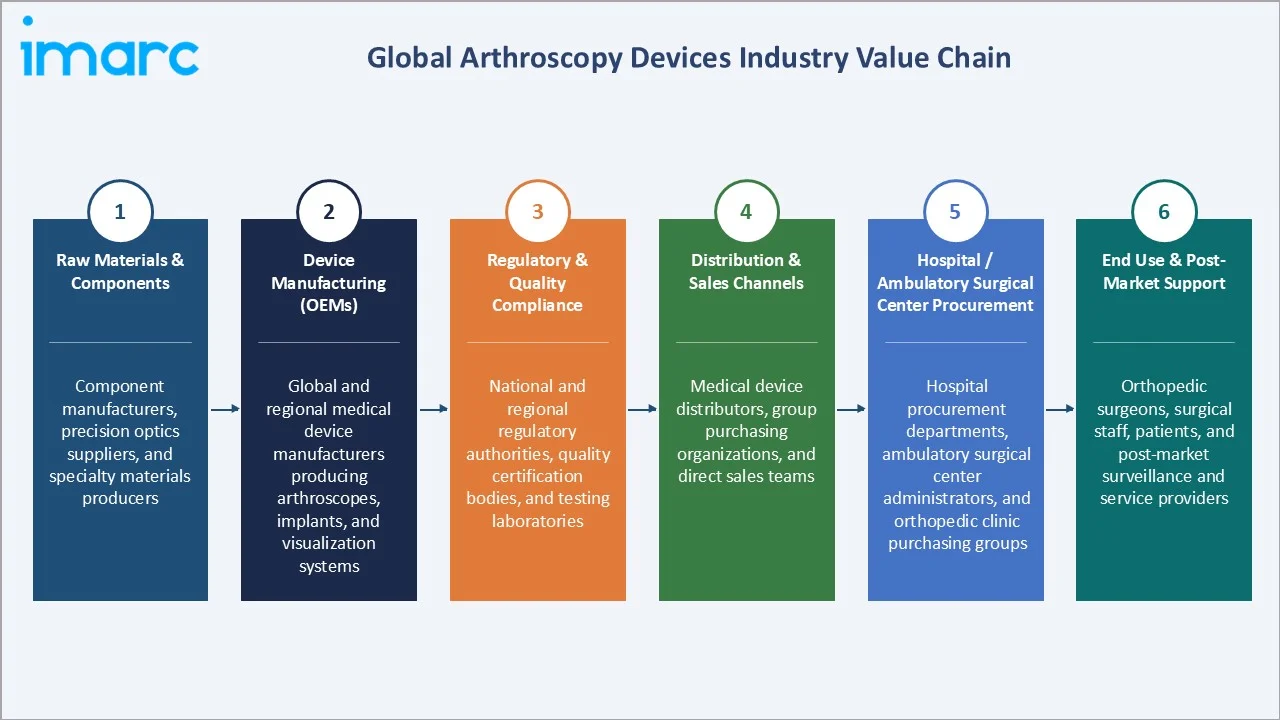
The ecosystem integrates component and optics suppliers, device manufacturers, distributors and group purchasing organizations, regulatory bodies, and hospitals, ambulatory surgical centers, and orthopedic clinics that deliver arthroscopic procedures. Together, these participants support a surgical pathway shaped by technology upgrades, reimbursement policy, and growing outpatient surgical capacity.
Market Dynamics
To evaluate market opportunities, Request Sample
Market Drivers
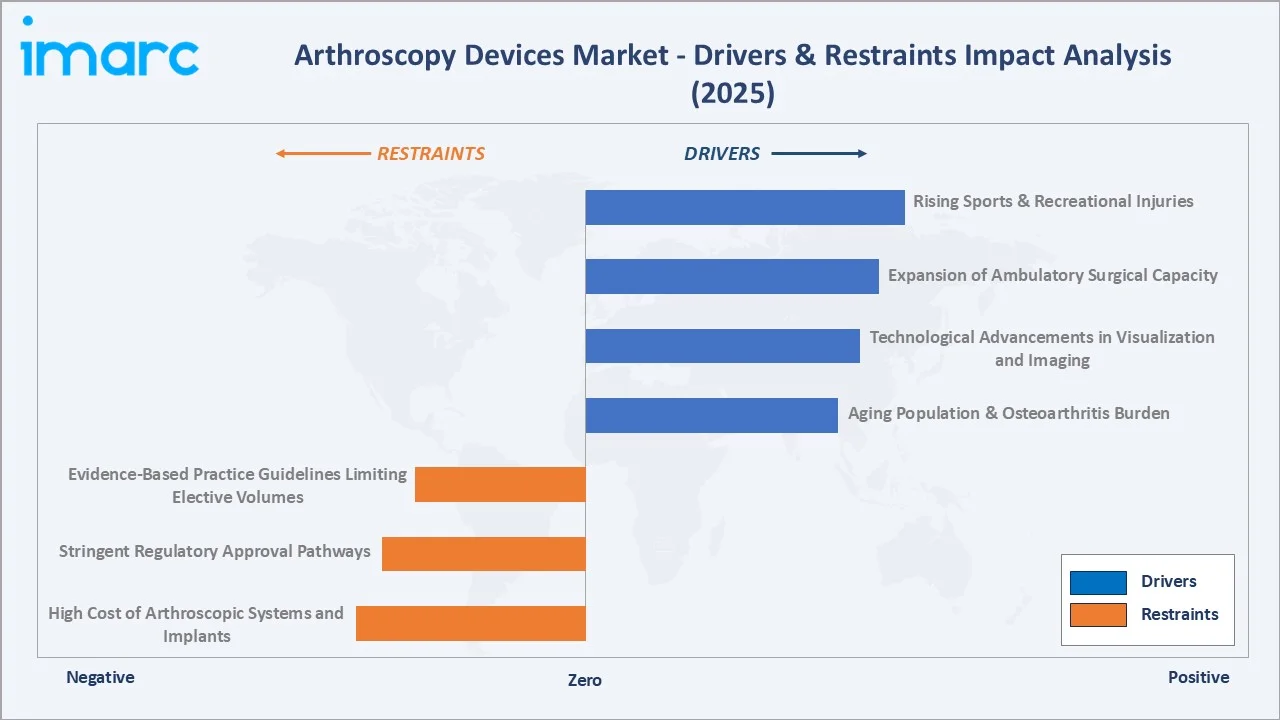
- Rising Sports and Recreational Injuries: Increasing participation in organized sports and recreational fitness activities across age groups is driving higher volumes of ligament, meniscal, and rotator cuff injuries that require arthroscopic evaluation and repair.
- Aging Population and Osteoarthritis Burden: As per WHO, by the year 2030, one out of every six individuals globally will be 60 years or older. Growing life expectancy and rising rates of degenerative joint disease are expanding the pool of patients eligible for arthroscopic diagnostic and therapeutic procedures.
- Technological Advancements in Visualization and Imaging: Continuous improvements in high-definition and digital arthroscopic cameras, along with integrated operating room platforms, are improving surgical precision and expanding the range of treatable conditions.
- Expansion of Ambulatory Surgical Capacity: Growing investment in ambulatory surgical centers is increasing access to outpatient arthroscopic procedures, supported by shorter recovery times and lower per-procedure costs relative to inpatient surgery.
Market Restraints
- High Cost of Arthroscopic Systems and Implants: Capital-intensive visualization towers, radiofrequency generators, and single-use implant components raise procedure costs, limiting adoption in price-sensitive and lower-resource healthcare settings.
- Stringent Regulatory Approval Pathways: Evolving regulatory frameworks across major markets extend product development and approval timelines for new arthroscopic devices, delaying entry for innovative systems.
- Evidence-Based Practice Guidelines Limiting Elective Volumes: Increasing reliance on evidence-based clinical guidelines for certain orthopedic conditions encourages more selective use of arthroscopic procedures, reducing demand for devices in cases where conservative treatment or alternative surgical approaches are recommended.
Market Opportunities
- Growth of Single-Use and Disposable Instrumentation: Rising infection-control priorities and sterilization cost pressures are creating opportunities for disposable arthroscopic shavers, cannulas, and fluid management components.
- Expansion in Emerging Healthcare Markets: Growing orthopedic surgical capacity and rising healthcare investment across Asia-Pacific and Latin America present opportunities for manufacturers to expand distribution and surgeon training programs.
Market Challenges
- Shortage of Trained Arthroscopic Surgeons: Arthroscopic procedures require specialized surgical training, and shortages of fellowship-trained orthopedic surgeons in several regions constrain procedure volume growth.
- Reimbursement Pressure and Bundled Payment Models: Value-based and bundled payment structures across several healthcare systems are compressing per-procedure margins for hospitals and ambulatory surgical centers, influencing device purchasing decisions.
Emerging Market Trends
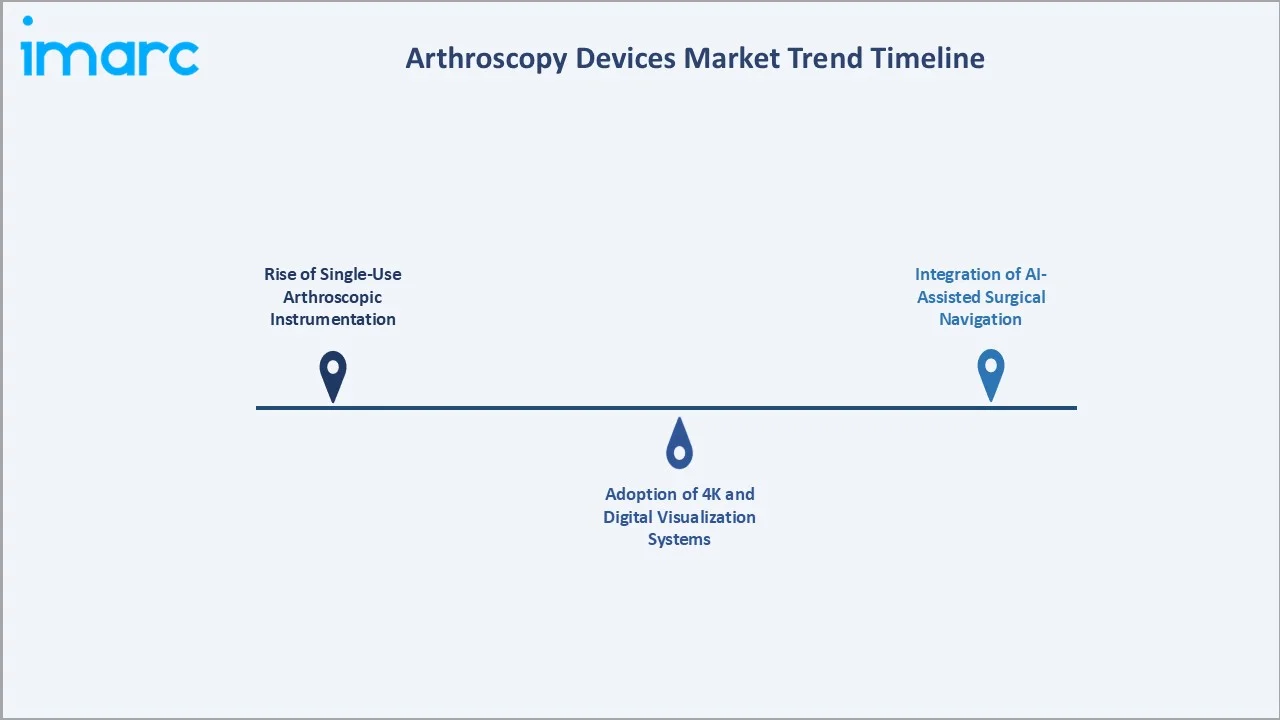
1. Adoption of 4K and Digital Visualization Systems
Hospitals and ambulatory surgical centers are upgrading to high-definition and 4K arthroscopic camera systems that improve intraoperative visualization of cartilage, ligament, and soft-tissue structures, supporting more precise repair techniques and shorter procedure times.
2. Rise of Single-Use Arthroscopic Instrumentation
Growing emphasis on infection control and sterile processing efficiency is accelerating adoption of single-use arthroscopic shavers, blades, and fluid management components across hospitals and ambulatory surgical centers.
3. Integration of AI-Assisted Surgical Navigation
Early-stage integration of AI and data analytics into arthroscopic platforms is beginning to support intraoperative decision-making, procedural documentation, and outcome tracking, extending digital capabilities already established in robotic-assisted orthopedic surgery.
Industry Value Chain Analysis
The arthroscopy devices value chain spans six stages, from component sourcing and device manufacturing through regulatory compliance, distribution, procurement, and end-use surgical application. Device manufacturing and hospital or ambulatory surgical center procurement capture the highest value-add, while regulatory and quality compliance capabilities increasingly determine sustainable competitive position in this technology-driven category.
|
Stage |
Key Players / Examples |
|
Raw Materials & Components |
Component manufacturers, precision optics suppliers, and specialty materials producers |
|
Device Manufacturing (OEMs) |
Global and regional medical device manufacturers producing arthroscopes, implants, and visualization systems |
|
Regulatory & Quality Compliance |
National and regional regulatory authorities, quality certification bodies, and testing laboratories |
|
Distribution & Sales Channels |
Medical device distributors, group purchasing organizations, and direct sales teams |
|
Hospital / Ambulatory Surgical Center Procurement |
Hospital procurement departments, ambulatory surgical center administrators, and orthopedic clinic purchasing groups |
|
End Use & Post-Market Support |
Orthopedic surgeons, surgical staff, patients, and post-market surveillance and service providers |
Vertically integrated manufacturers with proprietary optics, implant portfolios, and direct surgeon training programs are positioned to capture greater value than partners reliant on third-party components or distribution.
Technology Landscape in the Arthroscopy Devices Industry
Visualization and Imaging Technology
High-definition and 4K arthroscopic camera systems, coupled with LED and xenon light sources, are improving intraoperative visualization of cartilage, ligament, and soft-tissue structures, supporting more precise diagnosis and repair across knee, shoulder, and hip procedures.
Materials and Implant Innovation
Bioabsorbable and all-suture anchor materials are reducing implant bulk and supporting improved postoperative imaging, while advances in suture and fixation design are expanding the range of soft-tissue repairs performed arthroscopically.
Digital Connectivity and Operating Room Integration
Connected arthroscopic towers that centralize visualization, fluid management, and resection functions are streamlining operating room workflows and enabling wireless control of surgical components from outside the sterile field.
Automation and AI-Assisted Navigation
Early applications of AI in arthroscopic platforms are supporting procedural documentation, intraoperative measurement, and outcome tracking, extending capabilities already established in robotic-assisted orthopedic joint reconstruction.
Market Segmentation Analysis
The report covers the following segments:
|
Segment Category |
Leading Segment |
Market Share |
Year |
|
Device Type |
Arthroscope |
31.8% |
2025 |
|
Arthroscopy Type |
Hip Arthroscopy |
🔒 |
2025 |
|
End-User |
Hospitals |
56.7% |
2025 |
|
Region |
North America |
39.4% |
2025 |

By Device Type
Arthroscope leads the device type segment with a 31.8% share in 2025, supported by consistent replacement demand, continuous fiber-optic and digital imaging upgrades, and use across nearly every arthroscopic procedure regardless of joint or indication.
To access detailed market analysis, Request Sample
Arthroscopic implant follows at 24.6%, driven by rising use of suture anchors, meniscal repair devices, and soft-tissue fixation systems.
By End-User
Hospitals dominate the end-user segment with a 56.7% share in 2025, reflecting their role as the primary setting for complex and emergency arthroscopic procedures, established reimbursement pathways, and access to integrated operating room infrastructure.
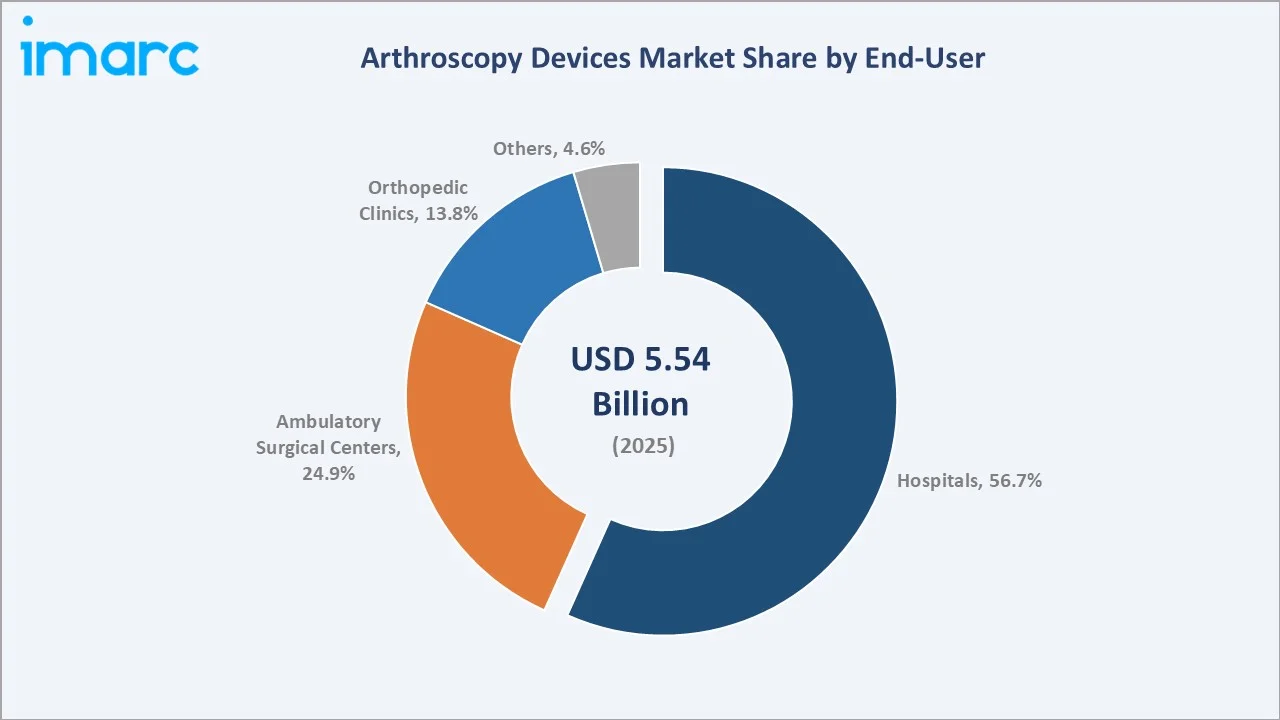
Ambulatory surgical centers represent 24.9% share and are the fastest-expanding end-user category, supported by outpatient-favorable reimbursement policy and shorter-stay arthroscopic procedures.
Regional Market Insights
|
Region |
Share (2025) |
Key Growth Drivers |
|
North America |
39.4% |
Well-established healthcare infrastructure, strong reimbursement coverage, and high adoption of advanced surgical technologies |
|
Europe |
28.1% |
Supportive regulatory frameworks, growing focus on outpatient care, and rising orthopedic procedure volumes |
|
Asia-Pacific |
21.7% |
Expanding healthcare infrastructure, rising healthcare investment, and growing patient awareness of minimally invasive treatment options |
|
Latin America |
6.2% |
Improving access to specialized orthopedic care and gradual expansion of private healthcare infrastructure |
|
Middle East and Africa |
4.6% |
Growing investment in healthcare infrastructure and increasing availability of specialized orthopedic services |
North America at 39.4% in 2025 leads the regional landscape, anchored by the United States, where high orthopedic surgery volumes, established reimbursement frameworks, and early adoption of advanced visualization and radiofrequency platforms support sustained regional leadership.
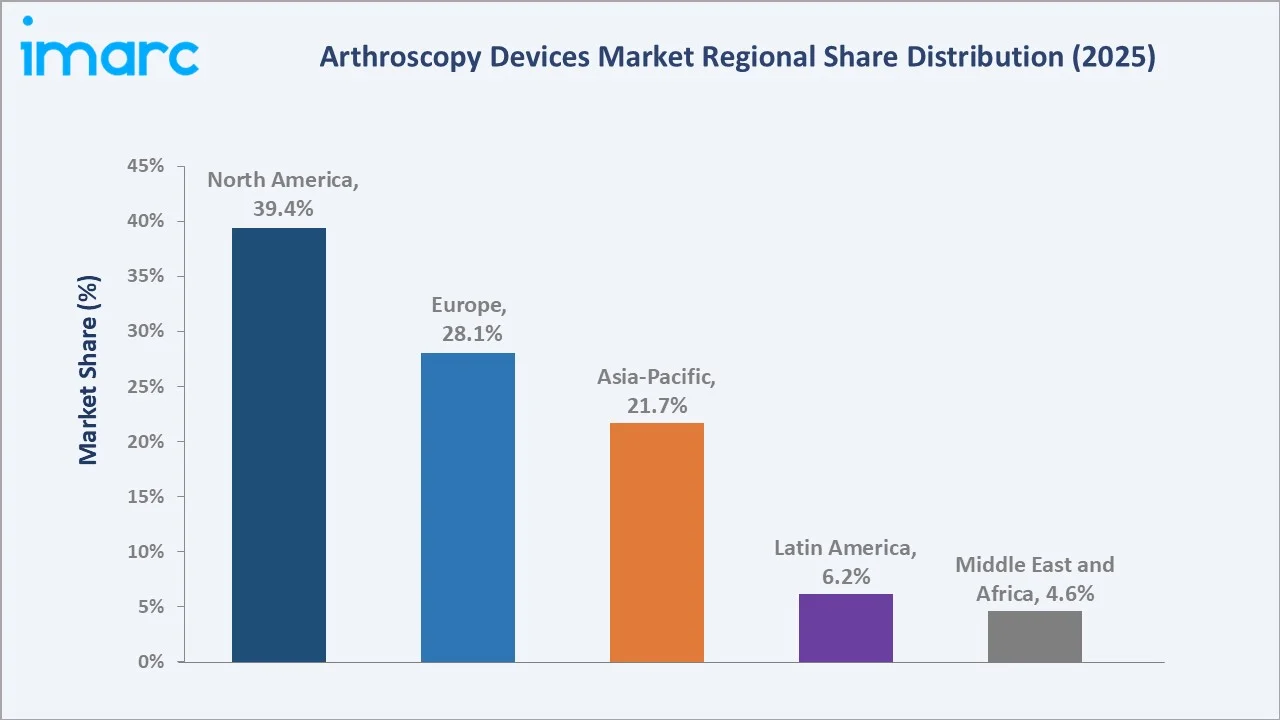
Asia-Pacific at 21.7% is the fastest-growing region. Expanding hospital infrastructure, rising healthcare investment, and growing orthopedic surgical training capacity are accelerating regional adoption of arthroscopic technologies through 2034.
Competitive Landscape
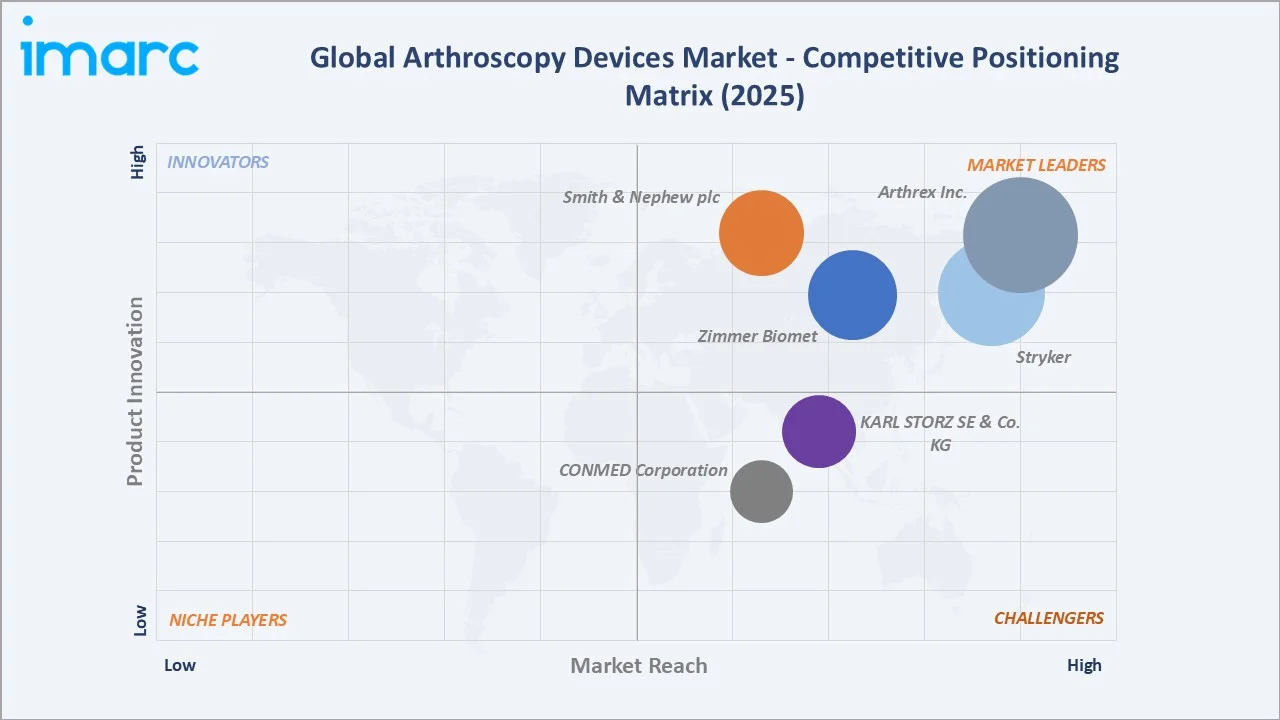
The arthroscopy devices market is moderately consolidated, with established diversified orthopedic technology companies leading product breadth and global distribution, while specialized and family-owned manufacturers compete on visualization technology and surgeon education. Product portfolio depth, surgeon training networks, and regulatory approval capacity form the key competitive moats across this category.
|
Company Name |
Brand / Key Product |
Position |
Strategic Focus |
|
Stryker |
Stryker Sports Medicine |
Leader |
Broad-based orthopedic technology company focused on expanding minimally invasive surgical portfolios and ambulatory surgical center offerings |
|
Arthrex, Inc. |
Arthrex |
Leader |
Privately held medical device company focused on continuous product innovation and surgeon education in arthroscopy |
|
Smith & Nephew plc |
Smith & Nephew Sports Medicine |
Leader |
Global medical technology company focused on advancing arthroscopic enabling technologies and expanding its joint repair portfolio |
|
Zimmer Biomet |
Zimmer Biomet Sports Medicine Products |
Leader |
Orthopedic technology company focused on integrating digital and robotic-assisted capabilities across its surgical portfolio |
|
KARL STORZ SE & Co. KG |
KARL STORZ |
Challenger |
Family-owned medical technology company focused on advancing endoscopic visualization and imaging platforms |
|
CONMED Corporation |
CONMED Linvatec |
Challenger |
Medical technology company focused on expanding its orthopedic surgery and sports medicine device portfolio |
Key players include Stryker, Arthrex, Inc., Smith & Nephew plc, Zimmer Biomet, KARL STORZ SE & Co. KG, and CONMED Corporation, among others.
Key Company Profiles
Stryker
Stryker is an American medical technology company headquartered in Michigan. It offers a broad portfolio of orthopedic, surgical, and visualization technologies, including advanced arthroscopy systems used across sports medicine and minimally invasive procedures.
- Product Portfolio: A range of arthroscopic visualization systems, soft-tissue fixation implants, and surgical instrumentation for sports medicine procedures.
- Recent Developments: In March 2026, the company showcased expanded orthopedic and robotic-assisted technologies at the AAOS 2026 Annual Meeting, continuing regular new product introductions across its Sports Medicine portfolio.
- Strategic Focus: Broadening its minimally invasive surgical portfolio and strengthening its presence in ambulatory surgical center-focused orthopedic solutions.
Arthrex, Inc.
Arthrex, Inc. is a privately held global medical device company headquartered in Naples, Florida. The company is focused on arthroscopy and minimally invasive orthopedic surgical technology.
- Product Portfolio: A broad range of arthroscopic implants, fixation devices, and visualization systems used across shoulder, knee, and small joint procedures.
- Recent Developments: The company continues to introduce new arthroscopic products and expand its global surgeon education and training programs.
- Strategic Focus: Continuous product innovation, surgeon education, and expansion of its minimally invasive surgical portfolio.
Smith & Nephew plc
Smith & Nephew plc is a British multinational medical technology company headquartered in Watford, UK. Its Sports Medicine business provides arthroscopic enabling technologies and joint repair systems.
- Product Portfolio: A range of arthroscopic visualization systems, meniscal and soft-tissue repair devices, and joint fixation implants.
- Recent Developments: The company continues to expand its Sports Medicine portfolio through new product launches and targeted acquisitions.
- Strategic Focus: Advancing arthroscopic enabling technologies and expanding its joint repair implant portfolio.
Market Concentration Analysis
The arthroscopy devices market is moderately concentrated, with the top players, including Stryker, Arthrex, Inc., Smith & Nephew plc, Zimmer Biomet, KARL STORZ SE & Co. KG, and CONMED Corporation, collectively accounting for a significant share of global device sales through broad hospital and ambulatory surgical center distribution networks.
Barriers to entry include capital-intensive product development, lengthy regulatory approval pathways, established surgeon training relationships, and the need for scalable global distribution. These factors favor well-capitalized incumbents with established product portfolios and surgeon education programs.
Consolidation continues as diversified orthopedic technology companies acquire specialized arthroscopy and soft-tissue fixation technology providers to strengthen their sports medicine portfolios, while family-owned and privately held manufacturers compete on focused innovation and surgeon relationships.
Investment & Growth Opportunities
Fastest-Growing Segments
Visualization system and radiofrequency system are the fastest-growing device type sub-segments, driven by hospital and ambulatory surgical center upgrades to digital, integrated arthroscopic towers and rising use of controlled ablation in soft-tissue procedures.
Emerging Markets
Asia-Pacific is the fastest-growing region, supported by expanding hospital infrastructure, rising healthcare investment, and growing orthopedic surgical training capacity, representing meaningful untapped opportunity for manufacturers able to expand localized distribution and education programs.
Venture & Investment Trends
Investment activity is concentrated in single-use arthroscopic instrumentation and early-stage AI-assisted surgical navigation platforms that extend digital capabilities already established in robotic-assisted orthopedic surgery.
Future Market Outlook (2026-2034)
The arthroscopy devices market is forecast to expand from USD 5.54 Billion in 2025 to USD 9.73 Billion by 2034 at a CAGR of 6.27%, adding roughly USD 4.19 Billion in incremental market value over the forecast period.
Four forces will shape the market through 2034: continued migration of procedures toward ambulatory surgical centers; broader adoption of digital and 4K visualization systems; early integration of AI-assisted surgical navigation; and expanding orthopedic surgical capacity across Asia-Pacific and other emerging healthcare markets.
By 2034, the arthroscopy devices market is expected to be defined by compact, ambulatory surgical center-optimized surgical systems, digitally integrated operating room platforms, and an expanding base of trained arthroscopic surgeons supporting sustained procedure volume growth across hospitals, ambulatory surgical centers, and orthopedic clinics.
Research Methodology
Primary Research
Primary research included structured interviews with orthopedic surgeons, hospital and ambulatory surgical center procurement leads, device manufacturer executives, and regulatory specialists, validating market sizing, segment mix, and regional demand patterns.
Secondary Research
Secondary sources included regulatory filings and clearances, company annual reports and investor presentations, peer-reviewed clinical literature, national ambulatory surgery survey data, and government health statistics agencies.
Forecasting Models
Market forecasts used top-down and bottom-up models combining procedure volume trends, device replacement cycles, average selling price movements, and regional healthcare infrastructure expansion. Scenario analysis addressed regulatory timelines, reimbursement policy shifts, and ambulatory surgical center adoption rates.
Arthroscopy Devices Market Report Coverage:
| Report Features | Details |
|---|---|
| Base Year of the Analysis | 2025 |
| Historical Period | 2020-2025 |
| Forecast Period | 2026-2034 |
| Units | Billion USD |
| Scope of the Report | Exploration of Historical Trends and Market Outlook, Industry Catalysts and Challenges, Segment-Wise Historical and Future Market Assessment:
|
| Device Types Covered | Arthroscope, Arthroscopic Implant, Fluid Management System, Radiofrequency System, Visualization System, and Others |
| Arthroscopy Types Covered | Knee Arthroscopy, Hip Arthroscopy, Spine Arthroscopy, Shoulder and Elbow Arthroscopy, Foot and Ankle Arthroscopy, and Others |
| End-Users Covered | Hospitals, Ambulatory Surgical Centers, Orthopedic Clinics, and Others |
| Regions Covered | Asia Pacific, Europe, North America, Latin America, Middle East and Africa |
| Countries Covered | United States, Canada, Germany, France, United Kingdom, Italy, Spain, Russia, China, Japan, India, South Korea, Australia, Indonesia, Brazil, Mexico |
| Companies Covered | Stryker, Arthrex, Inc., Smith & Nephew plc, Zimmer Biomet, KARL STORZ SE & Co. KG, CONMED Corporation, etc |
| Customization Scope | 10% Free Customization |
| Post-Sale Analyst Support | 10-12 Weeks |
| Delivery Format | PDF and Excel through Email (We can also provide the editable version of the report in PPT/Word format on special request) |
Frequently Asked Questions About the Arthroscopy Devices Market Report
The arthroscopy devices market was valued at USD 5.54 Billion in 2025, driven by rising sports-related injuries, an aging population, and growing adoption of minimally invasive orthopedic procedures.
The market is projected to grow at a CAGR of 6.27% from 2026-2034, reaching USD 9.73 Billion, supported by visualization technology upgrades and expanding ambulatory surgical capacity.
Arthroscope leads at 31.8% in 2025, supported by broad procedure applicability and continuous fiber-optic and digital imaging upgrades.
Hospitals lead at 56.7% in 2025, driven by complex procedure volumes and established reimbursement pathways.
North America commands 39.4% share in 2025, led by high orthopedic surgery volumes, strong reimbursement coverage, and early adoption of advanced arthroscopic technologies.
Asia-Pacific, with 21.7% share in 2025, is the fastest-growing region, supported by expanding hospital infrastructure and rising healthcare investment across the region.
Leading players include Stryker, Arthrex, Inc., Smith & Nephew plc, Zimmer Biomet, KARL STORZ SE & Co. KG, and CONMED Corporation, among others.
Rising sports and recreational injuries, an aging population with growing osteoarthritis prevalence, and continuous visualization technology advancements are the primary market drivers.
High costs of arthroscopic systems, stringent regulatory approval pathways, and evidence-based guidelines limiting elective procedures for certain knee conditions restrain broader market growth.
Advances in 4K visualization, digital operating room integration, and early AI-assisted surgical navigation are enabling more precise, efficient arthroscopic procedures across care settings.
Need more help?
- Speak to our experienced analysts for insights on the current market scenarios.
- Include additional segments and countries to customize the report as per your requirement.
- Gain an unparalleled competitive advantage in your domain by understanding how to utilize the report and positively impacting your operations and revenue.
- For further assistance, please connect with our analysts.
 Request Customization
 Speak to an Analyst
 Request Brochure
 Inquire Before Buying
Benefits of Customization
- Personalize this research
- Triangulate with your data
- Get data as per your format and definition
- Gain a deeper dive into a specific application, geography, customer, or competitor
- Any level of personalization
Get in Touch With Us
UNITED STATES
Phone: +1-201-971-6302
INDIA
Phone: +91-120-433-0800
UNITED KINGDOM
Phone: +44-753-714-6104
Email: [email protected]
Client Testimonials




.webp)




.webp)













Related Reports

Choose your plan
*Please note that the prices mentioned below are starting prices for each bundle type. Kindly contact our team for further details.*
Single User License
- 1 User License, Access on 2 Devices
- PDF Report + Excel Dataset (Password Protected)
- Lifetime Access
- No Printing Rights
- 10% Free Report Customization
- 10–12 Weeks of Analyst Support
Five User License
- Access for 5 Users, 2 Devices per User
- PDF Report + Excel Dataset (Password Protected)
- Lifetime Access
- Dedicated Account Manager
- 12–14 Weeks of Analyst Support
- No Printing Rights
- 15% Free Report Customization
- 25% Discount on Your Next Purchase
Corporate User License
- Unlimited User Access (Within Your Organization)
- PDF Report + Excel Dataset
- Lifetime Access
- Dedicated Account Manager
- 14–20 Weeks of Analyst Support
- No Printing Rights
- 20% Free Report Customization
- 30% Discount on Your Next Purchase
Essential Insights
What's included:
3 reports
- Lifetime Access
- PDF Reports
- Excel Datasets
- 2 Weeks of Free Analyst Support
- 2 User Licenses
- Access on 2 Devices
- Printing Rights
- Complimentary PowerPoint (PPT) Version
- Complimentary License Upgrade
Professional Access
What's included:
5 reports
- Lifetime Access
- PDF Reports
- Excel Datasets
- 8 Weeks of Free Analyst Support
- 2 User Licenses
- Access on 2 Devices
- Printing Rights
- Complimentary PowerPoint (PPT) Version
- Complimentary License Upgrade
Business Advantage
What's included:
8 reports
- Lifetime Access
- PDF Reports
- Excel Datasets
- 14 Weeks of Free Analyst Support
- 2 User Licenses
- Access on 2 Devices
- Printing Rights
- Complimentary PowerPoint (PPT) Version
- Complimentary License Upgrade
Enterprise Intelligence
What's included:
10 reports
- Lifetime Access
- PDF Reports
- Excel Datasets
- 20 Weeks of Free Analyst Support
- 2 User Licenses
- Access on 2 Devices
- Printing Rights
- Complimentary PowerPoint (PPT) Version
- Complimentary License Upgrade