
Asthma Therapeutics Market Size, Share, Trends and Forecast by Drug Class, Product Type, Treatment Type, Route of Administration, and Region, 2026-2034
Asthma Therapeutics Market Size and Share:
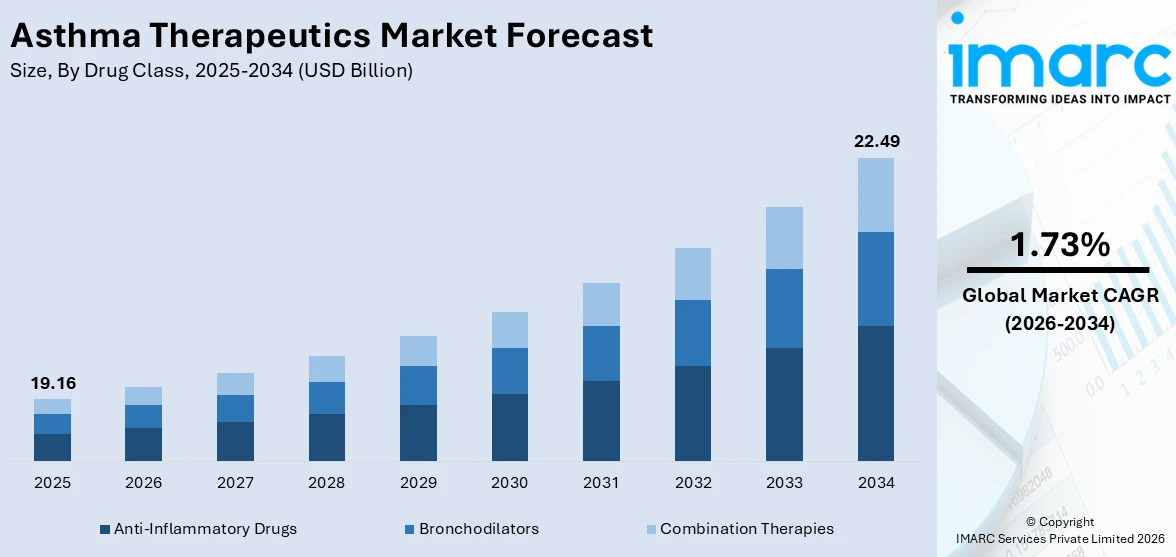
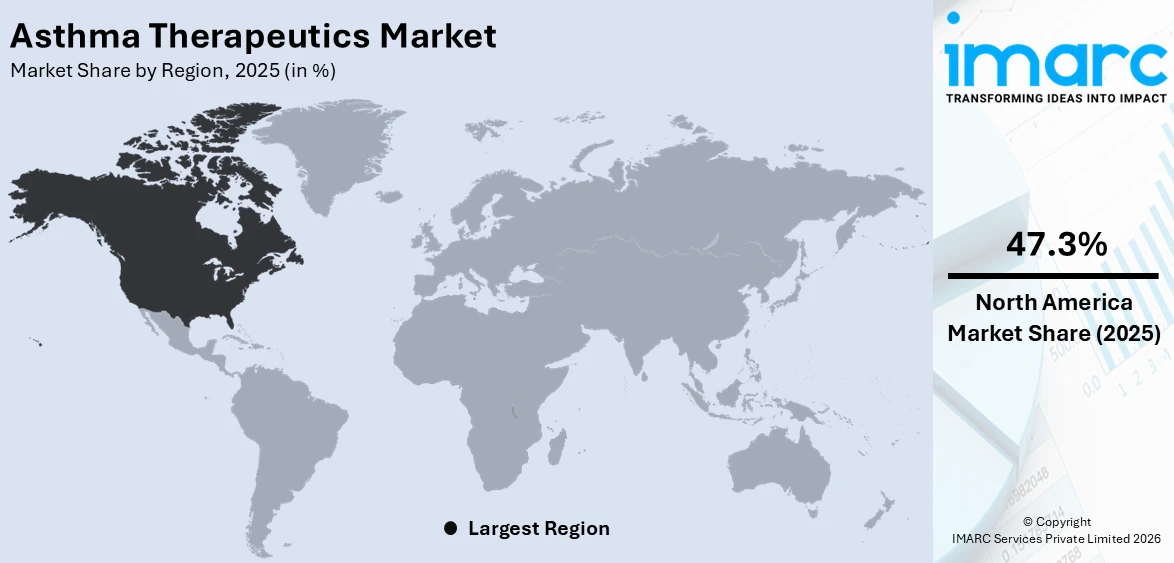
The global asthma therapeutics market size was valued at USD 19.16 Billion in 2025. Looking forward, IMARC Group estimates the market to reach USD 22.49 Billion by 2034, exhibiting a CAGR of 1.73% from 2026-2034. North America currently dominates the market, holding a market share of 47.3% in 2025. The region benefits from an extensive healthcare infrastructure, high prevalence of respiratory disorders, and robust regulatory frameworks that facilitate the timely approval and adoption of advanced asthma therapeutic solutions, reinforcing the global asthma therapeutics market share.
The global asthma therapeutics market is driven by a confluence of rising respiratory disease burden, growing awareness of chronic airway management, and rapid advancements in drug delivery systems. An increasing global prevalence of asthma among both pediatric and adult populations has intensified the demand for effective and targeted treatment regimens. The widespread adoption of biologics and monoclonal antibodies has expanded the treatment landscape, enabling more personalized and precision-based therapeutic approaches for patients with moderate to severe asthma. The expanding geriatric population globally, which tends to exhibit higher susceptibility to respiratory ailments, is additionally supporting asthma therapeutics market growth across multiple geographies.
The United States has emerged as a major region in the asthma therapeutics market owing to many factors. The nation carries one of the highest burdens of asthma globally, with a substantial portion of its population requiring continuous therapeutic management. According to reports, the American Lung Association reported that 26.8 million adults and 4.5 million children are living with asthma, emphasizing the widespread need for consistent treatment and disease management. This persistent demand has fueled robust market activity encompassing prescription medications, advanced delivery devices, and biologics. The widespread acceptance of inhaled corticosteroids and long-acting beta-agonists reflects physician confidence in established therapeutic pathways. Additionally, well-developed healthcare systems characterized by widespread insurance coverage, active physician networks, and patient support programs are enabling broader access to asthma medications.
To get more information on this market Request Sample
Asthma Therapeutics Market Trends:
Rising Adoption of Biologic Therapies
The growing adoption of biologic therapies represents a transformative shift in the management of severe asthma, particularly for patients who do not respond adequately to conventional treatment approaches. These therapies are especially beneficial for patients with eosinophilic or allergic phenotypes of asthma, enabling healthcare providers to deliver more targeted and individualized interventions based on specific patient disease profiles. In December 2025, the U.S. Food and Drug Administration approved depemokimab (Exdensur), developed by GSK, as an add-on maintenance biologic therapy for severe eosinophilic asthma, becoming the first biologic in this category designed for twice-yearly dosing. The increased availability of subcutaneous and intravenous administration options has expanded the reach of these treatments across hospital and outpatient settings alike.
Advancements in Smart Inhaler Technology
The rapid proliferation of smart inhaler technologies is fundamentally redefining asthma management practices across diverse patient demographics worldwide. These digitally enabled devices integrate electronic sensors and connectivity features that monitor medication usage patterns, track inhalation technique, and transmit real-time data to companion applications on mobile platforms. As per sources, that digital inhaler users achieved 71.4% medication adherence compared with 59.9% in standard-care groups, demonstrating improved asthma treatment compliance through connected inhaler technologies. Regulatory support for digital health tools and evolving reimbursement pathways for connected devices is reinforcing the asthma therapeutics market outlook as the sector embraces advanced, technology-driven care models promising meaningful improvements in patient adherence and long-term respiratory health outcomes.
Expanding Role of Combination Therapies
The expanding role of combination therapies in asthma management is significantly reshaping treatment protocols across clinical settings worldwide. Combining agents from different pharmacological classes, such as inhaled corticosteroids with long-acting beta-agonists or leukotriene receptor antagonists, offers synergistic benefits that single-agent therapies often cannot achieve independently. In May 2024, the World Health Organization reported that asthma affected around 262 million people globally and caused approximately 455 000 deaths annually, emphasizing the need for more effective treatment strategies including combination therapies. Furthermore, ongoing clinical investigations examining additional combination options, together with expanding reimbursement support across global markets, continue to underpin the positive asthma therapeutics market forecast as the industry advances toward increasingly holistic and evidence-based respiratory care delivery.
Asthma Therapeutics Industry Segmentation:
IMARC Group provides an analysis of the key trends in each segment of the global asthma therapeutics market, along with forecast at the global, regional, and country levels from 2026-2034. The market has been categorized based on drug class, product type, treatment type, and route of administration.
Analysis by Drug Class:
- Anti-Inflammatory Drugs
- Bronchodilators
- Combination Therapies
Anti-inflammatory drugs hold 62.8% of the market share, representing the foundational therapeutic category in asthma management, encompassing inhaled corticosteroids, leukotriene modifiers, and newer biologic agents designed to suppress airway inflammation at its source. These medications function by targeting the underlying inflammatory mechanisms responsible for airway hyperresponsiveness, mucus hypersecretion, and progressive bronchoconstriction, delivering meaningful symptomatic relief and reducing the risk of acute exacerbations. Inhaled corticosteroids, which constitute the primary subcategory, are widely recommended as first-line treatment across international asthma management guidelines due to their well-established safety and efficacy profiles. The emergence of biologic agents within the anti-inflammatory drug class has further expanded therapeutic options for patients with difficult-to-control and severe asthma phenotypes, enabling more precise targeting of specific immune pathways. Rising physician adoption of phenotype-guided treatment strategies continues to accelerate prescriptions within this category. Broader awareness of evolving asthma therapeutics market trends is encouraging healthcare systems to increasingly prioritize preventive anti-inflammatory therapies over reactive management approaches worldwide.
Analysis by Product Type:
Access the comprehensive market breakdown Request Sample
- Inhalers
- Dry Powder Inhalers
- Metered Dose Inhalers
- Soft Mist Inhalers
- Nebulizers
- Pneumatic Nebulizers
- Ultrasonic Nebulizers
- Mesh Nebulizers
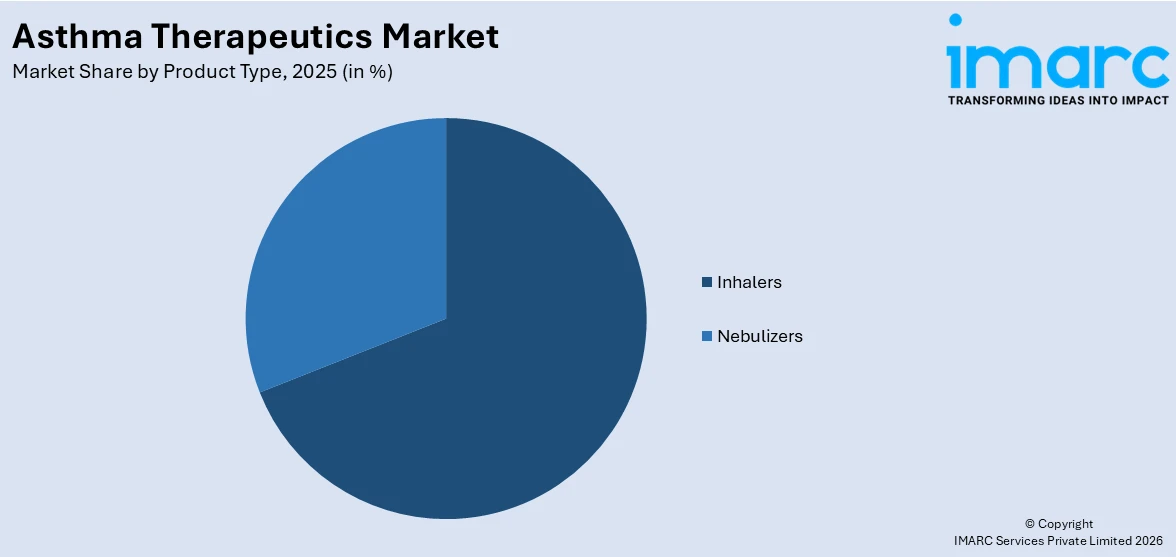
Inhalers lead the market with a share of 68.5%, offering a direct-to-lung drug delivery mechanism that maximizes therapeutic efficacy while minimizing systemic side effects. The category encompasses a diverse range of device types, including dry powder inhalers, metered dose inhalers, and soft mist inhalers, each designed to accommodate varying patient preferences, inhalation capacities, and severity levels. Metered dose inhalers remain the most widely used device type globally, given their portability, ease of use, and broad compatibility with multiple drug formulations including corticosteroids, bronchodilators, and combination therapies. As per sources, Viatris and Kindeva Drug Delivery launched Breyna™, the first U.S. FDA-approved generic version of Symbicort, a budesonide-formoterol inhalation aerosol used for asthma and COPD treatment. Dry powder inhalers are gaining traction owing to their propellant-free design and growing alignment with environmental sustainability initiatives across the pharmaceutical sector. Soft mist inhalers offer additional advantages for patients with coordination difficulties by producing a slow-moving aerosol cloud that optimizes lung deposition.
Analysis by Treatment Type:
- Quick-Relief Medications
- Long-Term Asthma Control Medications
Long-term asthma control medications dominate the market, with a share of 58.5%, encompassing a broad spectrum of therapies designed to reduce airway inflammation, prevent bronchoconstriction, and minimize the frequency and severity of asthma exacerbations over an extended period. These medications, which include inhaled corticosteroids, long-acting beta-agonists, leukotriene modifiers, and biologic agents, are prescribed as maintenance therapy for patients with persistent asthma. Their primary objective is to achieve and sustain asthma control, reducing the need for rescue medications and emergency interventions. Healthcare guidelines across major markets consistently recommend long-term control medications as the cornerstone of chronic asthma management, given their demonstrated ability to improve quality of life and reduce hospitalizations. The proliferation of biologics within this category has introduced highly targeted treatment options that address specific disease phenotypes, further strengthening clinical outcomes. Increased awareness of proactive disease management and the growing emphasis on personalized medicine are supporting sustained expansion of this treatment category globally.
Analysis by Route of Administration:
- Inhalation
- Oral
- Parenteral
Inhalation represents the leading segment, with a market share of 72.5%, as a route of administration is firmly established as the preferred delivery mechanism for asthma therapeutics worldwide, primarily due to its ability to deliver drugs directly to the site of action within the airways with high precision and minimal systemic exposure. This targeted approach significantly reduces the risk of systemic adverse effects commonly associated with oral or parenteral routes while enabling rapid onset of therapeutic action, making it particularly suitable for both maintenance and rescue therapy. The availability of a wide variety of inhaled formulations, including corticosteroids, bronchodilators, and combination products, supports comprehensive disease management across all severity levels. Technological advances in inhaler design, such as the development of more patient-friendly devices with dose counters, breath-actuation features, and digital connectivity, have further reinforced the dominance of the inhalation route.
Regional Analysis:
To get more information on the regional analysis of this market Request Sample
- North America
- United States
- Canada
- Asia Pacific
- China
- Japan
- India
- South Korea
- Australia
- Indonesia
- Others
- Europe
- Germany
- France
- United Kingdom
- Italy
- Spain
- Russia
- Others
- Latin America
- Brazil
- Mexico
- Others
- Middle East and Africa
North America, accounting for 47.3% of the share, maintaining the leading position in the market. The regions commanding position in the asthma therapeutics landscape is underpinned by a well-established healthcare infrastructure, a high disease burden, and a sophisticated pharmaceutical ecosystem that facilitates rapid adoption of innovative therapies. The region is home to the world's largest and most advanced healthcare markets, supported by substantial public and private investment in respiratory medicine research and development. Favorable regulatory pathways managed by agencies such as the U.S. Food and Drug Administration have historically enabled timely market entry for new drug approvals, including biologics and novel inhaler technologies. Comprehensive health insurance coverage and reimbursement structures across the United States and Canada have further expanded patient access to a broad spectrum of asthma therapies. Growing awareness of disease management best practices, robust clinical trial activity, and a strong pipeline of investigational asthma therapies are collectively sustaining the region's leadership position within the global market.
Key Regional Takeaways:
United States Asthma Therapeutics Market Analysis
The region has the largest national market in terms of the total market size in the global asthma therapeutics industry. This is attributed to the exceptionally high prevalence rates of the disease in the country. Additionally, the country has an entrenched tradition of pharmaceutical innovation and healthcare accessibility. It has an extensive healthcare system that includes well-organized networks of physicians, pulmonologists, and well-funded research activities that ensure continuous innovation in the detection and treatment of the disease. Government agencies like the national institutes of health and the centers for disease control and prevention actively monitor the epidemiology of the disease. They fund research activities that seek to improve treatment outcomes. The adoption of guidelines by organizations like the National asthma education and prevention program has helped standardize treatment approaches. This ensures that patients receive consistent treatment, including the prescription of drugs, despite their demographics. The country has an entrenched system of health insurance that covers patients suffering from asthma. This has helped remove economic barriers to treatment. Organizations advocating for patients suffering from the disease, along with active public awareness campaigns, have helped improve patient recognition, early detection, and treatment adherence.
Europe Asthma Therapeutics Market Analysis
Europe represents a well-developed and strategically significant market for asthma therapeutics, characterized by high healthcare standards, universal insurance coverage in most member states, and strong governmental emphasis on respiratory health. The region exhibits a significant asthma burden across densely populated nations such as Germany, France, the United Kingdom, and Italy, where environmental factors including urbanization, air pollution, and allergen exposure contribute to persistently high prevalence rates. According to reports, the European Commission approved Tezspire (tezepelumab), developed by AstraZeneca, as an add-on maintenance treatment for patients aged 12 years and older with severe asthma inadequately controlled by high-dose inhaled corticosteroids and another therapy. The national health service model prevalent across many European nations supports universal access to asthma medications, reducing out-of-pocket costs for patients. Growing investment in digital health adoption, telemedicine infrastructure, and personalized medicine initiatives is advancing asthma management capabilities across the continent. Additionally, pan-European public health programs focused on early diagnosis, preventive care, and patient education are supporting better disease control and contributing to sustained demand for advanced asthma therapeutics.
Asia-Pacific Asthma Therapeutics Market Analysis
Asia-Pacific represents a rapidly growing market for asthma therapeutics, driven by a large population base, rising urbanization, and increasing prevalence of respiratory conditions across the region. Countries such as China, India, Japan, South Korea, and Australia are experiencing escalating asthma burdens attributable to worsening air quality, occupational exposures, and changing environmental conditions. Government-led healthcare expansion initiatives and increasing investment in pharmaceutical infrastructure are improving access to asthma medications in previously underserved areas. The growing middle class in emerging economies such as India and China is driving greater healthcare consumption, including increased utilization of branded and innovative asthma therapeutic products. Additionally, rising physician awareness of modern treatment protocols and expanding health insurance coverage are translating into improved diagnosis rates and stronger demand for effective, long-term asthma management solutions across both urban and rural populations.
Latin America Asthma Therapeutics Market Analysis
Latin America presents a growing market for asthma therapeutics, supported by rising disease prevalence, improving healthcare access, and expanding pharmaceutical distribution networks. Brazil and Mexico serve as the primary market contributors in the region, driven by large patient populations, ongoing government healthcare investments, and strengthening insurance frameworks. Increasing urbanization and environmental degradation are elevating asthma incidence across the region. Regional health authorities are advancing public awareness campaigns to promote early diagnosis and consistent treatment adherence, further generating demand for therapeutic solutions. Nonetheless, affordability remains a key factor influencing treatment accessibility for a significant proportion of the Latin American patient population.
Middle East and Africa Asthma Therapeutics Market Analysis
The Middle East and Africa region represents an emerging market for asthma therapeutics, with demand driven by high disease prevalence rooted in environmental, climatic, and occupational risk factors across the region. Countries in the Gulf Cooperation Council, including Saudi Arabia and the United Arab Emirates, are making significant strides in healthcare infrastructure development and pharmaceutical market expansion. Increasing government investment in respiratory health programs and rising health awareness among the population are supporting market growth. However, limited healthcare access and affordability constraints in parts of sub-Saharan Africa continue to temper the overall pace of market development across the broader region.
Competitive Landscape:
The asthma therapeutics market is characterized by intense competitive activity among a select group of multinational pharmaceutical corporations that collectively dominate global drug development, manufacturing, and commercialization efforts. Market participants are actively engaged in advancing proprietary pipelines of biologic agents, inhaled corticosteroids, and novel combination therapies to address increasingly complex patient needs. Strategic collaborations, licensing agreements, and joint research initiatives are commonly employed to accelerate the progression of candidate molecules through clinical development phases. Companies are also investing substantially in device innovation, particularly in the development of smart inhalers and digitally enabled respiratory management platforms that align with evolving patient expectations and regulatory priorities.
The report provides a comprehensive analysis of the competitive landscape in the asthma therapeutics market with detailed profiles of all major companies, including:
- AstraZeneca PLC
- Abbott Laboratories
- Amgen Inc.
- Biogen Inc.
- Boehringer Ingelheim International GmbH
- F. Hoffmann-La Roche Ltd.
- GlaxoSmithKline Plc
- Merck Sharp & Dohme Corp.
- Novartis International AG
- Sunovion Pharmaceuticals Inc.
- Teva Pharmaceutical Industries Ltd.
Latest News and Developments:
- In March 2026, Glenmark Pharmaceuticals announced that the U.S. Food and Drug Administration granted final approval for Fluticasone Propionate Inhalation Aerosol USP (44 mcg), a generic equivalent to Flovent HFA used for asthma maintenance therapy. The inhaler received Competitive Generic Therapy designation and will launch in the United States in March 2026, supporting broader access to affordable inhalation treatments.
Asthma Therapeutics Market Report Scope:
| Report Features | Details |
|---|---|
| Base Year of the Analysis | 2025 |
| Historical Period | 2020-2025 |
| Forecast Period | 2026-2034 |
| Units | Billion USD |
| Scope of the Report |
Exploration of Historical Trends and Market Outlook, Industry Catalysts and Challenges, Segment-Wise Historical and Future Market Assessment:
|
| Drug Classes Covered | Anti-Inflammatory Drugs, Bronchodilators, Combination Therapies |
| Product Types Covered |
|
| Treatment Types Covered | Quick-Relief Medications, Long-Term Asthma Control Medications |
| Route of Administrations Covered | Inhalation, Oral, Parenteral |
| Regions Covered | North America, Asia Pacific, Europe, Latin America, Middle East and Africa |
| Countries Covered | United States, Canada, China, Japan, India, South Korea, Australia, Indonesia, Germany, France, United Kingdom, Italy, Spain, Russia, Brazil, Mexico |
| Companies Covered | AstraZeneca PLC, Abbott Laboratories, Amgen Inc., Biogen Inc., Boehringer Ingelheim International GmbH, F. Hoffmann-La Roche Ltd., GlaxoSmithKline Plc, Merck Sharp & Dohme Corp., Novartis International AG, Sunovion Pharmaceuticals Inc., Teva Pharmaceutical Industries Ltd., etc. |
| Customization Scope | 10% Free Customization |
| Post-Sale Analyst Support | 10-12 Weeks |
| Delivery Format | PDF and Excel through Email (We can also provide the editable version of the report in PPT/Word format on special request) |
Key Benefits for Stakeholders:
- IMARC’s report offers a comprehensive quantitative analysis of various market segments, historical and current market trends, market forecasts, and dynamics of the asthma therapeutics market from 2020-2034.
- The research study provides the latest information on the market drivers, challenges, and opportunities in the global asthma therapeutics market.
- The study maps the leading, as well as the fastest-growing, regional markets. It further enables stakeholders to identify the key country-level markets within each region.
- Porter's Five Forces analysis assists stakeholders in assessing the impact of new entrants, competitive rivalry, supplier power, buyer power, and the threat of substitution. It helps stakeholders to analyze the level of competition within the asthma therapeutics industry and its attractiveness.
- Competitive landscape allows stakeholders to understand their competitive environment and provides an insight into the current positions of key players in the market.
Frequently Asked Questions About the Asthma Therapeutics Market Report Report
The asthma therapeutics market was valued at USD 19.16 Billion in 2025.
The asthma therapeutics market is projected to exhibit a CAGR of 1.73% during 2026-2034, reaching a value of USD 22.49 Billion by 2034.
The asthma therapeutics market is propelled by the escalating global burden of respiratory disorders, rapid advancements in biologic drug development, and growing consumer adoption of smart inhaler technologies. Supportive regulatory frameworks, increasing healthcare expenditure, and expanding reimbursement coverage for innovative treatments further accelerate market expansion. Rising physician adoption of precision medicine strategies and combination therapy protocols contribute to sustained demand.
North America currently dominates the asthma therapeutics market, accounting for a share of 47.3%. The region benefits from an extensive and well-funded healthcare infrastructure, high burden of respiratory disease, robust regulatory approval pathways for innovative pharmaceuticals, and widespread insurance coverage that collectively facilitate broad patient access to advanced asthma therapeutic solutions.
Some of the major players in the asthma therapeutics market include AstraZeneca PLC, Abbott Laboratories, Amgen Inc., Biogen Inc., Boehringer Ingelheim International GmbH, F. Hoffmann-La Roche Ltd., GlaxoSmithKline Plc, Merck Sharp & Dohme Corp., Novartis International AG, Sunovion Pharmaceuticals Inc., Teva Pharmaceutical Industries Ltd., etc.
Need more help?
- Speak to our experienced analysts for insights on the current market scenarios.
- Include additional segments and countries to customize the report as per your requirement.
- Gain an unparalleled competitive advantage in your domain by understanding how to utilize the report and positively impacting your operations and revenue.
- For further assistance, please connect with our analysts.
 Request Customization
 Speak to an Analyst
 Request Brochure
 Inquire Before Buying
Benefits of Customization
- Personalize this research
- Triangulate with your data
- Get data as per your format and definition
- Gain a deeper dive into a specific application, geography, customer, or competitor
- Any level of personalization
Get in Touch With Us
UNITED STATES
Phone: +1-201-971-6302
INDIA
Phone: +91-120-433-0800
UNITED KINGDOM
Phone: +44-753-714-6104
Email: [email protected]
Client Testimonials




.webp)




.webp)













Related Reports

Choose your plan
*Please note that the prices mentioned below are starting prices for each bundle type. Kindly contact our team for further details.*
Single User License
- 1 User License, Access on 2 Devices
- PDF Report + Excel Dataset (Password Protected)
- Lifetime Access
- No Printing Rights
- 10% Free Report Customization
- 10–12 Weeks of Analyst Support
Five User License
- Access for 5 Users, 2 Devices per User
- PDF Report + Excel Dataset (Password Protected)
- Lifetime Access
- Dedicated Account Manager
- 12–14 Weeks of Analyst Support
- No Printing Rights
- 15% Free Report Customization
- 25% Discount on Your Next Purchase
Corporate User License
- Unlimited User Access (Within Your Organization)
- PDF Report + Excel Dataset
- Lifetime Access
- Dedicated Account Manager
- 14–20 Weeks of Analyst Support
- No Printing Rights
- 20% Free Report Customization
- 30% Discount on Your Next Purchase
Essential Insights
What's included:
3 reports
- Lifetime Access
- PDF Reports
- Excel Datasets
- 2 Weeks of Free Analyst Support
- 2 User Licenses
- Access on 2 Devices
- Printing Rights
- Complimentary PowerPoint (PPT) Version
- Complimentary License Upgrade
Professional Access
What's included:
5 reports
- Lifetime Access
- PDF Reports
- Excel Datasets
- 8 Weeks of Free Analyst Support
- 2 User Licenses
- Access on 2 Devices
- Printing Rights
- Complimentary PowerPoint (PPT) Version
- Complimentary License Upgrade
Business Advantage
What's included:
8 reports
- Lifetime Access
- PDF Reports
- Excel Datasets
- 14 Weeks of Free Analyst Support
- 2 User Licenses
- Access on 2 Devices
- Printing Rights
- Complimentary PowerPoint (PPT) Version
- Complimentary License Upgrade
Enterprise Intelligence
What's included:
10 reports
- Lifetime Access
- PDF Reports
- Excel Datasets
- 20 Weeks of Free Analyst Support
- 2 User Licenses
- Access on 2 Devices
- Printing Rights
- Complimentary PowerPoint (PPT) Version
- Complimentary License Upgrade