
Australia Lingerie Market Report by Product Type (Brassiere, Knickers or Panties, Shapewear, and Others), Material (Cotton, Silk, Satin, Nylon, and Others), Price Range (Economy, Premium), Distribution Channel (Mass Merchandizers, Specialized Stores, Online Stores, and Others), and Region 2026-2034
Market Overview:
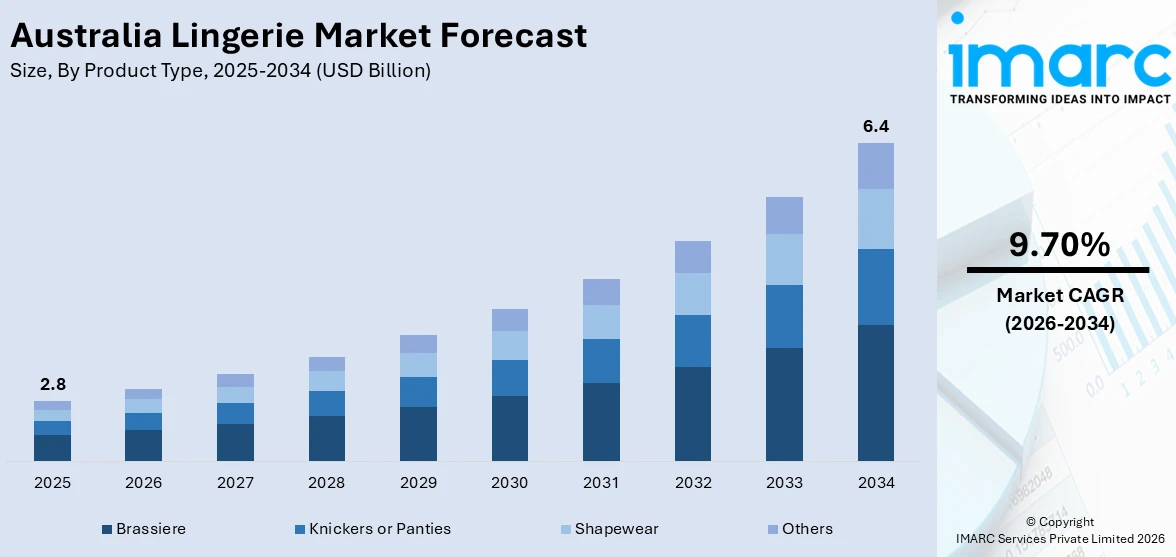
Australia lingerie market size reached USD 2.8 Billion in 2025. Looking forward, the market is projected to reach USD 6.4 Billion by 2034, exhibiting a growth rate (CAGR) of 9.70% during 2026-2034. The growing emphasis of individuals on self-expression and body confidence is primarily driving the market growth across the country.
|
Report Attribute
|
Key Statistics
|
|---|---|
|
Base Year
|
2025 |
|
Forecast Years
|
2026-2034
|
|
Historical Years
|
2020-2025
|
| Market Size in 2025 | USD 2.8 Billion |
| Market Forecast in 2034 | USD 6.4 Billion |
| Market Growth Rate (2026-2034) | 9.70% |
Lingerie refers to a flexible and lightweight undergarment produced from a combination of materials like cotton, polyester, nylon, lace, sheer fabrics, chiffon, satin, silk, etc. Individuals wear this intimate apparel between their bodies and outer clothing to safeguard clothes from bodily secretions, promoting hygiene. Lingerie serves multiple purposes, functioning as both fashionable and functional attire. It is utilized in everyday wear, bridal ensembles, and sportswear, contributing to physical enhancement, bolstered confidence, and overall well-being. In contemporary times, lingerie is available in diverse sizes, patterns, colors, and types, encompassing knickers, briefs, thongs, bodysuits, corsets, etc. As a result, it is catering to a wide range of consumer preferences and needs across the country.
To get more information on this market Request Sample
Key Trends of Australia Lingerie Market:
Shift Toward Comfort and Everyday Wear
In Australia, consumers are placing a greater emphasis on comfort, practicality, and functionality in lingerie, prioritizing these aspects over just aesthetic appeal. This trend is increasing the demand for designs that incorporate breathable fabrics, seamless structures, and lightweight materials ideal for all-day use. Brands are focusing on softness, stretch, and ergonomic designs to cater to the changing lifestyle demands, particularly among working women and those with active lifestyles. The growing trend of minimalist fashion and the rise of casual wear are further driving this change. Manufacturers are innovating with fabric blends and wire-free styles that offer both support and freedom of movement. As comfort becomes a key factor in purchasing decisions, this evolution is significantly shaping product development, branding strategies, and retail offerings, contributing to steady Australia lingerie market growth across diverse consumer groups.
Rise of Sustainable and Ethical Lingerie
Sustainability is becoming a key focus in the Australian lingerie market as consumers grow more aware of environmental and ethical concerns. Brands are increasingly opting for eco-friendly materials like organic cotton, bamboo, and recycled textiles while emphasizing transparent and ethical manufacturing processes within their supply chains. This change aligns with consumer values and helps brands cultivate long-term trust and stand out in a competitive landscape. Marketing strategies that highlight cruelty-free dyes, minimized carbon footprints, and fair labor conditions are resonating strongly. Furthermore, both small boutique labels and established companies are integrating sustainability into their core identity. This increasing focus on responsible production is guiding product innovations and bolstering Australia lingerie market share in favor of ethical brands.
Growth of Inclusive Sizing and Body Positivity
The concepts of inclusivity and body confidence are transforming the Australian lingerie sector as consumers look for brands that represent diversity in size, shape, and imagery. Companies are broadening their product offerings to cater to a wider range of body types, providing customized fits and larger size options. Marketing initiatives are increasingly celebrating natural body representations, empowering consumers and fostering self-acceptance. This inclusive mindset is reaching a broader audience, diminishing the stigma associated with sizing and encouraging repeat purchases. Retailers are also implementing flexible fitting solutions and virtual tools to enhance accessibility and convenience. The shift towards inclusivity represents both a cultural and commercial evolution that resonates profoundly with contemporary consumers, driving brand loyalty and engagement while contributing to the rising Australia lingerie market demand across all demographics.
Growth Drivers of Australia Lingerie Market:
Expanding E-commerce and Digital Retail
The swift expansion of online retail channels is reshaping lingerie sales in Australia. Shoppers are increasingly opting for digital platforms due to their convenience, privacy, and variety. Brands are utilizing virtual fitting tools and AI-driven recommendations to enhance the personalized shopping experience. Additionally, social media and influencer marketing have emerged as potent instruments for brand engagement, allowing companies to connect with customers directly and showcase new collections. Subscription-based lingerie boxes and flexible return options are also contributing to improved customer satisfaction and loyalty. As consumers grow more comfortable with purchasing intimate apparel online, digital retail is unveiling fresh opportunities for both established labels and new entrants. The incorporation of e-commerce innovations is promoting accessibility, affordability, and stronger relationships between consumers and brands within the expanding Australian lingerie market.
Innovation in Fabric and Design Technology
Progress in material science and design is significantly enhancing product quality and user comfort within the lingerie sector. According to Australia lingerie market analysis, brands are focusing on fabrics that are breathable, stretchable, and moisture-wicking to cater to the demands of modern, active lifestyles. Seamless designs, adaptive fits, and lightweight materials improve comfort while still being visually appealing. Smart textiles, featuring antimicrobial and temperature-regulating properties, are becoming increasingly popular, providing extra functionality and durability. Technological advancements also facilitate the creation of eco-friendly lingerie through sustainable dyeing processes and recycled materials. These developments are redefining comfort and performance while helping brands distinguish themselves in a competitive environment, attracting consumers who prioritize quality, innovation, and long-term value.
Premiumization and Lifestyle Shifts
Shifting lifestyles, increasing disposable incomes, and changing fashion preferences are driving the premiumization trend in the Australian lingerie market. Consumers are increasingly perceiving lingerie as a form of self-expression rather than merely a basic necessity, resulting in greater expenditure on designer, luxury, and specialized lingerie collections. The rising popularity of athleisure-inspired lingerie, which blends style and comfort, illustrates the fusion of fashion and functionality. High-quality materials, sophisticated designs, and limited-edition collaborations are resonating strongly with urban and millennial consumers. Furthermore, enhanced retail experiences, both online and offline, are fostering brand loyalty and repeat purchases. This inclination towards premium products signifies a wider consumer trend toward quality and personal empowerment, positioning the lingerie sector for continuous growth and differentiation in Australia.
Australia Lingerie Market Segmentation:
IMARC Group provides an analysis of the key trends in each segment of the market, along with forecasts at the country level for 2026-2034. Our report has categorized the market based on product type, material, price range, and distribution channel.
Product Type Insights:
- Brassiere
- Knickers or Panties
- Shapewear
- Others
The report has provided a detailed breakup and analysis of the market based on the product type. This includes brassiere, knickers or panties, shapewear, and others.
Material Insights:
- Cotton
- Silk
- Satin
- Nylon
- Others
A detailed breakup and analysis of the market based on the material have also been provided in the report. This includes cotton, silk, satin, nylon, and others.
Price Range Insights:
- Economy
- Premium
The report has provided a detailed breakup and analysis of the market based on the price range. This includes economy and premium.
Distribution Channel Insights:
Access the comprehensive market breakdown Request Sample
- Mass Merchandizers
- Specialized Stores
- Online Stores
- Others
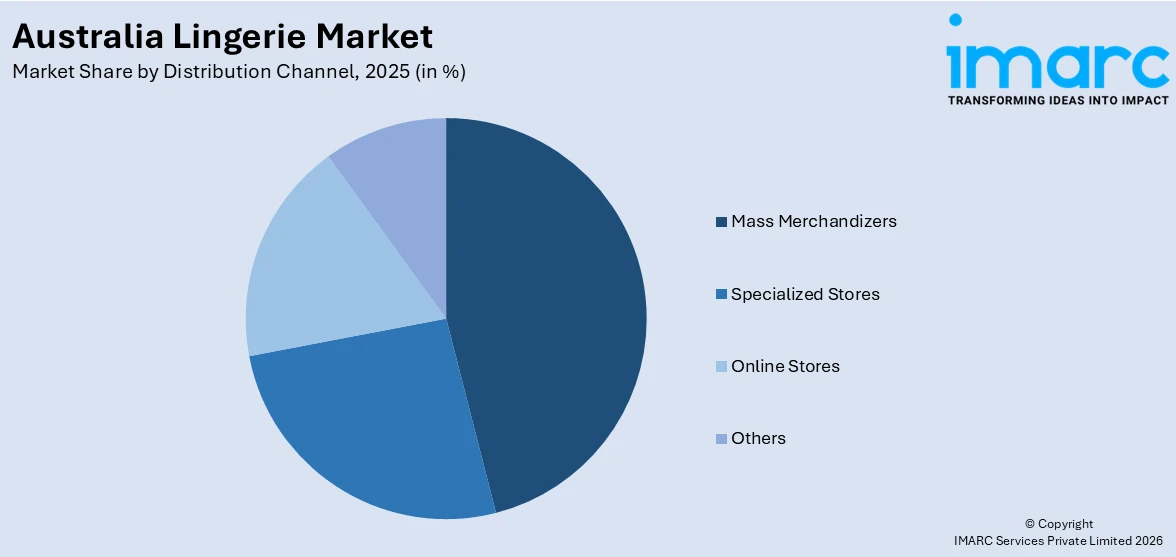
A detailed breakup and analysis of the market based on the distribution channel have also been provided in the report. This includes mass merchandizers, specialized stores, online stores, and others.
Regional Insights:
- Australia Capital Territory & New South Wales
- Victoria & Tasmania
- Queensland
- Northern Territory & Southern Australia
- Western Australia
The report has also provided a comprehensive analysis of all the major regional markets, which include Australia Capital Territory & New South Wales, Victoria & Tasmania, Queensland, Northern Territory & Southern Australia, and Western Australia.
Competitive Landscape:
The market research report has also provided a comprehensive analysis of the competitive landscape in the market. Competitive analysis such as market structure, key player positioning, top winning strategies, competitive dashboard, and company evaluation quadrant has been covered in the report. Also, detailed profiles of all major companies have been provided.
Australia Lingerie Market News:
- In May 2025, Billionaire retailer Brett Blundy launched Léays, a lingerie, sleepwear, and beauty emporium, marking his return to the lingerie sector. Opened at Westfield Parramatta, Léays targets professional women aged 25-40 with a blend of comfort and beauty. Plans for 20 stores by Christmas are underway, following strong initial customer interest.
- In July 2025, Marks and Spencer officially launched in Australia, bringing its products to David Jones stores. Initially available only online, the debut includes a curated selection of lingerie, sleepwear, and the popular Rosie by M&S collection, a collaboration with supermodel Rosie Huntington-Whitely, which has gained viral attention.
- In September 2025, Victoria’s Secret launched its first Australian e-commerce platform, www.victoriassecret.com.au, offering a full range of lingerie, sleepwear, and beauty products. The site features local shipping, online promotions, and tools for virtual fittings.
Australia Lingerie Market Report Coverage:
| Report Features | Details |
|---|---|
| Base Year of the Analysis | 2025 |
| Historical Period | 2020-2025 |
| Forecast Period | 2026-2034 |
| Units | Billion USD |
| Scope of the Report | Exploration of Historical Trends and Market Outlook, Industry Catalysts and Challenges, Segment-Wise Historical and Future Market Assessment:
|
| Product Types Covered | Brassiere, Knickers or Panties, Shapewear, Others |
| Materials Covered | Cotton, Silk, Satin, Nylon, Others |
| Price Ranges Covered | Economy, Premium |
| Distribution Channels Covered | Mass Merchandizers, Specialized Stores, Online Stores, Others |
| Regions Covered | Australia Capital Territory & New South Wales, Victoria & Tasmania, Queensland, Northern Territory & Southern Australia, Western Australia |
| Customization Scope | 10% Free Customization |
| Post-Sale Analyst Support | 10-12 Weeks |
| Delivery Format | PDF and Excel through Email (We can also provide the editable version of the report in PPT/Word format on special request) |
Key Benefits for Stakeholders:
- IMARC’s industry report offers a comprehensive quantitative analysis of various market segments, historical and current market trends, market forecasts, and dynamics of the Australia lingerie market from 2020-2034.
- The research report provides the latest information on the market drivers, challenges, and opportunities in the Australia lingerie market.
- Porter's five forces analysis assist stakeholders in assessing the impact of new entrants, competitive rivalry, supplier power, buyer power, and the threat of substitution. It helps stakeholders to analyze the level of competition within the Australia lingerie industry and its attractiveness.
- Competitive landscape allows stakeholders to understand their competitive environment and provides an insight into the current positions of key players in the market.
Frequently Asked Questions About the Australia Lingerie Market Report
The lingerie market in Australia was valued at USD 2.8 Billion in 2025.
The Australia lingerie market is projected to exhibit a compound annual growth rate (CAGR) of 9.70% during 2026-2034.
The Australia lingerie market is expected to reach a value of USD 6.4 Billion by 2034.
The market is witnessing a shift toward comfort-oriented, sustainable, and inclusive lingerie collections. Growing adoption of eco-friendly materials, digital retail expansion, and the influence of body positivity campaigns are reshaping consumer preferences. Hybrid designs blending style and functionality are also gaining popularity among modern consumers.
Rising disposable incomes, innovation in fabric technology, and expanding e-commerce platforms are driving market growth. Increasing demand for premium and athleisure-inspired lingerie, along with greater focus on comfort and personalization, is fueling purchases. Sustainability, ethical production, and inclusive marketing further enhance brand loyalty and market expansion across diverse consumer segments.
Need more help?
- Speak to our experienced analysts for insights on the current market scenarios.
- Include additional segments and countries to customize the report as per your requirement.
- Gain an unparalleled competitive advantage in your domain by understanding how to utilize the report and positively impacting your operations and revenue.
- For further assistance, please connect with our analysts.
 Request Customization
 Speak to an Analyst
 Request Brochure
 Inquire Before Buying
Benefits of Customization
- Personalize this research
- Triangulate with your data
- Get data as per your format and definition
- Gain a deeper dive into a specific application, geography, customer, or competitor
- Any level of personalization
Get in Touch With Us
UNITED STATES
Phone: +1-201-971-6302
INDIA
Phone: +91-120-433-0800
UNITED KINGDOM
Phone: +44-753-714-6104
Email: [email protected]
Client Testimonials




.webp)




.webp)













Related Reports

Choose your plan
*Please note that the prices mentioned below are starting prices for each bundle type. Kindly contact our team for further details.*
Single User License
- 1 User License, Access on 2 Devices
- PDF Report + Excel Dataset (Password Protected)
- Lifetime Access
- No Printing Rights
- 10% Free Report Customization
- 10–12 Weeks of Analyst Support
Five User License
- Access for 5 Users, 2 Devices per User
- PDF Report + Excel Dataset (Password Protected)
- Lifetime Access
- Dedicated Account Manager
- 12–14 Weeks of Analyst Support
- No Printing Rights
- 15% Free Report Customization
- 25% Discount on Your Next Purchase
Corporate User License
- Unlimited User Access (Within Your Organization)
- PDF Report + Excel Dataset
- Lifetime Access
- Dedicated Account Manager
- 14–20 Weeks of Analyst Support
- No Printing Rights
- 20% Free Report Customization
- 30% Discount on Your Next Purchase
Essential Insights
What's included:
3 reports
- Lifetime Access
- PDF Reports
- Excel Datasets
- 2 Weeks of Free Analyst Support
- 2 User Licenses
- Access on 2 Devices
- Printing Rights
- Complimentary PowerPoint (PPT) Version
- Complimentary License Upgrade
Professional Access
What's included:
5 reports
- Lifetime Access
- PDF Reports
- Excel Datasets
- 8 Weeks of Free Analyst Support
- 2 User Licenses
- Access on 2 Devices
- Printing Rights
- Complimentary PowerPoint (PPT) Version
- Complimentary License Upgrade
Business Advantage
What's included:
8 reports
- Lifetime Access
- PDF Reports
- Excel Datasets
- 14 Weeks of Free Analyst Support
- 2 User Licenses
- Access on 2 Devices
- Printing Rights
- Complimentary PowerPoint (PPT) Version
- Complimentary License Upgrade
Enterprise Intelligence
What's included:
10 reports
- Lifetime Access
- PDF Reports
- Excel Datasets
- 20 Weeks of Free Analyst Support
- 2 User Licenses
- Access on 2 Devices
- Printing Rights
- Complimentary PowerPoint (PPT) Version
- Complimentary License Upgrade