
Beauty Devices Market Size, Share, Trends and Forecast by Product Type, Portability, Mode of Operation, Gender, Application, and Region, 2026-2034
Beauty Devices Market Size and Share:
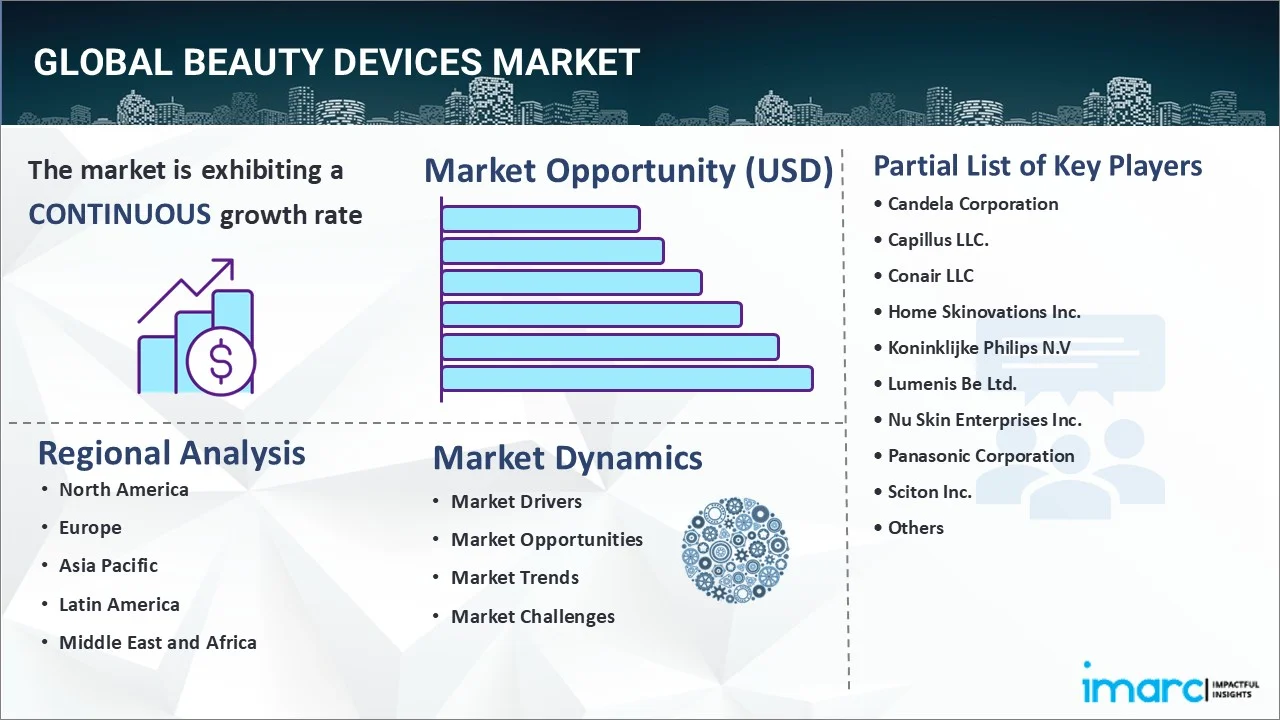
The global beauty devices market size was valued at USD 64.60 Billion in 2025. Looking forward, IMARC Group estimates the market to reach USD 255.72 Billion by 2034, exhibiting a CAGR of 15.14% from 2026-2034. North America currently dominates the market, holding a market share of 35.5% in 2025. High adoption rates of cutting-edge dermatological technologies, rising consumer spending on non-surgical cosmetic procedures, the presence of major industry players, and a strong e-commerce infrastructure that makes high-end personal care products easily accessible are the main drivers of regional growth, all contributing to the beauty devices market share.
The rising incidence of skin-related conditions such acne, hyperpigmentation, and early aging, which increases consumer desire for efficient, non-invasive treatment options, is the main driver of the worldwide beauty devices market. A growing number of elderly people are looking for cutting-edge anti-aging products, and at-home skincare regimens are becoming more popular because to the affordability and ease of use of professional-grade portable devices. Furthermore, the integration of smart technologies, including AI-powered skin diagnostics and app-connected tools, along with the powerful influence of social media trends and digital beauty influencers, continues to expand the beauty devices market growth.
The United States beauty devices market is uniquely characterized by a significant consumer pivot toward FDA-cleared, professional-grade technologies for unsupervised home use. This domestic expansion is heavily influenced by a self-care culture where nearly 74% of adults prioritize beauty rituals as essential wellness routines. High-end prestige devices like bio-magnetic and microcurrent tools are on the rise in the US market, in contrast to larger worldwide developments. This is especially true among Gen Z and Millennials, who perceive these items as long-term investments in preventive skincare rather than luxury indulgences. Additionally, the quick development of clean beauty technology, devices made with eco-friendly materials and energy-efficient systems, reflects a clear regional need for sustainability and ethical consumption. This is supported by a well-developed e-commerce environment, where a sizable portion of retail purchases take place online, providing quick access to innovations that go viral and are promoted by influencers.
To get more information on this market Request Sample
Beauty Devices Market Trends:
Rising Demand for At-Home Beauty Solutions
The industry is expanding due in large part to consumers' growing desire for at-home beauty treatments. Driven by the need for cost savings and time efficiency compared to salon visits, consumers are increasingly looking for professional-grade skincare and grooming solutions that can be easily used in the comfort of their homes. This trend has accelerated significantly, with a wide range of demographics adopting portable hair removal, skin rejuvenation, and facial cleansing gadgets. Adoption hurdles have been further reduced by the availability of user-friendly, portable, and technologically sophisticated gadgets, drawing in both new and returning customers. At-home treatments have become more commonplace due to the growing impact of social media beauty content makers and online guides, which encourages people to purchase equipment that can achieve salon-quality results. Additionally, the incorporation of intelligent features like skin tone sensors, app connectivity, and intensity levels that can be adjusted is improving the user experience and making at-home beauty regimens more efficient and customized than before.
Integration of AI and Smart Technologies
The integration of artificial intelligence and smart technologies into beauty devices is transforming the personal care landscape, representing a key trend fueling the beauty devices market outlook. The market is evolving away from one-size-fits-all solutions thanks to AI-powered devices that now provide real-time skin analysis, customized treatment recommendations, and adaptive settings that respond to unique user demands. Devices can automatically modify parameters for the best outcomes and safety thanks to smart sensors that identify skin tone, moisture content, and hair type. Additionally, consumers may track their progress, get guided routines, and get professional assistance from a distance thanks to connected beauty ecosystems that connect gadgets with mobile applications. For instance, at CES 2025, L'Oréal unveiled Cell BioPrint, a portable lab-on-a-chip device that analyzes skin biomarkers in five minutes to deliver personalized skincare insights using advanced proteomics technology. The convergence of beauty and technology is attracting tech-savvy consumers and driving premium product demand, as brands increasingly compete on innovation, personalization, and data-driven user experiences.
Expansion of LED and Light-Based Therapies
The rapid expansion of LED and light-based therapy devices is contributing substantially to the beauty devices market forecast. LED light therapy, which utilizes specific wavelengths of red, blue, and near-infrared light to address a range of skin concerns including acne, wrinkles, and hyperpigmentation, has gained significant traction among both consumers and skincare professionals. The growing body of clinical evidence supporting the efficacy of light-based treatments has bolstered consumer confidence and encouraged device manufacturers to invest heavily in research and development. Non-invasive light therapy devices are particularly appealing because they offer visible results with minimal risk of side effects or downtime. The increasing availability of clinically validated, compact LED masks and panels designed specifically for home use is enabling consumers to access professional-grade phototherapy without visiting dermatology clinics. The proliferation of FDA-cleared LED devices for home use is broadening the addressable market and encouraging manufacturers to develop more affordable and versatile light therapy products for mainstream consumers.
Beauty Devices Industry Segmentation:
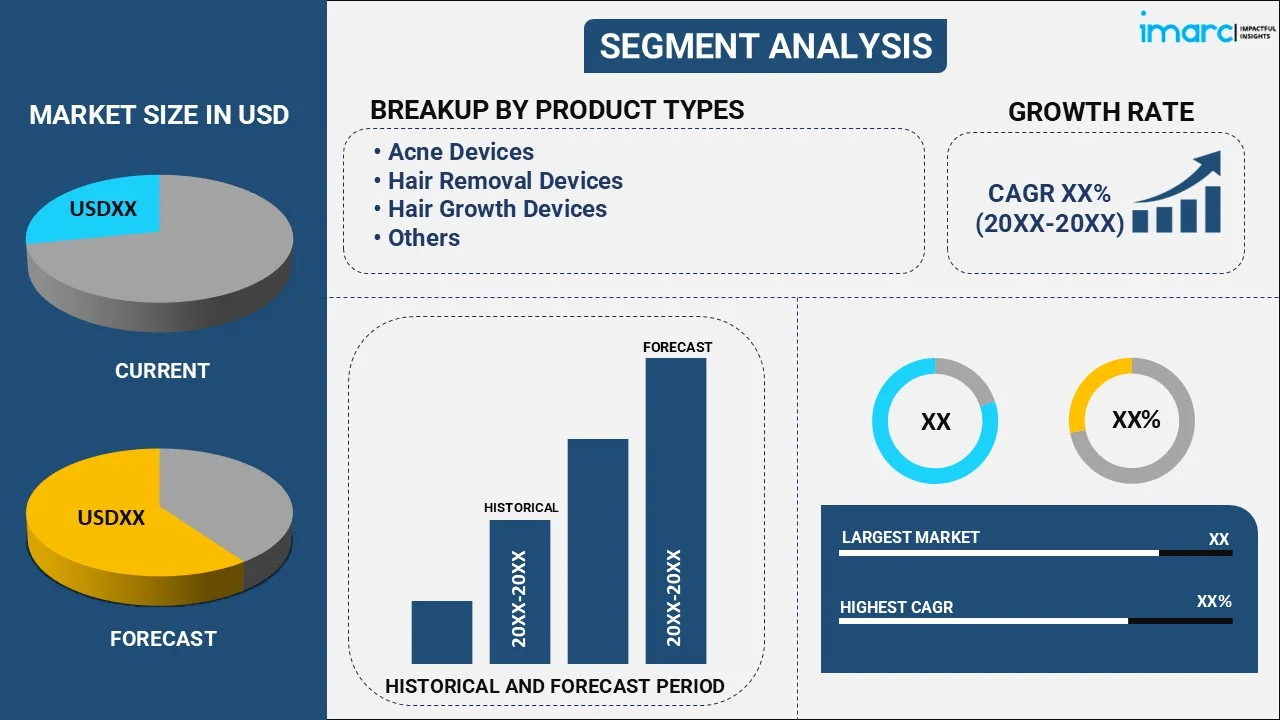
IMARC Group provides an analysis of the key trends in each segment of the global beauty devices market, along with forecast at the global, regional, and country levels from 2026-2034. The market has been categorized based on product type, portability, mode of operation, gender, and application.
Analysis by Product Type:
To get detailed segment analysis of this market Request Sample
- Acne Devices
- Hair Removal Devices
- Hair Growth Devices
- Cleansing Devices
- Oxygen and Steamer Devices
- Rejuvenation Devices
- Others
Hair removal devices hold 35.5% of the market share. The market is experiencing robust expansion, primarily driven by the escalating demand for non-invasive aesthetic treatments and a significant cultural shift toward long-term personal grooming. This hair removal devices market growth is heavily influenced by the rising prevalence of hormonal conditions like PCOS and the increasing influence of social media beauty standards, which together fuel interest in permanent hair reduction solutions. Technological breakthroughs are further accelerating adoption, as innovations in diode lasers and IPL systems now offer inclusive treatments for diverse skin tones and incorporate advanced cooling mechanisms to ensure a virtually painless experience. Moreover, the democratization of professional-grade technology has led to a surge in the home-use segment, where consumers prioritize the convenience and cost-effectiveness of portable devices over recurring salon appointments. As manufacturers continue to invest in AI-driven diagnostics and compact, user-friendly designs, the market is poised for sustained development across both clinical and domestic sectors.
Analysis by Portability:
- Pocket-Sized/Handheld Device
- Fixed
Pocket-sized/handheld device leads the market with a share of 68.5%. Pocket-sized and handheld beauty devices dominate the portability segment owing to their exceptional convenience, ease of use, and alignment with the growing consumer preference for on-the-go personal care solutions. The compact design of these devices allows users to perform treatments at home, during travel, or at the workplace without requiring dedicated space or professional assistance. Manufacturers have invested significantly in miniaturization technologies, enabling the integration of advanced features such as microcurrent stimulation, LED therapy, and radiofrequency into lightweight, ergonomic handheld formats. The rising availability of cordless and rechargeable handheld devices has further enhanced portability, allowing consumers to maintain their beauty routines without being tethered to power outlets. The demand for portability is further amplified by the increasing urbanization and fast-paced lifestyles, which drive consumers toward efficient, multifunctional beauty tools that can seamlessly fit into daily routines.
Analysis by Mode of Operation:
- Electric and Battery Operated
- Manual
Electric and battery operated dominates the market, with a share of 78.5%. Electric and battery-operated beauty devices hold the commanding position in this segment owing to their superior performance, consistency, and the ability to deliver precise, technology-driven treatments. These devices leverage advanced functionalities including variable speed settings, temperature regulation, sonic vibrations, and programmable treatment modes that manual alternatives cannot replicate. The growing consumer expectation for professional-grade results at home has further reinforced the preference for powered devices across hair removal, facial cleansing, and skin rejuvenation categories. Leading manufacturers continue to develop proprietary sensor-based technologies that enable electric devices to provide real-time feedback and automatically adapt treatment parameters to individual user needs and skin types. The continued decline in battery costs and improvements in rechargeable lithium-ion technology have also enabled longer device usage times and cordless operation, making electric and battery-operated devices the preferred choice for modern consumers.
Analysis by Gender:
- Female
- Male
Female represents the leading segment, with a market share of 82.5%. The female segment maintains its dominant position owing to the historically strong engagement of women with personal care and beauty routines, supported by a wide array of products specifically designed for female skincare, hair removal, and anti-aging needs. Women represent the primary target demographic for beauty device manufacturers, and marketing strategies, product designs, and distribution channels are predominantly tailored to female consumer preferences. The rising awareness of preventive skincare, combined with the influence of beauty influencers and social media platforms, continues to drive female consumers toward advanced beauty devices. The growing adoption of skincare and haircare devices among younger female generations and multicultural consumer segments is further expanding the addressable market and encouraging manufacturers to diversify their product offerings. The development of devices addressing specific female concerns such as hormonal skin changes and postpartum care is further strengthening market penetration.
Analysis by Application:
- Salon
- Spa
- Home Others
Home holds 72.5% of the market share. The home application segment leads the market owing to the strong and growing consumer preference for convenience, privacy, and cost-effectiveness when performing beauty treatments. The rapid advancement of technology has enabled manufacturers to develop compact, safe, and user-friendly devices that deliver professional-level results without requiring salon visits. Consumers increasingly favor at-home solutions that allow them to maintain their beauty routines on their own schedules, a trend that gained significant momentum during and after the global pandemic. The growing popularity of do-it-yourself beauty routines, supported by the widespread availability of online tutorials and influencer-led product demonstrations, has further encouraged consumers to invest in home-use beauty devices across multiple categories. Additionally, the proliferation of e-commerce platforms and direct-to-consumer sales channels has improved product accessibility, enabling consumers to research, compare, and purchase beauty devices from the comfort of their homes, further reinforcing the home segment dominance.
Regional Analysis:
To get more information on the regional analysis of this market Request Sample
- North America
- United States
- Canada
- Asia Pacific
- China
- Japan
- India
- South Korea
- Australia
- Indonesia
- Others
- Europe
- Germany
- France
- United Kingdom
- Italy
- Spain
- Russia
- Others
- Latin America
- Brazil
- Mexico
- Others
- Middle East and Africa
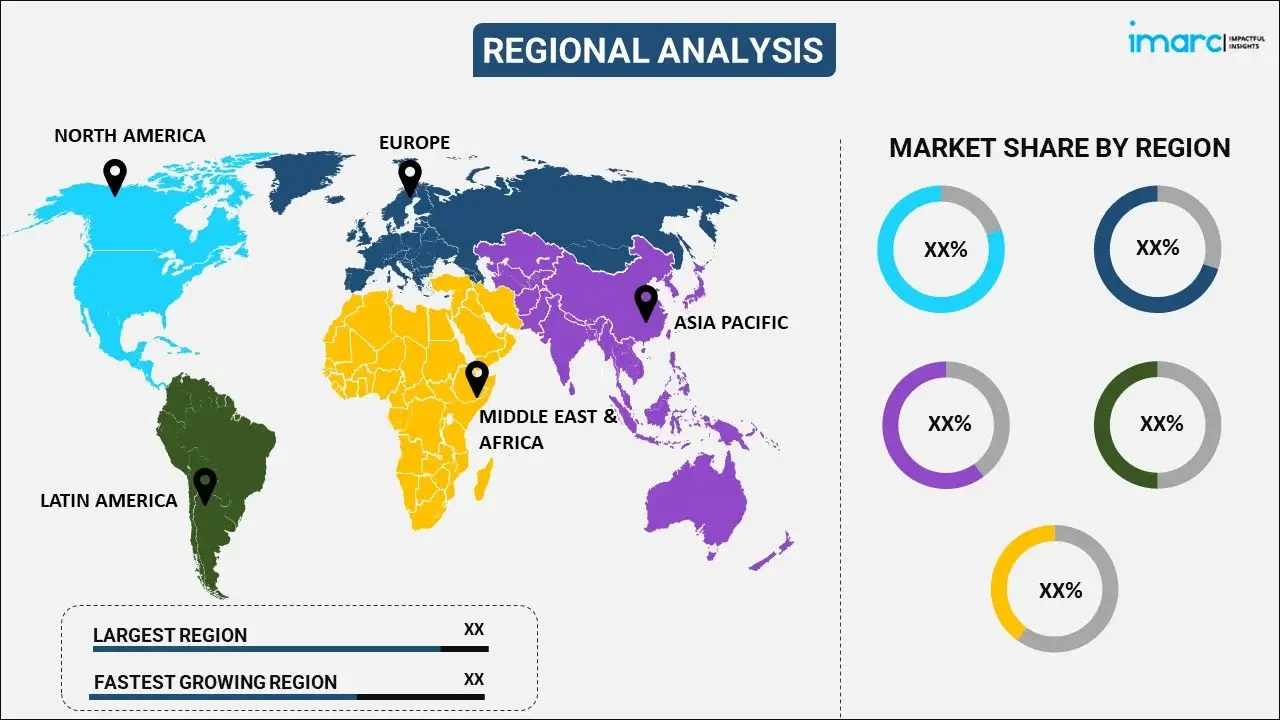
North America, accounting for 35.5% of the share, enjoys the leading position in the market. The region benefits from high consumer spending on personal care and grooming products, a well-developed retail and e-commerce infrastructure, and strong awareness of advanced beauty technologies. North American consumers are early adopters of innovative devices, particularly those incorporating AI, LED therapy, and radiofrequency technologies, which has positioned the region as a key revenue generator for major beauty device manufacturers. The presence of leading industry players and a robust regulatory framework, including FDA oversight of beauty devices, has fostered trust and encouraged wider adoption. The continued investment by major beauty corporations in establishing advanced research and innovation facilities across the region further strengthens North America's position as a hub for beauty technology development and commercialization. Additionally, the increasing influence of beauty content creators and social media platforms in the region continues to drive consumer interest and purchase decisions.
Key Regional Takeaways:
United States Beauty Devices Market Analysis
The United States represents the largest individual country market for beauty devices in North America, driven by a combination of high disposable incomes, advanced technological infrastructure, and a deeply ingrained culture of personal grooming and self-care. The country benefits from a large and diverse consumer base that is increasingly seeking non-invasive, technology-driven beauty solutions for both skincare and hair care needs. The proliferation of e-commerce platforms, including major retailers and direct-to-consumer channels, has made beauty devices widely accessible to consumers across all income segments. The influence of social media, beauty influencers, and online reviews plays a significant role in shaping purchasing decisions, particularly among younger demographics such as millennials and Generation Z. The strong consumer appetite for minimally invasive cosmetic procedures and non-invasive aesthetic treatments continues to drive demand for advanced beauty devices across the country. The regulatory environment, including FDA clearance processes for beauty devices, provides a framework that encourages innovation while ensuring consumer safety, supporting the beauty devices market trends. Furthermore, the growing interest in preventive skincare and anti-aging solutions among both women and men is expanding the addressable market for beauty devices across the country.
Europe Beauty Devices Market Analysis
Europe represents a significant market for beauty devices, underpinned by high consumer awareness, strong purchasing power, and a well-established beauty and wellness culture across key economies including Germany, France, the United Kingdom, Italy, and Spain. European consumers demonstrate a strong preference for premium, clinically validated beauty devices that offer proven efficacy and safety, which has driven manufacturers to invest in research and development tailored to regional preferences. The region benefits from stringent regulatory standards, including CE marking requirements, which ensure product quality and foster consumer confidence in beauty tech products. The ongoing strengthening of medical device regulations across the European Union continues to raise safety and performance standards for personal care and beauty devices marketed in the region. Additionally, the growing emphasis on sustainability and eco-conscious consumerism is encouraging the development of beauty devices made from recyclable materials with energy-efficient operation, aligning with broader European environmental goals and stimulating innovation across the industry.
Asia-Pacific Beauty Devices Market Analysis
Asia-Pacific represents the fastest-growing regional market for beauty devices, driven by rising disposable incomes, rapid urbanization, and increasing beauty consciousness among consumers across major economies including China, Japan, South Korea, India, and Australia. The region benefits from a thriving beauty technology ecosystem, particularly in South Korea and Japan, where K-beauty and J-beauty trends have significantly influenced global beauty device innovation and consumer preferences. For instance, at CES 2026, Kolmar Korea won the Best of Innovation Award in the Beauty Tech category for its AI-powered Scar Beauty Device, becoming the first cosmetics company worldwide to receive this top honor. Social media platforms and digital commerce are key purchase drivers in the region, as consumers increasingly rely on online reviews and influencer recommendations when selecting beauty devices.
Latin America Beauty Devices Market Analysis
Latin America is an emerging market for beauty devices, with Brazil and Mexico serving as the primary revenue contributors in the region. The market is supported by a strong cultural emphasis on personal appearance and grooming, coupled with rising disposable incomes and expanding access to e-commerce platforms. The region's established reputation as a leading global destination for cosmetic procedures reflects the strong consumer demand for both professional and at-home beauty solutions across multiple treatment categories. Growing urbanization and the increasing availability of affordable beauty devices are expanding market penetration.
Middle East and Africa Beauty Devices Market Analysis
The Middle East and Africa region is witnessing gradual growth in the beauty devices market, driven by increasing urbanization, rising consumer awareness of advanced skincare solutions, and growing disposable incomes in key economies such as the UAE, Saudi Arabia, and South Africa. The region's expanding cosmetics and personal care sector, supported by a growing demand for premium beauty products and devices among affluent consumers and a thriving medical tourism sector, is creating favorable conditions for market expansion. The expansion of modern retail infrastructure and e-commerce platforms is further improving accessibility to beauty devices across the region.
Competitive Landscape:
The global beauty devices market is characterized by intense competition among established multinational corporations and innovative emerging players, each striving to expand market share through product differentiation, technological innovation, and strategic partnerships. Leading companies are investing heavily in research and development to integrate advanced technologies such as artificial intelligence, LED light therapy, radiofrequency, and microcurrent stimulation into their product portfolios. The competitive landscape is further shaped by strategic mergers and acquisitions, licensing agreements, and collaborations with dermatologists and skincare professionals to enhance product credibility and clinical validation. Companies are also focusing on expanding their geographic footprint through partnerships with regional distributors and direct-to-consumer online channels. The growing emphasis on sustainability is prompting manufacturers to develop eco-friendly devices with recyclable components and energy-efficient designs. Additionally, the rise of premium and luxury beauty device segments is intensifying competition, as brands compete to offer differentiated, science-backed solutions that deliver visible, measurable results.
The report provides a comprehensive analysis of the competitive landscape in the beauty devices market with detailed profiles of all major companies, including:
- Candela Corporation
- Capillus LLC.
- Conair LLC
- Home Skinovations Inc.
- Koninklijke Philips N.V
- Lumenis Be Ltd.
- Nu Skin Enterprises Inc.
- Panasonic Corporation
- Sciton Inc.
- Termosalud S.L.
- The Procter & Gamble Company
- TRIA Beauty Inc.
- Ya-Man Ltd.
Beauty Devices Market Report Scope:
| Report Features | Details |
|---|---|
| Base Year of the Analysis | 2025 |
| Historical Period | 2020-2025 |
| Forecast Period | 2026-2034 |
| Units | Billion USD |
| Scope of the Report | Exploration of Historical and Forecast Trends, Industry Catalysts and Challenges, Segment-Wise Historical and Predictive Market Assessment:
|
| Product Types Covered | Acne Devices, Hair Removal Devices, Hair Growth Devices, Cleansing Devices, Oxygen and Steamer Devices, Rejuvenation Devices, Others |
| Portabilities Covered | Pocket-Sized/Handheld Device, Fixed |
| Modes of Operations Covered | Electric and Battery Operated, Manual |
| Genders Covered | Female, Male |
| Applications Covered | Salon, Spa, Home, Others |
| Regions Covered | Asia Pacific, Europe, North America, Latin America, Middle East and Africa |
| Countries Covered | United States, Canada, China, Japan, India, South Korea, Australia, Indonesia, Germany, France, United Kingdom, Italy, Spain, Russia, Brazil, Mexico |
| Companies Covered | Candela Corporation, Capillus LLC., Conair LLC, Home Skinovations Inc., Koninklijke Philips N.V, Lumenis Be Ltd., Nu Skin Enterprises Inc., Panasonic Corporation, Sciton Inc., Termosalud S.L., The Procter & Gamble Company, TRIA Beauty Inc., Ya-Man Ltd., etc. |
| Customization Scope | 10% Free Customization |
| Post-Sale Analyst Support | 10-12 Weeks |
| Delivery Format | PDF and Excel through Email (We can also provide the editable version of the report in PPT/Word format on special request) |
Key Benefits for Stakeholders:
- IMARC's report offers a comprehensive quantitative analysis of various market segments, historical and current market trends, market forecasts, and dynamics of the beauty devices market from 2020-2034.
- The research study provides the latest information on the market drivers, challenges, and opportunities in the global beauty devices market.
- The study maps the leading, as well as the fastest-growing, regional markets. It further enables stakeholders to identify the key country-level markets within each region.
- Porter's Five Forces analysis assists stakeholders in assessing the impact of new entrants, competitive rivalry, supplier power, buyer power, and the threat of substitution. It helps stakeholders to analyze the level of competition within the beauty devices industry and its attractiveness.
- Competitive landscape allows stakeholders to understand their competitive environment and provides an insight into the current positions of key players in the market.
Frequently Asked Questions About the Beauty Devices Market Size Report
The beauty devices market was valued at USD 64.60 Billion in 2025.
The beauty devices market is projected to exhibit a CAGR of 15.14% during 2026-2034, reaching a value of USD 255.72 Billion by 2034.
The beauty devices market is driven by the rising consumer demand for at-home beauty solutions, advancements in non-invasive aesthetic technologies, growing awareness of skincare and personal grooming, the integration of AI and smart technologies into beauty devices, increasing disposable incomes in emerging economies, and the expanding geriatric population seeking anti-aging solutions.
North America currently dominates the beauty devices market, accounting for a share of 35.5%. The region benefits from high consumer spending on personal care, advanced technological infrastructure, strong e-commerce networks, and the presence of major beauty device manufacturers driving continued innovation.
Some of the major players in the beauty devices market include Candela Corporation, Capillus LLC., Conair LLC, Home Skinovations Inc., Koninklijke Philips N.V, Lumenis Be Ltd., Nu Skin Enterprises Inc., Panasonic Corporation, Sciton Inc., Termosalud S.L., The Procter & Gamble Company, TRIA Beauty Inc., Ya-Man Ltd., etc.
Need more help?
- Speak to our experienced analysts for insights on the current market scenarios.
- Include additional segments and countries to customize the report as per your requirement.
- Gain an unparalleled competitive advantage in your domain by understanding how to utilize the report and positively impacting your operations and revenue.
- For further assistance, please connect with our analysts.
 Request Customization
 Speak to an Analyst
 Request Brochure
 Inquire Before Buying
Benefits of Customization
- Personalize this research
- Triangulate with your data
- Get data as per your format and definition
- Gain a deeper dive into a specific application, geography, customer, or competitor
- Any level of personalization
Get in Touch With Us
UNITED STATES
Phone: +1-201-971-6302
INDIA
Phone: +91-120-433-0800
UNITED KINGDOM
Phone: +44-753-714-6104
Email: [email protected]
Client Testimonials




.webp)




.webp)













Related Reports

Choose your plan
*Please note that the prices mentioned below are starting prices for each bundle type. Kindly contact our team for further details.*
Single User License
- 1 User License, Access on 2 Devices
- PDF Report + Excel Dataset (Password Protected)
- Lifetime Access
- No Printing Rights
- 10% Free Report Customization
- 10–12 Weeks of Analyst Support
Five User License
- Access for 5 Users, 2 Devices per User
- PDF Report + Excel Dataset (Password Protected)
- Lifetime Access
- Dedicated Account Manager
- 12–14 Weeks of Analyst Support
- No Printing Rights
- 15% Free Report Customization
- 25% Discount on Your Next Purchase
Corporate User License
- Unlimited User Access (Within Your Organization)
- PDF Report + Excel Dataset
- Lifetime Access
- Dedicated Account Manager
- 14–20 Weeks of Analyst Support
- No Printing Rights
- 20% Free Report Customization
- 30% Discount on Your Next Purchase
Essential Insights
What's included:
3 reports
- Lifetime Access
- PDF Reports
- Excel Datasets
- 2 Weeks of Free Analyst Support
- 2 User Licenses
- Access on 2 Devices
- Printing Rights
- Complimentary PowerPoint (PPT) Version
- Complimentary License Upgrade
Professional Access
What's included:
5 reports
- Lifetime Access
- PDF Reports
- Excel Datasets
- 8 Weeks of Free Analyst Support
- 2 User Licenses
- Access on 2 Devices
- Printing Rights
- Complimentary PowerPoint (PPT) Version
- Complimentary License Upgrade
Business Advantage
What's included:
8 reports
- Lifetime Access
- PDF Reports
- Excel Datasets
- 14 Weeks of Free Analyst Support
- 2 User Licenses
- Access on 2 Devices
- Printing Rights
- Complimentary PowerPoint (PPT) Version
- Complimentary License Upgrade
Enterprise Intelligence
What's included:
10 reports
- Lifetime Access
- PDF Reports
- Excel Datasets
- 20 Weeks of Free Analyst Support
- 2 User Licenses
- Access on 2 Devices
- Printing Rights
- Complimentary PowerPoint (PPT) Version
- Complimentary License Upgrade