
Black Seed Oil Market Size, Share, Trends and Forecast by Product, Application, and Region, 2026-2034
Black Seed Oil Market Size, Share, Trends & Forecast (2026-2034)
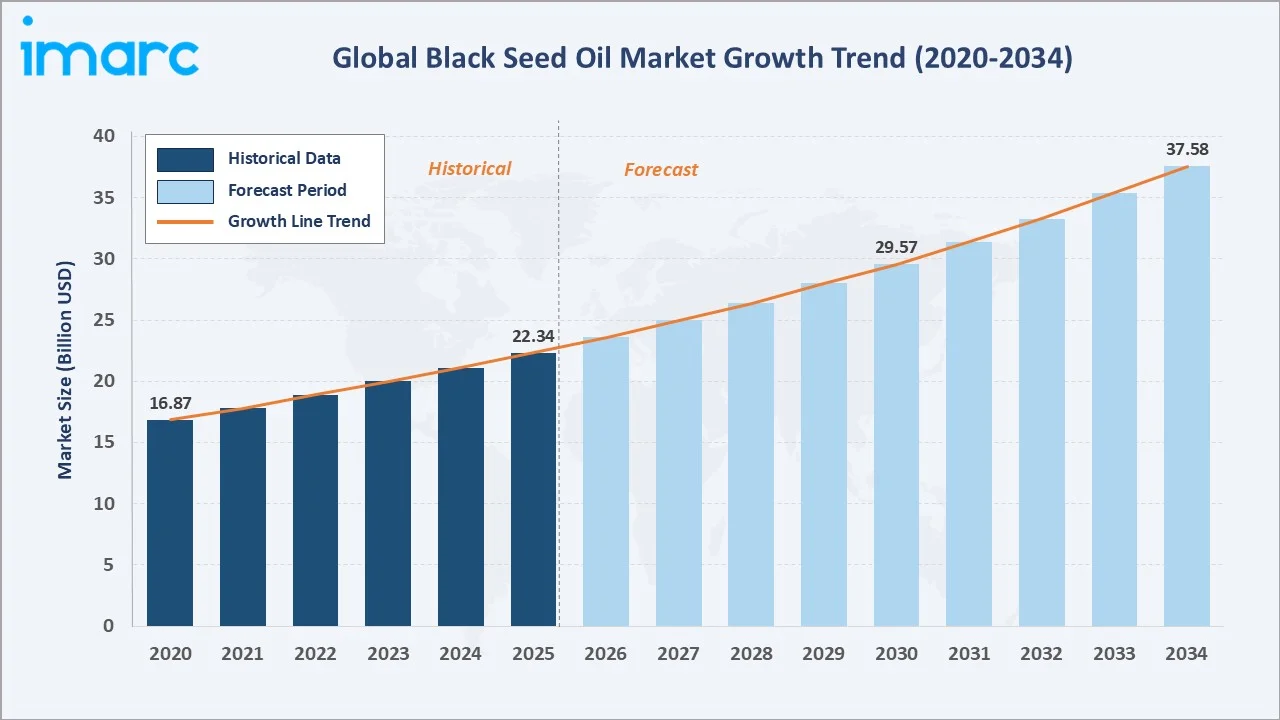
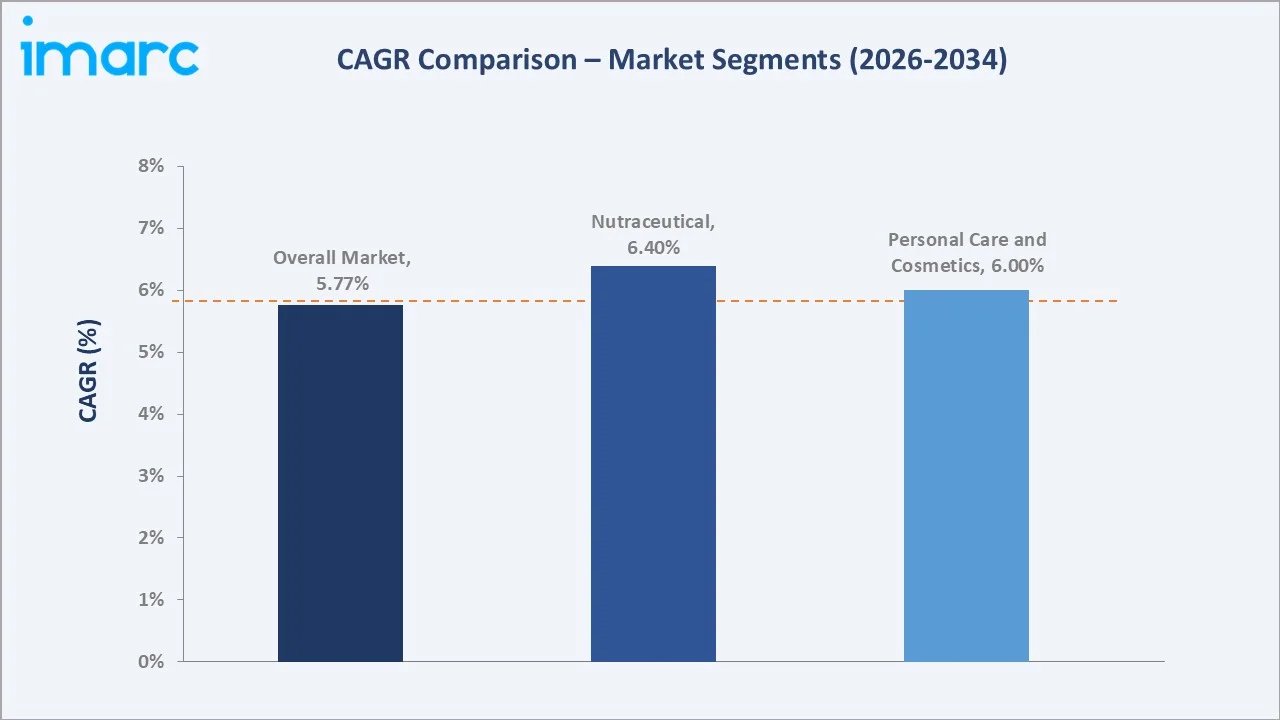
The global black seed oil market reached USD 22.34 Billion in 2025 and is projected to reach USD 37.58 Billion by 2034, expanding at a CAGR of 5.77% during 2026-2034. Rising health consciousness and demand for natural remedies, coupled with growing prevalence of chronic diseases driving complementary therapy adoption, and increasing use in personal care and cosmetics formulations are the primary growth catalysts.
Market Snapshot
|
Metric |
Value |
|
Market Size (2025) |
USD 22.34 Billion |
|
Forecast Market Size (2034) |
USD 37.58 Billion |
|
CAGR (2026-2034) |
5.77% |
|
Base Year |
2025 |
|
Historical Period |
2020-2025 |
|
Forecast Period |
2026-2034 |
Asia-Pacific leads the global black seed oil landscape, holding a 35.8% share in 2025, anchored by the region's traditional usage heritage, large nutraceutical manufacturing base, and expanding health and wellness consumption. Nutraceutical commands the largest share of the application segment at 36.7%, reflecting sustained demand for its use in dietary supplements and immunity-support products.
To get more information on this market, Request Sample
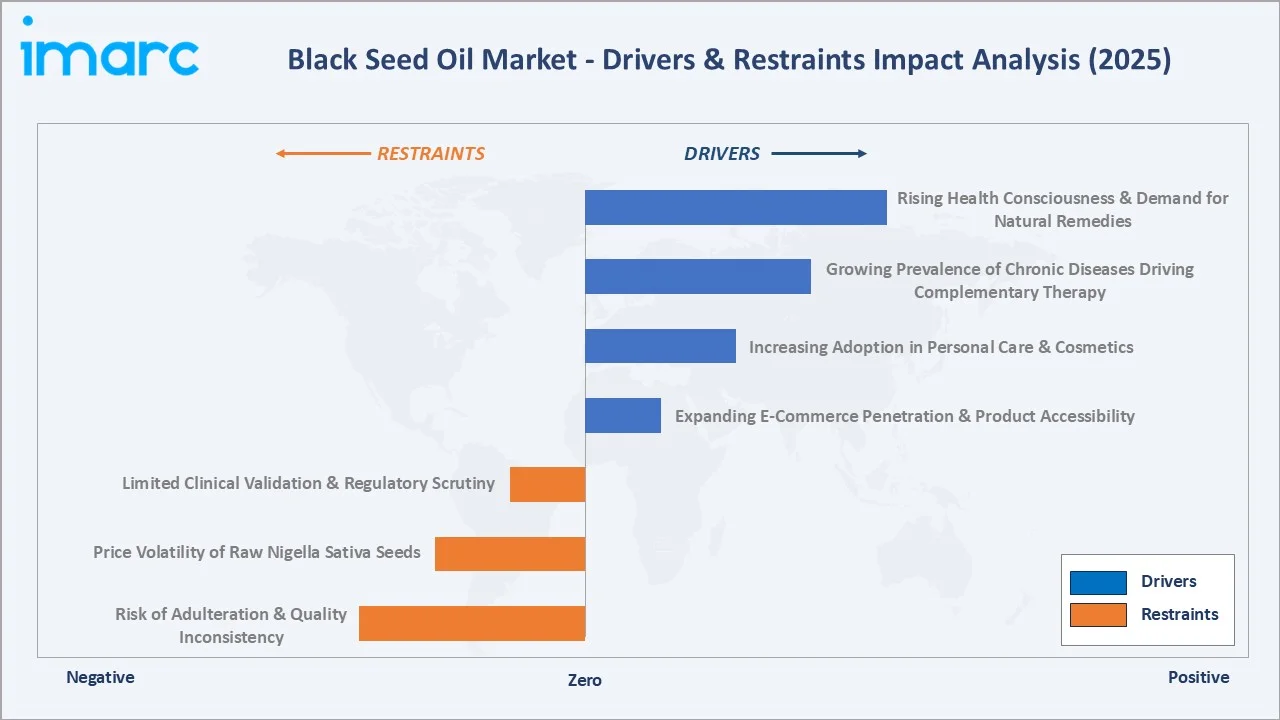
The global black seed oil market is underpinned by three structural forces: rising health consciousness and demand for natural remedies, growing prevalence of chronic diseases driving complementary therapy adoption, and increasing personal care and cosmetics ingredient innovation. Each force independently reinforces category growth, sustaining steady CAGR expansion through 2034 despite limited clinical validation and regulatory scrutiny.
Executive Summary
The global black seed oil market is experiencing steady expansion, driven by rising health consciousness, growing prevalence of chronic diseases, and increasing adoption of natural ingredients across nutraceutical, cosmetic, and pharmaceutical applications. The market was valued at USD 22.34 Billion in 2025 and is forecast to reach USD 37.58 Billion by 2034, growing at a CAGR of 5.77%.
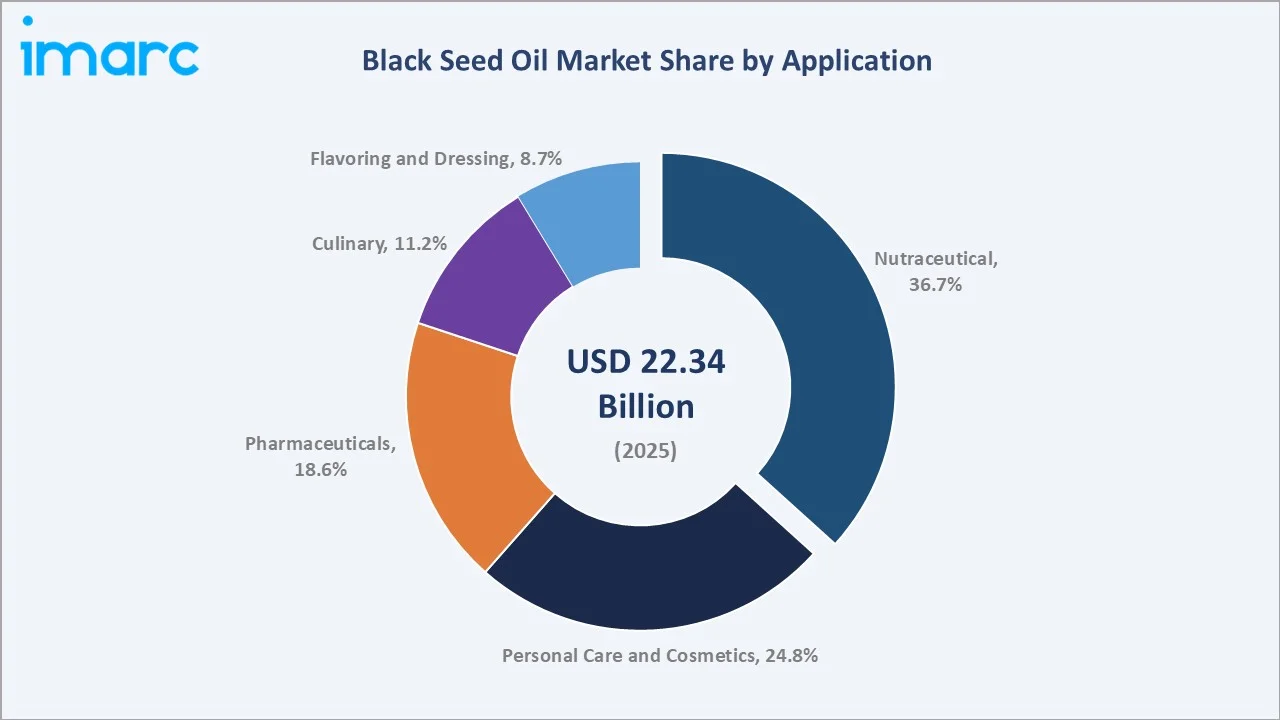
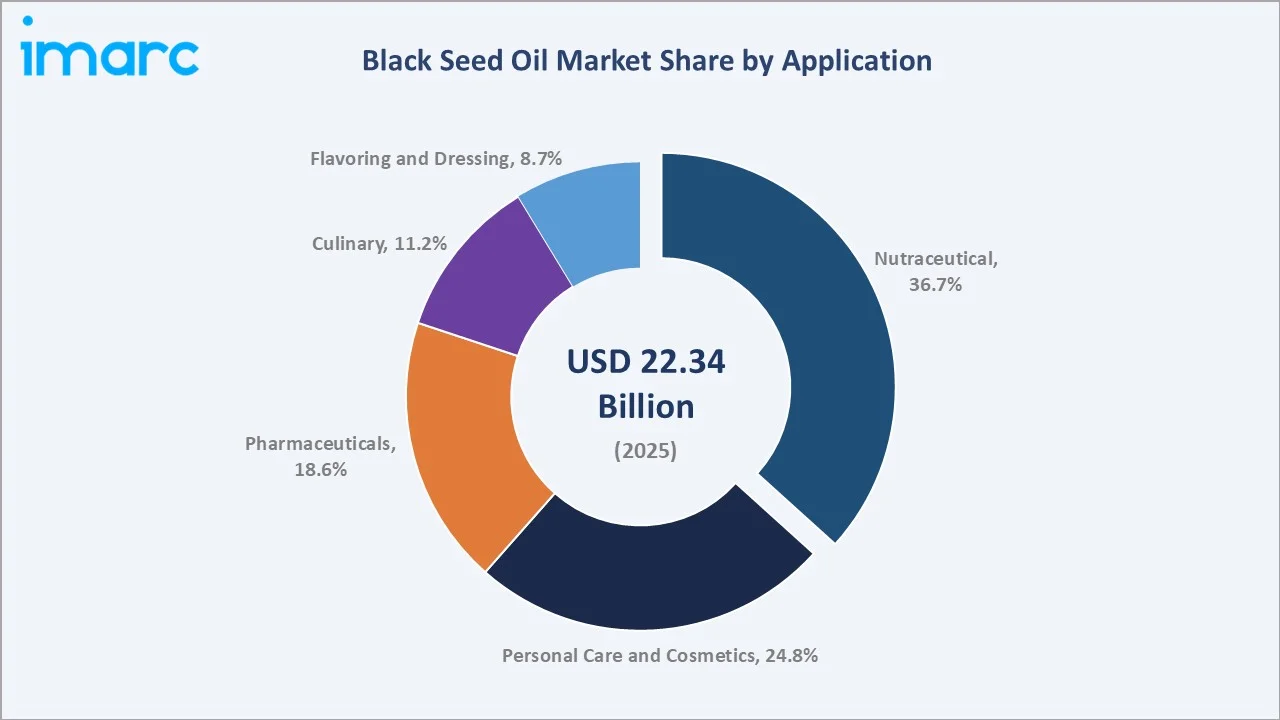
Nutraceutical dominates the application segment with a 36.7% share in 2025, encompassing dietary supplements and immunity-support products, while personal care and cosmetics account for 24.8%, pharmaceuticals 18.6%, culinary 11.2%, and flavoring and dressing 8.7%, reflecting the oil's broad functional versatility.
Oil leads the product segment at 52.8% share, supported by its widespread use across nutraceutical, culinary, and cosmetic applications, while powder, tablets, and capsules (31.4%) and softgel (15.8%) serve varied consumer convenience needs. Asia-Pacific leads regionally at 35.8%, anchored by the region's traditional usage heritage and expanding wellness consumption.
Key Market Insights
|
Insight |
Data |
|
Largest Application Segment |
Nutraceutical – 36.7% share (2025) |
|
Fastest Growing Application Segment |
Nutraceutical – ~6.4% CAGR (2026-2034) |
|
Largest Product Segment |
Oil – 52.8% share (2025) |
|
Leading Region |
Asia-Pacific – 35.8% share (2025) |
|
Top Companies |
Sami-Sabinsa Group, CoreFX Ingredients, FLAVEX Naturextrakte GmbH, TriNutra Ltd., Life Extension |
Key Analytical Observations Supporting The Above Data:
- Nutraceutical accounts for 36.7% of the global black seed oil market in 2025. This dominance reflects sustained demand for dietary supplements and immunity-support formulations.
- Oil remains the leading product segment at 52.8% share (2025), supported by its versatile use across nutraceutical, culinary, and cosmetic applications.
- Personal care and cosmetics are expanding steadily at 24.8% share (2025), as formulators increasingly incorporate black seed oil into moisturizers, shampoos, and anti-aging products.
- Asia-Pacific's 35.8% share (2025) reflects the region's traditional usage heritage, large nutraceutical manufacturing base, and expanding health and wellness consumption.
- Rising adoption of nano-emulsification technology is improving bioavailability, broadening the addressable market across nutraceutical and pharmaceutical applications.
Black Seed Oil Market Overview
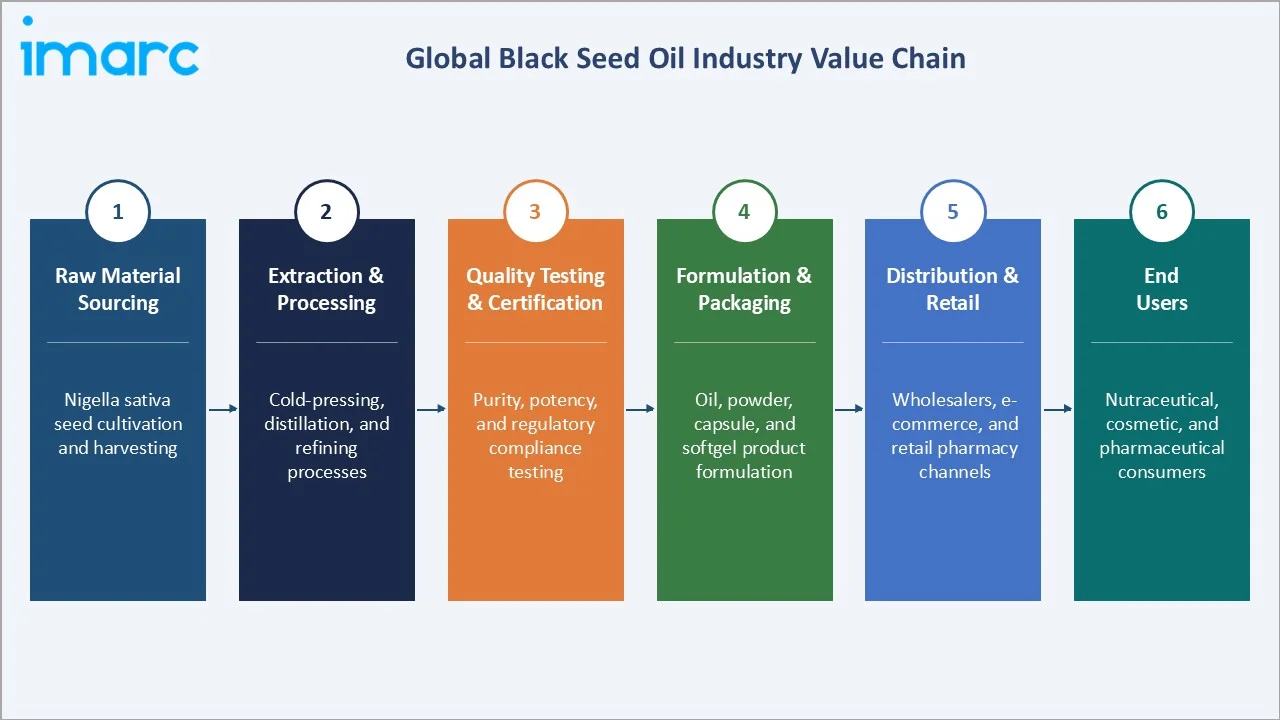
The global black seed oil market encompasses oil, powder, tablet, capsule, and softgel product forms derived from Nigella sativa seeds, offering natural bioactive compounds for nutraceutical, personal care, pharmaceutical, culinary, and flavoring applications. The black seed oil ecosystem spans raw material cultivation, extraction and processing specialists, and an expanding distribution network across wholesalers, e-commerce platforms, and retail pharmacy channels.
Macroeconomic drivers include rising health consciousness and demand for natural remedies, growing prevalence of chronic diseases driving complementary therapy adoption, and increasing adoption in personal care and cosmetics worldwide. Manufacturers are simultaneously investing in nano-emulsification technology and clean-label formulation innovation to improve bioavailability and consumer appeal, positioning the global black seed oil sector for continued innovation-led growth through 2034 despite limited clinical validation and regulatory scrutiny.
Market Dynamics
To evaluate market opportunities, Request Sample
Market Drivers
- Rising Health Consciousness & Demand for Natural Remedies: Growing consumer preference for natural, plant-based remedies is driving sustained black seed oil adoption throughout nutraceutical and wellness sectors.
- Growing Prevalence of Chronic Diseases Driving Complementary Therapy: By 2050, an estimated 853 million adults, approximately 1 in 8 worldwide, are projected to be living with diabetes, representing a 46% increase. Hence, the increasing incidence of chronic diseases such as diabetes, cardiovascular conditions, and respiratory ailments is accelerating demand for black seed oil as a complementary therapeutic option.
- Increasing Adoption in Personal Care & Cosmetics: Formulators are increasingly incorporating black seed oil into moisturizers, shampoos, and anti-aging products, expanding its footprint beyond traditional nutraceutical use.
- Expanding E-Commerce Penetration & Product Accessibility: Growing online retail infrastructure is broadening consumer access to black seed oil products across emerging and developed markets alike.
Market Restraints
- Limited Clinical Validation & Regulatory Scrutiny: Insufficient large-scale clinical evidence supporting therapeutic claims can constrain broader adoption and regulatory approval in certain markets.
- Price Volatility of Raw Nigella Sativa Seeds: Fluctuating agricultural yields and raw material costs create margin pressure across the value chain, affecting supply consistency.
- Risk of Adulteration & Quality Inconsistency: Prevalence of diluted or adulterated products in unregulated markets can undermine consumer confidence and brand trust.
Market Opportunities
- Nano-Emulsification Technology Advancement: Rising investment in bioavailability-enhancing extraction technologies presents opportunities for manufacturers to differentiate premium formulations.
- Clean-Label & Organic Formulation Expansion: Growing consumer preference for chemical-free, organic formulations creates opportunities for specialty ingredient suppliers. NSF research found that 74% of U.S. consumers consider organic ingredients important in personal care products, while 65% seek clear ingredient lists to identify potentially harmful substances.
- Pharmaceutical Research Application Growth: Expanding pharmaceutical research into black seed oil's therapeutic properties offers new opportunities for ingredient suppliers serving clinical-grade formulations.
Market Challenges
- Balancing Cost and Quality Assurance: Manufacturers must balance raw material sourcing costs with the need to deliver consistent, high-purity black seed oil products.
- Addressing Supply Chain Standardization: Ensuring consistent quality across diverse regional cultivation and extraction practices requires ongoing standardization and certification efforts.
Emerging Market Trends
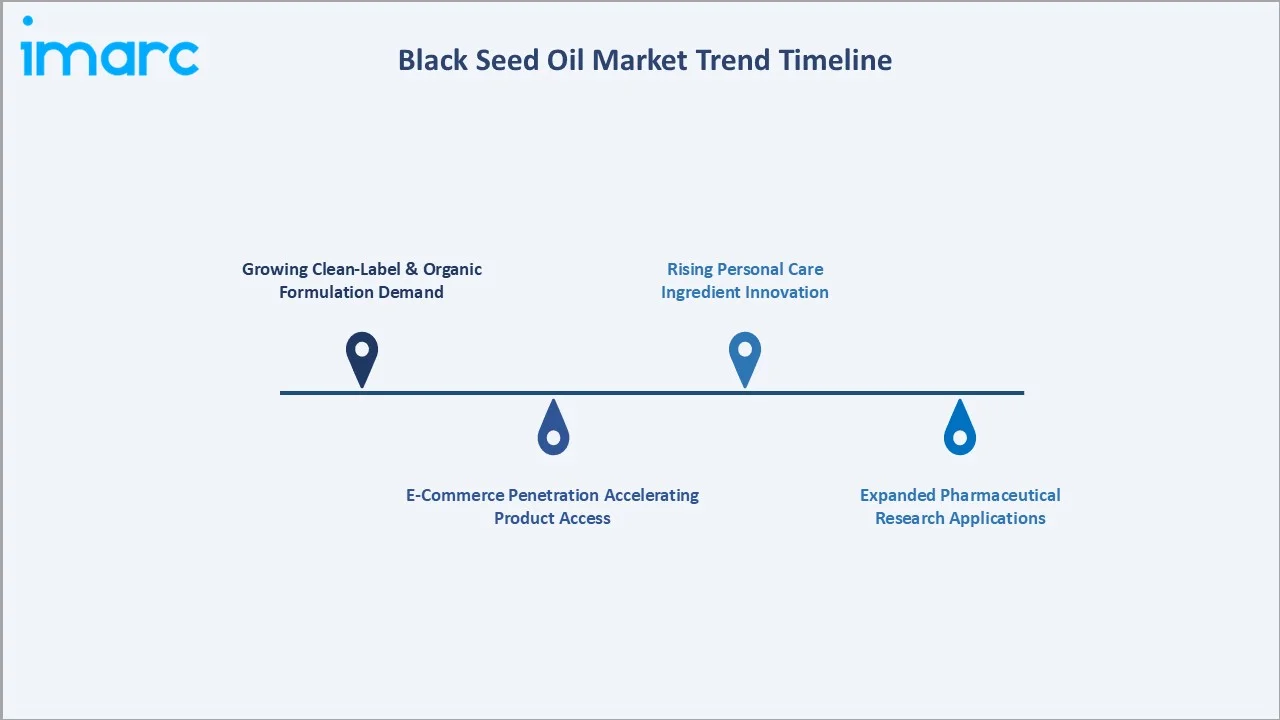
1. Growing Clean-Label & Organic Formulation Demand
Manufacturers are increasingly developing clean-label and organic black seed oil formulations, responding to rising consumer demand for chemical-free, transparently sourced ingredients. In August 2025, NUTRITUNES launched a premium black seed oil supplement featuring TriNutra’s USP-compliant ThymoQuin, available on Amazon in organic and non-organic softgel formats. The standardized ingredient was selected for its purity, potency, stability, and clinically researched health benefits, strengthening NUTRITUNES’ science-backed supplement portfolio.
2. E-Commerce Penetration Accelerating Product Access
Growing online retail infrastructure is driving broader consumer access to black seed oil products, expanding market reach into previously underserved regions. Direct-to-consumer brand websites, Amazon marketplace storefronts, and health-focused e-commerce platforms are enabling black seed oil supplement and cosmetic brands to reach geographically dispersed consumer segments where traditional brick-and-mortar health retail infrastructure remains underdeveloped relative to rising consumer demand for natural wellness products.
3. Rising Personal Care Ingredient Innovation
Increasing formulator investment in black seed oil-based personal care ingredients is accelerating its integration into premium skincare and haircare product lines. In September 2025, UAE-based Amaani raised USD 3 million in seed funding, led by Peak XV’s Surge, to expand its Arab beauty brand AÏZA across regional and global markets. AÏZA combines regional ingredients including black seed with clinical actives, offering vegan, cruelty-free, alcohol-free formulations that meet “Clean at Sephora” standards.
4. Expanded Pharmaceutical Research Applications
Growing pharmaceutical research into black seed oil's therapeutic properties is broadening its application scope into clinical-grade and specialty formulation segments. Thymoquinone is being investigated in peer-reviewed clinical studies for its anti-inflammatory, immunomodulatory, and antimicrobial mechanisms, with pharmaceutical formulators evaluating standardized thymoquinone-enriched black seed oil extracts as active ingredients in nutraceutical-pharmaceutical hybrid products targeting metabolic syndrome, respiratory inflammation, and antibiotic-resistant infection management applications.
Industry Value Chain Analysis
The global black seed oil value chain spans raw material sourcing through end-user delivery, with each stage occupied by specialized cultivation partners, extraction and processing specialists, and distribution partners whose performance directly influences product purity, efficacy, and cost-effectiveness.
|
Stage |
Key Activities |
|
Raw Material Sourcing |
Nigella sativa seed cultivation and harvesting |
|
Extraction & Processing |
Cold-pressing, distillation, and refining processes |
|
Quality Testing & Certification |
Purity, potency, and regulatory compliance testing |
|
Formulation & Packaging |
Oil, powder, capsule, and softgel product formulation |
|
Distribution & Retail |
Wholesalers, e-commerce, and retail pharmacy channels |
|
End Users |
Nutraceutical, cosmetic, and pharmaceutical consumers |
Technology Landscape in the Black Seed Oil Industry
Advanced Extraction & Bioavailability Technology
Manufacturers are advancing cold-pressing and nano-emulsification extraction technology to improve bioavailability and potency, supporting broader adoption among nutraceutical and pharmaceutical applications. Supercritical CO₂ extraction and phospholipid complexation techniques are being applied to concentrate and stabilize thymoquinone content at standardized levels, enabling manufacturers to produce black seed oil ingredients with verified bioactive potency and enhanced cellular absorption rates.
Clean-Label & Organic Formulation Development
Growing investment in organic certification and chemical-free formulation is expanding premium positioning, addressing rising demand for transparently sourced, high-purity products. USDA Organic, EU Organic, and Fairtrade-certified black seed oil supply chains are being developed with single-origin traceability documentation, enabling brands to substantiate provenance claims from Egyptian, Ethiopian, and Indian cultivation regions and meet the full-ingredient transparency requirements of natural health retailers and pharmacy channel buyers.
Personal Care Ingredient Innovation
Providers are engineering black seed oil-based moisturizers, shampoos, and anti-aging formulations to extend adoption across demanding premium skincare and haircare applications. High-linoleic acid black seed oil fractions and thymoquinone-enriched extracts are being incorporated into dermatologically tested emollient systems and scalp treatment formulations, with clinical substantiation of anti-inflammatory and sebum-regulating efficacy supporting product claims across eczema-prone skin care, psoriasis management, and hair loss prevention segments commanding premium retail price positioning.
Pharmaceutical-Grade Formulation Innovation
Expanding research into pharmaceutical-grade black seed oil formulations is strengthening therapeutic positioning, supporting premium placement across clinical and specialty health use cases. Standardized thymoquinone soft gel capsules, liposomal encapsulation systems, and enteric-coated tablet formats are being developed under GMP-certified manufacturing conditions with certificate of analysis documentation.
Market Segmentation Analysis
The report covers the following segments:
|
Segment Category |
Leading Segment |
Market Share |
Year |
|
Application |
Nutraceutical |
36.7% |
2025 |
|
Product |
Oil |
52.8% |
2025 |
|
Region |
Asia-Pacific |
35.8% |
2025 |

By Application
Nutraceutical dominates with a 36.7% share in 2025. This segment encompasses dietary supplements and immunity-support products, supported by sustained demand for natural, plant-based wellness solutions.
To access detailed market analysis, Request Sample
Personal care and cosmetics represent 24.8% (2025) of the market, followed by pharmaceuticals at 18.6%, culinary at 11.2%, and flavoring and dressing at 8.7%, reflecting the oil's broad functional versatility across consumer and industrial use cases.
By Product
Oil leads the product segment at 52.8% share (2025), supported by its widespread use across nutraceutical, culinary, and cosmetic applications requiring liquid-form ingredients.
Powder, tablets and capsules (31.4%) and softgel (15.8%) continue to serve varied consumer convenience needs, with the capsule and softgel formats gaining traction among consumers seeking precise dosing and ease of consumption.
Regional Market Insights
Asia-Pacific's market leadership (35.8%, 2025) reflects the region's traditional usage heritage, large nutraceutical manufacturing base, and expanding health and wellness consumption across residential and commercial sectors. Growing e-commerce penetration and expanding cosmetic ingredient innovation combine to sustain its dominant position through 2034.
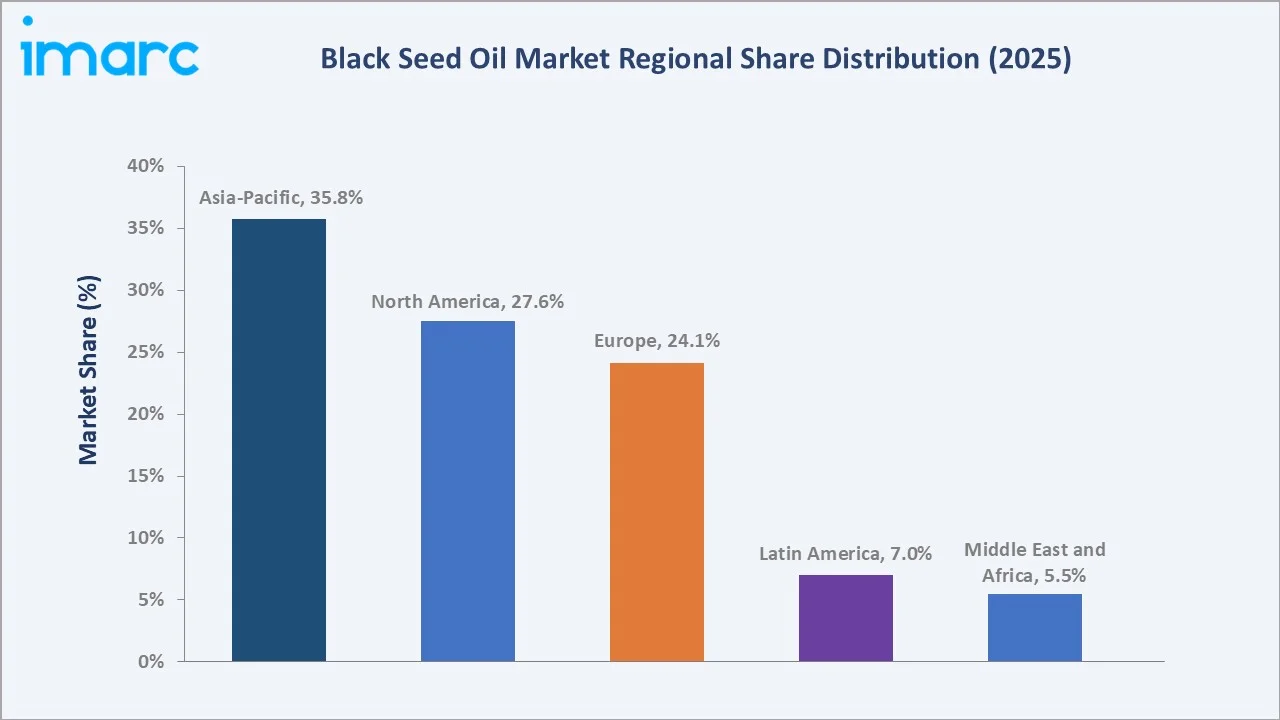
North America at 27.6% (2025) represents the second-largest black seed oil market globally. Strong wellness consumer demand and expanding e-commerce distribution are sustaining steady growth, positioning the region as a key contributor alongside Asia-Pacific through the forecast period.
|
Region |
Share (2025) |
Key Growth Drivers |
|
Asia-Pacific |
35.8% |
Traditional usage heritage and expanding nutraceutical manufacturing base |
|
North America |
27.6% |
Strong wellness consumer base and expanding e-commerce distribution |
|
Europe |
24.1% |
Supportive clean-label regulations and rising natural cosmetics adoption |
|
Latin America |
7.0% |
Emerging nutraceutical awareness and expanding retail pharmacy access |
|
Middle East and Africa |
5.5% |
Strong cultural affinity for black seed oil and growing local production capacity |
Competitive Landscape
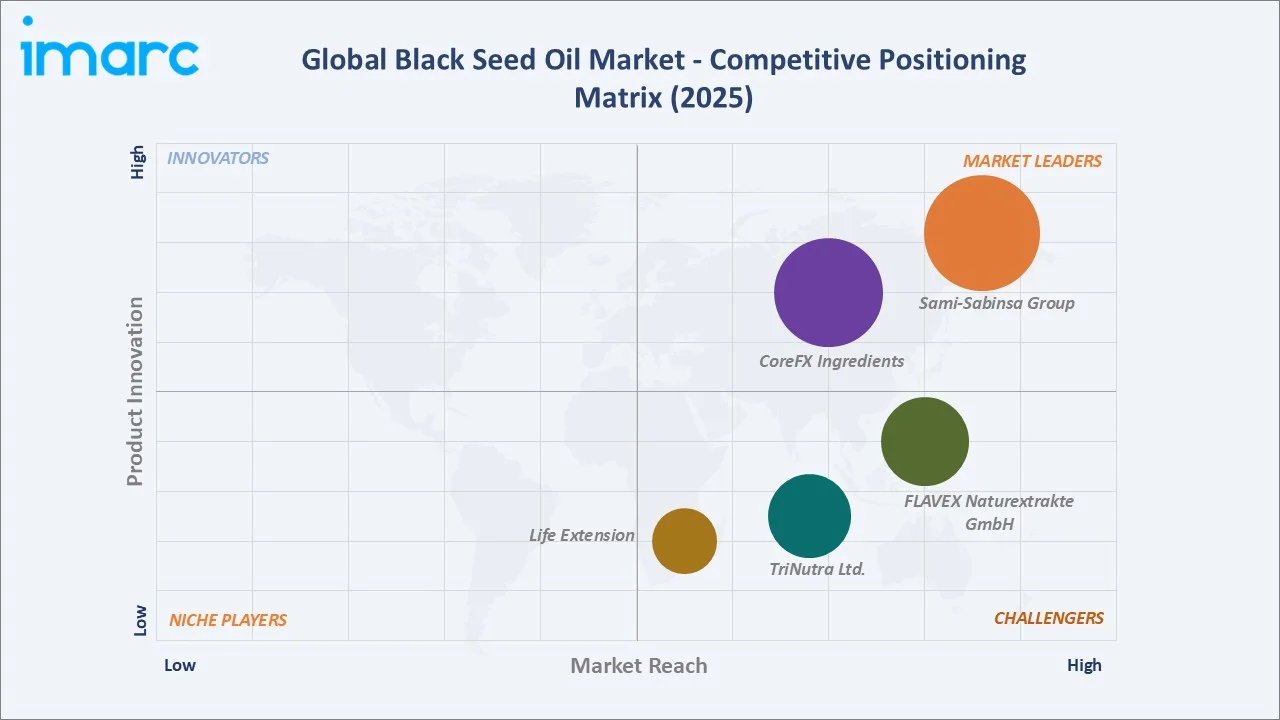
The global black seed oil market exhibits moderate concentration, with leading manufacturers collectively holding a significant share of market revenue in 2025, reflecting sustained investment in product innovation and distribution reach.
|
Company Name |
Brand Name |
Market Position |
Core Strength |
|
Sami-Sabinsa Group |
Nigellin |
Market Leader |
Global nutraceutical ingredient leadership and extensive extraction technology portfolio |
|
CoreFX Ingredients |
ConnOils |
Market Leader |
Diversified specialty oil supply platform and integrated bulk ingredient capabilities |
|
FLAVEX Naturextrakte GmbH |
FLAVEX |
Strong Challenger |
Advanced CO2 extraction technology and natural ingredient expertise |
|
TriNutra Ltd. |
B’utyQuin, ThymoQuin, JojobaQuin, ThymoQuin-OCare, ThymoQuin for canines |
Strong Challenger |
Specialty nutraceutical formulation leadership and clinical research expertise |
|
Life Extension |
Life Extension |
Challenger |
Specialty supplement innovation and direct-to-consumer nutraceutical expertise |
Sami-Sabinsa Group and CoreFX Ingredients dominate through comprehensive global ingredient portfolios and extensive distribution capacity, supported by continuous R&D investment. FLAVEX Naturextrakte GmbH, TriNutra Ltd., and Life Extension compete through targeted premium positioning, extraction technology expertise, and specialty retail differentiation, respectively.
Key Company Profiles
Sami-Sabinsa Group
Sami-Sabinsa Group’s subsidiary Sabinsa Corporation is one of the leading global nutraceutical ingredient companies with an extensive black seed oil portfolio spanning bulk oil, standardized extracts, and specialty formulations distributed across a vast global customer base.
- Product Portfolio: Black seed oil extracts, standardized nutraceutical ingredients, and specialty formulations under the Nigellin brand.
- Recent Developments: In January 2026, Sami-Sabinsa Group began production at its new USD 15 million herbal ingredients facility in Karnataka, India, expanding manufacturing capacity and supporting global exports. The cGMP-compliant plant employs around 250 people and incorporates energy-efficient operations, rainwater harvesting, and zero-liquid-discharge systems.
- Strategic Focus: Strengthening extraction technology innovation; expanding ingredient supply capacity across emerging application segments.
CoreFX Ingredients
CoreFX Ingredients’ subsidiary ConnOils LLC is one of the leading diversified specialty oil supply companies with a strong integrated bulk ingredient platform serving nutraceutical, cosmetic, and food industry markets across the globe.
- Product Portfolio: Bulk black seed oil, private-label formulations, and integrated specialty oil solutions.
- Recent Developments: In May 2024, CoreFX Ingredients acquired ConnOils LLC’s assets, expanding its capabilities in powder delivery systems, specialty oils, and nutritional ingredient technologies.
The acquisition strengthens CoreFX’s encapsulation expertise, research and development resources, and ability to deliver customized health and nutrition solutions. - Strategic Focus: Scaling bulk ingredient supply capabilities; deepening nutraceutical and cosmetic distribution partnerships.
Market Concentration Analysis
The global black seed oil market exhibits moderate concentration, with Sami-Sabinsa Group, CoreFX Ingredients, and FLAVEX Naturextrakte GmbH collectively accounting for a significant share of total category revenue in 2025, reflecting sustained R&D investment, brand loyalty, and extensive distribution infrastructure worldwide.
Consolidation pressure remains limited as leading manufacturers maintain distinct strategic positioning: Sami-Sabinsa Group and CoreFX Ingredients through comprehensive multi-category ingredient portfolios, FLAVEX Naturextrakte GmbH and TriNutra Ltd. through extraction technology and clinical research positioning, and Life Extension through diversified sourcing and specialty retail differentiation, rather than pursuing direct M&A consolidation.
Investment & Growth Opportunities
Fastest Growing Segments
Nutraceutical (~6.4% CAGR) represents the highest-growth investment vector through 2034, driven by expanding health consciousness and continuous innovation across bioavailability-enhancing extraction technologies. This subcategory addresses a rapidly expanding addressable market within the global black seed oil ecosystem.
Emerging Market Expansion
Latin America and the Middle East and Africa collectively represent an incremental growth opportunity beyond Asia-Pacific, North America, and Europe by 2034, as rising nutraceutical awareness and expanding retail pharmacy access accelerate category penetration in these regional markets.
Venture and Institutional Investment Trends
- Manufacturer investment toward nano-emulsification and bioavailability technology is creating opportunities for technology vendors serving the black seed oil sector.
- Growing personal care and pharmaceutical application demand is sustaining institutional interest in specialty ingredient manufacturing platforms.
- Clean-label and organic formulation innovation, led by major manufacturers, is opening opportunities for ingredient and technology vendors serving the global black seed oil industry.
Future Market Outlook (2026-2034)
The global black seed oil market is positioned for steady, innovation-driven expansion through 2034. From a base of USD 22.34 Billion in 2025, the market is projected to reach USD 37.58 Billion by 2034, representing substantial incremental value creation at a CAGR of 5.77%. This growth is underpinned by rising health consciousness, growing prevalence of chronic diseases, and increasing personal care and cosmetics ingredient innovation.
The application segment will continue evolving through 2034, with Nutraceutical gaining further share as bioavailability technology and clean-label formulation innovation accelerate. This shift creates opportunities for manufacturers investing in extraction technology, e-commerce distribution, and premium ingredient positioning to capture the next phase of the global black seed oil market growth.
Research Methodology
Primary Research
Primary research comprised structured interviews with industry participants across 2024-2025, including nutraceutical ingredient manufacturer executives, cosmetic formulation procurement managers, pharmaceutical researchers, and agricultural supply chain analysts across major global markets. Expert input validated market sizing, segmentation trends, and regional consumption patterns.
Secondary Research
Secondary research encompassed manufacturer annual reports, nutraceutical industry association publications, and health and wellness trade press covering ingredient innovation, regulatory trends, and regional market dynamics across major markets.
Forecasting Models
Market size estimations were derived using top-down and bottom-up forecasting, incorporating application and product segment transitions and manufacturer capacity disclosures. A base-case CAGR of 5.77% reflects consensus estimates validated against announced ingredient investment timelines and manufacturer strategic development plans.
Black Seed Oil Market Report Scope:
| Features | Details |
|---|---|
| Base Year of the Analysis | 2025 |
| Historical Period | 2020-2025 |
| Forecast Period | 2026-2034 |
| Units | Billion USD |
| Scope of the Report |
Exploration of Historical and Forecast Trends, Industry Catalysts and Challenges, Segment-Wise Historical and Predictive Market Assessment:
|
| Products Covered | Oil, Powder, Tablets and Capsules, Softgel |
| Applications Covered | Personal Care and Cosmetics, Pharmaceuticals, Nutraceutical, Flavoring and Dressing, Culinary |
| Regions Covered | Asia Pacific, Europe, North America, Latin America, Middle East and Africa |
| Countries Covered | United States, Canada, Germany, France, United Kingdom, Italy, Spain, China, Japan, India, South Korea, Australia, Indonesia, Brazil, Mexico |
| Companies Covered | Sami-Sabinsa Group, CoreFX Ingredients, FLAVEX Naturextrakte GmbH, TriNutra Ltd., Life Extension, etc. |
| Customization Scope | 10% Free Customization |
| Post-Sale Analyst Support | 10-12 Weeks |
| Delivery Format | PDF and Excel through Email (We can also provide the editable version of the report in PPT/Word format on special request) |
Key Benefits for Stakeholders:
- IMARC’s report offers a comprehensive quantitative analysis of various market segments, historical and current market trends, market forecasts, and dynamics of the black seed oil market from 2020-2034.
- The research study provides the latest information on the market drivers, challenges, and opportunities in the global black seed oil market.
- The study maps the leading, as well as the fastest-growing, regional markets. It further enables stakeholders to identify the key country-level markets within each region.
- Porter's five forces analysis assist stakeholders in assessing the impact of new entrants, competitive rivalry, supplier power, buyer power, and the threat of substitution. It helps stakeholders to analyze the level of competition within the black seed oil industry and its attractiveness.
- Competitive landscape allows stakeholders to understand their competitive environment and provides an insight into the current positions of key players in the market.
Frequently Asked Questions About the Black Seed Oil Market Report
The global black seed oil market reached USD 22.34 Billion in 2025 and is projected to reach USD 37.58 Billion by 2034.
The market is expected to grow at a CAGR of 5.77% during 2026-2034, driven by rising health consciousness and growing prevalence of chronic diseases.
Asia-Pacific leads with a 35.8% share in 2025, anchored by the region's traditional usage heritage and large nutraceutical manufacturing base.
Nutraceutical dominates with a 36.7% share in 2025, driven by sustained demand for dietary supplements and immunity-support products.
Oil leads with a 52.8% share in 2025, supported by its widespread use across nutraceutical, culinary, and cosmetic applications.
Some of the key players include Sami-Sabinsa Group, CoreFX Ingredients, FLAVEX Naturextrakte GmbH, TriNutra Ltd., and Life Extension.
Nutraceutical is growing fastest at an estimated 6.4% CAGR as health consciousness and bioavailability technology adoption accelerate.
Key challenges include limited clinical validation and regulatory scrutiny, price volatility of raw Nigella sativa seeds, and risk of adulteration and quality inconsistency.
Nano-emulsification technology advancement, clean-label and organic formulation expansion, and pharmaceutical research application growth represent leading investment opportunities.
Personal care and cosmetics, at 24.8% share, is expanding steadily as formulators increasingly incorporate black seed oil into moisturizers, shampoos, and anti-aging products.
Need more help?
- Speak to our experienced analysts for insights on the current market scenarios.
- Include additional segments and countries to customize the report as per your requirement.
- Gain an unparalleled competitive advantage in your domain by understanding how to utilize the report and positively impacting your operations and revenue.
- For further assistance, please connect with our analysts.
 Request Customization
 Speak to an Analyst
 Request Brochure
 Inquire Before Buying
Benefits of Customization
- Personalize this research
- Triangulate with your data
- Get data as per your format and definition
- Gain a deeper dive into a specific application, geography, customer, or competitor
- Any level of personalization
Get in Touch With Us
UNITED STATES
Phone: +1-201-971-6302
INDIA
Phone: +91-120-433-0800
UNITED KINGDOM
Phone: +44-753-714-6104
Email: [email protected]
Client Testimonials




.webp)




.webp)













Related Reports

Choose your plan
*Please note that the prices mentioned below are starting prices for each bundle type. Kindly contact our team for further details.*
Single User License
- 1 User License, Access on 2 Devices
- PDF Report + Excel Dataset (Password Protected)
- Lifetime Access
- No Printing Rights
- 10% Free Report Customization
- 10–12 Weeks of Analyst Support
Five User License
- Access for 5 Users, 2 Devices per User
- PDF Report + Excel Dataset (Password Protected)
- Lifetime Access
- Dedicated Account Manager
- 12–14 Weeks of Analyst Support
- No Printing Rights
- 15% Free Report Customization
- 25% Discount on Your Next Purchase
Corporate User License
- Unlimited User Access (Within Your Organization)
- PDF Report + Excel Dataset
- Lifetime Access
- Dedicated Account Manager
- 14–20 Weeks of Analyst Support
- No Printing Rights
- 20% Free Report Customization
- 30% Discount on Your Next Purchase
Essential Insights
What's included:
3 reports
- Lifetime Access
- PDF Reports
- Excel Datasets
- 2 Weeks of Free Analyst Support
- 2 User Licenses
- Access on 2 Devices
- Printing Rights
- Complimentary PowerPoint (PPT) Version
- Complimentary License Upgrade
Professional Access
What's included:
5 reports
- Lifetime Access
- PDF Reports
- Excel Datasets
- 8 Weeks of Free Analyst Support
- 2 User Licenses
- Access on 2 Devices
- Printing Rights
- Complimentary PowerPoint (PPT) Version
- Complimentary License Upgrade
Business Advantage
What's included:
8 reports
- Lifetime Access
- PDF Reports
- Excel Datasets
- 14 Weeks of Free Analyst Support
- 2 User Licenses
- Access on 2 Devices
- Printing Rights
- Complimentary PowerPoint (PPT) Version
- Complimentary License Upgrade
Enterprise Intelligence
What's included:
10 reports
- Lifetime Access
- PDF Reports
- Excel Datasets
- 20 Weeks of Free Analyst Support
- 2 User Licenses
- Access on 2 Devices
- Printing Rights
- Complimentary PowerPoint (PPT) Version
- Complimentary License Upgrade