
Brazil Biometrics Market Size, Share, Trends and Forecast by Technology, Functionality, Component, Authentication, End User, and Region, 2026-2034
Brazil Biometrics Market Size, Share, Trends & Forecast (2026-2034)
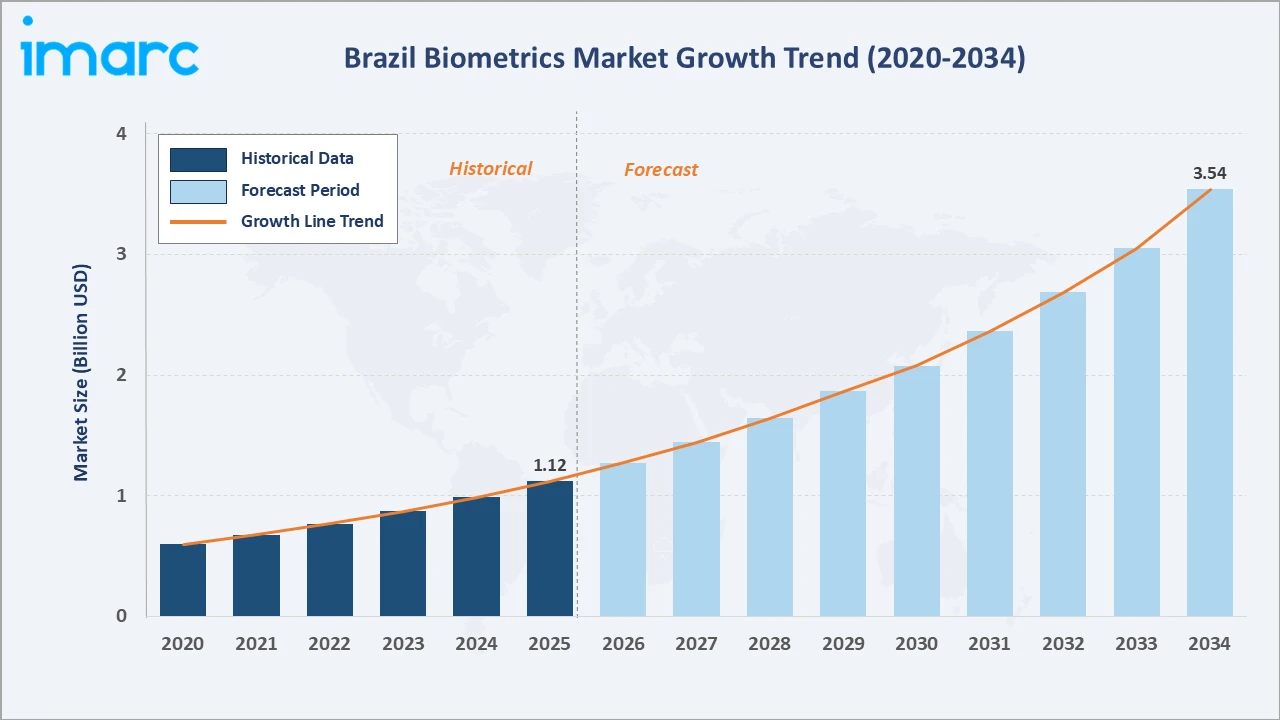
The Brazil biometrics market grew from USD 1.12 Billion in 2025 to USD 1.26 Billion in 2026 and is projected to reach USD 3.54 Billion by 2034, growing at a CAGR of 13.29% during 2026-2034. Brazil accounts for approximately 35% of Latin America's IT spending, reflecting its dominant regional position. Growth is driven by large-scale government identity digitalization, rising fintech demand for secure authentication, and rapid AI-driven innovation. The Southeast region holds 55.0% of market share in 2025, while face recognition leads with a 25.0% technology share and the government segment anchors end-user demand at 25.0%.
Market Snapshot
| Metric | Value |
|---|---|
| Market Size (2025) | USD 1.12 Billion |
| Market Size (2026) | USD 1.26 Billion |
| Forecast Market Size (2034) | USD 3.54 Billion |
| CAGR (2026-2034) | 13.29% |
| Base Year | 2025 |
| Forecast Period | 2026-2034 |
| Historical Period | 2020-2025 |
| Leading Technology | Face Recognition (25.0%) |
| Leading End User | Government (25.0%) |
| Largest Region | Southeast (55.0%) |
The market was valued at USD 0.60 Billion in 2020 and grew to USD 1.12 Billion in 2025, reflecting consistent historical expansion. With an estimated USD 1.26 Billion in 2026, the market is projected to reach USD 2.08 Billion by 2030 and USD 3.54 Billion by 2034.
To get more information on this market, Request Sample
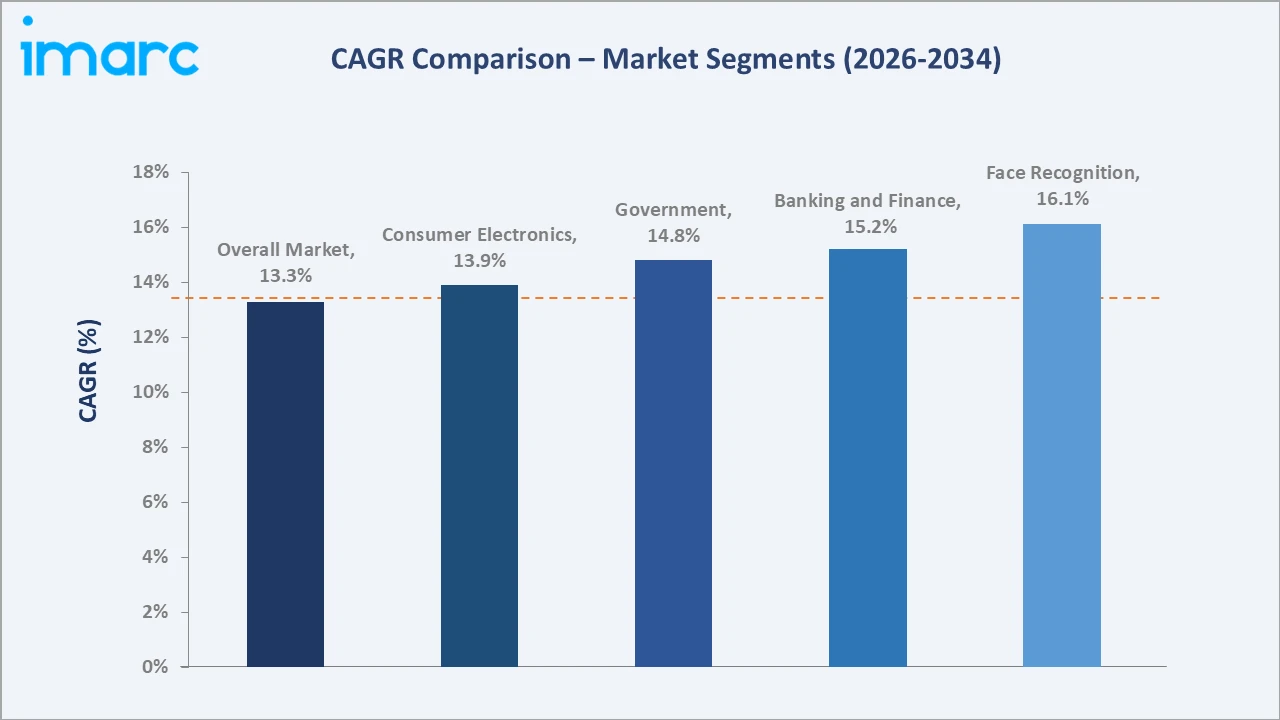
Face recognition leads with the highest projected CAGR of 16.1%, reflecting accelerating AI-driven adoption across government identity and mobile banking applications. Banking and finance follow at 15.2% CAGR, driven by digital onboarding mandates under Brazil's open banking framework. Government records a 14.8% CAGR, underpinned by sustained public-sector digitalization investments, while consumer electronics registers a 13.9% CAGR as biometric authentication becomes standard across connected devices.
Executive Summary
The Brazil biometrics market was valued at USD 1.12 Billion in 2025 and is forecast to reach USD 3.54 Billion by 2034 at a CAGR of 13.29%. Brazil's Pix instant payment infrastructure has significantly elevated demand for biometric authentication in banking and fintech. Rising cybercrime has further accelerated enterprise-level biometric deployments across both public and private sectors.
Face recognition holds the largest technology share at 25.0% in 2025, with AFIS (20.0%) and non-AFIS (18.0%) combining to represent 63.0% of total market value. The government end-user segment leads demand at 25.0%, driven by Brazil's biometric voter registration. The Southeast region commands 55.0% of national revenue, anchored by financial and technology infrastructure.
Key Market Insights
| Insight | Data |
|---|---|
| Largest Technology | Face Recognition – 25.0% share in 2025 |
| Largest End-User | Government – 25.0% share in 2025 |
| Leading Region | Southeast – 55.0% share in 2025 |
| Key Market Opportunity | AI-driven multi-modal biometrics in fintech onboarding and smart-city programs. |
Key Analytical Observations Supporting the Above Data:
- Face recognition holds the largest technology share at 25.0% in 2025, driven by AI advancements and widespread deployment in mobile banking KYC, government surveillance, and national identity management programs.
- Government remains the dominant end-user at 25.0%, reflecting Brazil's national biometric voter registration system.
- The Southeast region contributes 55.0% of market revenue in 2025, anchored by fintech hubs and smart-city programs involving significant annual technology procurement.
Brazil Biometrics Market Overview
The Brazil biometrics market encompasses automated identity verification technologies, including fingerprint recognition, facial recognition, iris scanning, voice authentication, and behavioral analytics, used to authenticate individuals across public and private sectors.
Rising cybercrime incidents, alongside accelerating e-government programs, fintech growth, and smart-city investments, serve as the primary macroeconomic drivers. The ecosystem spans hardware manufacturers, AI software developers, system integrators, and end-user organizations across government, finance, defense, healthcare, and commercial sectors.
Market Dynamics
To evaluate market opportunities, Request Sample
Market Drivers
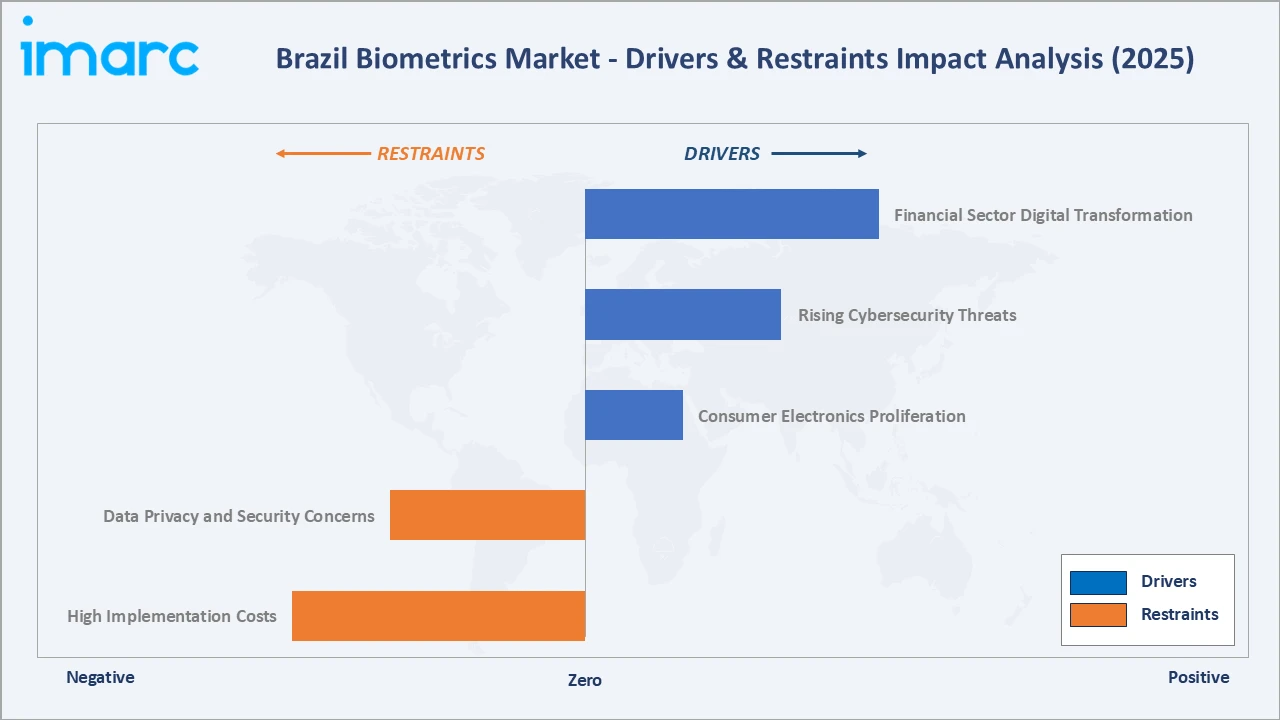
- Financial Sector Digital Transformation: As of March 2024, Pix had approximately 153 million individual users in Brazil, representing nearly 75% of the country's population, along with 15 million registered businesses, with fraud prevention mandates extending biometric requirements to ATMs, mobile apps, and digital onboarding workflows.
- Rising Cybersecurity Threats: During the first half of 2026, companies, institutions, and individuals in Brazil faced approximately 249.3 billion attempted cyberattacks and malicious activities targeting their systems, pushing enterprises to deploy multi-factor biometric security across critical systems and customer-facing platforms.
- Consumer Electronics Proliferation: At the beginning of 2025, Brazil had approximately 183 million internet users, representing an online penetration rate of 86.2%, generating recurring hardware refresh cycles and demand for biometric SDKs.
Market Restraints
- High Implementation Costs: Large-scale biometric infrastructure deployments require significant upfront investment in hardware, software integration, and ongoing maintenance, limiting adoption among small and mid-sized enterprises.
- Data Privacy and Security Concerns: Growing public awareness around biometric data misuse and storage vulnerabilities presents challenges for stakeholders seeking broader consumer and institutional acceptance of identity platforms.
Market Opportunities
- Fintech and Digital Banking Expansion: Brazil's large unbanked population represents a significant opportunity for mobile-first biometric onboarding and KYC platforms targeting financial inclusion and digital account opening.
- Smart City and Transport Integration: Federal investments in intelligent transport systems are creating demand for biometric ticketing, border management, and logistics authentication solutions across multiple Brazilian states.
Market Challenges
- Algorithmic Bias and Accuracy: Concerns about demographic bias in facial recognition accuracy across Brazil's diverse population present regulatory and reputational challenges for solution providers seeking broad public-sector adoption.
- Infrastructure Gaps in Remote Regions: The North and Central-West regions face connectivity and power supply limitations that hinder consistent deployment of cloud-dependent biometric platforms outside major urban centers.
Emerging Market Trends
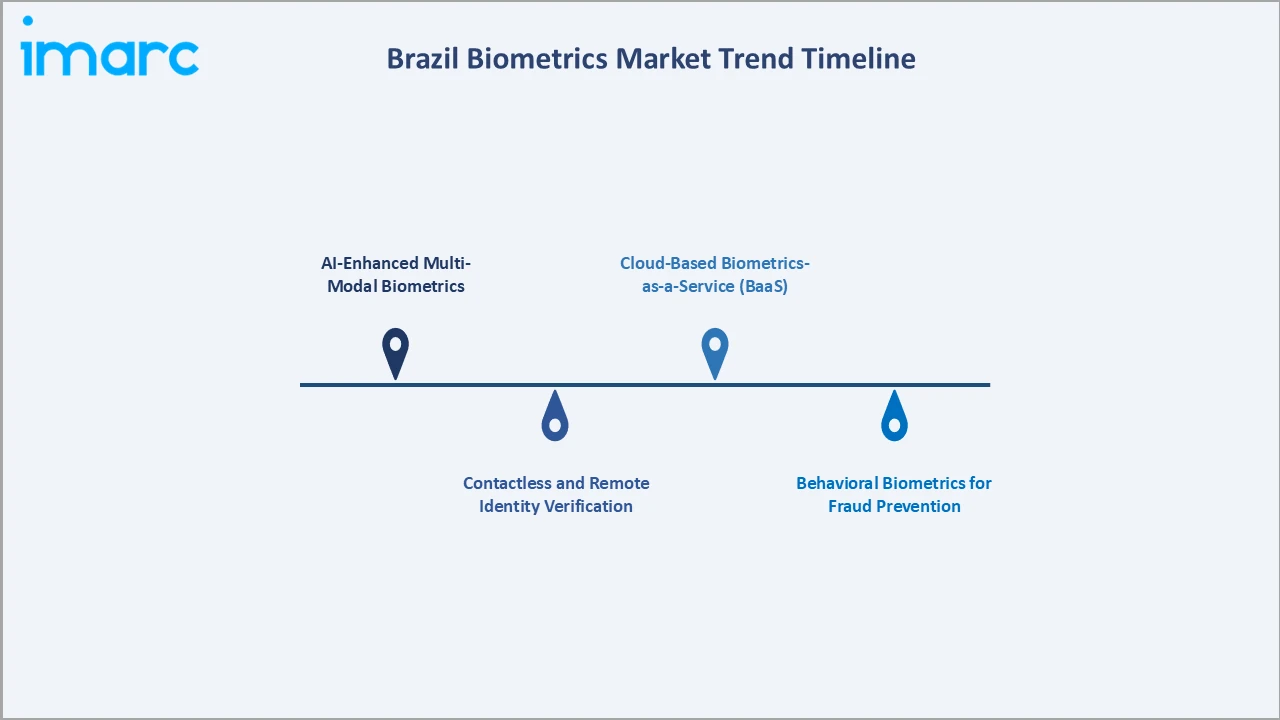
1. AI-Enhanced Multi-Modal Biometrics
The integration of artificial intelligence with multi-modal biometric platforms, combining facial, voice, and behavioral modalities, is rapidly gaining traction across enterprise and government deployments. These advanced systems deliver significantly higher accuracy than single-modality solutions, making them the preferred choice for high-security financial and identity management applications.
2. Contactless and Remote Identity Verification
Contactless biometric adoption has accelerated across banking, healthcare, and transport, driven by growing demand for frictionless and hygienic identity verification methods. Remote onboarding solutions powered by liveness detection have fundamentally reshaped KYC processes for fintech platforms and digital government service channels.
3. Cloud-Based Biometrics-as-a-Service (BaaS)
Subscription-based cloud biometric platforms are enabling organizations of all sizes to access enterprise-grade identity verification capabilities without significant upfront investment. The BaaS model is expanding the addressable market beyond large enterprises, drawing in a growing base of mid-market financial and commercial service providers.
4. Behavioral Biometrics for Fraud Prevention
Behavioral biometrics, analyzing patterns such as typing dynamics, device interaction, and navigation behavior, is emerging as a continuous and passive authentication layer within digital platforms. Financial institutions are increasingly adopting these solutions to detect anomalous activity in real time and reduce transaction fraud without disrupting customer experience.
Industry Value Chain Analysis
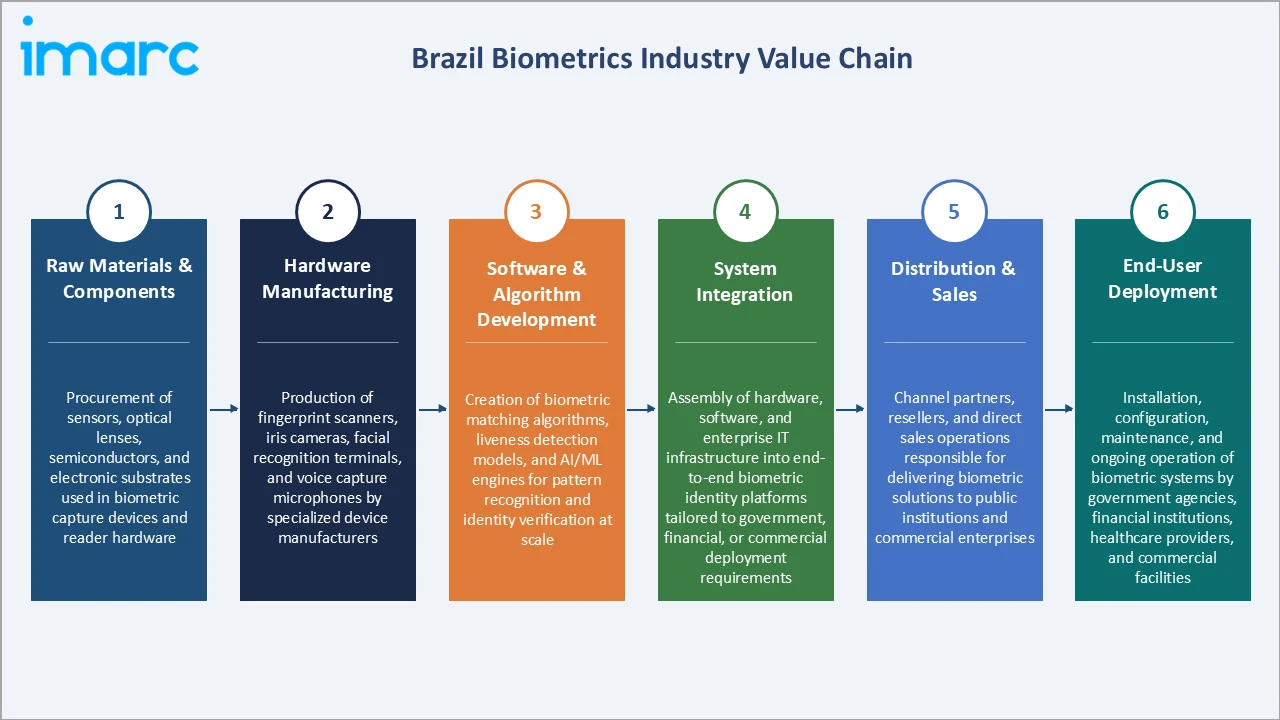
The biometrics industry value chain spans six core stages, from raw material sourcing through end-user deployment.
| Stage | Description |
|---|---|
| Raw Materials & Components | Procurement of sensors, optical lenses, semiconductors, and electronic substrates used in biometric capture devices and reader hardware. |
| Hardware Manufacturing | Production of fingerprint scanners, iris cameras, facial recognition terminals, and voice capture microphones by specialized device manufacturers. |
| Software & Algorithm Development | Creation of biometric matching algorithms, liveness detection models, and AI/ML engines for pattern recognition and identity verification at scale. |
| System Integration | Assembly of hardware, software, and enterprise IT infrastructure into end-to-end biometric identity platforms tailored to government, financial, or commercial deployment requirements. |
| Distribution & Sales | Channel partners, resellers, and direct sales operations responsible for delivering biometric solutions to public institutions and commercial enterprises. |
| End-User Deployment | Installation, configuration, maintenance, and ongoing operation of biometric systems by government agencies, financial institutions, healthcare providers, and commercial facilities. |
System integration represents the highest value-added stage, where biometric algorithms, hardware, and enterprise software are assembled into deployable solutions. This stage commands the greatest margins due to the customization and domain expertise required, making it a critical strategic position within the broader industry ecosystem.
Technology Landscape in the Brazil Biometrics Industry
AI and Deep Learning Integration
Artificial intelligence and deep learning are transforming biometric solution accuracy and scalability. Advanced neural network architectures enable highly accurate identity matching across diverse environmental conditions and demographic groups, reducing false acceptance and rejection rates to levels that support deployment in mission-critical applications.
Sensor and Capture Innovation
Continuous improvements in sensor technology, including optical fingerprint readers, 3D structured-light cameras, and high-resolution iris imaging systems, are enabling faster and more reliable biometric capture. These advances are driving adoption in a broader range of deployment environments, from high-volume public access points to compact mobile and wearable devices.
Smart Connectivity and IoT Integration
Biometric devices are increasingly integrated with broader IoT-enabled security ecosystems, allowing real-time identity data to flow seamlessly across connected platforms and enterprise applications. This integration supports end-to-end security architectures that combine physical access control, digital authentication, and behavioral monitoring within unified management frameworks.
Cybersecurity and Encryption
Advances in template protection, including encryption and secure processing techniques, are addressing data security concerns that have historically constrained biometric adoption. Passive liveness detection and anti-spoofing technologies are becoming standard components of biometric platforms deployed in regulated industries, ensuring robust protection against presentation attacks and fraudulent access attempts.
Market Segmentation Analysis
The report covers the following segments:
| Segment Category | Leading Segment | Market Share | Year |
|---|---|---|---|
| Technology | Face Recognition | 25.0% | 2025 |
| Functionality | 🔒 | 🔒 | 2025 |
| Component | 🔒 | 🔒 | 2025 |
| Authentication | 🔒 | 🔒 | 2025 |
| End User | Government | 25.0% | 2025 |
| Region | Southeast | 55.0% | 2025 |

By Technology
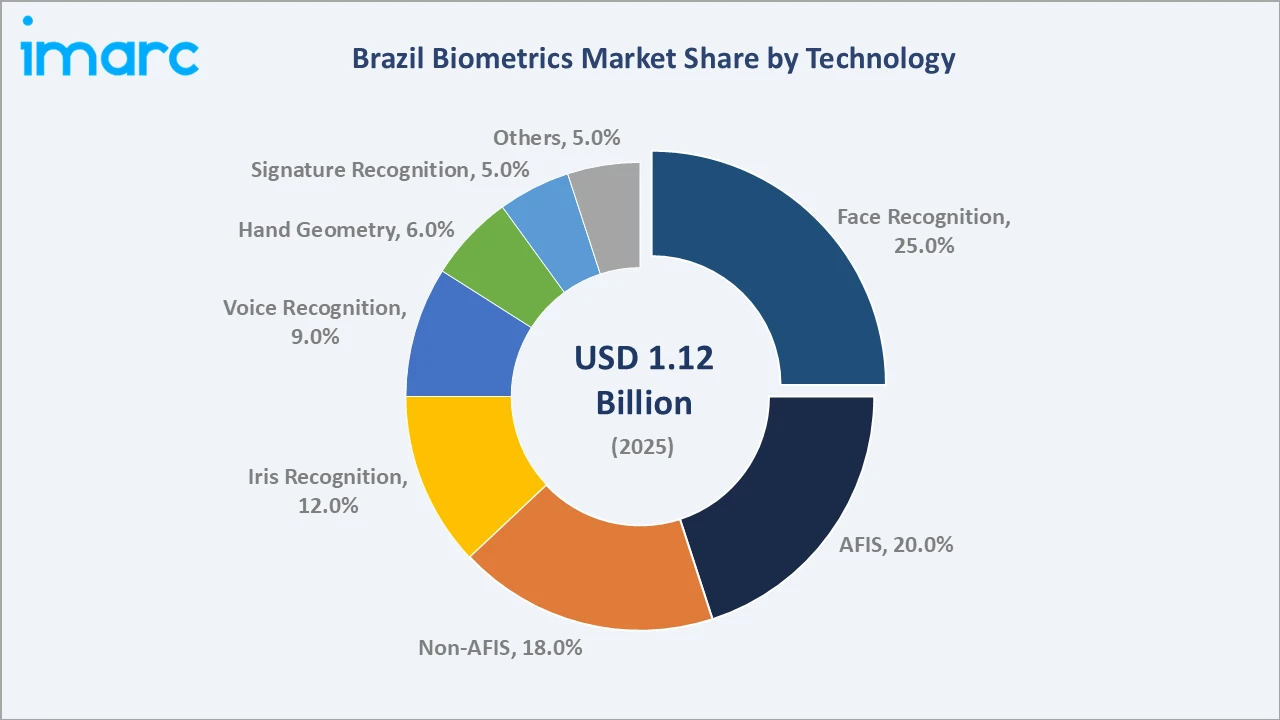
Face recognition leads with 25.0% market share in 2025, driven by AI-powered surveillance, mobile banking KYC, and government identity programs. AFIS (20.0%) is underpinned by law enforcement and national identification programs, while non-AFIS fingerprint solutions (18.0%) dominate workforce management and commercial access control.
To access detailed market analysis, Request Sample
Iris recognition (12.0%) sees growing adoption in border management due to its superior liveness resistance. Voice recognition (9.0%) expands within contact center fraud prevention. Hand geometry (6.0%) and signature recognition (5.0%) serve specialized access control and financial verification niches, and others account for 5.0%.
By End User
Government is the dominant end-user at 25.0% share in 2025, encompassing voter ID systems, e-passport issuance, social welfare verification, and law enforcement biometrics. Banking and finance (22.0%) grow at ~15.2% CAGR as instant payment platforms and open banking expand biometric security mandates.
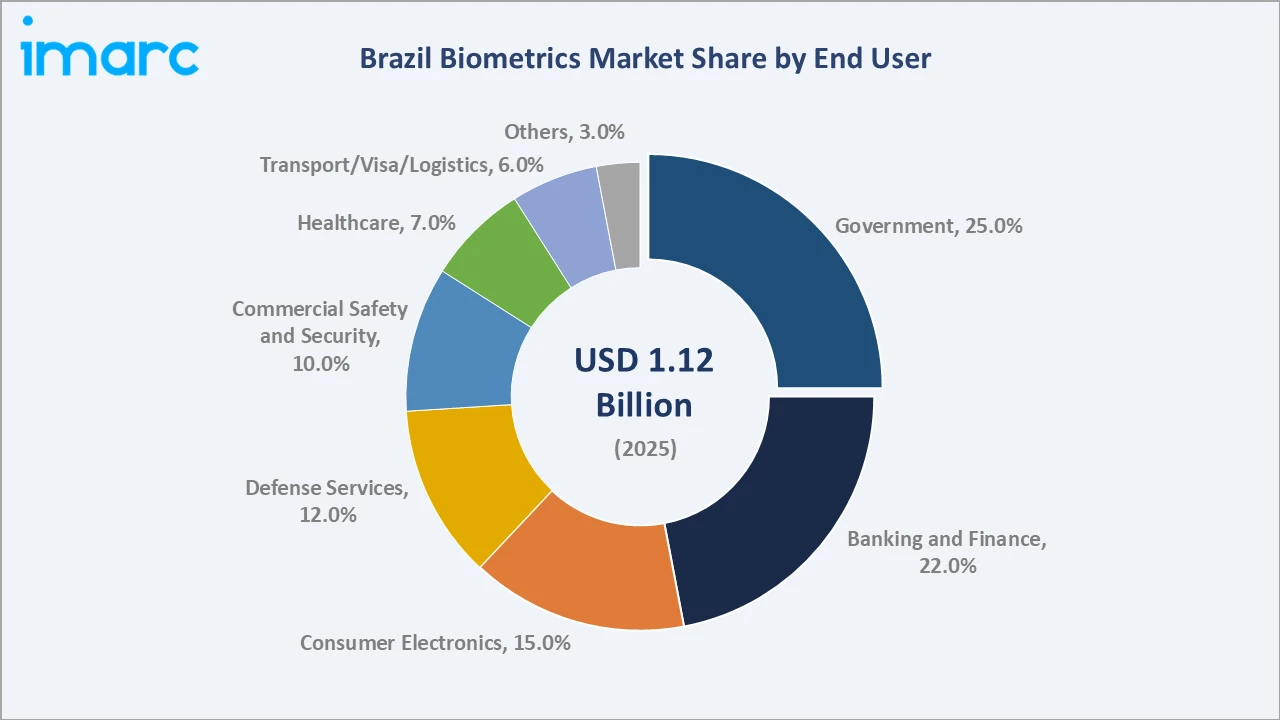
Consumer electronics (15.0%) are supported by universal fingerprint and face unlock integration in smartphones and laptops. Defense services (12.0%) reflect sustained investment in border surveillance and personnel access control. Commercial safety and security (10.0%) expand through retail loss prevention and smart building systems. Healthcare (7.0%) is an emerging segment driven by digital patient identity in Brazil's large-scale public health system. Transport/visa/logistics segment accounts for 6.0%, and others account for 3.0%.
Regional Market Insights
| Region | Share (2025) | Market Characteristics |
|---|---|---|
| Southeast | 55.0% | Largest economic hub; dense financial, technology, and commercial sectors drive strong biometric adoption across banking, smart cities, and enterprise security systems. |
| South | 18.0% | Strong industrial and agribusiness base; growing deployment in workforce management, logistics automation, and regional digital banking programs. |
| Northeast | 12.0% | Expanding digital inclusion and mobile banking adoption; government biometric social programs are the primary demand driver across the population. |
| Central-West | 9.0% | Agriculture-driven economy with increasing biometric adoption in rural workforce management, agri-supply chain traceability, and government service delivery points. |
| North | 6.0% | Nascent market; connectivity infrastructure development is the primary growth enabler, with border security and public safety as the leading application areas. |
The Southeast region leads with 55.0%, centered on São Paulo and Rio de Janeiro, which host Brazil's largest financial institutions, technology companies, and smart-city programs, creating dense demand for identity verification and access control solutions across both public and private sectors. South Brazil (18.0%) is driven by its industrial and agri-tech concentration.
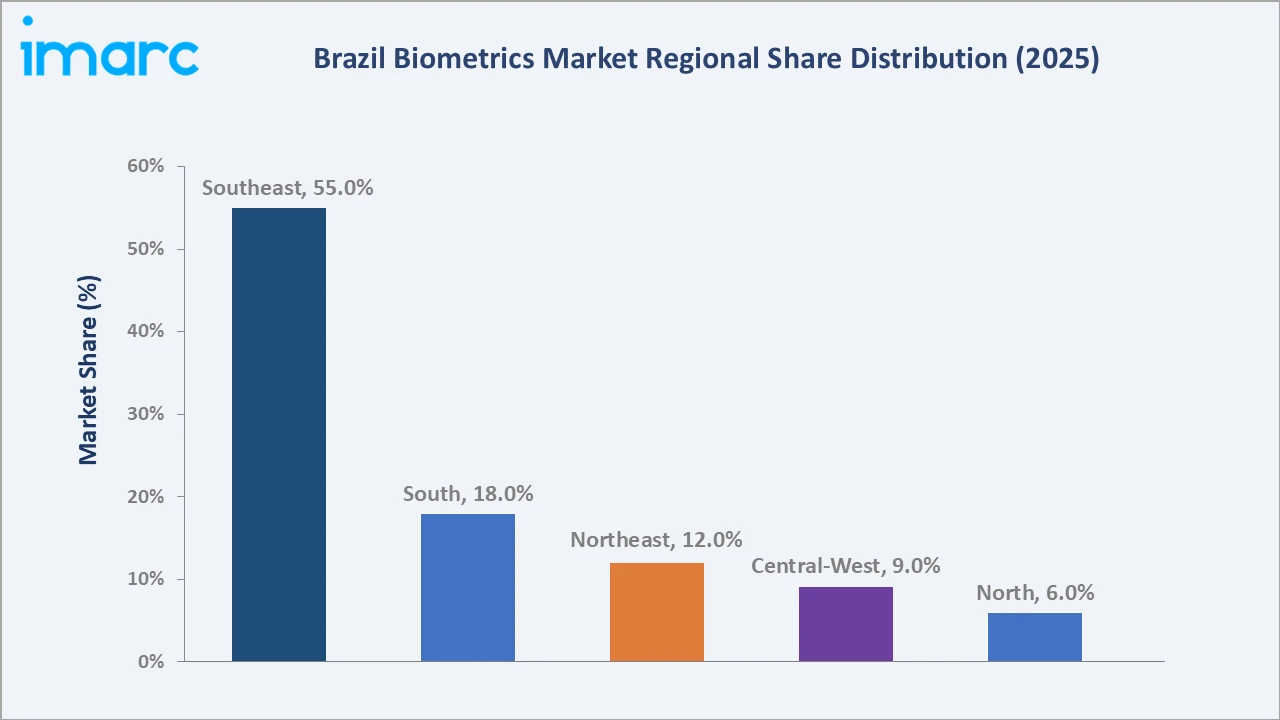
The Northeast (12.0%) represents a rapidly growing opportunity. Expanding e-government services and mobile banking penetration are the key drivers, with biometric-enabled social welfare verification programs reaching millions of low-income beneficiaries in this underserved region. The Central-West (9.0%) and North (6.0%) regions present longer-term growth potential. As connectivity infrastructure improves and federal digitalization programs extend, these regions are expected to register above-average growth rates, gradually increasing their national market share.
Competitive Landscape
The Brazil biometrics market features a mix of domestic specialists and global technology leaders. Local players dominate government and financial services segments through deep regulatory expertise and established public-sector relationships. Global firms contribute advanced hardware platforms and large-scale AFIS infrastructure.
| Company Name | Key Products | Market Position | Core Strength |
|---|---|---|---|
| Griaule | Griaule Biometric Suite (GBS) | Market Leader | Griaule plays a central role in Brazil’s national biometric, identity management, and electoral security infrastructure. |
| Unico | Human Token, Unico IDCloud | Innovator | Unico provides cloud-native facial recognition, liveness detection, and fraud-prevention infrastructure to top financial, retail, and telecommunications enterprises. |
| NEC Corporation | NeoFace, Bio-Idiom | Market Leader | NEC Corporation plays a major role in Brazil’s biometric security, digital identification, and public safety infrastructure. |
| Thales | LiveScan, CABIS, Mobile Biometric Identification (MBI) | Established Player | Thales plays a major role in Brazil’s biometrics, digital security, and identity-management markets, supplying core technology and multi-biometric systems. |
The competitive landscape is intensifying as established technology providers and emerging local players compete to offer advanced facial, fingerprint, iris, and multimodal biometric solutions. Rising demand for secure digital identity verification, banking authentication, and fraud prevention is encouraging companies to strengthen their technological capabilities, form strategic partnerships, and expand their product portfolios.
Key Company Profiles
Griaule
Griaule is a technology company specializing in biometric software solutions with expertise in fingerprint recognition and large-scale automated identification systems. The company delivers high-accuracy platform solutions to government agencies, law enforcement organizations, and enterprise clients across the Latin American region.
- Key Offerings: Griaule Biometric Suite (GBS).
- Strategic Focus: Broadening its cloud and SaaS-based biometric platforms, targeting both public-sector and financial services clients while developing strategic partnerships with regional system integrators.
Unico
Unico is a digital identity platform company providing AI-powered facial recognition and identity verification services. The company serves a broad range of industries including financial services, human resources, and e-commerce, offering solutions designed to streamline onboarding and authentication processes.
- Key Offerings: Human Token, Unico IDCloud.
- Strategic Focus: Focused on deepening integrations with financial service providers and expanding its platform into healthcare and public-sector identity programs across Latin American markets.
Market Concentration Analysis
The Brazil biometrics market exhibits a moderate level of concentration, with leading participants collectively accounting for a significant share of total industry revenue. Top-tier players benefit from established relationships with public-sector clients, proprietary algorithm portfolios, and large-scale integration capabilities that create meaningful barriers to entry for smaller challengers competing in government and enterprise segments.
The market is gradually consolidating as mid-sized players pursue strategic partnerships and acquisitions to build comprehensive solution portfolios. At the same time, cloud-native and AI-first domestic companies are capturing growing share in fintech and consumer electronics, contributing to a dynamic competitive landscape that balances consolidation at the top with continuous innovation from emerging participants.
Investment & Growth Opportunities
Fastest Growing Segments
Face recognition, projected at approximately 16.1% CAGR through 2034, represents the highest-growth technology investment opportunity. Banking and finance end users, with a ~15.2% CAGR, offer strong investment returns driven by Brazil's open banking expansion, digital-first financial inclusion mandates, and regulatory requirements for biometric-secured onboarding workflows.
Investment Themes
- AI-Powered Facial Recognition and Multimodal Biometrics: Investments in AI-enabled facial recognition, fingerprint, iris, and multimodal authentication technologies are gaining traction as businesses seek more accurate, faster, and fraud-resistant identity verification solutions. Opportunities exist in developing advanced biometric algorithms, liveness detection, and real-time authentication platforms.
- Digital Identity and Financial Services Integration: The expansion of digital banking, fintech platforms, and Brazil's Pix payment ecosystem is creating investment opportunities in biometric-based customer onboarding, transaction authentication, and fraud prevention. Companies are increasingly investing in scalable identity verification platforms to strengthen security and simplify digital transactions.
Future Market Outlook (2026-2034)
The Brazil biometrics market is positioned for sustained, high-velocity growth across the forecast period. Revenue is projected to expand from USD 1.26 Billion in 2026 to USD 3.54 Billion by 2034, representing a CAGR of 13.29%. This trajectory is underpinned by Brazil's accelerating digital transformation across both public and private sectors, reinforced by regulatory mandates and rising demand for secure, frictionless identity verification at national scale.
Three structural forces will define market evolution through 2034. First, the continued expansion of Brazil's digital financial infrastructure will embed biometric authentication as a mandatory layer across the financial services ecosystem, sustaining double-digit annual growth in the banking end-user segment. Second, government digitalization programs, covering social welfare, voter identification, border management, and national ID modernization, will drive large recurring procurement cycles that anchor demand across the AFIS and facial recognition technology segments. Third, the maturation of AI-powered multi-modal biometric platforms will progressively lower the cost and complexity of enterprise deployment, expanding the addressable market into healthcare, retail, logistics, and other sectors currently at early-adoption stages.
Research Methodology
Primary Research
Primary research involved structured interviews and surveys with stakeholders, including biometric solution providers, government procurement officers, banking and fintech executives, and industry analysts across Brazil. Data collected via primary channels were used to validate market size estimates, test segment assumptions, and identify emerging demand patterns not captured in secondary sources.
Secondary Research
Secondary research encompassed analysis of government publications, industry association reports, company annual reports, regulatory filings, patent databases, and proprietary data sources. Key inputs included Brazilian federal agency publications, central bank reports, and global technology analyst coverage of the Latin American identity and biometrics market.
Forecasting Models
Market forecasts were developed using a combination of bottom-up and top-down modeling approaches. Demand-side analysis across each end-user segment was integrated with supply-side capacity assessments and macroeconomic indicators. CAGR projections were validated against multiple economic scenarios accounting for regulatory, technological, and infrastructure variables across the 2026–2034 period.
Brazil Biometrics Market Report Coverage:
| Report Features | Details |
|---|---|
| Base Year of the Analysis | 2025 |
| Historical Period | 2020-2025 |
| Forecast Period | 2026-2034 |
| Units | Billion USD |
| Scope of the Report |
Exploration of Historical Trends and Market Outlook, Industry Catalysts and Challenges, Segment-Wise Historical and Future Market Assessment:
|
| Technologies Covered | Face Recognition, Hand Geometry, Voice Recognition, Signature Recognition, Iris Recognition, AFIS, Non-AFIS, Others |
| Functionalities Covered | Contact, Non-contact, Combined |
| Components Covered | Hardware, Software |
| Authentications Covered | Single-Factor Authentication, Multifactor Authentication |
| End Users Covered | Government, Defense Services, Banking and Finance, Consumer Electronics, Healthcare, Commercial Safety and Security, Transport/Visa/Logistics, Others |
| Regions Covered | Southeast, South, Northeast, North, Central-West |
| Companies Covered | Griaule, Unico, NEC Corporation, Thales, etc. |
| Customization Scope | 10% Free Customization |
| Post-Sale Analyst Support | 10-12 Weeks |
| Delivery Format | PDF and Excel through Email (We can also provide the editable version of the report in PPT/Word format on special request) |
Key Benefits for Stakeholders:
- IMARC’s industry report offers a comprehensive quantitative analysis of various market segments, historical and current market trends, market forecasts, and dynamics of the Brazil biometrics market from 2020-2034.
- The research report provides the latest information on the market drivers, challenges, and opportunities in the Brazil biometrics market.
- Porter's five forces analysis assist stakeholders in assessing the impact of new entrants, competitive rivalry, supplier power, buyer power, and the threat of substitution. It helps stakeholders to analyze the level of competition within the Brazil biometrics industry and its attractiveness.
- Competitive landscape allows stakeholders to understand their competitive environment and provides an insight into the current positions of key players in the market.
Frequently Asked Questions About the Brazil Biometrics Market Report
The Brazil biometrics market was valued at USD 1.26 Billion in 2026 and is projected to reach USD 3.54 Billion by 2034.
The Brazil biometrics market is projected to grow at a CAGR of 13.29% between 2026-2034, driven by government digitalization and financial sector biometric demand.
Face recognition leads with 25.0% market share in 2025, supported by AI advancements in mobile banking KYC, government surveillance, and national identity programs.
The government segment leads with a 25.0% share in 2025, driven by Brazil's national biometric voter registration system covering registered citizens.
The Southeast region accounts for 55.0% of market revenue in 2025, anchored by São Paulo and Rio de Janeiro's financial and technology infrastructure concentration.
Leading companies include Griaule, Unico, NEC Corporation, and Thales, among others
The market is forecast to grow from USD 1.26 Billion in 2026 to USD 3.54 Billion by 2034, with face recognition and banking end users among the fastest-growing segments.
Key opportunities lie in fintech onboarding for the unbanked, healthcare digital identity, smart-city biometric infrastructure, and cloud-based biometrics-as-a-service platforms.
Need more help?
- Speak to our experienced analysts for insights on the current market scenarios.
- Include additional segments and countries to customize the report as per your requirement.
- Gain an unparalleled competitive advantage in your domain by understanding how to utilize the report and positively impacting your operations and revenue.
- For further assistance, please connect with our analysts.
 Request Customization
 Speak to an Analyst
 Request Brochure
 Inquire Before Buying
Benefits of Customization
- Personalize this research
- Triangulate with your data
- Get data as per your format and definition
- Gain a deeper dive into a specific application, geography, customer, or competitor
- Any level of personalization
Get in Touch With Us
UNITED STATES
Phone: +1-201-971-6302
INDIA
Phone: +91-120-433-0800
UNITED KINGDOM
Phone: +44-753-714-6104
Email: [email protected]
Client Testimonials






















Related Reports

Choose your plan
*Please note that the prices mentioned below are starting prices for each bundle type. Kindly contact our team for further details.*
Single User License
- 1 User License, Access on 2 Devices
- PDF Report + Excel Dataset (Password Protected)
- Lifetime Access
- No Printing Rights
- 10% Free Report Customization
- 10–12 Weeks of Analyst Support
Five User License
- Access for 5 Users, 2 Devices per User
- PDF Report + Excel Dataset (Password Protected)
- Lifetime Access
- Dedicated Account Manager
- 12–14 Weeks of Analyst Support
- No Printing Rights
- 15% Free Report Customization
- 25% Discount on Your Next Purchase
Corporate User License
- Unlimited User Access (Within Your Organization)
- PDF Report + Excel Dataset
- Lifetime Access
- Dedicated Account Manager
- 14–20 Weeks of Analyst Support
- No Printing Rights
- 20% Free Report Customization
- 30% Discount on Your Next Purchase
Essential Insights
What's included:
3 reports
- Lifetime Access
- PDF Reports
- Excel Datasets
- 2 Weeks of Free Analyst Support
- 2 User Licenses
- Access on 2 Devices
- Printing Rights
- Complimentary PowerPoint (PPT) Version
- Complimentary License Upgrade
Professional Access
What's included:
5 reports
- Lifetime Access
- PDF Reports
- Excel Datasets
- 8 Weeks of Free Analyst Support
- 2 User Licenses
- Access on 2 Devices
- Printing Rights
- Complimentary PowerPoint (PPT) Version
- Complimentary License Upgrade
Business Advantage
What's included:
8 reports
- Lifetime Access
- PDF Reports
- Excel Datasets
- 14 Weeks of Free Analyst Support
- 2 User Licenses
- Access on 2 Devices
- Printing Rights
- Complimentary PowerPoint (PPT) Version
- Complimentary License Upgrade
Enterprise Intelligence
What's included:
10 reports
- Lifetime Access
- PDF Reports
- Excel Datasets
- 20 Weeks of Free Analyst Support
- 2 User Licenses
- Access on 2 Devices
- Printing Rights
- Complimentary PowerPoint (PPT) Version
- Complimentary License Upgrade