
Canada ATM Market Size, Share, Trends and Forecast by Solution, Screen Size, Application, ATM Type, and Region, 2026-2034
Canada ATM Market Size, Share, Trends & Forecast (2026-2034)
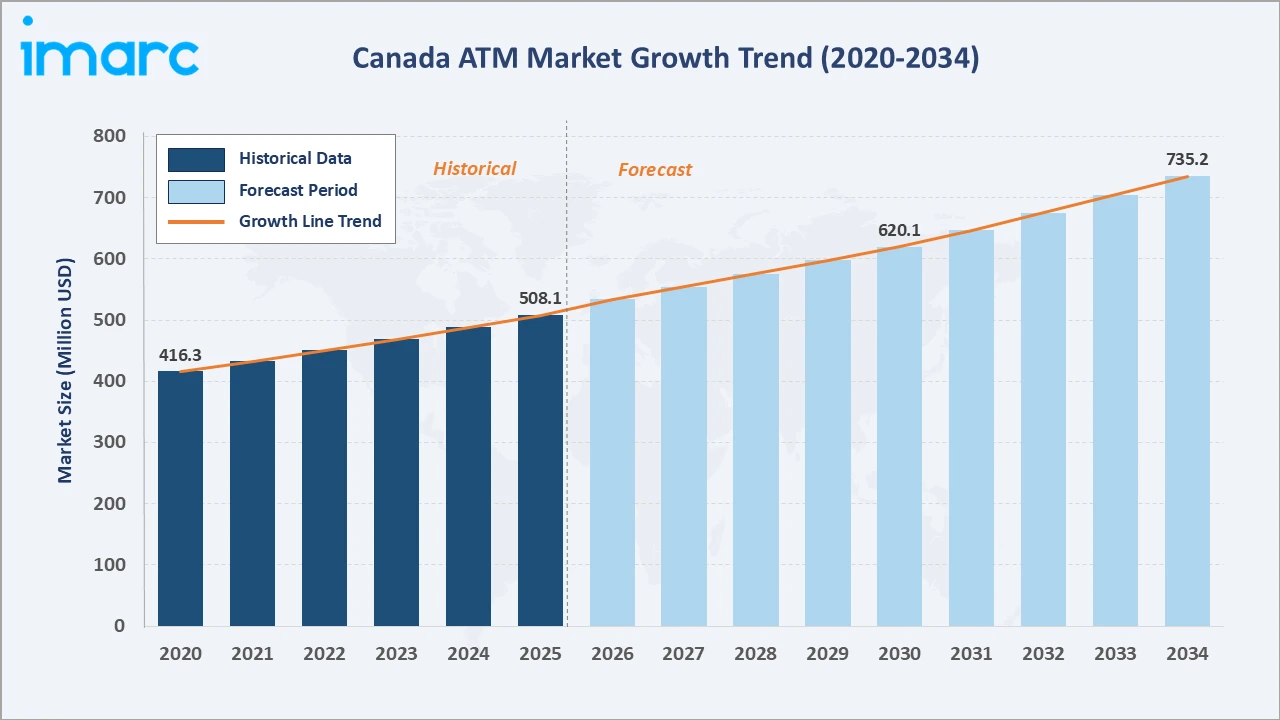
The Canada ATM market grew from USD 508.1 Million in 2025 to USD 534.5 Million in 2026 and is projected to reach USD 735.2 Million by 2034, growing at a CAGR of 4.07% during 2026-2034. Steady cash demand in rural and remote communities, growth of white-label ATM networks, and fleet upgrades support the market. Cash continues to be a popular choice in many communities, particularly in remote and Indigenous areas, sustaining the need for accessible ATMs.
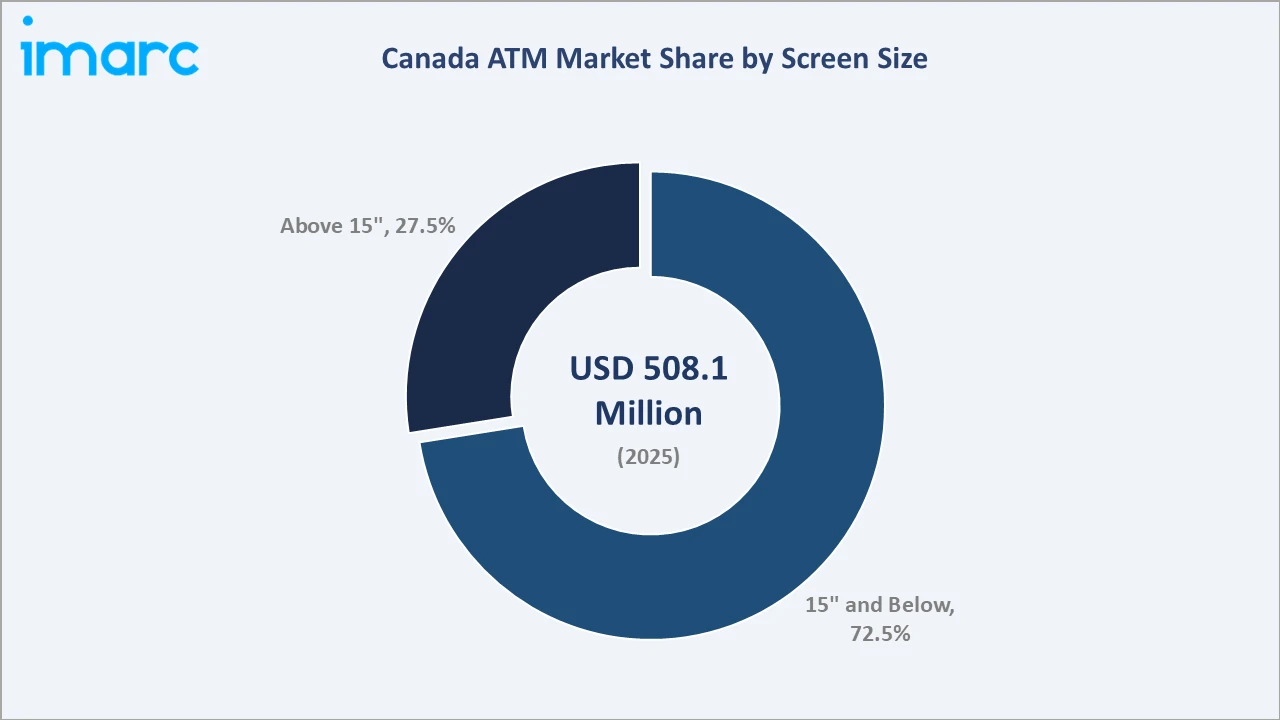
Bank outsourcing through ATM-as-a-service models, cash recycling technology, and new self-service features continue to shape Canada ATM market trends. 15-inch and below screens dominate at 72.5%. Deployment solutions lead at 65.5%. Ontario commands 38.5% of national market share.
Market Snapshot
|
Metric |
Value |
|
Base Year Market Size (2025) |
USD 508.1 Million |
|
Market Size (2026) |
USD 534.5 Million |
|
Forecast Market Size (2034) |
USD 735.2 Million |
|
CAGR (2026-2034) |
4.07% |
|
Base Year |
2025 |
|
Historical Period |
2020-2025 |
|
Forecast Period |
2026-2034 |
|
Dominant Screen Size |
15" and Below (72.5%, 2025) |
|
Dominant Solution |
Deployment Solutions (65.5%, 2025) |
|
Leading Region |
Ontario (38.5%, 2025) |
The Canada ATM market size increased from USD 416.3 Million in 2020 to USD 508.1 Million in 2025 and is estimated to reach USD 534.5 Million in 2026. The market is further expected to grow to USD 620.1 Million by 2030 and USD 735.2 Million by 2034. Growth reflects fleet replacement, new deployments in retail locations, and expanding managed services.
To get more information on this market, Request Sample
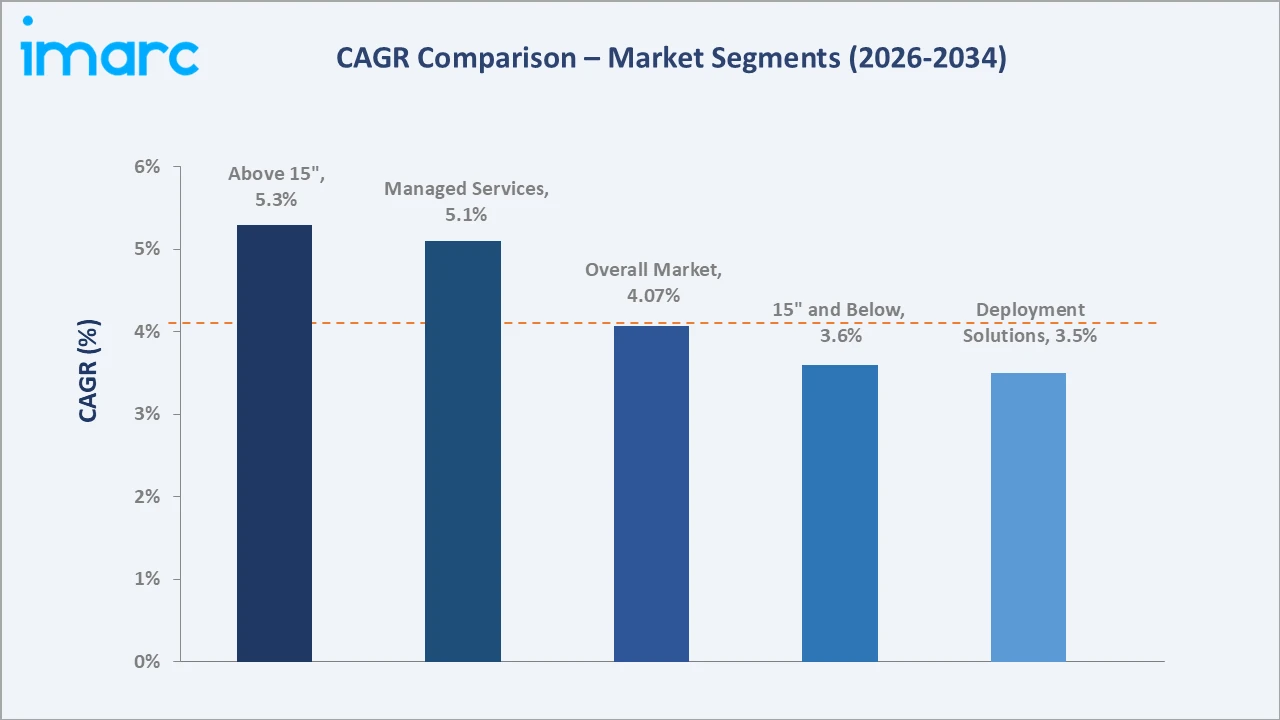
Above 15-inch screens are expected to grow fastest at ~5.3% CAGR, supported by multi-function and interactive ATMs. Managed services follow at ~5.1% CAGR as banks and credit unions outsource ATM operations to specialized providers.
Executive Summary
The Canada ATM market expanded from USD 508.1 Million in 2025 to an estimated USD 534.5 Million in 2026. Although digital payments are growing, cash remains important for many Canadians, especially in rural, remote, and Indigenous communities. Banks are optimizing their fleets and outsourcing operations, while white-label operators expand in retail and hospitality locations. The market is projected to reach USD 735.2 Million by 2034. 15-inch and below screens at 72.5% lead screen sizes. Deployment solutions at 65.5% lead solutions. Ontario leads regionally at 38.5%.
Key Market Insights
|
Insight |
Data |
|
Dominant Screen Size |
15" and Below - 72.5% share (2025) |
|
Dominant Solution |
Deployment Solutions - 65.5% market share (2025) |
|
Leading Region |
Ontario - 38.5% share (2025) |
|
Market Opportunity |
ATM-as-a-service; cash recycling ATMs; accessible and multi-function ATMs; rural and Indigenous community access; AI-based monitoring |
Key Analytical Observations Supporting the Above Data:
- 15" and Below at 72.5%: Smaller screens dominate because most retail, convenience store, and standard bank ATMs use compact displays that keep costs low and suit basic cash withdrawal and balance inquiry functions.
- Deployment Solutions at 65.5%: Deployment solutions lead because ATM hardware purchases, installation, software, and site setup account for most spending as banks and operators replace and expand fleets.
- Ontario at 38.5%: Ontario leads regionally due to its large population, dense retail and banking networks, and concentration of financial institution headquarters in Toronto.
Canada ATM Market Overview
Automated teller machines in Canada, often called automated banking machines, allow customers to withdraw cash, check balances, and in many cases deposit cash and cheques. The market includes bank-owned ATMs, white-label ATMs operated by independent companies, and specialized ATMs such as cash recyclers and Bitcoin ATMs. ATMs are found in bank branches, retail stores, gas stations, shopping malls, airports, and community centers across Canada.
The industry ecosystem links ATM manufacturers, software vendors, banks and credit unions, white-label operators, payment networks, cash logistics providers, regulators, and site hosts. Macroeconomic factors include cash usage, banking branch networks, retail activity, and security costs, all of which shape demand. Tourism and seasonal activity also influence ATM usage in many regions.
Market Dynamics
To evaluate market opportunities, Request Sample
Market Drivers
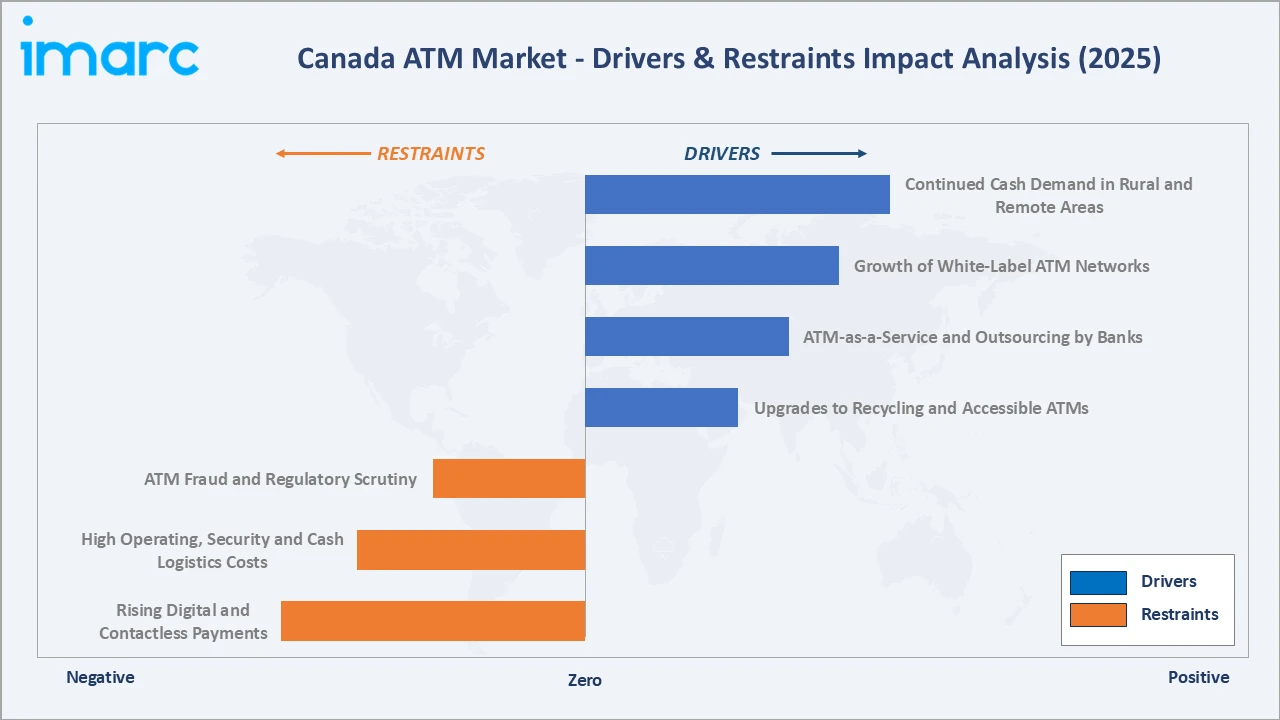
- Continued Cash Demand in Rural and Remote Areas: Many Canadians in rural, northern, and Indigenous communities rely on cash because of limited branch access, connectivity gaps, or personal preference. ATMs provide essential access to cash in these areas, and financial inclusion priorities encourage operators and institutions to maintain and expand coverage. Cash also serves as a backup during network outages, natural disasters, and power failures, reinforcing the importance of resilient ATM networks. Seniors and lower-income households continue to use cash for budgeting and everyday purchases, and small businesses in many communities still accept or prefer cash, maintaining steady withdrawal demand across the country. Newcomers to Canada and international visitors also rely on ATMs for cash access, particularly in tourist areas and major cities. Cash also remains important for privacy-conscious consumers and for transactions such as tips, small purchases, and person-to-person payments.
- Growth of White-Label ATM Networks: Independent ATM operators place machines in convenience stores, bars, restaurants, hotels, and event venues where bank ATMs are not available. White-label ATMs expand cash access, generate surcharge revenue, and help retailers increase foot traffic and in-store spending. Low-cost retail ATM models and flexible placement agreements make it easy for small businesses to host machines. Seasonal and event locations, such as festivals, sports venues, and tourist destinations, also generate strong demand for temporary or portable ATMs that independent operators are well placed to serve. White-label networks also fill gaps left by bank branch closures in smaller towns, helping communities retain convenient cash access. Surcharge-based business models give independent operators flexibility to serve locations that banks find uneconomical.
- ATM-as-a-Service and Outsourcing by Banks: Banks and credit unions are outsourcing ATM ownership, monitoring, cash management, and maintenance to specialized providers. These models reduce capital spending and operational complexity while improving uptime and service quality. Providers bring scale, specialized expertise, and advanced monitoring tools that individual institutions may not have. Smaller credit unions in particular benefit from outsourcing, as it allows them to offer modern ATM services to members without large internal teams. Outsourcing also helps institutions respond faster to changes in regulations, technology, and customer expectations. Providers also offer analytics that help banks understand usage patterns and plan their networks more effectively.
- Upgrades to Recycling and Accessible ATMs: Financial institutions are replacing older machines with cash recycling ATMs that accept and dispense notes, improving efficiency and reducing cash-in-transit costs. Accessibility features, contactless transactions, and enhanced security also drive upgrades. Older machines running outdated software must be replaced to meet security and compliance requirements. New ATMs also offer larger screens, better user interfaces, and improved reliability, supporting customer satisfaction and lower service costs. Energy-efficient designs and remote management capabilities further reduce the total cost of ownership for newer ATMs. Accessibility upgrades help institutions meet evolving standards for customers with disabilities.
Market Restraints
- Rising Digital and Contactless Payments: Growing use of debit, credit, mobile wallets, and real-time payments reduces the frequency of cash withdrawals in urban areas. Banks may reduce ATM numbers in locations with low usage. Younger consumers in particular are less likely to carry cash, reducing future withdrawal volumes. Retailers increasingly encourage card and mobile payments at checkout, further reducing everyday cash needs. However, cash usage remains resilient in many segments, limiting the pace of decline in ATM demand. Banks also face pressure to maintain access to cash for customers who cannot easily use digital channels.
- High Operating, Security, and Cash Logistics Costs: Cash replenishment, armored transport, maintenance, and security add significant costs to ATM operations, limiting profitability for low-volume machines. Rising labor and fuel costs for cash-in-transit services and higher insurance premiums add further pressure on operators. These costs can lead to ATM removals in low-traffic locations. Operators are therefore optimizing locations and using data to place machines where demand is strongest. Shared service models and network partnerships also help spread costs across multiple institutions.
- ATM Fraud and Regulatory Scrutiny: Skimming, physical attacks, and scams require ongoing investment in security. Regulators are also increasing scrutiny of cryptocurrency ATMs, creating uncertainty for this segment. Compliance with anti-money laundering rules and fraud prevention requirements adds operational complexity for all ATM operators. Public concerns about scams targeting vulnerable people have also increased pressure for stronger consumer protections at ATMs. Operators must invest continuously in monitoring, training, and incident response to manage these risks.
Market Opportunities
- Multi-Function and Self-Service Kiosks: ATMs that offer deposits, bill payments, cardless withdrawals, and video banking can replace some branch services and create new value for banks. Larger screens and video connectivity allow remote tellers to assist customers, extending service hours beyond branch operations. Such capabilities are particularly valuable in smaller communities where branch services are limited. Integration with mobile banking can also allow customers to pre-stage transactions for faster service. Bill payment and account transfer functions add further convenience for users. Multilingual interfaces support Canada’s diverse population, including newcomers and visitors. Accessible design features, such as audio guidance and tactile keypads, further support customers with visual or physical disabilities.
- Rural and Indigenous Community Access: Partnerships between financial institutions, governments, and operators can expand ATM access in underserved communities. Shared ATMs and community-owned models can help maintain cash access where individual banks cannot justify standalone machines. Government programs supporting rural infrastructure may also support ATM deployment in remote regions. Mobile and temporary ATMs can serve communities during events, emergencies, or seasonal peaks.
Market Challenges
- Network Optimization and Branch Closures: As banks rationalize branches, they must balance ATM coverage with cost, ensuring communities retain reasonable access to cash. Shared and white-label solutions can help maintain coverage while reducing duplicated infrastructure. Clear communication with customers about alternative cash access options is also important during network changes. Data on cash usage helps institutions decide where machines are most needed. Regulators and consumer groups continue to monitor access to cash in smaller communities. Community consultations are increasingly part of decisions to remove or relocate machines. Industry associations also promote best practices for surcharge transparency, accessibility, and security across ATM networks nationwide.
- Cybersecurity and Software Upgrades: Keeping ATM software secure and up to date requires regular investment and coordination across large fleets. Migration to newer operating systems and security standards can be costly and time-consuming for operators. Coordinated planning between manufacturers, software vendors, and operators helps reduce disruption during upgrades. Regular security patching is essential to protect ATMs from evolving cyber threats.
Emerging Market Trends
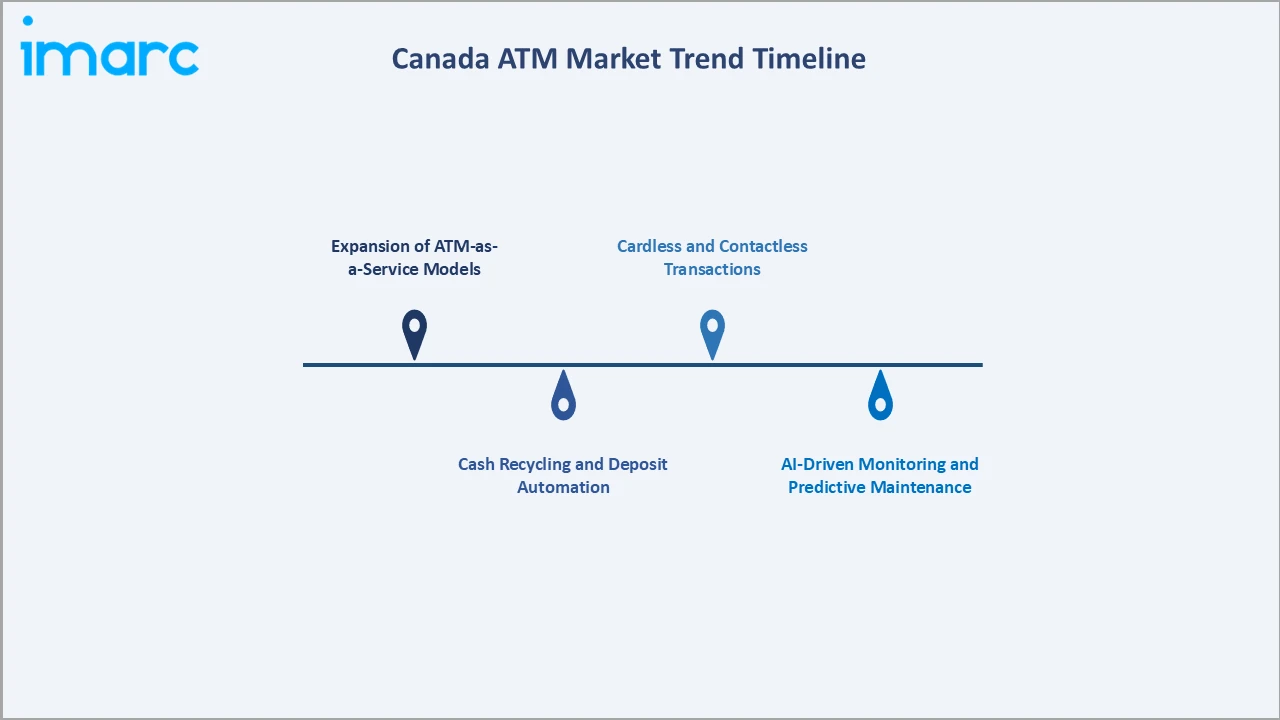
1. Expansion of ATM-as-a-Service Models
Financial institutions are increasingly adopting ATM-as-a-service, where providers own, operate, and maintain ATMs for a fee. This model shifts costs from capital to operating budgets and gives banks access to the latest technology and expertise. Contracts typically include monitoring, cash forecasting, replenishment, maintenance, and software management under a single agreement. Service-level agreements give banks clear guarantees on availability and response times. The model is gaining traction among credit unions and regional banks across Canada.
2. Cash Recycling and Deposit Automation
Cash recycling ATMs that reuse deposited notes for withdrawals are reducing replenishment needs and supporting branch transformation. Deposit automation allows customers to complete more transactions without visiting a teller. These capabilities support banks in reducing branch staffing while maintaining customer service. Deposit-capable ATMs are especially valuable for small business customers who handle cash daily. Recycling technology also reduces the frequency of armored car visits, lowering costs and security risks. Cash recyclers are increasingly deployed in branches and high-traffic retail locations.
3. Cardless and Contactless Transactions
Mobile-initiated and tap-to-withdraw transactions are improving convenience and security by reducing card skimming risks. Banks are integrating ATMs with mobile banking apps to create seamless experiences. Cardless withdrawals also make it easier for customers to send cash to others through mobile apps. Contactless readers are increasingly standard on new ATMs deployed across Canada. Mobile authentication also helps reduce fraud by removing the need to insert a physical card.
4. AI-Driven Monitoring and Predictive Maintenance
Artificial intelligence and data analytics help operators predict cash needs, detect faults early, and schedule maintenance before failures occur, increasing ATM availability and reducing service costs. Remote software updates and diagnostics further reduce the need for field visits. Data-driven cash forecasting also reduces idle cash in machines and lowers carrying costs. Predictive analytics also help operators plan staffing and inventory for field service teams. These tools are becoming standard in managed service contracts. Real-time alerts allow technicians to respond quickly to issues such as cash shortages, card reader failures, and network outages.
Industry Value Chain Analysis
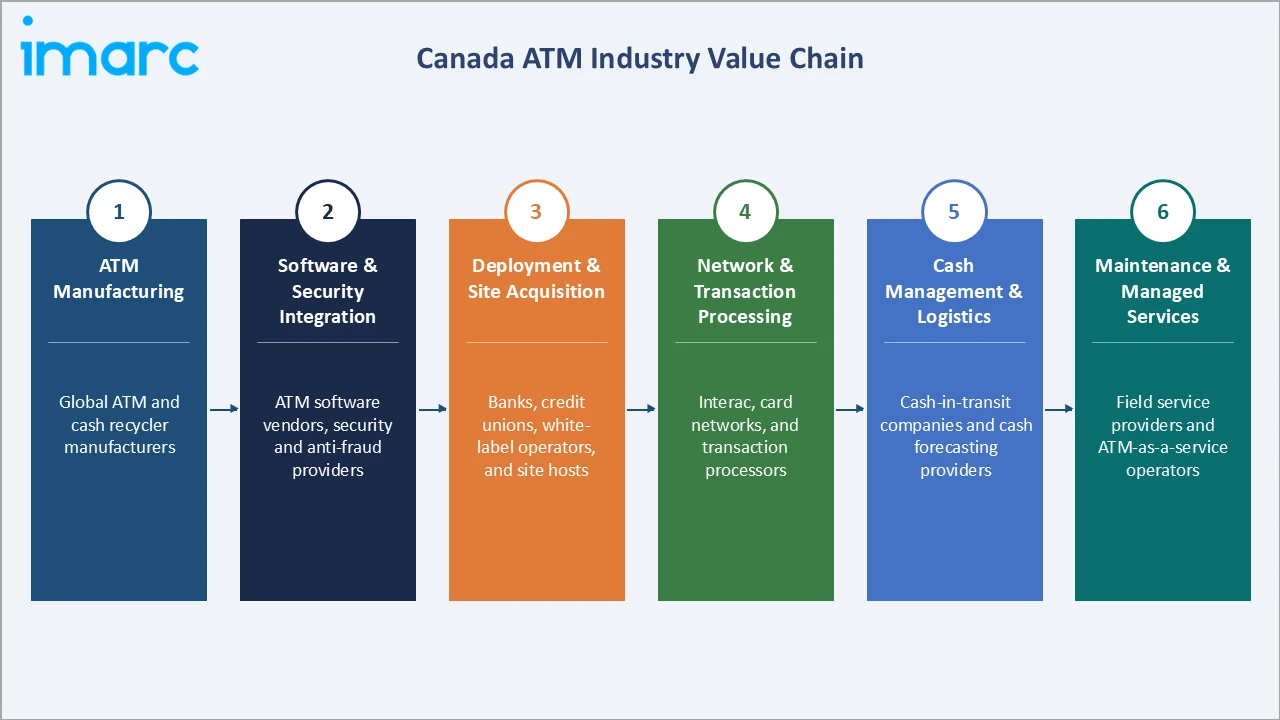
The Canada ATM value chain spans ATM manufacturing, software and security integration, deployment and site acquisition, network and transaction processing, cash management and logistics, and maintenance and managed services. Value is shifting toward software and services. Recurring service contracts are becoming the main source of value for many providers. Deployment and site acquisition remain important, as location quality strongly influences transaction volumes.
|
Stage |
Key Participants |
|
ATM Manufacturing |
Global ATM and cash recycler manufacturers |
|
Software & Security Integration |
ATM software vendors, security and anti-fraud providers |
|
Deployment & Site Acquisition |
Banks, credit unions, white-label operators, and site hosts |
|
Network & Transaction Processing |
Interac, card networks, and transaction processors |
|
Cash Management & Logistics |
Cash-in-transit companies and cash forecasting providers |
|
Maintenance & Managed Services |
Field service providers and ATM-as-a-service operators |
Cash management and logistics is the most consequential stage of the chain. Reliable replenishment and secure transport determine ATM availability and operating costs, making cash logistics partners critical to every ATM network. Maintenance and managed services also play a major role in keeping machines available and secure. Network and transaction processing ensure that ATMs can serve customers of different banks seamlessly.
Technology Landscape in the Canada ATM Industry
Cash Recycling and Advanced Dispensing
Cash recycling modules authenticate, sort, and reuse deposited notes, reducing cash-in-transit visits. Advanced dispensers support higher capacity and mixed denominations. These technologies help operators improve efficiency and customer convenience. Durable designs for outdoor and drive-up ATMs help machines withstand Canada’s harsh winter conditions.
Security and Anti-Fraud Technologies
Anti-skimming devices, encrypted PIN pads, intrusion detection, and ink-staining cassettes protect ATMs from physical and digital attacks. Continuous security updates and monitoring are essential as fraud methods evolve. Biometric authentication is being explored as a future method to further enhance security.
Remote Monitoring, Analytics, and Cardless Access
Remote monitoring platforms track ATM health and cash levels in real time, while analytics optimize replenishment. Mobile and contactless access enable cardless withdrawals. Integration with bank systems allows ATMs to offer personalized services and targeted offers. Cloud-based management platforms are making it easier for operators to manage large and diverse fleets.
Market Segmentation Analysis
The report covers the following segments:
| Segment Category | Leading Segment | Market Share | Year |
|---|---|---|---|
| ATM Type | 🔒 | 🔒 | 2025 |
| Screen Size | 15" and Below | 72.5% | 2025 |
| Solution | Deployment Solutions | 65.5% | 2025 |
| Application | 🔒 | 🔒 | 2025 |
| Region | Ontario | 38.5% | 2025 |

By Screen Size
15-inch and below screens lead at 72.5% (2025). Compact displays suit standard cash withdrawal and inquiry functions and keep hardware costs low for retail and bank deployments. These ATMs remain the standard choice for convenience stores, gas stations, and small branches. Their compact design and lower cost make them suitable for white-label and retail operators.
To access detailed market analysis, Request Sample
Above 15-inch screens at 27.5% are growing faster at ~5.3% CAGR, supported by multi-function ATMs, video banking, and interactive interfaces. Larger screens improve accessibility for users with visual impairments and support more complex transactions. Banks are using larger-screen ATMs to deliver branch-like services in self-service formats.
By Solution
Deployment solutions lead at 65.5% (2025). Hardware purchases, installation, software, and site setup account for most spending as fleets are replaced and expanded. Software licensing and installation services are included in deployment spending. Replacement cycles for aging bank fleets are a major source of deployment demand.
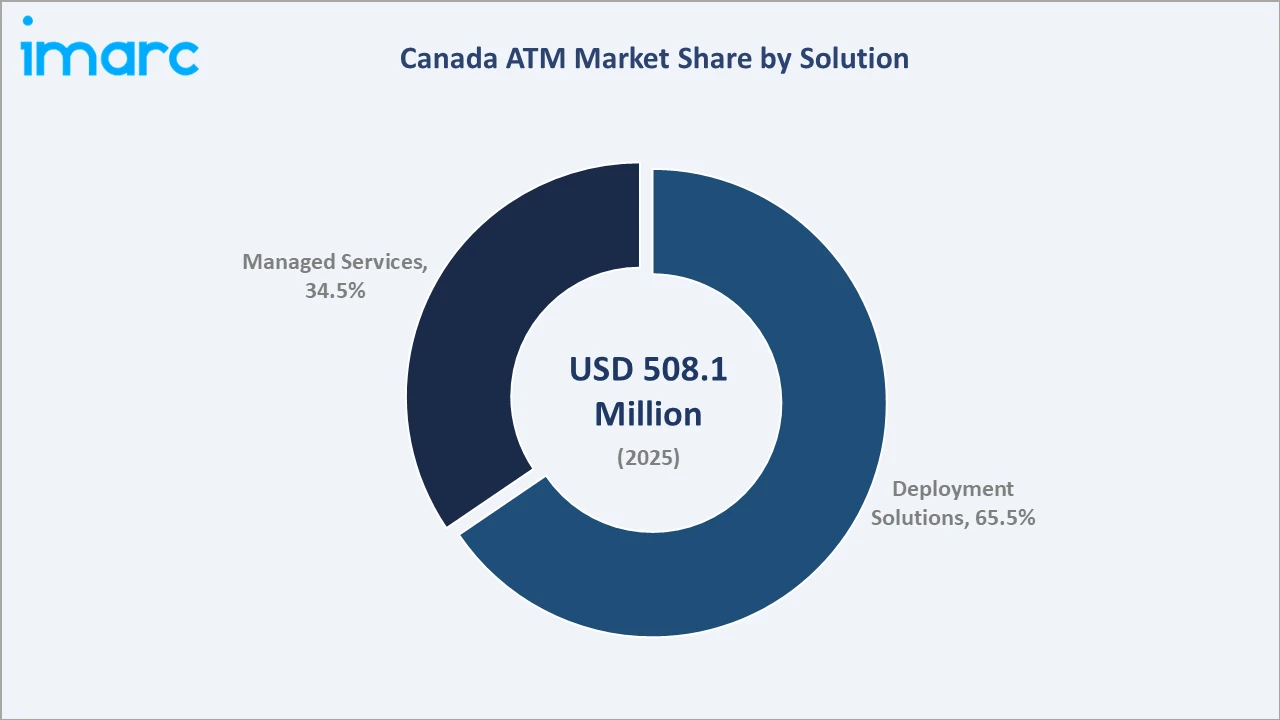
Managed services at 34.5% are growing faster at ~5.1% CAGR, as banks outsource monitoring, cash management, and maintenance. Recurring service contracts provide stable revenue for providers and predictable costs for banks. Smaller institutions in particular are turning to managed services to access advanced capabilities.
Regional Market Insights
|
Region |
Share (2025) |
Key Canada ATM Market Drivers & Characteristics |
|
Ontario |
38.5% |
Largest population and dense banking and retail networks in Toronto and Ottawa. |
|
Quebec |
23.5% |
Strong credit union networks and high ATM usage in Montreal and Quebec City. |
|
British Columbia |
14.5% |
Urban demand in Vancouver and access needs in remote communities. |
|
Alberta |
13.5% |
Energy-sector communities and growing retail ATM networks. |
|
Others |
10.0% |
Prairie, Atlantic, and northern regions with high rural cash dependence. |
Ontario's 38.5% market leadership reflects its large population, dense banking networks, and strong retail activity. Quebec's 23.5% reflects extensive credit union networks and steady cash usage. Both provinces have large urban centers and extensive rural areas that depend on ATM access. French-language interfaces and accessibility features are important requirements in Quebec deployments.
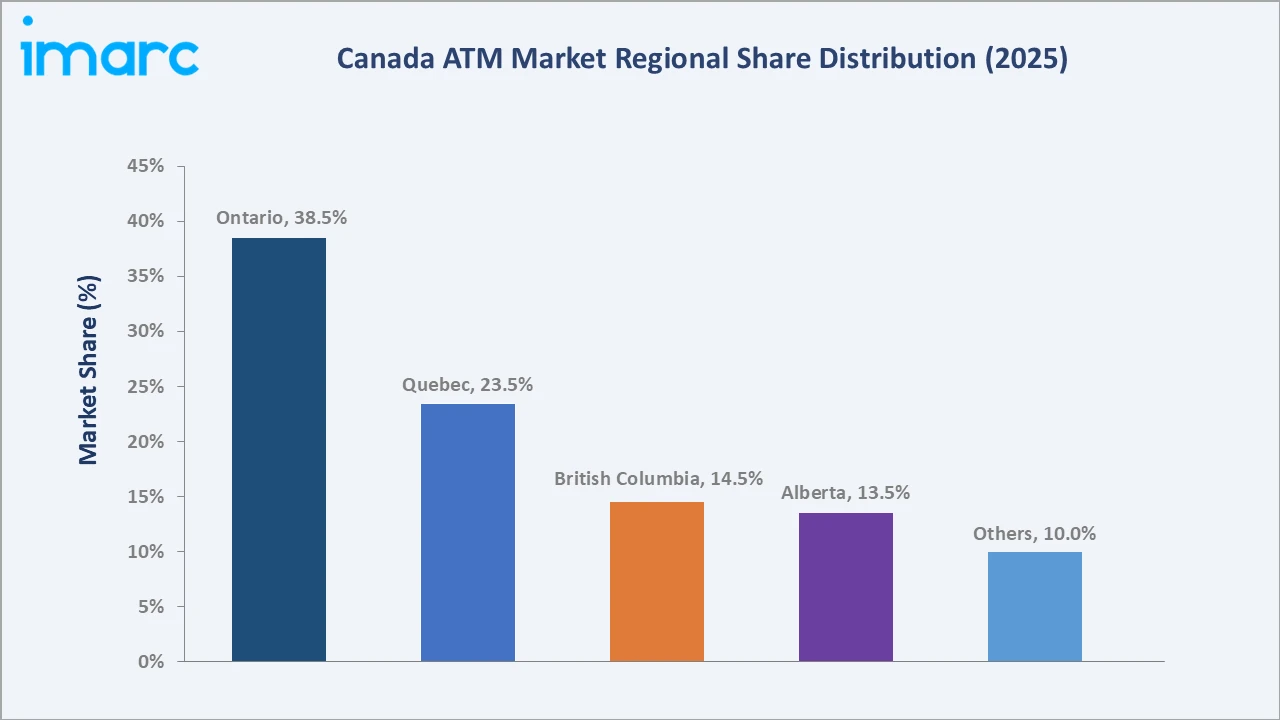
British Columbia at 14.5% and Alberta at 13.5% combine urban demand with remote community access needs. Others at 10.0% reflect high rural cash dependence in the Prairies, Atlantic provinces, and the North. Northern and remote communities often depend on ATMs as their primary source of cash. Long distances and harsh climates make reliable cash logistics especially important in these regions.
Competitive Landscape
The Canada ATM market includes global ATM manufacturers, managed service providers, cash logistics companies, payment networks, and independent and cryptocurrency ATM operators. Competition centers on reliability, security, service coverage, and total cost of ownership. Partnerships between manufacturers, service providers, and financial institutions are common across the market. Price, reliability, and service quality are the main factors in procurement decisions. Long-term relationships with banks and credit unions provide stable demand for leading suppliers. Manufacturers also compete on software capabilities, energy efficiency, and the availability of local service technicians across a large and geographically dispersed country.
| Company | Key Brands | Market Position | Core Strength |
|---|---|---|---|
| NCR Atleos | Atleos ATMs, ATM-as-a-Service, Allpoint | Market Leader | Largest ATM provider with broad managed services. |
| Diebold Nixdorf, Incorporated | DN Series, DN AllConnect | Market Leader | Cash recycling ATMs and AI-driven services. |
| Hyosung TNS Inc. | Halo II, Cajera, MX Series | Strong Challenger | Strong retail and recycling ATM portfolio. |
| GardaWorld | ATM Services | Strong Challenger | Cash logistics and ATM services across Canada. |
| Interac Corp. | Interac Debit ABM | Strong Challenger | National shared ABM network. |
| Bitcoin Well Inc | Bitcoin Well ATMs | Innovator | Canadian Bitcoin ATM network. |
The most important competitive dynamic is the shift from hardware sales to managed services. Providers that combine reliable hardware, software, cash logistics, and monitoring are gaining Canada ATM market share. Independent operators compete through flexible placement and local service. Cryptocurrency ATM operators compete in a distinct niche serving digital asset users. Retail partnerships and location quality are key differentiators for white-label operators. Convenience store chains, gas station networks, and hospitality groups are important partners for these operators across provinces.
Key Company Profiles
NCR Atleos
NCR Atleos specializes in ATM technology and related services, including ATM manufacturing, deployment, and maintenance.
- Key Brands: Atleos ATMs, ATM-as-a-Service, Allpoint Network.
- Recent Developments: In February 2026, NCR Atleos entered into a definitive agreement to be acquired by The Brink’s Company.
- Strategic Focus: Advancing a dual-sided ATM concept with AI-assisted design and a smaller footprint.
Diebold Nixdorf, Incorporated
Diebold Nixdorf, Incorporated provides ATMs, cash recyclers, software, and managed services for banks and retailers.
- Key Brands: DN Series, DN AllConnect Data Engine, Vynamic.
- Recent Developments: In December 2025, Diebold Nixdorf launched the DN Series 300 and 350 cash dispensers, higher-capacity machines designed to streamline cash operations.
- Strategic Focus: Expanding its DN AllConnect Data Engine, which uses AI to analyze ATM data in real time.
Hyosung TNS Inc.
Hyosung TNS has deployed more than 900,000 units worldwide and offers ATMs and cash recycling solutions.
- Key Brands: Halo II, Cajera, MX Series.
- Recent Developments: Hyosung expanded its Cajera cash recycling ATM line with the launch of the Cajera Pivot Series.
- Strategic Focus: Expanding retail and branch recycling ATM solutions in North America.
Market Concentration Analysis
The Canada ATM market is moderately concentrated in hardware, where a few global manufacturers supply most machines. Operations are more fragmented, with banks, white-label operators, and cryptocurrency ATM companies running separate networks.
Market concentration is evolving through two opposing forces: consolidation among global ATM providers, and continued entry of independent and specialized operators. Regulatory developments may also influence the number of cryptocurrency ATM operators. Partnerships and acquisitions continue to reshape the service landscape. Service providers with national coverage hold an advantage in serving large banks.
Investment & Growth Opportunities
Highest Growth Segments
Above 15-inch screens (~5.3% CAGR through multi-function ATMs), managed services (~5.1% CAGR through outsourcing), Alberta (~4.5% CAGR through retail growth), and British Columbia (~4.4% CAGR through remote access) represent the highest-growth investment areas through 2034.
Emerging Investment Opportunities
ATM-as-a-service and cash recycling upgrades are among the most promising opportunities, helping banks reduce costs and improve availability. Investments in rural access and advanced security technologies also offer attractive opportunities.
Investment Themes
- Managed ATM services: Outsourcing reduces costs and improves uptime.
- Rural cash access: Partnerships can expand ATMs in underserved communities.
Future Market Outlook (2026-2034)
The Canada ATM market is projected to grow from USD 508.1 Million in 2025 to USD 534.5 Million in 2026, reaching USD 735.2 Million by 2034, registering a CAGR of 4.07% during 2026-2034. The anchor value of USD 620.1 Million in 2030 marks a point at which managed services should account for a larger share. By then, recycling and multi-function ATMs should also make up a larger share of the installed base. Managed services and data-driven operations are expected to become standard for most banks. Cash access policies and regulatory developments will also shape network size and distribution.
This Canada ATM market report identifies three structural forces through 2034 persistent cash demand; outsourcing and managed services; and technology upgrades for efficiency and security. Together, these forces support steady growth across screen sizes, solutions, and regions over the forecast period.
Research Methodology
Primary Research
Primary research comprised structured interviews with industry stakeholders, including ATM manufacturers, banks, credit unions, white-label operators, and cash logistics providers across Canada.
Secondary Research
Secondary research covered company websites and press releases, payment network data, and industry reports. Over 50 credible secondary sources were reviewed, compared, and cross-checked for accuracy and consistency across datasets.
Forecasting Models
Market revenue forecasts were developed using an installed-base model: ATM fleet by region multiplied by replacement rates, new deployments, and average spending on hardware and services, with segment results aggregated to total market value. Assumptions were validated through detailed discussions with experienced industry experts, ATM operators, cash logistics providers, and financial institutions across all Canadian provinces.
Canada ATM Market Report Coverage:
| Report Features | Details |
|---|---|
| Base Year of the Analysis | 2025 |
| Historical Period | 2020-2025 |
| Forecast Period | 2026-2034 |
| Units | Million USD |
| Scope of the Report |
Exploration of Historical Trends and Market Outlook, Industry Catalysts and Challenges, Segment-Wise Historical and Future Market Assessment:
|
| Solutions Covered |
|
| Screen Sizes Covered | 15" and Below, Above 15" |
| Applications Covered | Withdrawals, Transfers, Deposits |
| ATM Types Covered | Conventional/Bank ATMs, Brown Label ATMs, White Label ATMs, Smart ATMs, Cash Dispensers |
| Regions Covered | Ontario, Quebec, Alberta, British Columbia, Others |
| Companies Covered | NCR Atleos, Diebold Nixdorf, Incorporated, Hyosung TNS Inc., GardaWorld, Interac Corp., Bitcoin Well Inc, etc. |
| Customization Scope | 10% Free Customization |
| Post-Sale Analyst Support | 10-12 Weeks |
| Delivery Format | PDF and Excel through Email (We can also provide the editable version of the report in PPT/Word format on special request) |
Key Benefits for Stakeholders:
- IMARC’s industry report offers a comprehensive quantitative analysis of various market segments, historical and current market trends, market forecasts, and dynamics of the Canada ATM market from 2020-2034.
- The research report provides the latest information on the market drivers, challenges, and opportunities in the Canada ATM market.
- Porter's five forces analysis assist stakeholders in assessing the impact of new entrants, competitive rivalry, supplier power, buyer power, and the threat of substitution. It helps stakeholders to analyze the level of competition within the Canada ATM industry and its attractiveness.
- Competitive landscape allows stakeholders to understand their competitive environment and provides an insight into the current positions of key players in the market.
Frequently Asked Questions About the Canada ATM Market Report
The Canada ATM market size is estimated at USD 534.5 Million in 2026, supported by steady cash demand and fleet upgrades.
The market grows at 4.07% CAGR during 2026-2034, reaching USD 735.2 Million by 2034.
15-inch and below screens lead at 72.5%, owing to lower costs and standard functions.
Deployment solutions lead at 65.5%, as fleets are replaced and expanded.
Ontario leads at 38.5%, driven by its population and banking networks.
Leading companies include NCR Atleos, Diebold Nixdorf, Incorporated, Hyosung TNS Inc., GardaWorld, Interac Corp., and Bitcoin Well Inc, among others.
Key Canada ATM market trends include ATM-as-a-service, cash recycling, cardless transactions, and AI-driven monitoring.
The market is projected to reach approximately USD 620.1 Million by 2030.
Need more help?
- Speak to our experienced analysts for insights on the current market scenarios.
- Include additional segments and countries to customize the report as per your requirement.
- Gain an unparalleled competitive advantage in your domain by understanding how to utilize the report and positively impacting your operations and revenue.
- For further assistance, please connect with our analysts.
 Request Customization
 Speak to an Analyst
 Request Brochure
 Inquire Before Buying
Benefits of Customization
- Personalize this research
- Triangulate with your data
- Get data as per your format and definition
- Gain a deeper dive into a specific application, geography, customer, or competitor
- Any level of personalization
Get in Touch With Us
UNITED STATES
Phone: +1-201-971-6302
INDIA
Phone: +91-120-433-0800
UNITED KINGDOM
Phone: +44-753-714-6104
Email: [email protected]
Client Testimonials






















Related Reports

Choose your plan
*Please note that the prices mentioned below are starting prices for each bundle type. Kindly contact our team for further details.*
Single User License
- 1 User License, Access on 2 Devices
- PDF Report + Excel Dataset (Password Protected)
- Lifetime Access
- No Printing Rights
- 10% Free Report Customization
- 10–12 Weeks of Analyst Support
Five User License
- Access for 5 Users, 2 Devices per User
- PDF Report + Excel Dataset (Password Protected)
- Lifetime Access
- Dedicated Account Manager
- 12–14 Weeks of Analyst Support
- No Printing Rights
- 15% Free Report Customization
- 25% Discount on Your Next Purchase
Corporate User License
- Unlimited User Access (Within Your Organization)
- PDF Report + Excel Dataset
- Lifetime Access
- Dedicated Account Manager
- 14–20 Weeks of Analyst Support
- No Printing Rights
- 20% Free Report Customization
- 30% Discount on Your Next Purchase
Essential Insights
What's included:
3 reports
- Lifetime Access
- PDF Reports
- Excel Datasets
- 2 Weeks of Free Analyst Support
- 2 User Licenses
- Access on 2 Devices
- Printing Rights
- Complimentary PowerPoint (PPT) Version
- Complimentary License Upgrade
Professional Access
What's included:
5 reports
- Lifetime Access
- PDF Reports
- Excel Datasets
- 8 Weeks of Free Analyst Support
- 2 User Licenses
- Access on 2 Devices
- Printing Rights
- Complimentary PowerPoint (PPT) Version
- Complimentary License Upgrade
Business Advantage
What's included:
8 reports
- Lifetime Access
- PDF Reports
- Excel Datasets
- 14 Weeks of Free Analyst Support
- 2 User Licenses
- Access on 2 Devices
- Printing Rights
- Complimentary PowerPoint (PPT) Version
- Complimentary License Upgrade
Enterprise Intelligence
What's included:
10 reports
- Lifetime Access
- PDF Reports
- Excel Datasets
- 20 Weeks of Free Analyst Support
- 2 User Licenses
- Access on 2 Devices
- Printing Rights
- Complimentary PowerPoint (PPT) Version
- Complimentary License Upgrade