
Canada Cheese Market Size, Share, Trends and Forecast by Source, Type, Product, Format, Distribution Channel, and Region, 2026-2034
Canada Cheese Market Size, Share, Trends & Forecast (2026-2034)
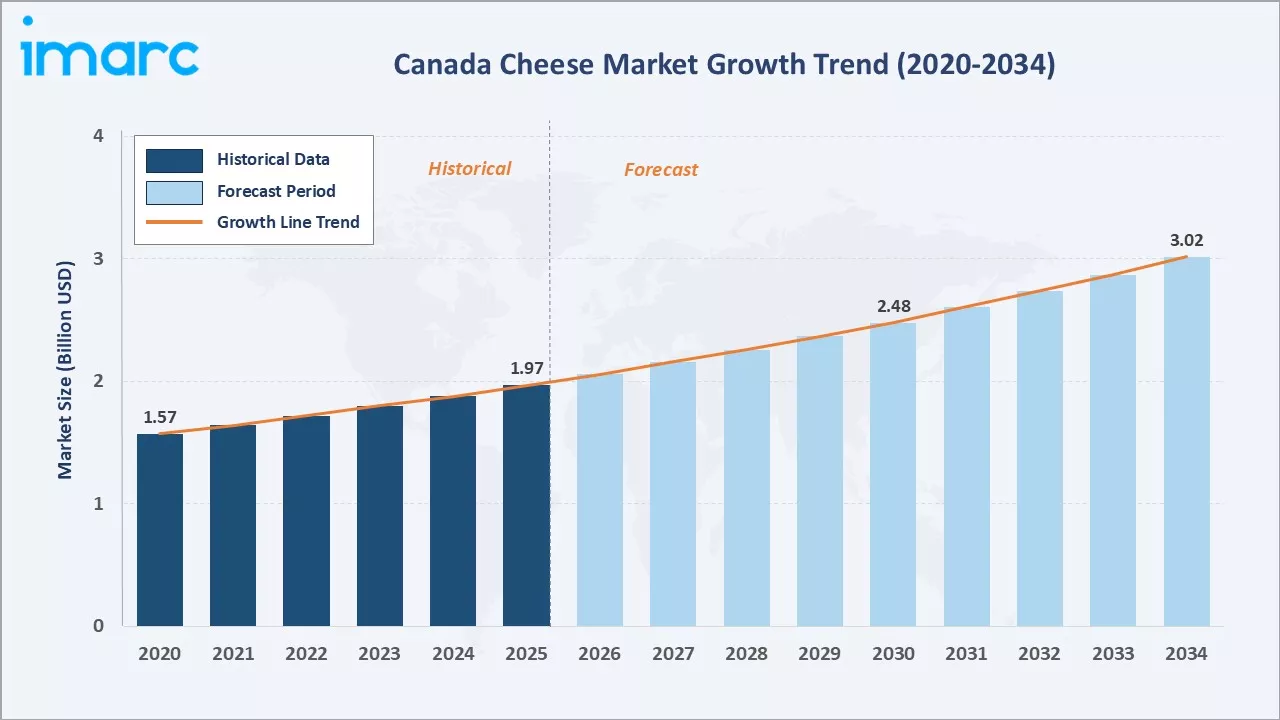
The Canada cheese market grew from USD 1.97 Billion in 2025 to USD 2.06 Billion in 2026 and is projected to reach USD 3.02 Billion by 2034, growing at a CAGR of 4.70% during 2026-2034. Rising demand for premium and artisanal cheese, growth of snacking formats, and high-protein diets are supporting steady growth. Domestic cottage cheese production rose 15% year on year in the first quarter of 2026, reaching 9,870 tonnes, reflecting strong demand for high-protein dairy.
Expanding retail assortments, foodservice demand, and investments by leading dairy processors continue to broaden the market. Cow milk dominates sources at 82.5%. Natural cheese leads types at 72.5%. Ontario commands 38.5% of national market share.
Market Snapshot
|
Metric |
Value |
|
Base Year Market Size (2025) |
USD 1.97 Billion |
|
Market Size (2026) |
USD 2.06 Billion |
|
Forecast Market Size (2034) |
USD 3.02 Billion |
|
CAGR (2026-2034) |
4.70% |
|
Base Year |
2025 |
|
Historical Period |
2020-2025 |
|
Forecast Period |
2026-2034 |
|
Dominant Source |
Cow Milk (82.5%, 2025) |
|
Dominant Type |
Natural (72.5%, 2025) |
|
Leading Region |
Ontario (38.5%, 2025) |
The Canada cheese market size increased from USD 1.57 Billion in 2020 to USD 1.97 Billion in 2025 and is estimated to reach USD 2.06 Billion in 2026. The market is further expected to grow to USD 2.48 Billion by 2030 and USD 3.02 Billion by 2034. Growth reflects rising per capita consumption, premiumization, and expanding snacking and foodservice use.
To get more information on this market, Request Sample
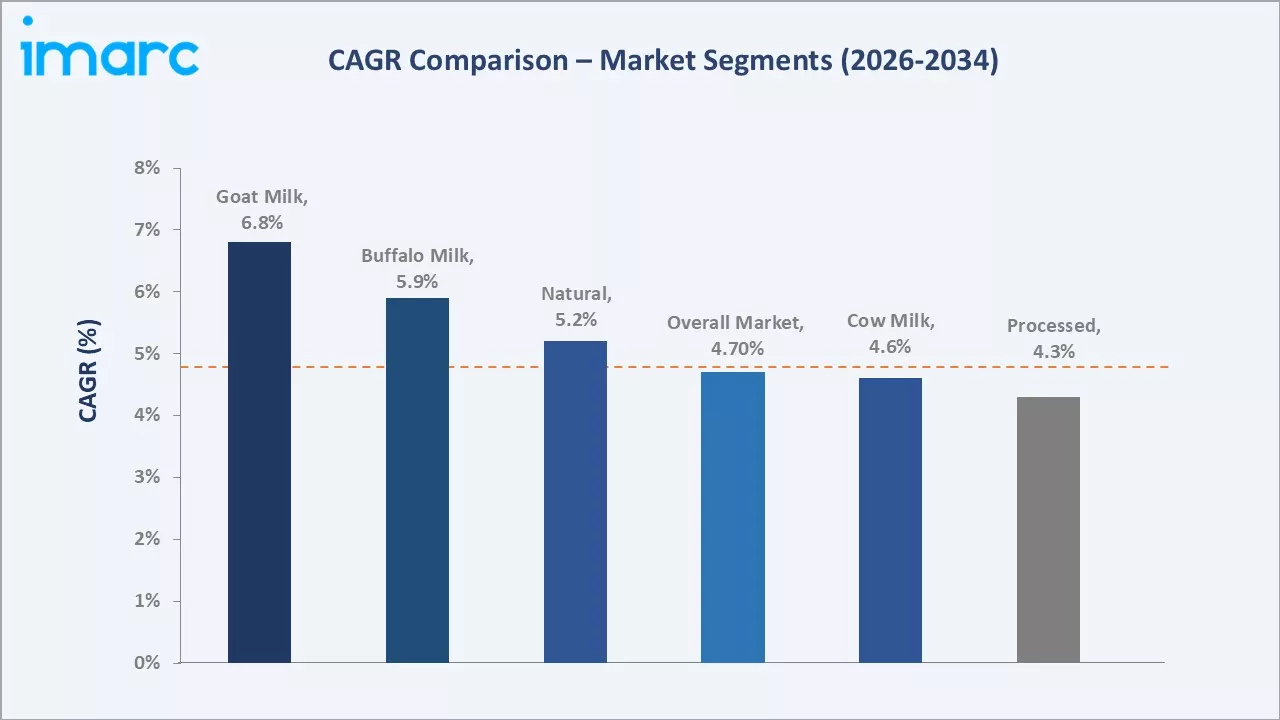
Goat milk cheese is expected to grow fastest at ~6.8% CAGR, supported by demand for specialty and easier-to-digest options. Buffalo milk follows at ~5.9% CAGR as consumers seek premium mozzarella and Italian-style cheeses.
Executive Summary
The Canada cheese market expanded from USD 1.97 Billion in 2025 to an estimated USD 2.06 Billion in 2026. Cheese is a staple in Canadian households, used in cooking, snacking, and entertaining, while foodservice demand from pizza chains and restaurants remains strong. Leading processors are investing in new products, acquisitions, and capacity to meet demand for premium, convenient, and high-protein options. The market is projected to reach USD 3.02 Billion by 2034. Cow milk at 82.5% leads sources. Natural cheese at 72.5% leads types. Ontario leads regionally at 38.5%.
Key Market Insights
|
Insight |
Data |
|
Dominant Source |
Cow Milk - 82.5% share (2025) |
|
Dominant Type |
Natural - 72.5% market share (2025) |
|
Leading Region |
Ontario - 38.5% share (2025) |
|
Market Opportunity |
Artisanal and specialty cheese; high-protein and cottage cheese; snacking formats; goat and buffalo milk cheese; foodservice growth |
Key Analytical Observations Supporting the Above Data:
- Cow Milk at 82.5%: Cow milk dominates because Canada has a large, well-organized dairy herd under supply management, providing a stable milk supply for cheddar, mozzarella, and other popular cheeses produced at scale.
- Natural at 72.5%: Natural cheese leads because Canadians prefer cheddar, mozzarella, and specialty varieties for cooking, snacking, and entertaining, and premium natural cheeses are growing faster than processed options.
- Ontario at 38.5%: Ontario leads regionally due to its large population, strong retail and foodservice networks, and major cheese processing facilities.
Canada Cheese Market Overview
Canadian cheese includes natural varieties such as cheddar, mozzarella, gouda, brie, and artisanal fine cheeses, as well as processed cheese slices, spreads, and blends. Products are sold in blocks, slices, shreds, snacks, and spreads through retail and foodservice channels. Cheese is one of the most widely consumed dairy products in Canada, with strong demand in both urban and rural areas.
The industry ecosystem links dairy farmers, cheese makers, packaging and logistics providers, regulators, retailers, foodservice operators, and consumers. Macroeconomic factors include milk prices under supply management, consumer income, foodservice activity, and trade agreements, all of which shape supply and demand. Population growth through immigration also brings new cheese preferences and culinary traditions.
Market Dynamics
To evaluate market opportunities, Request Sample
Market Drivers
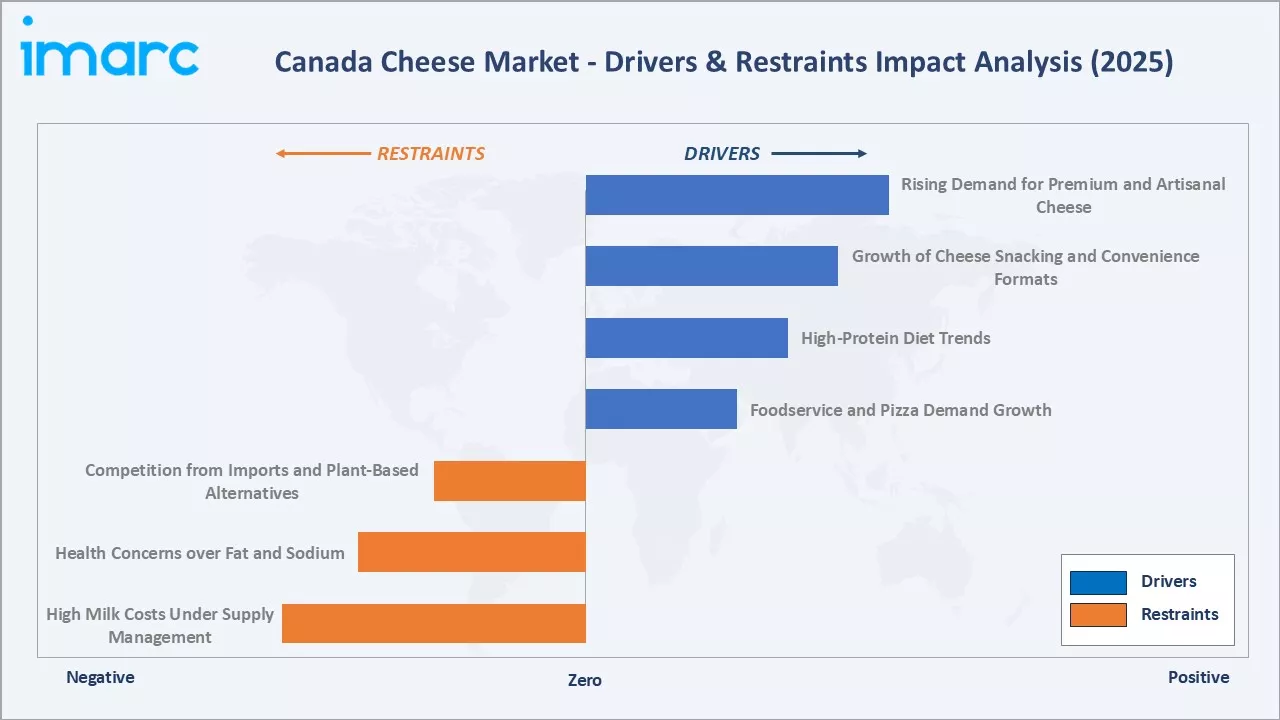
- Rising Demand for Premium and Artisanal Cheese: Canadian consumers are increasingly seeking aged cheddars, fine cheeses, and artisanal varieties with distinctive flavors and local origins. Quebec’s strong fromagerie tradition and growing interest in charcuterie boards and entertaining at home are supporting premium cheese sales across the country. Specialty cheese counters in grocery stores and dedicated cheese shops are expanding, and award-winning Canadian cheeses are raising consumer awareness of domestic quality. Gifting, holidays, and social gatherings also drive purchases of premium varieties, while younger consumers are exploring new flavors through social media and food content. Restaurants and specialty food retailers are also showcasing Canadian artisanal cheeses, helping build brand recognition and encouraging consumers to trade up from everyday varieties. Cheese pairing events, farm tours, and culinary tourism in regions such as Quebec and Ontario further strengthen interest in premium domestic products. Seasonal and holiday promotions also drive strong sales of specialty cheese platters and gift boxes.
- Growth of Cheese Snacking and Convenience Formats: Snack-size portions, string cheese, cheese sticks, pre-sliced, and shredded cheeses meet demand for convenience among busy households and children. Brands are launching new snacking formats and flavors, expanding everyday consumption occasions. Lunchbox-friendly formats, resealable packs, and portion-controlled snacks appeal to parents and on-the-go consumers. Retailers are expanding refrigerated snacking sections, giving more space to cheese-based snack kits and combinations with crackers, meats, and fruit. Children’s snack brands featuring fun shapes and characters continue to attract parents seeking convenient, protein-rich options. Adult snacking formats featuring aged cheddar and gourmet blends are also gaining shelf space. Packaging innovations such as resealable zippers and portion trays improve convenience and reduce waste.
- High-Protein Diet Trends: Consumers are increasing protein intake for fitness, weight management, and satiety. Cottage cheese, high-protein snacks, and cheese-based foods are benefiting from this trend, prompting processors to expand capacity. Cheese is a convenient source of protein and calcium, and brands are highlighting protein content on packaging. Fitness-focused consumers are incorporating cottage cheese into recipes such as smoothies, baked goods, and desserts, further broadening demand. High-protein positioning is also helping cheese compete with other snack categories such as bars and yogurt. Older adults are also turning to protein-rich foods to support healthy aging, adding to demand. Sports nutrition and fitness communities are also promoting cheese-based snacks as convenient protein sources.
- Foodservice and Pizza Demand Growth: Pizza chains, quick-service restaurants, and casual dining outlets are major users of mozzarella and cheddar. Recovery and growth in foodservice continue to support strong volumes for processors. Delivery apps and takeout culture have increased pizza and comfort food consumption, sustaining demand for foodservice cheese. Menu innovation featuring melted, grilled, and specialty cheeses also supports higher usage per serving. Quick-service restaurant chains also introduce limited-time menu items featuring cheese, which supports volume growth. Growth in frozen pizza and ready meals also increases demand for processed and shredded cheese. Institutional demand from schools, hospitals, and cafeterias provides an additional stable source of volume.
Market Restraints
- High Milk Costs Under Supply Management: Canada’s supply management system keeps milk prices relatively high, raising cheese production costs and retail prices compared with some other countries. These costs can limit export competitiveness and put pressure on retail pricing, particularly when consumers face broader food inflation. Supply management also limits rapid changes in production volumes, which can affect the industry’s ability to respond to demand shifts. Rising feed, labor, and energy costs on farms also feed into higher milk prices. Processors must manage these costs carefully to keep products affordable. Labor shortages in dairy processing plants add further pressure on operating costs and production schedules.
- Health Concerns over Fat and Sodium: Some consumers limit cheese consumption due to concerns about saturated fat, sodium, and calories, encouraging moderation or switching to lighter options. Health guidance encouraging reduced saturated fat intake may limit growth among older and health-conscious consumers.
- Competition from Imports and Plant-Based Alternatives: Trade agreements have increased access for imported European cheeses, while plant-based cheese alternatives compete for share among some consumers. Vegan and lactose-intolerant consumers may choose dairy-free alternatives, although these remain a small share of the market. Interest in plant-based cheese has moderated, but it continues to attract some flexitarian consumers. Imported cheeses under expanded quotas offer consumers more choice in specialty categories. Domestic producers respond by emphasizing Canadian milk, freshness, and local quality.
Market Opportunities
- Specialty, Goat, and Buffalo Milk Cheeses: Growing interest in diverse flavors and easier-to-digest options creates opportunities for goat and buffalo milk cheeses and specialty varieties. Local producers can build premium brands around regional heritage and sustainable farming practices. Export opportunities for distinctive Canadian cheeses also exist in markets that value high-quality dairy. Partnerships with restaurants and specialty retailers can help emerging cheese makers build brand awareness. Online direct-to-consumer sales also allow small producers to reach customers nationwide. Cheese clubs and subscription boxes are emerging channels for specialty producers. Farmers’ markets and on-farm shops also help artisanal producers build loyal local customer bases and gather direct feedback on new varieties.
- Clean-Label and Better-for-You Cheese: Lower-sodium, lactose-free, and simple-ingredient cheeses appeal to health-conscious consumers. Fortified and functional cheeses with added probiotics or vitamins may also attract new consumers. Reduced-fat and portion-controlled products help address health concerns while maintaining enjoyment. Lactose-free cheeses are gaining shelf space as awareness of lactose intolerance grows. Organic and grass-fed cheeses also appeal to consumers seeking natural products.
Market Challenges
- Supply Chain and Cold Chain Costs: Maintaining refrigerated distribution across Canada’s large geography adds cost and complexity. Remote and northern communities face higher distribution costs and limited product variety. Energy and fuel costs also affect the economics of refrigerated transport. Shelf-life management is also critical for soft and fresh cheeses. Investments in cold storage and logistics are therefore important for growth. Retailers are also working with suppliers to reduce waste and improve inventory management for perishable cheese products.
- Price Sensitivity and Private Label Competition: Food inflation has increased price sensitivity, with consumers shifting toward private label and promotional purchases. Brands must balance premium positioning with value offerings to retain price-sensitive shoppers. Promotions and value packs remain important tools for maintaining volume during periods of inflation. Clear communication of quality and Canadian origin helps branded products justify price premiums. Loyalty programs and digital coupons are increasingly used to engage shoppers. Smaller pack sizes help consumers manage budgets while still purchasing branded products. Retailers also use cheese as a traffic driver, featuring it prominently in weekly flyers and promotions. Seasonal recipes and in-store tastings further encourage consumers to try new cheese varieties more regularly.
Emerging Market Trends
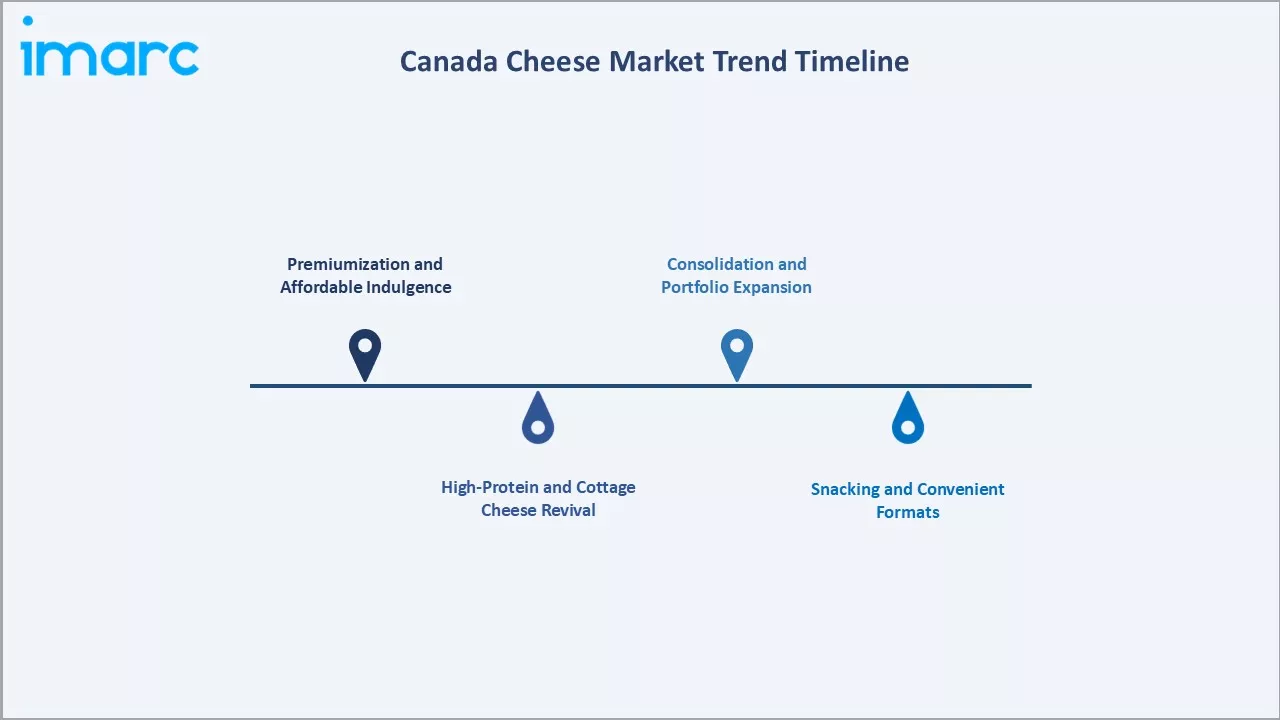
1. Premiumization and Affordable Indulgence
Brands are launching premium lines with bold flavors, aged varieties, and gourmet blends that offer affordable indulgence. These products bridge the gap between everyday cheese and specialty fromagerie offerings. Limited editions and seasonal flavors help brands keep consumers engaged and encourage trial. Premium private label lines from major grocers also compete in this space. Collaborations with chefs and food influencers help brands showcase new varieties. Premium packaging and storytelling around origin also support higher price points.
2. High-Protein and Cottage Cheese Revival
Cottage cheese and high-protein dairy are experiencing strong growth as consumers seek nutritious, affordable protein sources. Processors are investing in new capacity to meet demand. Recipes and social media trends featuring cottage cheese have introduced the product to younger consumers. Processors are also introducing flavored and single-serve cottage cheese formats. Expanded capacity is expected to ease supply shortages over the next few years. Cottage cheese is also being used in new product formats such as dips and spreads. Processors are also launching flavored and fruit-on-the-bottom varieties to attract new consumers.
3. Consolidation and Portfolio Expansion
Leading dairy companies are acquiring brands and facilities to strengthen their cheese portfolios, especially in specialty and fine cheese segments. Consolidation allows companies to optimize production, expand distribution, and invest in marketing. Larger portfolios also improve negotiating power with retailers and foodservice customers. Smaller producers may become acquisition targets as larger companies seek specialty brands. Regulatory approval processes shape the pace of such transactions. Integration of acquired brands and facilities also creates opportunities to improve efficiency and expand distribution across provinces.
4. Snacking and Convenient Formats
Single-serve snacks, shredded blends, and pizza-ready cheeses are expanding as consumers prioritize convenience and quick meal preparation. Pre-shredded blends designed for specific dishes, such as pizza or tacos, simplify home cooking. Snack kits that combine cheese with crackers and meats are popular for lunches and entertaining. Convenient formats also reduce preparation time for foodservice operators.
Industry Value Chain Analysis
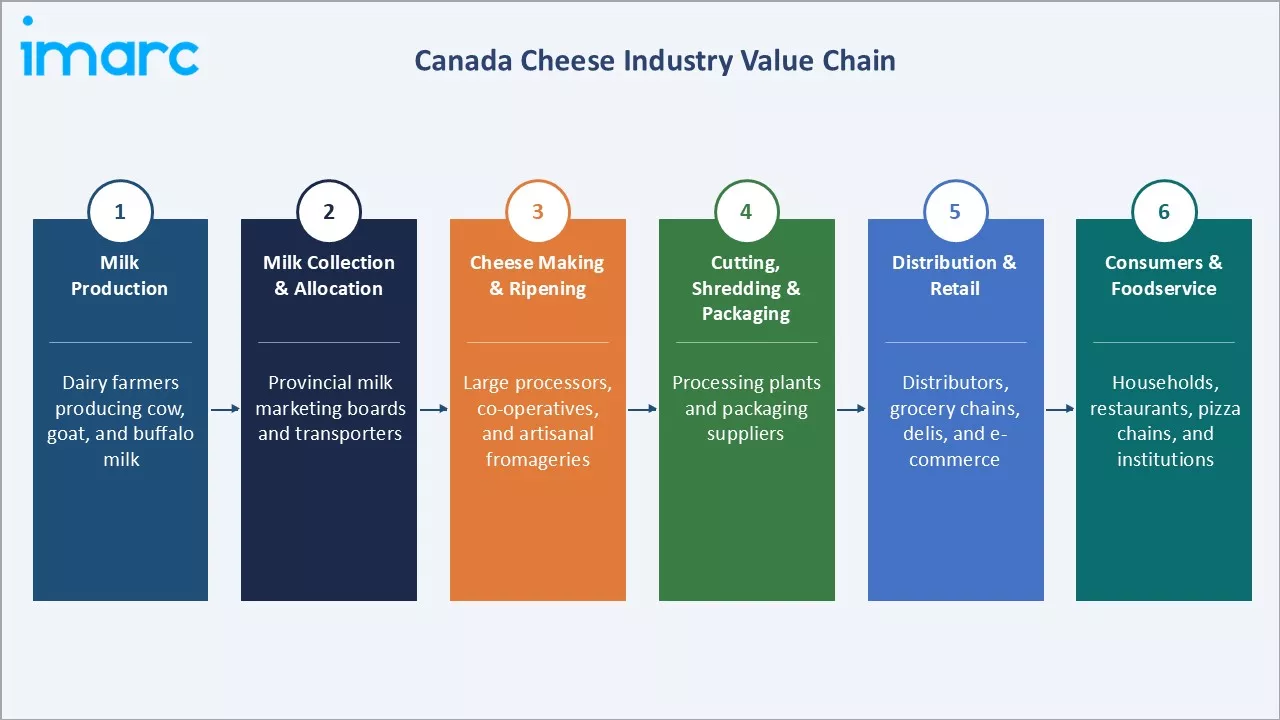
The Canada cheese value chain spans milk production, milk collection and allocation, cheese making and ripening, cutting and packaging, distribution and retail, and consumers and foodservice. Value is concentrated in processing, branding, and distribution. Milk supply management ensures stable volumes but also shapes costs across the chain. Retail and foodservice distribution networks determine product reach and visibility. Foodservice distributors play a major role in supplying restaurants and institutions.
|
Stage |
Key Participants |
|
Milk Production |
Dairy farmers producing cow, goat, and buffalo milk |
|
Milk Collection & Allocation |
Provincial milk marketing boards and transporters |
|
Cheese Making & Ripening |
Large processors, co-operatives, and artisanal fromageries |
|
Cutting, Shredding & Packaging |
Processing plants and packaging suppliers |
|
Distribution & Retail |
Distributors, grocery chains, delis, and e-commerce |
|
Consumers & Foodservice |
Households, restaurants, pizza chains, and institutions |
Cheese making and ripening is the most consequential stage of the chain. Processing expertise, scale, and quality determine flavor, consistency, and cost, giving established processors a strong advantage. Packaging and distribution are also important for maintaining freshness and reaching consumers across the country. Branding and marketing help processors differentiate products in a competitive market. Investments in automation and packaging improve efficiency across the chain.
Technology Landscape in the Canada Cheese Industry
Automated Cheese Making and Ripening
Automated vats, curd handling, and controlled ripening rooms improve consistency and efficiency in large cheese plants. Automation also helps processors manage labor shortages and maintain food safety standards. Energy-efficient equipment is also helping plants reduce operating costs and environmental impact. Water recycling and waste reduction programs are also becoming more common in dairy plants.
Advanced Cutting, Shredding, and Packaging
High-speed cutting, shredding, and modified-atmosphere packaging extend shelf life and support convenient formats. Recyclable packaging is becoming a priority as retailers and consumers focus on sustainability. Portion-controlled packaging supports snacking and reduces food waste. Sustainable packaging materials are increasingly used for premium and snacking products.
Quality Control and Traceability
Digital monitoring, lab testing, and traceability systems ensure food safety and track milk from farm to finished product. These systems also support rapid response in the event of quality issues or recalls. Data analytics help processors optimize yields and maintain consistent quality across batches. Predictive maintenance reduces downtime in high-volume production plants.
Market Segmentation Analysis
The report covers the following segments:
|
Segment Category |
Leading Segment |
Market Share |
Year |
|
Source |
Cow Milk |
82.5% |
2025 |
|
Type |
Natural |
72.5% |
2025 |
|
Product |
🔒 |
🔒 |
2025 |
|
Format |
🔒 |
🔒 |
2025 |
|
Distribution Channel |
🔒 |
🔒 |
2025 |
|
Region |
Ontario |
38.5% |
2025 |

By Source
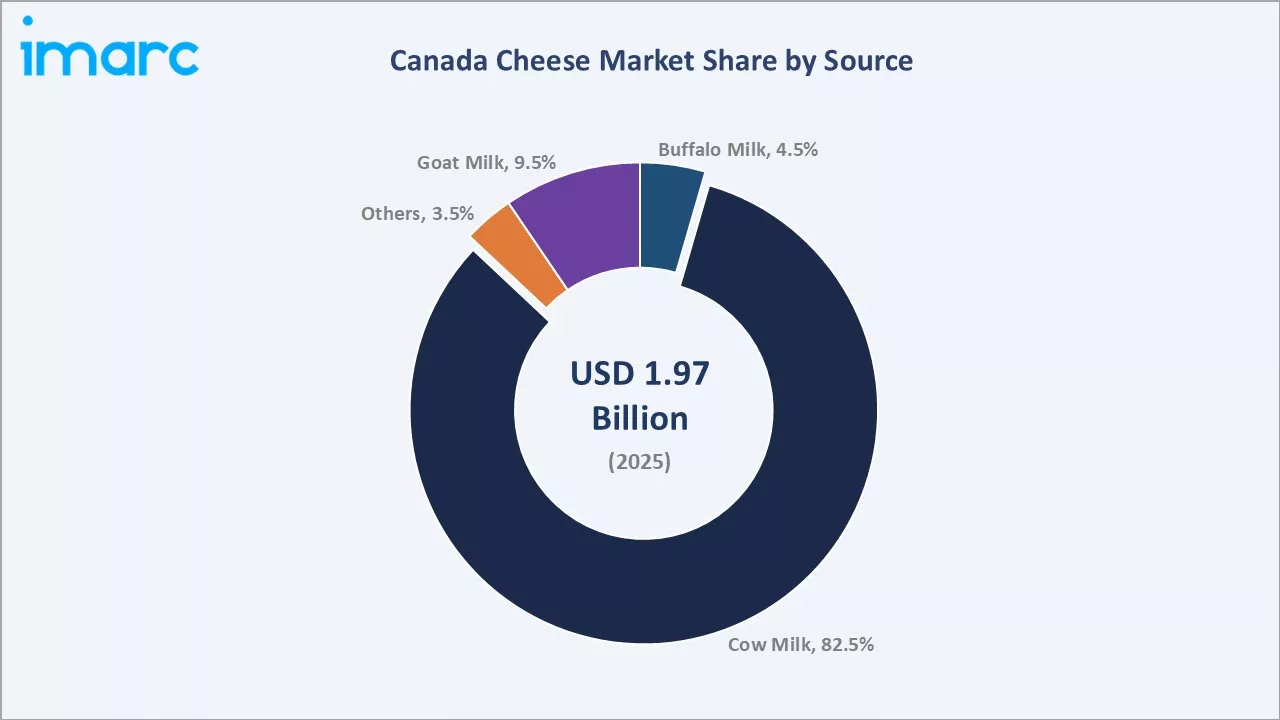
Cow milk leads at 82.5% (2025). Canada’s supply-managed dairy herd provides a stable milk supply for cheddar, mozzarella, and other high-volume cheeses. Cow milk cheeses dominate both retail and foodservice channels across all regions. Canada’s dairy farmers produce high-quality milk under strict standards, supporting consumer trust in domestic cheese. The blue cow logo of Dairy Farmers of Canada helps consumers identify products made with Canadian milk.
To access detailed market analysis, Request Sample
Goat milk at 9.5% is growing fastest at ~6.8% CAGR. Buffalo milk at 4.5% grows at ~5.9%, and others at 3.5% grow at ~5.4%, including sheep milk cheeses. Goat milk cheese demand is supported by consumers seeking easier digestion and distinctive flavors. Buffalo milk cheeses, particularly mozzarella, are growing in premium retail and restaurant channels. Sheep milk and blended cheeses also add variety to specialty cheese counters.
By Type
Natural cheese leads at 72.5% (2025). Cheddar, mozzarella, and specialty varieties are preferred for cooking, snacking, and entertaining. Natural cheese also benefits from clean-label perceptions and premium positioning. Aged cheddar, specialty cheeses, and shredded blends are among the fastest-growing natural cheese categories. Mozzarella demand remains strong due to pizza and foodservice consumption.
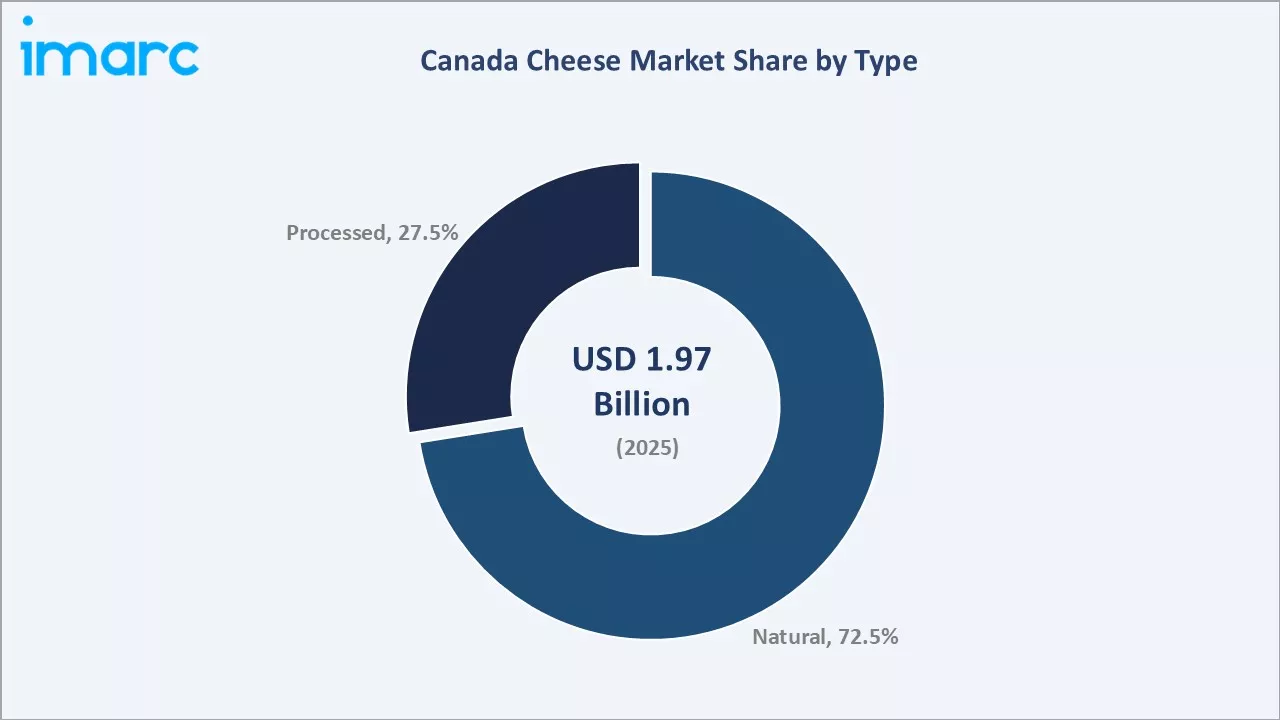
Processed cheese at 27.5% is growing at ~4.3% CAGR, supported by slices, spreads, and foodservice applications. Processed cheese remains popular for its meltability, long shelf life, and affordability. Processed cheese is widely used in sandwiches, burgers, and quick-service restaurant menus. Spreads and cheese sauces also contribute to processed cheese demand.
Regional Market Insights
|
Region |
Share (2025) |
Key Canada Cheese Market Drivers & Characteristics |
|
Ontario |
38.5% |
Largest population, major processing plants, and strong retail and foodservice networks. |
|
Quebec |
23.5% |
Strong fromagerie tradition and a large share of Canada’s cheese production. |
|
Alberta |
13.5% |
Growing population and expanding retail demand. |
|
British Columbia |
12.5% |
Demand for premium and specialty cheeses in Vancouver. |
|
Others |
12.0% |
Prairie and Atlantic provinces with steady retail demand. |
Ontario's 38.5% market leadership reflects its large population, strong retail networks, and major cheese processing facilities. Quebec's 23.5% reflects a strong fromagerie tradition and high per capita cheese consumption. Quebec is also home to many artisanal cheese makers and specialty brands. Quebec’s cheese culture supports both domestic consumption and growing interest from other provinces.
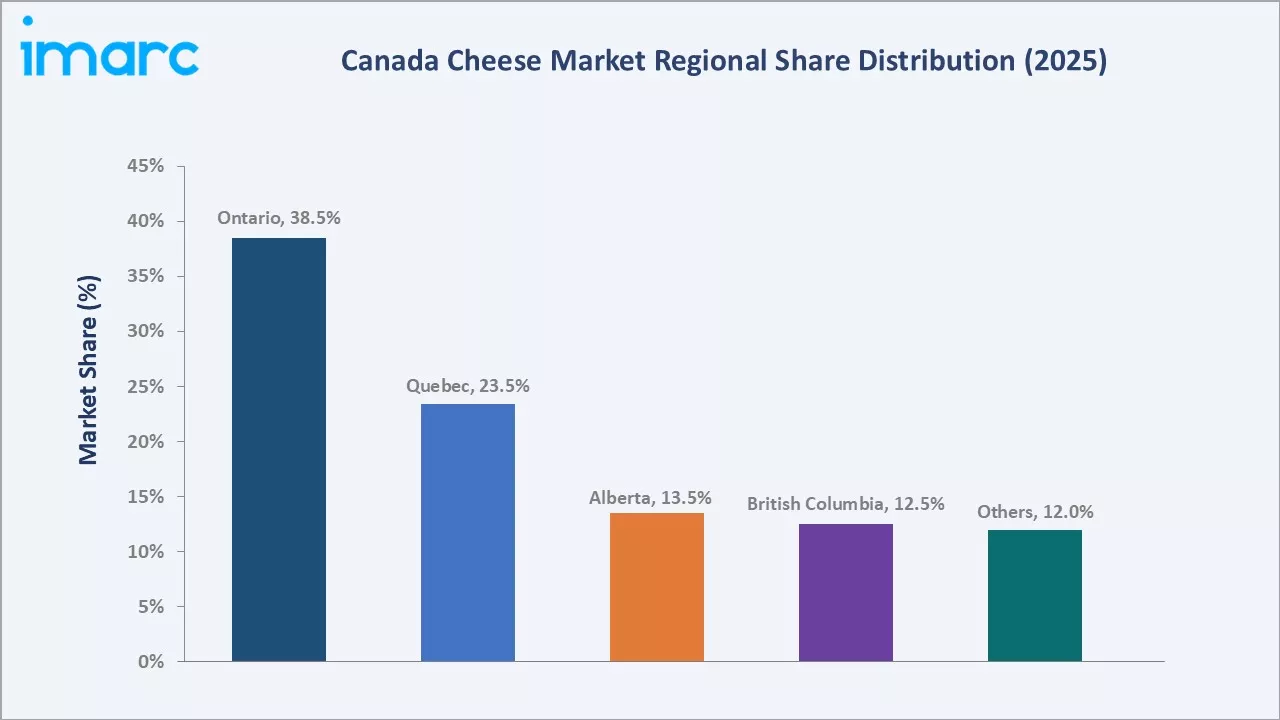
Alberta at 13.5% and British Columbia at 12.5% reflect growing populations and demand for premium cheese. Others at 12.0% reflect steady demand across the Prairies and Atlantic provinces. Rising urban populations in these regions support steady growth in retail and foodservice demand.
Competitive Landscape
The Canada cheese market is led by a few large dairy processors and co-operatives, alongside multinational brands and artisanal fromageries. Competition centers on brand strength, product range, quality, and distribution. Private label products from major grocery chains also compete strongly on price. Imported specialty cheeses also compete in premium segments under trade agreement quotas.
|
Company |
Key Brands |
Market Position |
Core Strength |
| Saputo Inc. | |||
| Armstrong, Saputo, Dragone, Alexis de Portneuf | Market Leader | Leading Canadian cheese manufacturer. | |
| Lactalis Canada | Cracker Barrel, Black Diamond, P’tit Québec, Balderson | Market Leader | Broad portfolio of iconic cheese brands. |
| Agropur | Agropur, Natrel, | Strong Challenger | Large dairy co-operative with cheese production. |
| Gay Lea Foods Co-operative Ltd. | Gay Lea, Nordica, Salerno, Bothwell Cheese |
Strong Challenger |
Cottage and specialty cheese. |
| Kraft Heinz, Inc. | Kraft Singles, Cheez Whiz | Strong Challenger | Processed cheese brands. |
| Fromagerie Perron | Aged Cheddars, Swiss, Fresh Cheddars | Niche Player | Heritage Quebec cheddar maker. |
The most important competitive dynamic is consolidation among leading processors, combined with continued innovation in premium and snacking formats. Partnerships with retailers and foodservice operators help leading brands secure shelf space and volume. Artisanal producers compete on uniqueness, local origin, and quality.
Key Company Profiles
Saputo Inc.
Saputo Inc. produces, markets, and distributes cheese, fluid milk, cultured products, and dairy ingredients, and is among the leading cheese manufacturers in Canada.
- Key Brands: Armstrong, Saputo, Dragone, Alexis de Portneuf, Neilson.
- Recent Developments: In September 2026, Saputo announced plans to construct an approximately 340,000-square-foot facility in Franklin, Wisconsin, employing about 600 people.
- Strategic Focus: Investing in in-store execution, media campaigns, and packaging upgrades for its Armstrong and Saputo shredded cheese brands in Canada.
Lactalis Canada
Lactalis Canada, part of France-based Lactalis Group, owns iconic Canadian cheese brands including Cracker Barrel, Black Diamond, P’tit Québec, and Balderson.
- Key Brands: Cracker Barrel, Black Diamond, P’tit Québec, Balderson, Galbani, Président.
- Recent Developments: In July 2026, Lactalis Canada agreed to acquire Agropur’s fine cheese division, including the OKA, Monsieur Gustav, and L’Extra brands and two Quebec production facilities.
- Strategic Focus: Launching premium innovations such as the Cracker Barrel Signature line in May 2026.
Gay Lea Foods Co-operative Ltd.
Gay Lea Foods is a Canadian dairy co-operative owned by about 1,200 farmer members in Ontario and Manitoba, producing brands including Gay Lea, Nordica, Salerno, and Bothwell Cheese.
- Key Brands: Gay Lea, Nordica, Salerno, Ivanhoe, Bothwell Cheese.
- Recent Developments: In August 2026, Gay Lea Foods announced a major expansion of its Clayson Road facility in Toronto to increase cottage cheese and high-protein dairy production.
- Strategic Focus: Modernizing its Canadian manufacturing network through its Network for Growth strategy, with the Toronto expansion expected to be completed in 2028.
Market Concentration Analysis
The Canada cheese market is moderately concentrated, with a few large processors holding significant shares of retail and foodservice cheese. Artisanal fromageries and imported brands compete in specialty segments.
Market concentration is increasing through acquisitions, while smaller producers continue to differentiate through local and specialty offerings. Supply management also limits rapid entry of new large-scale producers. Co-operatives play an important role by linking farmer members directly to processing operations.
Investment & Growth Opportunities
Highest Growth Segments
Goat milk (~6.8% CAGR through specialty demand), buffalo milk (~5.9% CAGR through premium mozzarella), Alberta (~5.4% CAGR through population growth), and natural cheese (~5.2% CAGR through premiumization) represent the highest-growth investment areas through 2034.
Emerging Investment Opportunities
High-protein cheeses and snacking formats are among the most promising opportunities, driven by health and convenience trends. Investment in packaging and portion formats can help capture growing snacking demand. Expanding capacity for specialty and goat milk cheeses also offers attractive returns.
Investment Themes
- Specialty and artisanal cheese: Premium varieties attract higher prices and loyal consumers.
- Capacity for high-protein dairy: Cottage cheese demand supports new investment.
Future Market Outlook (2026-2034)
The Canada cheese market is projected to grow from USD 1.97 Billion in 2025 to USD 2.06 Billion in 2026, reaching USD 3.02 Billion by 2034, registering a CAGR of 4.70% during 2026-2034. The anchor value of USD 2.48 Billion in 2030 marks a point at which premium and snacking formats should hold a larger share. By then, specialty and high-protein cheeses should also account for a larger share of retail sales. Consolidation is also expected to continue as companies seek scale and broader portfolios.
Three structural forces define Canada cheese market growth through 2034 premiumization; high-protein and snacking trends; and consolidation among processors. Together, these forces support steady growth across sources, types, and regions over the forecast period.
Research Methodology
Primary Research
Primary research comprised structured interviews with industry stakeholders, including cheese processors, dairy co-operatives, distributors, retailers, and foodservice buyers across Canada.
Secondary Research
Secondary research covered company press releases, Statistics Canada data, dairy industry publications, and industry reports. Over 50 credible secondary sources were reviewed, compared, and cross-checked for accuracy and consistency across datasets.
Forecasting Models
Market revenue forecasts were developed using a consumption-based model: cheese consumption by region multiplied by average prices for each source and type, with segment results aggregated to total market value. Assumptions were validated through detailed discussions with experienced industry experts, processors, and retail buyers across Canada.
Canada Cheese Market Report Coverage:
| Report Features | Details |
|---|---|
| Base Year of the Analysis | 2025 |
| Historical Period | 2020-2025 |
| Forecast Period | 2026-2034 |
| Units | Billion USD |
| Scope of the Report |
Exploration of Historical Trends and Market Outlook, Industry Catalysts and Challenges, Segment-Wise Historical and Future Market Assessment:
|
| Sources Covered | Cow Milk, Buffalo Milk, Goat Milk, Others |
| Types Covered | Natural, Processed |
| Products Covered | Mozzarella, Cheddar, Feta, Parmesan, Roquefort, Others |
| Formats Covered | Slices, Diced/Cubes, Shredded, Blocks, Spreads, Liquid, Others |
| Distribution Channels Covered | Supermarkets and Hypermarkets, Convenience Stores, Specialty Stores, Online, Others |
| Regions Covered | Ontario, Quebec, Alberta, British Columbia, Others |
| Companies Covered | Saputo Inc., Lactalis Canada, Agropur, Gay Lea Foods Co-operative Ltd., Kraft Heinz Inc., Fromagerie Perron, etc. |
| Customization Scope | 10% Free Customization |
| Post-Sale Analyst Support | 10-12 Weeks |
| Delivery Format | PDF and Excel through Email (We can also provide the editable version of the report in PPT/Word format on special request) |
Key Benefits for Stakeholders:
- IMARC’s industry report offers a comprehensive quantitative analysis of various market segments, historical and current market trends, market forecasts, and dynamics of the Canada cheese market from 2020-2034.
- The research report provides the latest information on the market drivers, challenges, and opportunities in the Canada cheese market.
- Porter's five forces analysis assist stakeholders in assessing the impact of new entrants, competitive rivalry, supplier power, buyer power, and the threat of substitution. It helps stakeholders to analyze the level of competition within the Canada cheese industry and its attractiveness.
- Competitive landscape allows stakeholders to understand their competitive environment and provides an insight into the current positions of key players in the market.
Frequently Asked Questions About the Canada Cheese Market Report
The Canada cheese market size is estimated at USD 2.06 Billion in 2026, supported by premiumization and snacking demand.
The market grows at 4.70% CAGR during 2026-2034, reaching USD 3.02 Billion by 2034.
Cow milk leads at 82.5%, supported by Canada’s supply-managed dairy herd.
Natural cheese leads at 72.5%, owing to strong demand for cheddar, mozzarella, and specialty varieties.
Ontario leads at 38.5%, driven by its population and processing base.
Leading companies include Saputo Inc., Lactalis Canada, Agropur, Gay Lea Foods Co-operative Ltd., Kraft Heinz, Inc., and Fromagerie Perron, among others.
The market is projected to reach approximately USD 2.48 Billion by 2030.
Key trends include premiumization, high-protein cheese, consolidation, and snacking formats.
Need more help?
- Speak to our experienced analysts for insights on the current market scenarios.
- Include additional segments and countries to customize the report as per your requirement.
- Gain an unparalleled competitive advantage in your domain by understanding how to utilize the report and positively impacting your operations and revenue.
- For further assistance, please connect with our analysts.
 Request Customization
 Speak to an Analyst
 Request Brochure
 Inquire Before Buying
Benefits of Customization
- Personalize this research
- Triangulate with your data
- Get data as per your format and definition
- Gain a deeper dive into a specific application, geography, customer, or competitor
- Any level of personalization
Get in Touch With Us
UNITED STATES
Phone: +1-201-971-6302
INDIA
Phone: +91-120-433-0800
UNITED KINGDOM
Phone: +44-753-714-6104
Email: [email protected]
Client Testimonials























Related Reports

Choose your plan
*Please note that the prices mentioned below are starting prices for each bundle type. Kindly contact our team for further details.*
Single User License
- 1 User License, Access on 2 Devices
- PDF Report + Excel Dataset (Password Protected)
- Lifetime Access
- No Printing Rights
- 10% Free Report Customization
- 10–12 Weeks of Analyst Support
Five User License
- Access for 5 Users, 2 Devices per User
- PDF Report + Excel Dataset (Password Protected)
- Lifetime Access
- Dedicated Account Manager
- 12–14 Weeks of Analyst Support
- No Printing Rights
- 15% Free Report Customization
- 25% Discount on Your Next Purchase
Corporate User License
- Unlimited User Access (Within Your Organization)
- PDF Report + Excel Dataset
- Lifetime Access
- Dedicated Account Manager
- 14–20 Weeks of Analyst Support
- No Printing Rights
- 20% Free Report Customization
- 30% Discount on Your Next Purchase
Essential Insights
What's included:
3 reports
- Lifetime Access
- PDF Reports
- Excel Datasets
- 2 Weeks of Free Analyst Support
- 2 User Licenses
- Access on 2 Devices
- Printing Rights
- Complimentary PowerPoint (PPT) Version
- Complimentary License Upgrade
Professional Access
What's included:
5 reports
- Lifetime Access
- PDF Reports
- Excel Datasets
- 8 Weeks of Free Analyst Support
- 2 User Licenses
- Access on 2 Devices
- Printing Rights
- Complimentary PowerPoint (PPT) Version
- Complimentary License Upgrade
Business Advantage
What's included:
8 reports
- Lifetime Access
- PDF Reports
- Excel Datasets
- 14 Weeks of Free Analyst Support
- 2 User Licenses
- Access on 2 Devices
- Printing Rights
- Complimentary PowerPoint (PPT) Version
- Complimentary License Upgrade
Enterprise Intelligence
What's included:
10 reports
- Lifetime Access
- PDF Reports
- Excel Datasets
- 20 Weeks of Free Analyst Support
- 2 User Licenses
- Access on 2 Devices
- Printing Rights
- Complimentary PowerPoint (PPT) Version
- Complimentary License Upgrade