
Electric Motor Starter Manufacturing Plant Project Report 2026: Industry Trends, Plant Setup, Machinery, Raw Materials, Investment Opportunities, Cost and Revenue
Electric Motor Starter Manufacturing Plant Project Report (DPR) Summary:
IMARC Group's comprehensive DPR report, titled "Electric Motor Starter Manufacturing Plant Project Report 2026: Industry Trends, Plant Setup, Machinery, Raw Materials, Investment Opportunities, Cost and Revenue," provides a complete roadmap for setting up an electric motor starter manufacturing unit. The electric motor starter market is driven by steady electrification of industrial facilities, where direct-on-line, star-delta, and soft starters protect three-phase induction motors used in pumps, compressors, conveyors, and fans. Demand is also supported by construction and irrigation spending, which expands pump-set installations and low-voltage distribution panels across fast-growing economies. Replacement cycles in existing plants add a further layer of recurring orders for contactors, overload relays, and enclosed starter assemblies. According to industry reports, Asia Pacific accounts for approximately 40% of the global market.
This feasibility report covers a comprehensive market overview to micro-level information such as unit operations involved, raw material requirements, utility requirements, infrastructure requirements, machinery and technology requirements, manpower requirements, packaging requirements, transportation requirements, etc.
The electric motor starter manufacturing plant setup cost is provided in detail covering project economics, capital investments (CapEx), project funding, operating expenses (OpEx), income and expenditure projections, fixed costs vs. variable costs, direct and indirect costs, expected ROI and net present value (NPV), profit and loss account, financial analysis, etc.

Access the Detailed Feasibility Analysis, Request Sample
What is Electric Motor Starter?
An electric motor starter is a low-voltage switching assembly that connects a three-phase induction motor to the supply, limits the inrush current drawn at start-up, and protects the winding against overload and phase loss. Enclosed starters combine a contactor, a thermal overload relay, and a housing of sheet steel, engineering plastic, or die-cast aluminum, with push buttons or a rotary handle on the door. Ratings typically span a few hundred watts to several hundred kilowatts, and formats range from direct-on-line and star-delta units to electronic soft starters with ramp control. Manufacturing involves stamping laminations, winding contactor coils, silver-tip brazing, and panel assembly. Buyers judge starters on short-circuit withstand, coil life, and ingress protection. Units reach the market as open chassis components for panel builders or as fully enclosed, routine-tested assemblies packed in cartons and palletized for distributors.
Key Investment Highlights
- Process Used: Production begins with incoming inspection and slitting of copper coil wire and busbars, followed by coil winding and varnishing; silver-alloy contact tips are brazed onto copper carriers and riveted into contact bridges, while CRGO and silicon steel laminations are stamped and stacked into the magnetic circuit. Bimetal strips, springs, and fasteners are then assembled with molded bakelite housings and sheet-metal enclosures, after routine electrical testing, calibration, and packaging.
- End-use Industries: Industrial machinery and automation, water pumping and irrigation, HVAC and refrigeration, construction and building services, oil and gas processing, food and beverage plants, and power distribution utilities.
- Applications: Direct-on-line motor starting, star-delta starting, soft starting of pumps and fans, motor overload and phase-failure protection, contactor switching in control panels, pump-set control for irrigation, compressor and chiller control, conveyor and material handling drives, and enclosed starter assemblies for dusty or humid plant areas.
Electric Motor Starter Plant Capacity:
The proposed facility is designed with an annual production capacity of 300,000 units, enabling economies of scale while maintaining operational flexibility.
Electric Motor Starter Plant Profit Margins:
The project demonstrates healthy profitability potential under normal operating conditions. Gross profit margins typically range between 22-28%, supported by stable demand and value-added applications.
- Gross Profit: 22-28%
- Net Profit: 9-13%
Electric Motor Starter Plant Cost Analysis:
The operating cost structure of an electric motor starter manufacturing plant is primarily driven by raw material consumption, including copper (coil wire, terminals, busbars), silver-alloy contacts, CRGO/silicon steel laminations, engineering plastics/bakelite housings, bimetal strips, springs, fasteners and sheet-metal enclosures, which accounts for approximately 62–70% of total operating expenses (OpEx).
- Raw Materials: 62–70% of OpEx
- Utilities: 3–4% of OpEx
Financial Projection:
The financial projections for the proposed project have been developed based on realistic assumptions related to capital investment, operating costs, manufacturing capacity utilization, pricing trends, and demand outlook. These projections provide a comprehensive view of the project's financial viability, ROI, profitability, and long-term sustainability.
Major Applications:
- Pump and Irrigation Control: Star-delta and soft starters accelerate large agricultural pump sets without water hammer, while overload relays protect motors from dry running and voltage imbalance.
- Industrial Fan and Compressor Drives: Direct-on-line contactor starters switch the three-phase motors driving centrifugal pumps, cooling tower fans, and screw compressors in process plants and utilities.
- Overload and Phase-Failure Protection: Thermal overload relays with bimetal strips track winding current and trip before insulation degrades, guarding motors against sustained overloading and single phasing.
- Panel Building and Equipment Manufacturing: Switchgear panel builders and compressor, chiller, and machine-tool manufacturers integrate open chassis starters into motor control centers as matched contactor and overload sets.
- Commercial Buildings and HVAC: Enclosed starters in ingress-protected housings control rooftop units, booster pumps, and ventilation fans where dust, humidity, and frequent starts shorten component life.
Why Electric Motor Starter Manufacturing?
✓ Steady Replacement Demand: Every installed motor needs a starter, and overload relays, contactors, and coils wear out on multi-year cycles, keeping order books full even when new plant construction slows.
✓ Broad End-Use Coverage: Starters serve pumping, HVAC, compressors, conveyors, and panel building simultaneously, so a single production line sells into unrelated demand cycles.
✓ Value Addition Over Components: Assembling copper coils, silver-alloy contacts, and bimetal relays into tested, type-approved enclosures captures far more margin than selling the individual switchgear components.
✓ Compliance-Led Differentiation: Certified short-circuit withstand, ingress protection, and temperature-rise performance let a well-documented plant supply panel builders and utilities that reject uncertified assemblies.
✓ Regional Scale Opportunity: Copper, laminations, and molded housings are widely traded inputs, and assembling near growing industrial and irrigation markets shortens lead times while lowering freight costs.
Transforming Vision into Reality:
This report provides the comprehensive blueprint needed to transform your electric motor starter manufacturing vision into a technologically advanced and highly profitable reality.
Electric Motor Starter Industry Outlook 2026:
The electric motor starter market is anticipated to expand steadily as industrial facilities add motors for pumping, air handling, and material movement. Electrification of irrigation and water supply networks creates durable demand, since every new pump set needs a starter and panel. Tightening motor efficiency classifications across major economies push replacements toward correctly rated contactors and overloads rather than oversized legacy units. Electronic soft starters continue to displace electromechanical star-delta assemblies where water hammer and current spikes carry real operating costs. Producers are focusing on contact material usage, coil winding consistency, temperature-rise performance, and faster assembly of type-tested enclosures. Opportunity over the forecast period sits with manufacturers that certify assemblies to several standards while holding lead times short for panel builders. Plants combining in-house contact manufacturing with disciplined routine testing should convert that demand into durable margins.
Leading Electric Motor Starter Manufacturers:
Leading manufacturers in the global electric motor starter industry include several innovative firms with broad product portfolios and advanced technological capabilities. Key players include:
- Schneider Electric
- ABB Ltd
- Siemens AG
- Eaton Corporation
- Rockwell Automation
- Mitsubishi Electric Corporation
all of which serve end-use sectors such as industrial machinery and automation, water pumping and irrigation, HVAC and refrigeration, construction and building services, oil and gas processing, and power distribution utilities.
How to Setup an Electric Motor Starter Manufacturing Plant?
Setting up an electric motor starter manufacturing plant requires evaluating several key factors, including technological requirements and quality assurance.
Some of the critical considerations include:
- Detailed Process Flow: The manufacturing process is a multi-step operation that involves several unit operations, material handling, and quality checks. Below are the main stages involved in the electric motor starter manufacturing process flow:
-
- Unit Operations Involved
- Mass Balance and Raw Material Requirements
- Quality Assurance Criteria
- Technical Tests
- Site Selection: The location must offer easy access to key raw materials such as copper (coil wire, terminals, busbars), silver-alloy contacts, and CRGO/silicon steel laminations. Proximity to target markets will help minimize distribution costs. The site must have robust infrastructure, including reliable transportation, utilities, and waste management systems. Compliance with local zoning laws and environmental regulations must also be ensured.
- Plant Layout Optimization: The layout should be optimized to enhance workflow efficiency, safety, and minimize material handling. Separate areas for raw material storage, manufacturing, quality control, and finished goods storage must be designated. Space for future expansion should be incorporated to accommodate business growth.
- Equipment Selection: High-quality, corrosion-resistant machinery tailored for electric motor starter manufacturing must be selected. Essential equipment includes coil winding machines, coil taping and varnishing ovens, contact tip brazing stations, lamination stamping presses, lamination stacking and riveting stations, spot welding machines, CNC sheet-metal punching and bending machines, powder coating and paint booths, injection molding machines for housings and covers, automatic screwdriving and assembly stations, overload relay calibration benches, high-voltage and insulation resistance testers, contact resistance and millivolt drop testers, temperature-rise test rigs, short-circuit test panels, laser marking machines, and automated cartoning and palletizing lines. All machinery must comply with industry standards for safety, efficiency, and reliability.
- Raw Material Sourcing: Reliable suppliers must be secured for raw materials like copper (coil wire, terminals, busbars), silver-alloy contacts, CRGO/silicon steel laminations, engineering plastics/bakelite housings, bimetal strips, springs, fasteners and sheet-metal enclosures to ensure consistent production quality. Minimizing transportation costs by selecting nearby suppliers is essential. Sustainability and supply chain risks must be assessed, and long-term contracts should be negotiated to stabilize pricing and ensure a steady supply.
- Safety and Environmental Compliance: Safety protocols must be implemented throughout the production process of the electric motor starter. Advanced monitoring systems should be installed to detect leaks or deviations in the process. Effluent treatment systems are necessary to minimize environmental impact and ensure compliance with emission standards.
- Quality Assurance Systems: A documented quality management system aligned with ISO 9001 governs incoming copper, contact, and lamination inspection, in-process coil and brazing checks, and final routine testing of every enclosure. Batch records link each starter to its copper heat number, contact alloy lot, and calibration data, giving panel builders and utilities full traceability. Finished units are validated against IEC 60947 requirements for temperature rise, short-circuit withstand, insulation resistance, and operational performance using calibrated test benches. Scheduled internal audits and third-party type-test surveillance verify that assembly methods and test equipment remain within specification. A corrective and preventive action framework resolves any non-conformance before the affected lot is released.
Project Economics:
Establishing and operating an electric motor starter manufacturing plant involves various cost components, including:
- Capital Investment: The total capital investment depends on plant capacity, technology, and location. This investment covers land acquisition, site preparation, and necessary infrastructure.
- Equipment Costs: Equipment costs, such as those for coil winding machines, coil taping and varnishing ovens, contact tip brazing stations, lamination stamping presses, lamination stacking and riveting stations, spot welding machines, CNC sheet-metal punching and bending machines, powder coating and paint booths, injection molding machines for housings and covers, automatic screwdriving and assembly stations, overload relay calibration benches, high-voltage and insulation resistance testers, contact resistance and millivolt drop testers, temperature-rise test rigs, short-circuit test panels, laser marking machines, and automated cartoning and palletizing lines, represent a significant portion of capital expenditure. The scale of production and automation level will determine the total cost of machinery.
- Raw Material Expenses: Raw materials, including copper (coil wire, terminals, busbars), silver-alloy contacts, CRGO/silicon steel laminations, engineering plastics/bakelite housings, bimetal strips, springs, fasteners and sheet-metal enclosures, are a major part of operating costs. Long-term contracts with reliable suppliers will help mitigate price volatility and ensure a consistent supply of materials.
- Infrastructure and Utilities: Costs associated with land acquisition, construction, and utilities (electricity, water, steam) must be considered in the financial plan.
- Operational Costs: Ongoing expenses for labor, maintenance, quality control, and environmental compliance must be accounted for. Optimizing processes and providing staff training can help control these operational costs.
- Financial Planning: A detailed financial analysis, including income projections, expenditures, and break-even points, must be conducted. This analysis aids in securing funding and formulating a clear financial strategy.
Capital Expenditure (CapEx) and Operational Expenditure (OpEx) Analysis:
Capital Investment (CapEx): Machinery costs account for the largest portion of the total capital expenditure. The cost of land and site development, including charges for land registration, boundary development, and other related expenses, forms a substantial part of the overall investment. This allocation ensures a solid foundation for safe and efficient plant operations.
Operating Expenditure (OpEx): In the first year of operations, the operating cost for the electric motor starter manufacturing plant is projected to be significant, covering raw materials, utilities, depreciation, taxes, packing, transportation, and repairs and maintenance. By the fifth year, the total operational cost is expected to increase substantially due to factors such as inflation, market fluctuations, and potential rises in the cost of key materials. Additional factors, including supply chain disruptions, rising consumer demand, and shifts in the global economy, are expected to contribute to this increase.
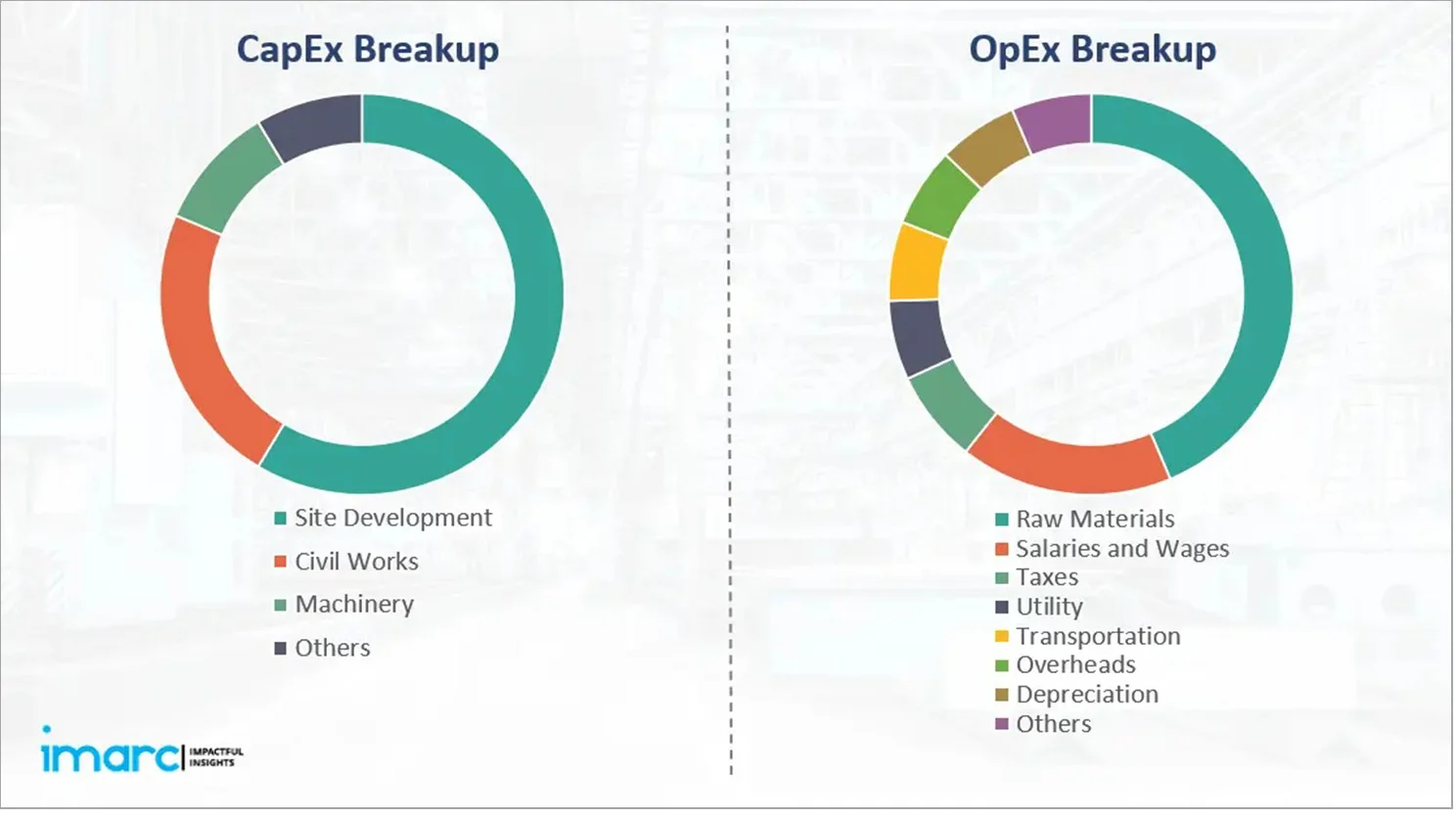
Capital Expenditure Breakdown:
| Particulars | Cost (in US$) |
|---|---|
| Land and Site Development Costs | XX |
| Civil Works Costs | XX |
| Machinery Costs | XX |
| Other Capital Costs | XX |
To access CapEx Details, Request Sample
Operational Expenditure Breakdown:
| Particulars | In % |
|---|---|
| Raw Material Cost | 62–70% |
| Utility Cost | 3–4% |
| Transportation Cost | XX |
| Packaging Cost | XX |
| Salaries and Wages | XX |
| Depreciation | XX |
| Taxes | XX |
| Other Expenses | XX |
To access OpEx Details, Request Sample
Profitability Analysis:
| Particulars | Unit | Year 1 | Year 2 | Year 3 | Year 4 | Year 5 | Average |
|---|---|---|---|---|---|---|---|
| Total Income | US$ | XX | XX | XX | XX | XX | XX |
| Total Expenditure | US$ | XX | XX | XX | XX | XX | XX |
| Gross Profit | US$ | XX | XX | XX | XX | XX | XX |
| Gross Margin | % | XX | XX | XX | XX | XX | 22-28% |
| Net Profit | US$ | XX | XX | XX | XX | XX | XX |
| Net Margin | % | XX | XX | XX | XX | XX | 9-13% |
To access Financial Analysis, Request Sample
Latest Industry Development
- September 15, 2026: Phoenix Contact announced a pluggable IO-Link network module for its CONTACTRON speed starters, enabling improved connectivity, commissioning, and diagnostics in industrial motor-control applications. The module provides access to operating and status data, simplifies integration with automation platforms, and reduces wiring requirements. The development also supports more efficient maintenance and improved equipment availability through enhanced monitoring capabilities. These advancements highlight the growing integration of digital communication, safety functions, and intelligent diagnostics in motor-starting solutions for industrial machinery and automation systems.
Report Coverage:
| Report Features | Details |
|---|---|
| Product Name | Electric Motor Starter |
| Report Coverage | Detailed Process Flow: Unit Operations Involved, Quality Assurance Criteria, Technical Tests, Mass Balance, and Raw Material Requirements Land, Location and Site Development: Selection Criteria and Significance, Location Analysis, Project Planning and Phasing of Development, Environmental Impact, Land Requirement and Costs Plant Layout: Importance and Essentials, Layout, Factors Influencing Layout Plant Machinery: Machinery Requirements, Machinery Costs, Machinery Suppliers (Provided on Request) Raw Materials: Raw Material Requirements, Raw Material Details and Procurement, Raw Material Costs, Raw Material Suppliers (Provided on Request) Packaging: Packaging Requirements, Packaging Material Details and Procurement, Packaging Costs, Packaging Material Suppliers (Provided on Request) Other Requirements and Costs: Transportation Requirements and Costs, Utility Requirements and Costs, Energy Requirements and Costs, Water Requirements and Costs, Human Resource Requirements and Costs Project Economics: Capital Costs, Techno-Economic Parameters, Income Projections, Expenditure Projections, Product Pricing and Margins, Taxation, Depreciation Financial Analysis: Liquidity Analysis, Profitability Analysis, Payback Period, Net Present Value, Internal Rate of Return, Profit and Loss Account, Uncertainty Analysis, Sensitivity Analysis, Economic Analysis Other Analysis Covered in The Report: Market Trends and Analysis, Market Segmentation, Market Breakup by Region, Price Trends, Competitive Landscape, Regulatory Landscape, Strategic Recommendations, Case Study of a Successful Venture |
| Currency | US$ (Data can also be provided in the local currency) |
| Customization Scope | The report can also be customized based on the requirement of the customer |
| Post-Sale Analyst Support | 10-12 Weeks |
| Delivery Format | PDF and Excel through email (We can also provide the editable version of the report in PPT/Word format on special request) |
Key Questions Answered in This Report:
- How has the electric motor starter market performed so far and how will it perform in the coming years?
- What is the market segmentation of the global electric motor starter market?
- What is the regional breakup of the global electric motor starter market?
- What are the price trends of various feedstocks in the electric motor starter industry?
- What is the structure of the electric motor starter industry and who are the key players?
- What are the various unit operations involved in an electric motor starter manufacturing plant?
- What is the total size of land required for setting up an electric motor starter manufacturing plant?
- What is the layout of an electric motor starter manufacturing plant?
- What are the machinery requirements for setting up an electric motor starter manufacturing plant?
- What are the raw material requirements for setting up an electric motor starter manufacturing plant?
- What are the packaging requirements for setting up an electric motor starter manufacturing plant?
- What are the transportation requirements for setting up an electric motor starter manufacturing plant?
- What are the utility requirements for setting up an electric motor starter manufacturing plant?
- What are the human resource requirements for setting up an electric motor starter manufacturing plant?
- What are the infrastructure costs for setting up an electric motor starter manufacturing plant?
- What are the capital costs for setting up an electric motor starter manufacturing plant?
- What are the operating costs for setting up an electric motor starter manufacturing plant?
- What should be the pricing mechanism of the final product?
- What will be the income and expenditures for an electric motor starter manufacturing plant?
- What is the time required to break even?
- What are the profit projections for setting up an electric motor starter manufacturing plant?
- What are the key success and risk factors in the electric motor starter industry?
- What are the key regulatory procedures and requirements for setting up an electric motor starter manufacturing plant?
- What are the key certifications required for setting up an electric motor starter manufacturing plant?
Report Customization
While we have aimed to create an all-encompassing electric motor starter plant project report, we acknowledge that individual stakeholders may have unique demands. Thus, we offer customized report options that cater to your specific requirements. Our consultants are available to discuss your business requirements, and we can tailor the report's scope accordingly. Some of the common customizations that we are frequently requested to make by our clients include:
- The report can be customized based on the location (country/region) of your plant.
- The plant’s capacity can be customized based on your requirements.
- Plant machinery and costs can be customized based on your requirements.
- Any additions to the current scope can also be provided based on your requirements.
Why Buy IMARC Reports?
- The insights provided in our reports enable stakeholders to make informed business decisions by assessing the feasibility of a business venture.
- Our extensive network of consultants, raw material suppliers, machinery suppliers and subject matter experts spans over 100+ countries across North America, Europe, Asia Pacific, South America, Africa, and the Middle East.
- Our cost modeling team can assist you in understanding the most complex materials. With domain experts across numerous categories, we can assist you in determining how sensitive each component of the cost model is and how it can affect the final cost and prices.
- We keep a constant track of land costs, construction costs, utility costs, and labor costs across 100+ countries and update them regularly.
- Our client base consists of over 3000 organizations, including prominent corporations, governments, and institutions, who rely on us as their trusted business partners. Our clientele varies from small and start-up businesses to Fortune 500 companies.
- Our strong in-house team of engineers, statisticians, modeling experts, chartered accountants, architects, etc. has played a crucial role in constructing, expanding, and optimizing sustainable manufacturing plants worldwide.
Need more help?
- Speak to our experienced analysts for insights on the current market scenarios.
- Include additional segments and countries to customize the report as per your requirement.
- Gain an unparalleled competitive advantage in your domain by understanding how to utilize the report and positively impacting your operations and revenue.
- For further assistance, please connect with our analysts.


Factory Setup Services
IMARC Group's factory setup services streamline the entire establishment process, ensuring efficient planning, seamless execution, and optimal operational readiness for your manufacturing facility.


Site Selection Services
IMARC Group's site selection services optimize location choices for businesses, ensuring strategic, cost-effective, and efficient manufacturing operations.


Factory Audit Services
IMARC Group's plant audit services offer comprehensive evaluations of your industrial facility's health, efficiency, and regulatory compliance.


Regulatory Approvals, and Licensing Services
IMARC Group's regulatory approval and licensing services ensure businesses meet all compliance requirements, facilitating smooth and timely market entry.
 Inquire Before Buying
 Speak to an Analyst
 Request Brochure
 Request Customization
Related Reports

Frequently Asked Questions
Our feasibility studies assess several key factors to provide a detailed evaluation of your project's potential. The study includes a pricing analysis of feedstocks, helping to understand industry profit margins and cost variations. Detailed insights into mass balance, unit operations, raw material requirements, and the manufacturing process flow are also provided to ensure a clear understanding of the production setup.
The study also covers critical elements such as location analysis, environmental impact, plant layout, and costs associated with land, machinery, raw materials, packaging, transportation, utilities, and human resources. The project economics section provides an in-depth analysis of capital expenditure (CapEx), operating expenditure (OpEx), income projections, taxation, depreciation, liquidity, profitability, payback period, net present value (NPV), uncertainty, and sensitivity analysis.
Additionally, IMARC Group's feasibility studies address regulatory procedures, financial assistance, and necessary certifications, ensuring all legal and compliance requirements are met. By covering these aspects, IMARC Group's feasibility studies support informed decision-making, risk reduction, and the overall viability of your business.
Yes, our site identification services include a thorough assessment of potential sites based on proximity to raw materials, ensuring cost-effective and timely supply chain operations. We also consider access to infrastructure, such as transportation networks, utilities, and technology, which are essential for smooth plant operations. Labor availability is another key factor we analyze to ensure that the site has access to a skilled workforce. Additionally, we evaluate the environmental impact to ensure compliance with regulations and sustainable practices. By integrating these factors, we provide a comprehensive site evaluation to identify the optimal location for your new plant, supporting your strategic goals and operational efficiency.
Yes, our regulatory approvals and licensing services are made specifically to support companies in effectively and efficiently navigating the ever-changing regulatory environment. We start by carefully evaluating your company's requirements as well as the unique regulatory framework that applies to your sector. After that, you are assisted by our team of professionals throughout the whole process of securing the necessary industrial permits, business licenses, and environmental clearances.
Additionally, we help with industry-specific regulatory licensing so that your company complies with all sector-specific regulations. To further safeguard your brand and innovations from the outset, we also offer support for intellectual property rights (IPR) registrations and licensing. We manage the required documentation and communicate with pertinent authorities on your behalf by utilizing our deep industry experience and painstaking attention to detail. This allows you to focus on building and growing your business while we take care of the regulatory complexities. Partnering with us ensures that your business is fully compliant and ready to thrive from the start.
Our skilled engineering staff specializes in designing efficient and effective plant layouts that meet your unique needs. We begin with a comprehensive process design to ensure the best possible workflow and use of resources.
Our services include careful equipment selection, ensuring that your plant design incorporates the most suitable and advanced machinery. We also focus on meticulous layout planning, strategically arranging workstations and equipment to optimize output and reduce operational bottlenecks. Furthermore, our facility design takes into account every important factor, such as regulatory compliance, scalability, and safety.
By leveraging our expertise, we ensure that your plant layout not only meets your current operational needs but is also adaptable to future growth and technological advancements. Our goal is to create a well-organized, efficient, and compliant facility that enhances your overall operational efficiency and supports your business objectives.
Yes, our raw material and machinery sourcing services are designed to identify and connect you with reliable and affordable providers. We leverage our extensive network and industry expertise to source high-quality raw materials and advanced machinery that meet your specific requirements.
We also conduct supplier audits and evaluations so that you get the best value for your investment. We evaluate potential suppliers on the basis of cost, quality, reliability, and delivery timelines. We also make sure that all the legal requirements are met, including customs, tax regulations, labor laws, and import/export laws, to ensure you are fully compliant.
When you choose to work with us, you gain access to a list of suppliers pre-screened for affordability and reliability, helping you optimize your procurement process and reduce overall operational costs. It is our goal to assist you in establishing a new plant effectively and economically, ensuring long-term success and sustainability.
IMARC Group can effectively manage the construction of your new facility through our comprehensive construction management services. Our dedicated construction management team oversees the entire construction phase, ensuring that all activities are executed according to plan and within the specified timeline. We manage contractors, coordinating their efforts to ensure smooth and efficient workflow on-site.
Furthermore, our team pays great attention to the progress of the construction work, and we conduct site reviews and quality control to ensure that the construction work is done to the highest standards. We resolve any problems as they arise, thus avoiding any form of delay and keeping the project on schedule. When you work with us, you can be assured that your new facility will be constructed to the highest standards that will enable you to concentrate on your core business activities.
Yes, our distributor identification services are designed to connect companies with trusted distributors who meet high standards of reliability, performance, and ethical practices. We leverage our vast network of vetted distributors across various industries and regions to find the best match for your business needs.
Our process begins with a careful analysis of your particular needs and business goals. We then carry out rigorous research and due diligence to identify the distributors that have market reach and the capability to manage your product lines effectively. Our thorough vetting process involves the distributors' background checks and performance history reviews to ensure that they meet industry standards and have a proven track record.
Also, we ensure compliance with the relevant legislation and regulations to avoid legal issues that may affect the functioning of the company. Once potential distributors are identified, we organize business meetings, as well as handle all logistics to facilitate productive discussions. We provide continuous support throughout the partnership, including performance monitoring and logistics coordination, to ensure the success and optimization of your distribution networks in the long run.
Yes, our factory audit services provide a systematic and thorough evaluation of your plant's performance across various critical parameters. Our experienced auditors utilize industry best practices to conduct detailed inspections, focusing on safety, quality, efficiency, compliance, and sustainability.
Our audits assess safety protocols to ensure a secure working environment, evaluate quality standards to enhance product satisfaction and optimize processes to increase productivity and reduce costs. Compliance checks ensure adherence to relevant regulations, mitigating legal risks, and our sustainability assessments recommend eco-friendly practices to minimize environmental impact.
Our holistic approach delivers actionable insights through detailed audit reports, offering clear recommendations for continuous improvement. By partnering with us, you gain valuable insights into your plant's operations, enabling you to drive enhancements, achieve operational excellence, and maintain a competitive edge.
Yes, our contract manufacturer identification services are designed to assist businesses in navigating the complex landscape of contract manufacturing. We start by defining the ideal contract manufacturer through in-depth discussions with our clients, followed by extensive research to identify potential candidates.
Once potential manufacturers are identified, we conduct a rigorous evaluation and vetting process to ensure they meet high standards of quality, reliability, and compliance with relevant regulations. Our team handles the pre-screening process, arranging meetings between our clients and interested candidates, and managing all logistics to facilitate productive discussions.
We have strict performance monitoring and quality control checks to ensure the manufacturers remain at par with your expectations and contribute positively to your business throughout the partnership lifecycle. Through our expertise and extensive network, we ensure that you partner with capable and credible contract manufacturers, who help you drive efficiency, quality, and growth in your production processes.
IMARC Group offers a comprehensive suite of marketing and sales services dedicated to helping businesses increase revenues and effectively sell products. Our performance marketing services focus on data-driven campaigns that maximize return on investment, utilizing programmatic advertising and retargeting techniques to reach the right audience at the right time. We enhance your online presence through SEO and SMO, driving organic traffic and improving your digital footprint.
The lead generation strategies we use target high-quality quality leads that convert into loyal clients, while our brand promotion strategies including influencer marketing and creative designing enhance the visibility and credibility of your brand. Our social media management services assist you in engaging with your audience, establishing relationships with them, and driving conversions through targeted campaigns.
By partnering with IMARC Group, you benefit from our approach that is tailored to your business needs and unique objectives. Our strategies cover all aspects of digital marketing so that you can reach your target audience consistently, along with our ongoing support and optimization to keep your campaigns effective and relevant. Our cutting edge and performance driven marketing services help you gain the competitive advantage and ensure long-term success.
Choose your plan
*Please note that the prices mentioned below are starting prices for each bundle type. Kindly contact our team for further details.*
Single User License
- 1 User License, Access on 2 Devices
- PDF Report + Excel Dataset (Password Protected)
- Lifetime Access
- No Printing Rights
- 10% Free Report Customization
- 10–12 Weeks of Analyst Support
Five User License
- Access for 5 Users, 2 Devices per User
- PDF Report + Excel Dataset (Password Protected)
- Lifetime Access
- Dedicated Account Manager
- 12–14 Weeks of Analyst Support
- No Printing Rights
- 15% Free Report Customization
- 25% Discount on Your Next Purchase
Corporate User License
- Unlimited User Access (Within Your Organization)
- PDF Report + Excel Dataset
- Lifetime Access
- Dedicated Account Manager
- 14–20 Weeks of Analyst Support
- No Printing Rights
- 20% Free Report Customization
- 30% Discount on Your Next Purchase
Essential Insights
What's included:
3 reports
- Lifetime Access
- PDF Reports
- Excel Datasets
- 2 Weeks of Free Analyst Support
- 2 User Licenses
- Access on 2 Devices
- Printing Rights
- Complimentary PowerPoint (PPT) Version
- Complimentary License Upgrade
Professional Access
What's included:
5 reports
- Lifetime Access
- PDF Reports
- Excel Datasets
- 8 Weeks of Free Analyst Support
- 2 User Licenses
- Access on 2 Devices
- Printing Rights
- Complimentary PowerPoint (PPT) Version
- Complimentary License Upgrade
Business Advantage
What's included:
8 reports
- Lifetime Access
- PDF Reports
- Excel Datasets
- 14 Weeks of Free Analyst Support
- 2 User Licenses
- Access on 2 Devices
- Printing Rights
- Complimentary PowerPoint (PPT) Version
- Complimentary License Upgrade
Enterprise Intelligence
What's included:
10 reports
- Lifetime Access
- PDF Reports
- Excel Datasets
- 20 Weeks of Free Analyst Support
- 2 User Licenses
- Access on 2 Devices
- Printing Rights
- Complimentary PowerPoint (PPT) Version
- Complimentary License Upgrade