
Emergency Contraceptive Pills Market Size, Share, Trends and Forecast by Type, Distribution Channel, and Region, 2026-2034
Emergency Contraceptive Pills Market Size, Share, Trends & Forecast (2026-2034)
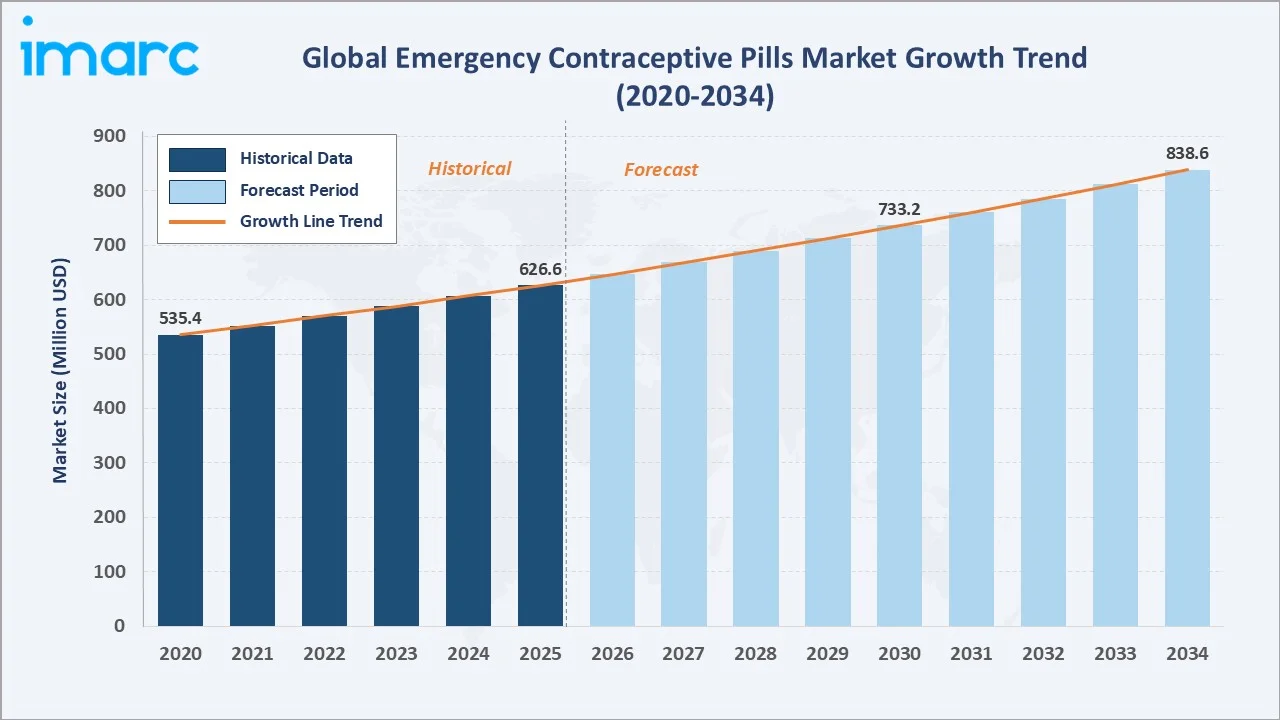
The global emergency contraceptive pills market reached USD 626.6 Million in 2025 and is projected to reach USD 838.6 Million by 2034, growing at a CAGR of 3.19% during 2026-2034. The market is driven by rising awareness regarding sexual and reproductive health, increasing incidences of unintended pregnancies, and supportive government and NGO family planning initiatives. The growing development and adoption of non-hormonal ulipristal acetate-based formulations is further strengthening product accessibility. Combination pills dominate the market at 56.8%. Retail stores lead distribution at 63.4%. North America commands 37.6% of the global market share.
Market Snapshot
|
Metric |
Value |
|
Market Size (2025) |
USD 626.6 Million |
|
Forecast Market Size (2034) |
USD 838.6 Million |
|
CAGR (2026-2034) |
3.19% |
|
Base Year |
2025 |
|
Historical Period |
2020-2025 |
|
Forecast Period |
2026-2034 |
|
Dominant Type |
Combination Pills (56.8%, 2025) |
|
Dominant Distribution Channel |
Retail Stores (63.4%, 2025) |
|
Leading Region |
North America (37.6%, 2025) |
The global emergency contraceptive pills market expanded from USD 535.4 Million in 2020 to USD 626.6 Million in 2025, anchored at USD 733.2 Million in 2030, and forecast to reach USD 838.6 Million by 2034. Rising awareness of emergency contraception, expanding over-the-counter access, and growing e-pharmacy penetration sustained steady market growth through 2022-2025, with momentum expected to continue through the forecast period.
To get more information on this market, Request Sample
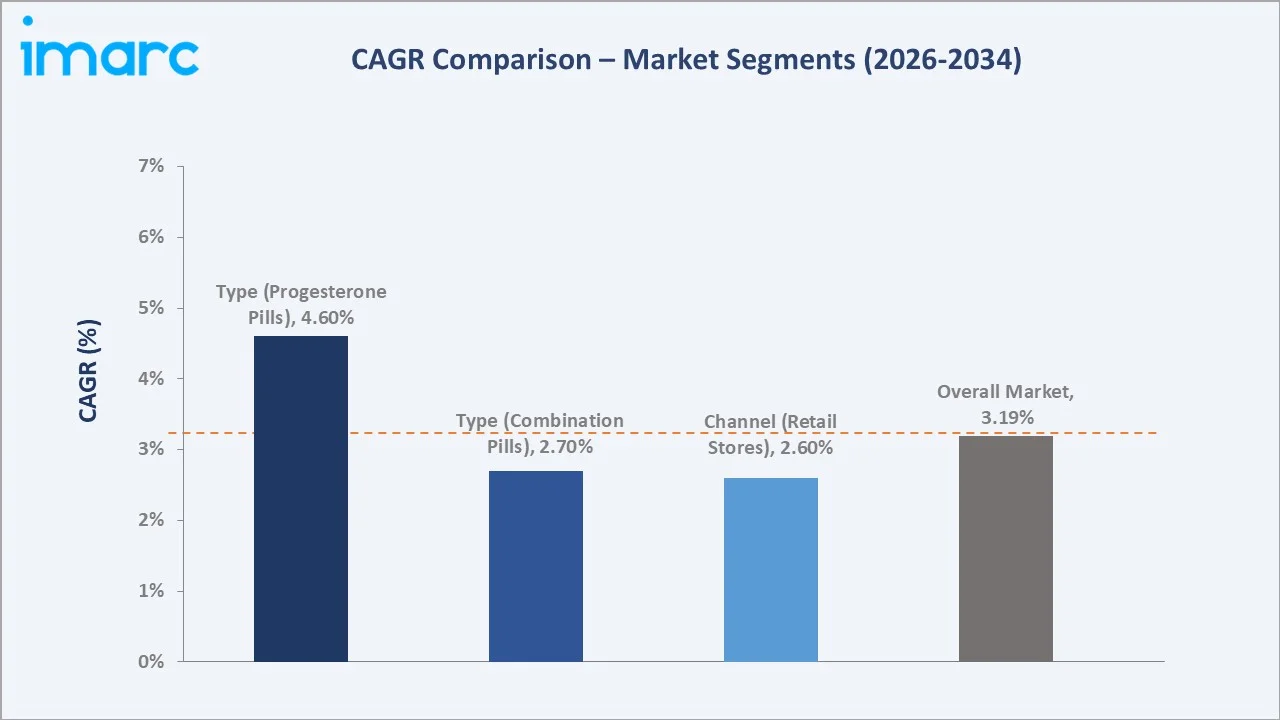
Progesterone pills grow fastest at ~4.6% CAGR as non-hormonal and single-hormone formulations gain clinical preference for their favorable side-effect profile. Online stores expand at ~6.3% CAGR as telehealth platforms and e-pharmacies improve discreet, convenient access to emergency contraception.
Executive Summary
The global emergency contraceptive pills market reached USD 626.6 Million in 2025, reflecting the critical role emergency contraception plays within the broader reproductive and sexual health ecosystem. The market encompasses hormonal combination and progesterone-only formulations, emerging non-hormonal ulipristal acetate products, and the retail, online, and institutional channels through which these products reach consumers.
Combination pills at 56.8% dominate through their long clinical track record, broad regulatory approval, and widespread pharmacy availability. Retail stores at 63.4% lead distribution through consumer trust, immediate access, and pharmacist counselling. North America, at 37.6%, leads through high awareness levels, supportive regulatory access, and a mature retail and e-commerce pharmacy infrastructure.
Key Market Insights
|
Insight |
Data |
|
Dominant Type |
Combination Pills - 56.8% share (2025) |
|
Dominant Distribution Channel |
Retail Stores - 63.4% market share (2025) |
|
Leading Region |
North America - 37.6% market share |
|
Market Opportunity |
Non-hormonal ulipristal acetate ECPs; e-pharmacy and telehealth expansion; NGO-backed access programs; OTC reclassification in emerging markets |
Key Analytical Observations Supporting The Above Data:
- Combination Pills at 56.8%: The combination pills segment dominates due to its established clinical efficacy, broad physician familiarity, and long-standing OTC approval across major markets, supporting consistent repeat purchase and pharmacist recommendation.
- Retail Stores at 63.4%: Retail stores lead because of immediate product availability, pharmacist guidance, and consumer preference for discreet, walk-in purchase without prescription delays across most developed markets.
- North America at 37.6%: North America leads through high consumer awareness, broad OTC access without age restriction, and a well-developed retail pharmacy and e-commerce distribution network.
Emergency Contraceptive Pills Market Overview
The global emergency contraceptive pills market encompasses the development, manufacturing, regulatory approval, and distribution of hormonal and non-hormonal medications used to prevent unintended pregnancy following unprotected intercourse or contraceptive failure. The market spans levonorgestrel-based combination and progesterone-only pills, ulipristal acetate-based non-hormonal formulations, and the retail, online, and institutional channels that make these products accessible to consumers.
Macroeconomic factors include rising healthcare expenditure, urbanization, and growing female workforce participation. In addition, expanding OTC reclassification, digital health adoption, and government-backed family planning programs are accelerating product accessibility and awareness worldwide.
Market Dynamics
To evaluate market opportunities, Request Sample
Market Drivers
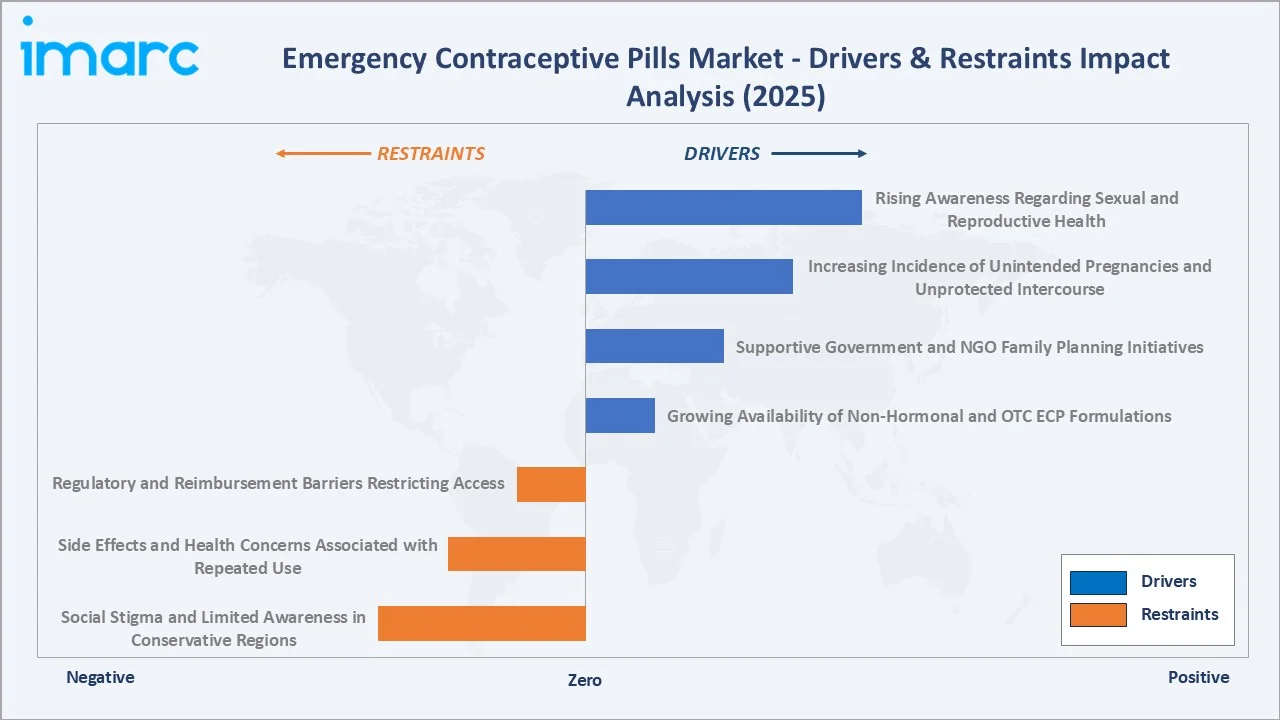
- Rising Awareness Regarding Sexual and Reproductive Health: Growing awareness of contraception and family planning is encouraging women to use emergency contraceptive pills as a safe, convenient backup method. Public health campaigns and digital platforms are improving understanding of correct usage, driving consistent demand across developed and emerging markets.
- Increasing Incidence of Unintended Pregnancies and Unprotected Intercourse: Rising rates of unprotected intercourse, contraceptive failure, and instances of sexual assault continue to drive demand. Emergency contraceptive pills offer a safe, accessible, time-sensitive solution that helps prevent unintended pregnancies without long-term hormonal commitment.
- Supportive Government and NGO Family Planning Initiatives: Governments and NGOs are expanding access through subsidized pricing, public health distribution programs, and awareness campaigns. These initiatives are particularly impactful in emerging markets, where affordability remains a key barrier to consistent contraceptive use.
- Growing Availability of Non-Hormonal and OTC ECP Formulations: The development of non-hormonal ulipristal acetate-based formulations, offering an extended effective window and fewer side effects than traditional levonorgestrel-based pills, is expanding the addressable market alongside broader OTC reclassification.
Market Restraints
- Social Stigma and Limited Awareness in Conservative Regions: Cultural and religious stigma surrounding emergency contraception continues to restrict open discussion and product uptake in several conservative regions, limiting awareness and discouraging timely access despite product availability.
- Side Effects and Health Concerns Associated with Repeated Use: Concerns regarding hormonal side effects and menstrual irregularities discourage some women from relying on emergency contraceptive pills, reinforcing the perception that they should be reserved strictly for occasional emergency use.
- Regulatory and Reimbursement Barriers Restricting Access: Inconsistent regulatory classification, prescription requirements, and limited insurance reimbursement in several countries continue to restrict timely access, particularly where healthcare infrastructure and pharmacy density remain limited.
Market Opportunities
- Expansion of E-Pharmacy and Telehealth Distribution Channels: The growth of e-pharmacy platforms and telehealth consultation services is creating new opportunities for discreet, convenient access, particularly among younger consumers and in regions with limited retail pharmacy density.
- Development of Advanced Non-Hormonal and Extended-Window Formulations: Continued R&D investment in non-hormonal, extended-effectiveness-window formulations presents opportunities for manufacturers to differentiate products and capture share from traditional levonorgestrel-based offerings.
Market Challenges
- Inconsistent Regulatory Status Across Countries: Varying regulatory classifications, ranging from full OTC access to prescription-only status, create market fragmentation and complicate manufacturers' ability to pursue consistent global commercialization strategies.
- Competition from Long-Acting Reversible Contraceptives: Growing adoption of long-acting reversible contraceptives, such as IUDs and implants, reduces the frequency of unprotected intercourse incidents among regular users, moderating repeat purchase rates in mature markets.
Emerging Market Trends
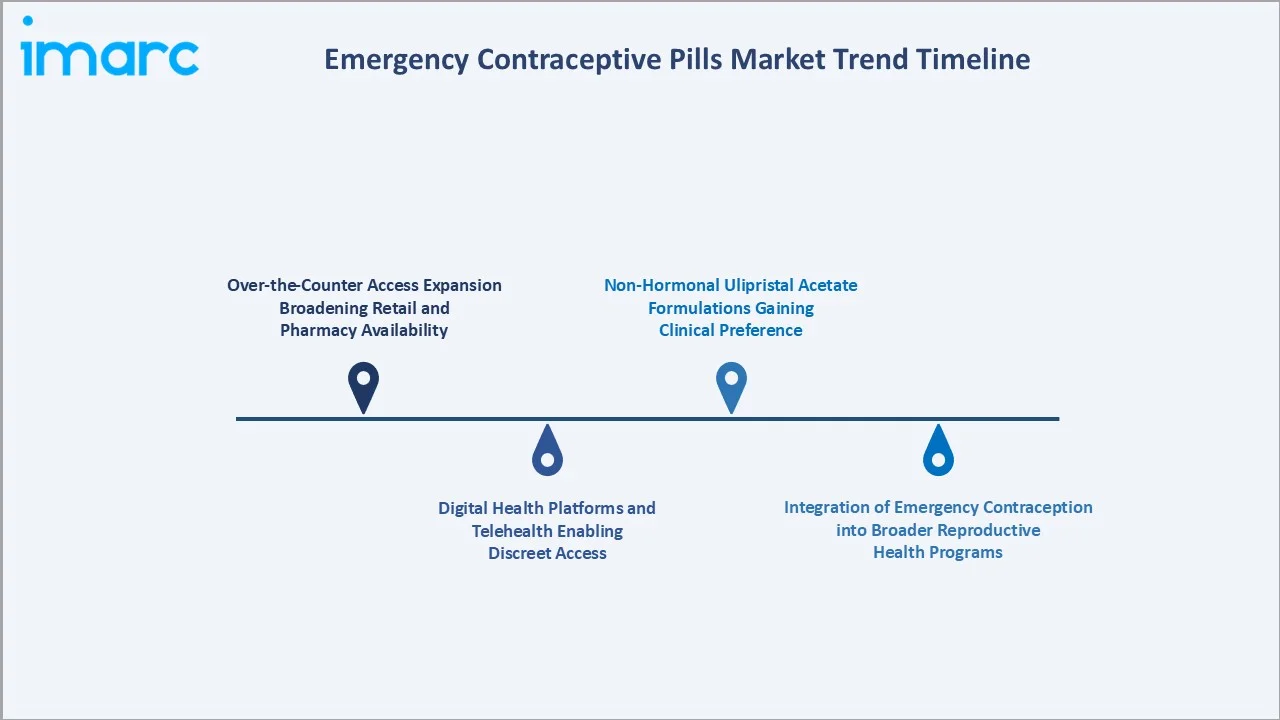
1. Over-the-Counter Access Expansion Broadening Retail and Pharmacy Availability
Over-the-counter reclassification is progressively broadening pharmacy and retail access to emergency contraceptive pills across markets that previously required a prescription. This shift reduces time-sensitive access delays, since effectiveness declines significantly with time elapsed since unprotected intercourse. Regulatory bodies across North America, Europe, and parts of Asia-Pacific continue to review OTC status expansion, supported by favorable long-term safety data.
2. Digital Health Platforms and Telehealth Enabling Discreet Access
Telehealth consultation platforms and e-pharmacy services are enabling women to access emergency contraception discreetly and conveniently, often with same-day or next-day delivery. This trend is particularly significant for younger consumers and those in regions with limited retail pharmacy density or where social stigma discourages in-person purchase.
3. Non-Hormonal Ulipristal Acetate Formulations Gaining Clinical Preference
Ulipristal acetate-based non-hormonal emergency contraceptive pills are gaining clinical preference due to their extended 120-hour effective window and comparatively favorable side-effect profile relative to traditional levonorgestrel-based formulations. Growing physician familiarity and expanding regulatory approvals are supporting steady adoption.
4. Integration of Emergency Contraception into Broader Reproductive Health Programs
Public health systems and NGOs are increasingly integrating emergency contraception counselling and distribution into broader reproductive and sexual health programs, including maternal health and post-sexual-assault care services. This integrated approach improves accessibility while normalizing emergency contraception as a routine healthcare component.
Industry Value Chain Analysis
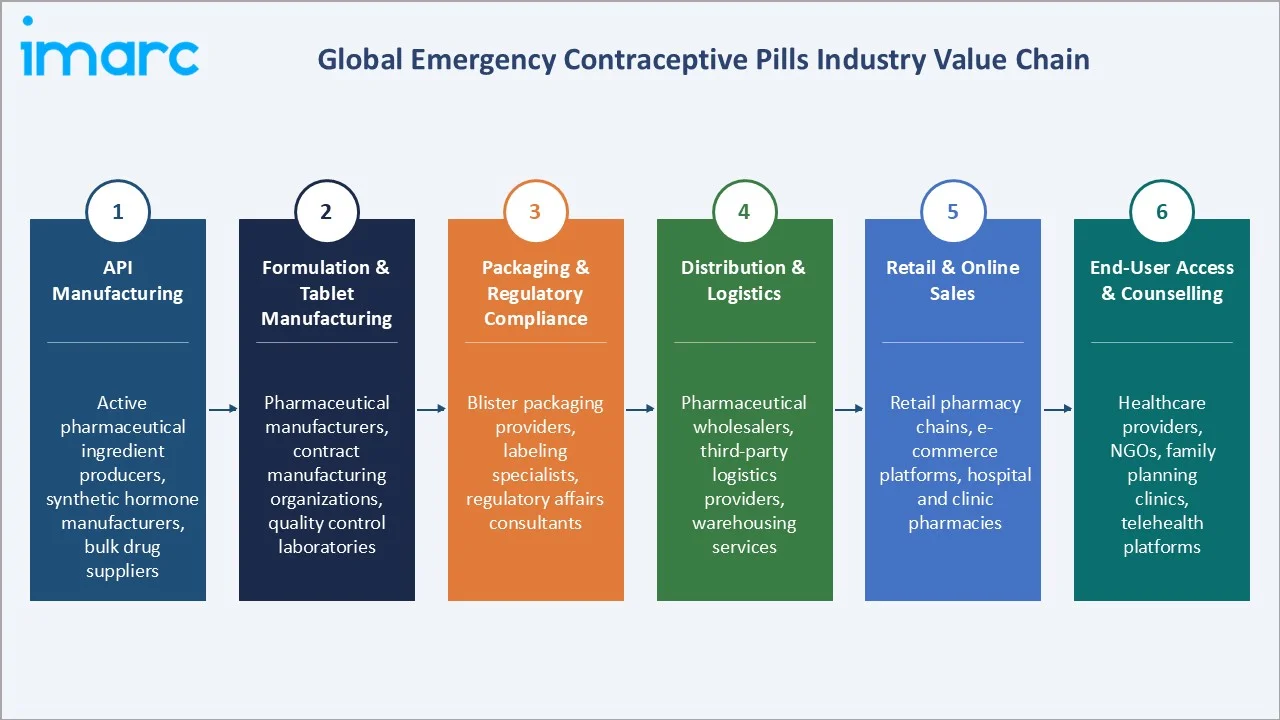
The emergency contraceptive pills value chain integrates active pharmaceutical ingredient sourcing, tablet formulation and manufacturing, packaging and regulatory compliance, distribution and logistics, retail and online sales, and end-user access and counselling. Each stage plays a distinct role in ensuring product quality, regulatory compliance, and timely availability to consumers.
|
Stage |
Key Participants |
|
API Manufacturing |
Active pharmaceutical ingredient producers, synthetic hormone manufacturers, bulk drug suppliers |
|
Formulation & Tablet Manufacturing |
Pharmaceutical manufacturers, contract manufacturing organizations, quality control laboratories |
|
Packaging & Regulatory Compliance |
Blister packaging providers, labeling specialists, regulatory affairs consultants |
|
Distribution & Logistics |
Pharmaceutical wholesalers, third-party logistics providers, warehousing services |
|
Retail & Online Sales |
Retail pharmacy chains, e-commerce platforms, hospital and clinic pharmacies |
|
End-User Access & Counselling |
Healthcare providers, NGOs, family planning clinics, telehealth platforms |
Formulation and tablet manufacturing represents the value chain's most quality-critical stage, given strict regulatory requirements for hormonal drug products. Distribution and logistics increasingly determine competitive advantage, as time-sensitive product availability directly affects treatment efficacy and consumer outcomes.
Technology Landscape in the Emergency Contraceptive Pills Industry
Levonorgestrel-Based Formulations
Levonorgestrel-based formulations remain the most widely used emergency contraceptive pill category, valued for their established safety profile, broad regulatory approval, and decades-long clinical track record. Available as single-dose and split-dose tablets, these formulations anchor combination and progesterone-only product portfolios across nearly all regulated markets, supporting consistent OTC availability.
Ulipristal Acetate-Based Formulations
Ulipristal acetate-based formulations offer a non-hormonal mechanism of action and an extended 120-hour effective window, providing a differentiated clinical option compared to traditional levonorgestrel-based pills. Growing physician familiarity and expanding regulatory approvals are supporting gradual adoption among women seeking a longer decision window.
Digital and Telehealth-Enabled Access Platforms
Telehealth consultation platforms and e-pharmacy services are streamlining access to emergency contraception through virtual prescribing, discreet home delivery, and integrated reproductive health counselling. These platforms are expanding fastest among younger, digitally native consumers and in regions where retail pharmacy density or social stigma limit in-person access.
Market Segmentation Analysis
The report covers the following segments:
|
Segment Category |
Leading Segment |
Market Share |
Year |
|
Type |
Combination Pills |
56.8% |
2025 |
|
Distribution Channel |
Retail Stores |
63.4% |
2025 |
|
Region |
North America |
37.6% |
2025 |

By Type
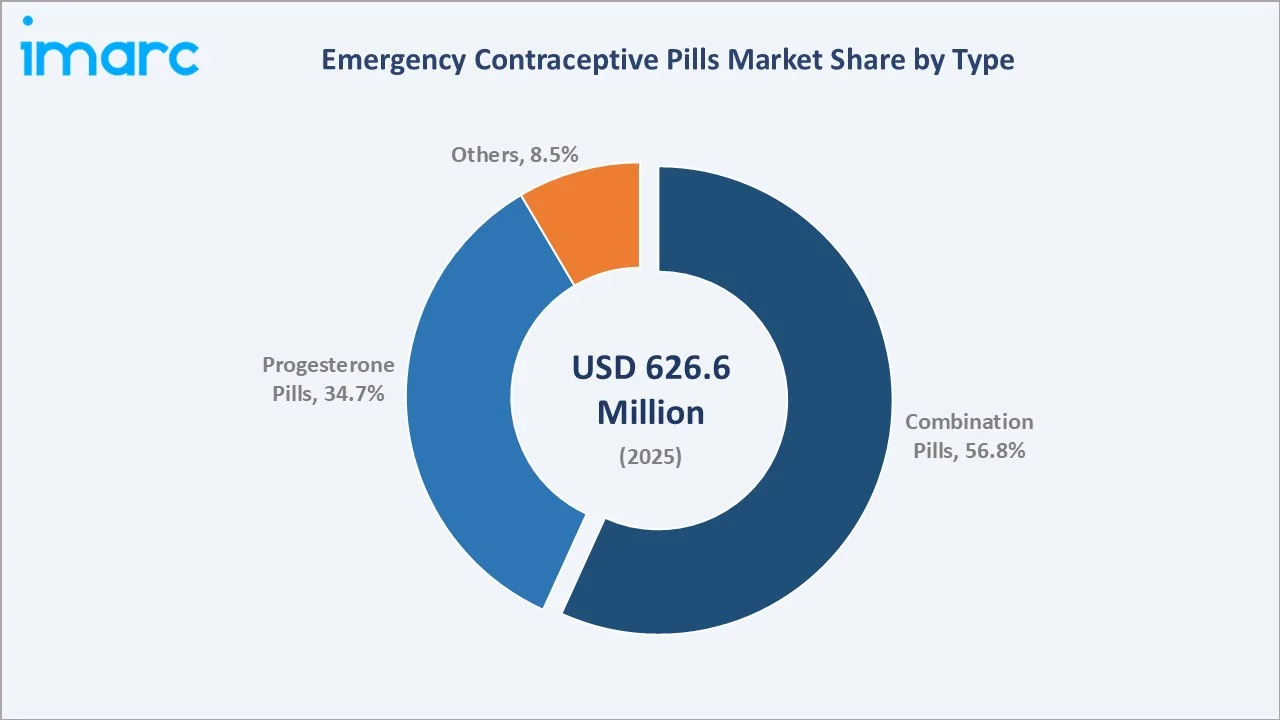
Combination pills lead at 56.8% (2025). The combination pills segment encompasses levonorgestrel-based single and two-dose formulations that combine broad regulatory approval with an established clinical safety record, supporting their continued dominance across both developed and emerging OTC markets.
To evaluate market opportunities, Request Sample
Progesterone pills at 34.7% encompass single-hormone levonorgestrel formulations valued for their simplified dosing regimen. Progesterone pills grow at ~4.6% CAGR through rising OTC reclassification and expanding store-brand availability across major retail pharmacy chains.
By Distribution Channel
Retail stores lead at 63.4% (2025). The retail stores segment encompasses pharmacy chains, drugstores, and supermarket pharmacy counters that provide immediate, walk-in access alongside pharmacist counselling, supporting consumer trust and time-sensitive product availability.
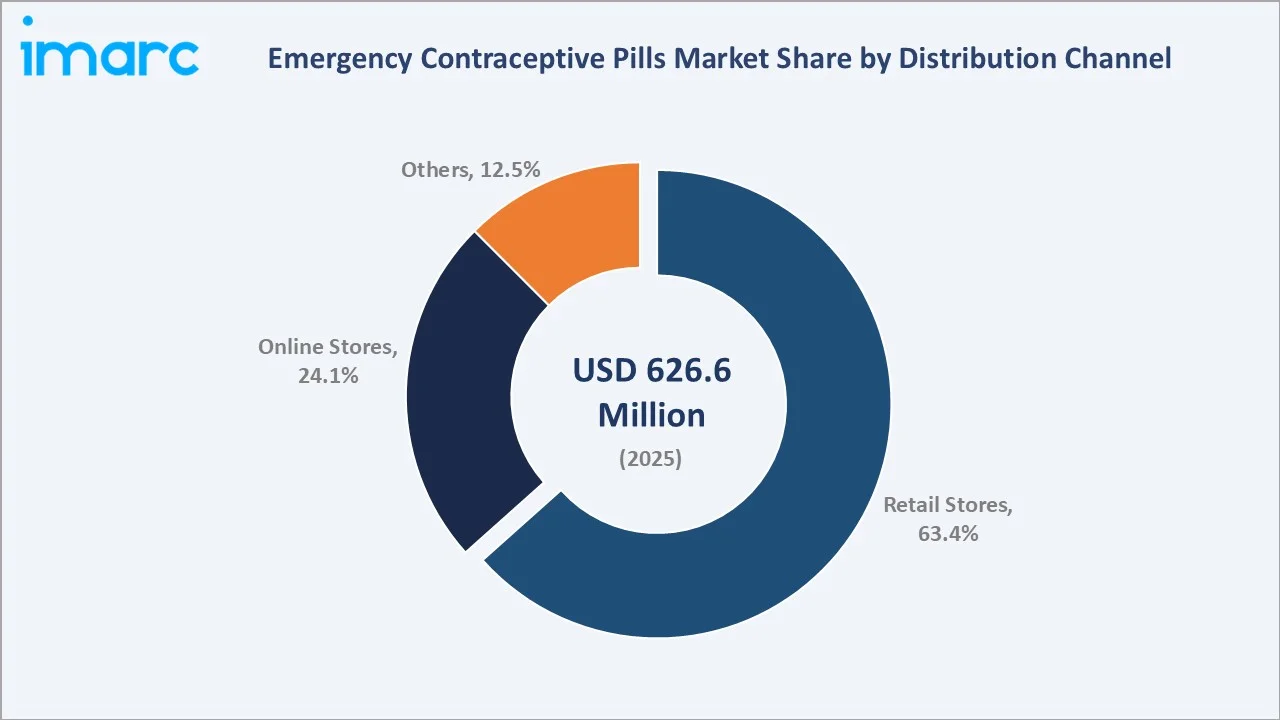
Online stores at 24.1% grow fastest at ~6.3% CAGR as e-pharmacy platforms and telehealth services expand discreet, convenient access. Others at 12.5% encompasses hospital pharmacies, community health clinics, and NGO-operated distribution programs.
Regional Market Insights
|
Region |
Share (2025) |
Key Emergency Contraceptive Pills Market Drivers & Characteristics |
|
North America |
37.6% |
Driven by high consumer awareness, unrestricted OTC access, and a mature retail pharmacy and e-commerce distribution network. |
|
Europe |
26.8% |
Supported by strong reproductive health policy frameworks, broad insurance coverage, and established pharmacy-based access across the region. |
|
Asia-Pacific |
22.9% |
Driven by a large population base, rising awareness campaigns, and expanding retail and e-pharmacy infrastructure in emerging economies. |
|
Latin America |
7.4% |
Supported by growing NGO-backed family planning programs and gradual expansion of OTC access across the region. |
|
Middle East and Africa |
5.3% |
Driven by increasing government and NGO reproductive health initiatives amid persistent access and awareness barriers. |
North America's 37.6% leadership is anchored by the United States' unrestricted, age-free OTC access and extensive retail pharmacy footprint. Europe's 26.8% reflects consistent regulatory support across major economies, including Germany, France, and the United Kingdom.
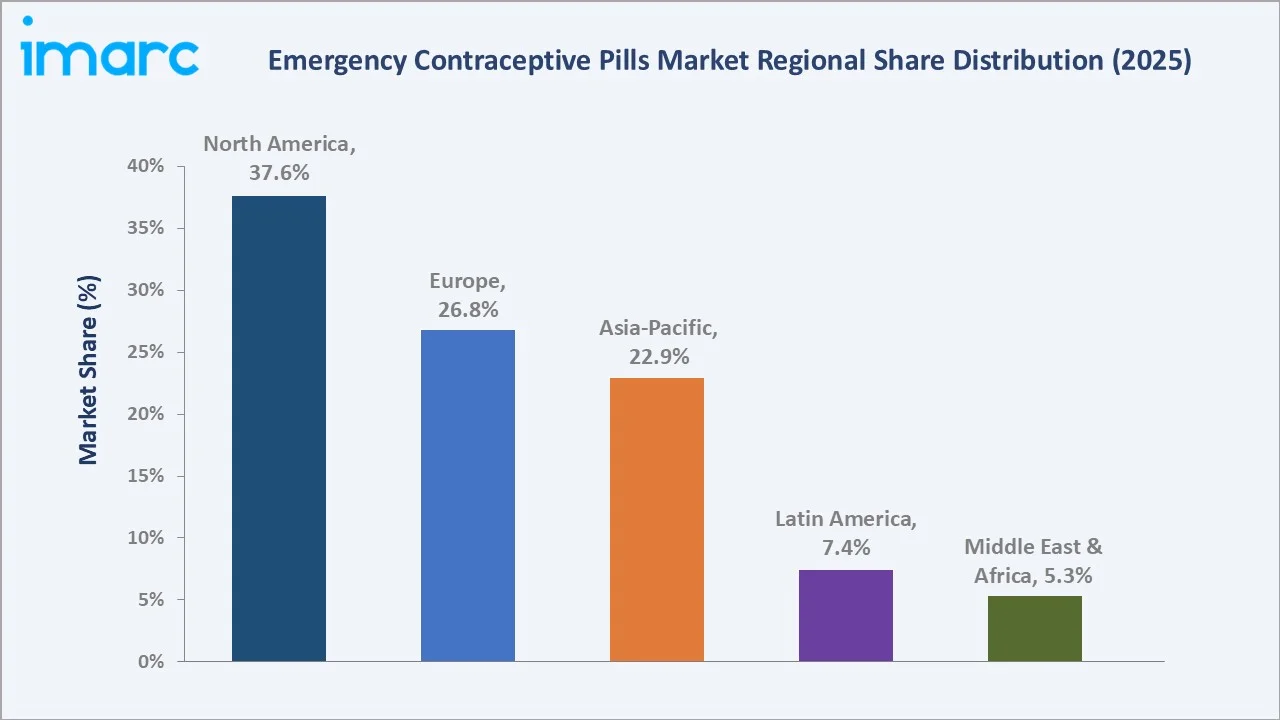
Asia-Pacific's 22.9% share reflects China and India's large population base alongside expanding awareness campaigns. The Middle East and Africa, at 5.3%, represents the most nascent but fastest-growing region as government and NGO reproductive health initiatives expand access.
Competitive Landscape
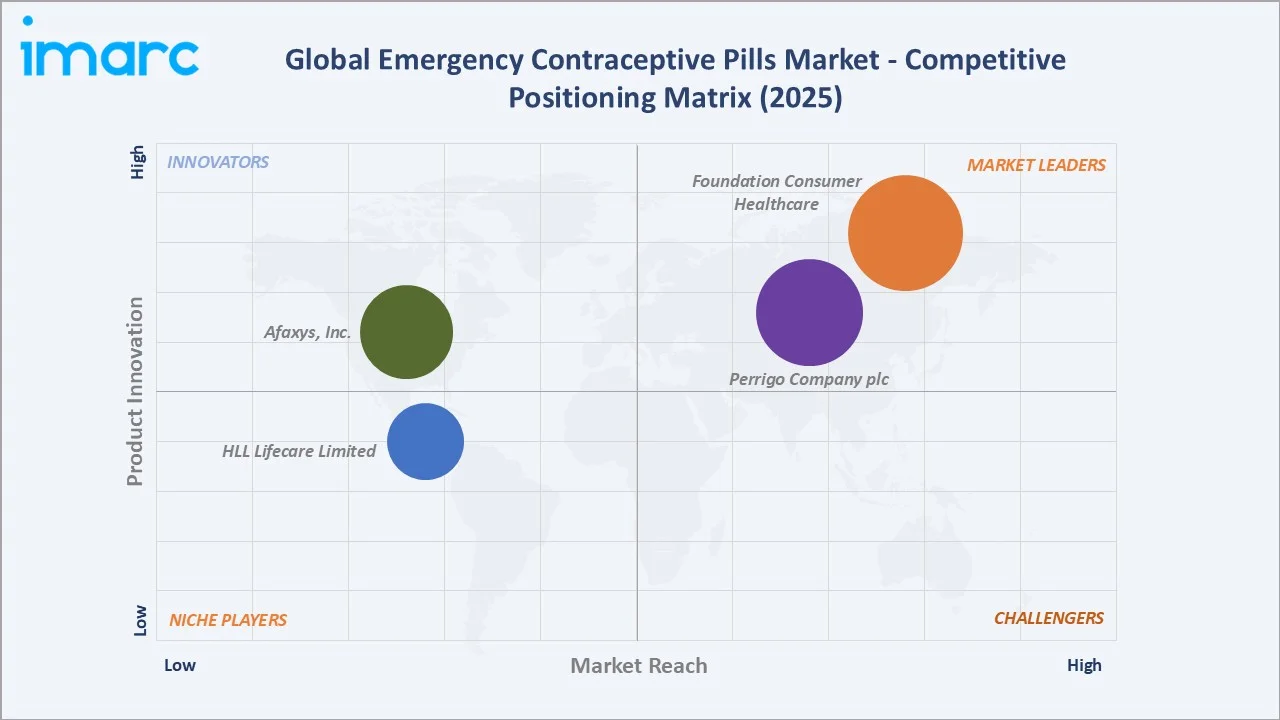
The global emergency contraceptive pills market competitive landscape encompasses distinct tiers: multinational specialty pharmaceutical companies, regional branded OTC manufacturers, government-backed public health suppliers, and store-brand private-label manufacturers.
|
Company Name |
Key Products |
Market Position |
Core Strength |
|
Afaxys, Inc. |
EContra One-Step |
Established Player |
Focused specialty distribution to public health and family planning institutions across the United States. |
|
Foundation Consumer Healthcare |
PLAN B ONE-STEP
|
Market Leader |
Strong brand recognition and broad retail pharmacy penetration across North America. |
|
Perrigo Company plc |
Option 2® Levonorgestrel Tablet, 1.5mg, Emergency Contraceptive |
Market Leader |
Scaled private-label manufacturing and extensive retail distribution reach. |
|
HLL Lifecare Limited |
Unipill |
Established Player |
Government-backed distribution network across India's national family welfare programs. |
Market leadership is anchored by companies with established brand equity, broad regulatory approvals, and extensive retail and institutional distribution networks. Competitive intensity is increasing as store-brand manufacturers expand affordable private-label alternatives across major retail pharmacy chains.
Key Company Profiles
Afaxys, Inc.
Afaxys, Inc. is a U.S.-based, socially-conscious specialty pharmaceutical company and a leading provider of oral and emergency contraceptives dispensed through the U.S. public health sector, including Planned Parenthood affiliates, family planning clinics, and student health centers.
- Key Products: EContra One-Step (levonorgestrel 1.5 mg), an FDA-approved, over-the-counter emergency contraceptive comparable to Plan B One-Step.
- Recent Developments: In August 2025, Afaxys secured USD 8 million to advance contraceptive access and product development. The company announced new funding to support the development of a novel contraceptive product and strengthen affordable access to reproductive healthcare products, including its portfolio of emergency contraceptives such as levonorgestrel emergency contraceptive tablets and ella® (ulipristal acetate) supplied to U.S. safety-net clinics. The investment is intended to improve supply stability and expand access to emergency contraception through public health providers.
- Strategic Focus: Focuses on securing affordable, reliable contraceptive supply for the U.S. public health sector through its branded and generic oral and emergency contraceptive portfolio and group purchasing organization.
Foundation Consumer Healthcare
Foundation Consumer Healthcare, LLC (FCH) is a Pittsburgh-based over-the-counter consumer healthcare company and the manufacturer of Plan B One-Step, the top OB/GYN-recommended emergency contraception brand in the United States.
- Key Products: Plan B One-Step (levonorgestrel 1.5 mg), the #1 OB/GYN-recommended emergency contraceptive brand in the US.
- Recent Developments: In October 2024, Foundation Consumer Healthcare supported expanded OTC contraceptive coverage. As the manufacturer of Plan B One-Step®, the company publicly endorsed efforts to broaden insurance coverage and access to over-the-counter contraceptives, emphasizing that women should have affordable access to a full range of contraceptive options, including emergency contraception.
- Strategic Focus: Focuses on strengthening its women's health portfolio and expanding education and access initiatives around Plan B One-Step following its divestiture of non-core consumer brands.
Perrigo Company plc
Perrigo Company plc is a leading global manufacturer of over-the-counter and store-brand consumer healthcare products, including levonorgestrel-based emergency contraceptive tablets marketed under its Option 2 brand.
- Key Products: Option 2® Levonorgestrel Tablet, 1.5 mg, Emergency Contraceptive, marketed across major retail pharmacy chains.
- Strategic Focus: Centered on scaling affordable, store-brand OTC healthcare products, including emergency contraception, through broad retail and e-commerce distribution partnerships.
Market Concentration Analysis
The global emergency contraceptive pills market is moderately fragmented, with a mix of multinational specialty pharmaceutical companies, regional branded manufacturers, and government-backed public health suppliers competing across different price tiers and distribution channels. Brand-led players maintain leadership in retail and online channels, while government and NGO-backed suppliers dominate institutional distribution in emerging markets. Market concentration is gradually increasing as leading manufacturers expand private-label and store-brand partnerships with major retail pharmacy chains.
Investment & Growth Opportunities
Highest Growth Segments
Progesterone pills (~4.6% CAGR), online stores (~6.3% CAGR), non-hormonal ulipristal acetate formulations, telehealth-enabled distribution platforms, and emerging market OTC reclassification represent the highest-growth investment vectors within the emergency contraceptive pills market through 2034.
Emerging Investment Opportunities
Emerging market OTC reclassification and NGO-backed family planning programs represent the largest near-term opportunity for emergency contraceptive pill manufacturers. Companies establishing preferred-supplier relationships with government procurement programs and expanding affordable store-brand offerings are positioned for above-market growth as access barriers continue to ease.
Investment Themes
- Non-hormonal formulation development capturing differentiated clinical demand: Continued investment in ulipristal acetate-based and extended-window formulations allows manufacturers to differentiate from commoditized levonorgestrel offerings and capture premium positioning among clinically informed consumers.
- Telehealth and e-pharmacy platform partnerships expanding discreet access: Manufacturers partnering with telehealth and e-pharmacy platforms can capture the fastest-growing distribution channel while improving discreet, convenient access for younger and underserved consumer segments.
Future Market Outlook (2026-2034)
The global emergency contraceptive pills market is projected to grow from USD 626.6 Million in 2025 to USD 838.6 Million by 2034, delivering a 3.19% CAGR over the forecast period. The market's anchor value of USD 733.2 Million in 2030 reflects steady, structurally-supported growth as non-hormonal formulations achieve broader clinical acceptance, OTC reclassification expands across additional markets, and telehealth-enabled distribution normalizes discreet access. By 2034, emergency contraception is expected to be more fully integrated into mainstream reproductive healthcare delivery.
Three structural forces support continued market growth through 2034. Rising global awareness of reproductive health and family planning continues to expand the addressable consumer base. Regulatory momentum toward broader OTC access is reducing structural barriers to timely purchase. Digital health infrastructure, including telehealth and e-pharmacy platforms, is normalizing discreet, convenient access across both developed and emerging markets.
Research Methodology
Primary Research
Primary research comprised structured interviews with industry stakeholders, including regulatory affairs directors, pharmaceutical product managers, retail pharmacy category managers, and reproductive health program specialists across major regional markets.
Secondary Research
Secondary research encompassed regulatory agency publications, pharmaceutical industry reports, company annual reports, reproductive health policy documents, and public health program data. Multiple secondary sources were reviewed to validate market estimates.
Forecasting Models
Market revenue forecasts were developed using a segment bottom-up model incorporating: (i) type component; (ii) distribution channel component; (iii) regional demand component.
Report Scope:
| Report Features | Details |
|---|---|
| Base Year of the Analysis | 2025 |
| Historical Period | 2020-2025 |
| Forecast Period | 2026-2034 |
| Units | Million USD |
| Scope of the Report | Exploration of Historical Trends and Market Outlook, Industry Catalysts and Challenges, Segment-Wise Historical and Predictive Market Assessment:
|
| Types Covered | Combination Pills, Progesterone Pills, Others |
| Distribution Channels Covered | Retail Stores, Online Stores, Others |
| Regions Covered | Asia Pacific, Europe, North America, Latin America, Middle East and Africa |
| Countries Covered | United States, Canada, Germany, France, United Kingdom, Italy, Spain, Russia, China, Japan, India, South Korea, Australia, Indonesia, Brazil, Mexico |
| Companies Covered | Afaxys, Inc., Foundation Consumer Healthcare, Perrigo Company plc, HLL Lifecare Limited, etc. |
| Customization Scope | 10% Free Customization |
| Post-Sale Analyst Support | 10-12 Weeks |
| Delivery Format | PDF and Excel through Email (We can also provide the editable version of the report in PPT/Word format on special request) |
Key Benefits for Stakeholders:
- IMARC’s report offers a comprehensive quantitative analysis of various market segments, historical and current market trends, market forecasts, and dynamics of the emergency contraceptive pills market from 2020-2034.
- The research study provides the latest information on the market drivers, challenges, and opportunities in the global emergency contraceptive pills market.
- The study maps the leading, as well as the fastest-growing, regional markets. It further enables stakeholders to identify the key country-level markets within each region.
- Porter's five forces analysis assist stakeholders in assessing the impact of new entrants, competitive rivalry, supplier power, buyer power, and the threat of substitution. It helps stakeholders to analyze the level of competition within the emergency contraceptive pills industry and its attractiveness.
- Competitive landscape allows stakeholders to understand their competitive environment and provides an insight into the current positions of key players in the market.
Frequently Asked Questions About the Emergency Contraceptive Pills Market Report
The emergency contraceptive pills market was valued at USD 626.6 Million in 2025, driven by increasing awareness of reproductive health, rising OTC access, and supportive family planning initiatives worldwide.
The market is projected to grow at a CAGR of 3.19% during 2026-2034, reaching USD 838.6 Million by 2034, as non-hormonal formulations and e-pharmacy access continue to expand.
Combination pills lead at 56.8% (2025) through established clinical efficacy, broad regulatory approval, and long-standing OTC availability across major global markets.
Retail stores lead at 63.4% (2025) through immediate product availability, pharmacist guidance, and consumer preference for discreet, prescription-free, walk-in purchase.
North America leads at 37.6% (2025) through high consumer awareness, unrestricted OTC access, and a mature retail pharmacy and e-commerce distribution network.
Leading companies include Afaxys INC, Foundation Consumer Healthcare, HLL Lifecare Limited, and Perrigo Company plc, among others.
The market is projected to reach approximately USD 733.2 Million by 2030, supported by expanding non-hormonal formulation adoption, broader OTC reclassification, and growing telehealth-enabled access.
Non-hormonal emergency contraceptive pills, based on ulipristal acetate, block progesterone receptors and offer an extended effective window with fewer side effects, representing a fast-growing, differentiated segment within the broader market.
Need more help?
- Speak to our experienced analysts for insights on the current market scenarios.
- Include additional segments and countries to customize the report as per your requirement.
- Gain an unparalleled competitive advantage in your domain by understanding how to utilize the report and positively impacting your operations and revenue.
- For further assistance, please connect with our analysts.
 Request Customization
 Speak to an Analyst
 Request Brochure
 Inquire Before Buying
Benefits of Customization
- Personalize this research
- Triangulate with your data
- Get data as per your format and definition
- Gain a deeper dive into a specific application, geography, customer, or competitor
- Any level of personalization
Get in Touch With Us
UNITED STATES
Phone: +1-201-971-6302
INDIA
Phone: +91-120-433-0800
UNITED KINGDOM
Phone: +44-753-714-6104
Email: [email protected]
Client Testimonials




.webp)




.webp)













Related Reports

Choose your plan
*Please note that the prices mentioned below are starting prices for each bundle type. Kindly contact our team for further details.*
Single User License
- 1 User License, Access on 2 Devices
- PDF Report + Excel Dataset (Password Protected)
- Lifetime Access
- No Printing Rights
- 10% Free Report Customization
- 10–12 Weeks of Analyst Support
Five User License
- Access for 5 Users, 2 Devices per User
- PDF Report + Excel Dataset (Password Protected)
- Lifetime Access
- Dedicated Account Manager
- 12–14 Weeks of Analyst Support
- No Printing Rights
- 15% Free Report Customization
- 25% Discount on Your Next Purchase
Corporate User License
- Unlimited User Access (Within Your Organization)
- PDF Report + Excel Dataset
- Lifetime Access
- Dedicated Account Manager
- 14–20 Weeks of Analyst Support
- No Printing Rights
- 20% Free Report Customization
- 30% Discount on Your Next Purchase
Essential Insights
What's included:
3 reports
- Lifetime Access
- PDF Reports
- Excel Datasets
- 2 Weeks of Free Analyst Support
- 2 User Licenses
- Access on 2 Devices
- Printing Rights
- Complimentary PowerPoint (PPT) Version
- Complimentary License Upgrade
Professional Access
What's included:
5 reports
- Lifetime Access
- PDF Reports
- Excel Datasets
- 8 Weeks of Free Analyst Support
- 2 User Licenses
- Access on 2 Devices
- Printing Rights
- Complimentary PowerPoint (PPT) Version
- Complimentary License Upgrade
Business Advantage
What's included:
8 reports
- Lifetime Access
- PDF Reports
- Excel Datasets
- 14 Weeks of Free Analyst Support
- 2 User Licenses
- Access on 2 Devices
- Printing Rights
- Complimentary PowerPoint (PPT) Version
- Complimentary License Upgrade
Enterprise Intelligence
What's included:
10 reports
- Lifetime Access
- PDF Reports
- Excel Datasets
- 20 Weeks of Free Analyst Support
- 2 User Licenses
- Access on 2 Devices
- Printing Rights
- Complimentary PowerPoint (PPT) Version
- Complimentary License Upgrade